
The One Pennsylvania Native Perennial That Does More Work In Your Garden Than Anything Else
Follow us on Google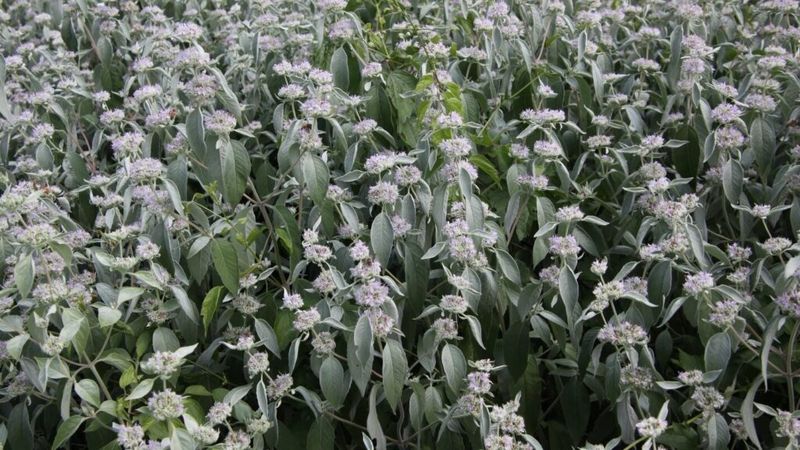
Most Pennsylvania gardeners walk right past clustered mountain mint at the native plant sale, drawn instead to showier flowers with bigger reputations.
That’s a real miss, because Penn State researchers spent three years counting every pollinator that landed on 86 native plants, and this quiet, knee-high perennial won by a landslide.
The numbers are striking enough to make you rethink what “hardworking” actually means in a garden.
Meet Pennsylvania’s Overlooked Mountain Mint
Walk through any native plant nursery in southeastern Pennsylvania and you’ll find bee balm front and center, goldenrod lined up in tidy rows, and the mountain mints tucked somewhere near the back.
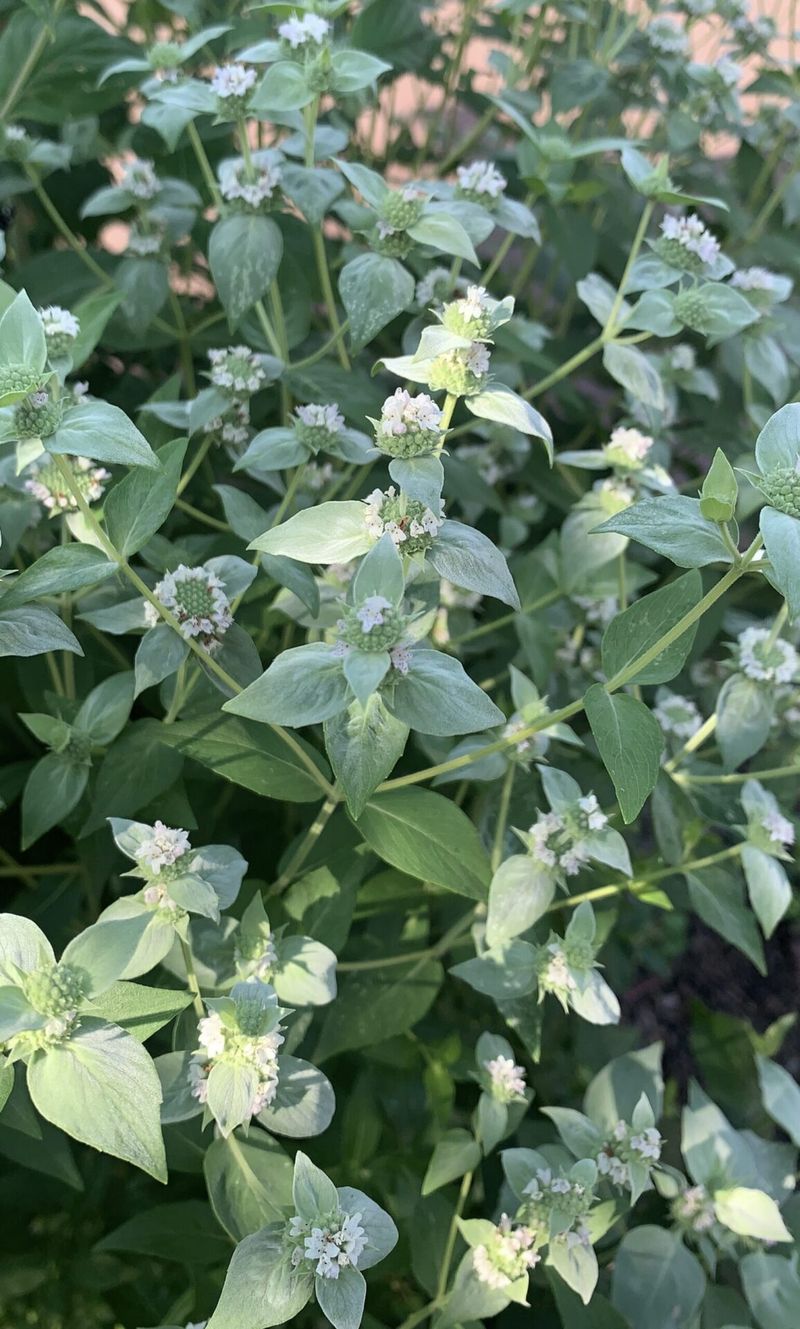
Clustered mountain mint, Pycnanthemum muticum according to Penn State Extension, rarely gets the headline spot, even though Pennsylvania is home to eight native mountain mint species.
It grows 24 to 36 inches tall, which puts it solidly at mid-border height, easy to tuck between a clump of switchgrass and a stand of black-eyed Susan.
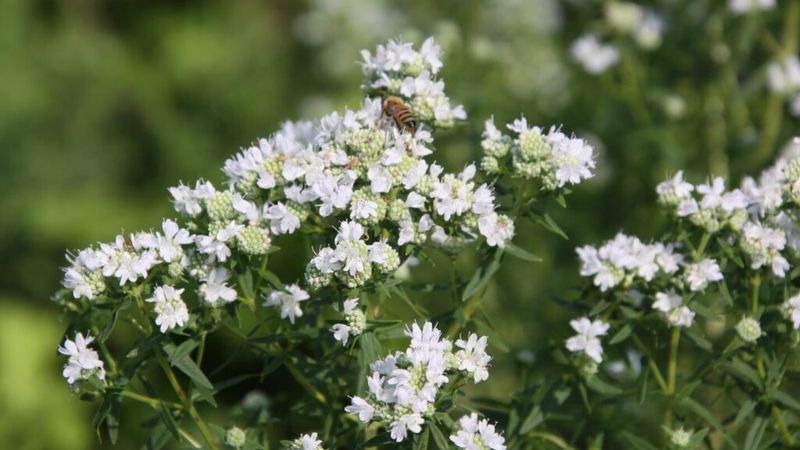
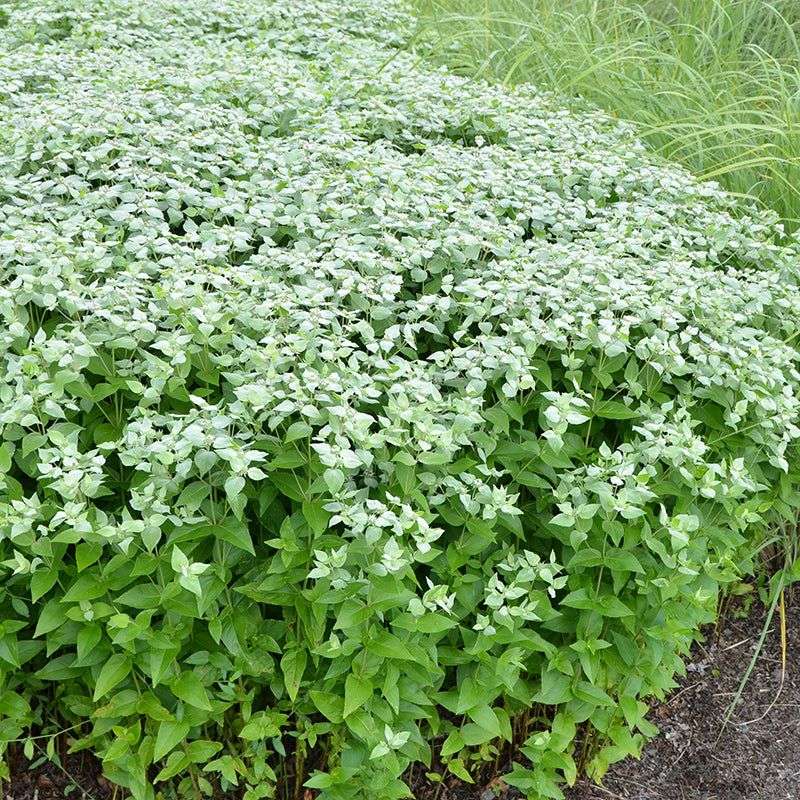
The flowers themselves are small and tubular, white to pale pink or lavender, often dotted with purple.
What catches the eye first, though, are the silvery bracts just below each flower cluster.
Those bracts give the plant a frosted, almost glowing appearance in midsummer light, and they keep looking interesting even when individual blooms come and go.
Crush a leaf between your fingers and you’ll get a strong, clean mint scent, the kind that makes you stop and smell it again.
The stems are square, a reliable sign of its mint-family membership.
But clustered mountain mint is not culinary mint from the genus Mentha, and it is not bee balm, Monarda, though all three share the same family.
The botanical name on the plant tag matters here, because Pennsylvania’s native Pycnanthemum species are genuinely distinct plants with different growth habits and garden personalities.
Clustered mountain mint can become a busy summer nectar hub, and its shallow rhizomes will spread, so it rewards thoughtful placement from the start.
Penn State’s Numbers Make the Case
Here is where the story gets genuinely surprising.
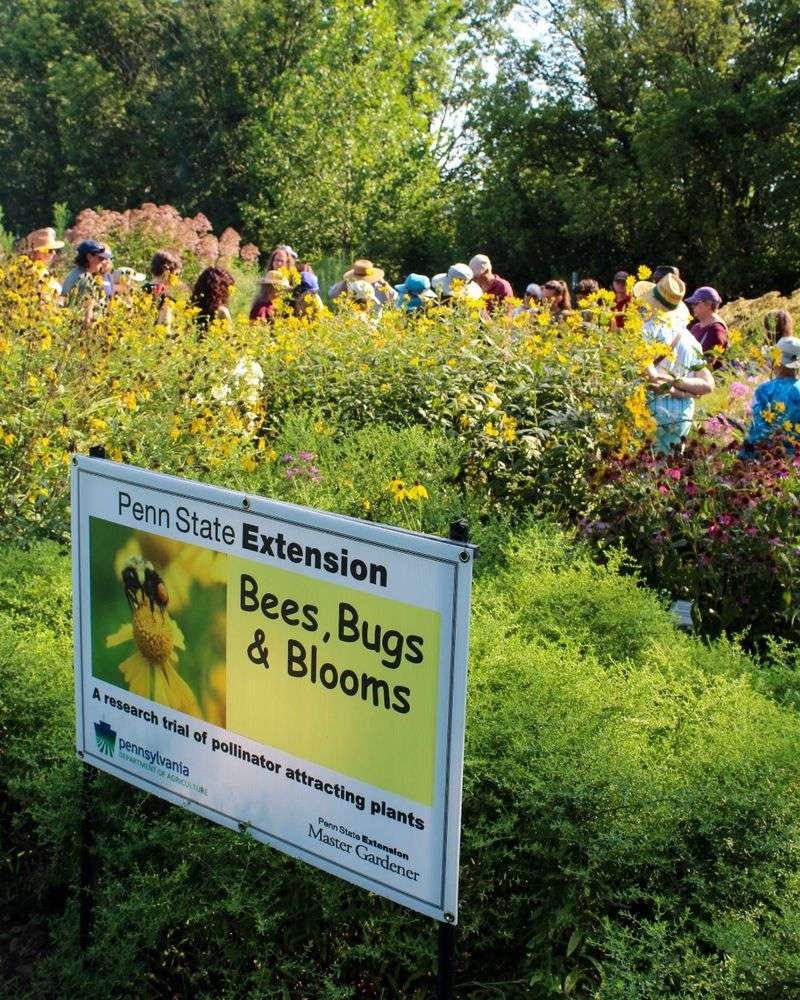
Penn State’s Bees, Bugs, and Blooms trial ran for three full growing seasons, from 2012 through 2014, at the Southeast Agricultural Research and Extension Center in Manheim, Pennsylvania.
Researchers evaluated 86 native species and cultivars, counting every pollinator that landed on each plant across the trial period.
The goal was a real-world comparison of which plants actually attract the most visitors under Pennsylvania conditions.
The Bees, Bugs, and Blooms project recorded 4,286 total pollinator visits to clustered mountain mint over those three years.
Stiff goldenrod came in second with 923 visits.
That gap is not a rounding error.
The visitor list included bees, butterflies, wasps, syrphid flies, and tachinid flies, making clustered mountain mint the most diverse-visitor plant in the entire trial.
The full trial rankings put it at the top of the list by a wide margin.
What the numbers do not say is equally important to understand.
This was one trial, at one site, measuring one type of value: pollinator visits.
It did not measure how many caterpillar species use the plant, how well it supports nesting bees, whether it feeds monarchs on migration, or how many bird species depend on it.
Peer-reviewed analysis of pollinator-plant trials consistently reminds researchers that visit counts reflect nectar and pollen attractiveness, not every dimension of ecological value.
The result is a strong, specific claim: clustered mountain mint delivered unusually high pollinator visitation in this Pennsylvania trial, and that is worth paying attention to.
A Long Summer Bloom With Real Garden Value
Numbers on a research table are one thing.
What those numbers feel like on a warm July afternoon in your yard is another.
Clustered mountain mint blooms from summer into late summer, with Penn State reporting that flowers can last up to 10 weeks under suitable conditions.
That kind of staying power fills the gap between your early spring bloomers and your fall asters, a period when many garden beds go quiet and pollinators have to work harder to find food.
The silvery bracts that frame each flower cluster do something useful beyond looking good.
They extend the plant’s visual presence even when individual flowers are between flushes, so the bed never looks like it’s between acts.
Deer, rabbits, groundhogs, and voles rarely browse the plant, according to Penn State, almost certainly because of that strong aromatic foliage. “Rarely” is the honest word here, local conditions and hungry seasons can change animal behavior, so no guarantee comes with it.
Come fall, leave the seed heads standing if you can.
Penn State’s rain garden profile for clustered mountain mint notes that dried seed heads provide winter interest and can offer food for birds.
What the plant does not do is carry the whole wildlife garden on its own.
High pollinator visit counts do not prove it is the top plant for caterpillars, monarch stopovers, specialist bees, or bird nesting.
Penn State’s pollinator habitat guidance is clear that a complete planting needs multiple species, bloom periods, and resource types, and clustered mountain mint fits into that picture as one strong summer piece.
Match It To Sun, Soil, And Space
Before you buy a single plant, walk your yard at noon on a clear day and count the hours of direct sun hitting the spot you have in mind.
Full sun, meaning at least 6 hours of direct light, gives clustered mountain mint its best flowering.
Penn State confirms that flowering is strongest in full sun, though the plant can manage in partial shade.
Deep shade is a different story, and you should not expect a strong bloom there.
Soil matters almost as much as light.
The plant prefers well-drained, moderately fertile ground and genuinely tolerates clay and moist-to-dry conditions once it has settled in.
What it will not forgive is waterlogged soil.
If your spot stays soggy after rain, look elsewhere in the yard.
Many central Pennsylvania and southeastern Pennsylvania gardens sit on heavy clay, which is workable as long as water moves through rather than pooling.
Penn State’s rain garden profile places it at the margin of rain gardens, where soil drains between storm events, not in the permanently wet center.
Space is the third factor to settle before planting.
Plan on at least 3 feet of open ground from neighboring plants as a conservative design starting point, with more room if you want a naturalized drift.
That guidance comes from the plant’s reported spread potential of more than 4 feet in favorable conditions, not from a formal Penn State spacing requirement.
NC State Extension’s mountain mint profile and University of Maryland guidance on native plants for sunny slopes both support placing vigorous mint-family plants where their spread is easy to observe and redirect.
A path edge, a lawn boundary, or a rain garden margin all give you a natural stopping point and a clear view of where the clump is headed.
Give New Plants A Careful Start
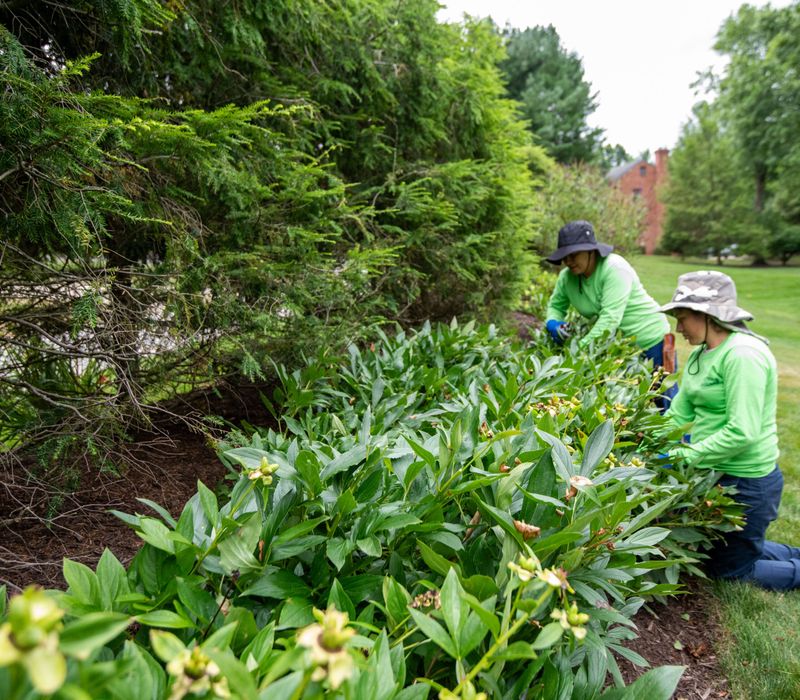
Planting day sets the tone for the next several seasons, so it’s worth doing it right.
Penn State’s native perennial planting guidance recommends spring, early summer, or fall as the best windows.
Spring and early summer give the plant a full warm season to build roots before its first Pennsylvania winter.
Fall planting works too, as long as you get it in the ground at least 6 weeks before the ground freezes, which in much of the state means finishing by mid-October.
Set the plant at the same depth it grew in its nursery container, no deeper.
Water thoroughly right after planting, enough to settle the soil around the roots without creating a puddle.
Then spread about 2 inches of shredded leaves, bark mulch, or compost over the root zone, keeping the mulch pulled back from the stems.
That layer holds moisture, moderates soil temperature during Pennsylvania’s uneven summers, and slows weed competition during the first year when the plant is most vulnerable.
Through establishment, aim for about 1 inch of water per week from rainfall or supplemental irrigation.
Penn State’s summer watering guidance recommends deep, infrequent watering rather than light daily sprinkles, which keeps roots growing downward instead of hovering near the surface.
Once the plant is established, it often needs little or no added water when the site matches its preferences.
But new plants still need monitoring, especially during the dry stretches that can follow Pennsylvania’s summer thunderstorms.
On fertilizer, skip the annual feeding.
Penn State’s rain garden best practices and its broader native plant guidance both point to soil testing before adding any nutrients, since excess fertility can make native perennials floppy and rank rather than sturdy and floriferous.
Manage The Spread Without Fearing It
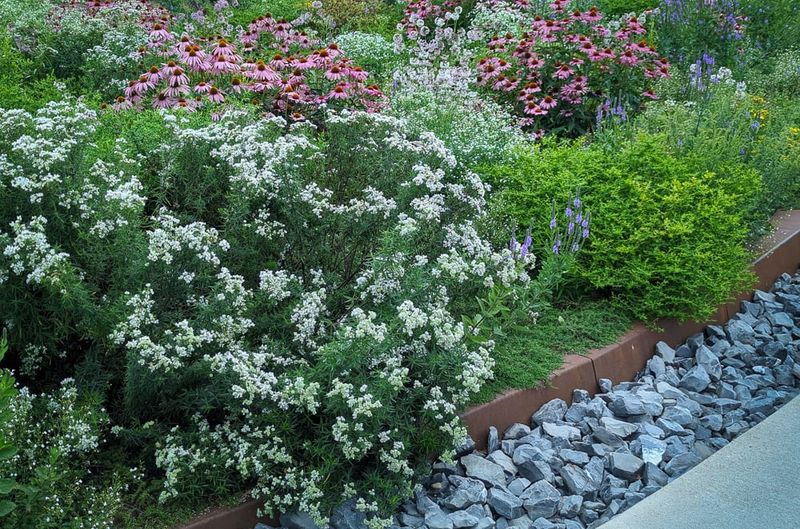
Calling clustered mountain mint well-behaved would be a stretch.
It spreads by shallow rhizomes, and in favorable conditions those rhizomes can travel more than 4 feet from the original planting.
Penn State describes the plant as vigorous, which is extension-speak for “give it room or give it a boundary.” This is not a reason to avoid the plant, but it is the main management consideration if you are working with a narrow bed or a tightly designed border.
The practical fix is straightforward.
Give the planting a visible edge, a path, a lawn strip, or a defined bed margin, and check the perimeter each spring.
When shoots appear outside the boundary you want, cut them off with a sharp spade.
Penn State’s rain garden profile supports spring root pruning as the way to keep the clump within bounds.
If your spot is genuinely tight, Penn State’s herb garden guidance describes using a drained 3- to 5-gallon container as an option for containing aggressive mint-family plants.
That is a practical adaptation you can borrow, not a requirement specific to clustered mountain mint.
The seasonal rhythm after establishment is low-effort.
Penn State’s pollinator garden guidance identifies standing perennial stems as useful overwintering habitat for native insects, so leave the dried stalks up through winter where you can.
Cut them back in spring when you do your edge pruning pass.
On deer and other mammals: the aromatic foliage means they rarely browse it, but “rarely” is genuinely the right word.
Pressure from deer in a tough winter or a hungry groundhog in spring can produce exceptions, so do not count on the plant being completely off the menu every single year.
Build A Habitat Around Its Summer Strength
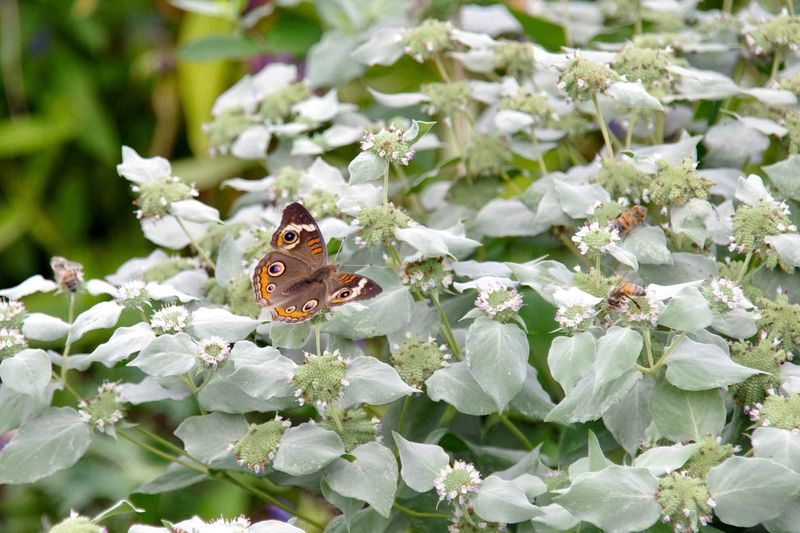
Clustered mountain mint earns its place as a summer nectar anchor, and that is genuinely where it shines.
But one plant cannot carry a full season of pollinator support on its own, and it was never designed to.
Penn State’s pollinator habitat guidance calls for a range of species blooming at different times, plus larval host plants, nesting spaces, water, and shelter.
Mountain mint fills the summer window, and that window matters, but the rest of the calendar still needs coverage.
For spring, pair it with serviceberry, Amelanchier, native violets, or wild columbine, Aquilegia canadensis, which feed early bees before mountain mint wakes up.
For fall, native asters and goldenrods pick up where the mountain mint fades, carrying pollinators through September and October across much of Pennsylvania.
Penn State’s Center for Pollinator Research food-source guidance specifically names native milkweeds as host plants for monarchs, a function mountain mint does not fill.
Joe Pye weed, Eutrochium purpureum, bee balm, Monarda fistulosa, and black-eyed Susan, Rudbeckia hirta, round out a mid-border planting that keeps something blooming from May through October.
Penn State’s wild bee conservation guidance adds that nesting habitat, bare or sparsely vegetated ground for ground-nesting bees and standing hollow stems for cavity nesters, matters as much as flower diversity.
A shallow water source helps too, especially during Pennsylvania’s dry midsummer stretches.
The practical summary: choose a sunny, well-drained spot, water during establishment, leave room for the rhizomes to move, and use clustered mountain mint as one high-performing piece of a layered, season-long planting.
Skip The Unproven Tick Remedies
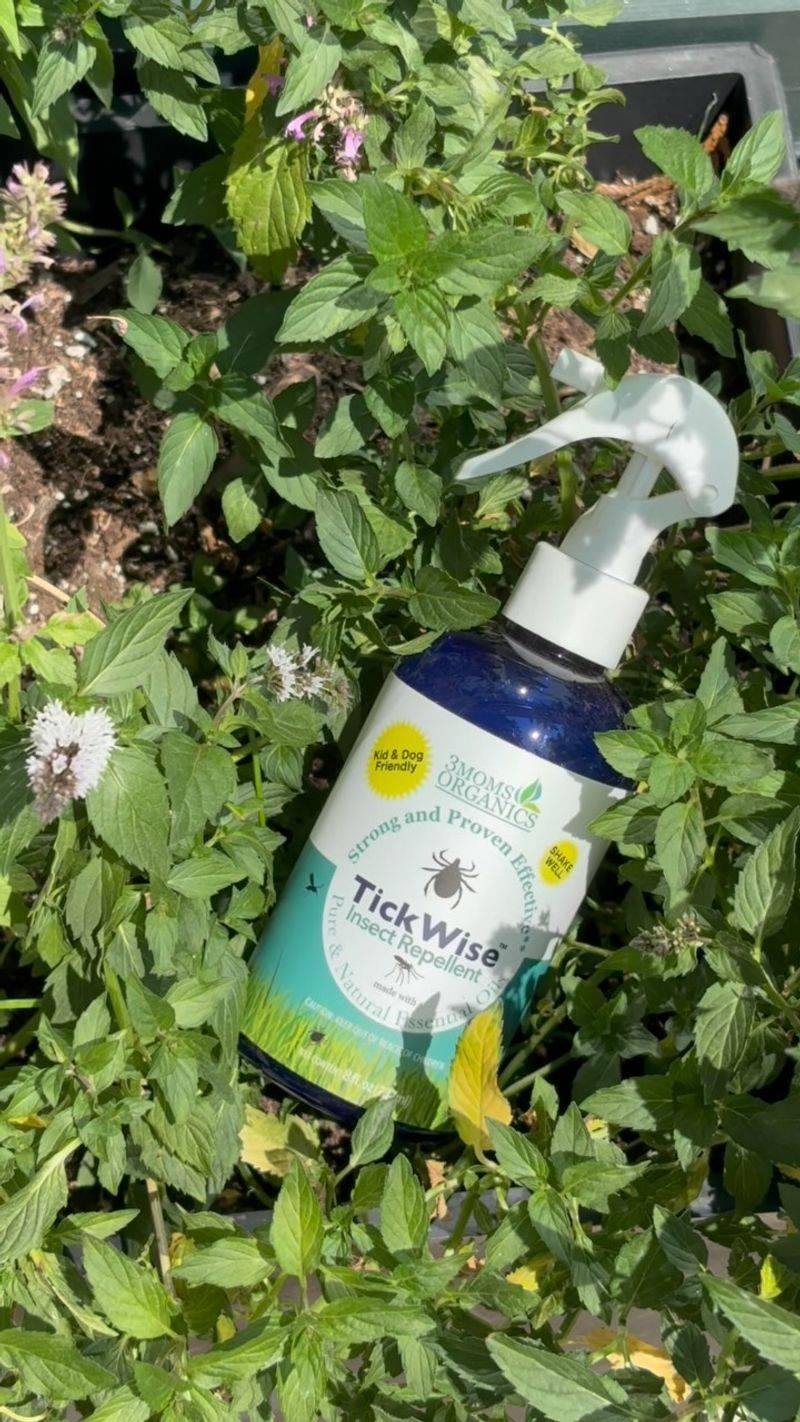
Clustered mountain mint smells strongly of mint when you brush against it, and that scent has led some gardeners to wonder whether rubbing the leaves on skin or clothing might keep ticks away.
It is an understandable leap.
The plant does contain aromatic compounds, and some regional plant references mention a traditional association between mint-family plants and insect deterrence.
But the available evidence does not establish that rubbing clustered mountain mint on yourself reliably repels ticks in the field.
That is a meaningful gap between a folk observation and a tested, dependable method.
For actual tick protection in a Pennsylvania yard, where blacklegged ticks and American dog ticks are genuine seasonal concerns, use repellents that have been tested and registered.
Penn State Extension’s guidance on tick and insect repellents points to DEET and picaridin as well-established options, and recommends following product label directions carefully.
Those products have documented field performance.
A handful of aromatic garden leaves does not.
The caution extends to homemade preparations.
Do not make concentrated essential oils from clustered mountain mint, and do not ingest homemade preparations because the plant smells pleasant.
Poison Control’s pennyroyal oil information documents severe liver toxicity from pennyroyal oil, another mint-family product containing the compound pulegone.
That toxicity concern applies to concentrated oil, not to ordinary garden contact with clustered mountain mint.
But it is a clear reason to avoid homemade essential-oil recipes from any mint-family plant.
Enjoy the scent while you’re pruning, wear your tested repellent before you head into tick habitat, and let the plant do the job it actually does well: pulling in pollinators from across the neighborhood all summer long.