
13 Blue Perennials Ohio Gardens Use For Calm And Balanced Design
Follow us on Google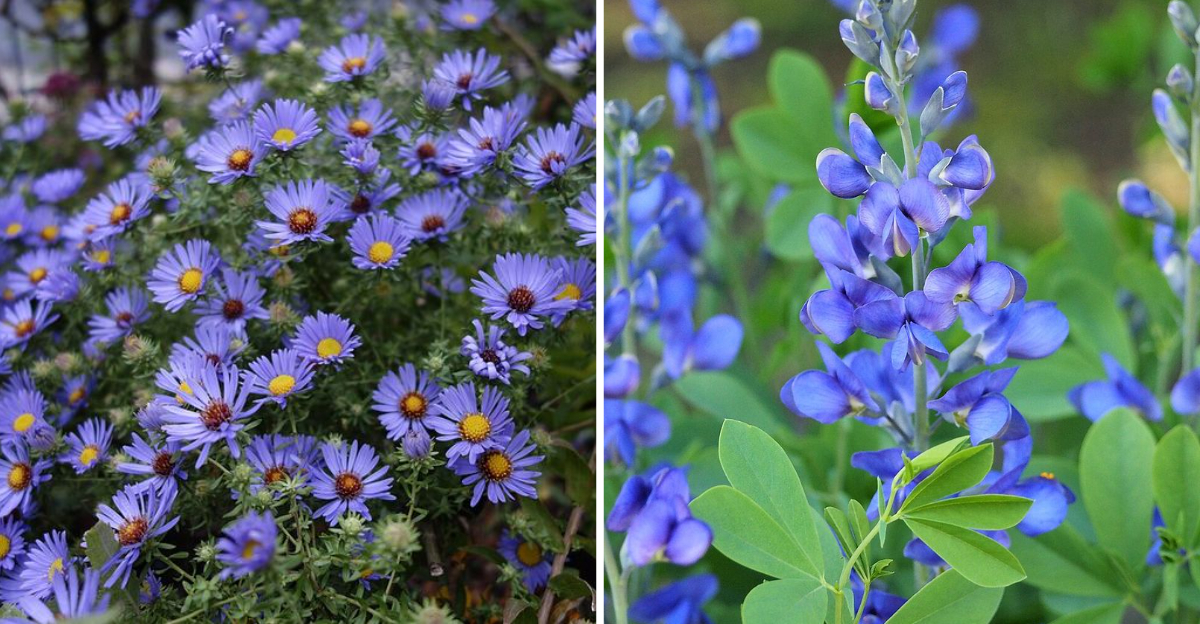
Blue flowers have a quiet way of slowing the eye and making a garden feel settled. In Ohio, that sense of calm matters because beds often need to bridge cool springs, hot summers, and unpredictable weather.
The right blue perennials do more than add color – they soften bold plantings, connect different bloom times, and make everyday spaces feel intentionally designed. Here are the varieties that bring steady structure and a peaceful mood without asking for fussy care.
Meadow Sage
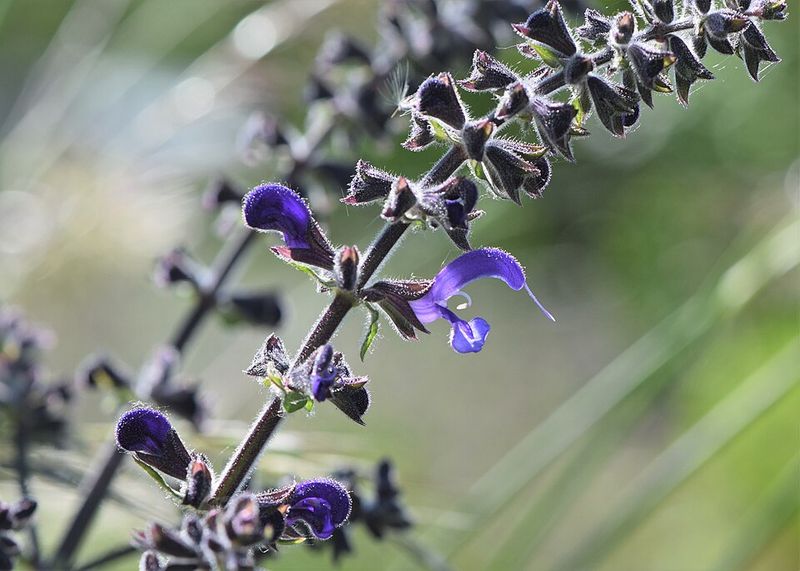
Color can calm a busy border fast, and this plant does it with upright blue spikes that read crisp instead of loud. In Ohio gardens, I like how the bloom shape adds order without making a bed feel stiff.
You get that clean, balanced look even when neighboring perennials are looser and more billowy.
Full sun and decent drainage keep it happiest, especially through humid stretches that can flatten fussier plants. After the first bloom, cutting spent stems back encourages another round and keeps the clump tidy.
That quick trim is one of those easy jobs that pays you back with weeks of extra color.
Because the foliage stays compact, it works beautifully near paths, mailbox beds, and front foundation plantings. Pair it with pale yellow coreopsis, silver artemisia, or white coneflowers when you want a relaxed palette.
I also like using it as a repeating rhythm plant, since repeated blue spires make long borders feel connected.
Pollinators show up constantly, which adds movement without visual chaos. Deer usually leave it alone, a real advantage in many Ohio neighborhoods.
If your garden needs blue that looks intentional, reliable, and easy to place, this is one of the smartest first choices.
Delphinium
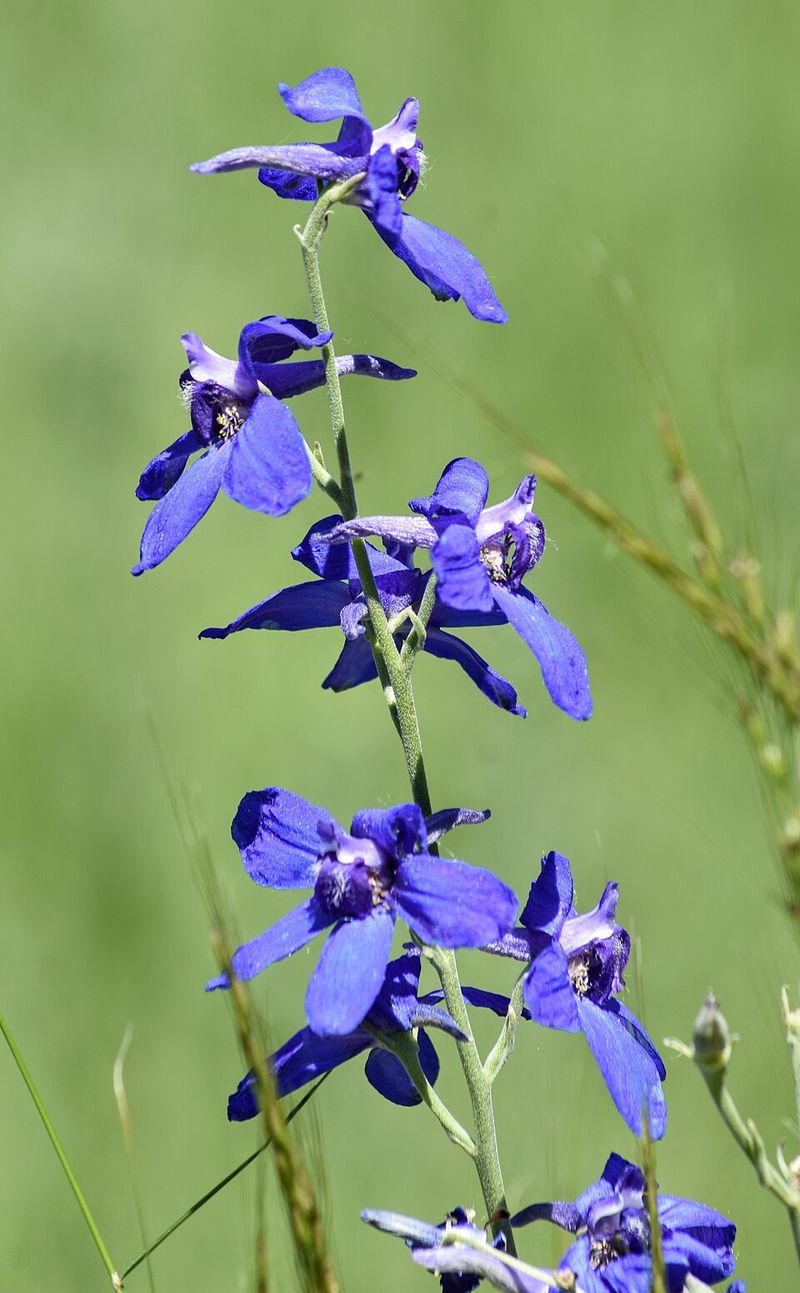
Height changes the mood of a planting, and these tall blue spires bring vertical drama without breaking a peaceful color scheme. The flower color feels clear and cool, which helps busy borders settle down visually.
In Ohio, they are best used where the roots stay cool and the stems get a little protection from strong wind.
Rich soil, regular moisture, and full to partial sun make a noticeable difference in performance. Staking early is usually worth it, especially in exposed gardens where summer storms roll through quickly.
I have found that placing them behind lower mounding plants hides supports while making the tall stems feel naturally anchored.
Because the bloom shape is so strong, this is a plant to use with intention. Pair it with rounded forms like catmint, lady’s mantle, or peonies to create balance instead of competition.
A few clumps can frame a focal view beautifully, especially near a fence, arbor, or long back border.
Some gardeners skip delphiniums because they seem demanding, yet the payoff is memorable when the site is right. If your design needs a cooling vertical accent, few perennials create that serene column of blue so effectively.
Just think placement first, and the whole garden will look more composed.
Blue False Indigo
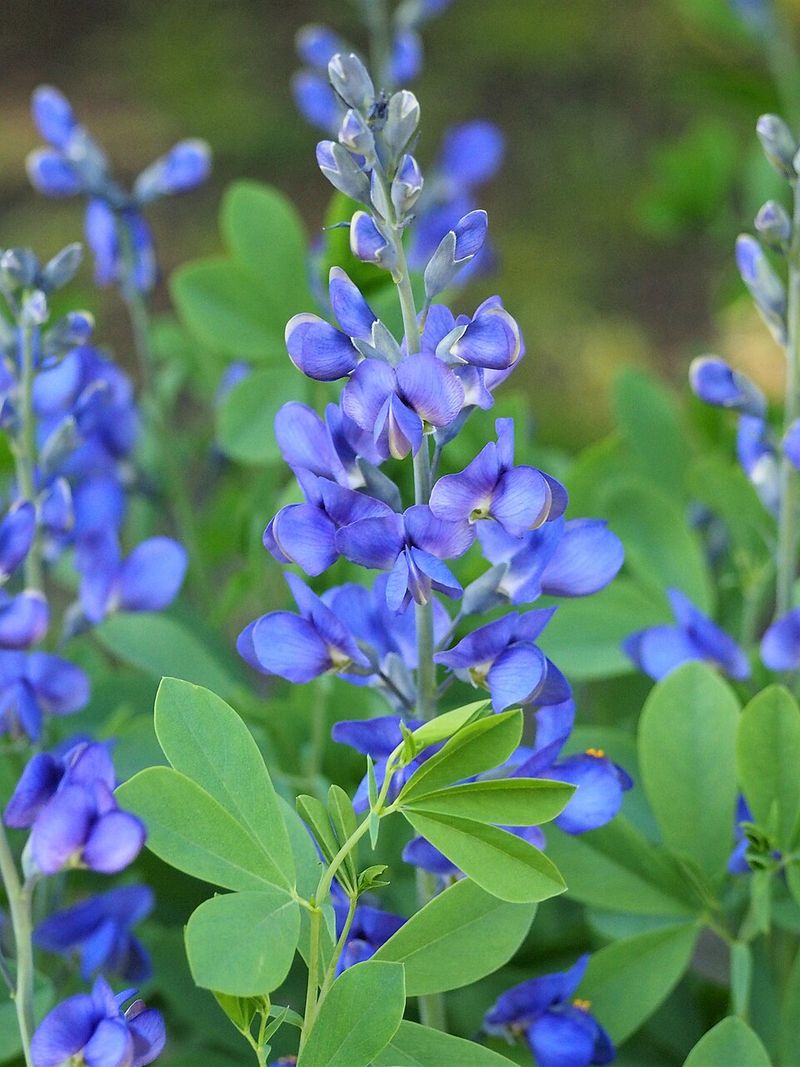
Some perennials earn their place by looking substantial for months, not just during bloom. This native favorite forms a handsome, shrub-like clump that gives Ohio gardens a grounded, steady presence.
The blue flowers arrive in late spring with a refined look that suits both formal borders and more relaxed native-inspired planting plans.
Patience matters at first because young plants can take time to settle in and reach full size. Once established, the deep roots help it handle dry periods better than many people expect.
That long-term durability makes it especially useful in beds where you want structure without constant dividing, staking, or replacing.
I love using it as an anchor among softer textures because the rounded mass keeps everything from feeling too airy. Try it with prairie dropseed, alliums, or pale yellow baptisia companions for a calm combination.
After flowering, the foliage stays attractive, so you are not left with a gap that needs hiding.
Seed pods can add extra interest, though some gardeners remove them for a cleaner outline. Deer pressure is usually low, and pollinators appreciate the blooms.
For balanced design, this plant does an important quiet job by making the whole border feel settled, mature, and intentionally built to last.
Siberian Iris
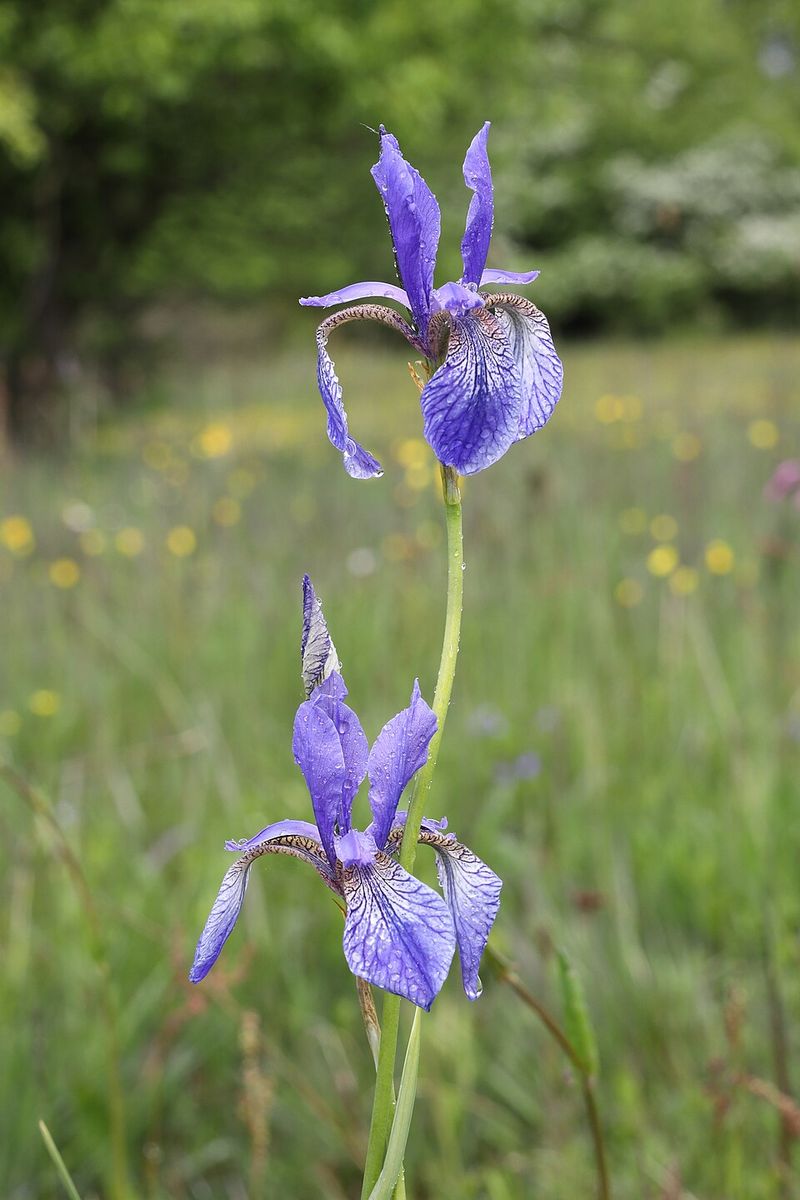
Graceful lines can calm a planting just as much as flower color, and this perennial delivers both. The blooms have a clean blue tone that feels sophisticated rather than flashy, while the blade-like foliage keeps the bed looking organized after flowering ends.
In Ohio, that combination is especially useful in gardens that need season-long structure.
Moist, reasonably fertile soil helps it perform best, though established clumps are not as delicate as they look. Full sun gives the strongest bloom, but a little afternoon shade can be helpful in hotter spots.
I like placing it where the narrow leaves can contrast with broader hosta, baptisia, or peony foliage nearby.
It works beautifully along paths, beside water features, or in front of shrubs where the vertical leaves echo nearby lines. Because the flowers float above the foliage, the effect feels light even in tighter spaces.
That keeps a small bed from looking crowded, which matters when you are aiming for a calm, uncluttered design.
Dividing every few years can refresh flowering, but maintenance is generally straightforward. After bloom, the clumps still contribute a neat architectural shape instead of disappearing.
If your Ohio garden needs blue that reads refined, dependable, and quietly elegant, this is an easy plant to appreciate for many seasons.
Balloon Flower
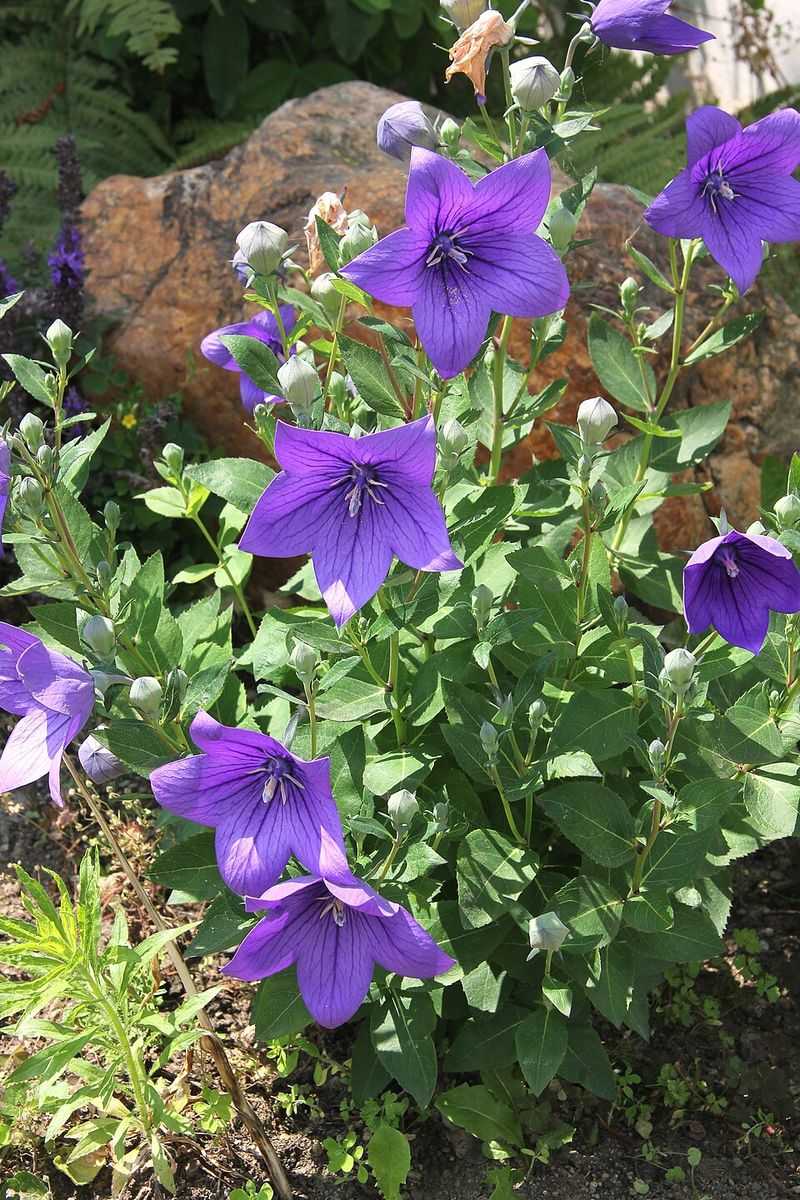
Playful details can still support a calm design, and the puffed buds on this plant prove it. Watching them swell before opening into blue stars adds character without making a border feel busy.
In Ohio gardens, the bloom color reads cool and clear, especially when it is paired with silver, white, or soft pink companions.
Good drainage is important, and full sun to light shade usually brings the best results. Because stems emerge late in spring, I always mark the spot so I do not disturb the crown while planting nearby annuals.
Once growth begins, the clumps are tidy and easy to fit into medium-height sections of a border.
This perennial is especially useful when you want blue in summer without relying only on spikes or airy mounds. The outward-facing flowers create a different rhythm, which keeps a design interesting while staying cohesive.
Try it near threadleaf coreopsis, dwarf grasses, or compact daylilies for a balanced combination of shapes.
Deadheading can stretch the bloom period, though even a lightly maintained clump usually performs well. Taller selections may benefit from discreet support in rich soil.
For gardeners who want a dependable blue perennial with a slightly whimsical edge, this one brings charm while still holding a composed, polished presence.
Great Blue Lobelia
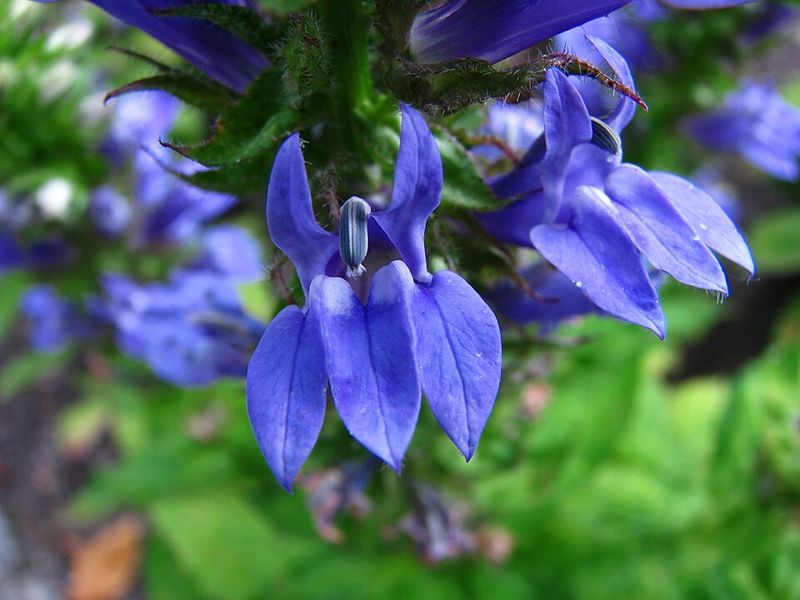
Late summer can leave a border looking tired, which is why this native perennial feels so valuable. Its vivid blue flower spikes arrive when many earlier cool tones have faded, restoring freshness to the planting.
In Ohio, that timing helps a garden stay visually balanced instead of slipping into a sea of late-season warm colors.
Moist soil is the key to success, so this is a smart choice for rain gardens, low spots, or beds near downspouts. Full sun works where the ground stays evenly damp, while part shade can reduce stress in hotter sites.
I often suggest it to gardeners who struggle with areas that are too wet for classic border perennials.
The growth habit is upright but not rigid, making it easy to combine with grasses, joe pye weed, or white turtlehead. Those pairings create a layered native look that still feels composed.
Because the blue is intense, a few clumps go a long way, especially when repeated to guide the eye through a larger bed.
Hummingbirds and pollinators are frequent visitors, which adds life without undermining the calm palette. Deer resistance can vary, so watch young plants at first.
If you need a blue perennial that carries the garden into late season and suits wetter Ohio sites, this one deserves serious attention.
Virginia Bluebells
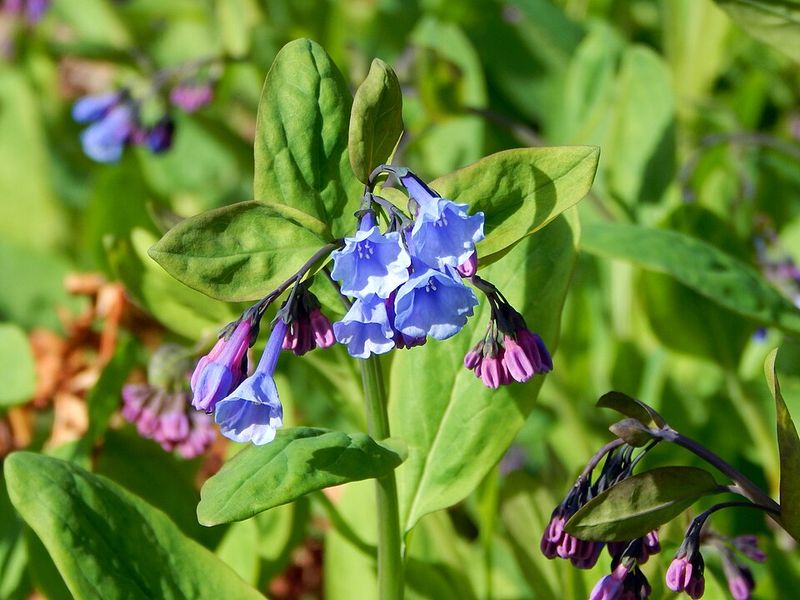
Spring shade gardens often need a gentle color shift, and this native plant handles that beautifully. The buds open pinkish and mature to soft blue, creating a layered effect that feels delicate and restful.
In Ohio woodlands and home gardens alike, that short but memorable display signals the season with a calm kind of drama.
Rich, moist soil and dappled shade are the ideal conditions, especially under deciduous trees that leaf out later. Because it is a spring ephemeral, the foliage fades by early summer, so planting around that habit is essential.
I like pairing it with hostas, ferns, and brunnera so the space stays full after bluebells disappear.
This is not a perennial for a hot, exposed bed, but it is excellent in naturalized shade gardens where plants can gently spread. A drift near a path feels especially inviting because the nodding flowers reward a close look.
The cool color also brightens shady corners without the harshness that some brighter blooms can bring.
Once established in the right setting, it asks for very little beyond patience and leaf mulch. Disturbing it often is unnecessary and usually unwelcome.
For calm and balanced design in spring shade, few plants create such a soft, fleeting, and genuinely Ohio-appropriate blue moment.
Jacob’s Ladder
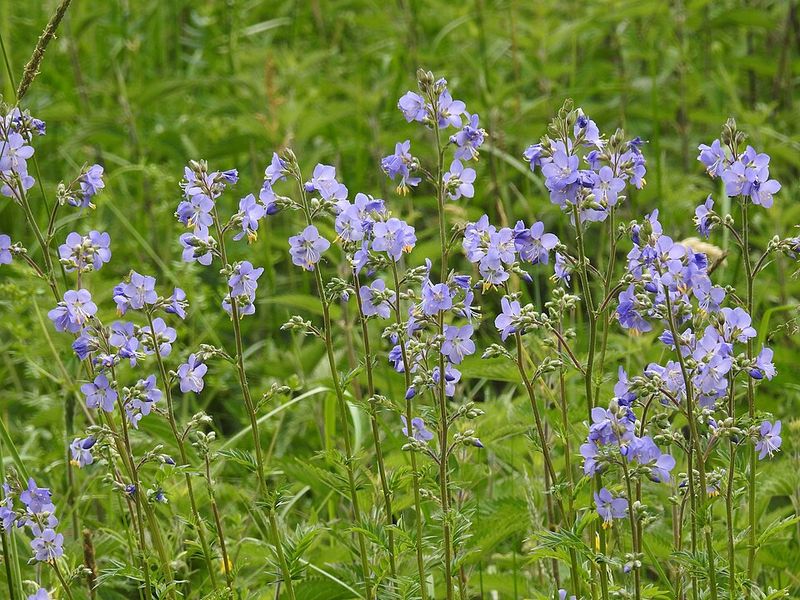
Texture can do as much design work as bloom color, and this perennial proves the point. The ladder-like leaves give the plant a refined, almost hand-drawn look that immediately adds interest to a shady bed.
Blue flowers appear above that foliage in spring, bringing a cool accent that feels gentle instead of showy.
Partial shade and evenly moist, humus-rich soil usually produce the best growth in Ohio gardens. Harsh afternoon sun can scorch the foliage, especially during dry periods, so placement matters more than many gardeners expect.
I think of it as a detail plant, one that rewards close viewing near a path, patio, or front border edge.
Because it stays fairly compact, it slips easily between larger shade perennials without causing crowding. Try it with heuchera, hosta, foamflower, or white bleeding heart when you want a layered but restful palette.
The ferny texture also helps lighten heavier leaf forms, which keeps a shady composition from feeling too dense.
In cooler seasons it can look remarkably fresh, though some trimming may help after hot spells. Self-seeding is possible, but usually not in an unruly way.
If your shade garden needs a blue perennial that contributes both flowers and fine texture, this one adds quiet sophistication with very little visual clutter.
Speedwell
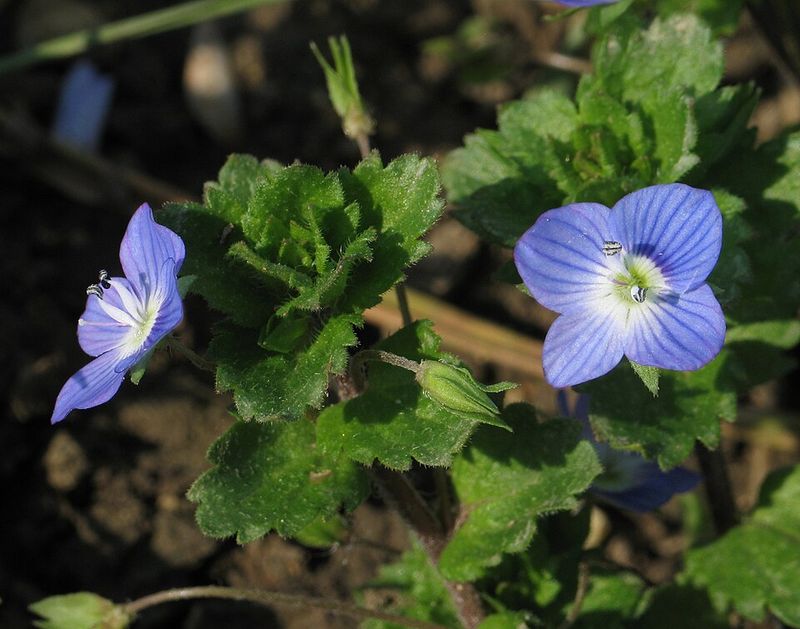
Not every blue perennial has to be airy or sprawling to feel relaxing in a design. This one offers compact clumps and tidy flower spikes that bring order to mixed borders.
In Ohio, that neat habit is useful in smaller spaces where every plant needs to contribute color without overwhelming neighboring perennials.
Full sun and well-drained soil usually keep it performing well, especially if air circulation is decent. Deadheading or lightly shearing spent blooms encourages a cleaner appearance and can prompt more flowers.
I appreciate how quickly it responds, since that means the border keeps its polished look through the busiest part of summer.
Its scale makes it easy to use near the front of beds, around roses, or in repeating drifts through a foundation planting. The blue pairs beautifully with white shasta daisies, pale pink echinacea, or chartreuse foliage.
If a bed feels scattered, repeating these upright spikes can create the rhythm that pulls everything together.
Pollinators visit often, adding energy without making the garden feel chaotic. Some varieties resist disease better than others, so cultivar choice is worth a little research.
For calm and balanced design, this perennial offers a practical mix of structure, bloom power, and manageable size that is especially helpful in suburban Ohio gardens.
Harebell
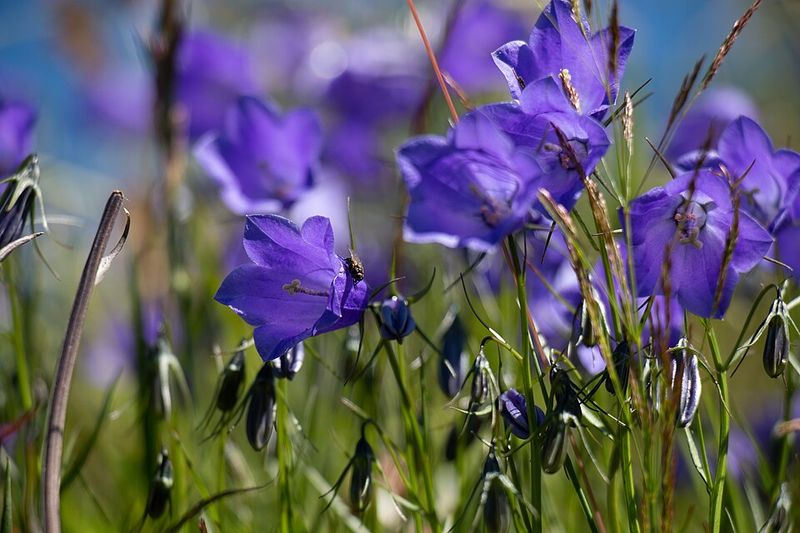
Delicate flowers can still have a strong design role when they are used with restraint. This perennial sends up slender stems with nodding blue bells that feel airy, light, and remarkably calming.
In Ohio, it is especially appealing for rock gardens, edging, or informal spaces where a heavy planting style would feel out of place.
Good drainage matters more than rich soil, which makes it useful in leaner spots that challenge thirstier perennials. Full sun suits it well, and the compact base keeps the plant from looking unruly even when the flowering stems dance in the breeze.
That movement gives a bed life while keeping the overall look quiet.
I like weaving it among stones, low grasses, or creeping groundcovers so the blue blooms seem to hover above the planting. The effect is subtle, which is exactly why it works in calm design.
Instead of demanding attention, it rewards repeated noticing, especially near a seat, stepping path, or smaller front-yard bed.
This is not the plant for a bold, blocky border that needs instant mass, but it excels in intimate spaces. Once established, it can settle in without much fuss.
If your Ohio garden needs a blue perennial with a lighter touch, harebell offers charm, motion, and a welcome sense of openness.
Brunnera
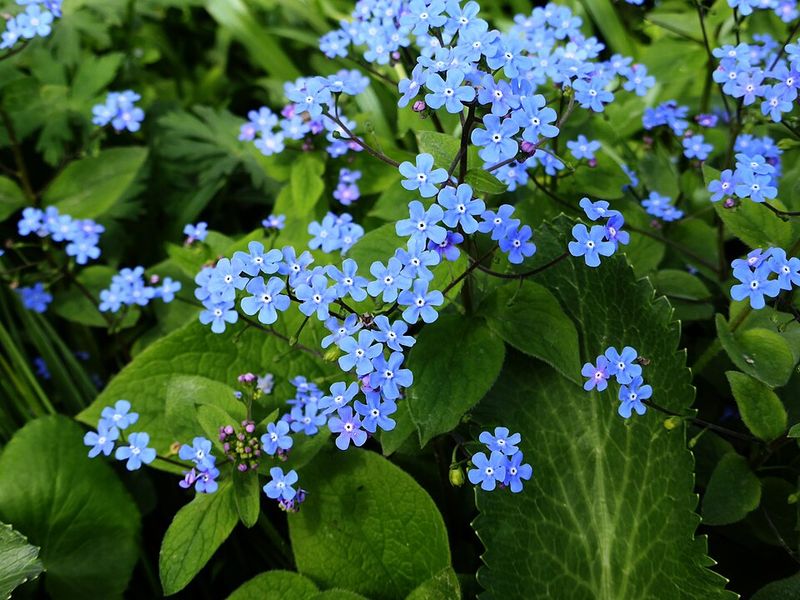
Shade gardens often need more than hostas to feel layered, and this perennial fills that gap beautifully. Clouds of tiny blue flowers rise above broad, heart-shaped leaves in spring, creating a cool, settled look.
In Ohio, it is especially useful where a shady bed needs brightness without relying on loud color or high contrast.
Morning sun or dappled light suits it well, while rich soil with consistent moisture helps the foliage stay attractive. Many gardeners grow it as much for the leaves as for the flowers, particularly the silver-variegated selections.
I like that double role, since a calm design usually depends on foliage carrying the scene between bloom moments.
Pair it with ferns, hellebores, pulmonaria, or dark green hostas for a composition that feels thoughtful and soft. Near pathways, the leaves create a strong visual base while the blue flowers add spring lift above them.
That layered effect keeps shade borders from reading as flat, which is a common issue in older Ohio yards.
Afternoon heat can stress the plant, so a sheltered location is worth choosing carefully. Damaged leaves can be trimmed and replaced by fresh growth later in the season.
For gardeners aiming at balanced shade design, this perennial offers one of the easiest ways to combine blue bloom, dependable foliage, and quiet elegance.
Johnson’s Blue Geranium
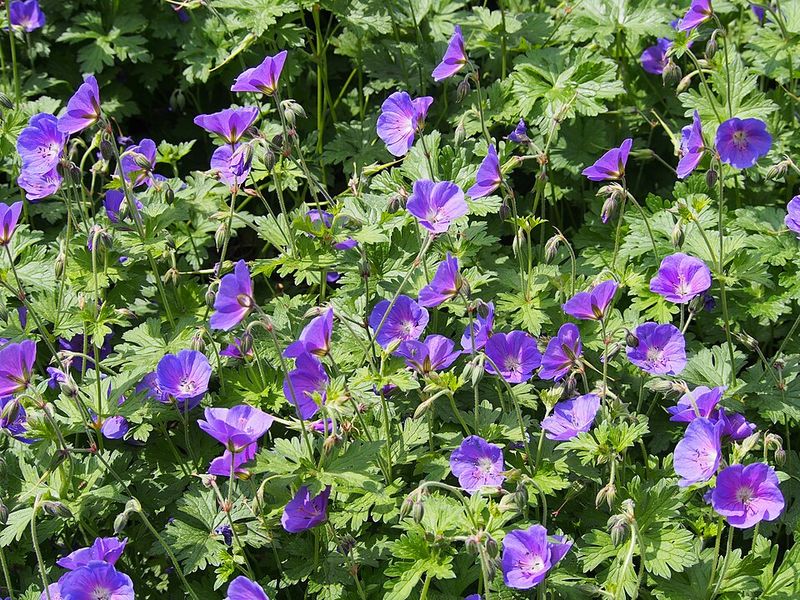
Ground-covering perennials can either look sloppy or beautifully relaxed, and this one usually lands in the second category. The open blue flowers weave through a planting in a way that softens edges and fills visual gaps.
In Ohio gardens, that loose habit is helpful when a border feels too rigid or disconnected between larger focal plants.
Sun to part shade works well, and average soil is usually enough if drainage is decent. After the main bloom flush, cutting the plant back can refresh the foliage and prevent a tired midsummer look.
That simple reset often brings a tidier mound and sometimes a repeat bloom later on.
Its spreading nature makes it a strong companion for roses, peonies, alliums, and shrubs with bare lower stems. I especially like using it to knit together plants with very different shapes because the wandering stems create visual continuity.
The flower color leans cool and clear, which helps tone down stronger pinks, yellows, or burgundies nearby.
It is not a formal edging plant, but that is part of its value in calmer design schemes. The overall effect feels lived-in rather than messy when the spacing is thoughtful.
If you want blue that smooths transitions and helps a mixed border look more cohesive, this hardy geranium is a reliable answer.
October Skies Aster
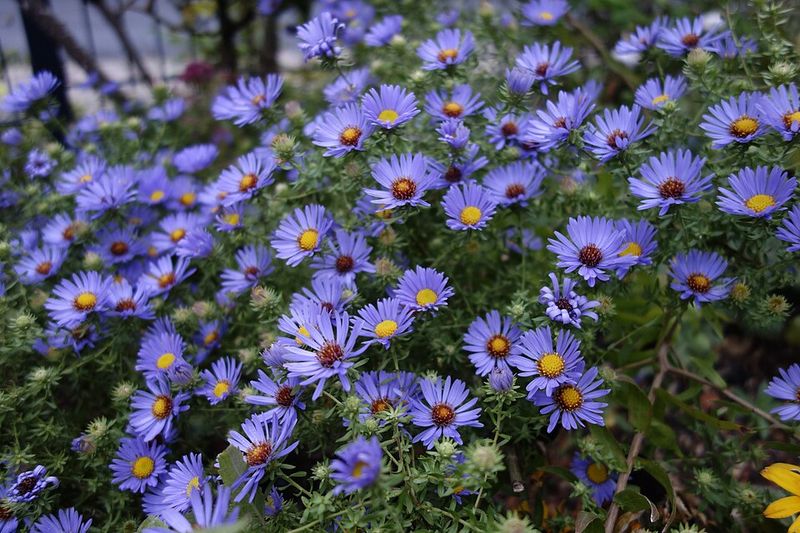
Autumn gardens often need blue to counterbalance all the gold, rust, and red happening at once. This compact aster answers that need with masses of small blue-lavender flowers that cool the scene instantly.
In Ohio, that late-season color can make a front bed look refreshed right when summer annuals begin to lose steam.
Full sun and well-drained soil help it keep a dense, rounded form, which is part of its appeal. Pinching stems in early summer can create an even fuller mound and prevent legginess by bloom time.
I think that one maintenance step is worth remembering because it supports the calm, balanced outline people usually want.
It pairs especially well with ornamental grasses, sedum, and goldenrod, where the blue tones soften stronger fall textures and colors. Repeating it along a border creates rhythm without the heaviness of larger shrubs.
If a planting leans too warm by September, this aster can pull the palette back into a more settled range.
Pollinators show up in impressive numbers, which makes the garden feel alive during cooler weeks. Deer resistance is fairly good, and the aromatic foliage is another plus.
For a composed Ohio garden that still looks intentional in October, this perennial is one of the best blue finishers you can plant.