
Black Leaves On A Peace Lily Spread Fast, But The Fix Starts With One Clue
Follow us on Google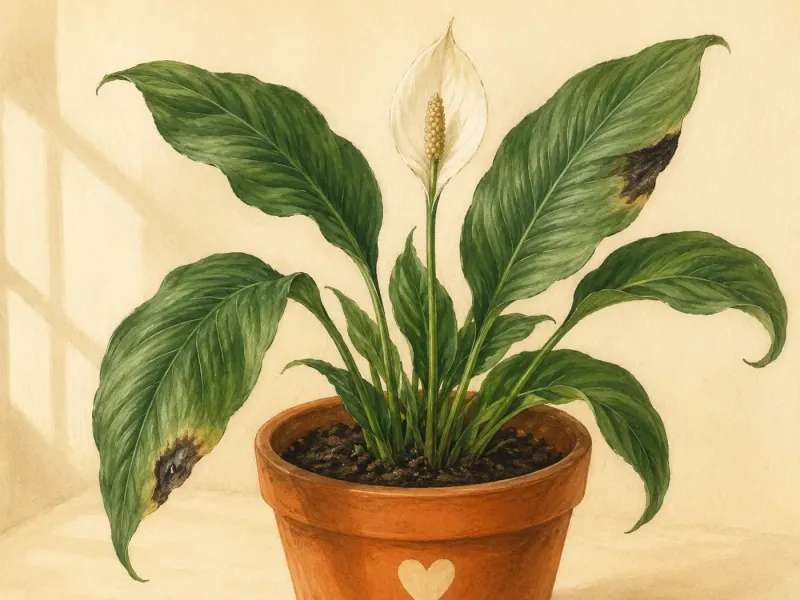
Spotting a black leaf on your peace lily (Spathiphyllum) is unsettling, especially when the damage seems to grow overnight.
Not every dark patch means the same thing, though, and reaching for the wrong fix can make things worse.
When blackening is actively spreading or worsening, the single most useful first move is checking what is happening at the roots.
The soil, the smell, and the roots together will point you toward the real problem faster than the leaf color alone ever could.
When Blackening Worsens, Start With the Soil
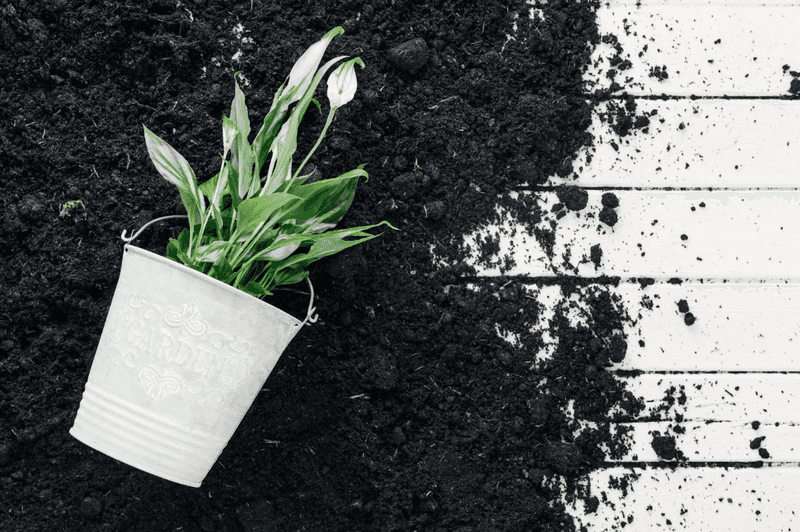
Feel the potting mix before you do anything else.
Push two or three fingers several inches into the soil and hold them there for a moment.
If the mix feels wet and cold well below the surface, and the plant is wilting or showing new soft black tissue despite that moisture, something is wrong at the root level and it deserves your attention today.
Actively worsening blackening is different from a few old brown tips that have been sitting there for weeks.
Old tip damage tends to stay put.
When soft, dark tissue is spreading to new leaves or moving from the leaf base upward, that pattern, combined with soggy soil, raises concern for root or crown damage.
Leaf color alone cannot tell you the cause, so do not stop at the leaves.
Check the drainage hole, the saucer underneath, and any decorative cachepot.
Virginia Cooperative Extension guidance on container houseplants warns that pots sitting in standing water for extended periods can keep the root zone saturated even after you stop watering.
Empty any water pooling below the pot, then sniff near the soil line.
A sour or musty odor strengthens the case that the roots are in trouble.
If the mix is dry and crumbly instead, water thoroughly until water runs from the drainage hole, then empty the saucer.
Dry roots produce their own kind of blackening, so the soil check is genuinely the fork in the road.
University of Florida plant diagnosticians put it plainly: the first question is whether the plant is diseased or simply stressed by its growing conditions.
Waterlogged Roots May Lose Access to Oxygen
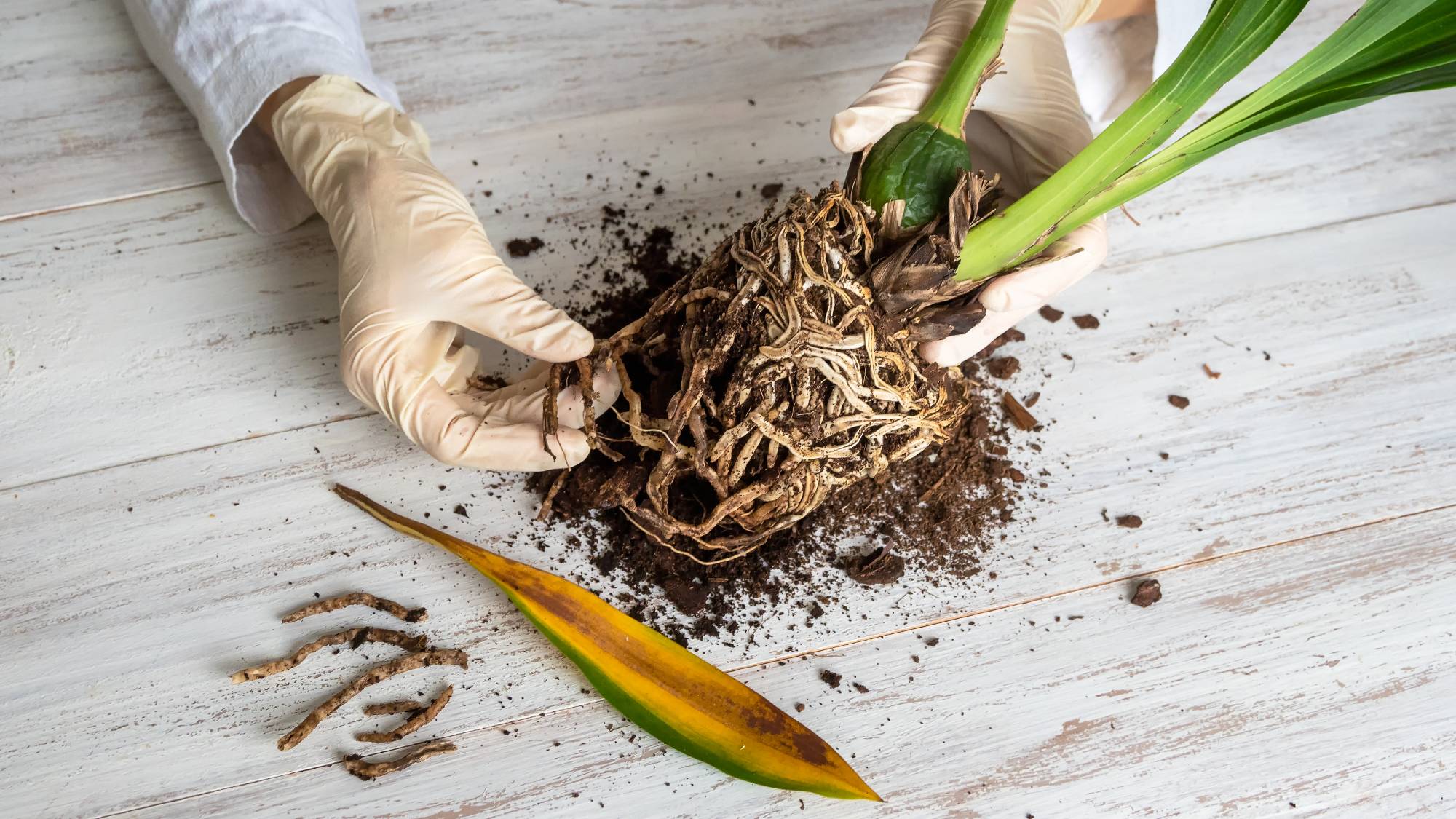
Roots need oxygen just as much as they need water.
When potting mix stays saturated for days or weeks, the air pockets that normally exist between soil particles fill with water, and the roots can no longer get the oxygen they need to function.
That oxygen shortage can contribute to root decay, and a root system that is breaking down cannot move water and nutrients up into the plant normally.
The result is a confusing picture: the plant wilts, the leaves yellow or darken at the edges, and some foliage may collapse or turn black, all while the soil is soaking wet.
University of Florida’s plant health diagnosticians note that these symptoms overlap significantly with other stresses, so wet soil plus those signs together is more informative than any one symptom by itself.
The phrase “root rot” describes a condition rather than a single confirmed disease.
Prolonged saturation can physically suffocate and kill roots on its own.
Organisms such as Pythium or Phytophthora may also contribute to decay when conditions favor them.
UMass Amherst research on Spathiphyllum identifies Phytophthora crown rot as a problem favored by excess moisture and excess nitrogen, though a home gardener cannot confirm a specific pathogen without a diagnostic lab.
What you can do at home is treat the condition: correct the drainage, reduce saturation, and inspect the roots.
Naming the exact organism matters less than stopping the wet conditions that allow decay to continue.
UF/IFAS cultural guidelines for Spathiphyllum emphasize that well-drained media and appropriate irrigation timing are the foundation of root health for this plant.
Inspect Roots Before You Decide What to Cut
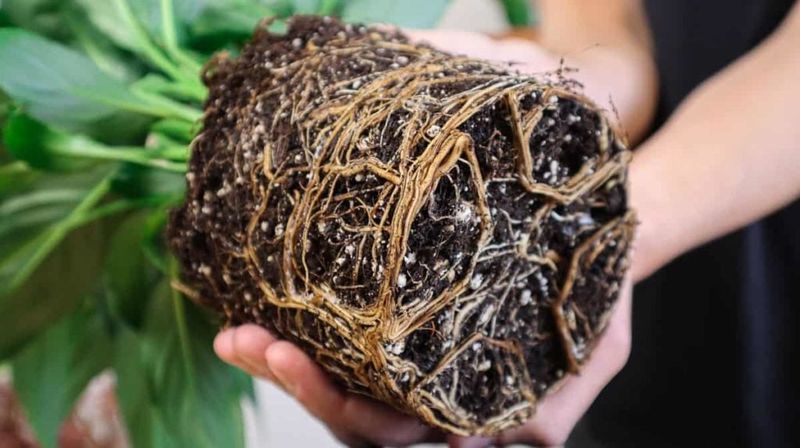
Slide the plant out of its container when blackening is progressing, the plant is wilting despite wet soil, or the mix smells sour.
Tipping the pot sideways and supporting the base of the plant usually works without too much force.
Once the root ball is out, you can actually see what you are dealing with instead of guessing.
Healthy roots are firm, light-colored, and hold their shape when you touch them.
Damaged roots feel soft or mushy, may collapse between your fingers, and are often brown or black.
A root ball with mostly firm, light roots is an encouraging sign.
A root ball that is mostly dark and mushy raises real concern, because recovery depends on how much healthy root tissue remains.
University of Florida plant health guidance recommends trimming clearly dead roots before repotting.
Use clean, sharp scissors and cut back to tissue that looks and feels healthy.
Iowa State University Extension recommends 70 percent isopropyl alcohol as a practical tool-sanitation option, which is worth doing between cuts when you suspect disease rather than simple waterlogging.
Repot into fresh, porous potting mix in a container with drainage holes.
Choose a pot only slightly larger than the remaining root system, because excess soil around small roots tends to stay wet longer.
Remove leaves that are mostly black, mushy, or collapsing entirely.
Pruning alone will not stop new damage, and University of Connecticut Extension is clear that correcting the root zone is necessary alongside any cosmetic cleanup.
Trimming a black leaf while the roots remain saturated is like patching a screen door on a flooding house: the appearance improves, but the real problem continues.
Dry Tips, Chilling, and Spots Need Different Fixes
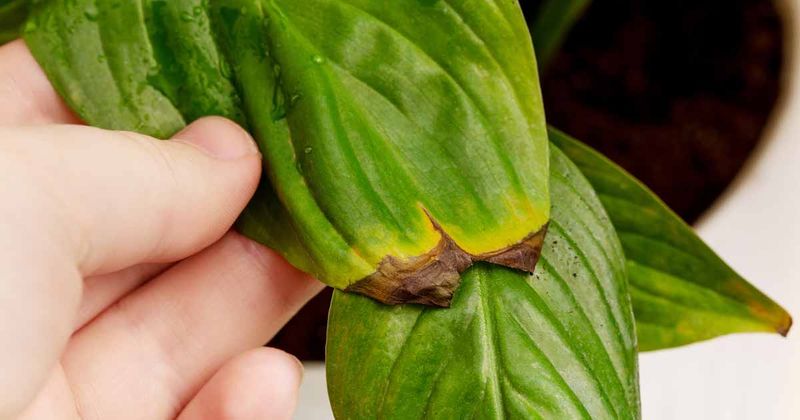
Blackening that starts at the leaf tips and creeps inward along the edges tells a different story than soft, collapsing tissue with wet soil.
Dry, crispy brown or black tips and margins can result from underwatering, low humidity, direct sunlight scorching the leaf surface, excess fertilizer salts, fluoride sensitivity, or chilling injury.
UF/IFAS cultural guidelines for Spathiphyllum list several of these as distinct problems with distinct causes.
Tip damage does not prove the plant needs more water.
Pouring on more water when salt buildup or fluoride is the cause will push more minerals through the root zone and worsen the injury.
Look for white crust on the soil surface or around the drainage hole as a clue that salts or mineral deposits may be involved.
Check whether the plant is near a heating vent, a cold drafty window, or a spot where afternoon sun hits the leaves directly.
Scattered dark spots across the leaf blade are a separate category.
University of Florida plant diagnosticians note that bacterial leaf spots tend to appear dark, wet, and angular, often stopping at major leaf veins.
Fungal spots are more often discrete brown or black circles that are not confined by veins.
Both patterns differ from tip-and-margin injury and from the soft, spreading blackness linked to root problems.
Trim dry, damaged tissue with clean scissors if the appearance bothers you, but understand that trimming is cosmetic.
The underlying condition, whether it is low humidity, a cold windowsill, or fluoride or salt sensitivity as documented in University of Illinois Extension records, must be corrected or the damage will continue on new growth.
Do not name a disease without enough evidence to support it.
A Wipeable Black Film May Mean Sooty Mold
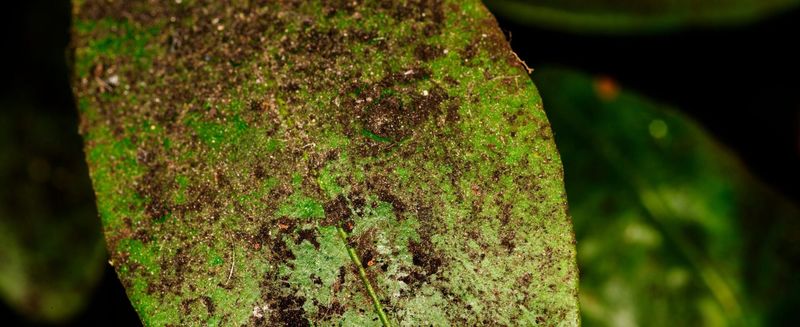
Run a damp cloth across the darkened area before assuming the leaf tissue is dead.
If the black material smears onto the cloth and the green leaf surface appears underneath, you are likely looking at sooty mold rather than dead plant cells.
That distinction changes everything about how you respond.
Sooty mold is a fungal coating that grows on sticky honeydew left behind by sap-feeding insects.
University of Illinois Extension explains that the mold does not infect living leaf tissue.
It feeds on the honeydew, not the plant, which means the leaf underneath can still be healthy.
A heavy coating may block enough light to stress the plant over time, but the mold itself is a symptom of an insect problem, not a disease attacking the peace lily directly.
Inspect the undersides of leaves, the stems, and the joints where leaves meet the stem.
Look for tiny insects, sticky residue, or the waxy white clusters that signal mealybugs.
Aphids, scale, mealybugs, and whiteflies all produce honeydew.
University of Maryland Extension guidance on honeydew and sooty mold confirms that controlling the pest is the primary fix, not treating the mold itself.
A wipeable black film may indicate a pest-linked problem, but finding the film alone does not prove pests are present.
Complete the inspection before drawing conclusions.
Once you confirm insects, address them with the appropriate control for that pest.
Then gently clean the leaves with a damp cloth to remove the mold.
Fungicide is not the right first response here, because the mold will return as long as the insects and their honeydew remain.
Reset Watering, Light, Temperature, and Minerals
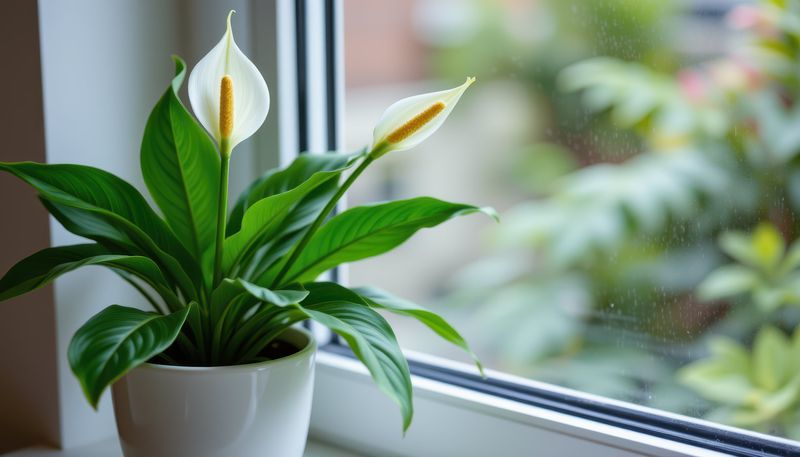
Once you have identified what went wrong, the next move is building a care routine that prevents the same problem from returning.
Think of it as resetting the plant’s environment rather than just fixing one mistake.
Bright, indirect light is the right target.
A spot near a window where the sun does not land directly on the leaves works well for most homes.
Very low light slows the soil’s drying time and weakens the plant’s ability to recover, while direct sun can scorch foliage and cause tip browning.
NC State Extension’s plant profile for Spathiphyllum recommends keeping the mix evenly moist without letting it stay saturated, and notes that water needs shift with pot size, light level, temperature, and the season.
Temperature matters more than many people realize.
UF/IFAS cultural guidelines place preferred daytime temperatures near 68 to 85 degrees Fahrenheit, with chilling injury becoming more likely during prolonged exposure below about 45 to 55 degrees, depending on the cultivar and how long the exposure lasts.
Keep the plant away from cold exterior windows, drafty doors, and heating vents that blast dry air.
If white crust appears on the soil or pot rim, or if tip damage keeps returning despite good watering habits, salt or fluoride buildup may be the issue.
University of Illinois Extension records on peace lily black leaves point to fluoride sensitivity and fertilizer salts as documented causes of tip necrosis.
Leaching the pot by running clean water slowly through the soil until it drains freely from the bottom may reduce salt concentration.
Softened water can add sodium or potassium salts, so University of Missouri IPM guidance on houseplant problems suggests considering your water source when tip damage persists.
Fertilize lightly.
NC State recommends one-quarter-strength fertilizer and flushing the soil between applications.
Heavy feeding at greenhouse production rates is one of the faster ways to burn roots and cause the same tip damage you are trying to prevent.
Judge Recovery by New Growth, Not Old Leaves
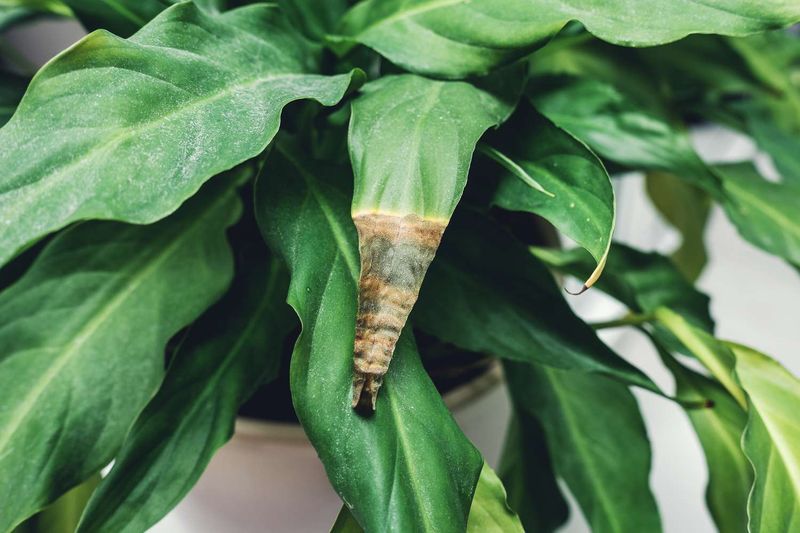
Necrotic tissue does not turn green again.
A leaf that has gone black will stay that way, so watching the old damaged leaves for signs of improvement will mislead you every time.
The real signal of recovery is what the plant does next.
Look for new leaves unfurling from the center of the plant.
Fresh growth that comes in healthy and green, without new blackening at the tips or base, tells you the root zone and growing conditions have stabilized.
University of Florida plant health guidance supports this: recovery from root damage depends on the crown and the amount of healthy root tissue that remained after the problem developed.
There are no guarantees, but a plant that still has a firm, intact crown and some firm roots has a real chance.
Keep a simple follow-up routine.
Check soil moisture by feel before every watering rather than following a fixed weekly schedule.
Watch for renewed sogginess, a returning sour smell, or soft new tissue, which would mean the root zone needs another look.
NC State Extension notes that peace lilies contain insoluble calcium oxalate crystals and should be placed out of reach of children and pets that chew on plants, so keep that placement consideration in mind as you choose a recovery spot.
If pests or a possible contagious leaf disease remain on your list of suspects, keeping the plant away from your other houseplants is a reasonable precaution while you monitor it.
That separation is not a documented requirement, just common sense when the diagnosis is still open.
A peace lily that stops producing new damage and pushes out a clean green leaf is telling you, quietly, that it is going to be fine.