
The Meaning Behind Seeing Cardinals Near Your North Carolina Porch Goes Deeper Than Most People Think
Follow us on Google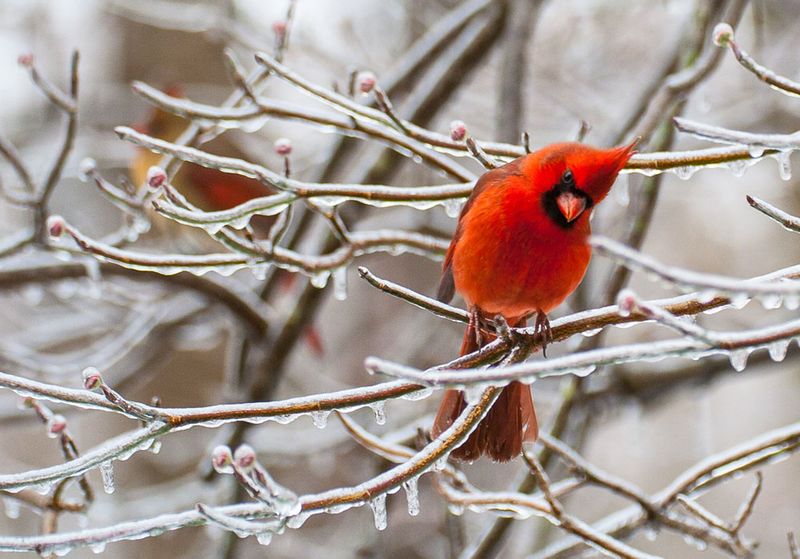
You settle into your porch chair on a quiet Tuesday morning, coffee still steaming, and a flash of red lands in the holly bush three feet away.
That cardinal holds perfectly still, looks your direction, and something in your chest shifts.
North Carolina homeowners ask about this moment more than almost any other backyard encounter, and the answer turns out to be richer than a simple yes or no. The bird has a real, explainable reason for being there, and the meaning you feel is genuinely yours to keep.
The Red Bird Is Usually a Northern Cardinal
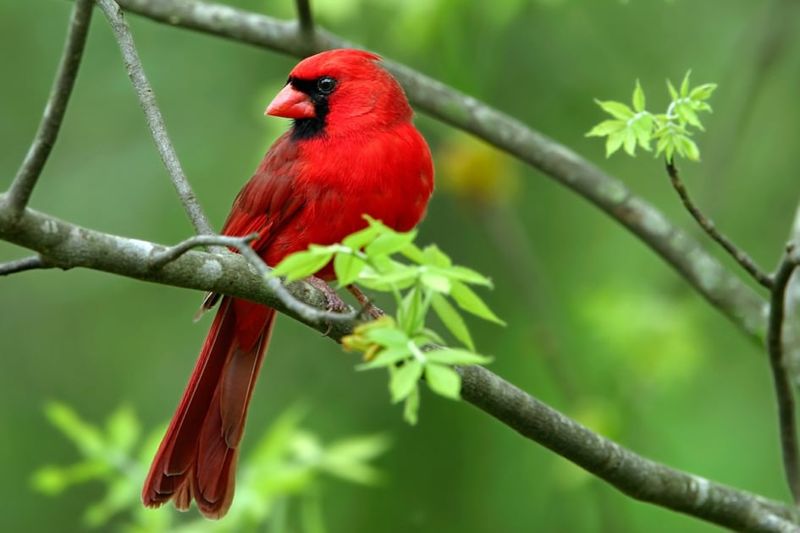
That bold red visitor near your porch is almost certainly a Northern Cardinal, Cardinalis cardinalis, though color alone is not a guaranteed ID.
North Carolina is also home to house finches and purple finches, both of which carry reddish tones, so look for the cardinal’s distinctive crest, thick orange-red bill, and stocky build before assuming.
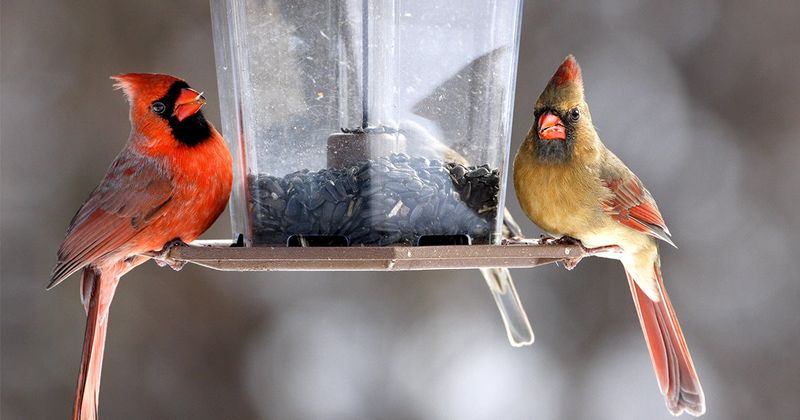
A male in full plumage is unmistakably red with a black mask, while the female is warm brown with reddish accents on her crest, wings, and tail, and she is just as much a cardinal as her partner.
What makes cardinals so familiar to North Carolina homeowners is simple: they never leave.
NC State Extension identifies Northern Cardinals as year-round resident birds that thrive in shrubby edges, woodland borders, and residential yards across the state.
They do not migrate south for winter or disappear in the heat of a Piedmont August.
The same pair you see in February may well be the same birds working your yard in July.
A porch that sits near dense shrubs, a hedgerow, a holly, or a feeder is simply a good address from a cardinal’s point of view.
The bird is not choosing your porch over a neighbor’s yard because of a personal connection to you.
It is choosing a spot that offers what it needs, and your yard happens to provide that.
That ecological reality does not shrink the moment one bit.
It just explains why the moment keeps happening, and why it will probably happen again tomorrow morning if the conditions stay the same.
Why Does the Same Porch Keep Seeing Cardinals?
Repeated cardinal visits to one porch are not random, and they are not mystical.
Cardinals are highly territorial birds, and once a male claims a yard as part of his range, he will defend and return to it consistently through the breeding season and beyond.
Audubon’s field guide notes that cardinals use dense shrubs and woodland edges as their core habitat, which describes the average North Carolina residential yard almost perfectly.
If your porch is within sight of a shrub border, a stand of hollies, or a brushy fence line, you have probably set up a territory anchor without meaning to.
Food is the other big driver.
Cardinals forage on the ground and in low vegetation, picking through leaf litter and low branches for seeds, berries, buds, and insects.
NC State Extension’s songbird guide confirms that nestling cardinals are fed mostly insects, so a yard with insect-supporting plants actually matters more during nesting season than a feeder does.
A reliable water source adds another reason to keep coming back, especially during dry Piedmont summers when standing water gets scarce.
Seeing two cardinals together near your porch adds another layer of ordinary explanation.
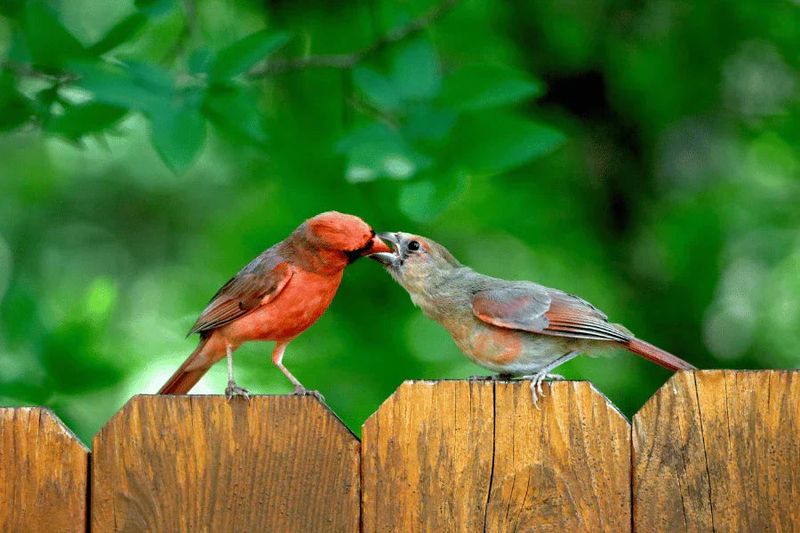
Cornell Lab’s reporting on bird courtship describes how male cardinals may feed females during courtship, a behavior called mate feeding that looks almost tender.
A pair working the same feeder or shrub line may be courting, co-defending a territory, or simply using the same reliable food source.
That is genuinely interesting bird behavior, even if it does not carry a message addressed to anyone on the porch.
The Meaning Belongs to the Observer
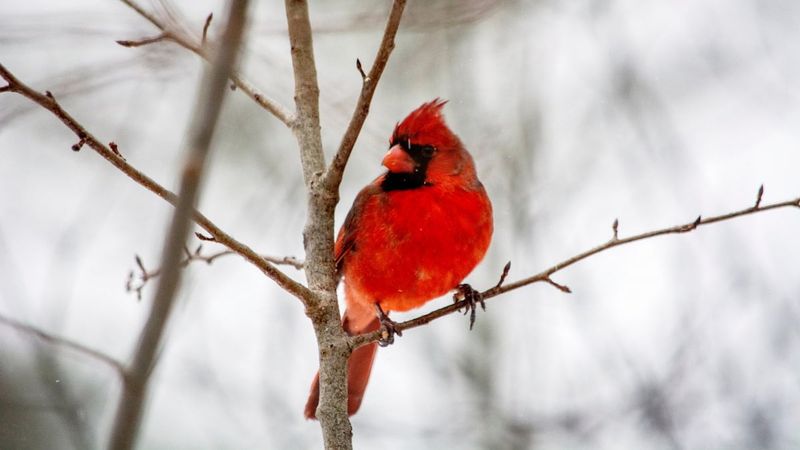
Plenty of North Carolina families have a story about a cardinal appearing right after a loss.
The bird shows up on the porch the morning after a funeral, or lands on the fence on what would have been a grandmother’s birthday, and the moment lands hard.
That experience is real, and the comfort it brings is real.
What it draws on is a documented piece of American folklore, not a verified biological fact about what cardinals do or where the dead go.
The USC Digital Folklore Archives records the belief that a cardinal represents a visiting loved one as a family tradition passed through generations, not as a universally shared religious doctrine or a finding from wildlife science.
It is a cultural interpretation, and it belongs to the people who hold it.
Acknowledging that it is folklore does not make it less meaningful.
It just means you are not required to believe it literally in order to feel what you feel when the bird appears.
Grief researchers have noted that some mourners report a sense of the deceased person’s presence, often described as comforting.
Writing in Psychology Today on after-death communications describes these experiences as meaningful for the people who have them, without claiming the experiences are caused by a bird or any external event.
A separate Psychology Today piece on sensing a deceased person’s presence frames these moments as a normal part of how some people process loss.
The cardinal does not need to be a messenger for the moment to matter.
The meaning lives in you, not in the bird’s itinerary.
What the Cardinal at Your Window Is Actually Doing
Here is where it gets tricky.
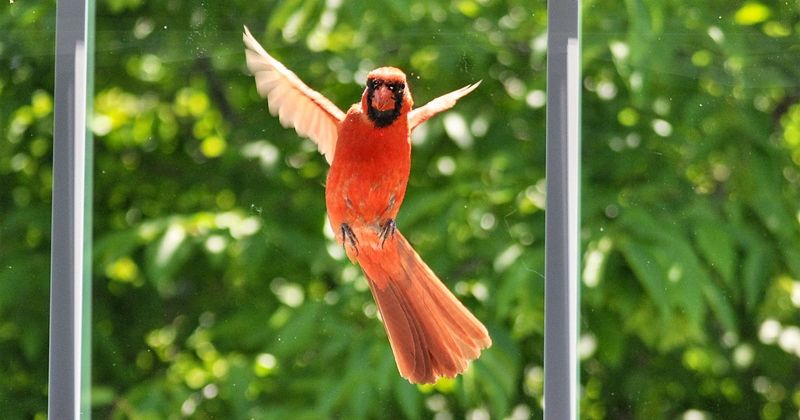
A cardinal tapping or throwing itself at a window is not trying to reach you, warn you, or deliver any kind of message.
Both male and female cardinals will attack their own reflection in glass, particularly from late winter through early summer when territory defense is at its peak.
Cornell Lab’s All About Birds profile for the Northern Cardinal confirms that this reflection-fighting behavior is territorial aggression, plain and simple.
The bird sees a rival that will not back down, because the rival is itself.
The behavior can go on for days or even weeks, and it is genuinely exhausting for the bird even if it looks almost comical from inside the house.
A cardinal spending energy fighting a window is a cardinal not eating, resting, or raising young.
That matters, especially in the heat of a Carolina spring when nesting is underway.
Fixing the problem means making the glass visible from the outside.
Fish and Wildlife Service identifies window glass as a major threat to birds and recommends exterior screens, tested window collision tape or decals placed no more than 2 inches apart, and films that reflect ultraviolet light as effective treatments.
Moving a nearby feeder or covering the outside of the glass with a sheer curtain or netting can also break the reflection.
Interior window stickers placed on the inside of the glass rarely work because the bird is responding to the exterior reflection, not to what it can see through the pane.
A Cardinal-Friendly Yard Starts With Cover
Food in a feeder brings cardinals in for a few minutes.
Dense cover keeps them in the neighborhood all year.
If you want cardinals reliably near your porch, the most durable thing you can do is give them somewhere to hide, roost, and raise young within a short flight of where you sit.
That means shrubs with real structure, not a single ornamental planted in a mulch ring.
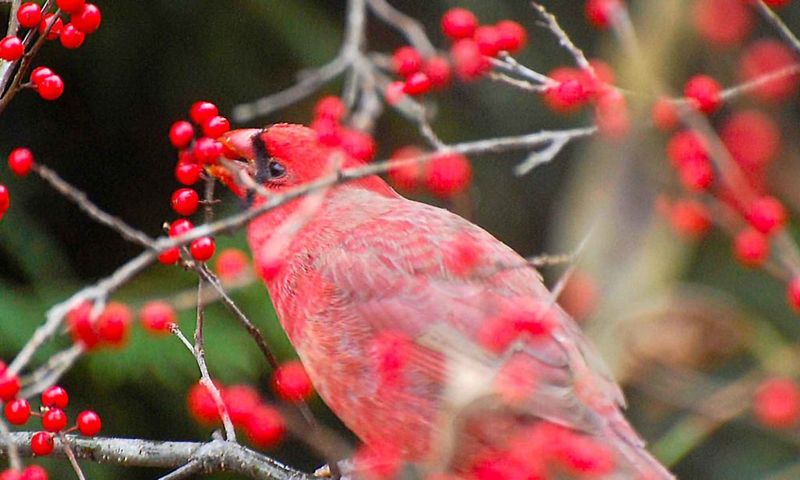
NC State Extension’s landscaping-for-wildlife guide points to native plants as the most efficient way to support multiple bird needs at once, since they provide fruit, seeds, insects, and nesting sites that non-native ornamentals often cannot match.
Options worth considering, depending on your region and site conditions, include American beautyberry (Callicarpa americanaIlex verticillataIlex opacaMorella ceriferaAmelanchierSambucus canadensisCornus florida), native viburnums, winterberry holly (), American holly (), wax myrtle (), serviceberry ( spp.), elderberry (), blackberry, flowering dogwood (), and native grasses or forbs.
A Piedmont yard in red clay and a Coastal Plain yard in sandy soil will not support the same plant list, so check with NC State Extension’s native plant handbook for what suits your specific conditions before you plant.
Insects matter as much as fruit and seeds, especially during nesting season.
NC State’s songbird resource notes that nestling cardinals eat mostly insects, so plants that host caterpillars and other invertebrates feed the whole family.
Leaving a small section of leaf litter under shrubs, letting some seedheads stand through winter, and skipping the fall blitz on every corner of the yard can make a real difference.
Audubon recommends that even a modest brushy border or less-manicured shrub edge near a fence line can serve as usable habitat while the rest of the yard stays tidy enough for kids, pets, and porch evenings.
Feeders Help Only When You Manage Them
A feeder is not automatically a gift to cardinals.
An unmanaged feeder can spread disease faster than an empty yard would, and seed that sits wet in a tray through a muggy Carolina afternoon is not doing any bird a favor.
Getting this right takes about 20 minutes a month, and it matters more than the brand of seed you buy.
For seed, black-oil sunflower is the most reliable choice for cardinals.
NC State Extension also lists safflower and white millet as suitable options.
Cardinals have larger bills and bodies than many small feeder birds, so a hopper feeder or a covered platform feeder with a wide tray gives them room to land and eat without crowding.
Tube feeders with small perches are harder for them to use comfortably.
Cleaning is non-negotiable.
Archived CDC guidance from a 2021 Salmonella outbreak linked to bird feeders recommends scrubbing feeders with warm soapy water, rinsing thoroughly, soaking for at least 10 minutes in a solution of 1 part bleach to 9 parts water, rinsing again, and letting the feeder dry completely before refilling.
Do this at least once a month, more often if the feeder stays damp or gets visibly dirty.
Always clean feeders outdoors and away from kitchen sinks or food-prep areas.
Research published in Emerging Infectious Diseases has documented how contaminated feeders can spread Salmonella among songbirds.
If you find sick or dead birds near your feeder, take it down along with any birdbaths, keep pets away from the area, avoid handling birds with bare hands, and clean all equipment outdoors.
That archived CDC guidance recommended removing feeders for two weeks specifically in the context of that 2021 Salmonella outbreak.
It is not a universal rule for every situation.
Follow current guidance from North Carolina Wildlife Resources Commission or your local public health authority for whatever is actually happening in your yard.
Placement is its own problem.
Cornell Lab recommends placing feeders either within 3 feet of a window or more than 30 feet away to reduce collision risk.
Fish and Wildlife Service warns that the 15-to-30-foot range is the most hazardous zone because birds build enough speed to cause serious injury when they strike glass at that distance.
If your feeder sits in that range, move it closer to the house or farther into the yard, and treat nearby windows with exterior screens or tested collision markers spaced no more than 2 inches apart.
Let the Visit Mean Something Without Making It a Prediction
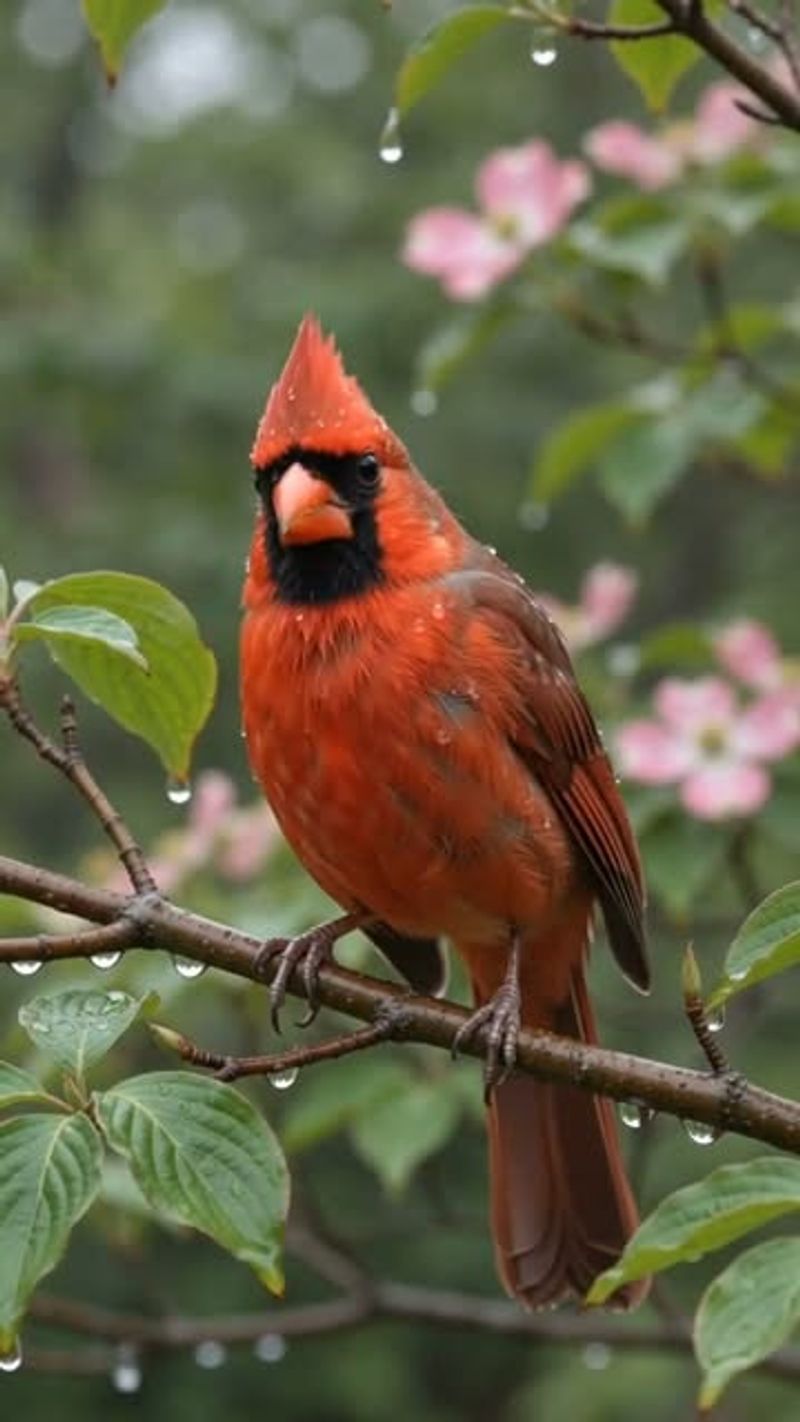
Next time a cardinal lands near your porch, spend 30 seconds actually watching it.
Notice whether it goes straight to a feeder, drops into the leaf litter under a shrub, or perches in the same holly branch it used yesterday.
That pattern tells you what your yard is providing, and knowing that gives you something real to work with.
NC State Extension’s urban habitat guide frames the goal simply: food, water, and cover.
If one of those is missing or poorly placed, that is the one thing worth improving.
You do not need to overhaul the yard.
Add a dense shrub near the porch, move a feeder inside the 3-foot window zone, or leave the leaves under one corner shrub alone this fall.
One change, done well, beats five half-measures.
The folklore that connects cardinals to loved ones who have passed has been carried through families for generations because it helps people feel less alone in hard moments.
That is worth something.
And as psychology researchers have noted, the experience of sensing a person’s presence after loss is a meaningful part of how many people grieve, not a sign that something is wrong.
You can hold both things at once: the bird is here because your yard is good habitat, and the moment matters because you are paying attention.
The cardinal does not need to be a miracle to be worth watching.