
A Front Porch You Actually Sit On Turns An Ordinary Evening Into The Best Part Of Your Day
Follow us on Google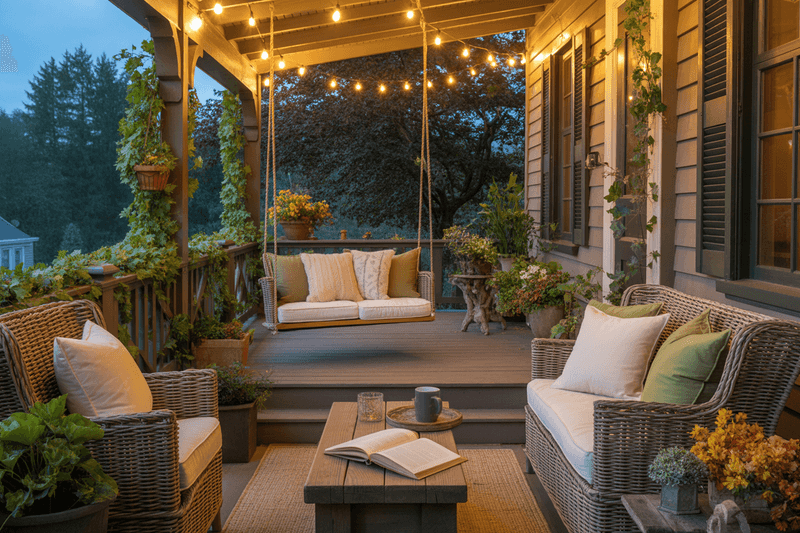
Most front porches collect delivery boxes and dead leaves instead of people.
A few small setup choices can change that, turning an overlooked slab of concrete or wood into the place you actually want to be when the day winds down.
The goal is not a magazine-worthy transformation but a porch that removes the small annoyances that send you back inside after five minutes.
A Porch Works When It Removes Small Frictions
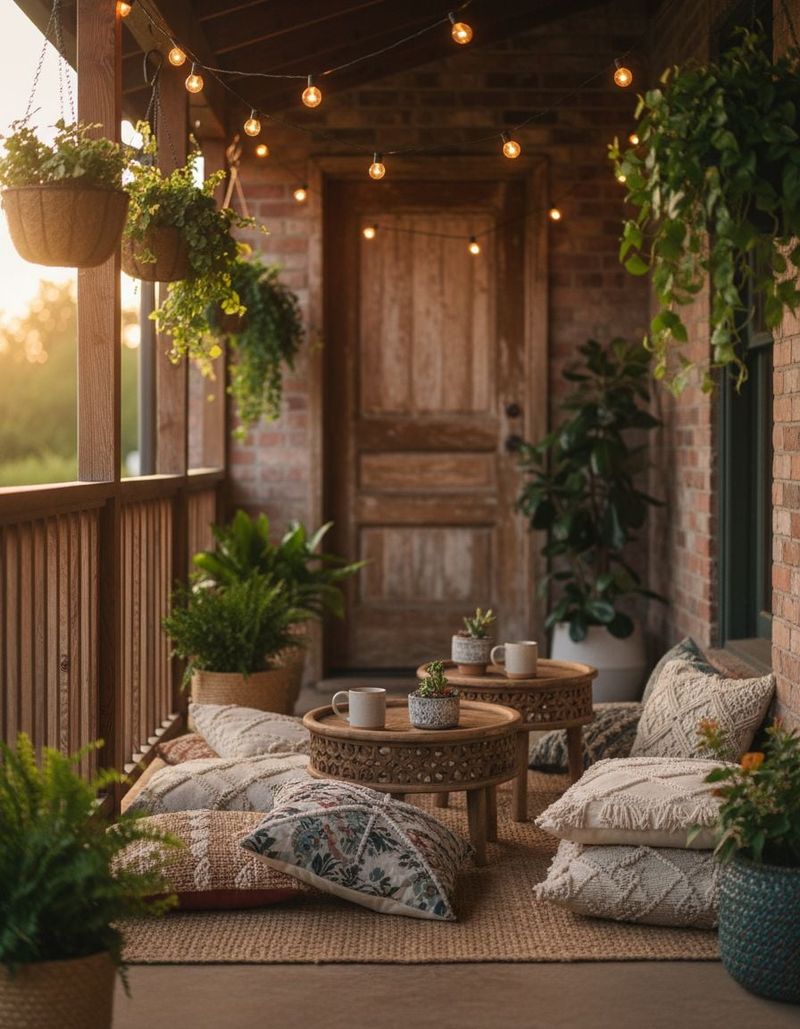
Somewhere between the end of dinner and the start of screen time, there is a window when going outside feels possible.
Whether you actually use it often comes down to how much the porch asks of you before you can relax.
A chair that wobbles, glare that makes you squint, mosquitoes that arrive in the first two minutes, and no place to set a drink are four separate reasons to go back inside, and most porches offer all four.
Research on green-space exposure gives some context here.
A systematic review of greenspace and mental well-being and a review of randomized trials on restorative effects from nature contact both associate time spent near green space with psychological restoration and improved well-being.
But the evidence is largely observational and does not test a specific porch, furniture arrangement, or evening routine.
What it does suggest is that access matters: if getting outside is easy and comfortable, you are more likely to do it.
The practical framework for the rest of this article follows from that.
Shade addresses glare and heat during the hours you actually sit outside.
A comfortable chair and a stable table within arm’s reach keep you from fidgeting.
Clear access means no tripping over cords or squeezing past stacked furniture.
Layered mosquito control, quiet lighting, and a plant or two that you can realistically maintain round out the setup.
None of these changes promises a particular mood, and an integrative review of nature exposure and positive mental health is careful to note that study designs and outcomes vary widely.
What the changes do is reduce the small frictions that cut a porch evening short before it begins.
Put The Main Seat In The Shade You Actually Use
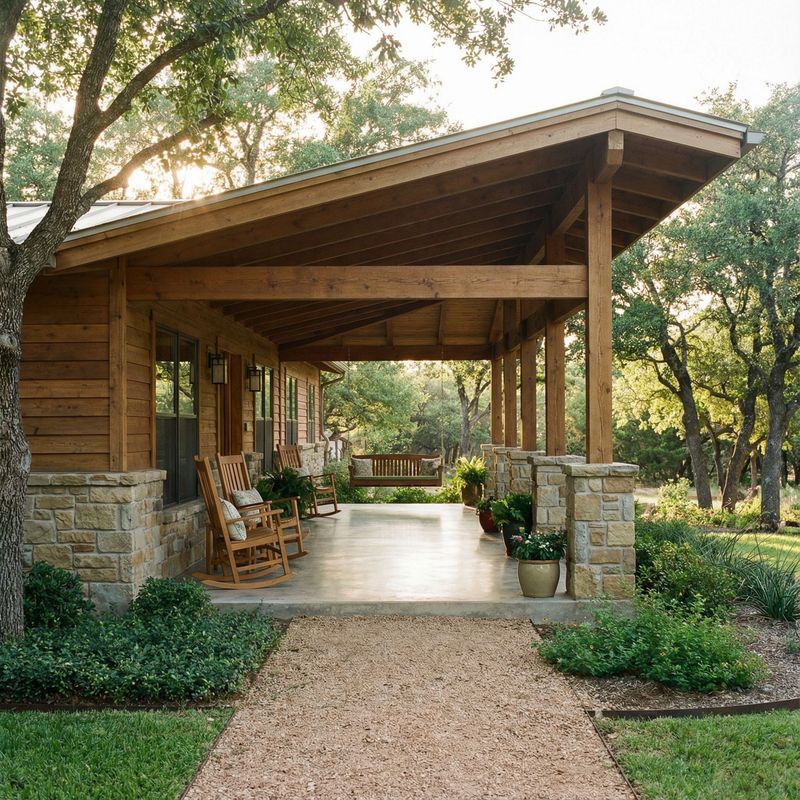
Shade is the first decision, not the last decoration.
Direct sun on an unshielded porch can make the space feel punishing during the hours most people want to use it, typically mid-afternoon through early evening in summer.
Before you move a single chair, spend a few minutes on the porch at 5 or 6 p.m. on a warm day and notice exactly where the sun lands.
A field study on shade and outdoor thermal comfort found that building shade and pergola shade substantially improved comfort compared with direct sun in a humid subtropical climate.
That specific setting matters: the exact temperature differences in that study do not translate directly to a dry Arizona afternoon or a breezy Maine evening.
But the underlying point holds across climates.
Direct solar exposure can make an otherwise attractive seating area genuinely uncomfortable, and removing it is the single highest-return change you can make.
Your options depend on what the porch already offers.
A deep roof overhang may do the job on its own if your chair is positioned far enough back.
A freestanding umbrella or a shade sail can fill gaps where the roof is shallow.
Mature trees to the west block low-angle evening sun in the Northeast and Midwest.
In the South and Southwest, afternoon shade is the priority, and you may need to schedule porch time for earlier in the day during peak summer heat.
CDC guidance on extreme heat recommends shade, hydration, breaks, and moving outdoor activity to cooler parts of the day when heat risk is high.
When conditions cross into dangerous territory, the right call is indoor cooling, not a better umbrella.
Think of shade as a comfort improvement for ordinary warm evenings, not a safety guarantee for every condition.
Let One Chair And One Table Do The Work
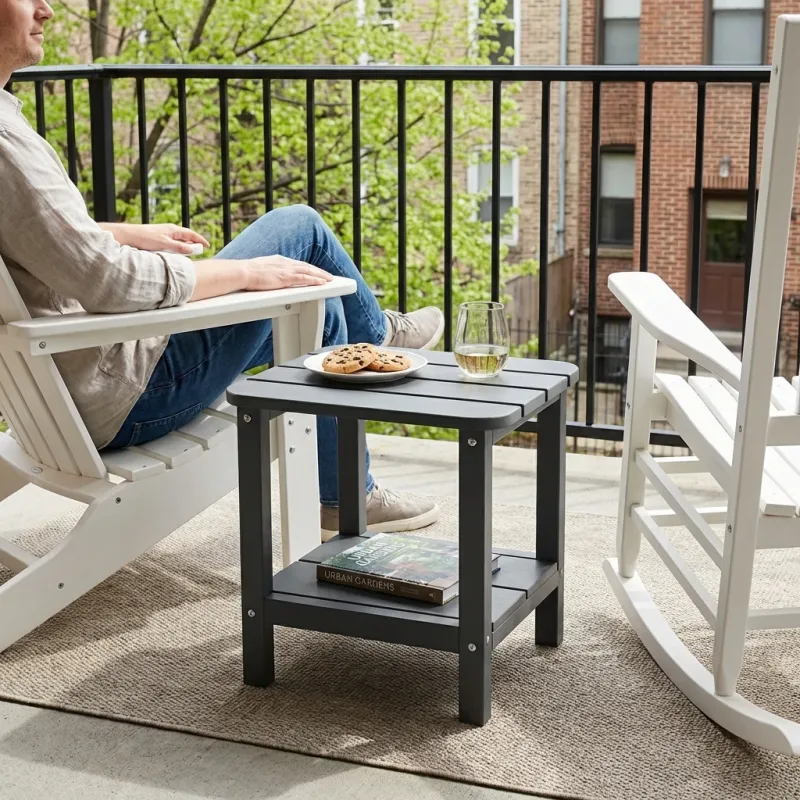
Clutter is the quiet enemy of porch time.
When the space is full of unused furniture, tangled extension cords, and stacked seasonal items, settling in feels like a project rather than a pause.
Start with one chair that is genuinely comfortable for the amount of time you want to spend outside, meaning it supports your back, has armrests at a usable height, and holds up in your local weather.
A stable side table within arm’s reach changes how long you stay.
When your water glass, phone, or book has a place to land, you stop standing up to retrieve things.
That small convenience is not a tested formula for longer outdoor stays, but it reflects the same logic behind Department of Energy landscaping guidance on designing outdoor spaces that people actually use: reduce the small barriers and the space becomes more inviting.
Keep the table low enough to reach from a seated position and heavy enough that it does not tip in a breeze.
A clear walking path matters more than it sounds.
Extension cords across doorways, chairs angled to block the steps, and bags stacked near the threshold all create a moment of friction that can tip a tired person toward staying inside.
Route any outdoor lighting cords along the wall or railing, not across foot traffic areas.
The social dimension of a front porch is real but unpredictable.
Some porches face quiet side streets and feel private; others face busy sidewalks and invite conversation.
Neighborhood layout, traffic, and local culture shape whether the space feels exposed or welcoming.
A well-arranged porch may make casual neighbor contact easier, but it does not manufacture community on its own.
Set it up for your own comfort first, and let the social dimension follow naturally.
Use Several Small Barriers Against Mosquitoes
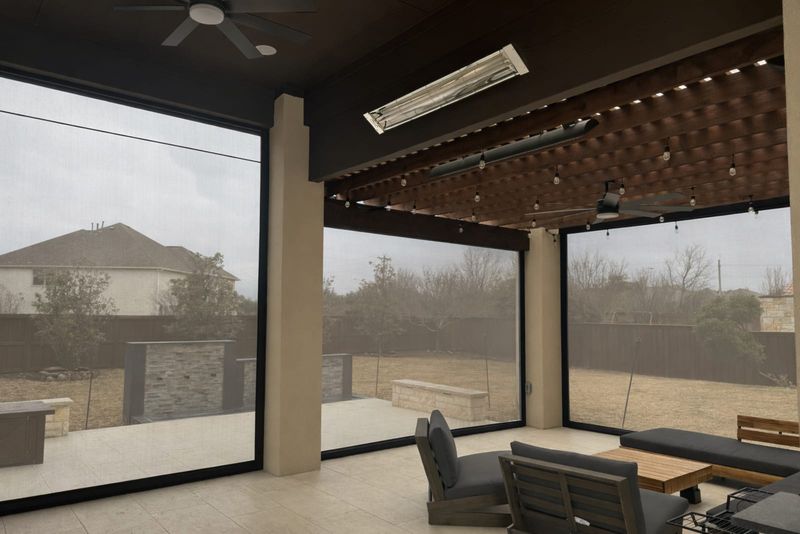
Mosquitoes do not ruin a porch evening all at once.
They do it one bite at a time, starting about ten minutes after you sit down, until going inside feels like the only reasonable option.
Treating that problem as a single-product fix is where most people go wrong.
Screens are the most reliable physical barrier available.
CDC guidance on mosquito bite prevention recommends installing or repairing window and door screens and keeping them tight enough to prevent entry.
A screened porch can reduce exposure meaningfully, though it does not guarantee a bite-free space if screens have gaps or if you spend time in the yard before sitting down.
A ceiling fan or portable fan adds a second layer.
Penn State Extension’s mosquito biology and control guidance notes that mosquitoes are repelled by high winds and that electric fans may help at outdoor gatherings.
The fan helps most when its airflow crosses the area where you are seated.
During extreme heat, remember that a fan is a comfort aid, not a substitute for shade, water, or moving indoors when conditions become dangerous.
Standing water near the porch deserves a weekly walk-around.
CDC’s mosquito control at home page recommends emptying, scrubbing, turning over, covering, or discarding items that hold water at least once a week.
Saucers under containers, buckets, birdbaths, toys, and trash lids are common culprits.
Removing these reduces nearby breeding sites, but mosquitoes can still arrive from neighboring yards or green spaces, so standing-water control is one layer, not a complete solution.
Clothing, EPA-registered repellents, and local public-health advisories round out the approach.
Skip ultrasonic devices, vitamin B supplements, and plant-scent claims.
Penn State Extension reports that neither vitamin B nor ultrasonic devices have been shown to prevent mosquito bites, and CDC notes that the effectiveness of many non-registered natural repellents is unknown.
Choose Lighting That Guides Instead Of Glaring

A bare bulb at eye level on a dark porch does two things you do not want: it blinds you when you look toward the yard, and it draws insects toward the brightest point on the block.
Swapping it for a shielded, downward-facing fixture is a small change that makes the porch feel calmer and less like a floodlit parking lot.
DarkSky International’s home lighting assessment and its responsible outdoor lighting principles suggest fully shielded fixtures, downward direction, timers or motion sensors, and warm or amber-toned light.
As optional benchmarks for reducing glare and light spill, DarkSky recommends 2700K or lower where possible, pathway lighting at 300 lumens or less, and total output below 1,000 lumens when practical.
These are not validated thresholds for comfort, mental restoration, or mosquito control.
They are reasonable starting points for keeping light where you want it and out of your neighbors’ windows.
Warm-toned bulbs can make a porch feel more settled in the evening, but they do not replace screens, airflow, repellents, or standing-water control.
Light color alone does not solve a mosquito problem.
What thoughtful lighting does is keep the space usable after dark without creating the glare that sends you squinting back inside.
A motion-sensor fixture near the steps adds a practical safety benefit: you get light when you need it and darkness the rest of the time.
Timers work well for a single low-wattage wall sconce.
Keep fixtures pointed down and away from neighboring windows, and the porch becomes a place that feels like yours rather than a security spotlight.
Add Plants That Match The Porch And The Region

Plants earn their place on a porch when they connect the space to the yard and the season, not when they are pressed into service as mosquito repellents or air purifiers.
Lavender, citronella grass, mint, basil, and marigolds are often marketed with insect-repelling claims, but CDC notes that the effectiveness of many such natural repellents is unknown, and the scent of a potted plant sitting several feet away is not the same as a tested repellent applied to skin.
Choose plants for how they look and feel, not for promises they cannot keep.
The practical starting point is sun exposure.
Count the hours of direct sun your porch floor receives during the hours you use it, then choose containers that match that number.
A shady north-facing porch and a blazing south-facing one need completely different plants.
USDA Natural Resources Conservation Service guidance on yard and garden habitat lists regionally appropriate plants across the Pacific Northwest, Great Plains, Great Lakes, Northeast, Southeast, Southwest, and other areas, and it is clear that plant choices vary enormously by region.
Before calling any plant native, identify its actual native range.
A plant native to the mid-Atlantic states may be nonnative in California or the Pacific Northwest.
Your local Cooperative Extension office can suggest species appropriate for your specific county and conditions.
Container maintenance is real and worth planning for.
University of Minnesota Extension’s container watering guidance notes that outdoor containers may need watering at least daily, and sometimes more than once per day during hot, dry weather.
Mulch on top of the potting mix can slow evaporation and moderate root-zone temperatures.
Check saucers after every rain and after watering: standing water in a saucer is a mosquito breeding site, so tip it out or remove it entirely.
Two or three well-chosen containers that you can realistically maintain will serve the porch far better than a crowded collection that dries out and looks ragged by midsummer.
Build For Your Conditions Before You Add Heat
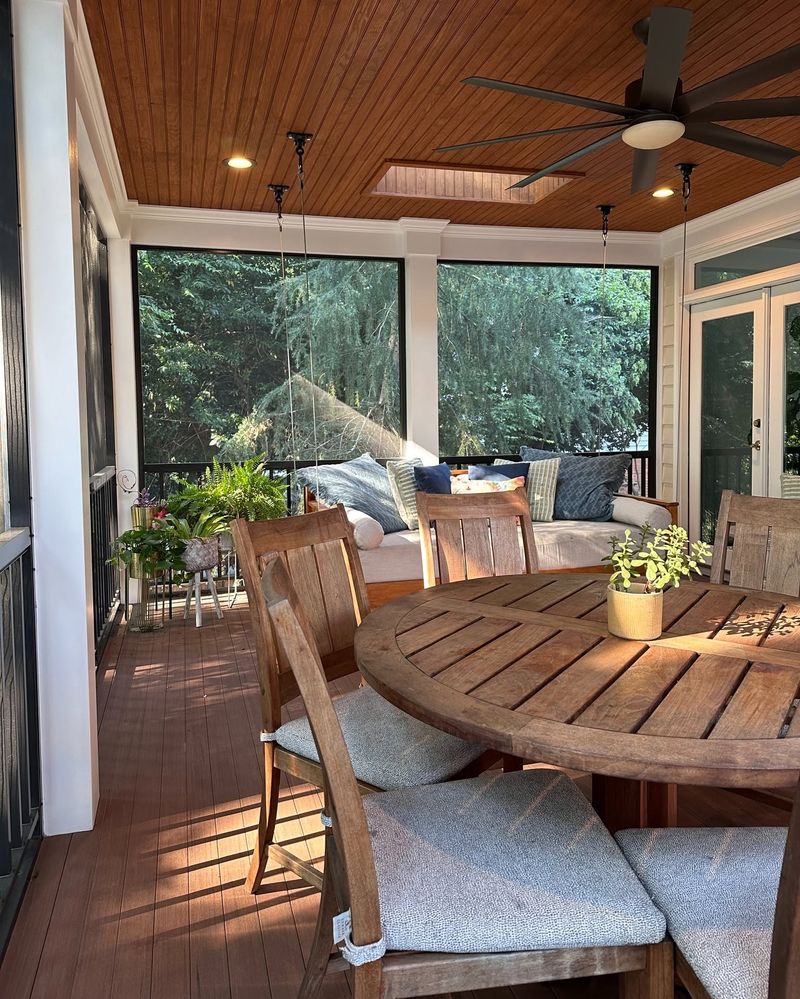
Running through the sequence once makes the whole setup feel less like a project.
Start with shade: position the main chair where it sits in shade during the hours you actually use the porch.
Add a stable side table within arm’s reach.
Clear the walking path and route any cords along the wall.
Repair or add screens before relying on repellents.
Position a fan so its airflow crosses where you sit, and use it as a comfort layer, not a replacement for shade or hydration.
Walk the yard weekly for water-holding containers: saucers, buckets, birdbaths, and anything that collects rain.
Install low, shielded, warm lighting.
Add only the number of containers you can water consistently.
During hot weather, keep water nearby, move outdoor time to cooler parts of the day when possible, and follow CDC heat safety guidance when temperatures become dangerous.
The porch is not worth a heat emergency.
Adapt every part of this to your actual conditions.
A porch in coastal South Carolina needs mildew-resistant materials and serious mosquito layering.
One in Albuquerque needs deep shade and heat-aware scheduling from June through August.
A porch in Vermont or Michigan may be most useful during a shorter warm window, roughly late May through September.
USDA hardiness zones describe winter cold tolerance, not summer heat, humidity, or rainfall.
For regional plant and material choices, your state’s Cooperative Extension service and USDA NRCS habitat guidance are more useful than a zone map alone.
If you want to extend the season into cool evenings, outdoor heaters are an option with serious safety requirements.
CPSC outdoor heater guidance and CPSC portable heater safety guidance are clear: keep portable heaters at least 3 feet from cushions, curtains, furniture, and plants; never use outdoor heaters or grills indoors; and follow the product manual for ventilation and clearance.
Do not power high-wattage heaters through extension cords or power strips, as CPSC extension cord guidance explains the fire risk plainly.
Treat outdoor heating as a separate decision with its own rules, not a casual addition to the porch setup.
A porch that earns regular use is one that asks little of you on an ordinary Tuesday.
The chair is already in the shade, the table is already there, the screens are already tight, and the light comes on without blinding you.
That kind of setup does not guarantee anything about your mood, but it removes the small reasons you would have talked yourself out of going outside in the first place.