
The Meaning Behind Seeing A Blue Jay Return To The Same Oak In Your Florida Yard
Follow us on Google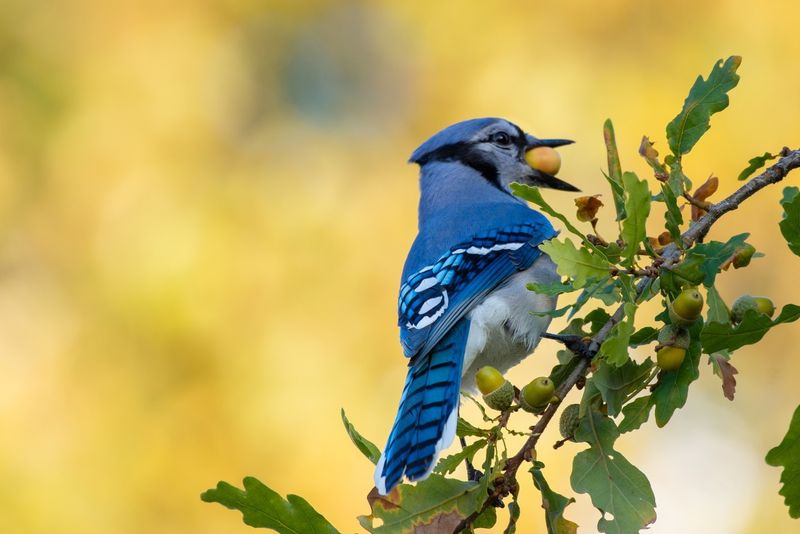
You step onto the back patio one morning, coffee in hand, and there it is again.
That same flash of blue against the bark of your oak, loud and unhurried, like it owns the place.
A Blue Jay keeps coming back to the same spot, and you want to know what that means for your yard.
The honest answer is more useful than any symbolic reading you might find online.
A Repeated Visit Usually Means Useful Habitat
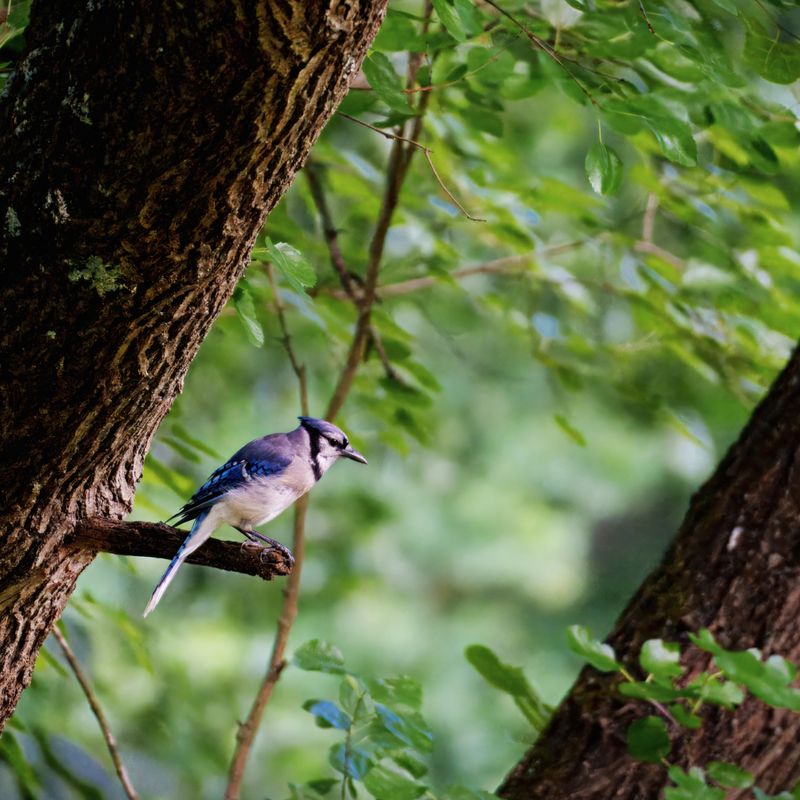
That jay is not delivering a message.
What it is doing, most likely, is using a spot that works.
Cornell Lab’s Blue Jay profile describes the species as especially common near oak trees, forest edges, and suburban yards, exactly the kind of place many Florida homeowners have created without realizing it.
Blue Jays move through landscapes with purpose.
They look for food, watch for predators, call to other jays, and pause in familiar spots between one task and the next.
Your oak branch may be doing any one of those jobs, or several at once on different visits.
The exact reason cannot be pinned down from watching a bird land and leave.
That uncertainty is actually the useful part.
A jay returning to one branch is telling you, in the only language it has, that something in that corner of your yard is worth coming back to.
Maybe it is an acorn supply.
Maybe it is a clear sightline.
Maybe the branch sits at just the right height between the canopy and the ground.
Whatever the draw, the pattern is a clue about habitat, not a promise or a symbol.
Think of it as a nudge to look more carefully at what your yard is already offering.
A healthy, well-placed oak in a Florida neighborhood can attract jays, squirrels, woodpeckers, and a long list of other wildlife, and the bird landing on your tree may simply be confirming that your oak has earned its place in the local landscape.
The Branch May Serve Several Plausible Purposes
Here is where it gets tricky.
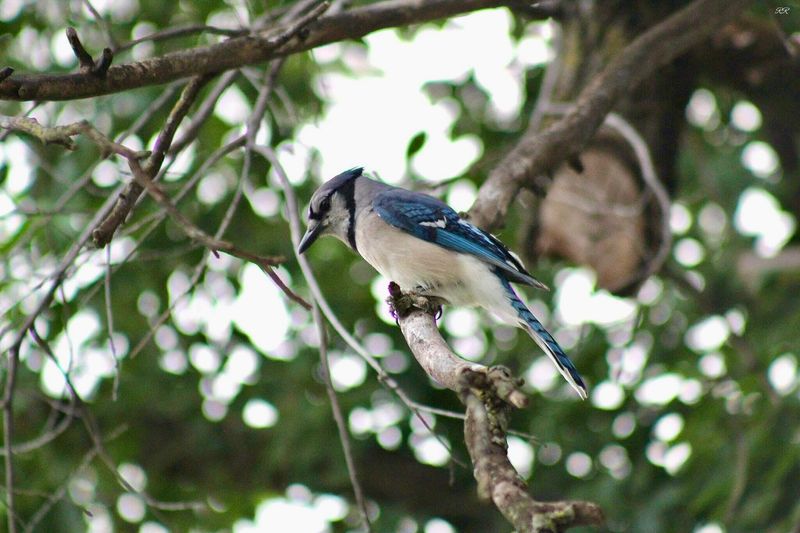
One branch can serve completely different functions on different days, and none of those functions can be confirmed just by watching the bird return.
A few plausible hypotheses worth considering: the jay may be cracking or holding food, using the branch as a stable surface the way a woodworker uses a bench.
It may be scanning the yard below for movement before dropping to the ground.
It may be calling, which Blue Jays do loudly and often, using an elevated spot to project sound.
Or it may simply be pausing between the tree and a nearby shrub, feeder, or patch of ground cover.
Blue Jays are omnivores that eat acorns, insects, seeds, grains, fruit, and occasionally small vertebrates, eggs, or nestlings.
So repeated visits to an oak do not automatically mean acorns are the draw.
The bird may be gleaning insects from the bark, watching a squirrel, or simply resting.
What you can do is watch more carefully over several visits.
Does the jay carry something in its bill?
Does it drop to the ground after a minute, or fly toward the back fence?
Does it call repeatedly before leaving?
Those observations can suggest possibilities.
They cannot tell you for certain what the branch is for, but they can help you notice which parts of your yard the bird actually uses, and that is genuinely useful information for anyone thinking about habitat improvements.
Inspect The Existing Oak Before Planting Another
Before you head to the nursery, spend ten minutes under the tree you already have.
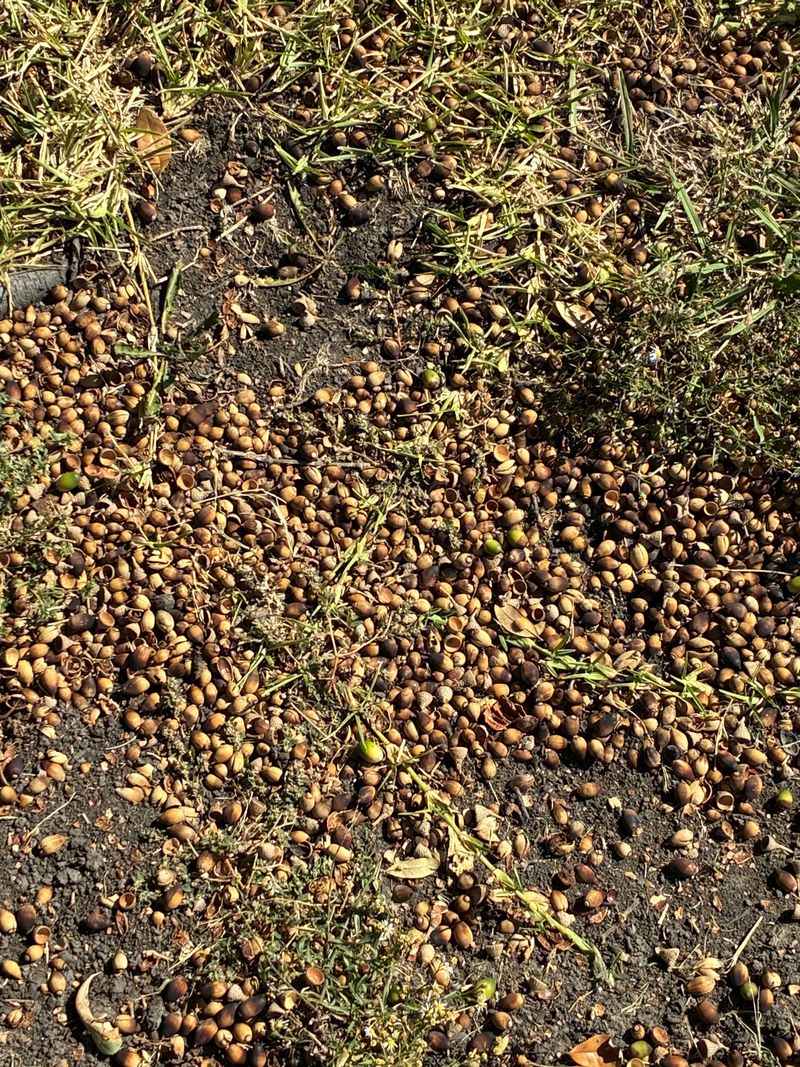
Look at the ground directly beneath the canopy.
Fresh acorn caps, fallen whole acorns, and chewed or hollowed shells are all signs that the tree is producing and that something is eating what it drops.
Check for insect activity too, small holes in bark, sawdust-like frass, or clusters of scale insects along the branches.
Squirrels, crows, turkeys, and other wildlife using the same tree are also worth noting.
A busy oak is usually a healthy one, and a healthy one is your most valuable habitat asset right now.
UF/IFAS identifies acorns as a critical food source for jays and many other Florida wildlife species, but acorn production is not a steady, predictable thing.
It varies by oak species, tree age, genetics, weather, soil quality, growing space, and whether the tree has faced insect pressure or disease.
One strong crop year does not guarantee a similar crop the following autumn.
Florida has many native oaks, and they do not all produce on the same schedule.
A live oak dropping acorns in late winter is doing something quite different from a water oak dropping in early fall.
If you are not sure what species you have, your county’s UF/IFAS Extension office can help with identification.
As for planting a second oak, UF/IFAS describes oak habitat improvement as a long-term investment, because many native oaks may not produce meaningful acorn crops until about 20 years of age.
Protecting and caring for the oak you already have will almost always deliver more immediate habitat value than buying a sapling today.
Choose Florida Oaks For The Site You Have
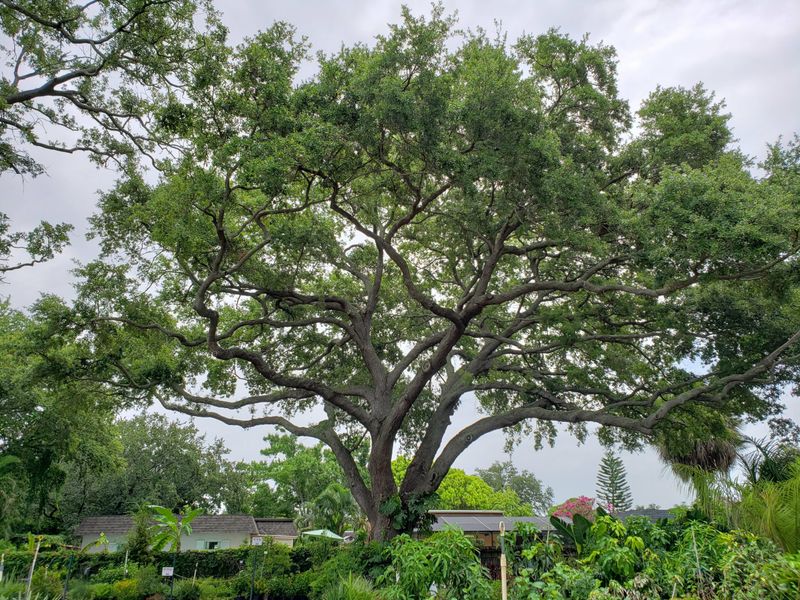
Not every oak belongs in every Florida yard, and getting the match wrong can create problems that outlast any bird visit.
The two most common scenarios worth knowing before you plant anything.
Live oak, Quercus virginiana, can reach 60 to 80 feet tall with a canopy spread of 60 to 120 feet.
That is a magnificent tree, and a genuinely useful wildlife tree, but it needs room.
Do not place a live oak near utility lines, light posts, curbs, sidewalks, or driveways.
A constrained site will eventually force you into the kind of aggressive pruning that weakens a tree’s structure and reduces its habitat value.
For smaller or drier sites in North and Central Florida, bluejack oak, Quercus incana, is adapted to sandy, drought-prone soils and can be a more practical native choice.
Even so, bluejack oak may reach about 55 feet, so it is not a patio tree.
Its leaves and acorns can stain pale concrete, which matters if you have a light-colored driveway or pool deck nearby.
Florida’s regional differences also matter.
Along the Gulf Coast and Atlantic Coast, salt exposure narrows your options and affects how a young tree establishes.
Low areas with poor drainage can stress oaks that prefer well-drained ground.
In South Florida and the Keys, shallow limestone-based soil and year-round warmth call for closer attention to local plant recommendations.
UF/IFAS regional planting guides can help you sort out which species fits your specific county and soil type.
If you do plant a new tree, UF/IFAS recommends roughly 2 to 3 gallons of water per inch of trunk diameter at each watering during establishment.
A 2-inch trunk needs about 4 to 6 gallons per session.
New trees may need watering 2 to 3 times per week early on, then weekly until established, always adjusting for recent rainfall and saturated soil.
For any significant pruning on a tree taller than about 15 feet, a qualified arborist is the right call.
Build More Than One Habitat Layer
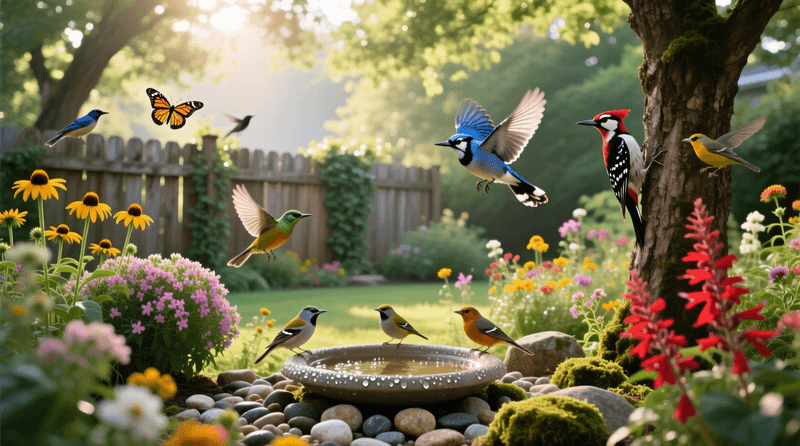
Food alone does not make a yard worth returning to.
Birds need cover to escape from hawks, shelter during sudden downpours, and a reliable water source close enough to use safely.
If your oak is the only feature doing any work, the habitat is thin.
Several Florida native plants can fill in the gaps.
American beautyberry, Callicarpa americana, produces clusters of bright purple fruit in late summer and fall.
Simpson’s stopper, Myrcianthes fragrans, offers small white flowers, red berries, and dense cover.
Firebush, Hamelia patens, pulls in insects and hummingbirds.
Saw palmetto, Serenoa repens, provides low, dense escape cover that works well along fence lines.
Sabal palm, Sabal palmetto, adds vertical structure and nesting opportunity.
UF/IFAS recommends native plants as a primary food and cover source, with feeders as a supplement rather than a replacement.
Match plants to your site before you buy.
Salt-exposed yards along either coast need species that can handle spray and wind.
Low spots with standing water after rain need plants that tolerate wet feet.
North Florida yards face occasional hard freezes that South Florida gardeners never plan for.
Add a shallow birdbath or dish near a shrub, ideally no more than about 2 inches deep at the center.
Change the water every 2 to 3 days to prevent mosquito breeding and algae buildup.
If you use a feeder, clean it regularly with a 10 percent bleach solution, which means 1 part bleach to 9 parts water, and let it dry completely before refilling.
Audubon advises removing a feeder temporarily if sick birds appear, and UF/IFAS recommends keeping the ground beneath feeders free of moldy seed and droppings.
Protect The Oak And Manage Yard Hazards
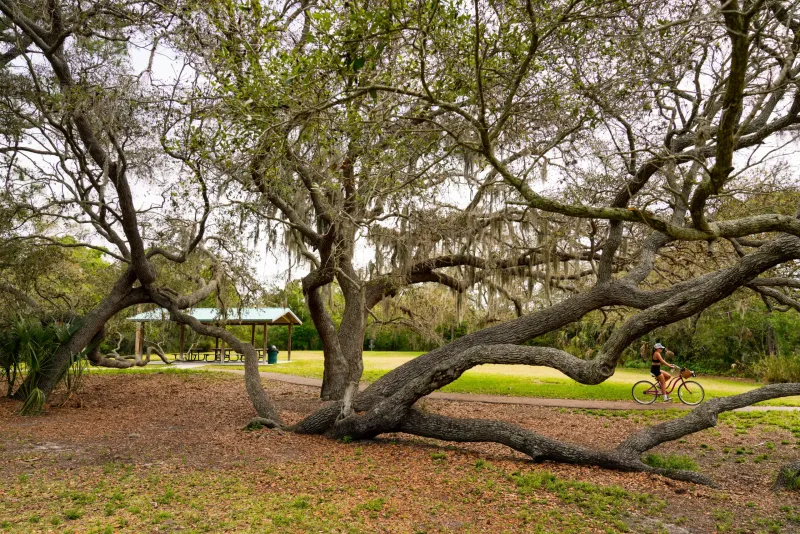
Attracting wildlife and protecting your property are not competing goals, but they do require some honest trade-offs.
Start with the oak itself.
Mulch around the base of the tree helps retain moisture and reduce competition from grass.
UF/IFAS recommends a mulch circle at least 8 feet in diameter and about 3 inches deep, with a 12-inch gap between the mulch and the trunk.
Piling mulch against the bark can trap moisture and invite rot.
Florida’s tropical storm and hurricane season runs from June through November, and oaks take the brunt of it.
UF/IFAS advises maintaining a strong central structure in young trees and avoiding last-minute canopy thinning before a storm.
Topping, large indiscriminate cuts, and weak branch unions actually increase failure risk rather than reducing it.
For any significant work on a tree taller than about 15 feet, a certified arborist is the right resource.
Pesticide use is worth reconsidering too.
UF/IFAS recommends scouting first, identifying the problem, and spot-treating when practical rather than spraying the whole yard on a schedule.
Broad-spectrum insecticides can remove the insects birds need, including the caterpillars and beetles that jays feed to nestlings.
Targeted treatment following label directions protects both your plants and the food web your yard supports.
Dead limbs and snags can provide real wildlife value, but only where they do not threaten people, buildings, vehicles, walkways, or utility lines.
UF/IFAS suggests that a 10- to 15-foot snag can serve wildlife when a tree must be removed and the stump can stand safely.
Spilled seed and poorly managed food scraps can attract raccoons, rodents, and nuisance birds.
Sanitation, exclusion, and habitat modification are safer first responses than attempting to harm or remove wildlife.
Confirm Which Blue Jay You Are Watching
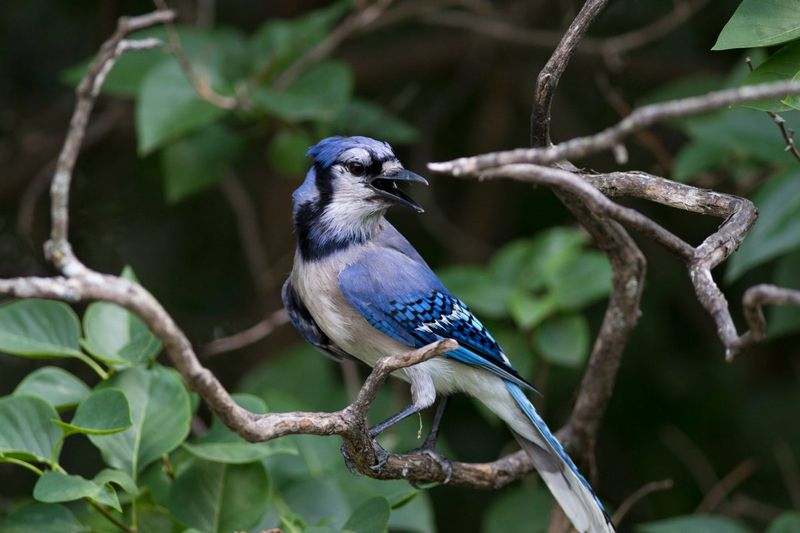
Before you go too far down the habitat rabbit hole, make sure you know which bird you are actually watching.
Florida has two blue jay species, and they are not interchangeable.
The Common Blue Jay, Cyanocitta cristata, is the one most Florida homeowners see.
It has a prominent blue crest, bold black markings around the face and throat, and white patches on the wings and tail.
It is noisy, adaptable, and at home in suburban neighborhoods, forest edges, and yards with mature oaks.
Nothing about a crested blue bird in a conventional live oak suggests anything unusual.
The Florida Scrub-Jay, Aphelocoma coerulescens, is a different species entirely.
Florida Fish and Wildlife describes it as federally threatened, with a range tied specifically to open oak scrub, scrubby flatwoods, and sandy ridge habitats.
It lacks the Common Blue Jay’s crest and black markings, appearing mostly blue-gray with a white forehead.
Scrub-Jays defend territories year after year and use exposed perches for sentry behavior, watching for predators on behalf of the family group.
A blue bird in your suburban live oak is almost certainly a Common Blue Jay, not a Scrub-Jay.
But if you live near a scrub preserve in Central Florida, or on a sandy ridge in Brevard, Polk, or Highlands County, it is worth a closer look.
The two species have different conservation needs, and a Scrub-Jay sighting near your property carries real significance for local habitat management.
One more thing worth saying plainly: repeated visits to the same oak do not prove that the same individual bird is returning each time.
Several Blue Jays may use the same tree, and you cannot establish identity from observation alone without bands or other markings.
Use The Jay’s Return As A Yard Checklist
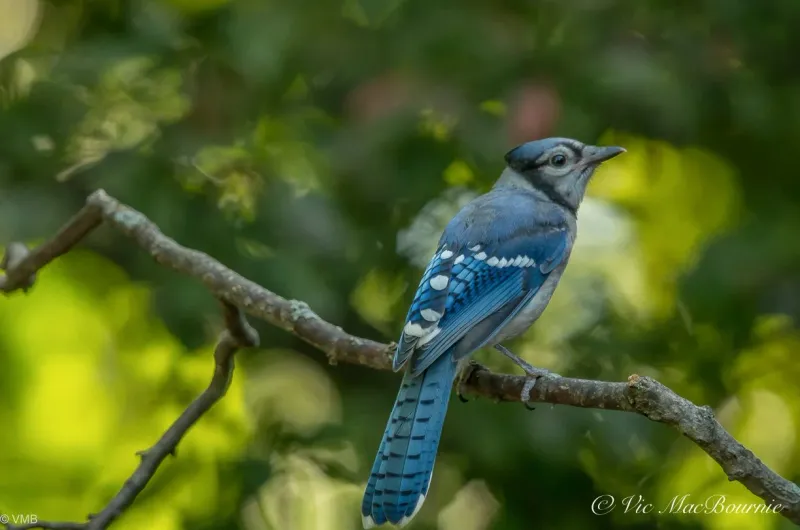
The most practical thing that jay is doing is giving you a reason to look at your yard more carefully.
Start with the oak.
Check for acorn activity, insect life, dead limbs, and signs of other wildlife using the tree.
Then look outward: is there a water source within about 50 feet?
Is there low cover nearby where a bird could duck if a hawk appeared?
Are you spraying anything on a schedule that might be removing the insects the tree supports?
Blue Jays move through yards with a loose pattern, using food, cover, and water in combination.
One returning bird suggests that at least one of those elements is working.
It does not mean all three are in place, and it does not guarantee that every improvement you make will bring the bird back more often.
UF/IFAS frames oak habitat improvement as a gradual, long-term project, which is the right way to think about any Florida yard.
The heat, the dry spells, the sudden downpours, and the storms from June through November mean that the landscape shifts constantly.
A yard that works well for wildlife in October may look very different after a wet summer or a hard freeze in the Panhandle.
Make changes gradually and match them to your region, your soil, and the space you actually have.
Native plants, fresh water, and reduced pesticide use are the three layers most likely to make a real difference over time.
Protect healthy existing trees before adding new ones.
Watch how the bird uses the space across different seasons, not just one morning in fall.
A yard that earns a jay’s return has already done something right, and careful observation is how you find out exactly what that is.