
These Pennsylvania Native Wildflowers Beat The Annuals You Replant Every Spring And Come Back For Free
Follow us on Google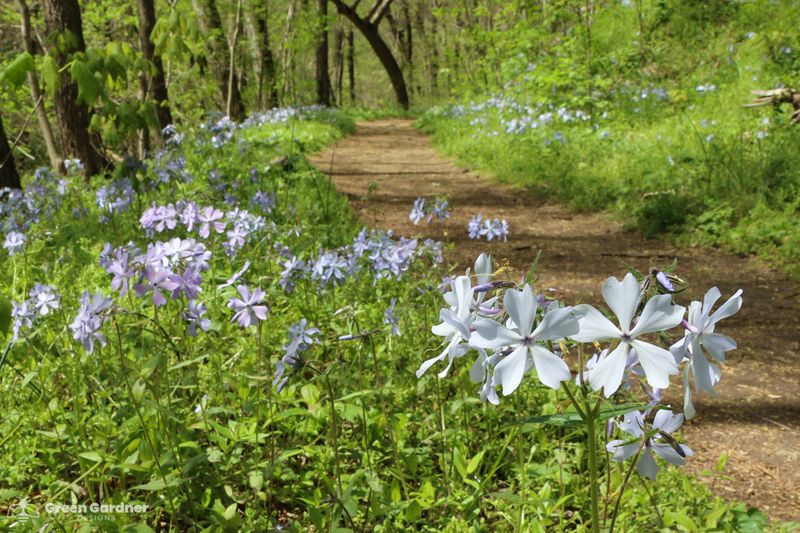
You step into your Pennsylvania yard on an April morning, mist still clinging to the budding dogwood, and there it is again.
The spot where last year’s annuals lived is bare dirt, and your wallet already knows what comes next.
Another trip to the garden center, another round of planting, another summer of watering things that quit at the first hard frost.
But some plants skip that whole routine.
They come back on their own, for free, tougher every year, and they feed the bees and birds while they do it.
Here are the natives worth trading your annuals for.
1. Native Plants Thrive In Pennsylvania’s Diverse Conditions
Pennsylvania is not one garden.
It is a patchwork of climates, and native wildflowers were built for exactly that mess.
Our state spans USDA hardiness zones from about 5b in the colder northern tier and higher elevations up to 8a in the warmest southeastern pockets near Philadelphia.
Most yards fall somewhere between 5b and 7b.
A plant hardy to your zone shrugs off the average winter low without any fuss from you.
Then there is the soil, which changes from county to county.
Near the Lake Erie region you get beach sands and lake-laid silts.
Just inland, glacial till leaves slow-draining subsoil that gardeners call a fragipan.
The Laurel Highlands and Allegheny Plateau lean toward acid clay shales, while limestone valleys in central Pennsylvania hold fertile, shaly silt loam.
Southeastern yards often fight heavy clay.
Natives evolved in these soil neighborhoods over thousands of years.
They do not need you to fix the dirt first, and that is the whole point.
2. They Return For Free, Saving Your Back And Wallet
Here is the payoff that hooks most people.
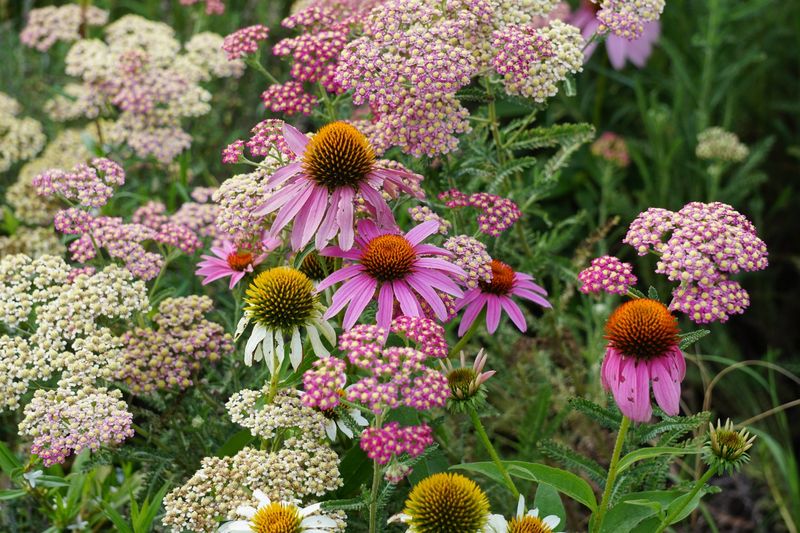
You plant once, and these wildflowers come back on their own, year after year, no receipt required.
Annuals ask for money every spring.
Perennials ask for patience one time.
After that, they handle Pennsylvania’s four hard seasons themselves, the humid summers, the sudden July thunderstorms, the freeze-and-thaw cycles that heave lesser plants right out of the ground.
Their secret is underground.
Native roots reach deep, sometimes several feet down, and that lets them find water during the dry stretches that sneak in between our downpours.
Pennsylvania averages around 41 inches of rain a year, but it does not fall evenly.
Deep roots ride out the gaps, so you water far less once plants are settled.
Those same roots hold soil in place.
On the steeper slopes common across central and western Pennsylvania, that means less erosion after a storm.
You genuinely spend less, work less, and worry less.
3. Joe Pye Weed Draws All The Butterflies To Your Yard
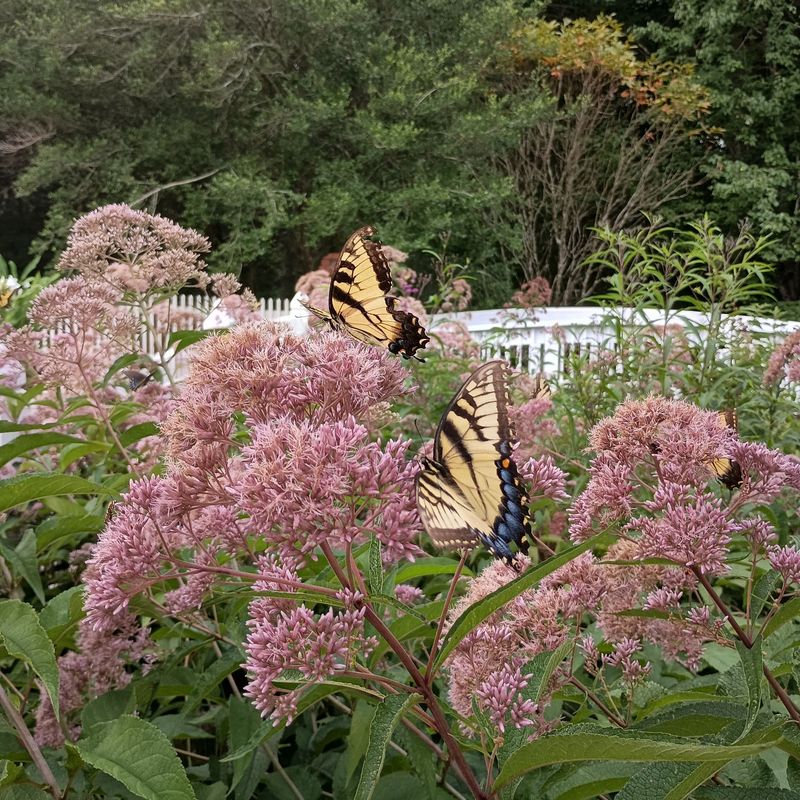
Picture a plant taller than your kids, crowned in dusty pink-purple blooms, with monarchs and swallowtails stacked on it during your August cookout.
That is Joe Pye weed (Eutrochium purpureum) earning its keep.
Most folks are surprised by the size.
Joe Pye weed reaches 4 to 7 feet in average soil and can hit 10 feet where things stay moist and rich.
It takes full sun to partial shade and likes consistent moisture, though it tolerates ordinary garden dirt once it settles in.
Give it room.
Space plants 3 to 5 feet apart so air moves through and powdery mildew, a regular pest in our humid summers, cannot get a foothold.
That spacing is the fix, not a fungicide.
Deer tend to walk right past it, which counts for a lot in the northern tier.
And as a late-season nectar bar, it fuels pollinators right when the fall monarch migration rolls through Pennsylvania.
Few plants pull their weight this well.
4. Bee Balm Brings Hummingbirds And Deters Deer
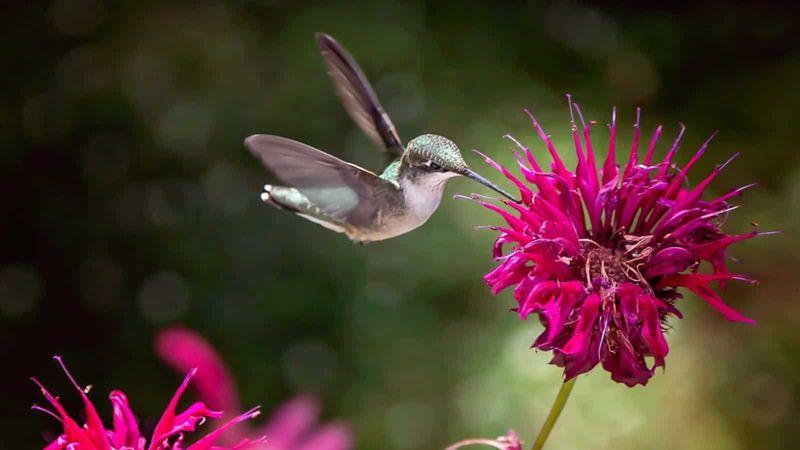
Ruby-throated hummingbirds have a route, and bee balm puts your porch on it.
The shaggy red, pink, and purple tubular flowers of Monarda didyma bloom June through July and act like a neon sign for hummingbirds, bees, and butterflies.
But here is the part that wins over tired gardeners.
Bee balm is deer-resistant, and its minty leaves carry a scent that can help keep mosquitoes off your evening porch time.
Not a magic bug shield, just one helpful layer.
Give it at least 6 hours of direct sun and moist, well-drained soil.
The one honest catch is powdery mildew, which loves our sticky Pennsylvania summers.
Beat it with airflow.
Space plants 18 to 24 inches apart so leaves dry fast after rain.
During dry spells, soak the soil 6 to 8 inches deep every 7 to 10 days.
Do that the first season, and the plant mostly fends for itself after.
Your reward is a summer of tiny wings on the patio.
5. Black-Eyed Susans Offer Sunny Beauty And Feed Birds
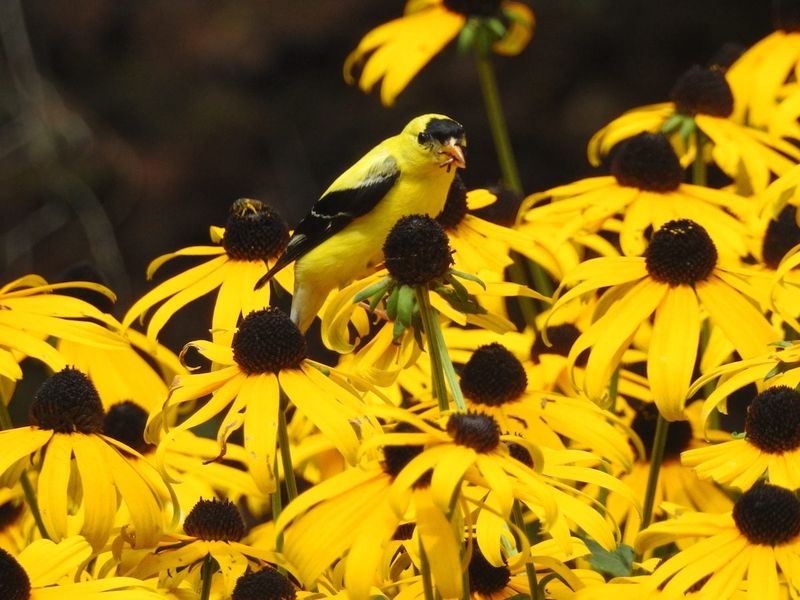
Nothing looks more like a Pennsylvania July than a drift of golden black-eyed Susans (Rudbeckia hirta) with those dark chocolate centers.
They are cheerful, and they are almost impossible to kill.
Once established, they laugh off drought, poor dirt, rocky ground, even sandy patches.
Full sun suits them best, but they handle a little shade and bloom from midsummer straight into fall.
Deer generally leave them alone too.
Plant in spring after your last frost, which runs roughly mid-May in the Poconos and higher elevations, or in early to mid-fall.
Space them 12 to 24 inches apart depending on the variety so they have breathing room.
Now the quiet bonus.
Leave the spent seed heads standing through fall and winter instead of cutting everything down.
Goldfinches and other songbirds pick them clean during the cold months.
So the lazy move, skipping cleanup, is actually the better one for the birds.
6. Goldenrod Is A Pollinator Powerhouse, Not A Problem
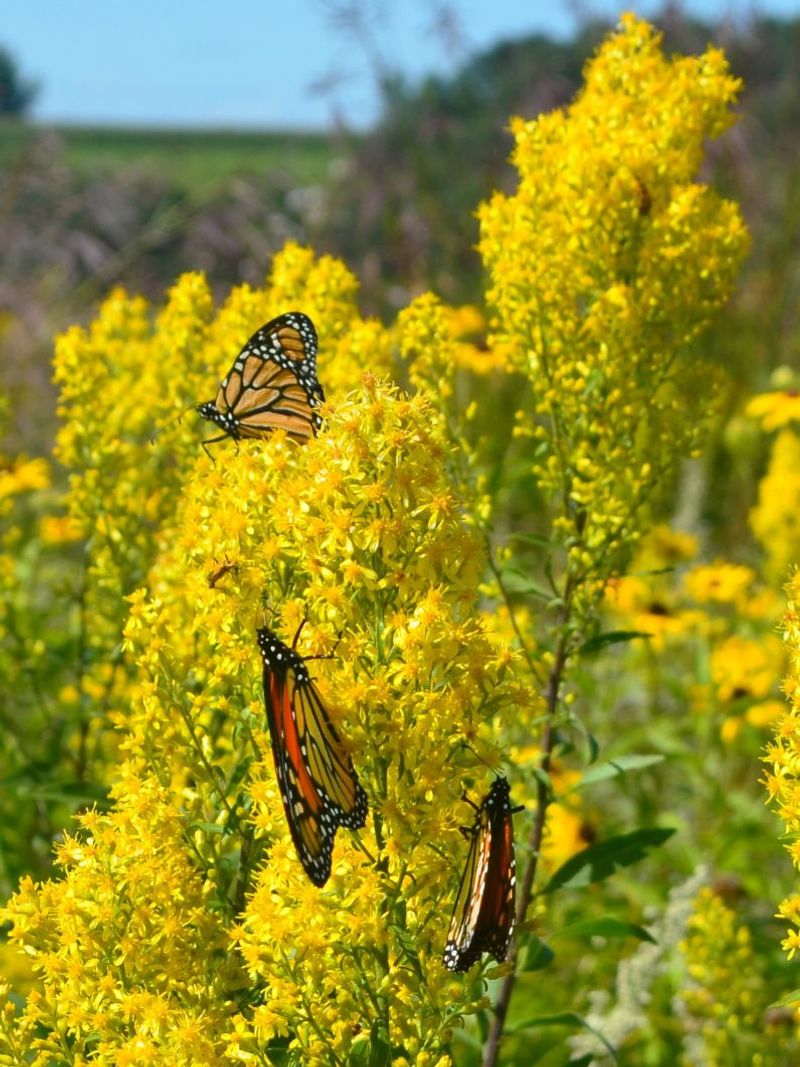
Time to clear an old name off the suspect list.
Goldenrod (Solidago species) gets blamed every fall for hay fever, and it is almost entirely innocent.
The real culprit is ragweed, which blooms at the same time and flings clouds of wind-borne pollen.
Goldenrod pollen is heavy and sticky, carried by insects, not the breeze, so it rarely reaches your nose.
It has taken the fall for its neighbor for generations.
What goldenrod actually does is feed the crowd.
Its bright plumes light up in late summer and fall, right when bees and butterflies are loading up before cold weather or migration.
That timing makes it one of the most valuable nectar sources in the whole yard.
Varieties like wrinkleleaf goldenrod (Solidago rugosa) adapt to most soils and thrive in sun with almost no attention.
Plant it, forget it, and watch the fall pollinators find it on their own.
7. Native Milkweeds Anchor The Monarch Migration
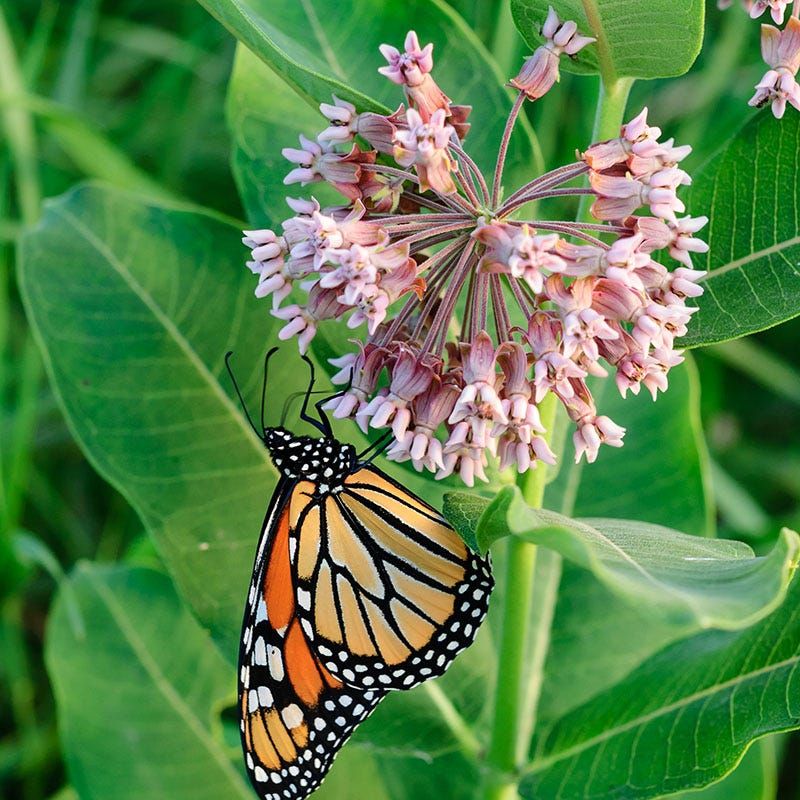
If you want your yard to actually matter to wildlife, milkweed is the one.
Native milkweeds (Asclepias species) are the only plants monarch caterpillars can eat.
No milkweed, no next generation of monarchs.
It is that simple.
They feed everyone else too, offering nectar to butterflies, bees, and hummingbirds, and deer skip them entirely.
You get three main choices for Pennsylvania yards.
Butterfly milkweed (Asclepias tuberosa) throws off blazing orange flowers, stays around 2 feet tall, and prefers sunny, dry, well-drained spots.
Common milkweed (Asclepias syriaca) grows 3 to 5 feet with fragrant pink blooms and spreads by underground runners, so pick its spot carefully or let it fill a naturalized corner.
Swamp milkweed (Asclepias incarnata) likes it wet, making it perfect for a rain garden or a soggy low spot.
Starting from seed, common milkweed needs 10 to 30 days of cold, moist chilling, what gardeners call stratification, or you can just sow it in fall and let a Pennsylvania winter do the work.
Space plants 12 to 18 inches apart.
8. Switchgrass And Pennsylvania Sedge Provide Texture And Structure
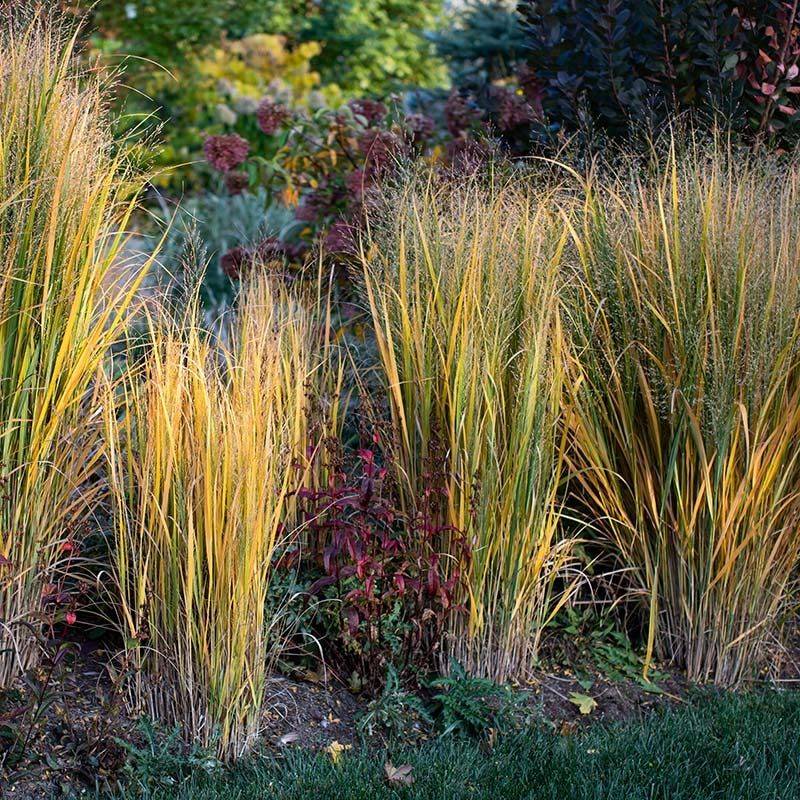
Flowers get the glory, but a native garden without grasses looks unfinished.
Two natives handle structure in totally different ways.
Switchgrass (Panicum virgatum) is the tall one.
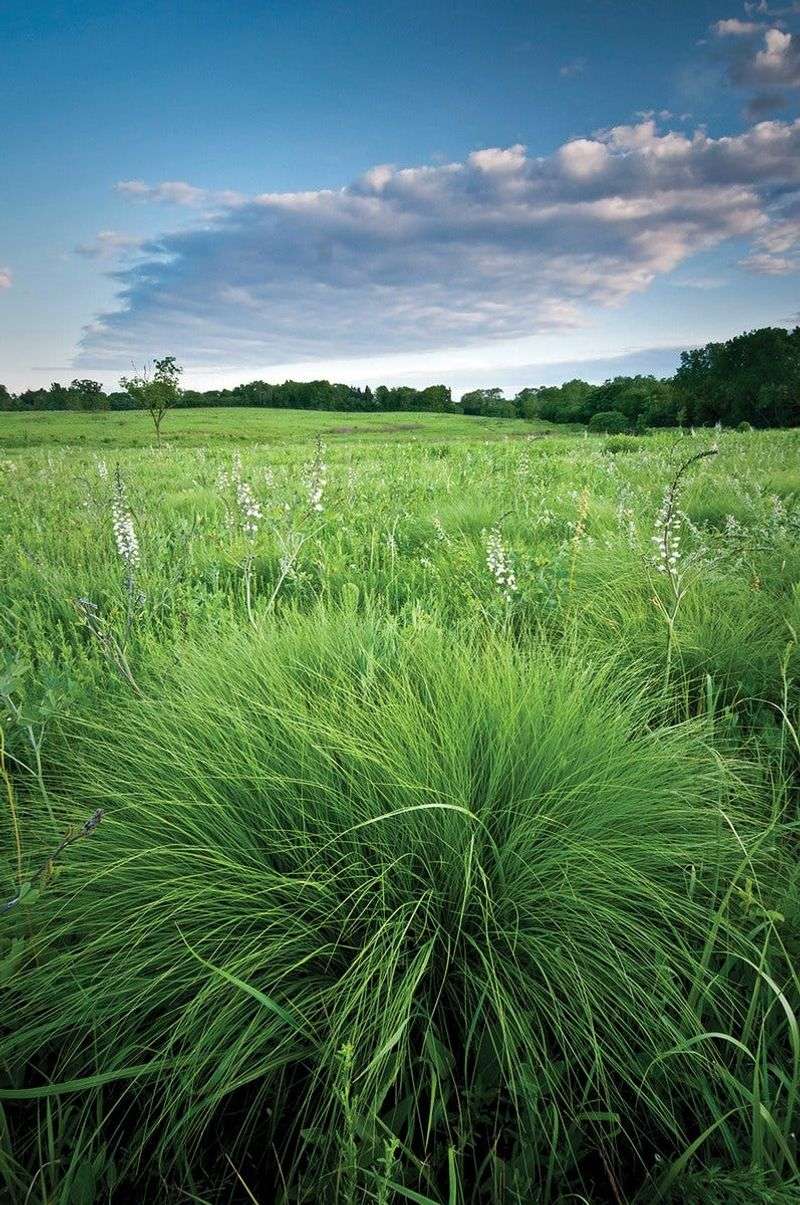
It forms dense upright clumps 4 to 7 feet high and 2 to 4 feet wide, topped by airy seed heads that feed songbirds through winter and catch the low autumn light.
It takes full sun and handles clay or sand, so it is genuinely useful on the shale-based ground common across central and western Pennsylvania.
It also grips slopes and fights erosion.
Plant container switchgrass in spring or early fall, spacing clumps 2 to 3 feet apart, and water it regularly that first season so roots reach deep.
Pennsylvania sedge (Carex pensylvanica) does the opposite job.
This fine, flowing groundcover thrives in the shade where lawn grass gives up.
It stays soft and low, resists deer, and makes a natural carpet beneath native trees and shrubs.
Together they frame everything else.
9. Protecting Your Yard With Nature’s Own Pest Control
Blunt truth.
A yard full of natives comes with its own security team, and it works while you sleep.
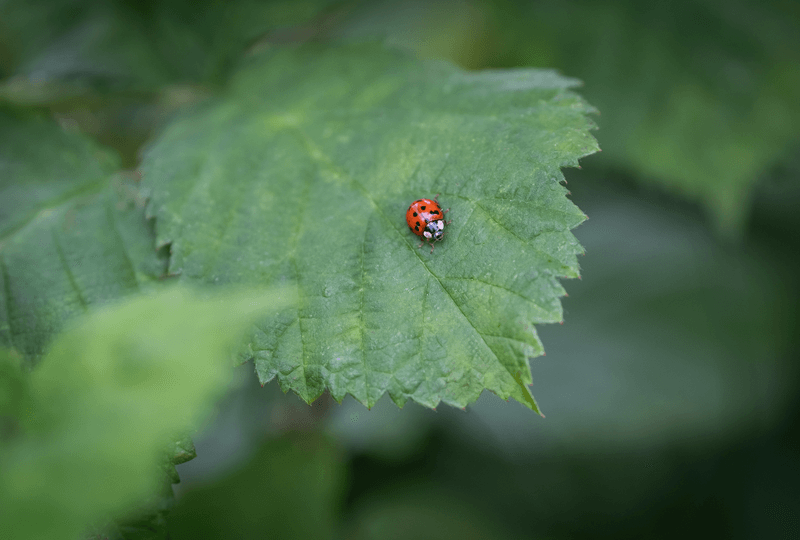
Native plants pull in beneficial insects like ladybugs, lacewings, and parasitic wasps, and those bugs hunt the antagonists you actually hate.
Aphids, stink bugs, and Japanese beetles all end up on the menu.
Japanese beetles have a routine, emerging mid-June to early July to chew through more than 300 kinds of plants, and each female buries up to 60 eggs 2 to 4 inches deep in moist soil.
You can hand-pick the adults into a bucket of soapy water in the morning when they are slow.
The longer game is protecting their predators.
Penn State Extension recommends avoiding broad systemic pesticides that harm pollinators and the good bugs along with the bad.
Natives will not stop the spotted lanternfly (Lycorma delicatula), first found in Berks County in 2014, and it is dishonest to claim otherwise.
But a diverse, deep-rooted planting handles our 41 inches of annual rain better and stays healthier under stress.
You build the balance, and the garden defends itself.
That is a yard you can be proud of, and it costs you almost nothing after year one.