
A Brief Garden Break May Help You Feel Less Stressed and More Refreshed
Follow us on Google
Most of us know the feeling of staring at a screen until the words blur together and every notification feels like one too many.
Stepping outside into a garden, even for just ten or fifteen minutes, may help some people feel less mentally loaded and more ready to focus again.
The research behind this is encouraging but not absolute, and the experience varies from person to person.
What follows is a plain-language look at what a garden pause can realistically offer, how to try one, and how to keep it safe and comfortable.
A Garden Break May Help You Change Context

You are three hours into back-to-back tasks, your shoulders are up near your ears, and the browser has fourteen tabs open.
The work is not finished, but your brain feels like it is running in sand.
Stepping outside does not solve the problem, but it does something simpler and more immediate: it moves you out of the environment where the pressure lives.
Changing your physical surroundings and the type of attention you are using can be a meaningful part of a mental break.
A systematic review of nature-based outdoor activities for mental and physical health found improvements in depressive mood, anxiety, positive affect, and negative affect across a range of outdoor exposure studies.
The sessions that showed benefits commonly lasted 20 to 90 minutes, though smaller studies suggest shorter time outside can also matter.
A residential garden is not a forest trail or a clinical intervention.
The research on parks, urban forests, and green exercise does not translate directly to every backyard or balcony.
But the overlap in what those settings offer, outdoor air, natural sights and sounds, a reason to look at something other than a screen, is real enough to make a garden pause worth trying.
The narrower promise here is this: a brief garden break may help some people feel less stressed or mentally refreshed, especially when it replaces continued screen time or a demanding task.
That is a useful and realistic thing, even if it is not the dramatic nervous-system reset that wellness headlines sometimes suggest.
Think of it less as a cure and more as a gear shift, one that some people find easier to make outside than in.
Several Small Inputs Can Shift Your Attention
A garden does not work through one single mechanism.
What makes it potentially useful is a combination of overlapping inputs arriving at the same time, and that layering is worth understanding plainly.
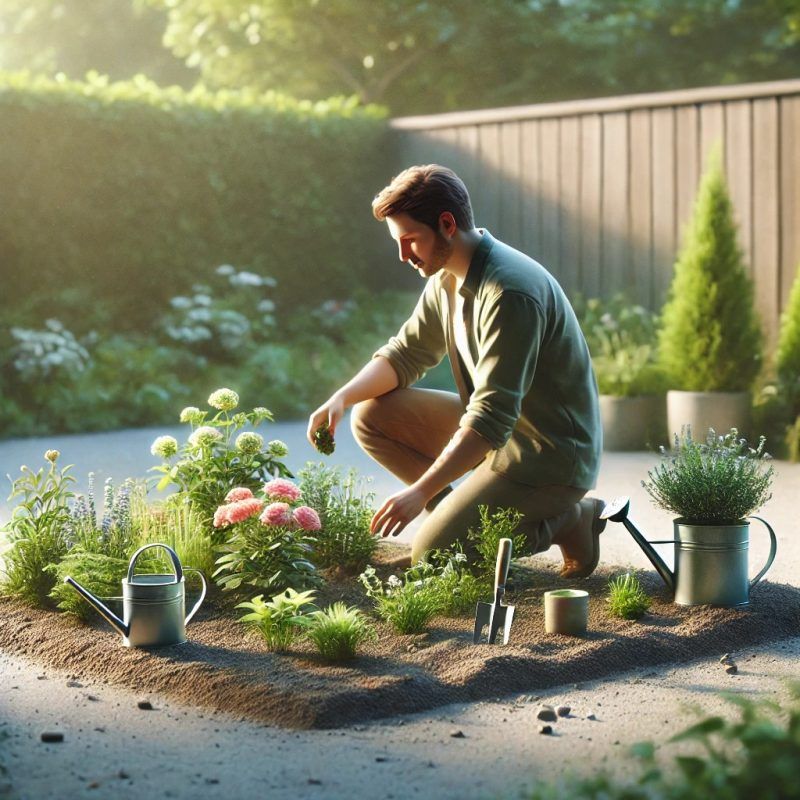
Natural sights pull your eyes to things that move slowly and without urgency: a leaf catching the wind, a bee moving between flowers, light shifting across the soil.
Natural sounds, birds, rustling leaves, water if you have a small fountain, ask almost nothing of your thinking brain.
Handling a plant, smelling fresh herbs like basil (Ocimum basilicum) or rosemary (Salvia rosmarinus), or simply noticing the texture of bark gives your hands and nose something real to process.
A systematic review of nature exposure therapies found that outdoor nature experiences were associated with reductions in stress, depression, and anxiety levels across multiple study designs.
Light movement, even a slow walk between raised beds or a gentle round of watering, adds another layer.
Your body shifts posture, your breathing tends to slow, and directed mental effort steps back to let sensory experience take the lead.
That combination, changing visual focus, sensory detail, and a temporary release from screen-based attention, is what the research describes as potentially restorative, not any single plant or smell on its own.
One review of small-scale greenery found positive effects in 15 of 19 studies, though every included study carried a high risk of bias.
That means the evidence supports cautious optimism, not certainty.
What it does suggest is that a cluster of small inputs working together, not one dramatic cause, is probably what makes a garden pause feel different from simply closing your eyes at your desk.
Try A Low-Pressure Ten-Minute Pause
The routine does not need to be elaborate.
Before you go outside, silence your phone or leave it on the kitchen counter.
That one step matters more than most people expect, because notifications keep part of your brain in task mode even when your body is outdoors.
Once you are outside, aim for somewhere between 10 and 20 minutes.
You do not need to weed, deadhead, or accomplish anything at all.
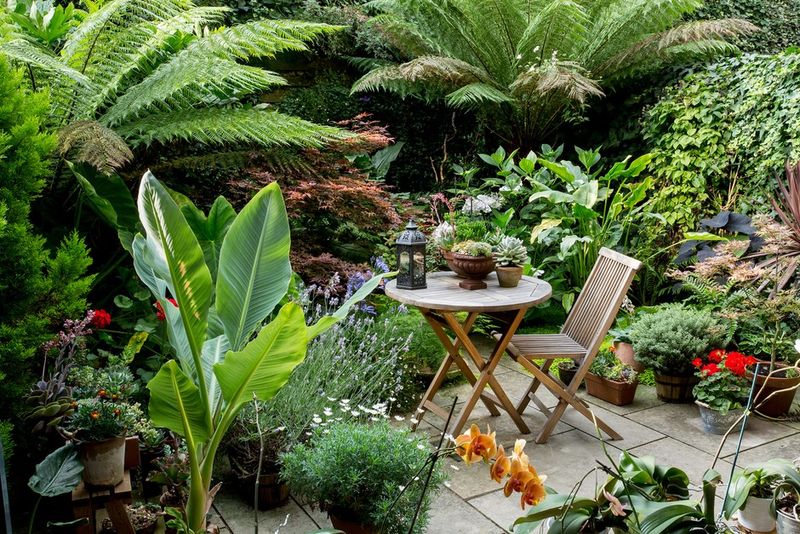
Sitting in a chair near a garden bed counts.
Walking slowly around the yard counts.
Filling a watering can and moving it from plant to plant counts.
The goal is a genuine shift in what you are paying attention to, not productivity in a different location.
Choose one sensory detail to notice.
The color variation in a single leaf.
The sound of a bird you cannot immediately identify.
The smell of soil after watering.
Fixing attention on something specific and unhurried is the practical core of what the research describes, and it is something almost any garden space can offer, even a patio with three containers.
Adjacent evidence from a study on short virtual nature breaks in an office setting found that 15-minute nature video sessions reduced stress on some measures.
That study tested virtual nature, not a real garden, so it does not prove that your backyard will produce the same result.
It does suggest that even a limited nature exposure during a workday break is worth exploring.
Treat this routine as a low-stakes experiment rather than a prescription, and adjust the length and activity to whatever your space and energy allow on a given day.
Gentle Movement Adds Another Way To Change Gears

Slow movement in a garden can do something that sitting still does not always manage: it gives your body a direction that is not a deadline.
Watering, walking a slow loop around the yard, or pulling a handful of obvious weeds without rushing are all ways to add light physical activity to the break without turning it into a workout.
Research on walking in natural settings offers some useful context here, with an important caveat.
A randomized controlled trial comparing a 30-minute urban forest walk with indoor laboratory time found that the outdoor group showed greater improvements in directed attention and mood, a larger reduction in cortisol, and greater parasympathetic activity.
Those findings are genuinely encouraging for the idea that moving in a natural setting can shift your physiology.
The study examined a 30-minute walk in an urban forest, not a residential garden, and it compared that walk with time spent in an indoor lab rather than with other kinds of breaks.
So those specific numbers do not transfer directly to ten minutes of slow watering in a suburban backyard.
What the evidence does support is that movement, natural surroundings, and leaving a stressful environment can each contribute something, and that combining them in a low-demand way is a reasonable approach.
Choose the least demanding activity that feels comfortable for your body that day.
A slow walk along a garden path is a different experience from hauling bags of mulch.
Nature exposure research consistently frames passive and low-effort engagement as valid, not as a lesser version of hard physical work.
The goal is a gear change, not a second shift.
The Evidence Supports A Helpful Habit, Not A Cure

Gardening research has grown substantially in recent years, and the overall direction is encouraging.
But encouraging is not the same as settled, and the distinction matters for anyone deciding how to use a garden break in real life.
A 2024 umbrella review and meta-analysis on gardening and well-being found a positive association between gardening or horticultural therapy and well-being outcomes, while explicitly cautioning against direct clinical conclusions because the included studies varied so widely in setting, population, duration, and design.
A separate review of gardening interventions among people with chronic conditions found small-to-moderate mental-health effects, with confidence again limited by study differences.
The evidence is stronger for short-term changes in perceived stress, mood, attention, and affect than it is for treating lasting anxiety, depression, burnout, or other medical conditions.
A garden pause is one supportive habit, not a stand-alone treatment.
If stress or low mood is persistent, a conversation with a healthcare provider is the right next step, not a longer weeding session.
Surroundings also shape the experience in ways the research does not always capture.
A quiet, shaded garden on a mild morning is a different proposition from a yard beside a busy road, under a heat advisory, or thick with mosquitoes.
Noise, traffic, smoke, privacy concerns, allergies, and physical discomfort can all reduce or eliminate the benefit.
One systematic review of small-scale greenery found broadly positive results but flagged high bias risk across all included studies.
That is a reason to hold the promise lightly, not to abandon it.
A garden break can be a genuinely useful part of a busy day for many people, as long as the claims stay proportionate to what the evidence actually shows.
Protect The Break From Heat And Ticks

A garden break stops being restorative the moment you feel dizzy, overheated, or itchy from a tick you did not notice.
Practical precautions are not optional extras, they are what keep the routine worth repeating.
For heat, the core advice is simple: use shade when you can, drink water before you feel thirsty, and stop if you notice heavy sweating, nausea, headache, or muscle cramps.
CDC guidance on extreme heat prevention recommends scheduling outdoor activity during the coolest parts of the day.
As a regional example from the Upper Midwest, University of Minnesota Extension recommends gardening before 10 a.m. or after 4 p.m. during hot conditions and identifies 5 to 9 a.m. as a useful watering window for plants.
Those timeframes are practical guidance for that region, not a nationwide rule.
Your local conditions, humidity, elevation, and typical afternoon temperatures all affect what is safe where you live.
For ticks, the risk level depends on your yard.
Gardens with tall grass, brush, leaf litter, wooded edges, or regular wildlife activity carry more exposure than a well-trimmed patio.
CDC tick-bite prevention guidance recommends checking your body, clothing, pets, and gear after outdoor time, showering within two hours when possible, and drying dry clothing on high heat for at least 10 minutes to kill ticks that may have attached.
A 3-foot barrier of wood chips or gravel between your lawn and any wooded or brushy edge is among the CDC-listed landscaping measures for reducing blacklegged tick exposure.
That barrier reduces contact opportunities but is not a complete defense on its own.
Keep Soil And Pesticides From Creating New Problems

Soil feels elemental and wholesome, and for good reason.
But ordinary garden soil can contain bacteria, fungi, and parasites, so a few basic hygiene steps belong at the end of every garden session, especially before you handle food or eat anything.
CDC handwashing guidance recommends scrubbing with soap and clean running water for at least 20 seconds.
That step matters most before eating, preparing food, or touching your face.
If you have a cut or scrape, keep it covered while you garden.
A soil-contaminated puncture wound, from a trowel, a stake, or a piece of wire, deserves prompt attention.
CDC guidance on tetanus notes that the bacteria can enter through wounds exposed to soil or manure, and that adults need a tetanus booster every 10 years.
If you are unsure of your vaccination status and you have had a significant puncture wound, check with a healthcare provider.
Pesticides deserve the same measured approach.
The first step is identifying what you actually have, because the right product for aphids on roses is not the right product for grubs in turf.
EPA garden pesticide safety guidance is direct: more product is not better, and garden chemicals can harm people, pets, wildlife, and water when misused.
Use only a product labeled for the specific pest and the specific site, follow the stated application rate, observe reentry intervals before going back into treated areas, and respect harvest intervals if you grow edible plants.
Storing unused product in its original container, away from children and pets, is not optional.
These steps take a few extra minutes and protect everyone who shares your yard.
Make The Pause Fit Your Space And Life
You do not need a sprawling yard to try this.
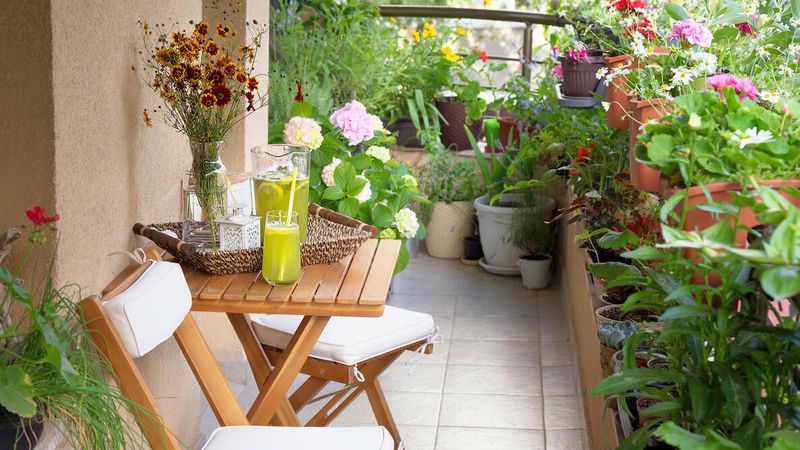
A shaded porch with two herb pots, a balcony with a single planter, a chair pulled next to a raised bed, or a shared green space nearby can all serve the same basic purpose: getting you out of the task environment and into something slower and more sensory for a few minutes.
A larger garden is not automatically more restorative.
What shapes the experience more than size is comfort, access, and quiet.
If your outdoor space is loud, exposed to heavy traffic, or physically difficult to reach, it may not offer the kind of break described here.
Adjust the routine to what you actually have and what actually feels manageable.
Disability, allergies, extreme weather, and privacy all factor in, and none of those are reasons to push through discomfort.
Pay attention to what actually helps you change gears.
For some people, leaving the phone inside makes the biggest difference.
For others, the shift comes from sitting still rather than staying in motion, or from picking one specific thing to look at closely.
Research on nature-based outdoor activities supports passive engagement as genuinely valid, so watching a spider cross a leaf is a legitimate use of the ten minutes.
A garden break is one option among many.
Sleep, exercise, a real conversation, or a quiet room without a screen can all offer something similar.
The goal is not to replace those things but to add one more accessible pause to a busy day.
If you have outdoor space available and a stressful afternoon ahead, stepping out for 10 minutes is a low-cost experiment worth trying once to see how it feels for you.