
This Beautiful Bloomer Wins People Over Fast Once They Learn What It Actually Needs
Follow us on Google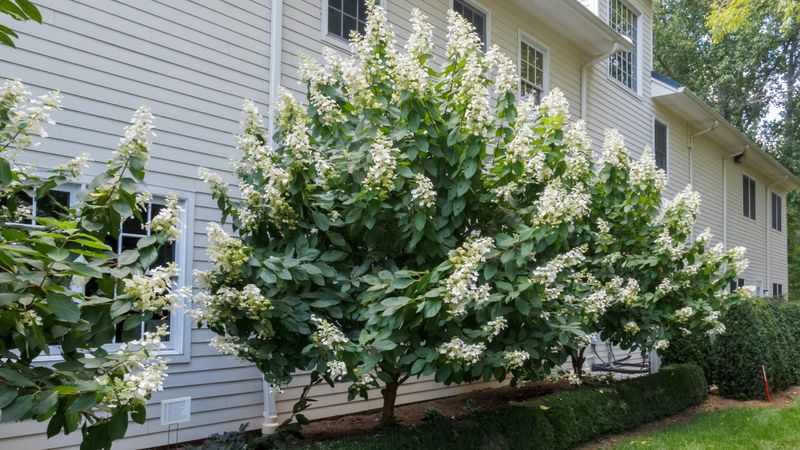
Walk through almost any neighborhood in late spring or summer and you will spot them: big, pillowy flower clusters in shades of blue, pink, purple, and white spilling over fences and filling front beds.
Most people recognize hydrangeas on sight, but plenty of gardeners have stood in their yard in June, staring at a healthy green shrub that produced almost no flowers.
The fix is not a secret fertilizer or a special watering trick.
Once you learn which type of hydrangea you have and treat it accordingly, the blooms tend to take care of themselves.
Hydrangea Is the Bloomer Hiding in Plain Sight
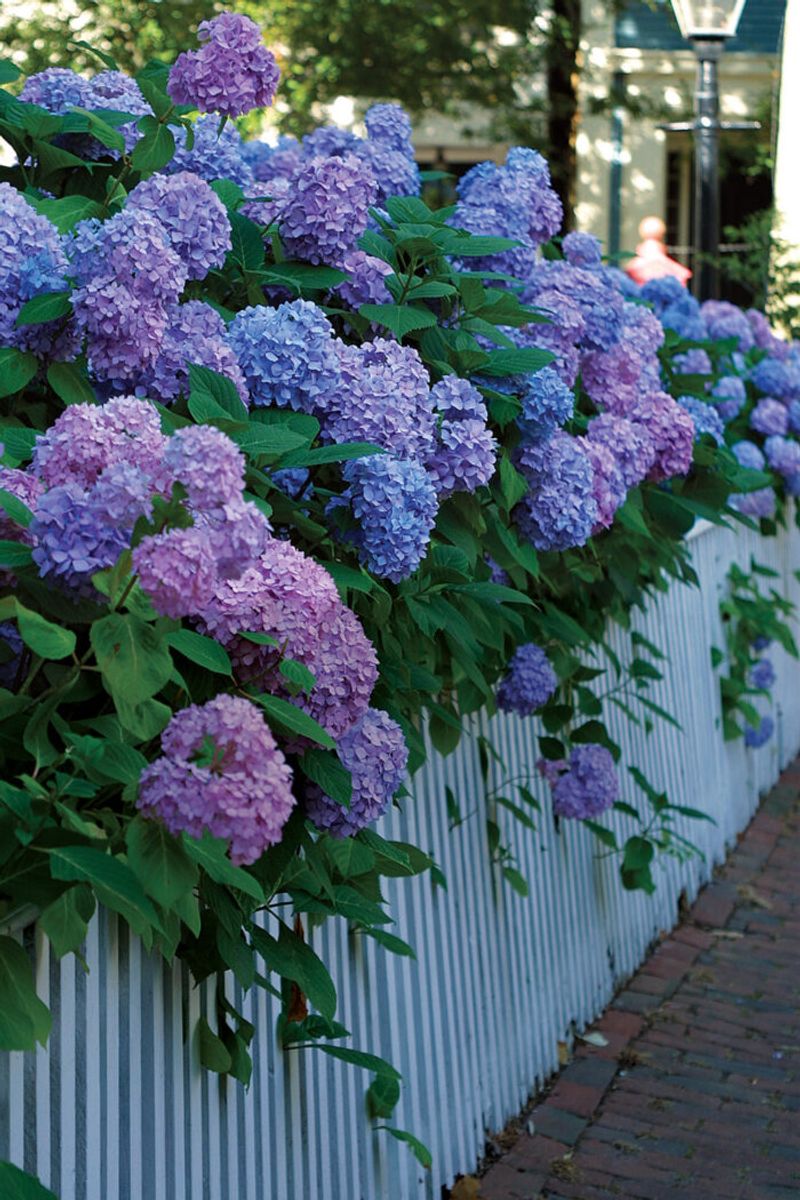
Few plants stop people in their tracks the way a hydrangea does when it is loaded with blooms.
Those big, globe-shaped mopheads and the flatter, more delicate lacecap flowers belong to one of the most recognized garden shrubs in the United States, and the plant most likely behind the headline’s mystery is hydrangea, especially bigleaf hydrangea, Hydrangea macrophylla.
Bigleaf hydrangea is the type most closely tied to a care mistake that quietly costs gardeners an entire season of color.
The surprise is not a hidden fertilizer formula or a shade secret.
According to Oregon State University Extension, hydrangeas are not a single uniform plant, and treating every type the same way is exactly where things go wrong.
One well-intentioned session with the pruning shears in late fall can strip away every flower bud the plant spent the entire growing season setting.
Bigleaf hydrangea is the familiar one at garden centers, the one with the color-changing flowers that neighbors talk about.
It is commonly hardy in USDA Zones 5 through 9, though those zones only describe winter cold tolerance, not summer heat, rainfall, or soil conditions.
University of Connecticut’s Home Garden Education Center points out that cultivars and groups within the hydrangea family do not share identical care requirements, which is the central lesson worth learning before you do anything else to the plant.
The good news is that once you know your type, the care becomes much more logical.
The sections that follow walk through identification, pruning timing, moisture, light, color, and feeding in plain terms so you can stop guessing and start getting flowers.
The Name on the Tag Changes Everything
Before you prune, water differently, or move a hydrangea to a sunnier spot, find out what you actually have.
The plant tag, a nursery receipt, or even a photo-identification app can tell you which group your shrub belongs to, and that single piece of information shapes every care decision that follows.
Bigleaf hydrangea, Hydrangea macrophylla, is the mophead or lacecap type most people picture.
Oakleaf hydrangea, Hydrangea quercifolia, is a southeastern U.S. native with cone-shaped white flowers, distinctive lobed leaves, and fall foliage color.
Both of these types generally flower on old wood, meaning the stems that grew last season carry the buds for next year’s blooms.
Prune them at the wrong time and those buds are gone.
Smooth hydrangea, Hydrangea arborescens, includes the well-known cultivar Annabelle.
It is native to the eastern and central United States and generally flowers on new wood, the growth it puts out during the current season.
Panicle hydrangea, Hydrangea paniculata, also flowers on new wood and is among the most cold-hardy groups, with many varieties suited to USDA Zones 3 through 7.
Both of these types are generally more forgiving of late-winter or early-spring pruning than old-wood types.
Climbing hydrangea, Hydrangea anomalapetiolaris subsp. , is worth a separate mention because it is a woody vine that can grow beyond 30 feet and needs a sturdy support structure.
University of Vermont Extension notes that its aerial roots can affect some wall surfaces, so placement matters and it should not be folded into ordinary shrub-care advice.
Know what you have, and the rest of the guidance will make sense.
The Pruning Date Protects Next Year’s Flowers
Somewhere every fall, a well-meaning gardener tidies up the yard and cuts the hydrangea back hard, figuring the plant will thank them for it in spring.
Then June arrives and the shrub leafs out beautifully with almost no flowers.
That is the pruning mistake in action, and it happens to good gardeners all the time.
Old wood, in plain terms, is the stem tissue that carried flowers this past season and now holds the tiny buds that will open next year.
New wood is the fresh growth the plant produces during the current growing season.
Whether your hydrangea blooms on old wood or new wood is the single most important thing to know before you pick up the shears.
Bigleaf and oakleaf hydrangeas generally bloom on old wood.
The safest time to prune them is soon after they finish flowering, usually in midsummer, before next year’s buds have a chance to set.
University of Connecticut’s Home Garden Education Center recommends this timing specifically to avoid removing the following season’s flower buds.
Waiting until fall, winter, or early spring puts those buds at risk.
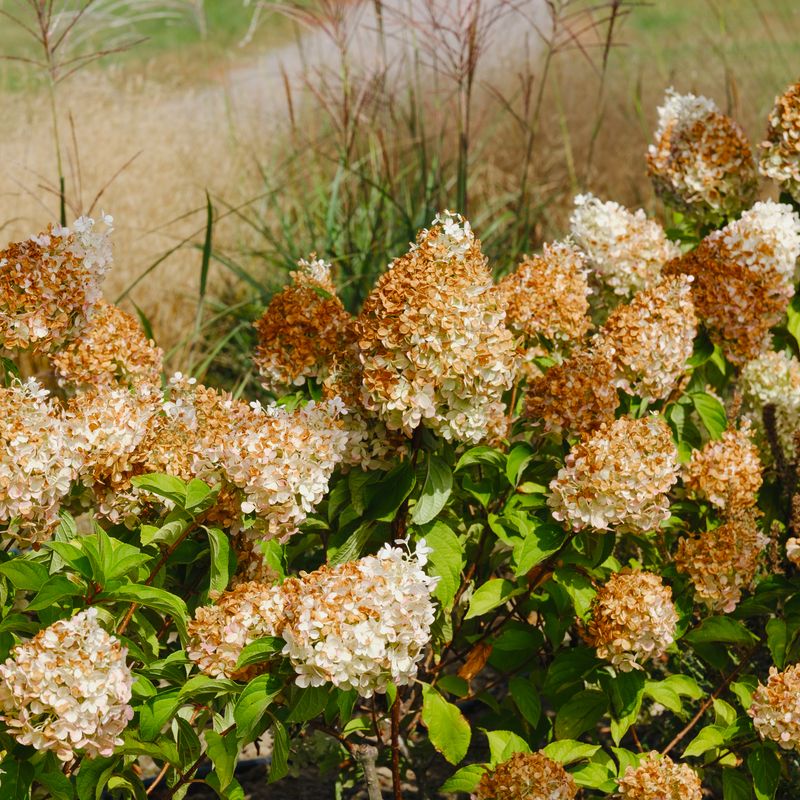
Smooth and panicle hydrangeas bloom on new wood and can generally be pruned during dormancy, from late fall through early spring, depending on local conditions.
But even here, cutting to the ground is not always the right move.
For smooth hydrangeas like Annabelle, removing all stems very low can produce weak new growth that struggles to hold the heavy flower heads upright.
UConn guidance suggests retaining older stem structure at roughly 18 to 24 inches when appropriate, rather than starting from scratch every year.
Matching your pruning date to your hydrangea type is the one change that protects more blooms than anything else you can do.
Moist Soil Matters More Than Constant Water
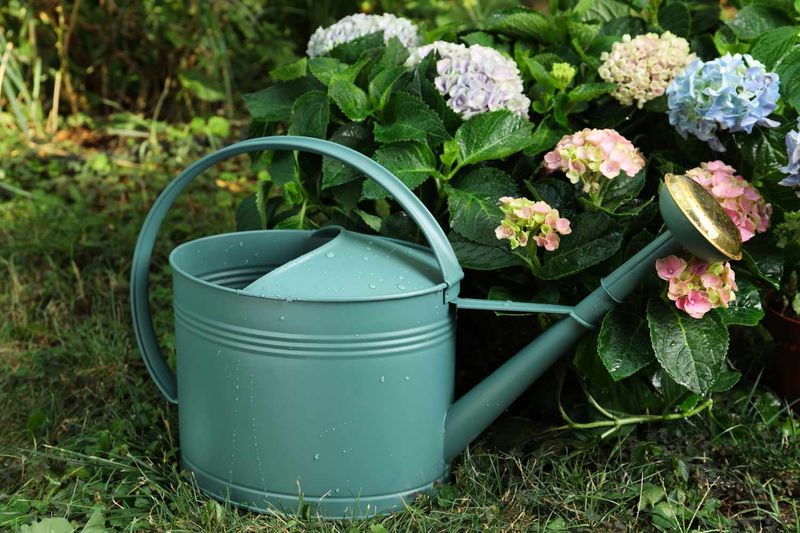
Hydrangeas have a reputation for being thirsty, and on a hot August afternoon they will droop dramatically to make the point.
That wilting looks alarming, but it does not always mean the plant is dying of thirst.
Reading the plant correctly keeps you from overwatering just as much as from underwatering.
The goal is rich, well-drained soil that holds moisture without staying soggy.
Roots sitting in water are not happy roots, and the damage shows up as brown leaf edges or sudden leaf drop, the same symptoms that can appear with too little water.
Before you reach for the hose, push a finger several inches into the soil near the base of the plant.
If the soil feels moist at that depth, the plant likely does not need water yet.
When the soil does begin to dry out at that depth, water deeply and slowly at the base so moisture reaches the root zone rather than running off the surface.
UC Agriculture and Natural Resources cautions against shallow, frequent watering because it encourages roots to stay near the surface where they dry out faster.
How often you water will depend on your soil type, local rainfall, summer heat, sun exposure, and whether the plant is in a container or in the ground.
Oregon State University Extension notes that leaves drooping and then recovering within roughly 30 minutes after watering suggest short-term heat stress rather than a deep moisture problem.
Brown edges and persistent leaf drop point more toward drainage or root issues.
Think of the soil check as your most reliable tool, more useful than any fixed watering schedule.
Match Light to the Hydrangea and the Climate
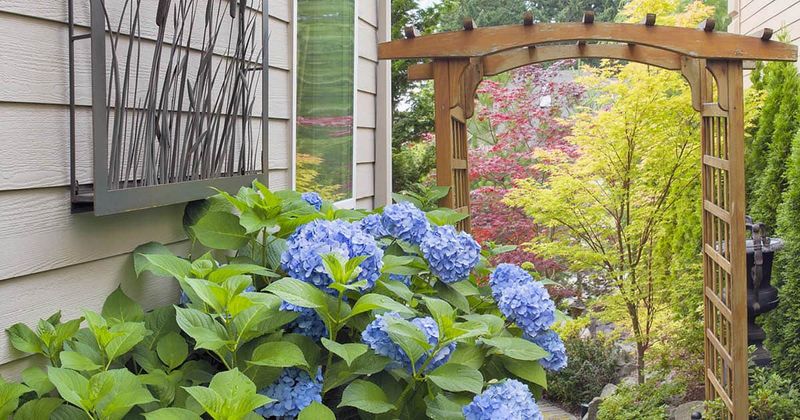
Ask ten gardeners where to plant a hydrangea and you will probably hear “shade” more than anything else.
That advice is not wrong in every case, but it is incomplete enough to cause real problems.
Heavy shade can reduce flowering or stop it altogether, while too much direct afternoon sun in a hot climate can scorch leaves and stress the plant badly.
Flowering generally benefits from substantial light.
University of Connecticut’s Home Garden Education Center notes that about 6 to 8 hours of sun supports good flowering, but the right amount of light depends on the hydrangea group, the cultivar, the climate, the summer heat, and how much moisture the soil holds.
That figure is a useful reference point, not a requirement that applies to every type in every region.
In hot climates across the South and Southwest, morning sun with afternoon shade is a common and practical arrangement.
It gives the plant enough light to flower well while protecting leaves and buds from the most intense heat of the day.
In cooler northern regions, some bigleaf hydrangeas do fine in more open sun, and panicle hydrangeas can generally handle more direct light than bigleaf types when moisture is adequate.
Oakleaf hydrangea is among the better choices for warm conditions and tends to tolerate more sun than some of its relatives.
Spring planting is generally safest after the local frost period has passed and before the hottest stretch of summer arrives, though the exact window shifts considerably from Minnesota to Georgia to the Pacific Northwest.
University of Vermont Extension also flags winter wind and late freezes as real risks for bigleaf hydrangea, because harsh late-season cold can kill old flower buds even when the rest of the plant survives.
Siting the plant with shelter from prevailing winter winds reduces that risk in colder areas.
Blue Flowers Require the Right Kind of Hydrangea
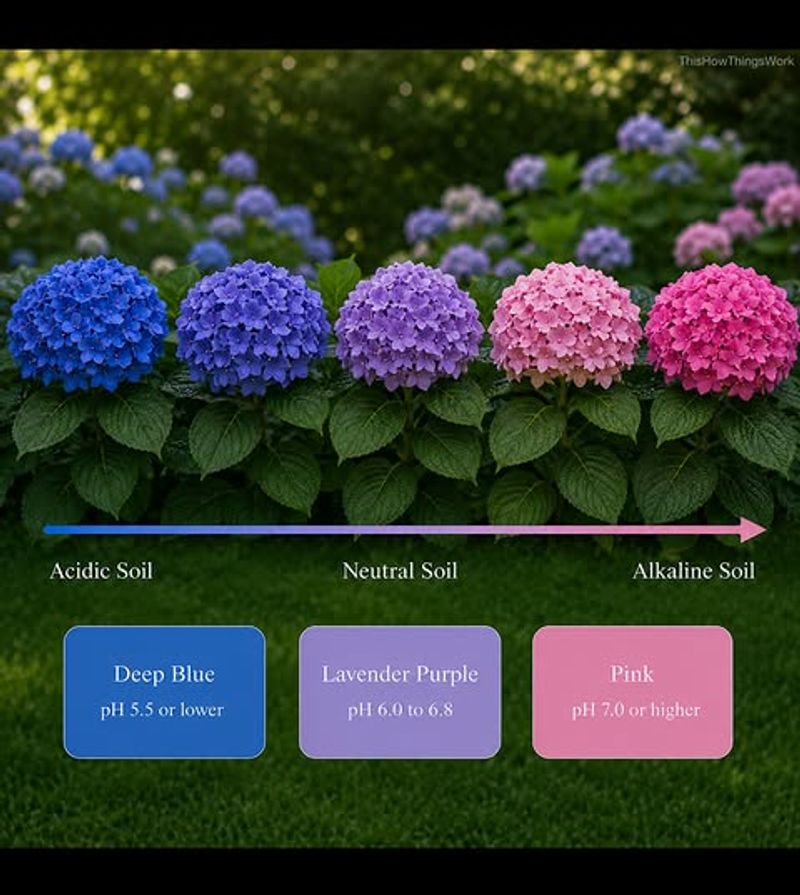
The idea that you can turn hydrangea flowers from pink to blue by burying pennies or pouring coffee grounds around the roots is one of the most persistent garden myths around.
The actual mechanism is real, but it is more specific than the folklore suggests, and it only applies to certain hydrangeas in the first place.
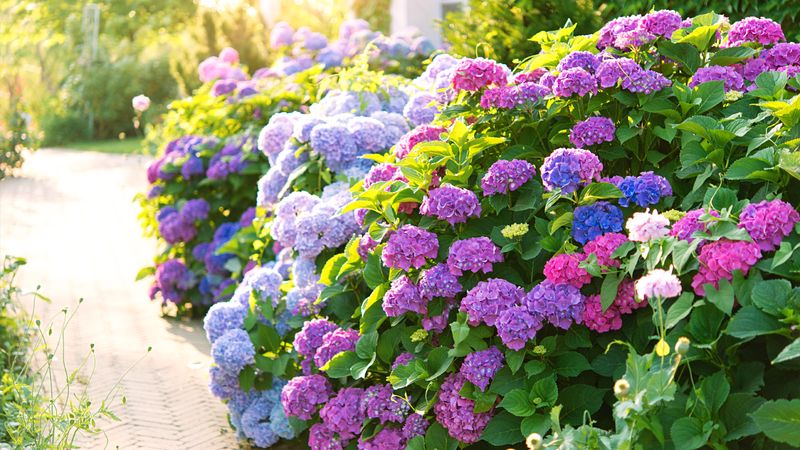
Soil pH and the availability of aluminum in the soil affect flower color in many bigleaf and mountain hydrangeas.
UMass Extension gives approximate ranges: soil below pH 5.5 tends to produce blue flowers, pH 5.5 to 6.5 tends toward purple or mixed colors, and soil above pH 6.5 tends toward pink.
Those are rough targets, not guaranteed outcomes, because the existing soil chemistry, the specific cultivar, and the amount of available aluminum all factor in.
White-flowered hydrangeas and some naturally pink cultivars may respond weakly or not at all to pH adjustments.
Panicle, smooth, and most oakleaf hydrangeas do not follow the same blue-versus-pink story, so applying acidifying amendments to those plants to chase a color change is not going to produce the expected result.
Before adding lime to push toward pink or aluminum sulfate to push toward blue, test your soil.
UMass specifically warns that the amount of amendment needed varies with soil type and current pH, and excess aluminum sulfate can injure plant roots.
Results are also gradual, often taking a full season or more to show clearly.
Household objects like rusty nails, pine needles, or pennies are not reliable tools for this job.
A soil test and a labeled product are the practical starting point for anyone who genuinely wants to shift their hydrangea’s color.
Use Fertilizer Sparingly and Keep Expectations Realistic
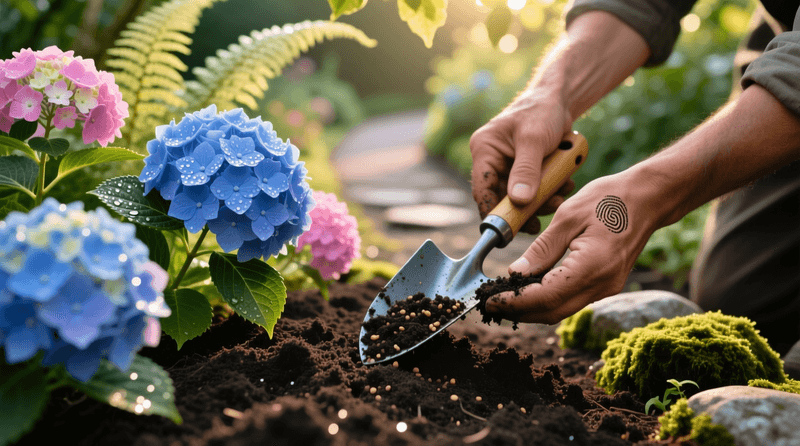
Fertilizer is tempting when a plant is not performing the way you hoped.
More nutrients feel like a logical fix, but with hydrangeas the relationship between feeding and flowering is not that straightforward.
Excess fertilizer, particularly excess nitrogen, tends to push the plant toward lush leafy growth at the expense of flower production, and it can alter soil chemistry or injure roots if applied too heavily.
Many hydrangeas do well with light feeding.
Oregon State University Extension notes that hydrangeas often bloom better when fed lightly, and the most reliable guidance is to follow the product label for the fertilizer you choose.
A general slow-release balanced fertilizer applied in spring works for many types, while gardeners trying to maintain blue flowers in bigleaf hydrangeas may want a low-phosphorus formulation to avoid interfering with aluminum uptake.
But fertilizer is not the main route to more blooms, and chasing flowers with extra feeding often backfires.
Hydrangeas can attract bees and butterflies and do provide some nectar and pollen.
University of Vermont Extension notes that they are not among the top choices for pollinators, so planting them primarily for pollinator support may not deliver what you expect.
They are worth growing for their flowers, their foliage, and their adaptability to a range of landscape conditions.
The most useful next step before changing anything about your hydrangea’s care is to read the plant tag or identify the group.
That single piece of information tells you when to prune, how much sun to aim for, whether a color change is even possible, and how lightly to feed.
Get the type right first, and the rest of the decisions become much easier to make.
A well-matched hydrangea in the right spot, pruned at the right time, is a plant that tends to reward you without much drama.