
If Your Cucumber Vines Keep Blooming But Never Start Cucumbers, These Are The Usual Reasons
Follow us on Google
By 8 a.m., the cucumber patch is already covered in yellow blooms, and still not one little green fruit is showing. That is frustrating, especially when the vines look healthy and your summer salads are already planned out.
In most yards, blooming without cucumbers points to a short list of fixable problems, from flower timing to heat stress to missed pollination. Once you know what your plants are trying to tell you, the garden starts making a lot more sense.
1. Early Blooms Are Often The Wrong Flowers
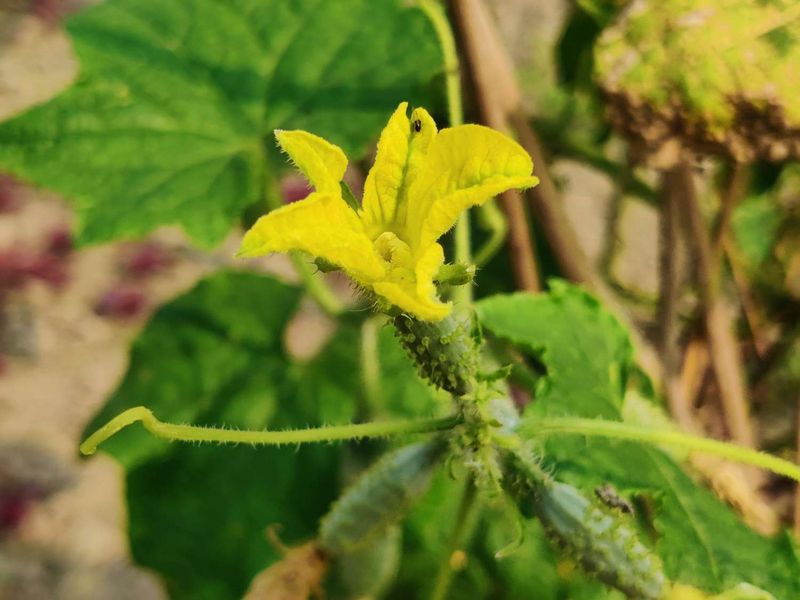
At first glance, a vine full of blooms looks like a promise. Then you lean in, see flowers everywhere, and realize none of them have that tiny baby cucumber sitting behind the petals.
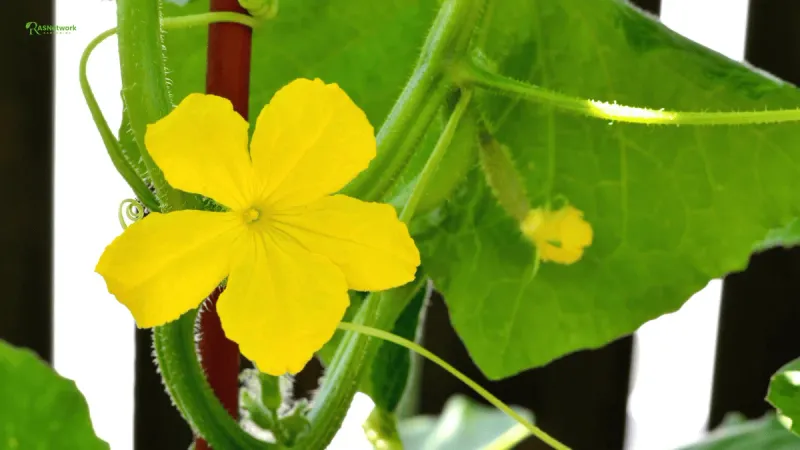
Cucumber plants, Cucumis sativus, usually open male flowers first. Male blooms sit on slim stems and carry pollen, while female blooms have a small swollen ovary, often only 0.25 to 0.5 inches long, at the base.
Many gardeners notice a gap of 7 to 14 days before female flowers show up in useful numbers, especially when vines are still putting on early growth.
So the fix may be patience, not panic. Check flowers every morning for that miniature cucumber shape, and resist adding random fertilizer or extra water just because fruit is not there yet.
A young vine is like a stage crew setting the lights before the main act.
If you planted late in a cooler region, or after a long cloudy stretch, the wait can stretch a little more. Give plants full sun, steady moisture, and another week before you decide something is wrong.
Often the first real change is simple. Female flowers finally arrive, pollinators visit, and the tiny fruits start swelling within a few days.
2. Poor Pollination Stops Fruit Before It Starts
Quiet gardens often tell on themselves. When cucumber flowers open and barely a bee stops by, the blooms can fade by lunch and never set fruit.
Cucumber pollen is sticky and heavy, so wind does not do much of the work. Female flowers need pollen carried from a male bloom, usually in the morning, and one missed visit can mean one missed cucumber.
Iowa State University Extension and other public garden guides note that poor pollination is one of the most common reasons cucumbers bloom without producing.
Watch your patch between about 8 a.m. and 11 a.m. If you do not see bees, hoverflies, or other pollinators after several warm mornings above 65 degrees F, step in.
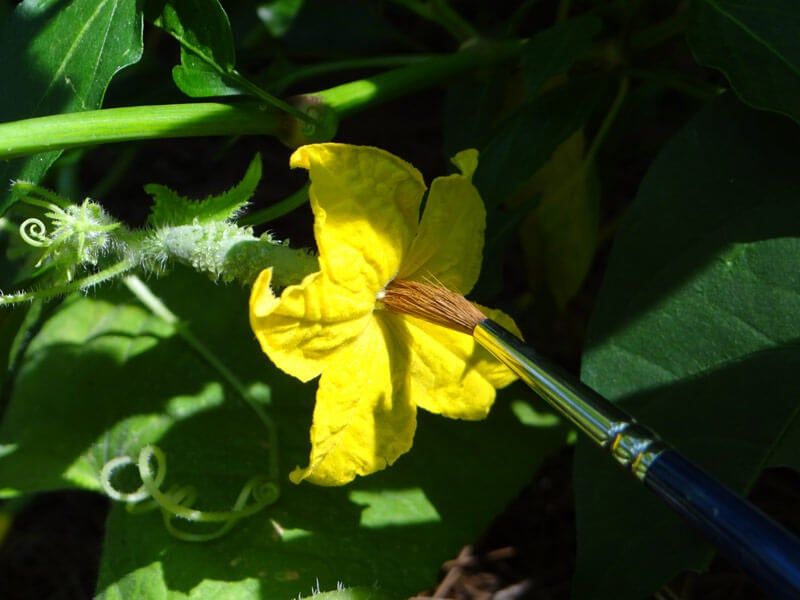
Use a small paintbrush or cotton swab. Touch the pollen inside a male flower, then dab the center of a female flower on the same day it opens.
Skip broad-spectrum insect sprays during bloom, and if you must treat pests, do it at dusk when bees are less active. Planting nearby basil, dill, or zinnias can help bring more visitors over time.
Think of pollinators as your delivery crew. Without them, the order never reaches the porch.
3. Heat And Cold Push Vines Off Balance
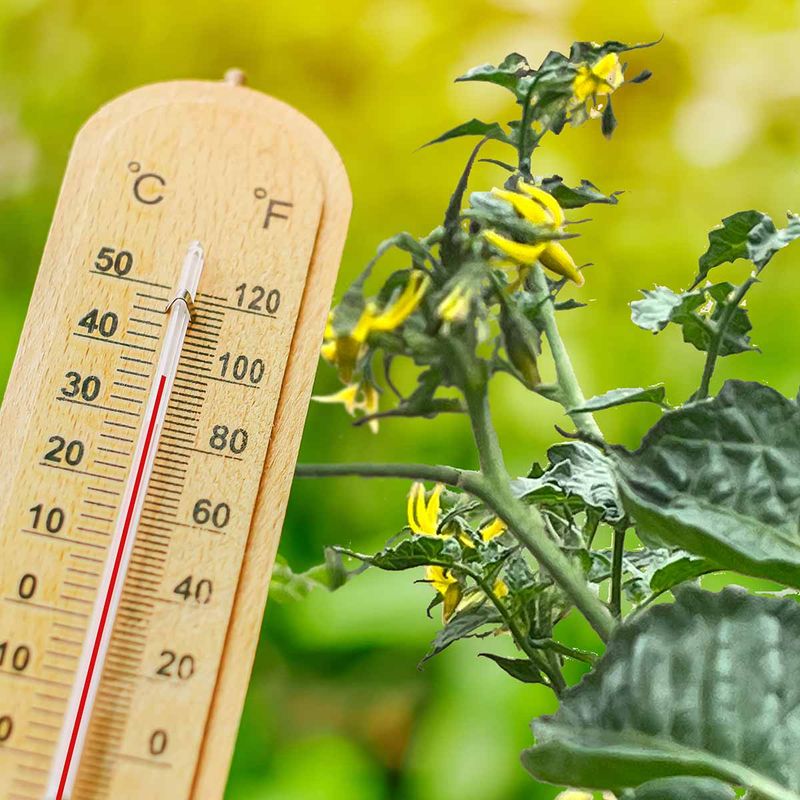
Summer can turn on a dime. One week feels perfect, then afternoons hit 95 degrees F and the vines act like they forgot what fruiting season is for.
Cucumbers like warmth, but they do not love extremes. Fruit set is usually best when daytime temperatures stay near 70 to 85 degrees F and nights stay around 60 to 70 degrees F.
Once days climb above 90 degrees F for several stretches, or nights stay above 75 degrees F, plants may produce more male flowers, drop female flowers, or stall tiny fruits. Cold can do it too, especially when nights dip below 50 degrees F.
In the South, Deep South, and hot inland West, afternoon shade from a 30 to 40 percent shade cloth can protect bloom quality. In cooler regions, planting after soil reaches at least 60 degrees F, with 70 degrees F even better, helps roots and flowering stay in sync.
NOAA summer heat patterns are not the same everywhere, so match your fix to your weather, not somebody else’s post online.
You cannot argue a vine out of weather stress, you can only buffer it. Mulch 2 inches deep, water early, and avoid pruning heavily during a heat wave.
When temperatures settle, the plant often resumes fruiting on its own.
4. Uneven Water Makes Flowers Give Up
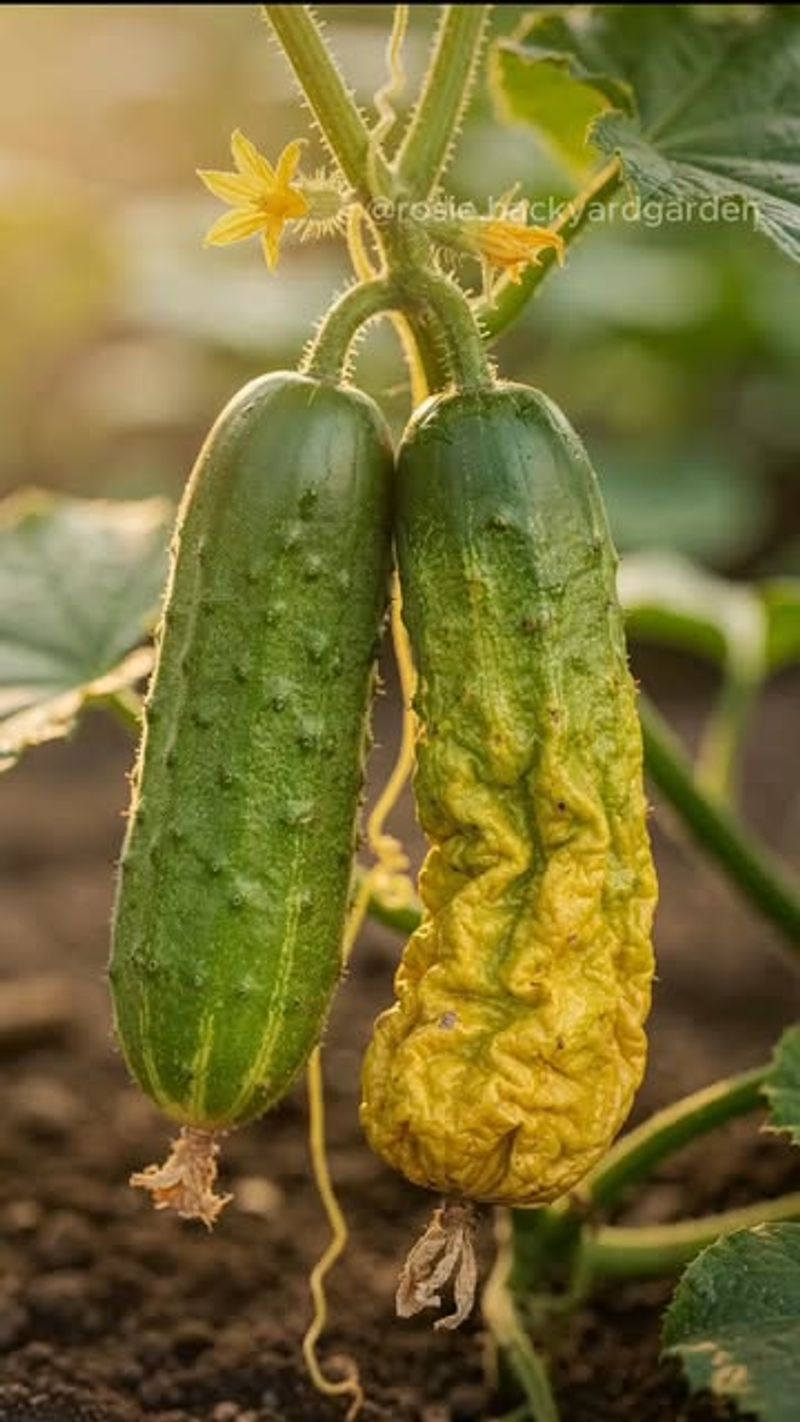
One dry spell followed by a soaking can be enough to throw cucumbers into a sulk. You may still get flowers, but the plant starts treating fruit like an expense it cannot afford.
Cucumbers are mostly water, and steady moisture matters most during bloom and fruit set. A common target is 1 to 2 inches of water per week, including rainfall, though sandy soil and hot spells can push that higher.
If the top 2 inches of soil feel dry, do not wait much longer. In many raised beds during July, watering every 1 to 2 days is more realistic than a once-a-week schedule.
Water at the base instead of overhead so leaves stay drier and disease pressure stays lower. A soaker hose or drip line works especially well, and a mulch layer of straw or shredded leaves about 2 inches deep slows evaporation.
The goal is moist soil, not swampy soil.
Bitter cucumbers and misshapen fruit often trace back to the same problem. The vine behaves like a household checking the water bill and cutting back everywhere.
One deep pattern helps more than heroic rescue watering, though it may take 5 to 7 days of consistency before the plant responds with better fruit set.
5. Too Much Nitrogen Grows Leaves Instead
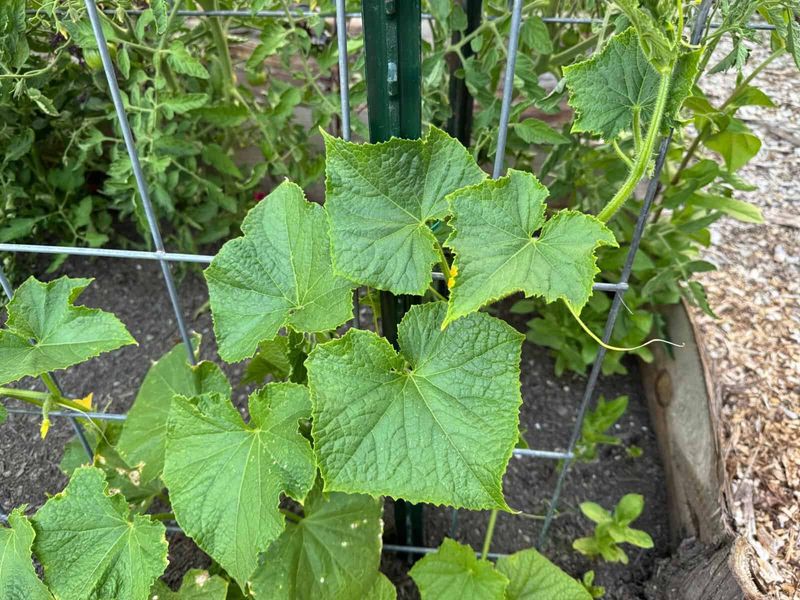
Big leafy vines can fool you. A cucumber plant can look rich and successful while quietly spending all its energy on stems and leaves instead of fruit.
High nitrogen fertilizer is often the reason. Nitrogen drives green growth, which is useful early on, but too much after planting can push vines into overdrive.
You end up with a jungle, fewer female flowers, and very little fruit set. If you fed with lawn fertilizer by mistake, or used repeated doses of fish emulsion without checking the label, that imbalance may be the whole story.
Before planting, many home gardens do fine with a balanced product such as 10-10-10, or a lower nitrogen blend like 5-10-10, applied at label rates. Some extension recommendations fall near 2 to 3 pounds per 100 square feet before planting, but soil tests should guide exact amounts.
During flowering, side-dress lightly with compost or a fertilizer that does not flood the plant with extra nitrogen.
A cucumber vine with too much nitrogen is like a teenager who keeps buying sneakers instead of groceries. If the leaves are huge, dark green, and rampant, ease off feeding, keep water consistent, and let the plant rebalance.
You may not get an instant turnaround, but later flowers often perform better.
6. Shade And Crowding Cut Female Flowers
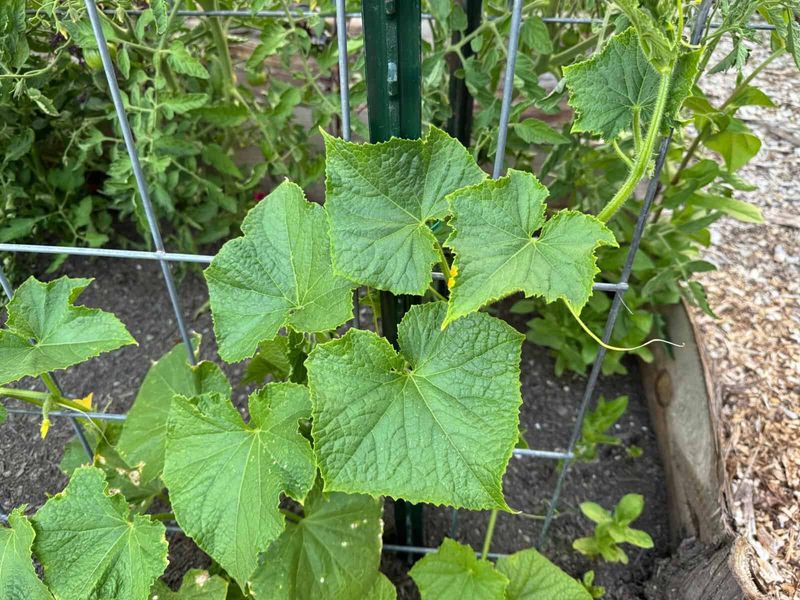
Not every bloom problem starts with fertilizer or bees. Sometimes the vine is simply living in the gardening version of rush hour, packed in tight and reaching for light.
Cucumbers need strong sun to keep making female flowers and filling fruit. In many US yards, 6 hours is the minimum, but 8 or more hours of direct sun usually gives better results.
When vines are shaded by corn, tomatoes, fences, or fast-growing squash, they may flower yet struggle to hold fruit. Crowding also reduces air flow, which raises humidity around leaves and adds stress.
Give vining types about 12 to 24 inches between plants on a trellis. Bush or ground-sprawling types often need 24 to 36 inches, with rows 3 to 5 feet apart depending on the variety.
If your patch is already planted, the practical fix is to train vines upward, remove only a little competing growth around them, and avoid hacking away too much foliage during hot weather.
Sunlight is the plant’s paycheck. When the bed is cramped and dim, fruiting becomes the first expense to get cut.
A cleaner layout does not solve every issue, but it often turns a bloom-heavy vine into one that finally starts setting cucumbers you can actually pick.
7. Some Varieties Need A Pollen Partner
Seed packets can hide a plot twist in small print. You may be doing plenty right and still miss fruit because your variety has special pollination needs.
Some cucumber varieties are gynoecious, which means they produce mostly female flowers. That sounds ideal, but female flowers still need pollen from male flowers unless the variety is parthenocarpic, meaning it can set fruit without pollination.
Many gynoecious seed packets include a few pollinator seeds from a standard monoecious type. If those do not germinate, or were not planted, your vines can bloom heavily and still produce almost nothing.
Check the packet or order page if you still have it. If the variety is gynoecious, add a standard slicing cucumber nearby, or hand-pollinate using a male flower from another plant.
In greenhouses, screened patios, and high tunnels, parthenocarpic varieties often perform better because they do not rely on insect traffic the same way.
Many Midwest and Northeast gardeners run into this after buying high-yield varieties without reading the details. The plant is not being stubborn, it is following its design.
Once a pollen partner enters the picture, the tiny cucumbers behind those female blooms often start enlarging within several days.
8. Root Stress Can Stall A Healthy Looking Vine
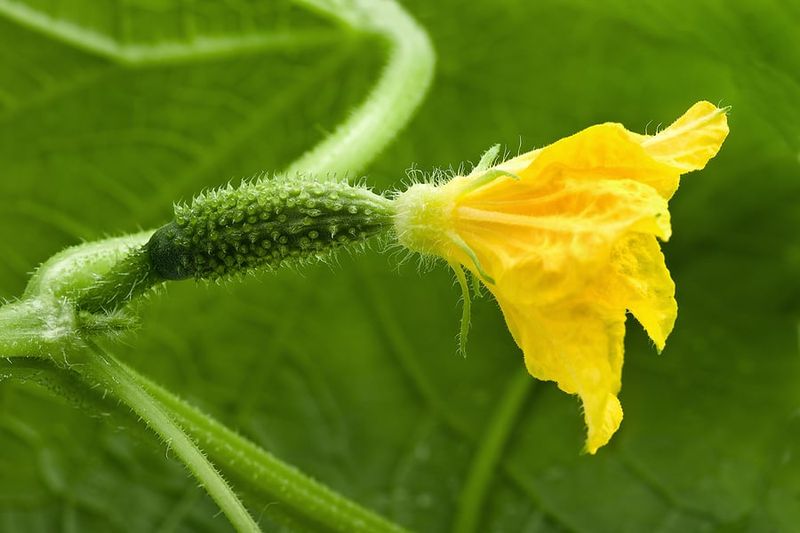
Here is the sneaky one. A vine can stay green, climb hard, and still fail at fruiting because the roots never settled in properly.
Transplant shock, compacted soil, poor drainage, and root damage all reduce the plant’s ability to support female flowers and swelling fruit. Cucumbers prefer loose, well-drained soil with a pH around 6.0 to 6.8.
If the bed stays soggy after rain for more than 24 hours, or dries into a hard crust, roots may be functioning at half speed. You see blooms above ground, but the engine below ground is coughing.
Scratch the soil surface gently and check how fast water moves in. Amending with compost before planting helps, and raised beds are often useful where clay soil holds water too long.
When transplanting, disturb roots as little as possible and set plants at the same depth they were growing in the pot. Direct seeding after frost is often easier in warm soil than forcing tender starts through a rough move.
Do not expect a damaged root system to recover overnight. Keep moisture even, avoid extra fertilizer for a week or two, and let the plant rebuild.
Once the roots act like a solid kitchen foundation instead of a wobbly folding table, fruit set usually improves.
9. Pests And Disease Make Plants Abort Fruit
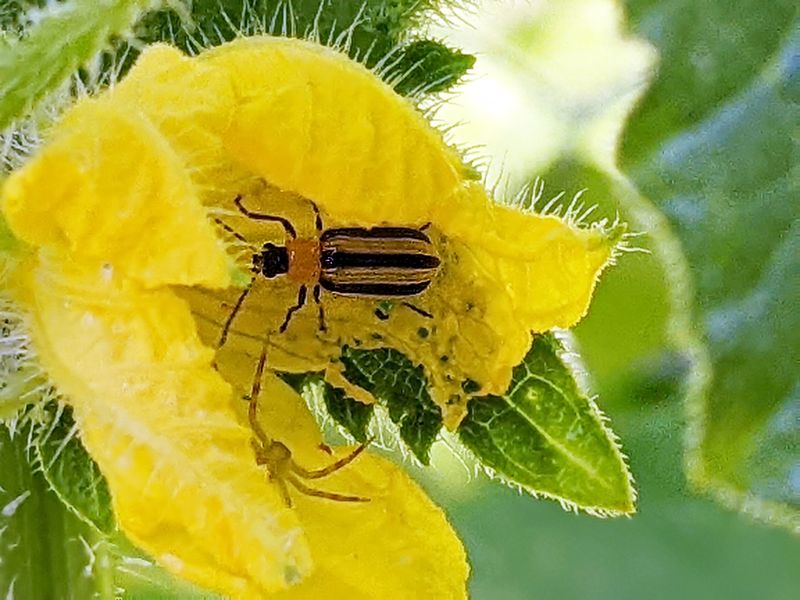
A few flowers can disappear for normal reasons, but repeated drop with ragged leaves is a warning sign. When pests or disease pile on, the plant starts saving itself before it saves your salad.
Cucumber beetles, squash bugs, spider mites, and heavy aphid pressure all stress vines enough to reduce fruit set. Disease can do the same.
Powdery mildew, bacterial wilt, and downy mildew often show up as leaf spotting, yellowing, wilting, or a gray-white coating. Ohio State and other Extension services regularly warn that stressed cucurbits, the squash and cucumber family, may bloom but fail to carry fruit well.
Look under leaves every few days, especially during warm humid stretches. Hand-pick beetles when numbers are low, use row cover early in the season before flowering if cucumber beetles are severe in your area, and water at soil level to keep foliage drier.
Remove badly diseased leaves sparingly, and do not compost plants that clearly carry serious disease if your local guidance advises disposal.
No single spray fixes a worn-out vine. What helps is reducing stress from several angles at once, then giving the plant a little breathing room.
By the final stretch of summer, a cleaner, steadier patch often produces enough cucumbers to make the whole problem feel manageable again.