
The Calm Gardeners Talk About Is Real, And Science Backs It Up
Follow us on Google
Pull a few weeds on a rough afternoon and something shifts, even if you cannot quite explain it. Gardeners have described that feeling for generations, and researchers have started looking at whether the biology behind it holds up.
The short answer is encouraging but complicated: time with plants may genuinely support everyday stress relief, though the effect is not the same for every person or every garden. Understanding what the science actually says can help you get more out of the time you already spend outside.
The Calm May Be Real, but It Is Not Universal
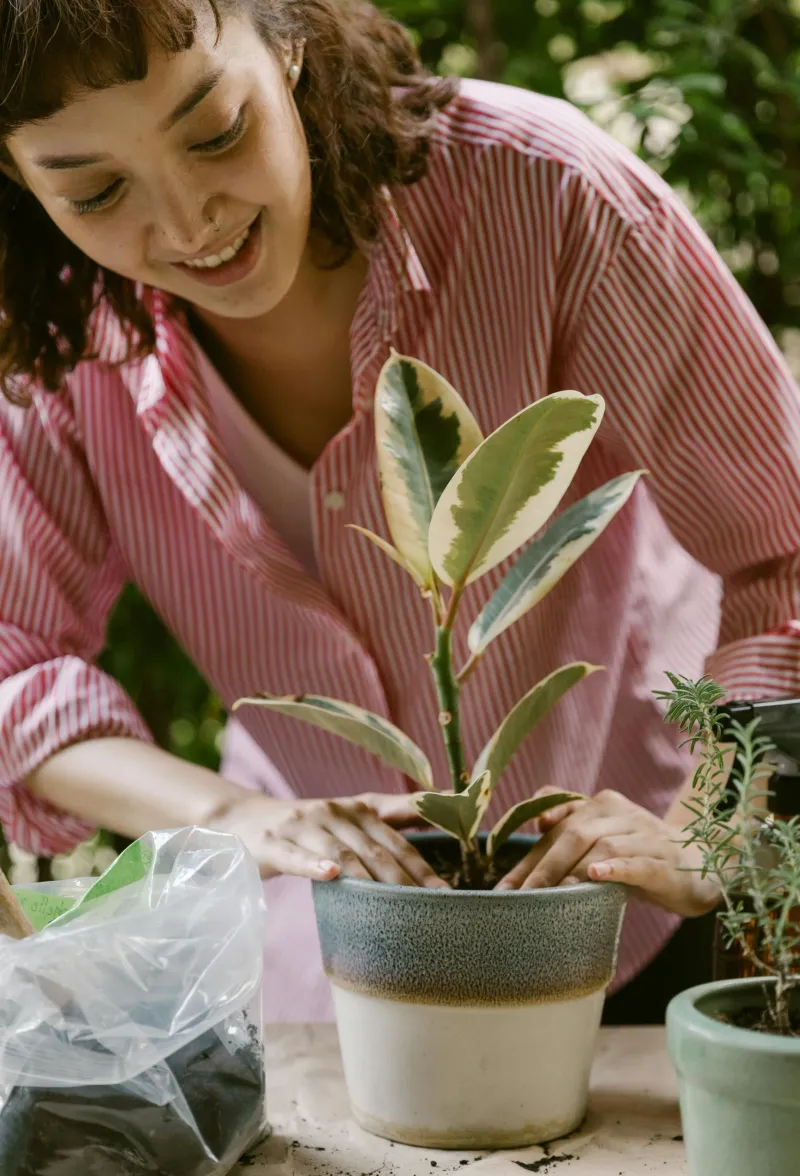
Something does happen out there among the tomato stakes and the overgrown herb bed, but it does not happen the same way for everyone. Researchers have measured that shift in at least one careful experiment.
A controlled study on gardening and stress recovery had participants complete a standard laboratory stress task, then spend 30 minutes either gardening or reading. Both groups showed lower cortisol levels during recovery, but the gardening group showed the stronger reduction during that specific window.
That is an encouraging finding, and it is also a narrow one: a single recovery period, in a lab, does not tell us that gardening permanently changes stress hormones for everybody who picks up a trowel.
The broader picture is similarly promising but uneven. A 2024 umbrella review covering 40 studies found an overall positive effect of gardening on well-being, but its authors were careful to flag high variation across the studies included.
Different interventions, different populations, and different ways of measuring well-being all contributed to results that pointed in a hopeful direction without landing on a clean universal answer.
So the honest version of the title is this: gardening may support everyday stress relief and emotional well-being for many people, and a real body of research stands behind that possibility. What the research does not support is the idea that every gardener will feel calmer, that the effect lasts indefinitely, or that one short experiment proves a permanent hormonal benefit.
The calm is real for a lot of people, the science is genuinely encouraging, and both of those things can be true while the full picture remains incomplete.
A Garden Offers Several Possible Routes to Calm
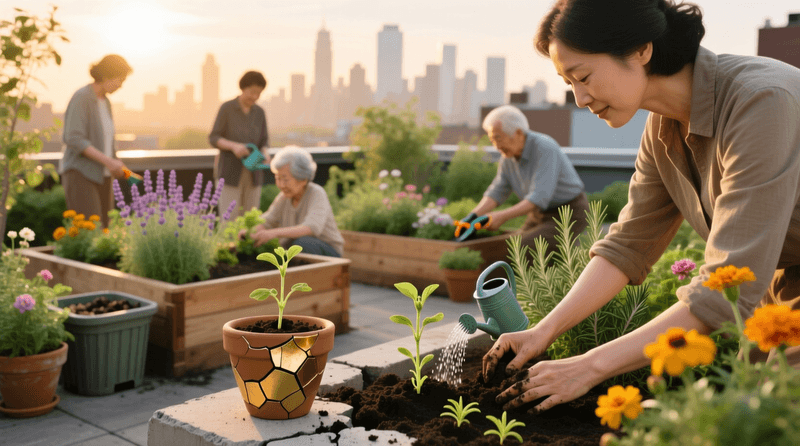
Nobody has pinned down a single reason why pulling deadheads or watering a container can shift your mood. What researchers have instead is a cluster of overlapping ideas, each plausible, none yet proven as the one essential ingredient.
One of the more developed theories is attention restoration. Research on gardening and well-being describes how sustained directed attention, the kind required for spreadsheets, screens, and hard conversations, builds up a kind of mental fatigue over the course of a day.
Nature-based environments may allow that system to rest because they engage a softer, more effortless form of attention. A garden full of moving leaves, changing light, and small tasks pulls your focus gently rather than demanding it.
Beyond that theory, a garden session combines several things that may each contribute a little. A systematic review of nature-based outdoor activities found improvements in depressive mood, anxiety, positive affect, and negative affect across adult studies, with interventions that bundled movement, outdoor exposure, and focused tasks together.
Watering containers, for example, gives you light physical activity, something specific to watch, a clear beginning and end, and the mild satisfaction of a job finished. Harvesting a handful of herbs adds a sensory layer: the smell of bruised basil or lemon thyme is genuinely hard to ignore.
Routine and visible progress may matter too. A plant that was drooping yesterday and stands up today is a small, concrete win at a time when many stressors feel invisible and unresolvable.
None of these factors has been tested in isolation by gardening researchers, so their individual weight is unknown. What the evidence suggests is that the combination, movement plus attention plus outdoor air plus a tangible result, may be what makes a garden feel like a reset rather than just another chore.
Soil contact alone, including bare-hand digging, has not been established as a necessary part of that effect.
The Research Shows Promise, Not a Prescription
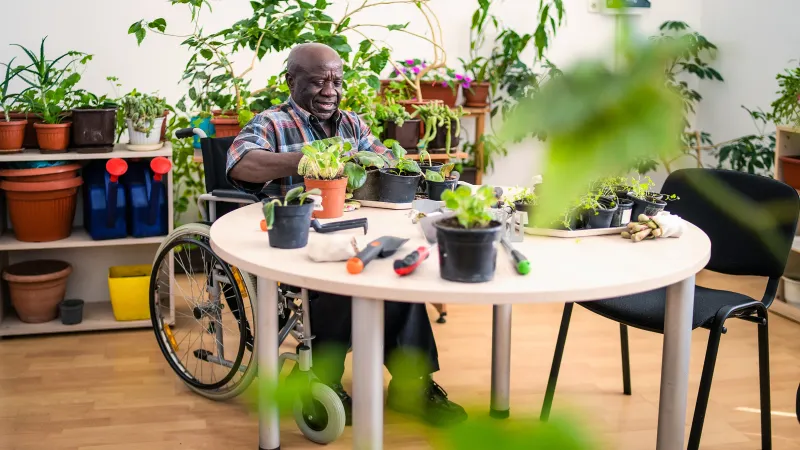
Gardening research covers a wide range of activities that do not all look alike. Some studies involve people tending their own home plots alone.
Others take place in community gardens with social contact built in. Still others are structured therapeutic programs run by trained practitioners.
Lumping all of those together is a bit like counting a solo walk, a spin class, and physical therapy as the same intervention, which makes it hard to draw clean conclusions.
The 2024 umbrella review found that overall positive well-being signal, but its authors specifically noted high heterogeneity across the underlying studies. Many of those studies relied on self-reported gardening habits and self-reported mood, which makes it difficult to separate the effect of gardening from the characteristics of people who are drawn to gardens in the first place.
People who garden regularly may also sleep better, exercise more, and have stronger social ties, and the research often cannot fully untangle those threads.
A systematic review and meta-analysis of gardening activities in adults with chronic conditions found a small-to-medium mental-health effect, but its confidence interval for mental health crossed zero, meaning the pooled estimate was statistically compatible with little or no benefit as well as with meaningful benefit. That is not a reason to dismiss gardening, but it is a reason to present it honestly.
A 2025 review of social and therapeutic horticulture found sizable effects on depression and anxiety symptoms, but also reported high heterogeneity and meaningful risk of bias, and the authors called for better-designed randomized trials before drawing firm clinical conclusions. None of these reviews establish a universal cortisol effect, a fixed gardening dose that works for everyone, or gardening as a stand-alone treatment for depression or anxiety.
What they do suggest is that spending time with plants is a reasonable, accessible way to support well-being, and that is a claim worth making clearly.
Start With One Manageable Garden Task

You do not need a half-acre plot or a full Saturday afternoon to test whether gardening helps you decompress. The evidence points toward focused, contained nature activities rather than marathon sessions.
A review of nature-based outdoor interventions found that promising sessions commonly lasted somewhere between 20 and 90 minutes, but that range came from many different types of programs, not a controlled gardening-dose study. Think of it as a starting window to experiment with, not a prescription to follow precisely.
Picking one task with a clear end point tends to work better than vague time in the garden. Watering your containers from start to finish, harvesting whatever herbs are ready, deadheading the spent blooms on a single bed, or clearing a small patch of weeds all give your attention somewhere specific to land.
You can also simply sit near the plants and watch what is happening. The evidence does not require strenuous digging, and bare-skin contact with soil has not been shown to be a necessary part of the benefit.
Gloves are a reasonable choice, especially if the soil has been treated, if you have any cuts or skin concerns, or if thorny plants are involved.
Your body deserves the same consideration as your mood. University of Minnesota Extension guidance on ergonomics and back health recommends alternating tasks rather than staying in one position too long, taking movement breaks, keeping good posture, lifting with your knees rather than your back, keeping loads close to your body, and asking for help with anything heavy or awkward.
A sore back the next morning does not help the stress-relief goal. Gardening works best as a gentle, repeatable habit rather than an all-out effort, and you are more likely to return to it if it leaves you feeling better than when you started.
Use the Green Space You Can Reach
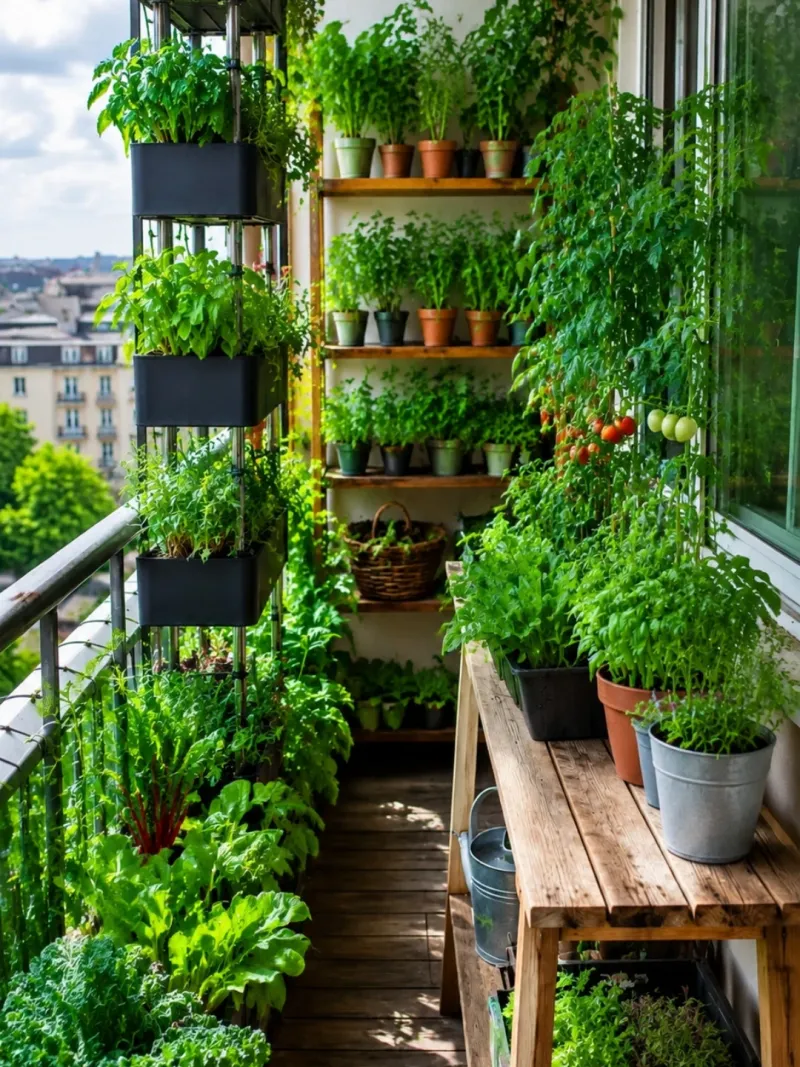
Not every gardener has a yard, and not every yard has a dedicated garden bed. A balcony with a few pots, a raised bed on a concrete patio, a windowsill herb garden, or even a clear view of trees from a porch chair all count as green space worth using.
A systematic review of 19 studies on small-scale greenery and stress found that all included studies reported beneficial health effects, with 15 of the 19 reporting stress reduction specifically. That is a consistent pattern, but the review leaned heavily on indoor greenery research, which means the direct evidence for small outdoor home gardens, balconies, and views of green space is more limited than those headline numbers might suggest.
The World Health Organization has reviewed the relationship between green and blue spaces and mental health across a wide body of literature. That WHO report found an overall positive relationship but also emphasized that results vary by space type, design, individual, and circumstance.
There is no single garden layout or plant combination that research has identified as the most restorative for all people in all settings.
The practical takeaway is straightforward: use whatever green space is actually available to you, because the alternative, staying inside entirely, has less support behind it than any form of outdoor or plant-adjacent time. A container of basil on a sunny step is not a clinical intervention, and it should not be treated as one.
But it is an accessible starting point, and for many people that is exactly what a supportive habit needs to be.
Protect the Calm From Heat, Ticks, and Pesticides
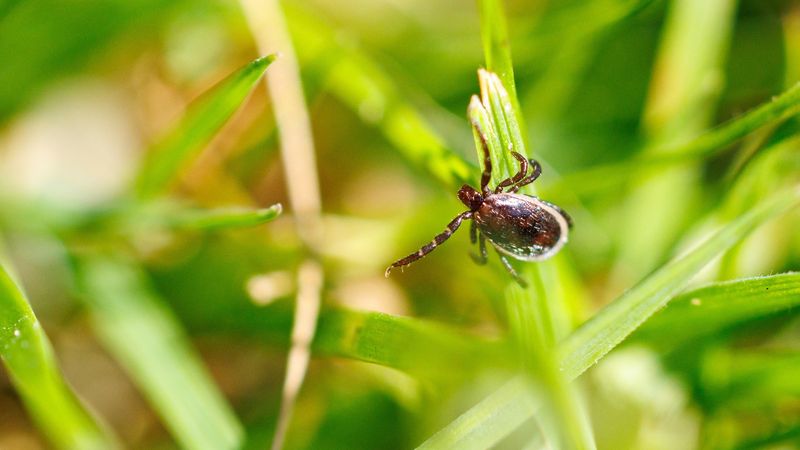
A garden session that ends in heat exhaustion or a tick bite is not a restorative experience. Physical hazards are real, and they vary considerably depending on where in the country you live and what time of year it is.
During periods of high heat, the most straightforward protection is timing: try to garden during the cooler hours of the morning or evening, find shade when you can, take breaks before you feel like you need one, and keep water close. CDC guidance on heat and health lists dizziness, headache, weakness, nausea, unusual sweating, shortness of breath, and muscle cramps as warning signs of overheating.
If any of those appear, stop, move to a cool place, and hydrate. These symptoms are not things to push through.
Ticks are not just a hiking or camping concern. CDC guidance on preventing tick bites specifically includes residential yards and gardens as exposure settings.
Using an EPA-registered repellent, wearing long sleeves and pants when practical, doing a thorough tick check after coming inside, showering within two hours of outdoor exposure, and putting dry clothes through a dryer on high heat for 10 minutes are all recommended steps. Tick species and risk levels differ by region, so checking with your local cooperative extension or health department about what is common in your area is a worthwhile step.
Pesticides deserve the same careful attention whether they come from a natural source or a synthetic one. EPA guidance on protecting your garden advises identifying the pest before choosing a product, selecting one labeled specifically for that pest, using only the amount the label specifies, following all protective-equipment directions, observing reentry and harvest intervals, and keeping products away from waterways.
The EPA states directly that using more product than directed is not more effective and can harm people, plants, and the environment. Natural origin does not remove the need to read and follow the label.
Let Gardening Support Care, Not Replace It
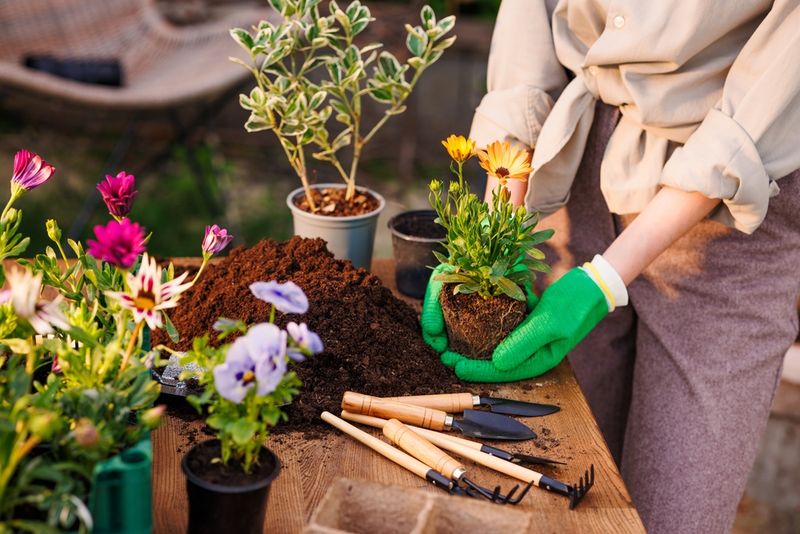
Home gardening and therapeutic horticulture are not the same thing, and the difference matters. Social and therapeutic horticulture generally involves a planned program led or supported by trained practitioners, often targeting people with specific mental-health or physical-health needs.
The encouraging effects found in reviews of those programs should not automatically be applied to someone weeding alone for ten minutes on a Tuesday. Both things can be valuable, but they are different tools.
For everyday stress, a manageable garden task can be one useful part of a wider routine. Penn State Extension’s overview of therapeutic horticulture describes how plant-based activities can complement well-being, while making clear that structured programs differ from casual gardening.
Neither replaces psychotherapy, medication, crisis services, or medical treatment when those are what a person needs.
MedlinePlus guidance on stress advises seeking professional help when severe stress symptoms last two weeks or more, interfere with daily functioning, or include thoughts of suicide. If you are at that point, a garden bed is not the right first step.
A call to a doctor, counselor, or crisis line is.
For everyone else, the invitation is low-pressure: pick one safe, reachable task, spend whatever time feels right, and notice whether it shifts anything for you. Your response may be different on a cool October morning than on a humid August afternoon, and it may change from one week to the next.
That variability is not a failure. It is just what the evidence, and most gardeners’ actual experience, would lead you to expect.