
Why Clover Still Belongs In American Lawns After All These Years
Follow us on Google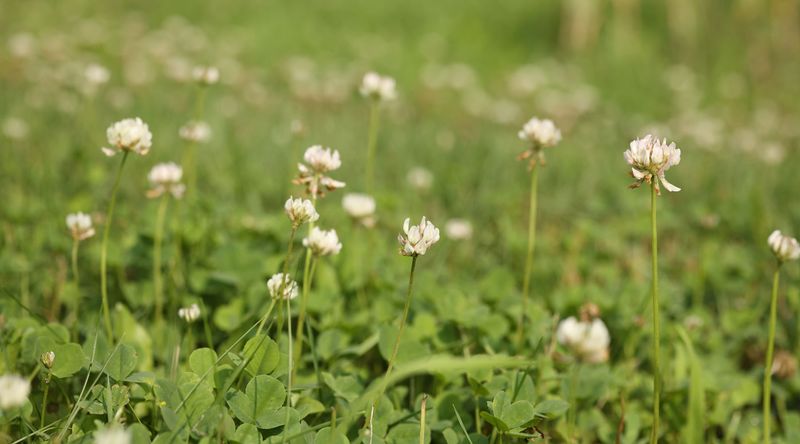
Somewhere around the 1950s, a small three-leafed plant went from being a welcome part of the American lawn to something you were supposed to kill. That shift had a lot to do with chemistry, and not much to do with what actually makes a yard work well.
White clover has been quietly growing back into favor, and for good reason. Understanding why it disappeared, and what it still offers, can change how you think about the patch of green outside your door.
The Rebel In Your Lawn Is White Clover
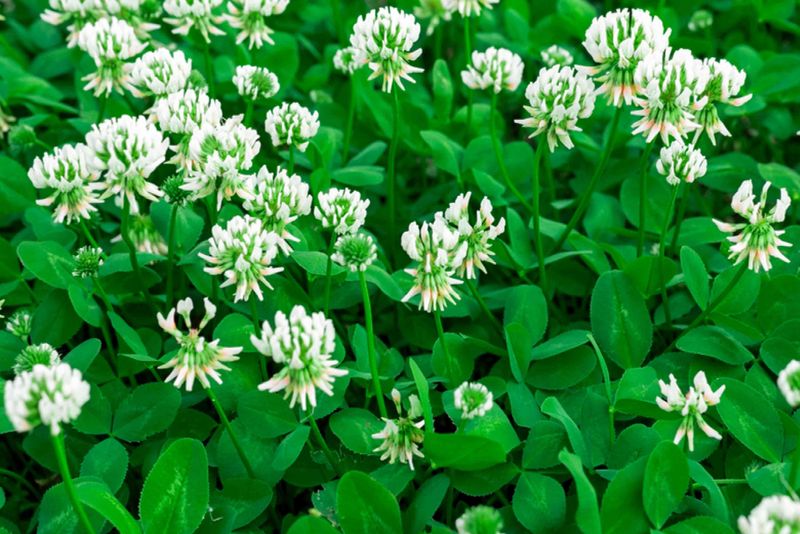
Most homeowners recognize it the moment they look closely: those small, round, three-part leaves with a faint pale chevron across each leaflet, sitting low and spreading quietly through whatever grass is nearby. That plant is white clover, or Dutch white clover, known botanically as Trifolium repens.
It is a perennial legume, meaning it comes back year after year, and it moves through your lawn by sending out creeping stems called stolons that root as they go.
White clover grows roughly 3 to 12 inches tall and can spread 1 to 2 feet from a single plant. It flowers from spring into early fall, producing the small white pom-pom blooms most people know on sight.
University of Minnesota Extension describes it as preferring cool, moist conditions in full sun to partial sun, which is why it shows up most visibly in spring and again after summer heat breaks.
If clover is spreading in your lawn right now, there is a good chance it is telling you something. Penn State Extension notes that clover tends to appear where turf is thin, soil nitrogen is low, compaction has stressed the grass, or drought has opened up bare patches.
That does not mean every clover patch signals a lawn crisis. It means clover is an opportunist, and it moves into spaces where grass is not winning.
The central point of this article is not that you should rip out your grass and plant clover wall to wall. The realistic case for clover is simpler: as a companion in a mixed lawn, it can contribute real benefits that pure grass cannot match on its own.
Chemistry Changed What A Good Lawn Meant
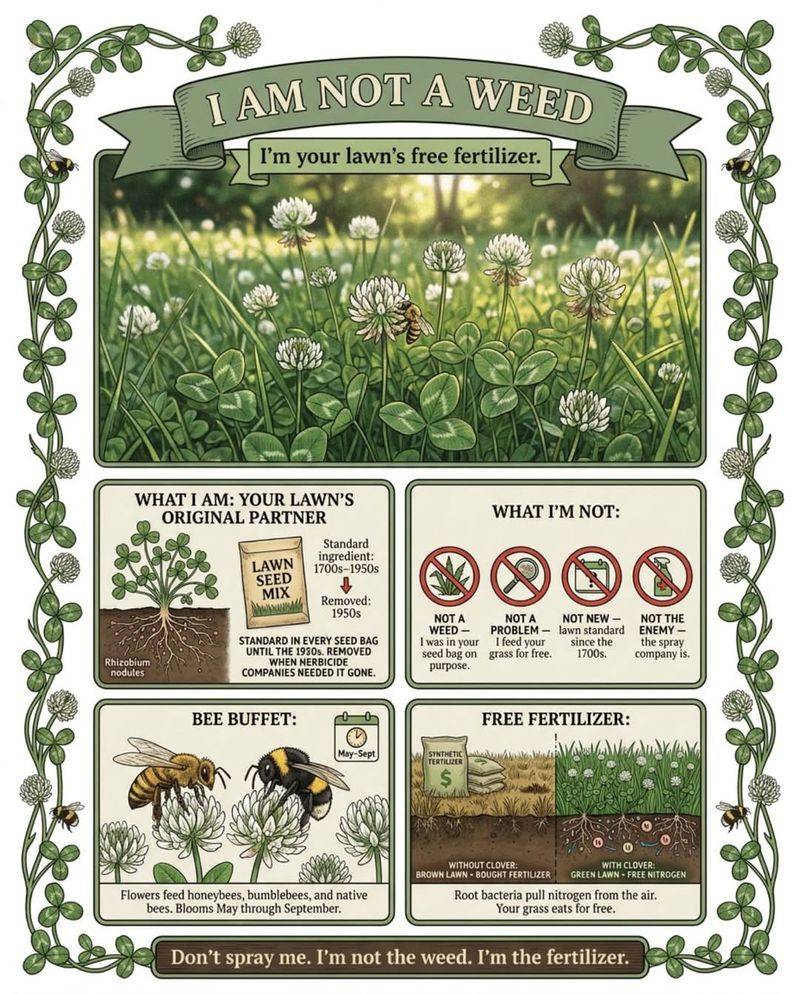
Before the 1940s, clover was not considered a weed. Lawn seed mixes sold to American homeowners often included white clover alongside grass, and for practical reasons: it stays low, it stays green, and it contributes to the mix rather than competing against it.
The idea that a proper lawn meant nothing but grass had not yet taken hold everywhere.
What changed that picture was chemistry. A historical review in Weed Science documents how selective broadleaf herbicides, particularly 2,4-D and related compounds, became widely available in the 1940s and 1950s.
These products could kill broadleaf plants growing among grass without killing the grass itself. That was a genuine technical leap, and it made a grass-only lawn something a homeowner could actually achieve with a sprayer and an afternoon.
Early published work on 2,4-D from that era shows how quickly the compound was recognized as a tool for removing exactly the kind of broadleaf plants that clover represents.
Once you could spray clover out of a lawn cleanly, it became logical to define clover as something to spray. The University of Maryland Extension points to herbicide availability as a key reason clover disappeared from many grass seed mixtures.
But herbicides were not the only force at work. Changing ideas about what a neat yard should look like, advances in turfgrass breeding that produced denser and more uniform grass varieties, the growing availability of synthetic nitrogen fertilizer, regional climate preferences, and plain homeowner habit all pushed in the same direction.
Blaming the whole shift on chemical companies trying to sell fertilizer makes a tidier story than the evidence supports. The more accurate version is that a new technology made grass-only lawns possible, and a combination of culture, commerce, and convenience made them the standard.
The Little Legume Feeds Its Grass Neighbors
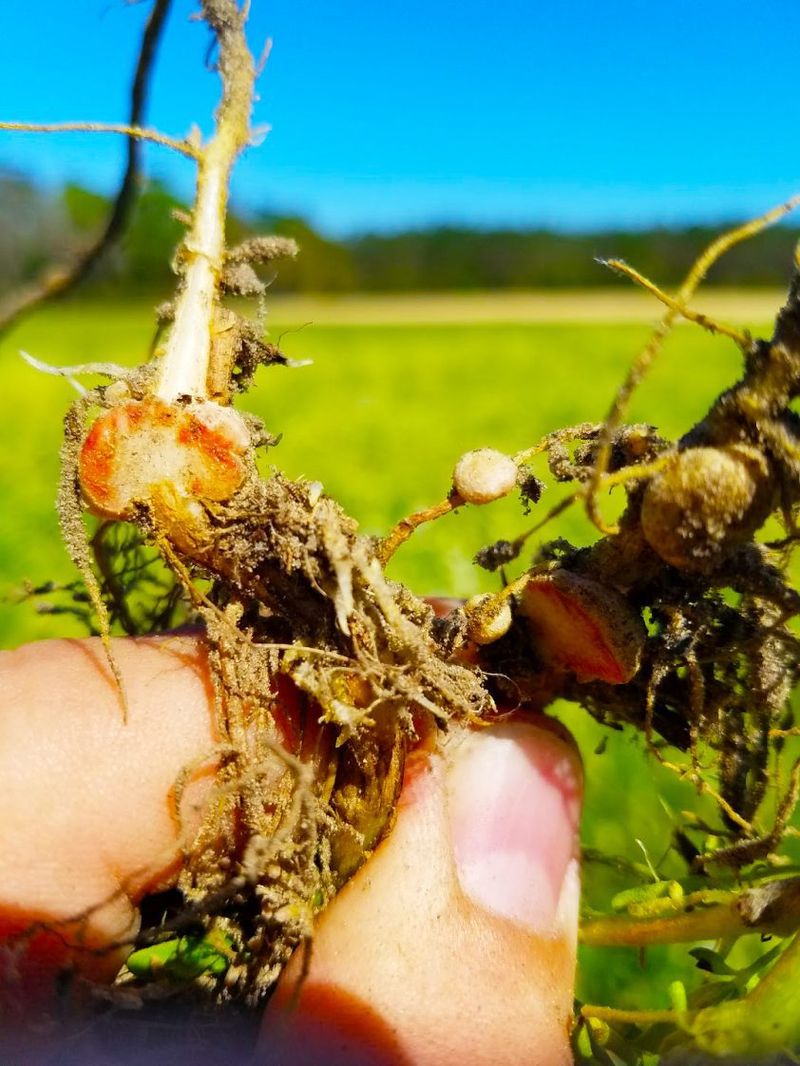
Clover has a partnership going on underground that most grass plants cannot match. Inside the roots of white clover are small nodules containing Rhizobium bacteria.
Those bacteria pull nitrogen directly from the air in the soil and convert it into forms the clover plant can use for growth. That process is called nitrogen fixation, and it is why clover stays green in low-fertility spots where grass turns pale and thin.
The grass next to the clover can benefit from some of that nitrogen, but the path it travels is not a direct pipeline. Research on nitrogen cycling in mixed swards shows that nitrogen moves from clover to nearby plants through several indirect routes: decomposing leaf and root material, root turnover, and root exudates released into the soil.
The amount that actually reaches the grass depends on how much clover is present, how often the lawn is mowed, how moist the soil stays, and which grass species is growing alongside it. Crop science studies on legume-grass mixtures confirm that the transfer is real but variable, not a guaranteed fertilizer substitute.
What clover can do, in the right setup, is reduce how much supplemental nitrogen a lawn needs. University of Maryland research on microclover mixed with turf-type tall fescue found that the combination may provide enough organic nitrogen to reduce one nitrogen application per year in that specific tested context.
That is a meaningful result, but it applies to a particular grass type, a particular clover cultivar, and Maryland’s climate. It does not mean every mixed lawn in every state can drop all fertilizer applications.
Penn State Extension recommends soil testing before drawing conclusions about fertilizer needs either way. Knowing your soil’s baseline nitrogen level tells you far more than watching clover grow.
Flowers Turn Turf Into A Small Food Stop
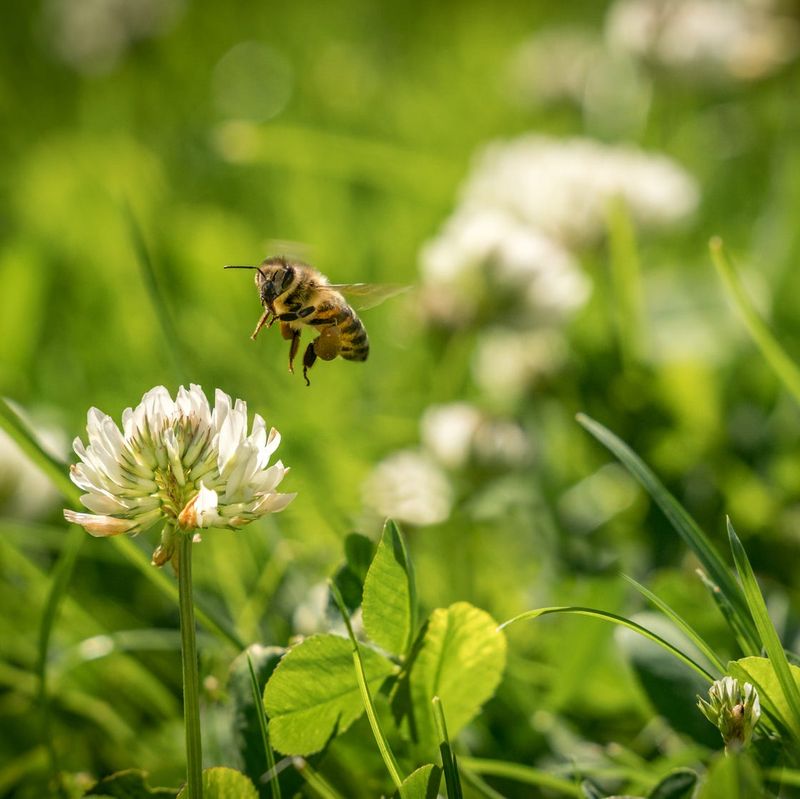
A lawn with clover in bloom is doing something that a pure grass lawn simply cannot do: feeding insects. White clover flowers are a reliable nectar and pollen source for bees and other beneficial insects from late spring through early fall.
University of Minnesota research on bee lawns found 56 bee species visiting white clover in a single study, which puts this common lawn plant in a different category from the grass surrounding it.
That number is worth holding onto, but it also needs a frame around it. A clover-dotted lawn is a useful food stop, not a complete habitat.
The University of Minnesota is clear that a bee lawn is less valuable to pollinators than a planting containing a broad range of native perennials, shrubs, and trees. White clover was introduced from Europe and naturalized across the United States, so calling it a native pollinator plant would be inaccurate.
What it offers is real but partial: consistent forage during the months it blooms, accessible to a wide range of bee species, right in the middle of a yard that would otherwise be ecologically empty.
The practical tradeoff is worth naming honestly. Clover flowers are low to the ground, which is exactly where kids and adults walk barefoot.
University of Maryland Extension specifically lists bee attraction as a disadvantage for households where someone has a bee-sting allergy. That is a documented medical concern, not a reason to dismiss clover for everyone, but it is a real factor for some families.
Households that need a reliably flower-free barefoot play surface should think carefully before adding clover to a high-traffic area.
For yards where those concerns do not apply, a patch of clover in bloom is one of the easiest ways to add ecological function to a conventional lawn without rebuilding the whole yard.
A Grass-And-Clover Mix Handles The Tradeoffs
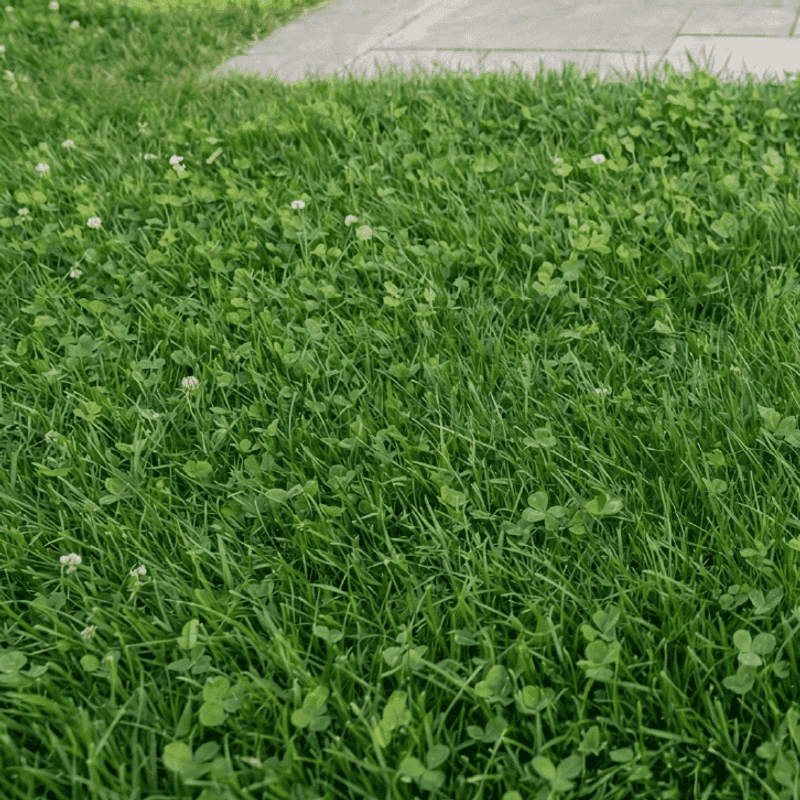
The strongest case for clover is not a clover-only yard. Grass handles repeated foot traffic better than clover does, and a lawn that gets daily use from kids, dogs, or outdoor furniture needs turf that can take that kind of punishment.
Clover’s contribution is different: it adds nitrogen fixation, provides flowers for pollinators, and stays low without aggressive upward growth. A mixed lawn lets both plants do what they do best.
White clover and microclover are not the same plant, even though both belong to the same species. University of Maryland Extension explains that microclover refers to smaller cultivars of white clover, including varieties like Pirouette and Pipolina.
Microclover has smaller leaves, produces fewer flowers, and has a less aggressive clumping habit than standard white clover. It is generally intended as a component within a grass mixture, blending in more smoothly than the larger-leafed Dutch white clover.
The tradeoff is that microclover can decline during high heat and drought and may require reseeding in some climates.
Choosing the right grass partner matters as much as choosing between clover types. University of Minnesota recommends fine fescues as a grass companion for white clover in Minnesota’s climate, pairing them in a bee lawn mixture with self-heal and creeping thyme.
Those are regionally specific recommendations for cool northern climates. A homeowner in the mid-Atlantic or Southeast needs to match grass species to local heat, humidity, and soil before picking a blend.
Minnesota Extension also notes that white clover performs poorly under heavy continuous traffic, so high-use areas of any yard may need to stay pure grass regardless of region.
Extension guidance on mixed lawns suggests thinking through your priorities before seeding: play surface, appearance, pollinator support, fertilizer reduction, or long-term persistence each point toward a different balance of grass and clover.
Give The Seed A Fair Start
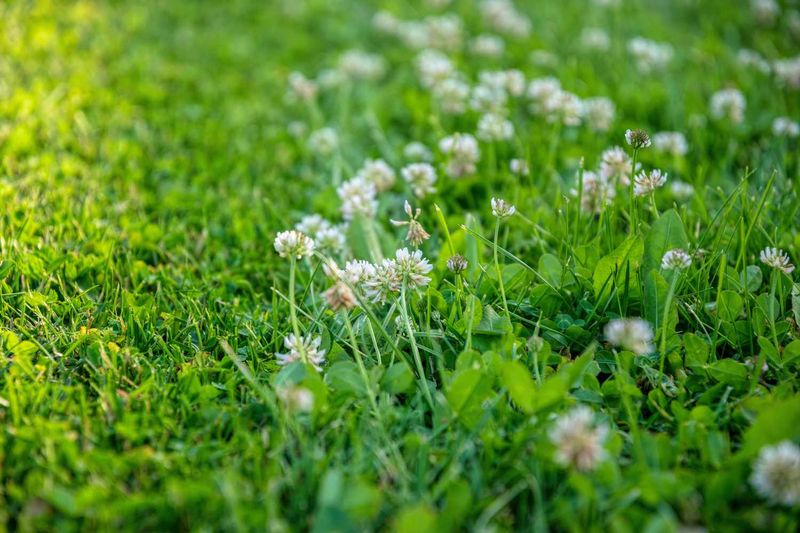
Clover seed is small enough that planting depth matters more than most homeowners expect. Penn State Extension recommends seeding white clover no deeper than one-quarter inch and emphasizes a firm seedbed with good seed-to-soil contact.
For an established lawn, the practical approach is to lightly rake any bare or thin patches, scatter the seed, and press it in with the back of a rake or a lawn roller. Burying clover seed too deep is one of the most common reasons it fails to germinate.
Water matters most in the first few weeks. University of Minnesota Extension advises watering regularly during establishment, especially after spring seeding when the soil can dry quickly between rains.
Once the plants are rooted and spreading, a well-established cool-season mixed lawn may need little supplemental irrigation outside of prolonged drought periods. That is not the same as saying clover is drought-proof.
White clover can thin out sharply during late-summer dry spells, which is one reason a mixed lawn with adapted grass holds together better than a clover-only stand.
Mowing height and timing both affect how well the mix performs. Keep the mower at or near 3 inches for a mixed lawn.
When new seedlings first reach 5 or 6 inches, take off no more than the top one-third at that first cut. After that, a mowing interval of roughly 2 to 3 weeks works for many cool-season situations, though growth rate and your pollinator goals should adjust that schedule.
Letting flowers reach full bloom before mowing gives bees a longer feeding window. Minnesota Extension notes that clover tolerates close mowing well once established, so missing a week is rarely a problem.
For homeowners who want less clover and more grass, the path forward is different from reaching for a sprayer. Penn State Extension recommends soil testing first, then correcting compaction where it exists, improving turf density with overseeding, and choosing grass adapted to the site.
UC IPM guidance adds that dense, vigorous grass is the most reliable long-term competition against clover.
Know When Clover Is The Wrong Tool
White clover has real limits, and knowing them keeps this from turning into a one-size-fits-all recommendation. Heat is the first problem.
University of Maryland Extension reports that microclover does not tolerate high heat and drought well, and can die back when cool-season grass goes dormant in summer. Standard white clover faces the same pressure.
Research on clover persistence under stress conditions identifies late-summer drought as a critical factor that can sharply reduce stand density, especially where dense cover is expected to function as a lawn surface.
Plant science research on white clover under drought confirms that persistence varies significantly by cultivar, soil type, and regional climate. A homeowner in the Deep South or in an arid western climate should expect more difficulty maintaining clover than someone in the cooler, wetter parts of the Northeast or Pacific Northwest.
Shade is another obstacle: white clover performs poorly in low light, so a lawn under tree canopy is not a good candidate for a clover mix. Extension guidance on mixed lawns also notes that heavy, continuous foot traffic can thin clover faster than it can recover.
The U.S. Forest Service documents that white clover was introduced from Europe and has naturalized throughout the United States, including Alaska and Hawaii.
Its pollinator value is genuine, but it does not substitute for a diverse planting of native perennials, shrubs, and trees that support a broader range of insects and wildlife.
If clover is spreading where you do not want it, start with the lawn conditions rather than a sprayer. Soil testing, compaction correction, overseeding with adapted grass, and reducing unnecessary lawn stress will address the underlying reasons clover moved in.
If chemical control becomes necessary, UC IPM warns that products used to control clover in turf can damage ornamental plants, and effectiveness varies by grass type. Never spray flowering clover casually.
EPA pollinator protection guidance requires reading the label, observing bloom restrictions, and avoiding applications while bees are actively foraging. Colorado State University Extension recommends spot treatment over broadcast spraying whenever the affected area is small.
Make The Decision Fit The Yard
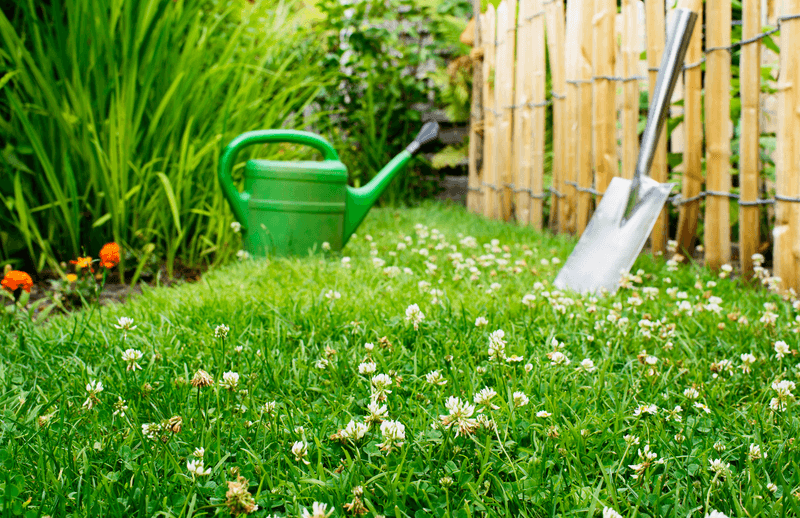
No single verdict fits every yard. Clover works best as one part of a site-matched lawn system, paired with grass adapted to your region, mowed at a sensible height, and supported by occasional soil testing and careful fertility management.
Adding clover to a lawn that is compacted, chronically dry, or planted with the wrong grass for the climate will not fix those problems on its own.
What clover can do, in the right context, is reduce some of the nitrogen your lawn needs and provide consistent pollinator forage during the months it blooms. University of Maryland’s microclover research shows a real but context-specific reduction in fertilizer demand.
Minnesota Extension is straightforward that clover belongs in a mix, not as a standalone solution. Neither source promises that clover makes fertilizer runoff, weed pressure, drought stress, or regular lawn care irrelevant.
EPA guidance on nutrient pollution is clear that over-fertilizing and overwatering residential yards contributes to nitrogen and phosphorus runoff regardless of what is growing in the lawn. Reducing fertilizer demand through a clover mix is a step in the right direction, but EPA yard care recommendations still emphasize soil testing, correct application timing, and avoiding excess as the foundation of responsible lawn fertility.
Keep or add clover where its flowers and low-growing habit fit the way you use your yard. Limit it where heavy traffic, a flower-free play surface, or a sting allergy concern makes blooms a problem.
Either way, the best thing you can do for a lawn that keeps showing clover is fix the underlying conditions that invited it in the first place. A lawn that is dense, well-matched to its site, and managed with some restraint rarely needs much else, and it tends to be the kind of yard that looks good without a lot of fuss.