
American Beautyberry: A Promising North Carolina Native Shrub for a Wildlife-Friendly Yard Edge
Follow us on Google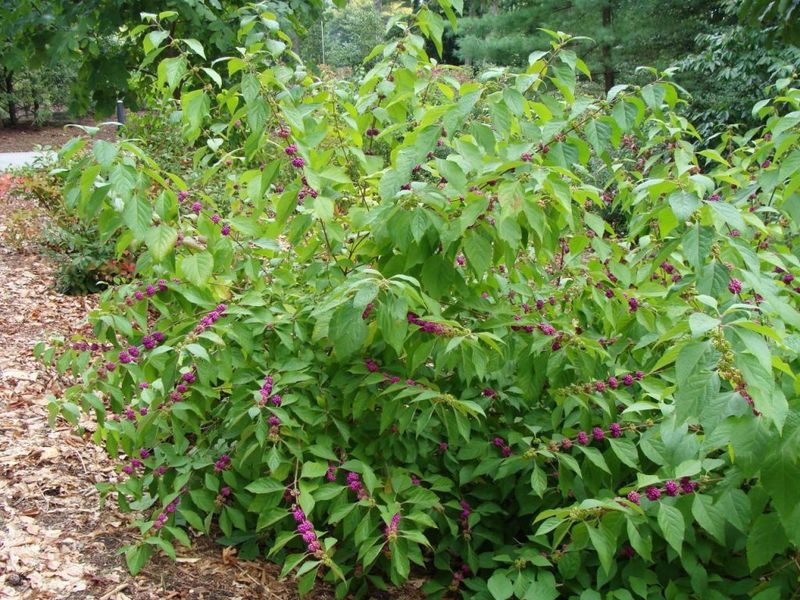
Ticks are a real concern for North Carolina families who spend time in the yard, and many homeowners are searching for ways to lower their risk without turning their outdoor space into a barren, chemical-treated lot. American beautyberry is a native shrub that grows throughout the state and has sparked genuine scientific interest because compounds found in its leaves showed tick-repellent activity in lab testing.
That research is worth knowing about, but it also comes with important limits that every homeowner should understand before treating the plant as a pest-control solution. This article walks through what beautyberry can honestly offer, where to place it, and what other steps actually help protect your family and pets.
American beautyberry fits a North Carolina wildlife-friendly border
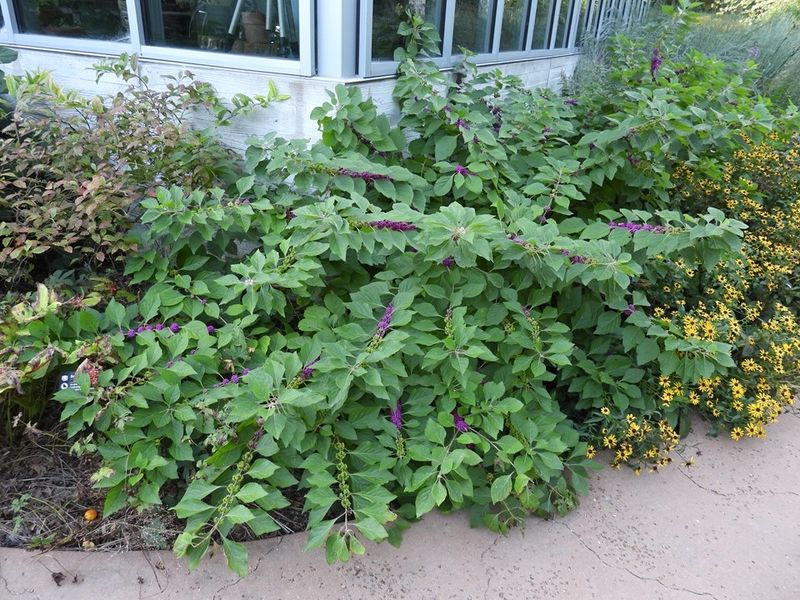
American beautyberry (Callicarpa americana) grows naturally across North Carolina, from the Coastal Plain through the Piedmont and into the Mountain foothills. NC State Extension’s plant profile describes it as a deciduous shrub that typically reaches 3 to 8 feet tall and 3 to 6 feet wide, with arching branches that give it a loose, relaxed shape in the landscape.
It performs well in full sun to partial shade and prefers well-drained soil, making it adaptable to a wide range of residential settings.
The plant earns its name in late summer and fall, when tight clusters of vivid purple berries line each branch. Those berries ripen from roughly August through October and provide food for songbirds including American robins, brown thrashers, purple finches, and eastern towhees, along with small mammals that share the yard.
For homeowners who want to support North Carolina wildlife without importing exotic species, beautyberry fits naturally into a border planting, a naturalized corner, or a pollinator-friendly yard design.
Beautyberry can be planted in groups for a denser effect or used as a single specimen where space allows. Its seasonal color, wildlife value, and native status make it a reasonable candidate for the habitat side of a yard edge.
What it cannot do, based on current research, is guarantee a safer tick environment on its own. Its ornamental and ecological benefits are real and separate from its reputation as a tick-related plant, and the two should not be treated as the same thing when you are deciding where and why to plant it.
The tick research tested beautyberry compounds on treated cloth
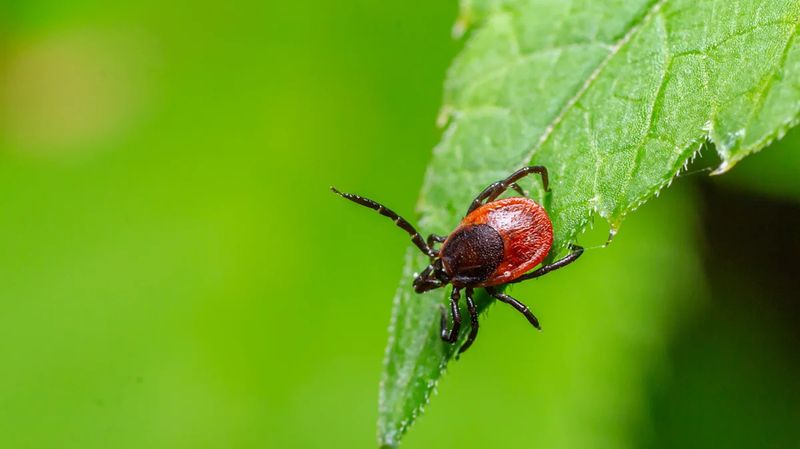
Beautyberry’s connection to tick science comes from a specific line of laboratory research. Scientists isolated two terpenoid compounds from the leaves of Callicarpa americana: callicarpenal and intermedeol.
These compounds were then applied at controlled concentrations to cloth and tested against tick nymphs under laboratory conditions.
A published study on the repellency of these two terpenoids found that treated cloth repelled 98% of blacklegged tick nymphs (Ixodes scapularis) and 96% of the same species under the tested conditions. Those are striking numbers, and they explain why beautyberry keeps appearing in natural-repellent conversations.
The blacklegged tick is one of the species responsible for Lyme disease transmission in North Carolina, so results involving that species carry practical weight.
The critical detail is what the study actually measured. Researchers tested isolated compounds applied to fabric in a controlled lab setting, not a living shrub growing in a yard, not leaves crushed and scattered around a garden bed, and not a homemade spray made from foliage.
The concentration and delivery method in the assay are not the same as what an intact plant releases into the air or soil around it. Treating the published numbers as proof that a beautyberry hedge will repel ticks from your property skips over the gap between a lab result and a residential landscape.
The research is scientifically relevant and genuinely promising as a starting point for future repellent development. Understood on those terms, it gives beautyberry a credible scientific association that most ornamental shrubs lack.
Understood plainly, it means that certain compounds found in beautyberry leaves showed strong activity against blacklegged tick nymphs in a laboratory, and that is a meaningful but limited finding.
Laboratory repellency does not make a planted hedge a tick fence
One of the most common misreads of the beautyberry research is treating a lab result as a field result. The study that reported high repellency against blacklegged tick nymphs did not test intact shrubs, did not test crushed leaves placed at the perimeter of a yard, and did not measure whether beautyberry plantings reduce tick abundance or movement in a residential setting.
No cited research establishes that planting beautyberry lowers tick counts in a yard or reduces the chance of a tick bite or tickborne illness.
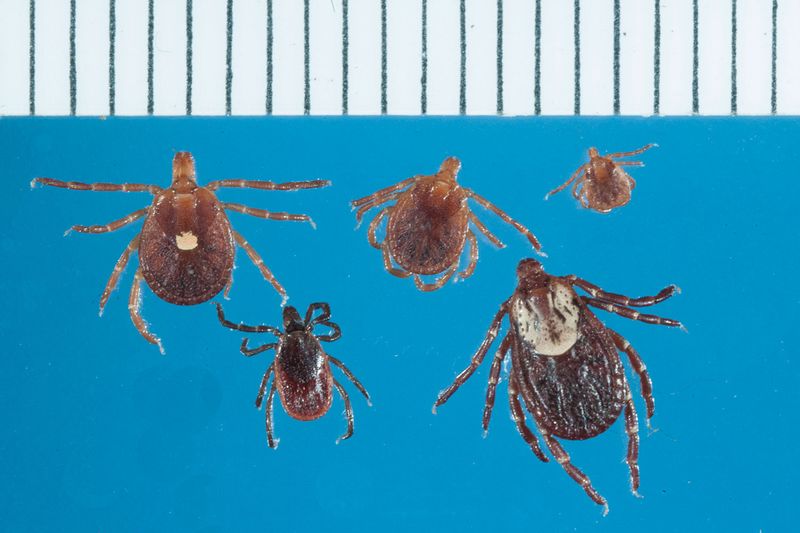
The same study found substantially weaker performance against lone star tick nymphs (Amblyomma americanum), which are common and medically significant across much of North Carolina. Generalizing the 98% blacklegged-tick result to every tick species in the state would overstate what the research actually shows.
Homeowners dealing with lone star ticks, which are widespread in brushy and woodland-edge habitats here, should not expect the same outcome.
A separate line of research found mosquito bite-deterrent activity from compounds isolated from American and Japanese beautyberry leaves, as reported in a published mosquito-deterrent study on beautyberry terpenoids. That study also worked with isolated compounds, not with an unaltered shrub growing outdoors.
An uncrushed beautyberry plant sitting beside a patio has not been shown to reduce mosquito bites in that space.
A broader systematic review of residential yard tick risk factors found that landscape features, host activity, and vegetation management matter more as predictors of tick exposure than the presence or absence of any particular native plant. The gap between a promising compound and a proven outdoor barrier is real, and filling that gap honestly is what lets homeowners make decisions that actually help.
Place beautyberry behind a maintained transition zone
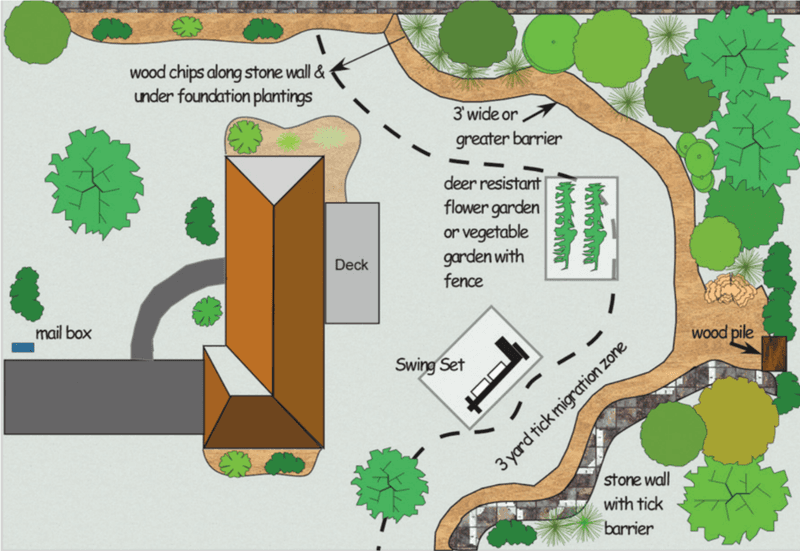
Knowing where to put beautyberry matters as much as knowing what it can and cannot do. The practical rule is straightforward: position it on the habitat side of a maintained transition, not directly beside children’s play equipment, decks, patios, or lawn furniture.
A shrub that attracts birds and wildlife belongs at the outer edge of the yard, where its ecological work can happen without placing it right next to the spaces where your family spends the most time.
CDC guidance on preventing tick bites recommends maintaining a three-foot-wide strip of wood chips or gravel between mowed lawn or recreation areas and wooded or brushy vegetation. That strip creates a physical and environmental boundary that blacklegged ticks, which prefer moist, shaded leaf litter, are less likely to cross.
It also gives you a visual line that separates the managed, lower-risk part of your yard from the habitat zone where beautyberry and other naturalized plants belong.
Placing the shrub behind that buffer does two things at once. It keeps beautyberry’s wildlife benefits active, since birds and small mammals will still find and use the berries from the habitat side.
At the same time, the maintained transition reduces the chance that ticks moving through the shrub border will travel directly into the spaces where children play or adults sit. The shrub itself has no proven standalone repellent effect in a yard setting, so the transition zone does the practical separation work that the plant alone cannot.
CDC’s Lyme disease prevention guidance reinforces keeping high-use household areas away from grassy, brushy, and wooded edges as a general protective measure. That principle applies whether or not beautyberry is part of the border planting.
Maintain the edge around the places people use

A beautyberry planting works best as part of a managed yard, not as a substitute for one. The practices that most directly affect tick habitat are the ones that happen regularly, not seasonally, and they focus on the conditions ticks need to survive: shade, moisture, and undisturbed ground cover close to where people walk and play.
Keep grass short in all areas where your family moves through or sits. Remove leaf litter from around patios, play equipment, garden beds, and lawn seating areas, especially during the fall when leaves accumulate quickly.
Clear tall grass and unmanaged brush within a reasonable distance of the house. Trim shrubs and low-hanging branches enough to let sunlight reach the ground near activity areas, because ticks do not do well in dry, sunny conditions.
CDC’s tick prevention guidance identifies these steps as recommended ways to reduce the habitat conditions that support tick populations near homes.
One risk specific to beautyberry and similar naturalized shrubs is that a dense, shaded border allowed to grow unchecked can merge with leaf litter, brush piles, and damp woodland cover. That combination creates exactly the kind of microhabitat ticks prefer.
Keeping the border tidy, the base of the shrubs clear of accumulated debris, and the transition zone between the border and the lawn maintained prevents the habitat planting from working against you.
A study assessing effectiveness of residential yard management measures found that vegetation management practices generally have more direct support from yard-based evidence than plant-selection strategies do. These steps are recommended risk-reduction measures with varying levels of evidence behind them, and none of them guarantee that ticks will stay out of your yard or that tickborne disease will not occur.
What they do is reduce the conditions that make your yard more welcoming to ticks over time.
Keep wildlife habitat separate from high-use household space
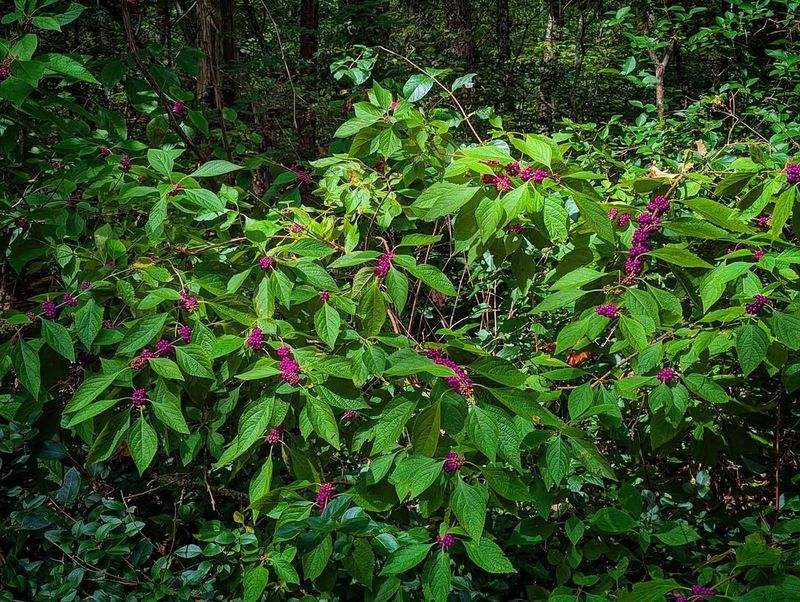
American beautyberry genuinely earns its place in a North Carolina wildlife planting. Robins, brown thrashers, towhees, and purple finches are among the birds that feed on the berries from late summer into fall, and small mammals use them as well.
For homeowners who want to support local wildlife without installing a formal garden, a beautyberry border at the yard’s outer edge delivers real ecological value through the growing season.
That wildlife value does not automatically lower tick risk near the house, and in some cases it works in the opposite direction. The animals that visit beautyberry for its berries, including deer, raccoons, and rodents, are hosts that carry ticks and influence how tick populations move through a landscape.
Research on tick-borne pathogen spillover into urban yards found that animal host activity is a meaningful factor in residential tick exposure. Welcoming wildlife to the yard is a reasonable and worthwhile goal; understanding that it comes with some tick-host traffic is part of making informed decisions about where to put habitat plantings.
Beautyberry is also not deer-proof by virtue of being native. NC State Extension’s native plants guidance notes that native plants vary widely in deer palatability, and the beautyberry plant profile specifically notes that white-tailed deer browse the leaves and eat the fruit.
Deer moving through a beautyberry border are exactly the kind of host contact that can bring ticks closer to the yard.
The solution is not to remove habitat plantings from the property but to use the maintained transition zone to keep them separated from the spaces where people and pets spend their time. Biodiversity and household protection are not incompatible goals; they just need a clear boundary between them.
Protect people and pets beyond the landscape
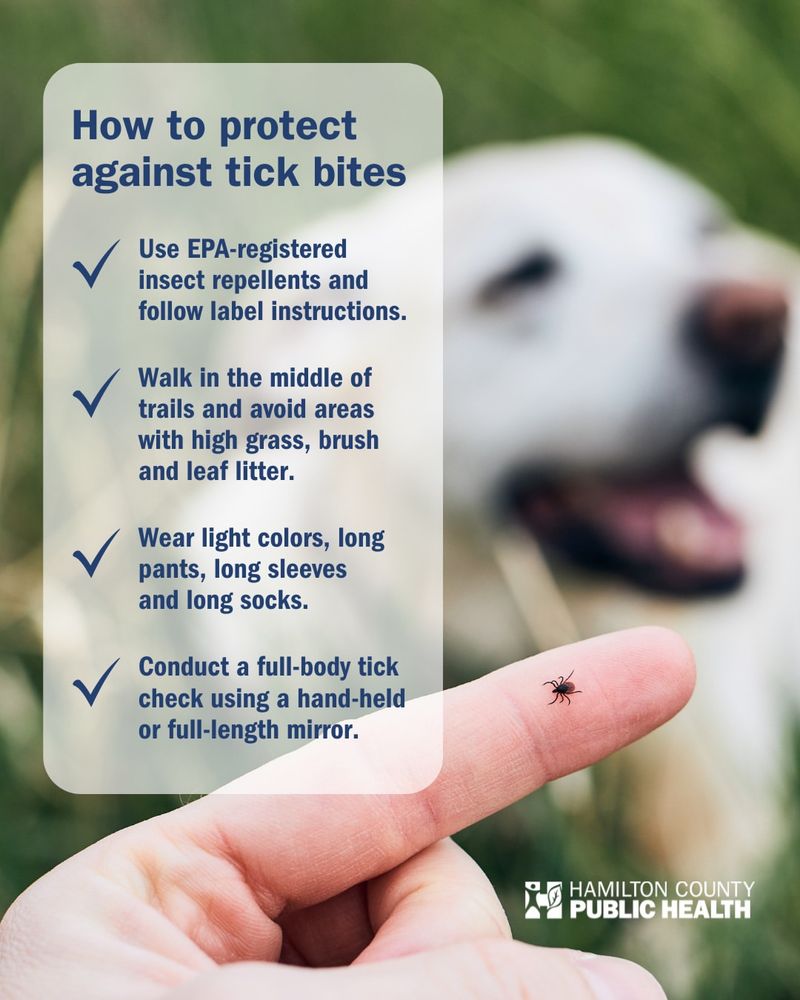
Yard design is one layer of tick risk management, not the whole picture. Ticks are found throughout North Carolina, from the Piedmont to the coast to the mountains, and North Carolina Division of Public Health’s vector-borne disease information identifies ehrlichiosis, Lyme disease, Rocky Mountain spotted fever, spotted-fever rickettsioses, and STARI among the tick-related health concerns in the state.
Homeowners in suburban neighborhoods and rural properties alike face tick exposure, so protection needs to travel with people, not just stay at the yard edge.
Use EPA-registered repellents on exposed skin and clothing when spending time outdoors, following the product label directions for age-appropriate use and reapplication. CDC guidance on Lyme disease prevention recommends products containing DEET, picaridin, IR3535, or oil of lemon eucalyptus, depending on the person’s age and the situation.
Conduct a full-body tick check after any time spent in grassy, brushy, or wooded areas, including your own backyard. Shower within two hours of coming inside when possible.
For pets, daily tick checks after outdoor time are a basic and effective habit. Dogs should have veterinary-recommended tick preventives year-round in North Carolina, where ticks remain active during mild winter days.
CDC’s guidance on preventing ticks on pets emphasizes consulting a veterinarian before applying any tick product to cats, because cats are especially sensitive to certain chemicals that are safe for dogs. Never substitute beautyberry leaves, a beautyberry border, or any homemade plant-based preparation for these precautions.
No evidence supports raw or crushed beautyberry as a safe or effective repellent for people or animals in household use.
Use beautyberry as one qualified layer of yard planning
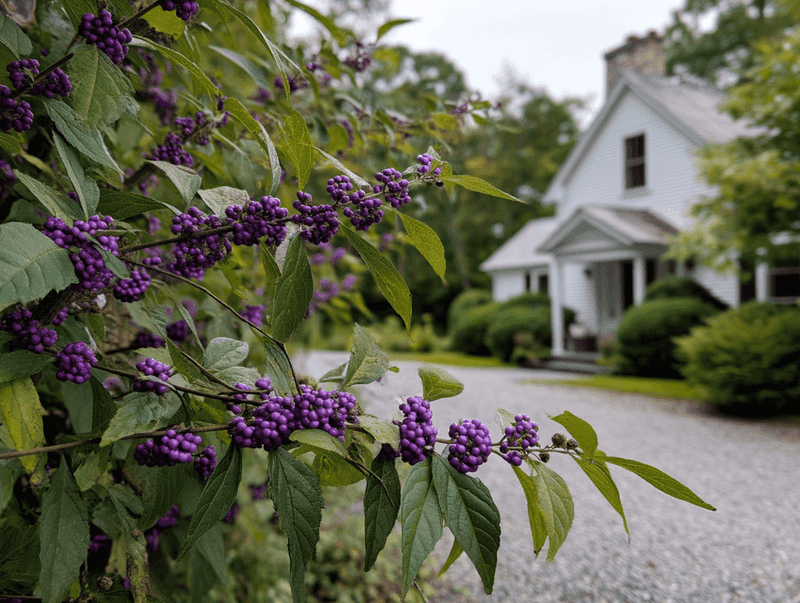
American beautyberry brings two things to a North Carolina yard: genuine native habitat value and a scientifically documented connection to compounds that repelled blacklegged tick nymphs in controlled laboratory assays. Both of those things are worth having.
Neither of them, on its own or together, creates a tick-resistant yard edge or prevents tickborne disease.
Place beautyberry behind a three-foot wood-chip or gravel transition on the habitat side of your yard, away from play areas and frequently used seating. Pair that placement with regular mowing, leaf-litter removal, and brush management in the spaces where your family actually spends time.
Keep up with EPA-registered repellents and daily tick checks for people and pets, and follow veterinary guidance for animal preventives. CDC’s tick prevention recommendations and NC Extension’s beautyberry profile together support a layered approach rather than any single fix.
A yard that uses beautyberry well is one where the shrub earns its place through birds, berries, and botanical curiosity, while the real protective work happens through consistent maintenance and personal precautions. That combination makes for a yard that feels genuinely alive and a little more manageable at the same time.