
The Backyard Animal North Carolina Families Keep Fearing Is Actually Eating Their Ticks
Follow us on Google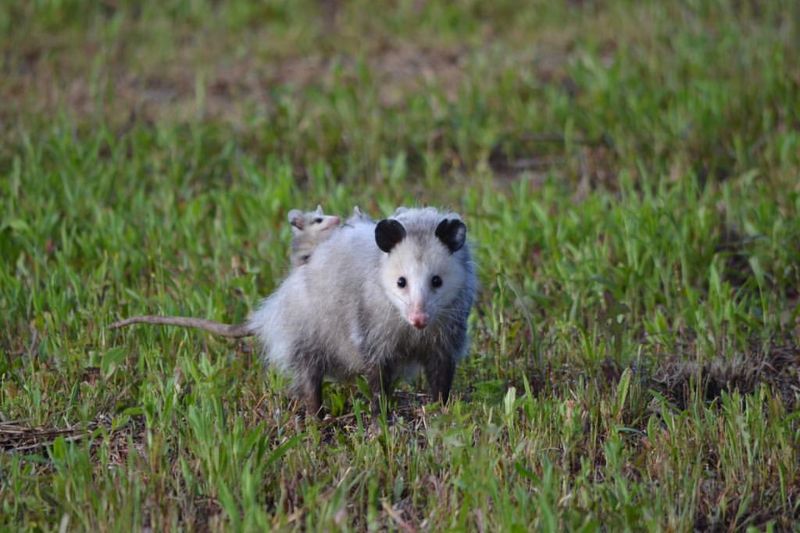
Something shuffles across the back porch after dark, and a lot of North Carolina families assume the worst. That pointy-faced, slow-moving creature is actually a Virginia opossum, and a popular story claims it devours thousands of ticks a week, making your yard safer just by showing up.
The truth is more interesting and more nuanced than that headline suggests. Understanding what opossums really do, and what they cannot do, helps families protect their yards and their kids without dismissing a genuinely useful native animal.
Meet one possible North Carolina nighttime visitor
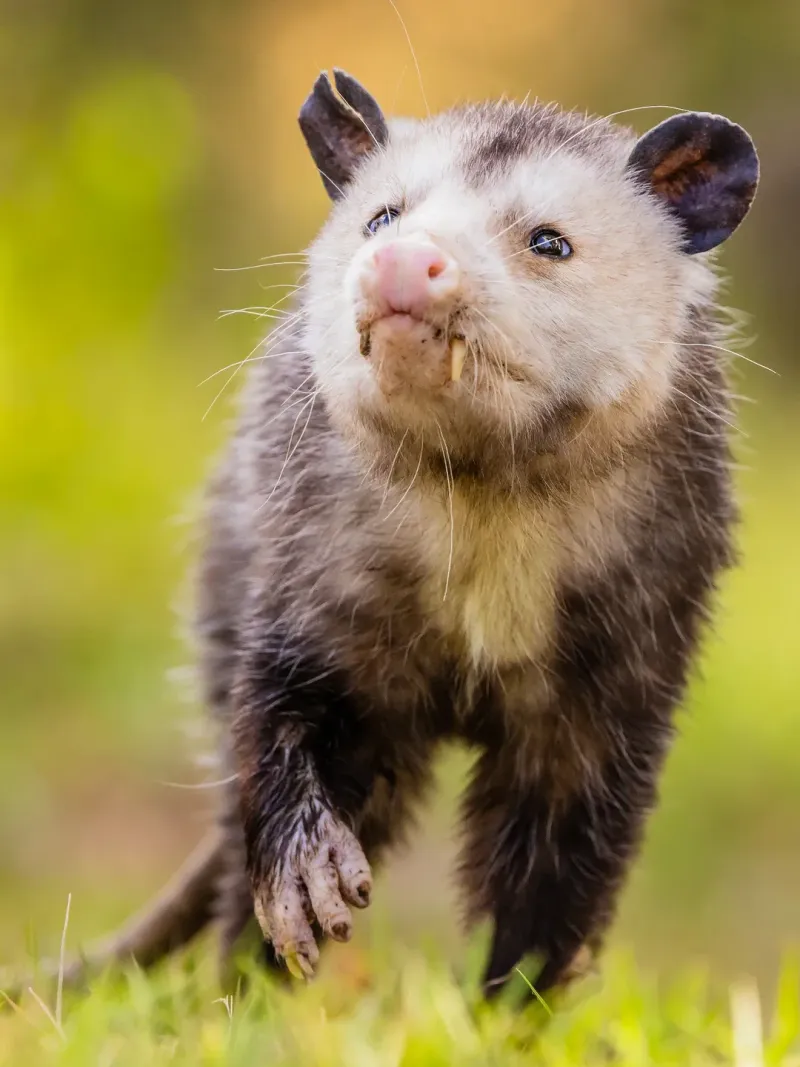
Shuffle through enough North Carolina porches and wooded neighborhood edges after sunset and you will eventually cross paths with a Virginia opossum. North Carolina’s only native marsupial, this gray-furred, pink-nosed animal is a regular presence in residential yards, along roadsides, under sheds, and around outbuildings across the state.
Spotting one at night is completely normal behavior for the species.
Before assuming that every mystery shadow in the backyard is an opossum, though, it helps to know what to look for. Virginia opossums are roughly cat-sized, with coarse gray and white fur, a long hairless tail, a narrow white face, and small dark eyes.
Other animals, including raccoons, groundhogs, and cats, also move through North Carolina yards at night, so a quick look at size, shape, and movement is worth taking before drawing conclusions.
Daytime sightings do sometimes happen, and a slow or groggy opossum in daylight is not automatically a sign of rabies or illness. Young opossums that have recently left their mother, animals displaced by habitat disturbance, or individuals simply resting near a food source may appear during the day.
That said, an animal that appears severely disoriented, injured, or aggressive is worth a call to a local wildlife rehabilitator or the North Carolina Wildlife Resources Commission.
According to North Carolina Wildlife Resources Commission guidance on the Virginia opossum, the species is primarily nocturnal and is commonly encountered around human structures. Its presence in a yard tells you that suitable food, water, or shelter is nearby.
What it does not tell you is anything reliable about the yard’s tick population. That connection, which has spread widely online, needs a much closer look.
How the 5,000-ticks-a-week story took hold
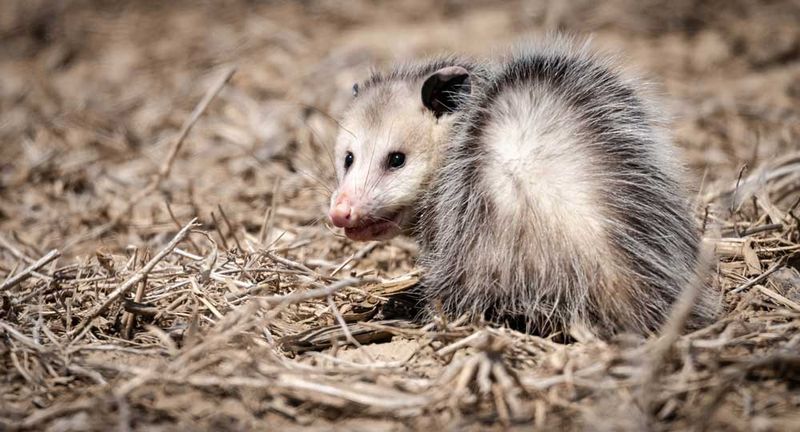
Few wildlife claims have traveled as fast as the idea that a single opossum can destroy 5,000 ticks in a week. The number is striking, memorable, and easy to share, which is exactly why it has appeared in countless nature posts, wildlife pages, and backyard gardening guides.
Tracing it back to its source reveals a much smaller and more conditional experiment than the viral version suggests.
The figure originated from a study in which researchers placed larval blacklegged ticks directly onto five captive opossums inside enclosed experimental chambers. After a set period, the scientists counted how many ticks remained on the animals and in the enclosure.
Many ticks were unaccounted for, and the researchers inferred that the opossums had consumed or removed them during grooming. That published experiment, along with its full-text companion article, was designed to compare how different host species handled tick loads, not to measure what wild opossums do in residential yards.
Several important distinctions got lost as the story spread. First, “missing ticks” is not the same as “eaten ticks.” Ticks in an enclosed chamber can die, detach, burrow into bedding, or simply be missed during counting.
The consumption estimate depended heavily on inference rather than direct observation of an opossum eating a tick. Second, the subjects were captive animals under controlled laboratory conditions, not free-ranging opossums navigating a North Carolina neighborhood with many competing food options and no experimental enclosure keeping ticks in place.
Third, and most practically, a backyard is not a sealed chamber. An opossum moving through an open yard encounters ticks in much lower and patchier concentrations than a captive animal sitting inside a container seeded with larvae.
The conditions that produced the high tick-removal estimate simply do not exist in a typical residential landscape. A result from a small captive study, even a carefully designed one, cannot automatically describe what the same species does while foraging freely through a suburban yard in Johnston County or Mecklenburg County.
Wild-opossum evidence weakens the sweeping claim
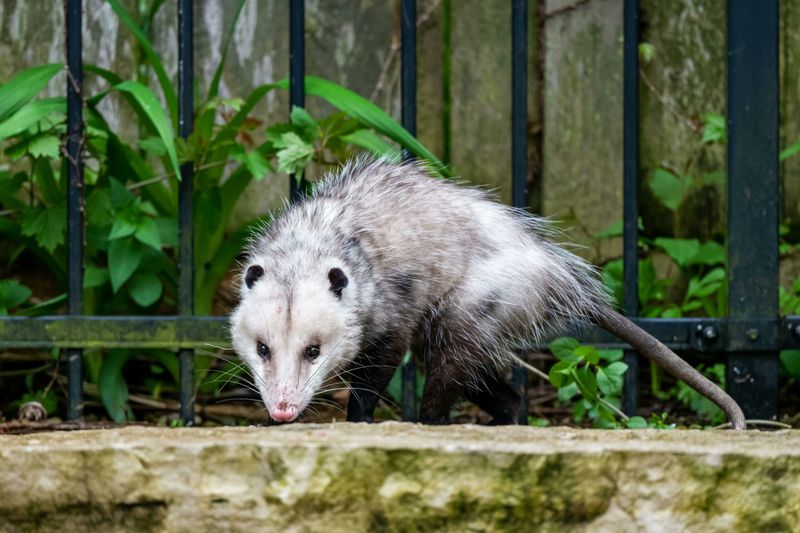
A 2021 study set out to test whether wild opossums actually behave the way the captive experiment implied. Researchers examined the stomach contents of 32 Virginia opossums collected from Illinois and found no ticks and no tick parts in any of the animals.
They also reviewed 23 earlier published studies on opossum diet and found no reports of tick ingestion in any of them. That 2021 follow-up study concluded that ticks are not a preferred food item for opossums and that the animals probably play little direct role in controlling tick populations under real-world conditions.
Reading that finding carefully matters. Thirty-two animals from one region, and a review of existing diet literature, does not prove that no opossum anywhere has ever swallowed a tick.
Wildlife biology rarely produces absolute rules. What the finding does show is that the sweeping claim, that a wild opossum routinely destroys thousands of ticks and meaningfully reduces the tick burden in a residential yard, is not well supported when you look at what wild opossums are actually eating.
Tick ecology adds another layer of complexity. Different tick species use different hosts, and the relationship between a given host species and a given tick-borne pathogen varies considerably by region and by the specific disease involved.
Research on Borrelia burgdorferi reservoir competence and regional Lyme disease patterns both illustrate how host-tick-pathogen relationships shift across geography. A claim about tick control or disease prevention that holds in one region or one laboratory setting does not automatically apply to a North Carolina yard.
The practical upshot for families is straightforward. An opossum passing through the yard may remove or kill some ticks during its own grooming, but no reliable evidence supports counting on that grooming behavior to protect your children, pets, or lawn furniture from tick exposure.
The opossum is not a substitute for the precautions that actually work.
The defensible benefit is broader than tick control
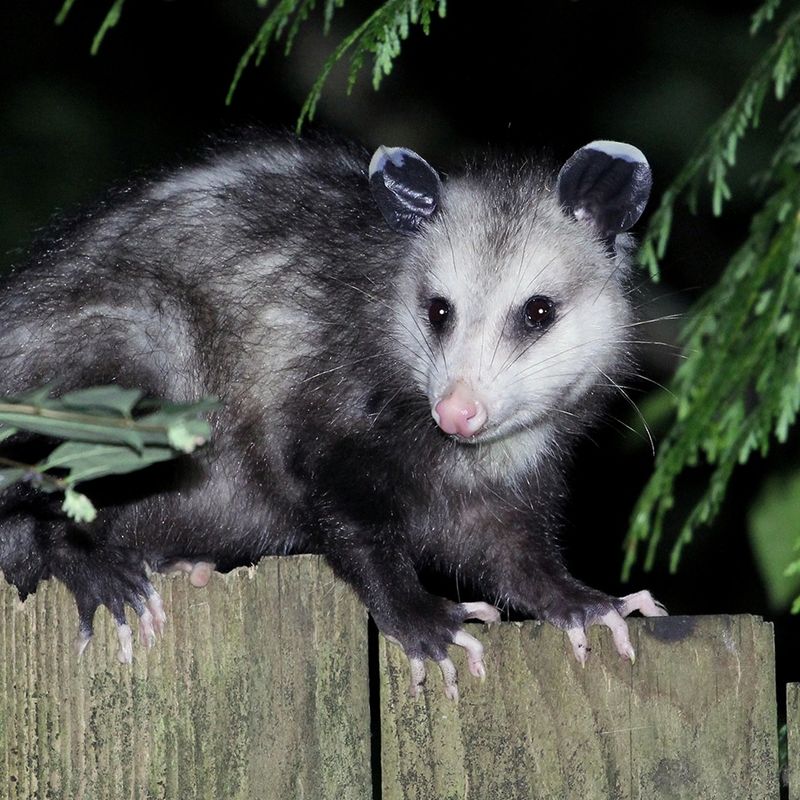
Replacing a myth with nothing is not very satisfying, so here is what the evidence actually supports. Virginia opossums are generalist scavengers with a wide-ranging diet that includes insects, slugs, snakes, small rodents, carrion, fruits, berries, and other plant material.
North Carolina Wildlife Resources Commission’s profile of the Virginia opossum describes this dietary flexibility clearly, and it is the more honest basis for calling the animal ecologically useful.
An opossum moving through a yard on a summer night is quietly doing several things that benefit the broader living system of that space. It may consume beetle grubs, slugs, and other invertebrates that damage garden plants.
It will clean up fallen fruit, birdseed spills, and small animal carcasses that would otherwise attract other pests or create odor problems. Its presence as an active nocturnal forager is part of what makes a North Carolina yard feel alive rather than sterile after dark.
None of that translates into a quantified pest-control guarantee. Saying that an opossum eats insects is not the same as saying it will eliminate a measurable percentage of the mosquitoes or ticks in your yard.
The ecological role is real and worth appreciating, but the magnitude of any household pest-reduction effect is not established by the available research. Families who want both a living yard and a safer yard are better served by holding both ideas at the same time: the opossum contributes to a healthy, active outdoor ecosystem, and families still need their own tick and mosquito precautions.
The distinction that matters most for North Carolina homeowners is between an animal that is a welcome and useful part of the local wildlife community and an animal that serves as a dependable pest-control service. The Virginia opossum is genuinely the first thing.
It is not reliably the second, and treating it as the second can lead families to skip the steps that actually reduce their tick exposure.
Protect the family-use zone from tick exposure
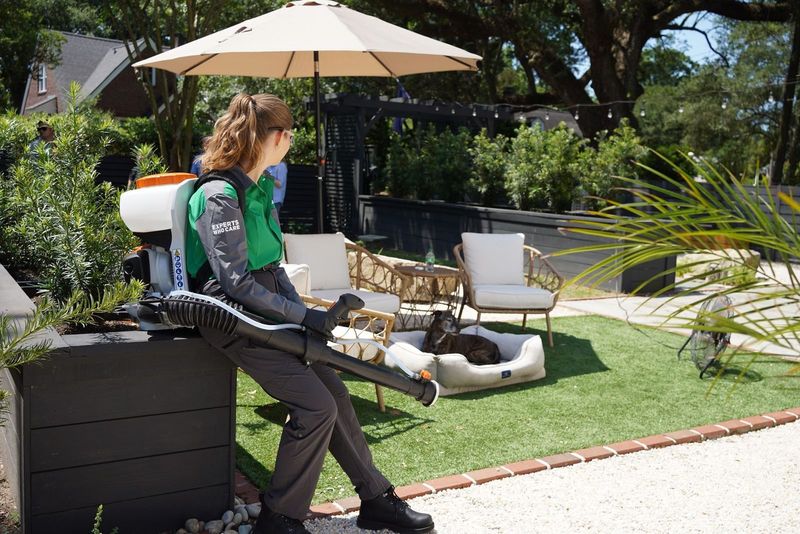
Whatever an opossum may or may not do with ticks during its own grooming, your family’s outdoor safety depends on steps you control directly. The good news is that targeted yard management does not require stripping every leaf or eliminating every wild corner.
The goal is a clear, lower-risk zone around the spaces your family actually uses, while leaving habitat intact in less-trafficked parts of the property.
Start with the spaces where kids play, where adults sit, and where pets roam most often. Remove accumulated leaf litter from those areas when practical, because leaf litter is prime resting habitat for ticks.
Clear tall grass and brush from the edges of play areas, patios, and frequently used paths, and mow those zones regularly. CDC guidance on tick prevention also recommends considering a three-foot wood-chip or gravel barrier between a maintained lawn and a wooded or brushy edge, though the agency notes that barrier effectiveness can vary by site and should not be treated as a guarantee.
Keep play equipment, seating, and sandbox areas away from the brushy perimeter of the yard when your layout allows it. Ticks are most active in the transition zone between maintained lawn and taller vegetation, so moving high-contact surfaces toward the center of the yard reduces the chance of a tick hitching a ride.
The CDC Tick Management Handbook notes that stacking firewood neatly and keeping it dry also reduces the rodent activity that brings ticks into the yard.
Personal precautions remain essential even in a well-managed yard. Dress children in light-colored clothing with long sleeves and pants tucked into socks when they will be in or near vegetation.
Use EPA-registered repellents according to the product label. After outdoor time, check children and pets carefully, paying attention to hairlines, behind the ears, behind the knees, and around waistbands.
Showering within two hours of coming indoors helps remove unattached ticks. Remove any attached tick promptly using fine-tipped tweezers, pulling upward with steady pressure.
None of these steps requires removing all wildlife habitat from the property. They require a few consistent habits focused on the spaces your family uses most.
Reduce mosquitoes and the attractants that bring wildlife close

Mosquitoes and opossums are separate problems, and combining them into a single “wildlife handles it” story causes families to underestimate both. Mosquito control around a North Carolina home comes down to one primary action: eliminating the standing water where mosquitoes breed.
A single container holding even a small amount of still water can produce hundreds of mosquitoes within a week.
Walk the yard at least once a week and empty, cover, or remove any container that holds water. The list is longer than most families realize: buckets, flowerpot saucers, children’s toys, old tires, tarps with pooled water, clogged gutters, poorly drained low spots, and birdbaths that are not cleaned and refreshed regularly.
North Carolina Department of Agriculture and Consumer Services guidance emphasizes this source-reduction approach as the most effective household mosquito control strategy. An opossum cannot empty a bucket.
Managing wildlife attractants serves a different but equally practical goal: keeping the opossum from becoming a nuisance instead of a passing visitor. Opossums are opportunists, and an easy food source near the house will encourage repeated, closer visits.
Secure garbage cans with tight-fitting lids, bring in pet food and water bowls at night, store birdseed in sealed containers, and keep chicken feed secured in a predator-resistant structure. North Carolina Wildlife Resources Commission tips on coexisting with wildlife cover these attractant-reduction steps in practical detail.
Firewood stacked neatly off the ground and away from the house discourages both rodents and the ticks they carry. Poultry housing should be predator-resistant, with hardware cloth rather than chicken wire covering any openings, to protect birds without creating a conflict with an opossum that might otherwise wander through harmlessly.
Families can support wildlife while limiting the conditions that turn a useful nocturnal scavenger into a recurring porch problem. The two goals are compatible with a little consistent maintenance.
Watch the visitor without handling it
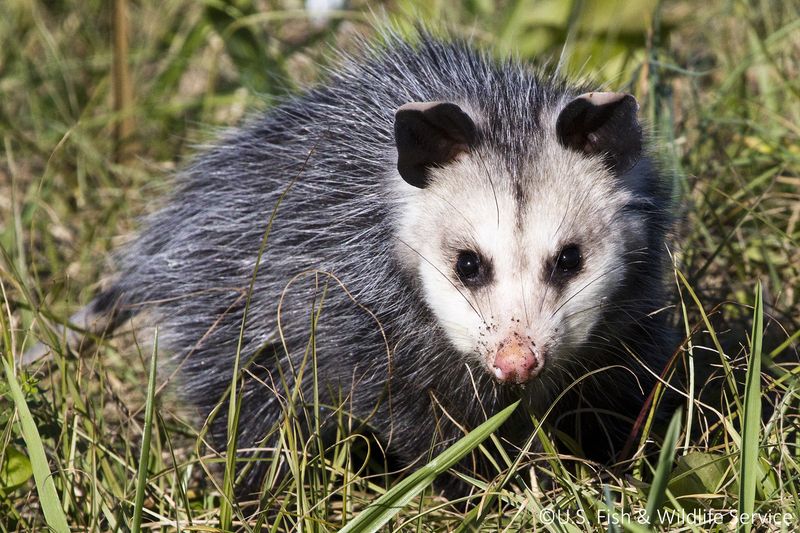
Watching an opossum from a safe distance is genuinely enjoyable, and most encounters require nothing more than that. Virginia opossums are highly resistant to rabies, and the North Carolina Wildlife Resources Commission does not classify them as a rabies-vector species the way it does raccoons, foxes, and skunks.
That resistance is a meaningful biological fact, but it is not a license to handle the animal. Resistant does not mean immune, and a wild animal that feels cornered or threatened may bite or scratch.
If an opossum does scratch or bite someone in your family, wash the wound thoroughly with soap and water immediately and contact a healthcare provider or your local public health department for guidance. CDC rabies prevention guidance is consistent on this point: any bite or scratch from a wild animal warrants prompt medical consultation, regardless of the species involved.
Do not try to capture, relocate, or treat the animal yourself.
Before closing any opening under a porch, deck, shed, or outbuilding to prevent wildlife entry, confirm that no animal is currently sheltering inside. An opossum or other animal sealed inside a structure can cause significant damage trying to escape, and a mother with young can create a more complicated situation.
North Carolina Wildlife Resources Commission coexistence guidance recommends checking for activity before sealing entry points and using one-way exclusion devices when needed.
For families considering pesticide applications to manage ticks in the yard, product selection and application require careful attention. Only use products registered with the EPA for the specific site and pest you are targeting.
The product label is legally enforceable, not optional, and it governs application rates, timing, reentry intervals, and restrictions around children, pets, and water. EPA guidance on pesticide labels explains what the label requires and why it is binding.
EPA registration requirements confirm that only reviewed and approved products may be legally used. If the yard includes flowering plants or pollinator habitat, also review EPA pollinator protection strategies before applying any pesticide, and avoid blanket spraying across the entire property when targeted treatment of high-contact zones is sufficient.
Keep the opossum, keep the precautions
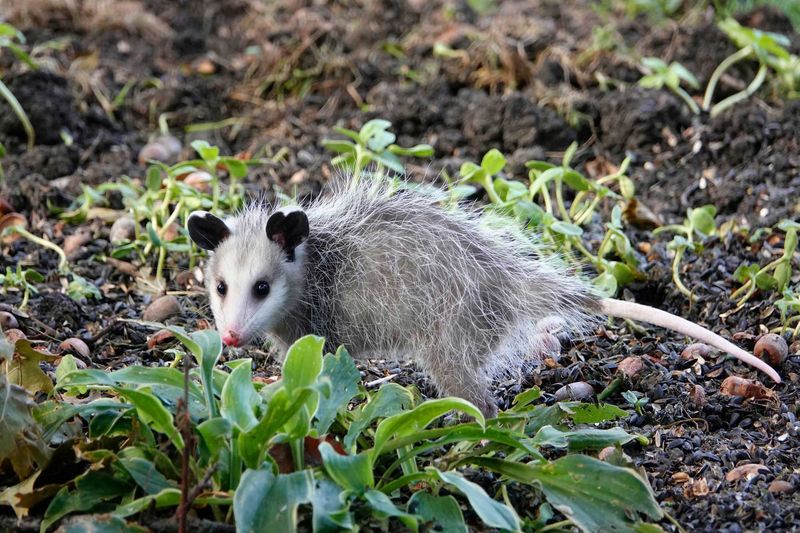
A Virginia opossum shuffling through the yard after dark is a normal part of North Carolina’s residential wildlife landscape. It is a native animal with a useful ecological role, a generally nonaggressive disposition, and a diet that contributes to a living, active outdoor space.
Families do not need to fear it, chase it off, or feel pressure to remove it from the property.
What families should not do is hand the opossum their tick-prevention responsibilities. Wild opossums may remove or kill some ticks on their own bodies during grooming, but the research does not support counting on that behavior to reduce tick exposure across a residential yard.
Personal precautions, targeted yard maintenance in high-contact zones, regular standing-water removal, and secured attractants are the actions that actually protect the family.
According to North Carolina Wildlife Resources Commission species information, the Virginia opossum is a flexible and resilient part of the state’s native fauna. Pairing that coexistence with the CDC’s tick prevention recommendations gives families something more reliable than a viral wildlife claim: a yard that feels genuinely safer because the right precautions are in place, and more alive because the right wildlife is welcome in it.