
The Late-Fall Peony Task That Decides Whether Your North Carolina Plants Bloom Next Spring
Follow us on Google
Cutting back your peonies at the right moment, and clearing away the old leaves, is the late-fall job that sets your plants up for healthy growth next spring. You do not need a calendar for it, just a good look at the plant.
Do it well and you give your peonies a clean start. Here is how North Carolina gardeners can get it right without hurting the plant.
Know Which Peony You Have
Walk out to the bed with your pruners and stop for a moment. Not every plant sold as a peony wants the same haircut.
Cut the wrong one to the ground and you may remove stems that were meant to stay.
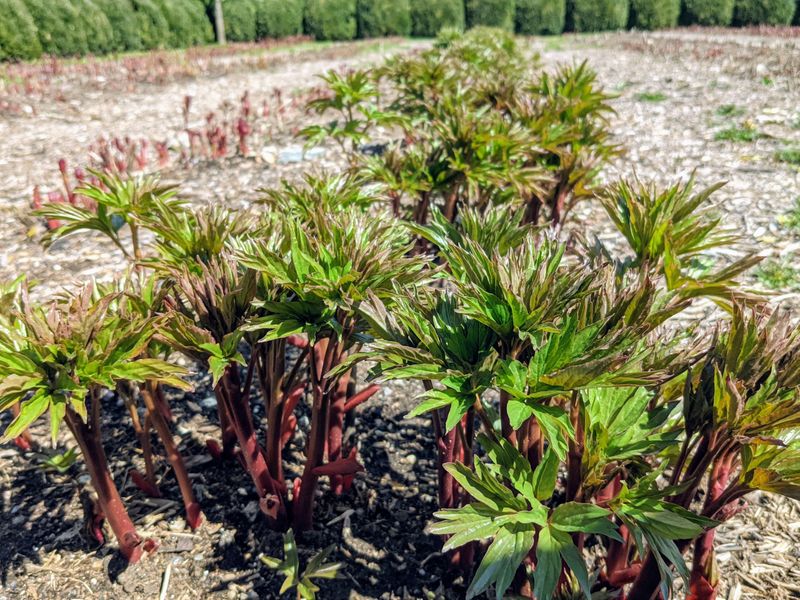
Herbaceous peonies are the classic old-fashioned kind. Their tops die back every winter, and new red shoots push up again in spring.
These are the plants that get cut close to the soil in late fall.
Tree peonies are a different story. They keep woody stems year after year, so there is nothing to chop down.
Intersectional peonies, a cross between the two types, may hold on to some stems above ground. N.C.
Cooperative Extension in Lee County points out that these three kinds have different pruning needs.
So how do you tell which one you own? Check the plant tag, your garden notes, or the receipt if you still have it.
Look at the bed in winter too. If the plant vanishes into bare ground, it is herbaceous.
If woody stems stand there, leave them alone.
When you are not sure, hold off. A peony left uncut for another few weeks is rarely a problem, while a wrongly cut plant cannot be fixed.
The cut-to-ground advice in this article is for herbaceous peonies only.
Wait Until the Foliage Dies
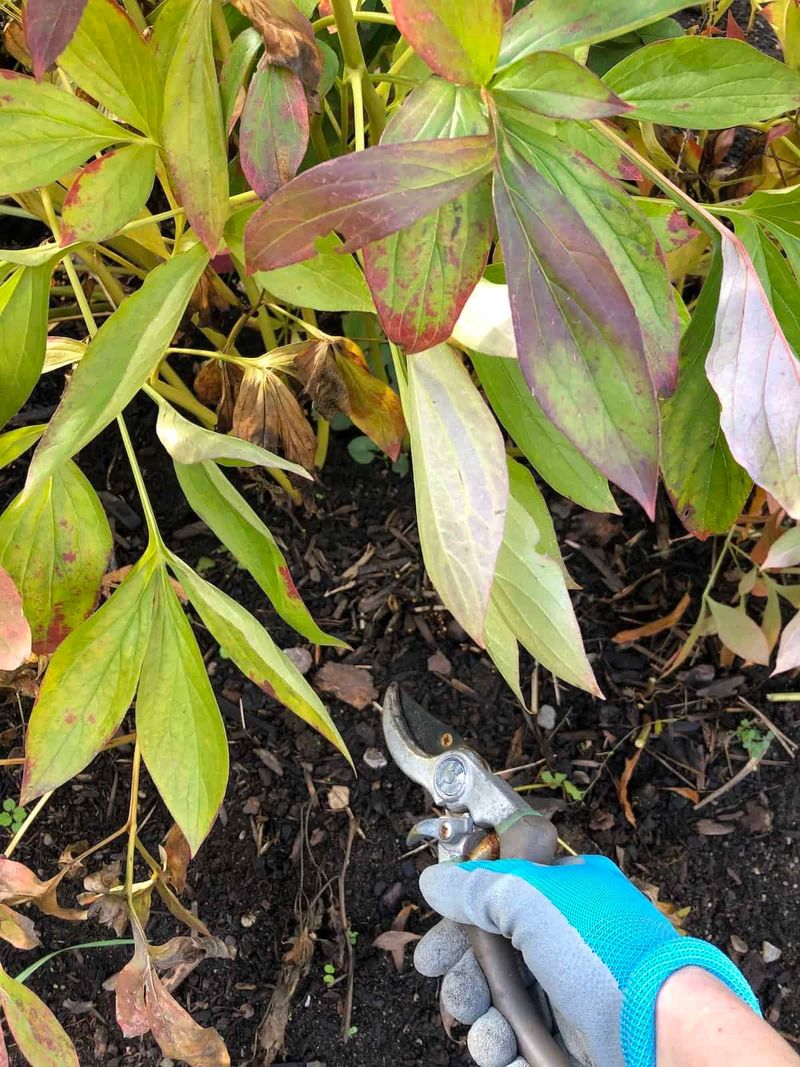
Your peonies will tell you when it is time. The signal is the plant itself, not a date on the kitchen calendar.
Green, healthy leaves are still working, and they should stay put.
Those leaves spend the late season feeding the roots and the crown, where next year’s buds are forming. Cut them off too soon and you take away that food.
Iowa State Extension says plants cut back in August or early September may bloom less, and it recommends cutting after a hard freeze.
So watch for two cues. One is foliage that has turned yellow, brown, and limp on its own.
The other is a hard freeze that has blackened the leaves and flopped the stems over.
Here is where North Carolina gets tricky. Iowa gives a late-October or early-November window, but that does not carry over to every yard here.
A cold mountain town may see a hard freeze weeks before a coastal neighborhood does. Some warm spots may take much longer to get one.
Plant signals beat a fixed month every time. If your neighbor down the road has already cut hers, your peonies may simply be on a different clock.
Let the leaves finish their work, and you will know when it is done.
Cut Stems Close to the Soil
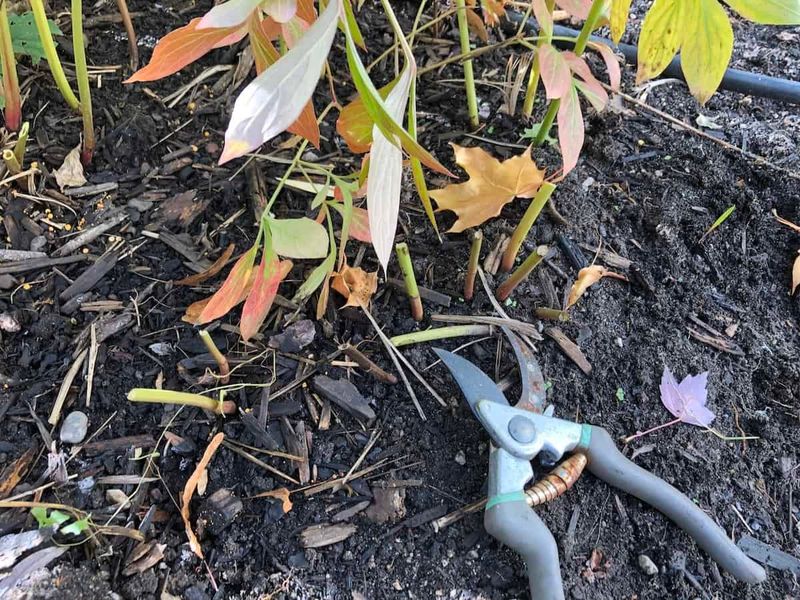
Once the leaves are brown and the stems are limp, grab clean, sharp pruners. A dry afternoon is ideal.
Dry stems cut cleaner, and you will not be sloshing around in red clay mud.
Cut each stem close to the soil. Iowa State’s guidance is the same, to cut the stems down to the ground once the foliage is dead.
Close does not mean scraping the dirt, though.
The crown is the part to protect. It sits right at the base of the stems and holds the pink or red buds, often called eyes, for next spring.
Nicking those buds with a blade or yanking on a stubborn stem can damage them.
Go slowly and gather the stems in one hand. Snip a little above the point where you can see the buds.
Leave a short stub if that feels safer. You can always trim a little lower, but you cannot put a bud back.
Rinse the blades with rubbing alcohol if you cut anything that looked sick. Then step back and look at the bed.
A neat, bare spot where your peony stood is a good sign. It means you did the job, and the plant is resting.
Clear Away Old, Diseased Debris
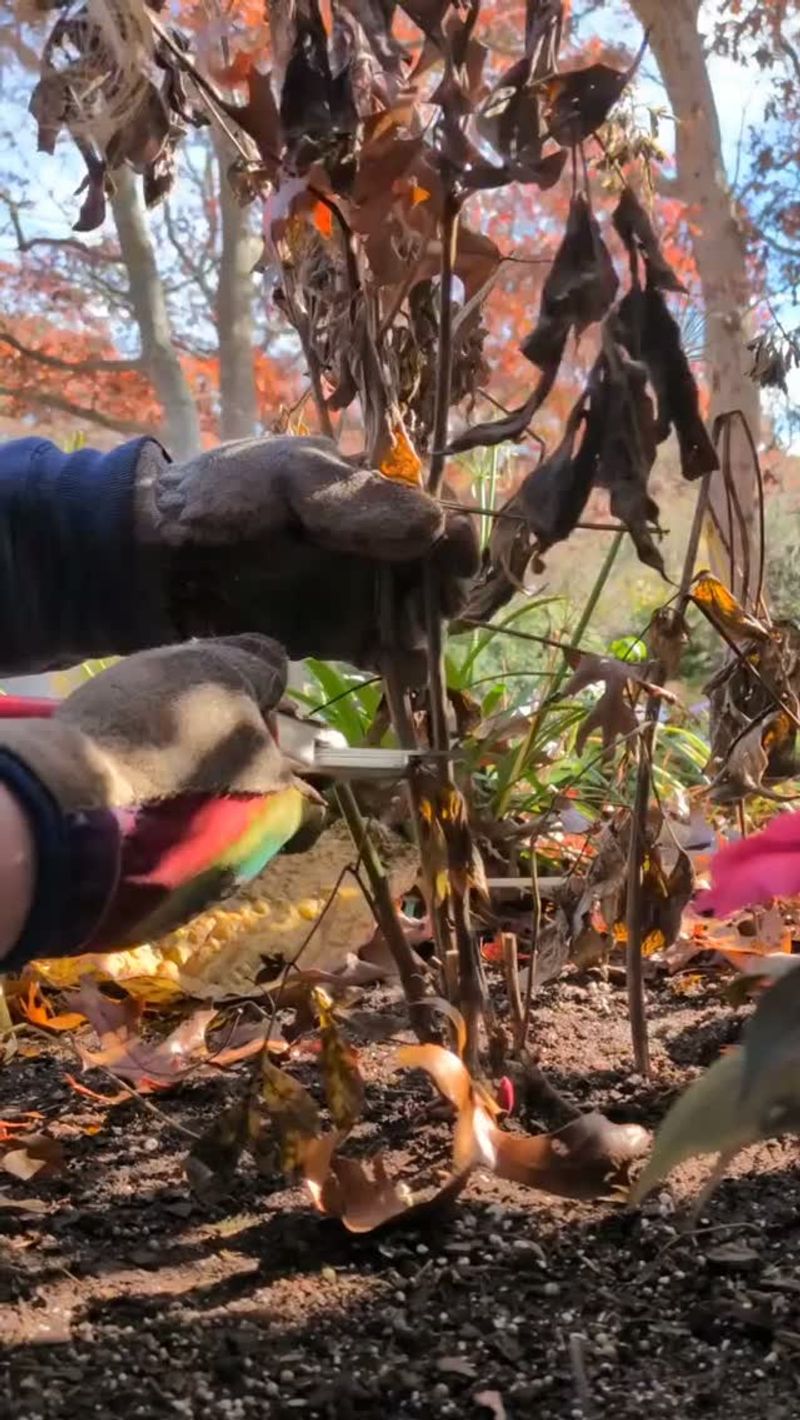
Old peony leaves can carry a quiet passenger. Botrytis, a gray mold fungus, can persist on peony debris and wait for a damp spring.
UC IPM guidance recommends removing old growth in fall.
Pick up the cut stems and fallen leaves. Pay extra attention if your plant had leaf spots, blotches, or blight this year.
Those are the leaves most worth getting out of the bed.
Disposal depends on what you saw. Purdue Extension says debris may be composted if disease was absent, while infected debris should be removed.
Bag the sick material and send it out with the household trash rather than your compost pile.
Think of this as one layer of care, not a force field. Cleanup lowers the amount of fungus waiting around, but it cannot promise a disease-free spring.
Wet weather, crowded plants, and poor airflow still matter.
You also do not need a bare, scrubbed-down bed. Just clear the peony’s own dead tops and any old litter piled around the crown.
A little leaf mold elsewhere in the garden is fine, and a calm, tidy base is plenty.
Consider Planting Depth When Bloom Fails Repeatedly
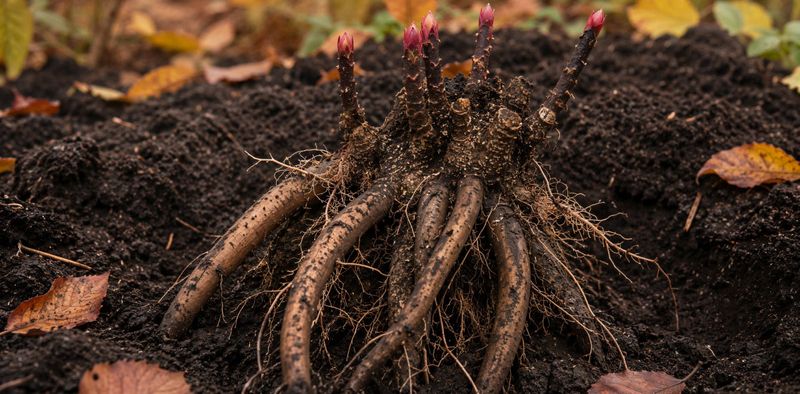
Depth gets a lot of blame when peonies will not flower. Sometimes it deserves it.
But it is only one suspect, and it is not a fall chore for every plant.
If a healthy, established peony is growing well, leave the crown alone. Digging it up just to peek at its depth can do more harm than good.
Plants also need time. NC State Extension notes that peonies can take a year or two to flower after transplanting.
When a plant keeps skipping blooms year after year, look at the whole picture first. Purdue lists too little light, a young plant, crowding, recent division, weather stress, and disease as other causes.
Planting too deep is on that list too.
For bare-root planting in warm areas, NC State advises setting the crown no deeper than 1 inch. Purdue’s broader guidance allows the top buds to sit up to 2 inches down, but that is not the target for warm North Carolina sites.
Stick with the shallower advice if you live in a warm part of the state.
If you do suspect a buried crown, lifting or dividing is its own project. Plan it as a separate transplanting decision, not something you do while trimming leaves.
North Carolina Conditions Also Shape Flowering

Where you live in North Carolina matters to a peony. NC State Extension says herbaceous peonies do best in the mountains and the cooler parts of the Piedmont.
In warmer areas they may languish, because the winter chill they need is hard to come by.
That chilling requirement is the cold time a plant needs to set buds. Low-chill cultivars may suit some warm sites, so ask a local nursery or your county Extension office for names that fit your area.
Fall cleanup helps, but it is one piece of a bigger picture. Bloom also depends on plant type, light, age, growing conditions, planting depth, and winter chilling.
A neat bed cannot make up for a shady spot or a mild winter.
Mulch needs a careful hand too. NC State warns that winter mulch can insulate crowns in warm areas and recommends none there.
Lee County Extension allows only very light cover in some cases and says not to cover exposed buds. So do not bury your crowns under a heavy blanket anywhere in the state.
Cut the dead tops, clear the sick leaves, and give the plant sun. Then let winter do its work.
The peony will take it from there.
