
This Little Sparrow Travels South To Pennsylvania Just To Spend Winter Hiding In Your Brush Pile
Follow us on Google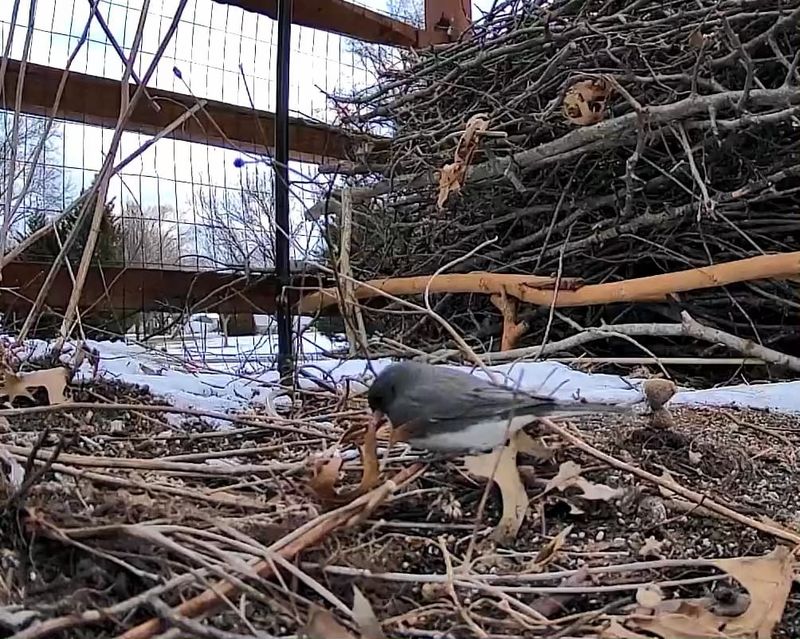
On a gray January morning, a small bird with a slate-gray back flicks white tail feathers and slips into the tangle of branches at the edge of your yard. That bird is the dark-eyed junco, a sparrow that moves south into Pennsylvania each fall and uses brush piles as one kind of winter cover.
It also feeds and shelters in hedgerows, thickets, and weedy fields, so a pile is a helpful extra, not a promise. Here is how to recognize the junco and build a safe, simple shelter that gives it a place to duck out of the wind.
Meet the Dark-Eyed Junco
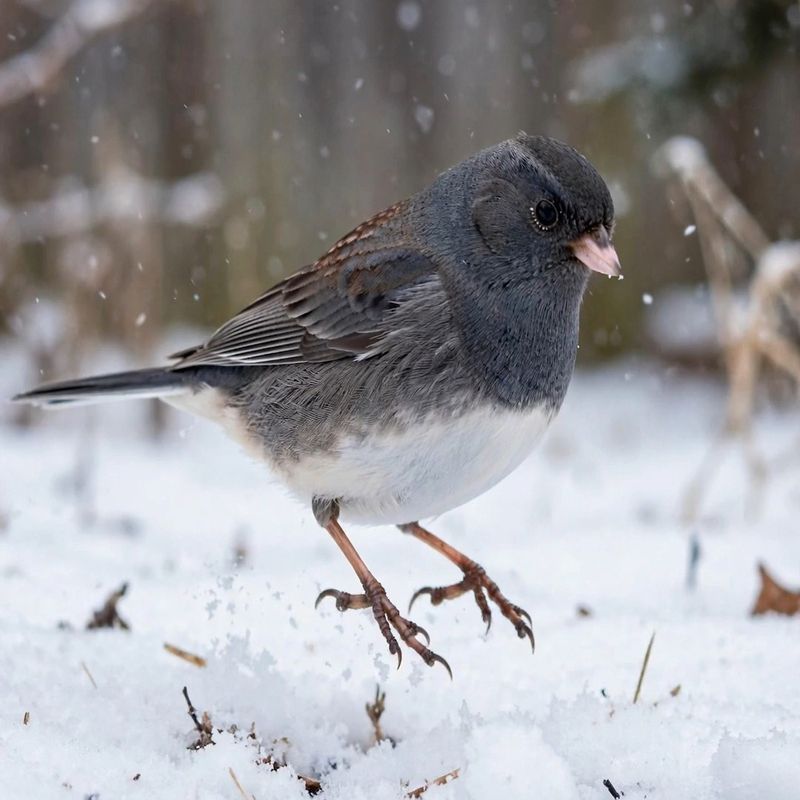
Snow is falling softly, and something small hops along the edge of the yard. Look closely and you will see a gray-backed bird with a clean white belly, a pale pink bill, and a flash of white on each side of the tail when it takes off.
That is the dark-eyed junco, a sparrow that many Pennsylvanians call the snowbird.
Adults are easy to pick out once you know those clues. The Pennsylvania Game Commission describes adults as gray-backed with white bellies, pink bills, and white outer tail feathers.
Young birds are streakier, so not every visitor will look like the neat slate-gray adult. If a streaky little sparrow shows those white tail edges, take a second look.
Juncos also travel in flocks. The Game Commission says they move south mainly in October, so the first flocks often show up around the time you are raking leaves and pulling the last tomato vines.
Brush piles come into the story as one of the winter habitats juncos favor. They are not the reason the birds migrate, and they are not where a junco spends every winter day.
Think of a pile as one cozy corner in a much bigger neighborhood of cover.
So watch the ground beneath your feeders and along the edges of your yard. A quick flash of white tail feathers is often your first clue that winter has really arrived.
Juncos Also Breed in Pennsylvania
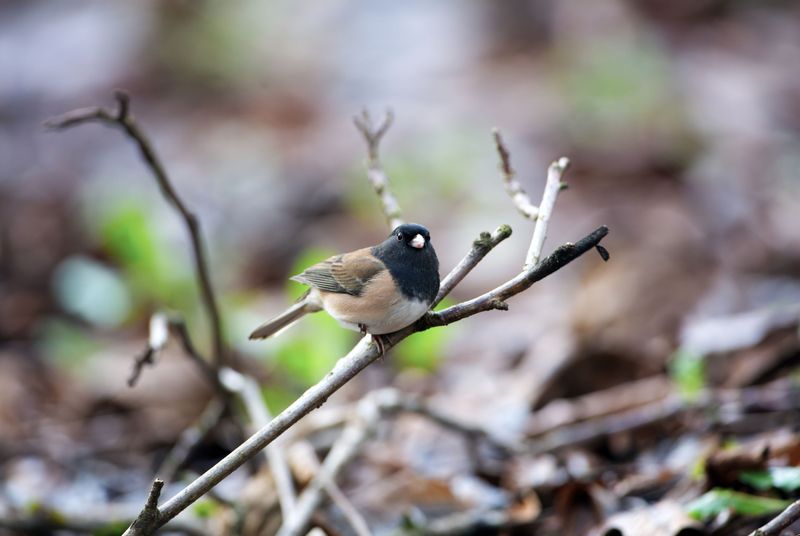
Here is a twist that surprises many people. Juncos are not only winter visitors in Pennsylvania, because some also nest here in summer.
The Game Commission says they breed on wooded ridgetops and in hemlock ravines across the forested northern third of the state. They also breed at higher elevations in the Ridge and Valley region.
So how do those birds fit with the winter flocks? Many juncos wintering in Pennsylvania probably came from farther north.
Some of the birds you see at your feeder in January might even be from the same population that nests in the state, but nobody can say that about any single bird.
That is the honest answer for backyard watchers. You cannot look at a junco on your lawn and tell where it hatched or where it spent the summer.
Gray feathers do not come with a passport.
The Game Commission’s account keeps both stories side by side. Some juncos nest in cool northern forests and mountain ravines.
Many others pass through or settle in for winter after coming south.
If you hike a hemlock ravine in the northern tier during summer and hear a trilling junco, you are hearing a nesting bird. When you see flocks in your yard in December, you are watching winter visitors.
Both are real, and both make the state a little richer.
What Juncos Find Around a Brush Pile
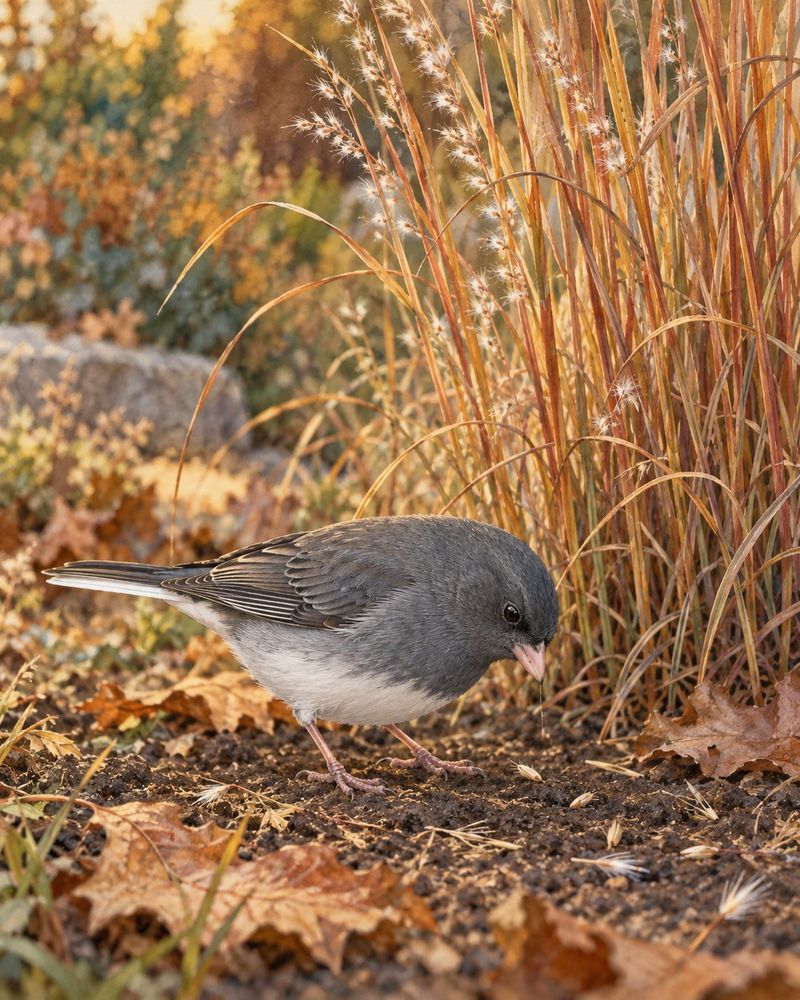
Watch a junco for five minutes and you will see it working the ground like a tiny farmer. It hops, scratches, and flicks leaves aside, searching leaf litter, soil, and snow for food.
According to the Game Commission, their fall and winter menu leans on seeds from weeds and grasses, including asters and goldenrods.
That is a good reason to leave some seed heads standing instead of cutting everything down in November. A weedy edge can be a genuine food counter for a hungry flock.
Juncos do not stick to one spot, either. They also use hedgerows, thickets, weedy fields, and shrubs around houses.
A junco might feed in an overgrown field, tuck into a thicket at dusk, and pop under a shrub when a hawk glides by.
Where does a brush pile fit? It is one more piece of cover in that patchwork.
The Game Commission lists brush piles among favored winter habitats, but it does not describe them as the only place a junco finds food or shelter.
The practical lesson is to think of your yard as a whole. A pile beside a patch of native asters and goldenrod, with a hedge nearby, gives birds options.
Options are what make a winter yard useful.
Build a Loose Stack With Openings
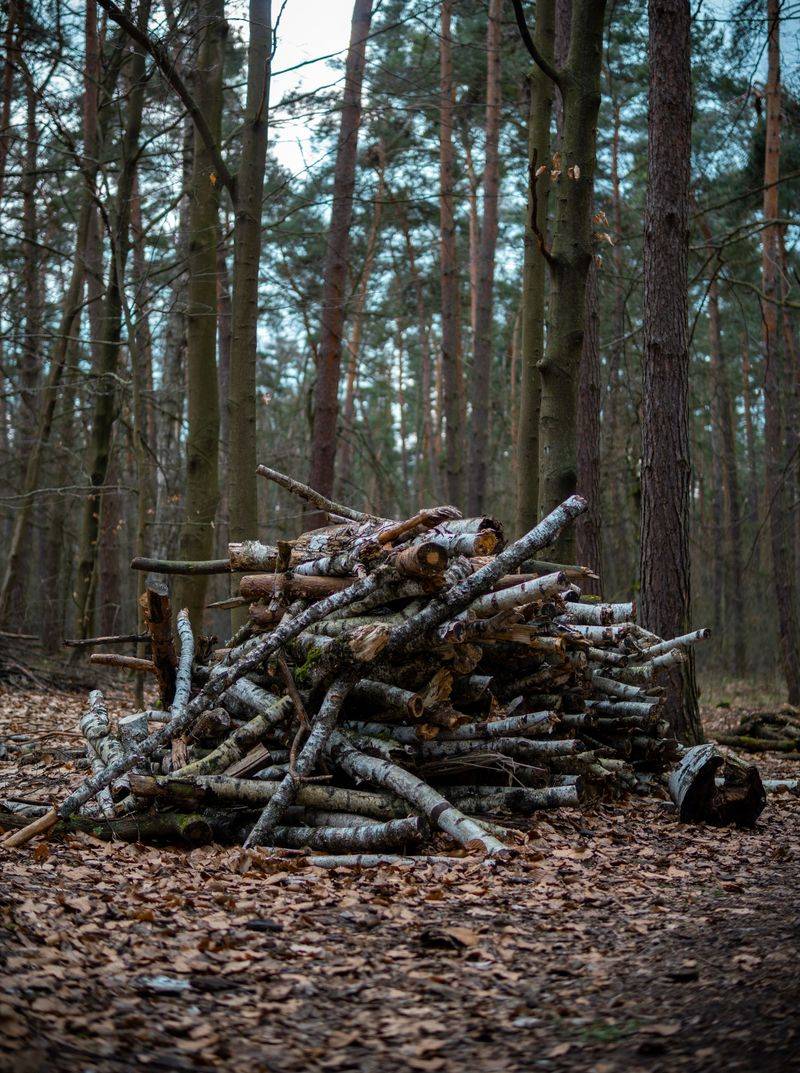
A good brush pile looks messy on purpose. Start with the biggest pieces, such as larger logs or limbs, and lay them on the bottom.
Penn State’s wildlife guidance on brush piles and snags describes this layered approach.
Next, raise the brush slightly so small animals can get underneath. You can prop the first layer on a few thicker logs so there are gaps at ground level.
Those openings are what turn a heap of sticks into a structure with entrances.
Then add smaller branches on top, layer by layer. Work from big to small, and the pile settles into a rough dome with hollow spaces inside.
The key step is to leave spaces rather than pack it tight. Penn State Extension’s habitat management practices also call for open, loose construction.
A tightly stuffed pile is more like a wall than a shelter.
What you get is potential cover. Birds and other small animals may duck into it, but it is not a heated room, and it cannot keep every predator out.
Treat it as a windbreak and hiding spot with limits.
Fall cleanup is a natural time to build one, since you already have fallen limbs and prunings on hand. Just save the neat stack for the woodpile and let the tangled ones become habitat.
Choose a Spot and Scale That Fit Your Yard
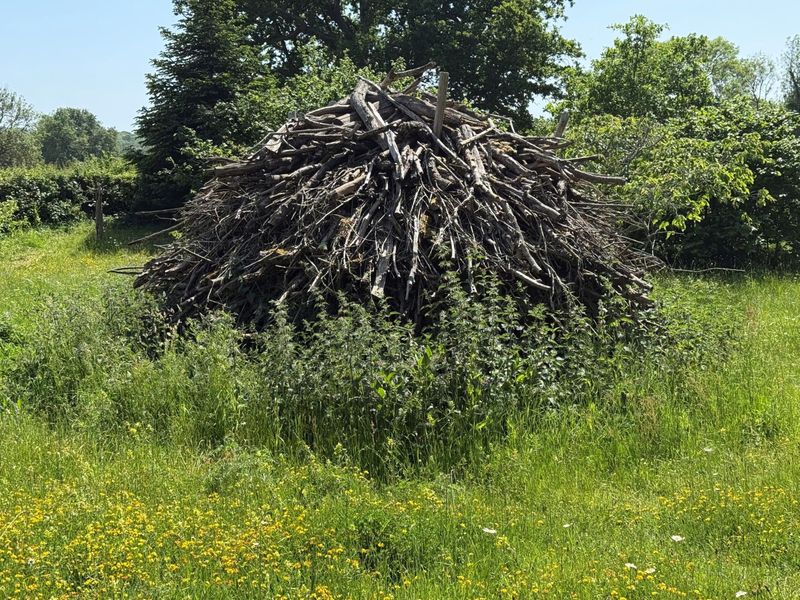
Location matters as much as construction. Penn State Extension’s habitat guidance suggests putting piles near food sources and in places where low cover is scarce.
A bare lawn with no shrubs is a spot where a pile may fill a gap, while a yard already full of thickets may need less.
Walk your property and look for the edges. Is there a patch of goldenrod or native asters nearby?
Is there an open stretch where small birds have nowhere to duck? Those are good candidates.
As for size, WeConservePA describes a pile roughly 6 feet high and 6 feet wide as a homeowner-sized example. Treat that as one example, not a rule.
A small lot may call for something smaller, and larger habitat projects use bigger dimensions.
Whatever size you pick, keep the gaps. Leave openings at the base and spaces between branches so wildlife can move in and out.
A pile that suits a quarter-acre in the central valleys might swamp a tight townhouse yard near Philadelphia.
Start modest, watch how the yard is used, and adjust. You can always add a few more limbs next fall.
Keep the Pile Away From Hazards
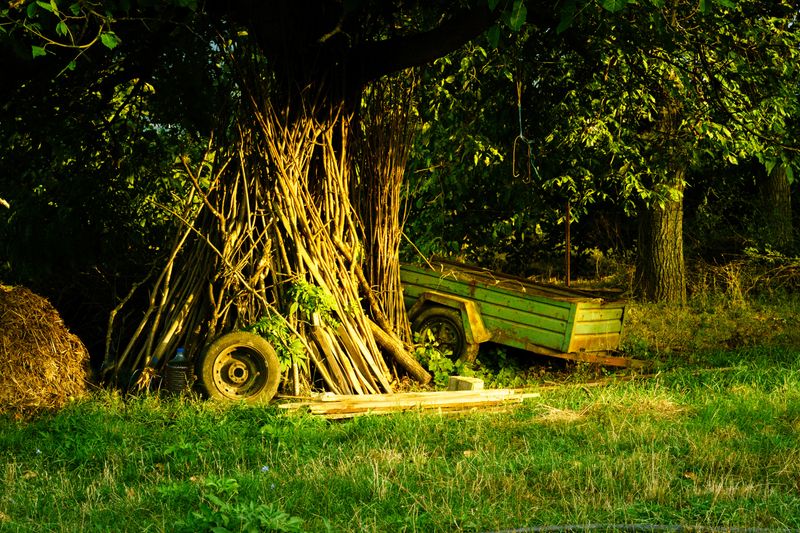
A brush pile is dry wood, and dry wood burns. Connecticut’s wildlife agency flags flammability near buildings and nuisance risks near homes, so set yours well away from the house, deck, and shed.
Feeders need thought too. Maryland’s DNR notes that piles can conceal predators and recommends keeping them away from ground-feeding areas.
A pile right beside a ground-level feeder gives a cat or other predator a place to wait.
Check local rules before you build. Some towns and homeowner associations limit brush storage, so a quick call to your municipality can save trouble.
Materials matter, too. Use untreated, uncontaminated wood and branches.
Connecticut DEEP warns against pressure-treated wood, creosote railroad ties, lead-painted materials, and tires, because toxic substances can harm wildlife.
These steps are precautions, not a guarantee. No pile is risk-free, and none can protect birds from every danger.
Still, a few minutes of planning makes the pile safer for you, your neighbors, and the birds. Pick a spot, check the rules, and use clean branches from your own yard.
A Brush Pile Adds One Kind of Cover
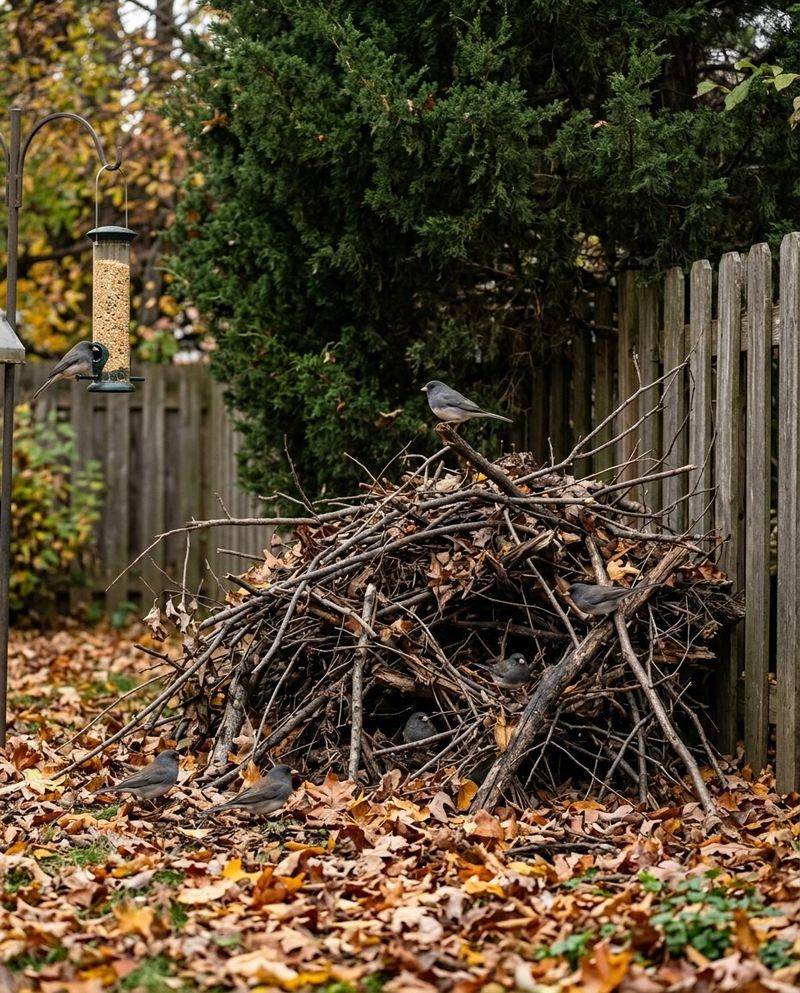
Here is the honest bottom line. Penn State says songbirds may use brush piles as perches, especially near feeding or nesting areas.
The U.S. Fish and Wildlife Service describes shelter for birds and small animals.
Neither source promises that a junco will move into your particular pile.
Some winters a flock may pass through your yard without stopping at the stack. Other winters you might catch a sparrow ducking in at dusk.
Either way, the pile is also useful to other wildlife, including small mammals and the predators that follow them.
That is why a pile works best alongside everything else juncos use. Seedy weeds, hedgerows, thickets, and shrubs around the house all do their part.
Add a loose pile of branches, and you have given the neighborhood one more option.
If you never spot a junco, the effort is not wasted. You turned fallen limbs into habitat, and you left a messy corner that someone else might use.
So keep an eye on the yard when the first cold snap arrives. If a gray bird flashes white tail feathers and disappears into your tangle of sticks, you will know exactly what you are seeing.
