
7 Signs An Eastern Indigo Snake Already Patrols Your Florida Yard And Why You Want It
Follow us on Google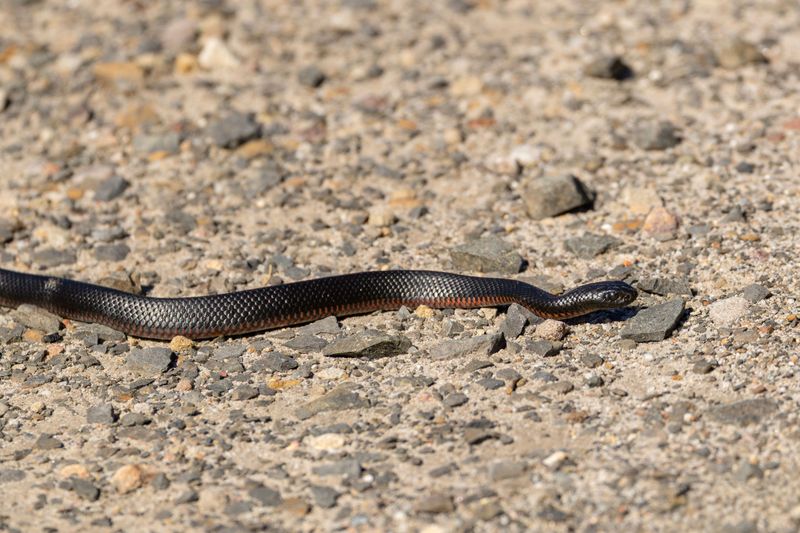
You step onto the patio after breakfast, coffee in hand, and a long glossy black shape slides past the fence line before you can blink. That flash could be an eastern indigo snake, the longest native snake in North America and one of the best neighbors a Florida yard can have.
It is harmless to people, protected by law, and it quietly hunts the rodents and venomous snakes you would rather never meet. Here are seven signs one may already be on patrol near you, and why that is genuinely good news.
1. Gopher Tortoise Burrows Mean Indigo Real Estate
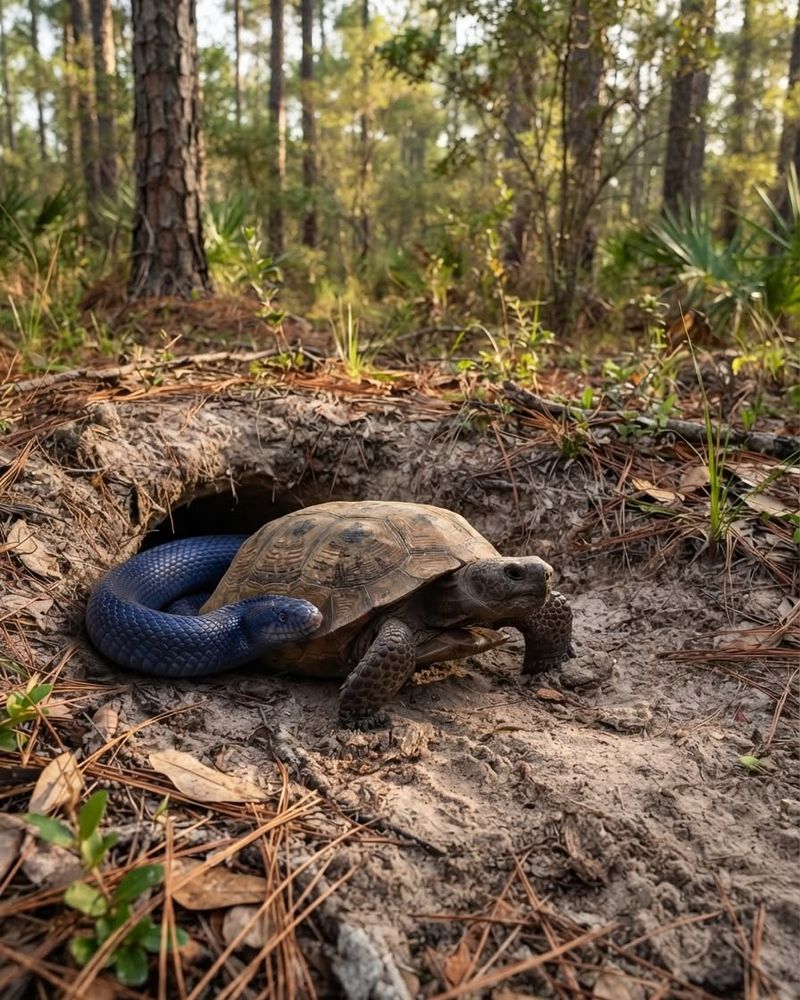
That sandy half-moon hole near your back fence is not just a tortoise house. It is the most important apartment building in upland Florida, and indigo snakes hold a long lease.
Gopher tortoises (Gopherus polyphemus) dig burrows that can run 40 feet long and 10 feet deep. Inside, the temperature stays steady when North Florida nights drop into the 20s.
Indigo snakes rely on these burrows for winter shelter, and many return to the same burrow area year after year.
Here is where it gets interesting. Scientists have found that indigo snakes are most common where tortoise burrows are common, especially in the sandy ridges of Central and North Florida.
A healthy burrow on or near your property makes an indigo visit far more likely.
Your job is simple. Leave the burrow alone, keep mowers and string trimmers at least 25 feet from the opening when you can, and never fill it in.
Gopher tortoises are protected by the Florida Fish and Wildlife Conservation Commission, so even moving one requires a permit.
That modest sand apron is a welcome mat. You did not build it, but you get to keep it open.
2. Fewer Rats Around The Shed Is A Quiet Clue
Many Central Florida homeowners know the sound. Something scratching in the shed wall at night, a chewed seed bag, droppings by the pool pump.
So when those signs quietly fade, people usually credit the weather or luck. Sometimes the real reason is a hungry predator working the yard by daylight.
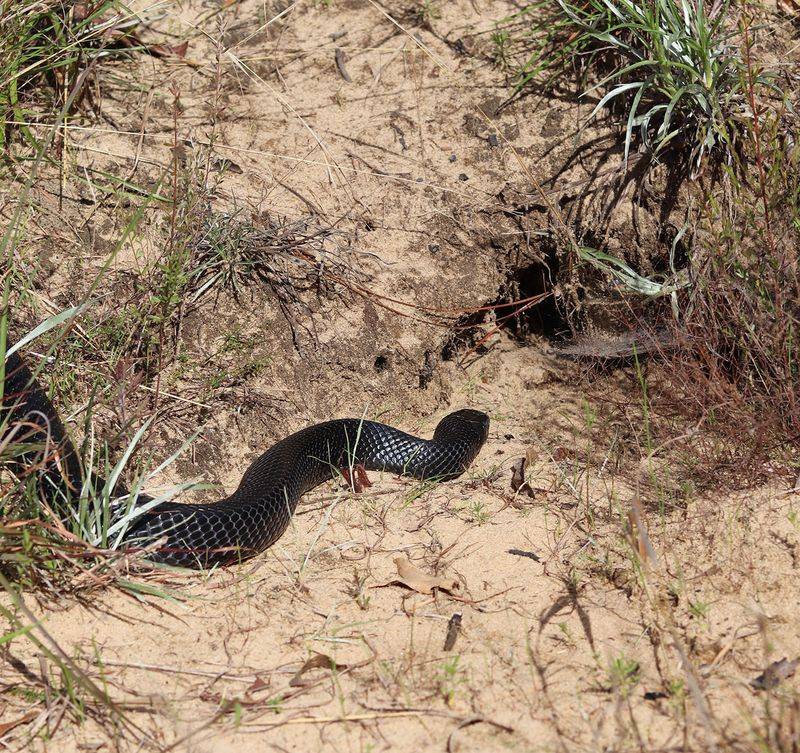
Indigo snakes are active during the day, and they eat rodents along with frogs, lizards, birds, and other snakes.
Unlike rat snakes, indigos do not squeeze their prey. They simply grab it and overpower it with strong jaws, like a determined dog with a rope toy.
A large adult can cover a lot of ground in one afternoon.
Be honest with yourself here, because fewer rats alone does not prove an indigo lives nearby. Owls, hawks, and black racers also help.
But it is one clue worth noticing alongside the others.
The best action is to skip rodent poison entirely. Poisoned rodents can sicken the very predators doing your work for free.
Seal gaps wider than a quarter inch on sheds and garages instead, then let nature handle what slips through.
Quiet nights in the shed feel good. Knowing why feels even better.
3. Rattlesnakes Lose When An Indigo Moves In
Here is the myth: any big black snake in the yard is trouble. The truth runs the other way.
Eastern indigo snakes eat other snakes, including young eastern diamondback rattlesnakes and cottonmouths. They show strong resistance to rattlesnake venom, which lets them tackle prey most predators avoid.
For families near woods or wetlands in Florida, that is a real comfort during summer evenings on the porch.
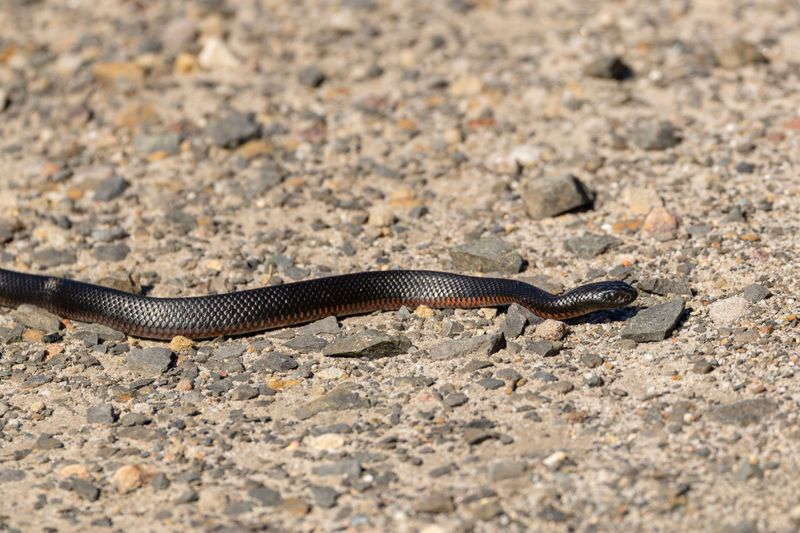
The turn is learning to recognize your ally. An indigo is thick, smooth, and glossy blue-black, with a reddish-orange or cream wash on the chin and throat.
Adults typically reach 5 to 7 feet, and record snakes have topped 8.5 feet.
Many people confuse it with the black racer, which is thinner, faster, and has a white chin. Both are harmless.
Neither deserves a shovel.
Teach the kids the chin trick and keep pets leashed or inside if a big snake appears. Indigos are federally threatened, so killing, capturing, or harassing one is illegal.
Just give it room, at least 10 feet, and it will move on.
It is not a magic shield against every venomous snake. It is one strong layer of protection, wearing a very handsome coat.
4. A Huge Shed Skin Tells A Big Story
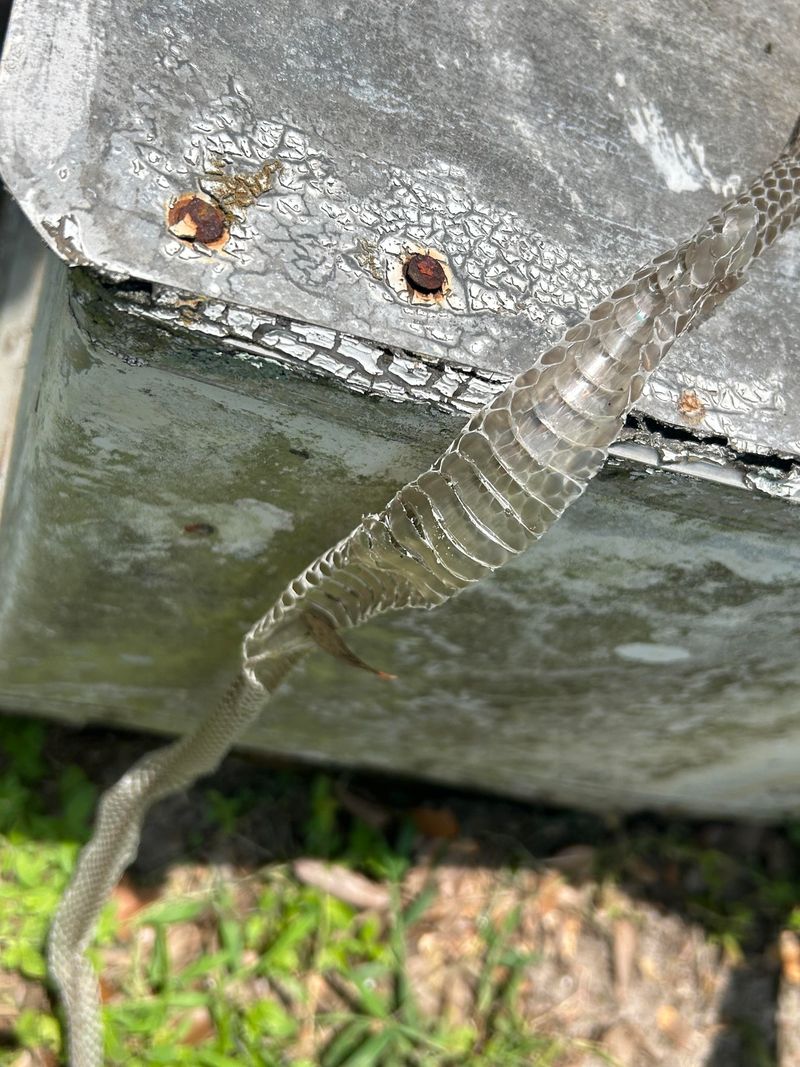
You pull back a pile of pine straw by the beautyberry and find it. A papery tube, longer than your arm, stretched across the mulch.
Every snake sheds as it grows, often several times a year. What makes this find special is size.
A shed skin over 4 feet long and nearly as wide as a garden hose points to a very large snake, and in much of Florida, few native species grow that big.
Look closely at the scale pattern. Indigo scales are smooth, so the shed feels slick rather than ridged.
Rattlesnake and water snake sheds show keeled scales, which have a small raised ridge down the middle like the spine of a book.
One honest note helps here. Shed skins lose most of their color, so you will not see that blue-black shine.
Size, smooth scales, and location near tortoise burrows or sandy uplands are your real clues.
Snap a photo with a tape measure beside it, then leave it or keep it as a curiosity. UF/IFAS Extension and local wildlife groups can often help confirm an ID from a clear photo.
It is a calling card. Someone big came through, grew a little, and kept going.
5. Big Black Snakes Crossing At Noon Are Usually Indigos
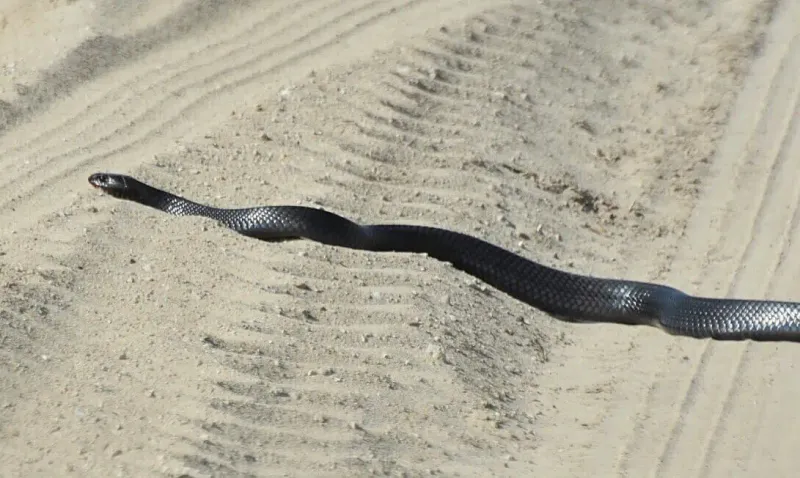
Most snakes keep odd hours. Many hunt at dusk or at night, then vanish under boards and brush when the sun gets strong.
Indigos break that rule. They are daytime hunters, so a heavy, shiny snake gliding across your lawn at lunchtime is a strong hint.
In Central Florida, research tracked males using home ranges of roughly 117 to 341 acres, with females covering 53 to 392 acres.
That means your yard is probably one stop on a long route, not a permanent home. Think of it like a mail carrier with a huge territory who passes by on certain days.
Winter sightings are common too. On cool, sunny days between November and March, indigos often bask near burrow entrances when air temperatures climb into the 60s.
Summer sightings tend to be brief, since the snake keeps moving to find food and shade.
Your action is easy and genuinely rewarding. Stay still, watch from a distance, and let it pass.
If you want to help science, note the date, time, and location, then report the sighting to the Florida Fish and Wildlife Conservation Commission.
A few seconds of watching can become a story you tell for years.
6. Your Native Plantings Already Roll Out The Welcome
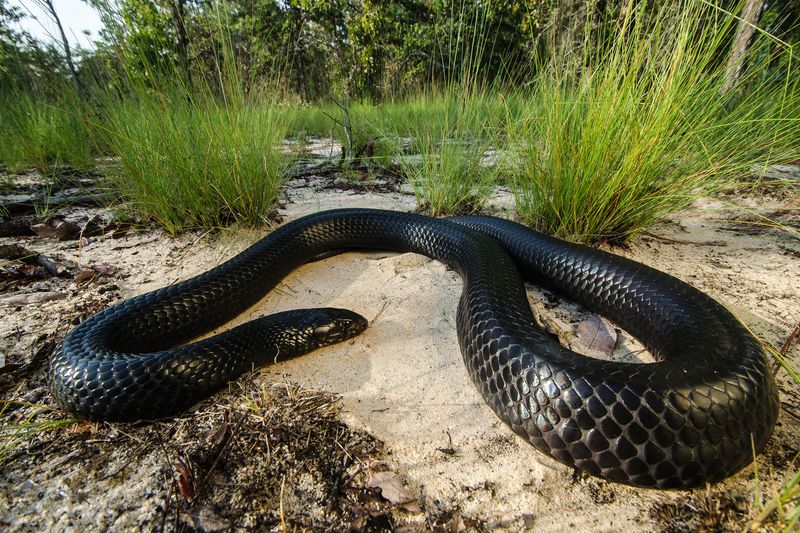
Indigo snakes do not care about your roses. They care about cover, prey, and safe paths between habitats.
Across Florida, these snakes favor places where dry sandhills and pine flatwoods meet wetter spots like ponds, hammocks, and creek edges. If your lot backs onto scrub, flatwoods, or a conservation area, you may already sit on their commute.
Yards in the Panhandle, North Florida, and the Central Florida ridge are especially promising, and a reintroduction effort is bringing them back to parts of the Panhandle.
Native plants turn a plain lot into a stopover. Coontie (Zamia integrifolia), firebush (Hamelia patens), American beautyberry (Callicarpa americana), and saw palmetto (Serenoa repens) shelter lizards, frogs, and small mammals, which is exactly the menu an indigo wants.
Plant a border along the back property line at least 10 to 15 feet deep if space allows. Space firebush and beautyberry about 4 to 5 feet apart, and water new plants every 2 to 3 days for the first month, then taper off.
Leave a little leaf litter and a log or two for cover.
It is not a guarantee. It is an open door, and some visitors genuinely appreciate one.
7. A Balanced Backyard Is The Best Sign Of All
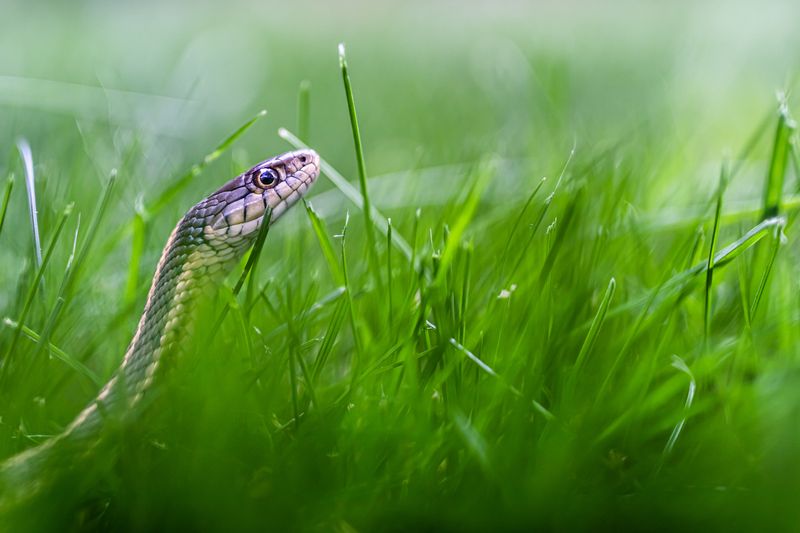
The last sign is the quietest. Your yard simply feels in balance.
Anoles still flash their throat fans on the porch rail. Tree frogs sing after summer storms.
Yet nothing seems to explode in number, and venomous snake sightings stay rare. That steady rhythm often means predators at the top of the food chain are doing their part.
Indigo snakes are what biologists call apex predators, meaning few animals hunt them once they are grown. Like a referee in a busy game, they keep any one group of critters from taking over.
Where they disappear, the whole system tends to wobble.
You protect that balance with small choices. Skip broad-spectrum insecticides that wipe out frogs and lizards along with pests.
Treat problems like chinch bugs or whiteflies with targeted products only where needed, and keep pets supervised outdoors so wildlife can move freely.
Fencing matters too. Leaving a 4 to 6 inch gap at the bottom of a section of fence, or using wildlife-friendly openings, lets large snakes and tortoises pass through instead of getting trapped or turned away.
You may never see your indigo. But a yard full of quiet, healthy life is proof that you built a place worth patrolling, and that is something to be proud of.
