
Fall Hydrangea Care Before Frost: What Actually Helps Next Spring
Follow us on Google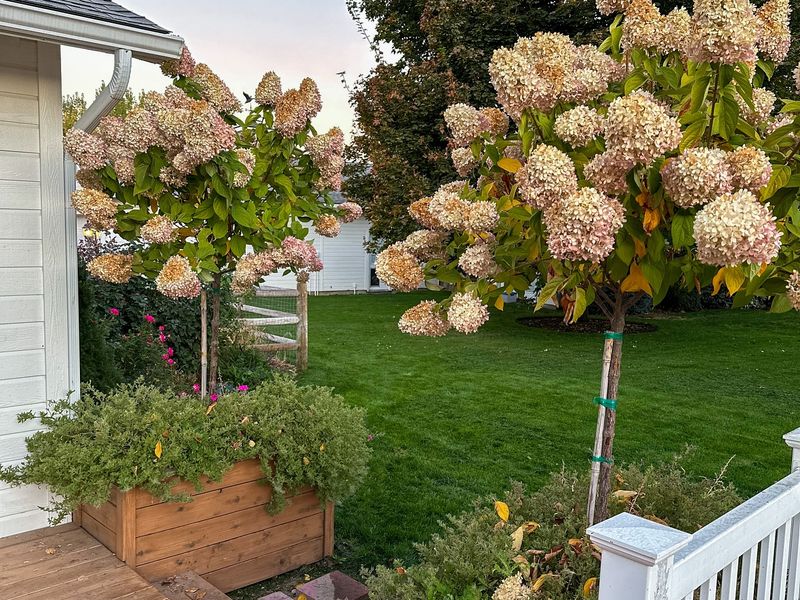
The leaves are turning, the nights are cooler, and your hydrangeas are starting to look tired. You might have heard that one quick chore before frost will give you giant blooms next spring.
That promise is bigger than the science behind it. Here is what fall care can really do, and which chores are worth your time.
The Bloom-Size Promise Needs a Correction
Picture a cool October morning, coffee in hand, as you stand over a hydrangea with papery, fading blooms. Somebody online swore a quick chore before frost would double next spring’s flower size.
Here is the honest answer: the guidance reviewed for this article does not show that any quick pre-frost job reliably makes blooms bigger.
So what does help? Extension guidance supports mulch for holding soil moisture and insulating roots.
University of Georgia Extension hydrangea guidance recommends mulch to conserve moisture and control weeds, and Oregon State Extension covers general care along the same lines. That is plant protection, not a bloom-size guarantee.
Feeding is the other myth. Fertilizer is not a universal fall task for hydrangeas, and Mississippi State University Extension describes light applications during the growing season and warns that too much nitrogen can reduce flowering.
More plant food does not mean more flowers.
Think of fall care as tucking your shrub in for the night. A good blanket helps, but it will not change who the plant is.
The next sections walk through each step in plain terms, so you can pick what fits your yard.
What Mulch Can—and Cannot—Do
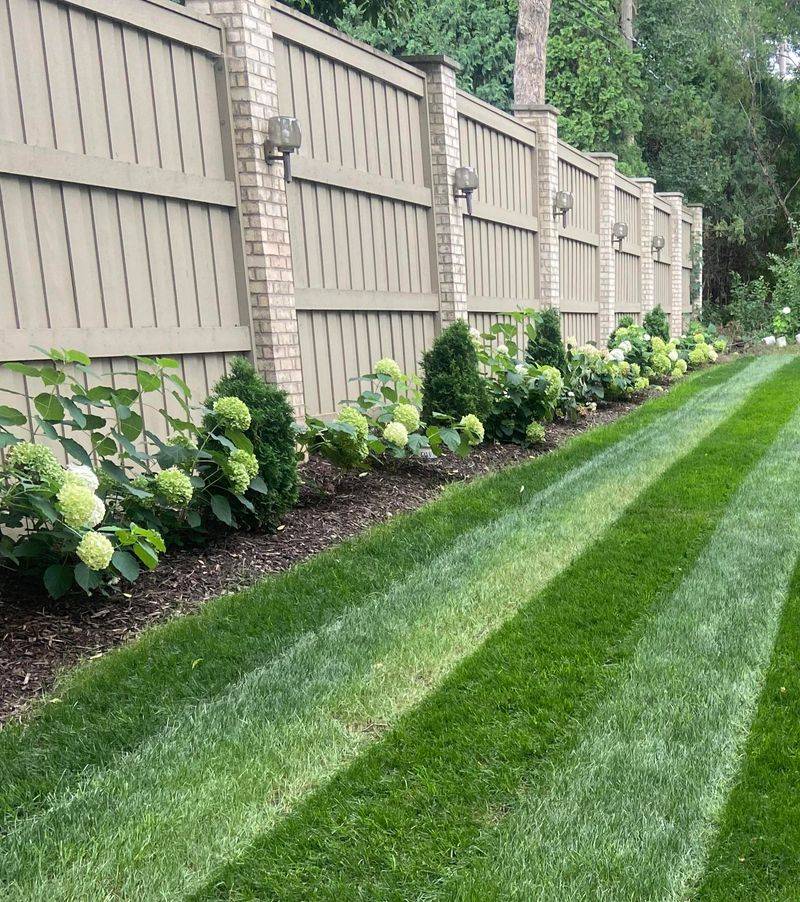
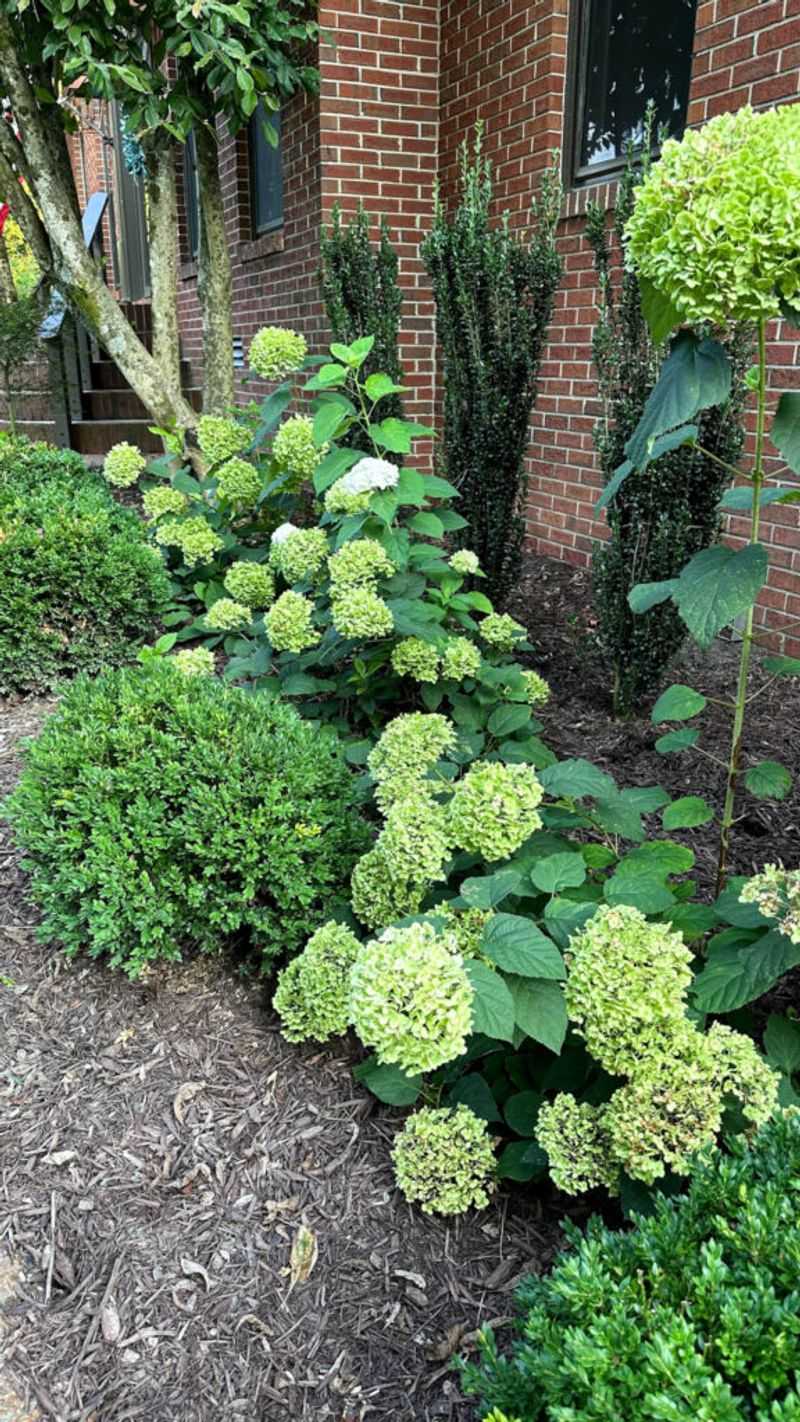
Mulch is a blanket for the root zone, nothing fancier than that. A layer of shredded bark, pine straw, or leaf compost slows moisture loss and softens swings in soil temperature.
Many gardeners notice the soil under mulch stays damp longer after a dry spell.
What mulch cannot do is promise bigger flower heads. The sources reviewed show moisture and root benefits, not a bloom-size boost.
Treat it as protection, and you will not be let down.
Depth depends on your site. Georgia Extension’s fall garden advice points to about 2 to 4 inches for landscape beds, while hydrangea-specific guidance from the University of Georgia suggests 3 to 4 inches to conserve moisture and hold down weeds.
Those are examples from one region, not a rule for every yard. Heavy clay that stays soggy may want a lighter touch, and sandy soil that dries fast may welcome more.
The one firm habit is to keep mulch pulled back from the stems. Piled against the bark, it holds moisture on the plant and invites trouble.
Leave a small gap, like a collar, and spread the layer across the root area. Oregon State Extension offers similar general care guidance.
If you already have mulch down, top it off where it has thinned. That is a ten-minute job, and it is honest work.
Water When Conditions Call for It
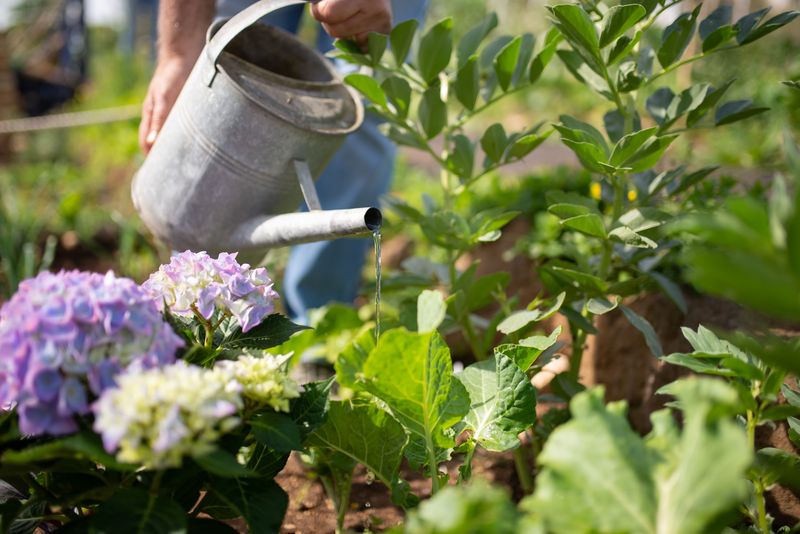
Rain can vanish for three weeks in fall, and hydrangeas notice. Their big leaves lose water fast, and drooping in the afternoon is a classic signal.
Hydrangeas can suffer in drought, so a dry fall is worth paying attention to.
But soggy soil is its own problem. Roots sitting in waterlogged ground struggle for air, so keeping the bed constantly wet is not the goal.
Think of watering as a response, not a calendar.
A simple test works well. Push a finger two or three inches into the soil beneath the mulch.
If it feels dry, give the plant a slow, deep drink. If it feels damp, wait and check again in a few days.
Mulch and watering work as a pair. The mulch slows evaporation, so each watering lasts longer, which can save you a bit on the water bill.
University of Georgia Extension ties mulch to moisture conservation, and Oregon State Extension covers watering and soil needs.
No watering routine guarantees larger blooms. It simply keeps the plant from being stressed going into winter.
Rainy regions may need little help, while dry stretches in the Southeast or the West may need more.
Fall Fertilizer Is Not a Bloom Shortcut
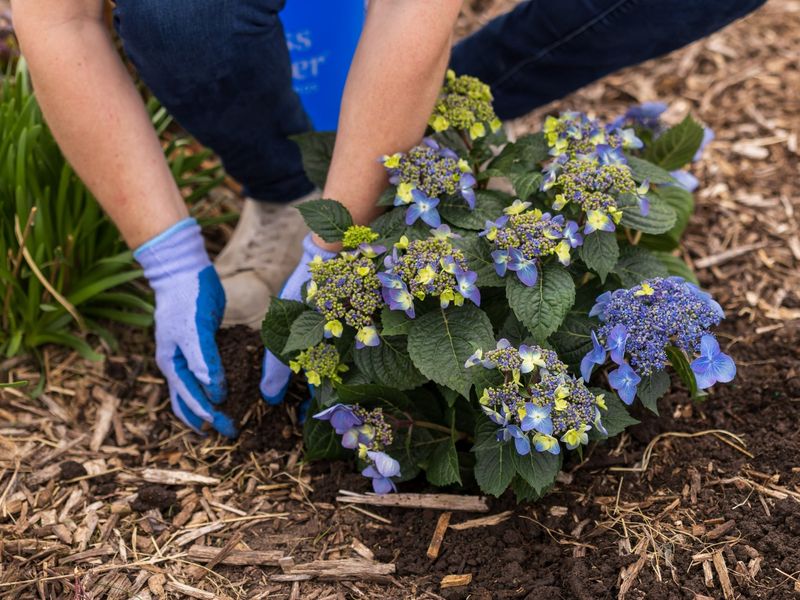
Here is a myth worth retiring: feed the plant before frost and it will reward you with giant flowers. It sounds logical, and it is not backed up.
Plant food is not a bloom shortcut.
Mississippi State University Extension describes light fertilizer applications during the growing season. It also warns that too much nitrogen, the nutrient that pushes leafy growth, can reduce flower production.
So a heavy hand can leave you with lush leaves and fewer blooms.
Timing matters too. A late burst of leafy growth can be tender and easily damaged when frost arrives.
That is a good reason to skip a reflex feeding.
You may have seen a fall feeding window mentioned. University of New Hampshire Extension says fall fertilization can benefit established trees and shrubs between mid-September and mid-October.
That is general guidance for woody plants in that region, not a hydrangea-specific order to feed every plant before frost. The same fact sheet also warns against late-summer high-nitrogen applications.
So no dose is given here, because the right amount depends on your soil and plant. If you wonder whether your shrub needs feeding, a soil test through your local Extension office is a sensible first step.
Many hydrangeas do fine with healthy soil and no extra push.
Prune According to the Hydrangea’s Flowering Wood
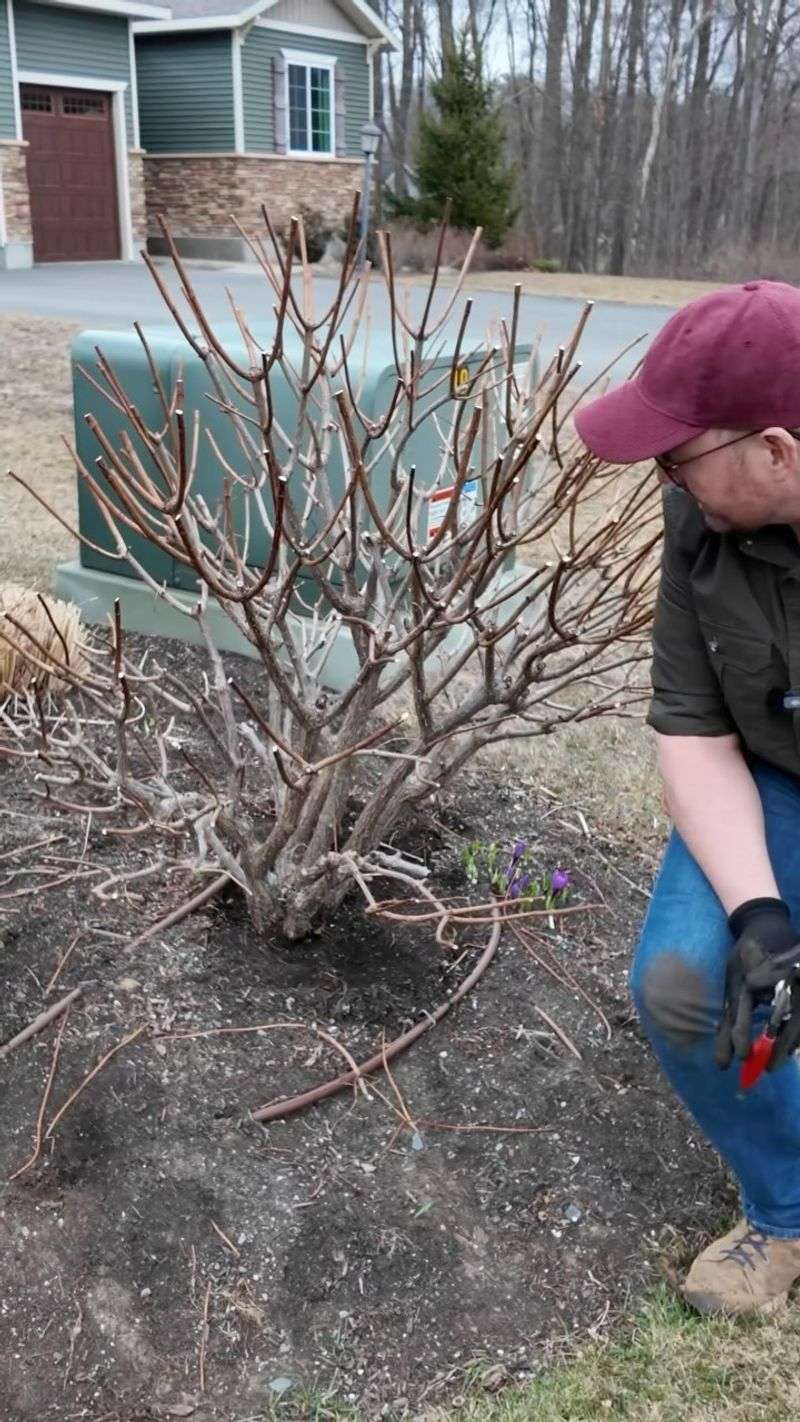
Old wood and new wood sound like jargon, so here is the plain version. Old wood is last season’s stems.
New wood is growth the plant makes this season. Which one carries the flowers decides when you can safely prune.
Bigleaf, oakleaf, and mountain hydrangeas generally flower on old wood. Cut them hard in fall or winter, and you may snip off buds already formed.
University of Maryland Extension lays out these groups clearly. Prune them right after flowering, or wait until spring to see which stems were damaged by winter.
Smooth and panicle hydrangeas flower on new wood. Their blooms form on growth made next season, so routine pruning belongs in late winter or early spring.
University of New Hampshire Extension adds that spring pruning smooth hydrangeas to the ground can produce larger, sturdier flowers. That is a pruning note for that species, not proof for any fall chore.
Then there are the exceptions. Some bigleaf and mountain cultivars rebloom, flowering on both old and new wood.
Check your plant tag or the nursery listing before you reach for shears.
If you cannot identify your hydrangea, the safest fall move is to leave the stems alone. Remove only clearly dead or broken branches, and sort out the rest in spring.
Use Plant Type and Local Conditions, Not a Frost Countdown
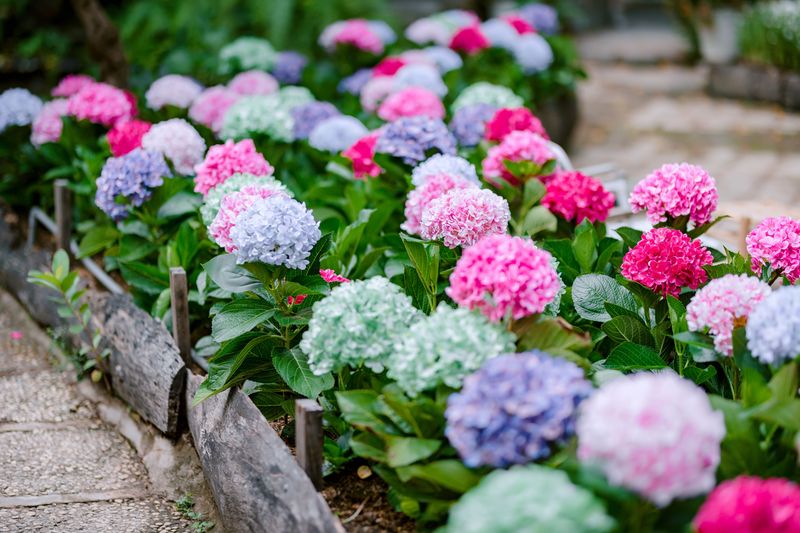
A frost date on the calendar is tempting to treat as a deadline. But a first frost in Minnesota and one in Georgia arrive weeks apart, and your hydrangea does not read the calendar.
Your plant type and your local weather are the better guides.
Here is a simple order to follow. First, identify your hydrangea, because that decides your pruning.
Second, check the mulch and refresh it if it has thinned, keeping it off the stems. Third, water only when the soil is dry below the surface.
Fertilizer stays off the automatic list. University of New Hampshire Extension gives a specific fall window for established trees and shrubs, but that is not a call to feed every hydrangea right before frost.
Pruning timing also varies, as its hydrangea pruning fact sheet shows. For general seasonal chores, Georgia Extension’s September garden notes are a handy regional example.
These steps look after the plant, and that is all they promise. Bigger blooms are not guaranteed.
A shrub that goes into winter with protected roots and untouched buds has simply been given a fair chance.
