
7 Clues A Black Racer Already Lives In Your Florida Yard, And Why You Should Let It Stay
Follow us on Google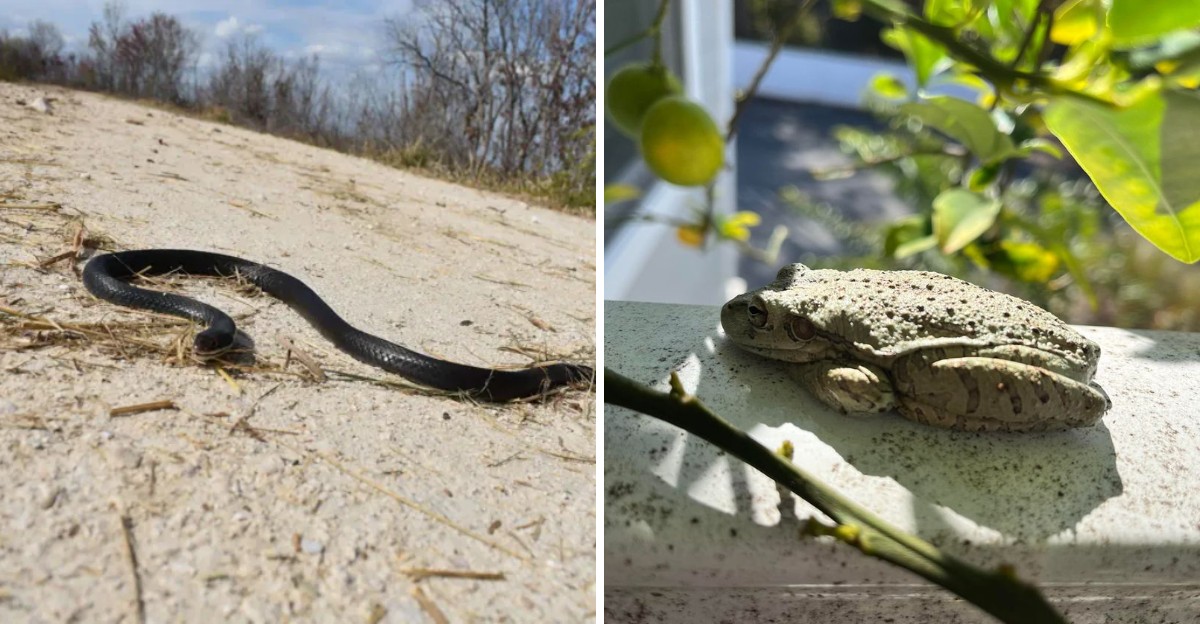
You step onto the patio after breakfast, coffee in hand, and a glossy black streak zips across the warm pavers before you can blink. Odds are good it was a Southern black racer, and odds are even better it has been living in your Florida yard for months.
These fast, harmless snakes leave quiet clues long before most homeowners ever spot one. Here are the seven signs to watch for, plus the honest reasons this speedy neighbor deserves a spot in your landscape.
1. A Fast Black Streak That Vanishes In Daylight
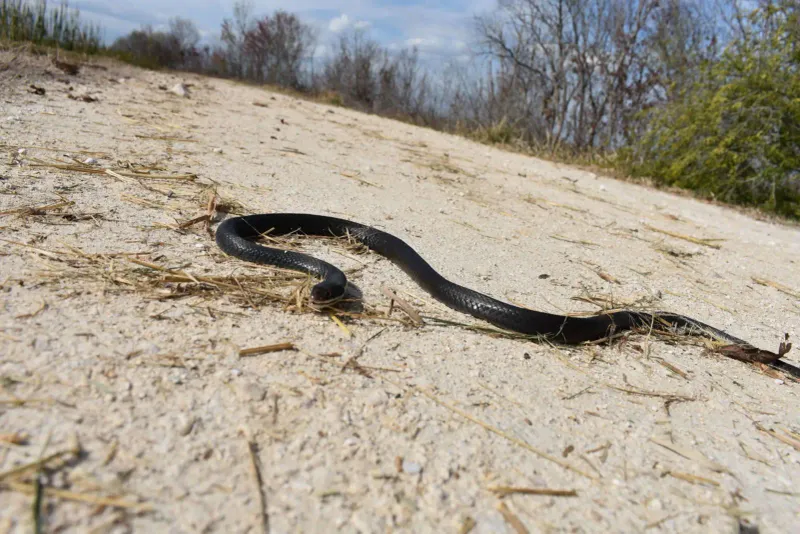
Most snakes in your yard stay hidden until dusk. The black racer does not play by those rules.
It hunts in full daylight, which is why so many Central Florida homeowners first meet one while mowing or watering.
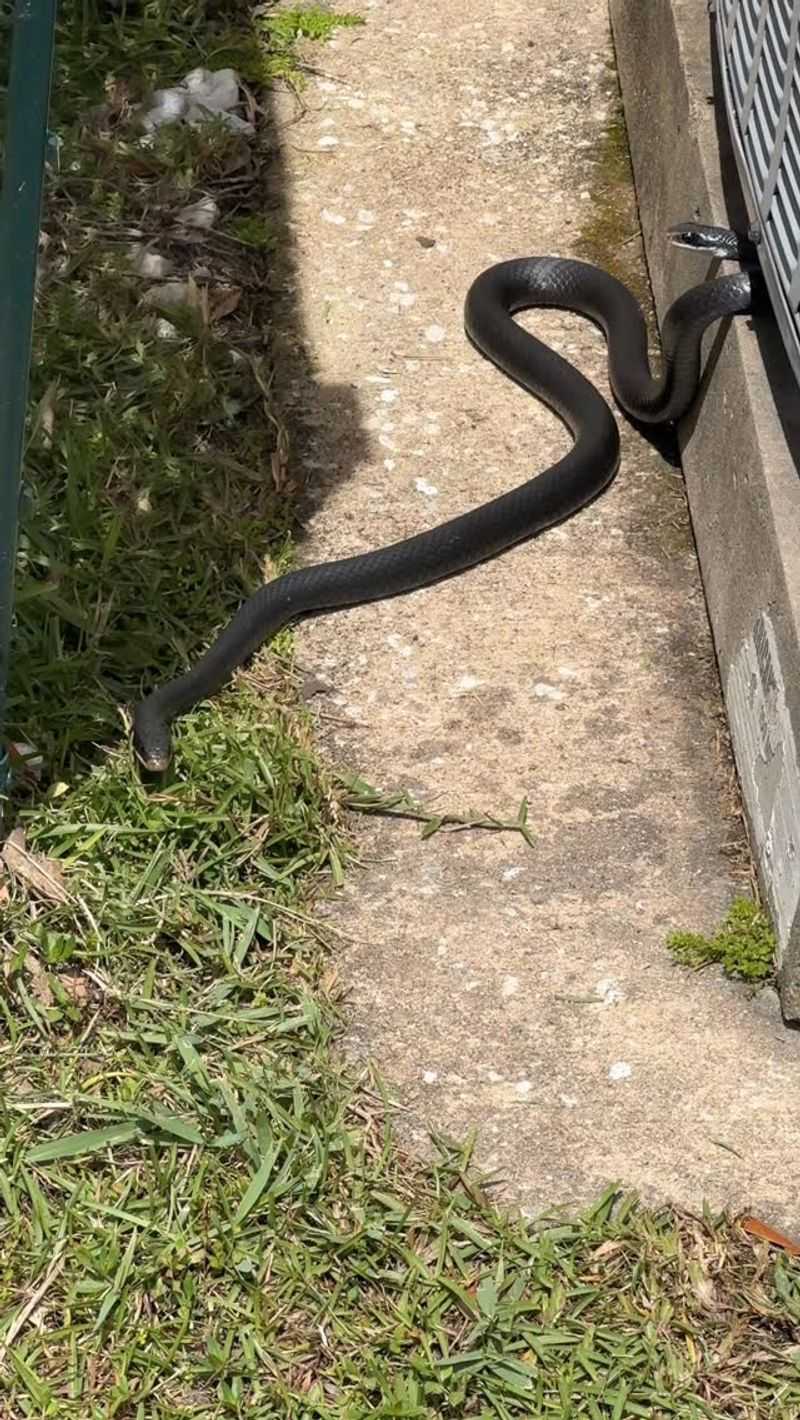
Here is how to know it was a racer. Adults are solid glossy black with a white or grayish chin, large round-pupiled eyes, and a long slender body that usually runs 3 to 5 feet.
Some stretch close to 6 feet. The giveaway is speed, since racers can move around 4 miles per hour, roughly a brisk walking pace for you but lightning quick across grass.
Watch sunny edges in midmorning, along fences, walkways, and the border where lawn meets shrubs. Racers love these edge zones the way kids love the end of a pool.
If the same shiny shape keeps flashing past the same spot, you likely have a resident.
And that sighting is genuinely good news, not a warning.
2. Fewer Mice, Lizards, And Cuban Tree Frogs Around
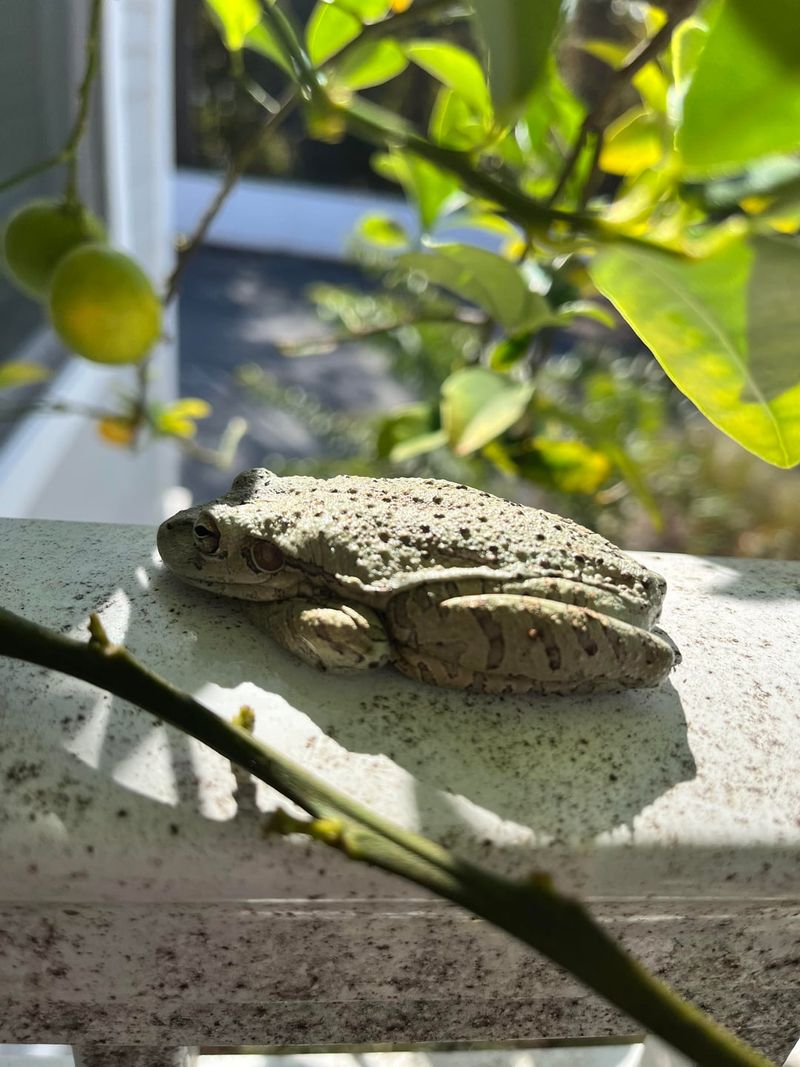
Last summer the porch lights drew a crowd of Cuban tree frogs. This year, the glass looks strangely empty.
That quiet change can be one of the best clues a black racer has moved in.
Racers are active hunters, not ambush sitters. They chase down mice, rats, moles, lizards, frogs, and large insects, and they swallow prey without squeezing it, despite the scientific name Coluber constrictor.
In South Florida, many homeowners notice fewer invasive Cuban tree frogs clogging downspouts once a racer patrols the area.
Give this clue a few weeks before you trust it. Track rodent droppings in the shed or garage over 30 days.
If they drop off while you have not changed baits or traps, something is doing the work for free.
Of course, a racer is not a magic solution. Weather, neighborhood cats, and food sources matter too, so treat this as one layer of pest control.
Still, it is satisfying to have a tireless night shift that actually works days.
3. A Papery Shed Skin Snagged In The Shrubs

A long, ghostly tube draped through the beautyberry stops plenty of gardeners cold. Relax, it is just an old outfit.
Snakes shed their skin several times a year as they grow, and racers often leave theirs in shrubs or low branches.
Racer sheds tend to be long and thin, often 24 inches or more, with smooth scales. You can tell smooth from keeled scales by running a gloved finger along the skin.
Keeled scales have a raised ridge down the middle, while racer scales feel slick, like polished paper.
Look in dense plantings such as American beautyberry (Callicarpa americana), saw palmetto (Serenoa repens), and around woodpiles. Sheds show up most often in spring and summer when snakes are growing fastest across Florida.
A shed does not prove the species on its own. Pair it with a daytime sighting and you have a strong case.
Leave the skin there or toss it with gloves, then smile, because your yard just passed a habitat test.
4. Leathery White Eggs Tucked Under Your Mulch
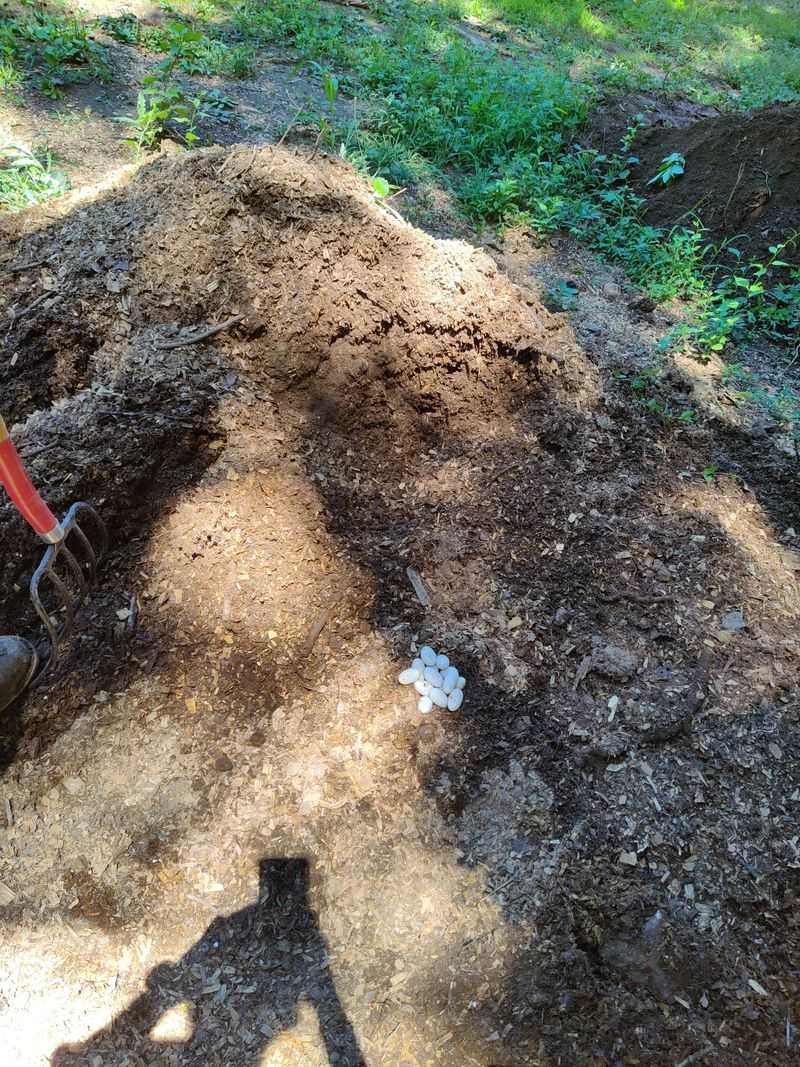
Here is a surprising fact. Your garden mulch is prime real estate for a mother racer.
Females lay 6 to 20 white, leathery, oval eggs in warm loose material like leaf litter, sandy soil, rotting logs, and pine bark mulch.
In Central Florida, breeding usually runs March through June. Eggs hatch about 60 days after being laid, so hatchlings can appear anywhere from May into October.
If you rake beds in early summer, you may uncover a clutch without meaning to.
The fix is simple. Cover the eggs back up gently with the same mulch, keep the spot undisturbed, and skip that bed for about 2 months.
Turning eggs can harm the developing young, so do not move them.
Hatchlings surprise people because they look nothing like their parents. Juveniles are gray or brown with reddish brown blotches, and they turn solid black after reaching about 12 inches long.
Spot one of these patterned babies and you have met the next generation of your yard crew.
5. A Rattle In Dry Leaves With No Rattlesnake
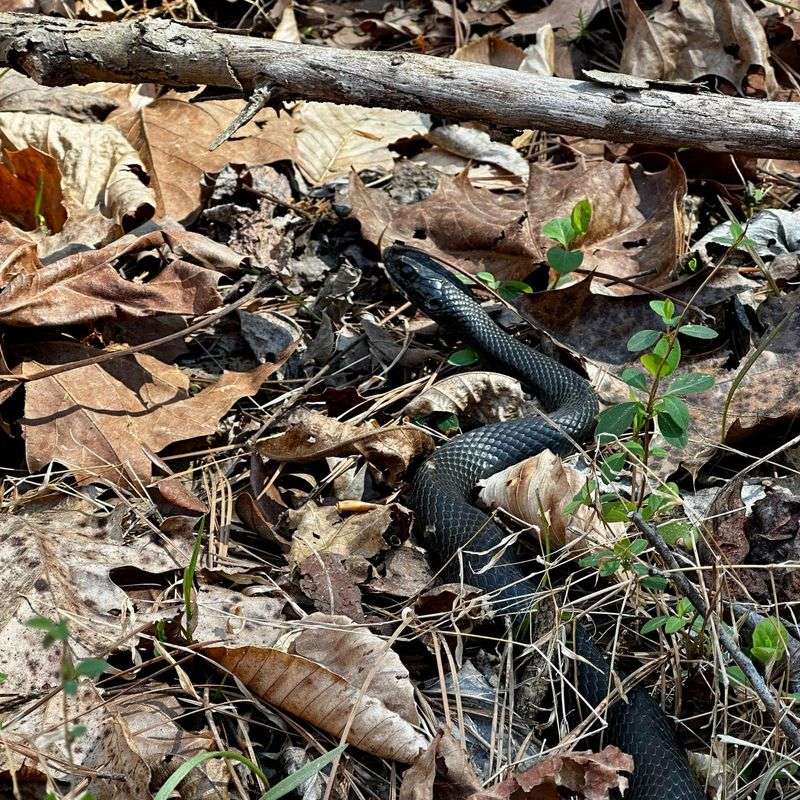
You reach for a fallen branch near the live oak and hear a buzzing rattle in the leaves. Your heart jumps.
Then a black snake bolts away, and you realize the bluff worked perfectly.
Racers have a clever trick. When cornered, they vibrate the tail fast against dry leaves, mimicking a rattlesnake.
It is pure theater, a costume borrowed from a far more dangerous neighbor. Florida has over 50 snake species, with only 6 venomous, and the racer is not one of them.
Here is where it gets tricky. You should never assume every rattle is fake, especially in North Florida and the Panhandle where eastern diamondbacks and timber rattlers live.
Step back about 6 feet and look before you decide anything.
A solid glossy black body with a white chin and slender build means a racer. Give it a few seconds and room to escape, and it will happily take the exit.
6. A Sudden Musky Smell After Disturbing Brush
A myth floats around that a strong, sour smell in the yard means a snake nest. Not quite.
That odor usually comes from one startled snake using a defensive musk.
Black racers release a foul-smelling musk when they feel seriously threatened or grabbed. Many Gulf Coast homeowners notice it while clearing brush piles, pulling old boards, or chasing a snake out of the garage.
The smell is unpleasant and clingy, like something left too long in a cooler.
If you catch a whiff, stop and back off. Wait about 15 minutes so the snake can slip away, then finish the job with gloves and long pants.
Wash hands and tools with soap afterward, since the scent lingers on skin and fabric.
A racer may also bite if handled. It hurts and leaves shallow scratches, but it is not medically significant.
Clean the scratch like any garden scrape. The lesson is easy, look, do not grab, and everybody walks away happier.
7. Black Racers Earn Their Spot In Every Florida Yard
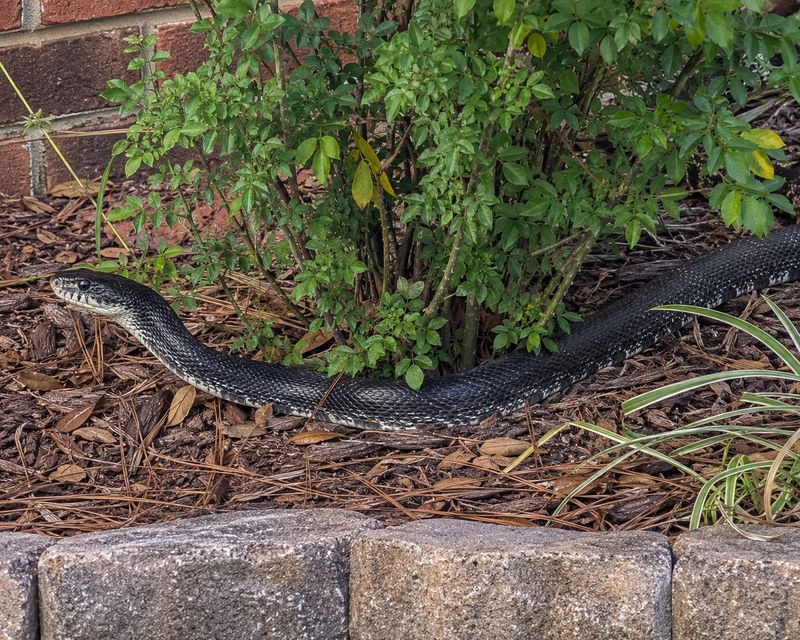
Racers climb better than most people expect. You might see one draped in a firebush, poking through palm fronds, or slipping along a garage wall while hunting tree frogs.
Spotting one up high is the final clue, and it leads straight to the reason to let it stay.
These snakes are mid-level predators, which means they eat smaller animals and get eaten by bigger ones like hawks. That balance keeps rodents and lizards in check without chemicals.
Racers also eat other snakes, including smaller venomous ones, which may help reduce unwanted visitors. UF/IFAS Extension describes racers as common, harmless residents across mainland Florida and the Keys.
To welcome one, keep a 3 foot strip of native shrubs like firebush (Hamelia patens) or coontie (Zamia integrifolia) along a fence, and leave a small log or leaf pile in a back corner. Seal garage door gaps wider than 1/4 inch so it hunts outside, not inside.
Then let it be. Your racer works daylight hours, the same hours you are outside enjoying the yard.
Every flash of black across the grass means your little ecosystem is doing exactly what it should.
