
Before You Toss Those Faded Porch Mums, This One Check Gives You a Clue About Winter Survival
Follow us on Google
It’s a gray October evening, and the porch mum that glowed last month now looks like a pile of brown crumbs. Before you carry it to the trash, there’s one quick check that can tell you if it’s even a decent candidate to come back.
It takes about a minute, and it beats guessing from the faded flowers. It does have limits, and we’ll cover those too.
The Tag Offers Your Best Winter Clue
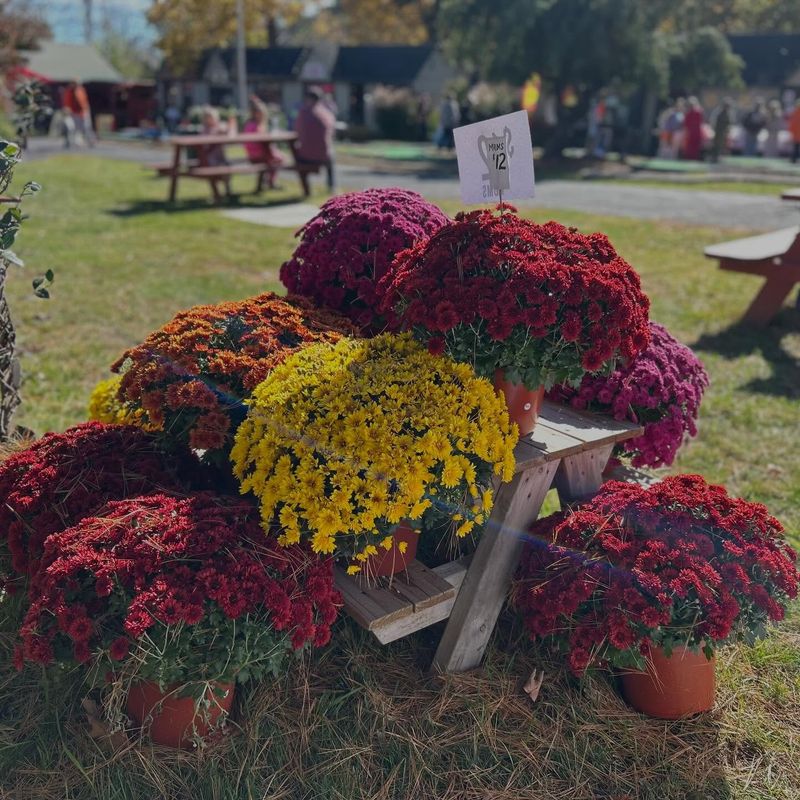
Grab the plastic tag stuck in the soil, because that little strip is your best quick clue. Look for the words “garden mum” or “hardy mum,” plus a winter-hardiness range that includes your area.
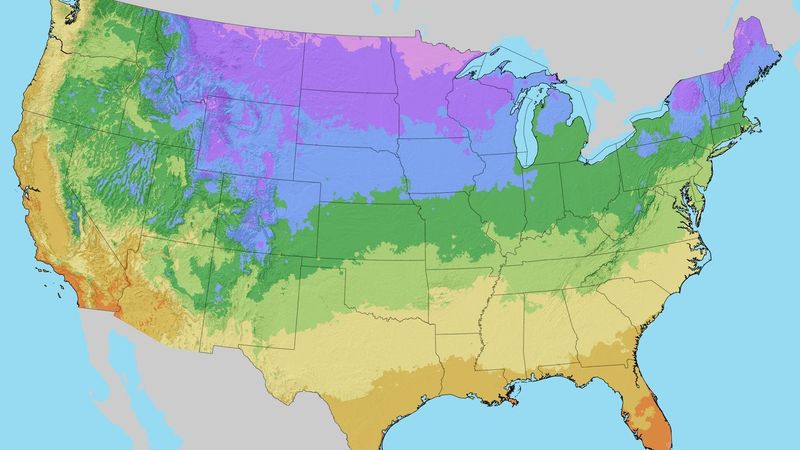
That range is usually written as USDA zones, which are simply a map of average coldest winter temperatures.
No tag? Do not give up yet.
Ask the seller where you bought it, or search the cultivar name, which is the specific variety name printed on the pot or receipt. Extension guides, like Virginia Cooperative Extension’s garden mum publication, point out that cold tolerance varies from one cultivar to the next, which is why the name matters.
Here is the honest part. A good tag helps you spot a more promising plant, but it does not promise anything.
Think of it like a weather forecast for your mum, useful for planning but never a guarantee.
It is also tempting to judge by looks. Bloom color, size, and shape seem like they should tell you something.
But Utah State Extension notes that flower forms overlap, with hardy and nonhardy varieties sharing some of the same shapes.
Cultivar, planting time, local winter conditions, and whether the plant sits in a pot all shape the odds. Iowa gardeners, for example, get cautious guidance from Iowa State Extension, which shows why local advice counts.
Florist And Garden Mums Serve Different Jobs
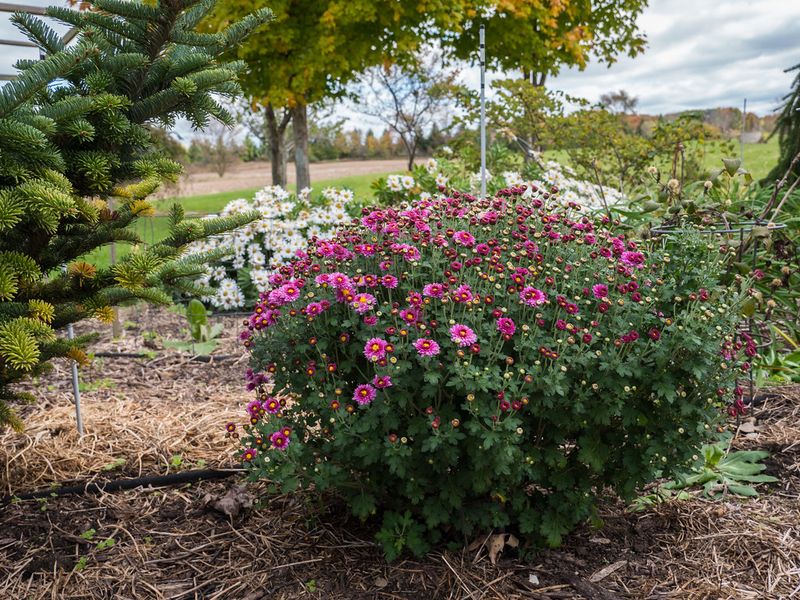
Two mums can look nearly twin-like in October, yet they were bred for different lives. Florist mums are commonly grown for indoor display, so they may not survive outdoors in colder regions.
Garden mums are selected for landscape use and are generally more cold-hardy.
Generally is the key word. Performance still varies by cultivar and by location, so a garden mum in a mild spot may thrive while the same type struggles somewhere harsher.
Utah State Extension describes the home garden side of the story well.
So where you bought the plant tells you very little. Grocery stores, big-box stores, and garden centers can all stock a mix, and a garden center mum is not automatically a hardy one.
The tag or cultivar name is a better guide than the parking lot you bought it in.
Picture the florist mum as a houseguest and the garden mum as a neighbor who lives there year round. The houseguest may enjoy a short stay on the porch, but it was not raised for a long winter outside.
Even for true garden mums, no one can promise a comeback. Iowa State Extension cautions that even garden mums planted in fall often do not survive Iowa winters.
That is not a reason to give up. It is a reason to treat each mum as a good bet or a long shot, and plan accordingly.
A Faded Bloom Does Not Prove The Plant Is Dead
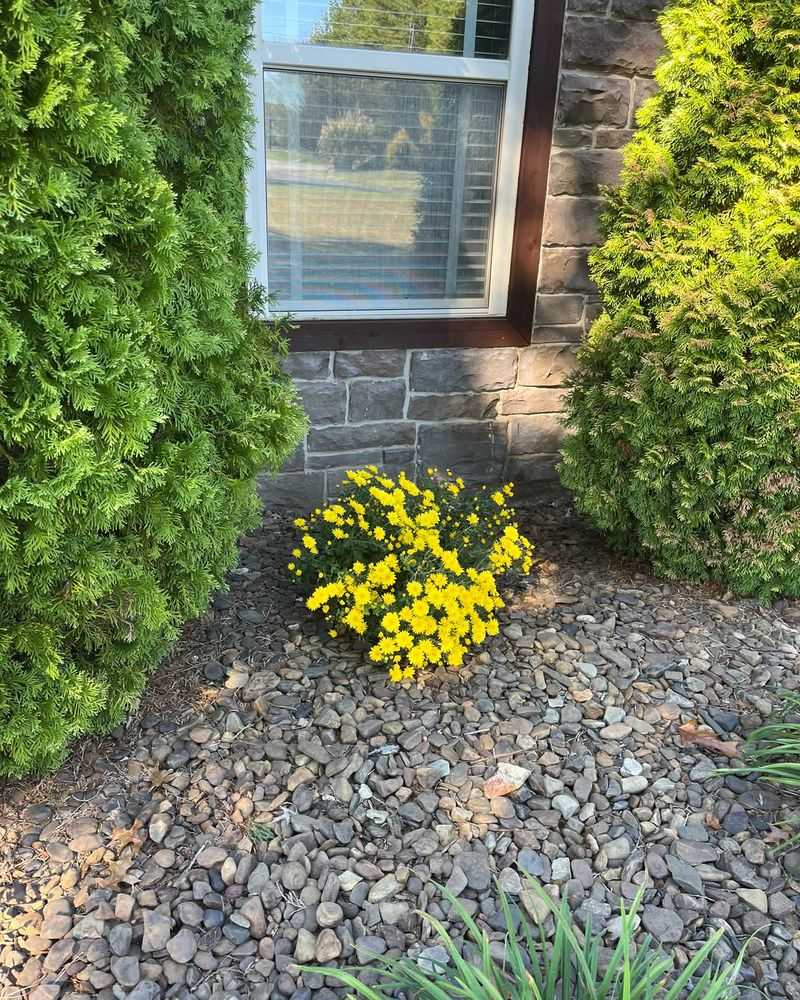
Brown blooms look like a funeral, but they are only the end of the show. Mums are perennials, which means the plant can live for more than one year.
Above-ground growth may die back, and hardy varieties may persist from underground shoots.
So spent flowers alone reveal neither that the plant is dead nor that it is winter-hardy. And please skip any flower-shape shortcut.
Utah State Extension notes that forms overlap among hardy and nonhardy varieties, so the blooms cannot sort them for you.
If your mum is planted in the ground, you can leave it in its planting site. Then watch for new shoots at the base in spring, and give it time before you decide anything.
A potted mum is a different story. Please do not read that advice as a reason to leave the pot exposed on the porch all winter.
Container roots get less protection from cold, so look for a locally appropriate overwintering step, such as the options in University of Illinois Extension guidance on potted plants.
Your local Extension office can tell you which step fits your climate. That quick call may be the difference between a tidy porch and a pot of mush.
A Hardiness Label Cannot Promise Survival
Some gardeners buy a plant labeled hardy to their zone and feel safe. Then a strange winter arrives and the plant disappears.
A label is a clue, not a contract.
According to Virginia Cooperative Extension, cultivar cold tolerance varies, and survival also depends on site, care, planting time, and winter severity. Any one of those can tip the balance.
USDA hardiness zones deserve the same careful reading. They describe winter cold tolerance, meaning how cold a typical winter gets.
They do not capture every condition at your porch or garden bed, such as wet soil, wind, or a bed that thaws and freezes again and again.
So a mum can be a sensible match on paper and still struggle in a soggy corner. Another may do fine in a sheltered spot beside the house.
Your yard has its own small climates.
Here is the practical takeaway. The tag helps you assess suitability, so you can decide how much effort a plant deserves.
But no single check guarantees the plant will return.
Treat the label as the first question you ask, not the last. Then let your site, your care, and the winter itself fill in the rest of the answer.
Planting Time Changes The Odds
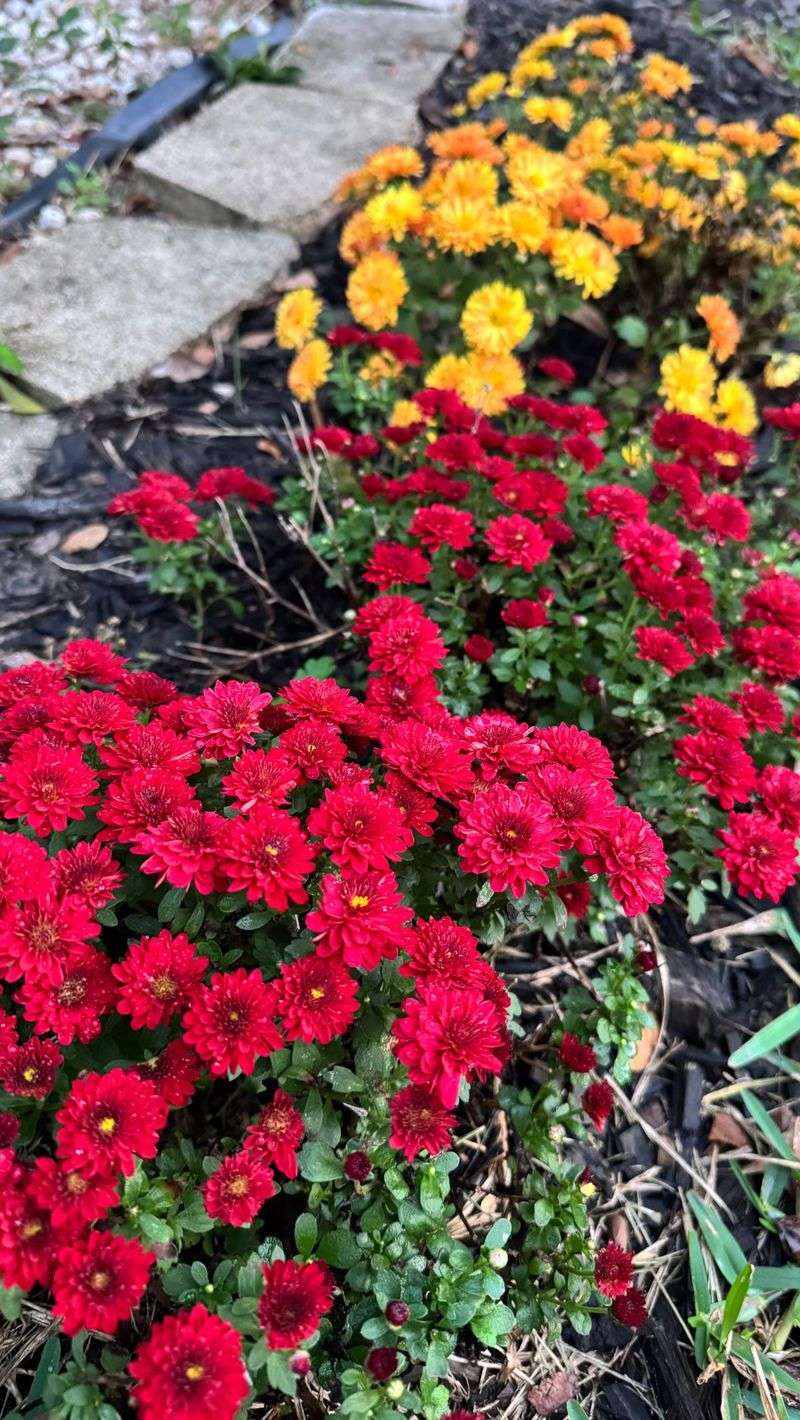
A suitable mum still needs time to put down roots. Roots are what anchor the plant and carry it through winter.
A plant dropped into the ground too late may never get settled.
That is why advice differs by region. Iowa State Extension recommends spring planting in Iowa, because fall-planted mums often fail to establish in time there.
Penn State takes a broader view. Penn State Extension gives a general guideline of at least six weeks to establish before extreme heat or freezing weather.
Those two pieces of advice are not rivals. One is a regional recommendation, and the other is a rule of thumb about timing.
Neither one is a nationwide planting date, so please do not copy a calendar from another state.
Here is a simple way to use both. Count backward six weeks from the time hard freezes usually arrive where you live.
If you are past that point, the plant has less time to settle in, and the odds shift against it.
Mulch and other winter protection cannot make up for a late start or an unsuitable cultivar. They are helpers, not rescuers.
Your local Extension office can share frost dates for your county, which beats guessing every time.
Placement And Protection Can Help, Not Guarantee
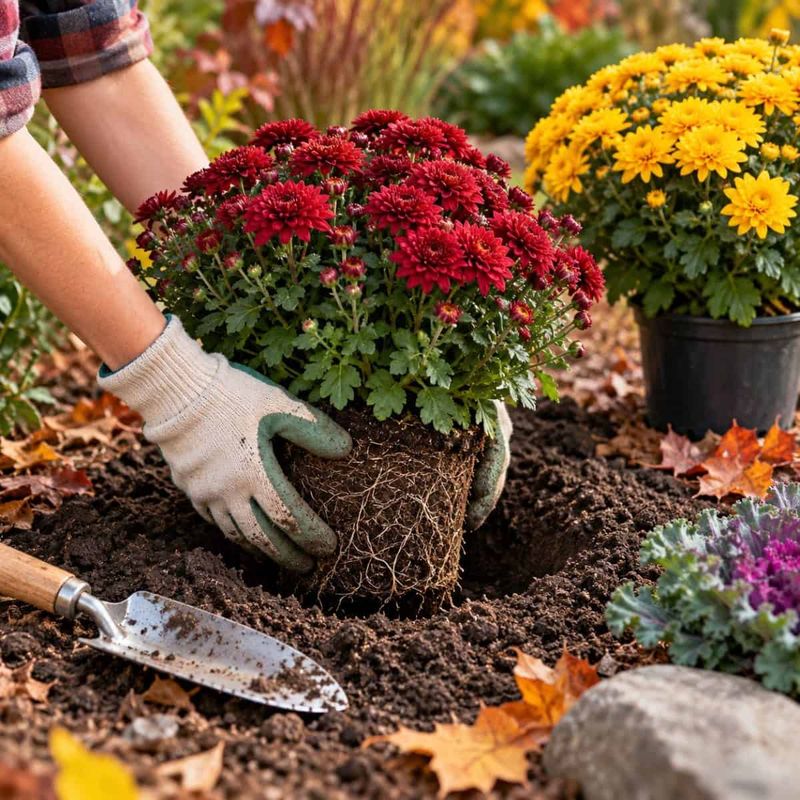
A mum in the ground has a cozy advantage. Soil acts like a blanket, so roots there are generally less exposed to winter cold than roots in a porch pot.
Container roots are less buffered, and the cold can reach them from every side.
If yours is still potted, University of Illinois Extension explains that overwintering potted plants takes planning. Burying the pot in a garden bed or giving it suitable winter protection may help, depending on the plant and your climate.
It does not ensure survival.
For a spot in the ground, choose full sun and well-drained soil, where water does not sit around the roots. Iowa State Extension suggests at least 6 hours of direct sun, spacing of 18 to 24 inches, and watering during dry periods.
Those numbers are Iowa-specific guidance, not nationwide rules, so check what fits your region.
Think of placement as setting the stage. A sunny, drained spot gives a hardy mum a fair chance, while a shady, soggy one stacks the deck against it.
So start with the tag for your first assessment. Then match the planting time and protection to the winters you actually get.
Some mums return, and some do not. Either way, you will know you gave yours an honest shot.
