
A Small Seed Patch Near Low Cover May Make Your Florida Yard More Inviting To Painted Buntings
Follow us on Google
You step outside on a cool winter morning in Florida, coffee in hand, and a flash of blue, red, and green darts into the shrubs. That jewel-colored bird might be a Painted Bunting.
These birds feed mostly on the ground, so a low, tidy seed spot near thick cover may suit them. It is no guarantee, but it is an easy thing to try, and this article shows you how.
Seed and Low Cover May Suit Painted Buntings
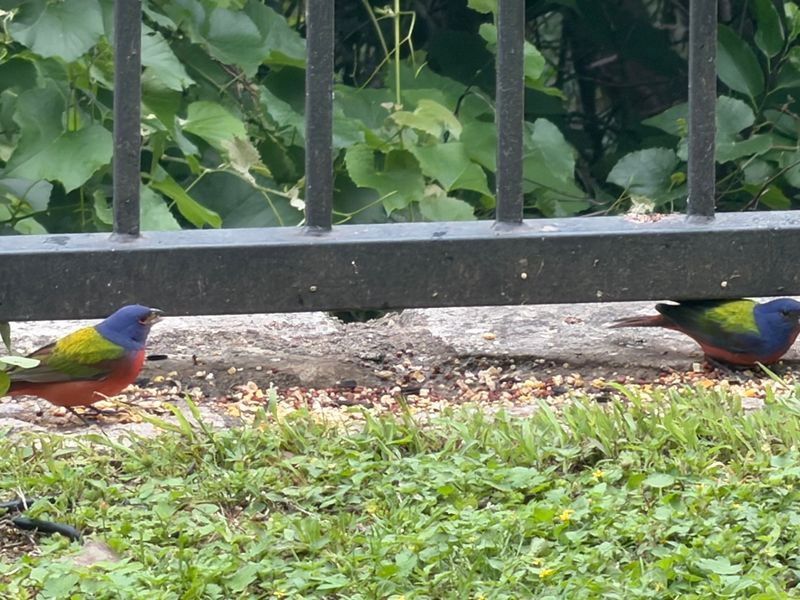
Picture a bird that would rather walk than perch. Audubon’s field guide says Painted Buntings eat seeds for much of the year, forage mostly on the ground, and favor brush, gardens, and thickets with low, dense growth.
That is the whole idea behind this little patch.
So the plan is simple. Make seed easy to reach near the ground, and keep some thick, low growth close by.
One half of the plan matches how the bird eats. The other half matches where it likes to be.
Here is where honesty matters. Nobody has shown that one small patch makes a bunting stop instead of flying past.
What we have is a good habitat match, not a magic switch. Think of it as setting a welcome table, then waiting to see who shows up.
That is still worth doing. Many backyard birders find that small, patient changes are the ones that pay off, even if the payoff takes a season or never arrives.
If a bunting does drop in, you will know the table was set the right way for its habits.
The rest of this article walks through where winter visits are reported, how to offer seed, how to keep cover nearby, and how to keep the whole spot clean and safe.
Florida Winter Visits Depend on Region
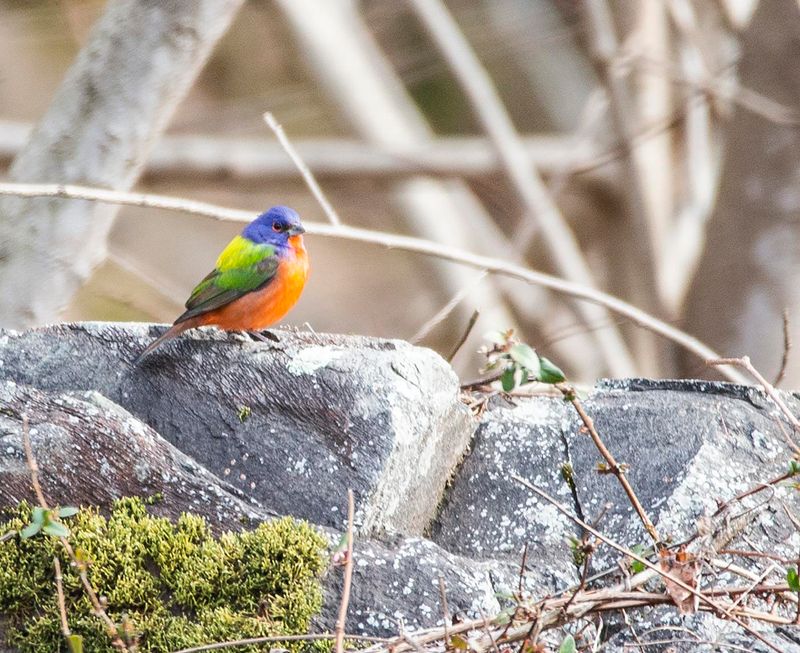
Florida is a long state, and winter bird luck is not spread evenly across it. The Florida Fish and Wildlife Conservation Commission describes South Florida as the winter range for the eastern population of Painted Buntings.
It also lists a breeding range along the northeast coast and the St. Johns River.
That means a homeowner in Miami-Dade or Palm Beach County has a different outlook than someone in the Panhandle. Where you live matters before you ever fill a feeder.
Farther north, there are local reports too. A UF/IFAS Extension article from Duval County reports wintering birds along Atlantic coastal counties.
So Atlantic Coast neighbors may have a real chance as well.
Still, a bird living somewhere in your region is not a promise that it will land in your yard. Think of regional range as the odds, not the outcome.
If you live inland or in a part of the state not mentioned in these accounts, you can still try. Just keep your expectations modest and your eyes open.
A quiet winter morning with binoculars costs nothing, and it is the best way to learn what your own yard offers.
Offer Seed in a Low, Managed Feeder
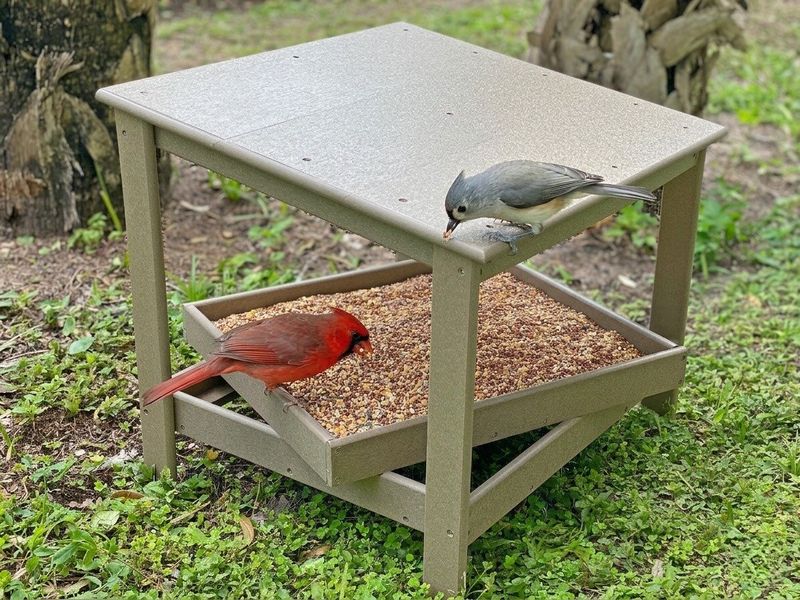
Since buntings feed on the ground, a feeder hanging high may miss the mark. UF/IFAS recommends a low platform feeder for ground-feeding birds.
That gives you a tidy, contained version of a seed patch.
The same guidance suggests placing feeders 10 to 15 feet from bushes. That distance can give birds a place to perch and escape, without handing cats a hiding spot right beside the food.
Nearby shrubs are not automatically safe, so the gap matters.
What about the seed itself? The Duval County UF/IFAS article mentions one local birder who attracted Painted Buntings with white proso millet in a tube feeder.
That is one person’s reported approach. It is not a test of preferred seed, and it is not a required setup.
So treat millet as a reasonable thing to try, not a formula. If the first setup draws no one, you can adjust slowly and watch what visits.
A small, low feeder placed with care is a gentle way to offer food. It keeps seed off bare dirt and makes cleanup far easier, which the next section covers.
Retain Dense, Low Cover Nearby
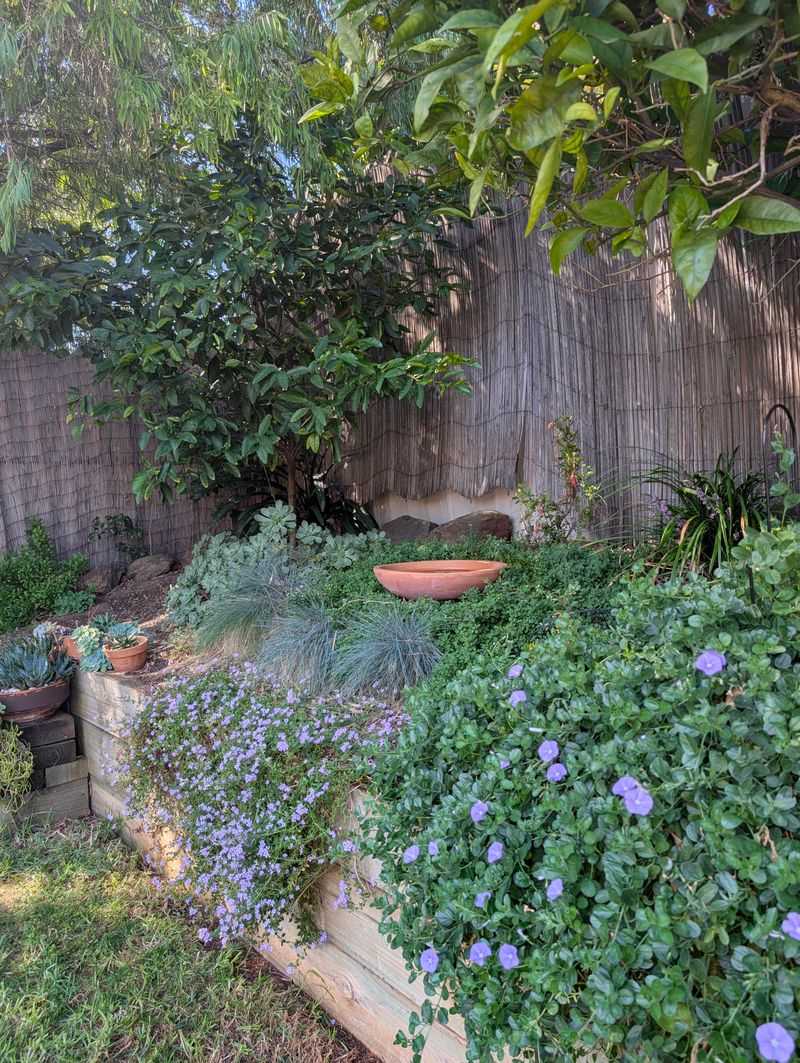
Cover is the other half of the story. Painted Buntings use brush, gardens, thickets, and other spots with low, dense growth, and their winter habitats include shrubby or grassy areas, according to Audubon’s species account.
For a homeowner, that is a cue to resist the urge to tidy every corner. A back border that is left thick and low might be exactly the kind of place a shy bird feels at ease.
Think of retained cover as a habitat feature, not a lure. It will not pull a bunting out of the sky.
It simply fits the way the species lives, so your yard looks less like open lawn and more like home turf.
There is no single plant list or spacing rule to follow here, and it would be a mistake to invent one. Use what already grows well in your yard, and keep it low and dense where you can.
Remember the cat caveat too. Cover that helps a bird can also help a cat, which is why feeder placement and cat control matter alongside the shrubs.
Keep the Feeding Area Clean and Cat-Aware
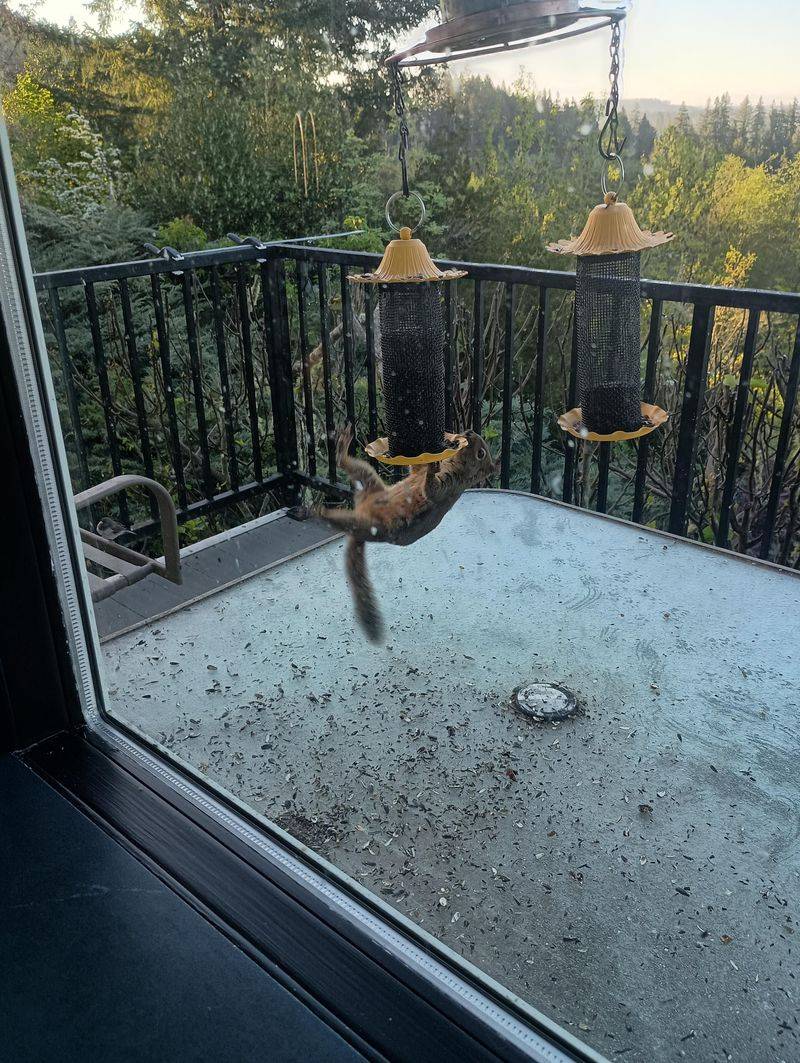
A feeder is a gathering spot, and gathering spots get messy. Audubon warns that feeders and bird baths can concentrate birds and their waste, which raises disease concerns.
Its advice is to clean them regularly.
UF/IFAS also cautions that spoiled food is unhealthy for birds and that spilled seed can attract rodents. So after rain or a few damp days, check the feeder and toss anything wet or moldy.
Sweep up spilled seed too. This is why scattering seed on bare ground is a poor shortcut.
It is hard to clean, it gets wet, and it invites rodents.
Cats are the other piece. Discourage free-roaming cats around the feeding area, whether they are neighborhood visitors or your own.
Ground-feeding birds are most exposed exactly where you want them to eat.
No one can hand you a perfect cleaning schedule, so use judgment. If seed looks old, clumped, or smells off, it is time to clean.
A tidy station keeps the visit safer for every bird that comes.
Make the Yard Welcoming, Not a Promise
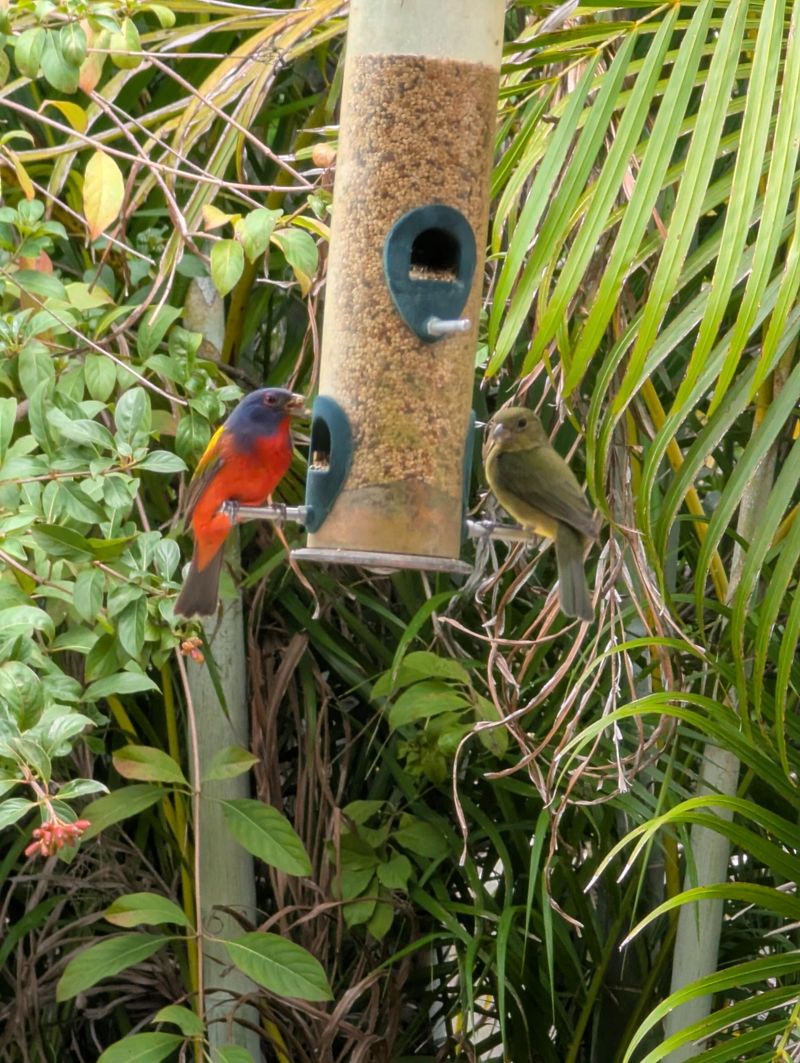
A seed spot beside low cover fits what we know about Painted Buntings. It is a thoughtful setup, but it is not a proven reason for a bird to stop.
Audubon even describes winter feeder visits in Florida as something that happens for lucky Floridians.
Where you live shapes the odds as well. FWC’s species profile points to South Florida as winter range for the eastern population, and the Florida habitat study it cites looked at breeding-season sites, not winter seed patches.
So no one can say your patch will make a difference.
Individual birds also make their own choices. Some will pass through, some will linger, and some will never come near your yard no matter how well you plan.
What you can do is keep the station clean, keep the cover thick, and watch a few mornings a week. If nothing arrives, you still have a safer, friendlier yard for the birds that do.
Patience is the quiet part of birding, and sometimes it is the best part.
