
Osage Orange Heartwood: A Fence Post Worth a Second Look Before You Cut
Follow us on Google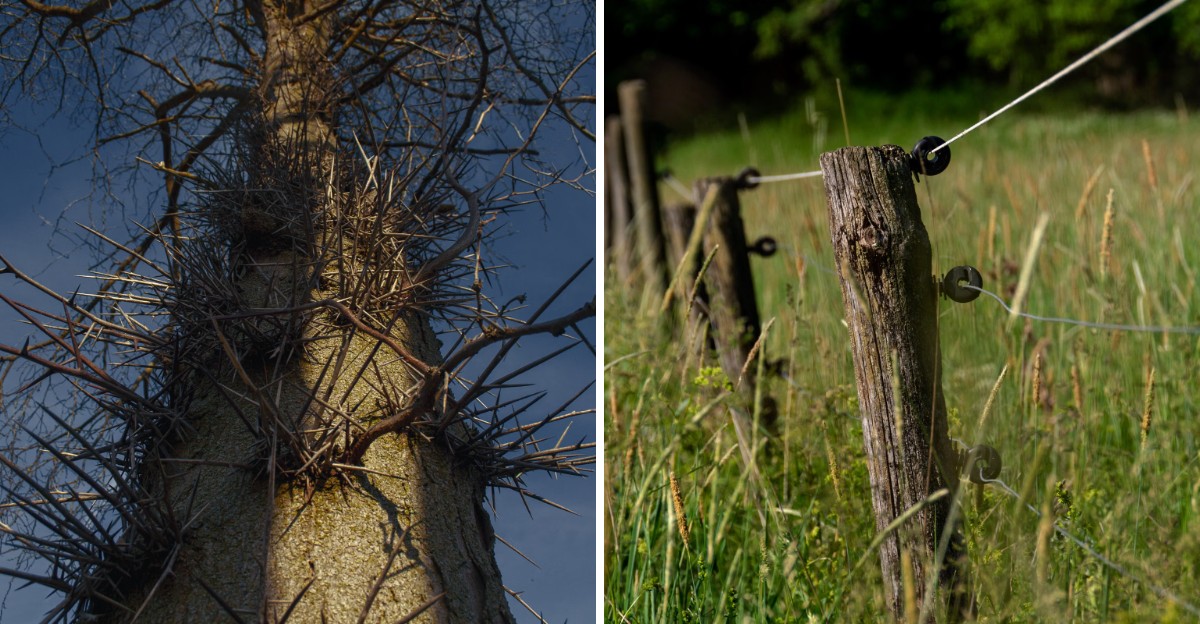
The hedge tree at the edge of your field may be hiding something. Its thorny branches and lumpy green fruit make it easy to dislike.
But the wood inside the trunk has a long record as fence post material. Before you haul it to the burn pile, here is what that wood can and cannot do.
Why Osage Orange Makes a Durable Fence Post
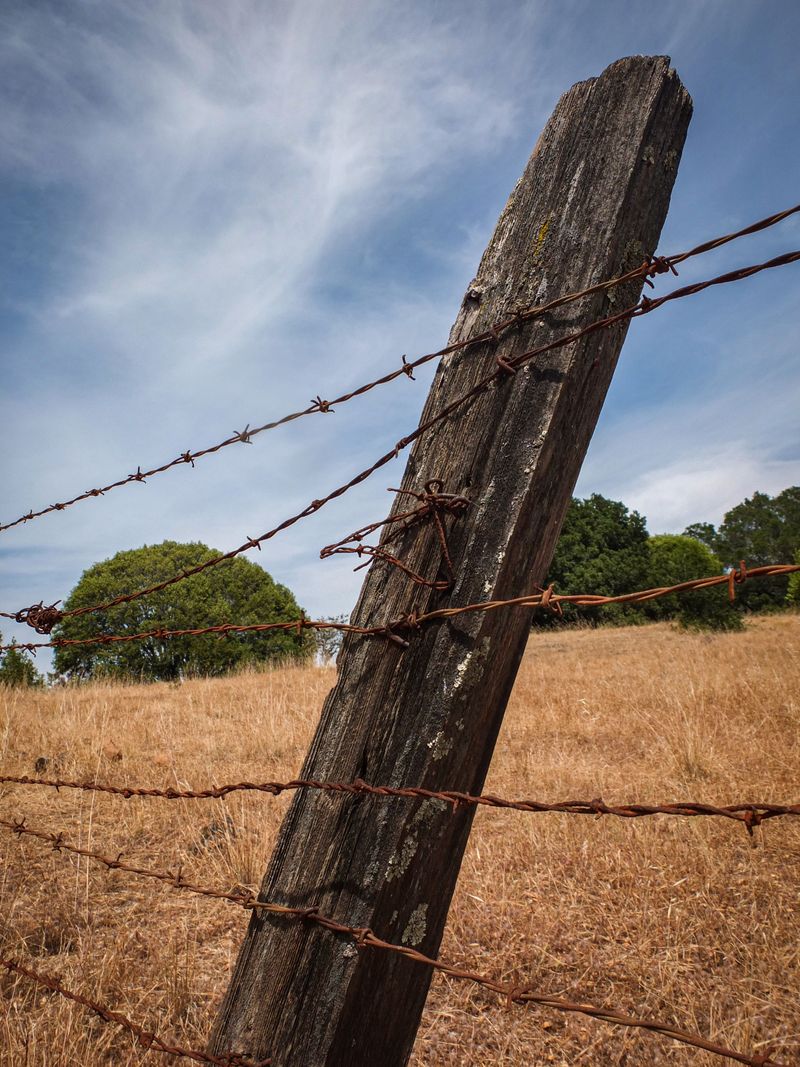
Walk any old farm fence line in the Midwest and you may spot a post that has stood far longer than the ones around it. Osage orange (Maclura pomifera) is often the reason.
Its heartwood, the dense core of the trunk, has a strong record for resisting decay and termites.
Here is the careful version of the headline. In an Oregon State University post test near Corvallis, no Osage-orange posts had failed after 63 years at the report date.
That is striking. But it does not prove every post will last that long, and it does not prove Osage orange beats every post you can buy.
So the wood earns the word exceptional, not the word rot-proof. Heartwood is the star here.
According to the Forest Service Silvics of North America, the outer sapwood is thin and the heartwood is exceptionally decay-resistant.
The tree also has a rough side. Thorny branches and softball-sized fruit can make it a poor neighbor in some yards.
Think of it as a prickly relative with one great talent.
Salvage is an option when a tree already needs to come down, for safety, location, or condition. It is not a good reason, by itself, to cut down a healthy tree.
The rest of this article helps you sort out which situation you are in.
Heartwood Is the Durable Part
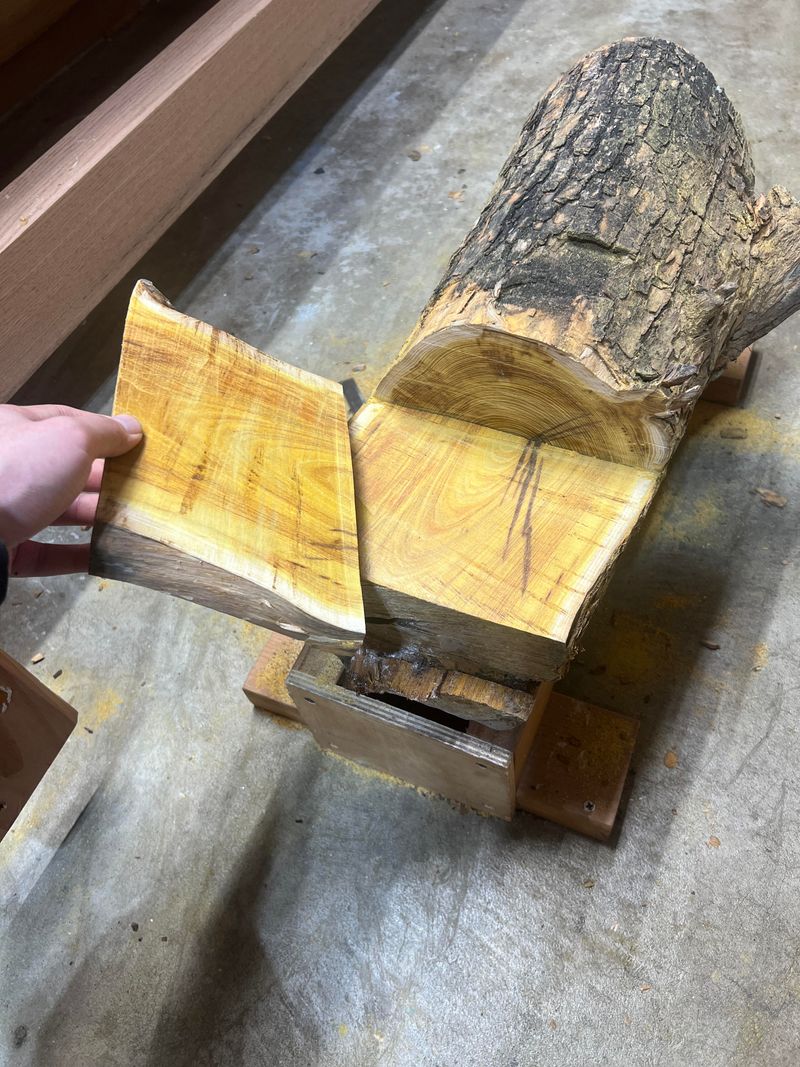
Cut a fresh Osage orange log and you will see two colors. The center glows golden yellow to bright orange.
A thin band near the bark looks paler. That pale band is sapwood, and it is the weak spot.
The heartwood is the part with the reputation. Forest Service silvics information describes the sapwood as thin and the heartwood as exceptionally decay-resistant.
Heartwood also resists termites. Resistant is the key word, though, because no wood holds up under every condition.
Species name alone is no guarantee either. Forest Service guidance on hardwood fence posts points out that the amount of heartwood in a post matters.
A skinny post that is mostly sapwood will not behave like a thick one with a big orange core.
Color is a clue, not a verdict. The Forest Products Laboratory notes the heartwood darkens with exposure, so an old piece may look brown instead of orange.
An orange tint does not prove a piece is sound, and a dull color does not prove it is bad.
Check for cracks, soft spots, and rot pockets as well. Think of heartwood as armor.
Armor helps a lot, but it still has to be in one piece.
What the Oregon Test Actually Shows
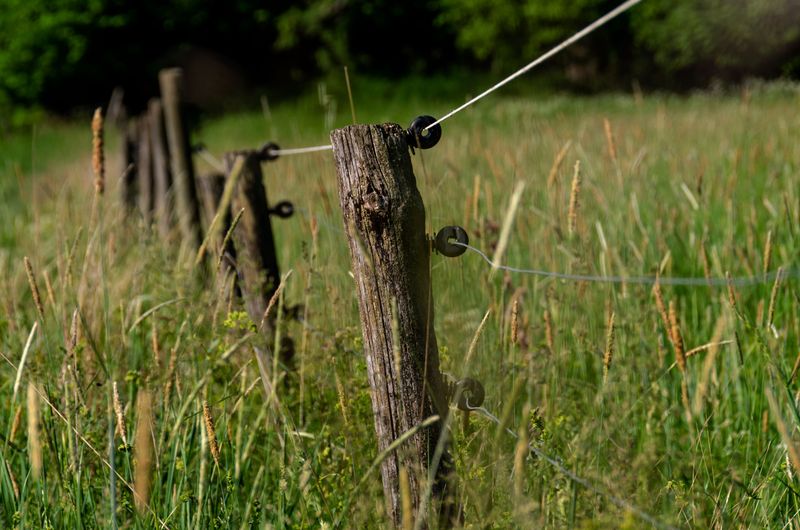
Here is the fact behind the buzz. In the Oregon State University post test near Corvallis, no Osage-orange posts had failed after 63 years at the report date.
Few wood products can claim a record like that.
Now the fine print. The study cautions against applying its results to other climates or service conditions.
Oregon is not Oklahoma or Illinois, and rainfall, soil, and temperature all change how fast wood breaks down.
The test posts also faced fewer physical stresses than some real fences. They were not holding back cattle, sagging under heavy wire, or getting hit by a tractor.
A working fence can fail from stress long before rot is a problem.
Steel was in the test too. Some steel designs also had no failures after 48 years.
That means the test does not rank Osage orange above every modern post, and it does not rank every product against every other.
The fair takeaway is simple. The test supports exceptional durability for Osage-orange posts in that setting.
It does not show superiority over every post you can buy, and it does not promise 63 years for the post in your yard.
A Promising Log Still Needs Assessment
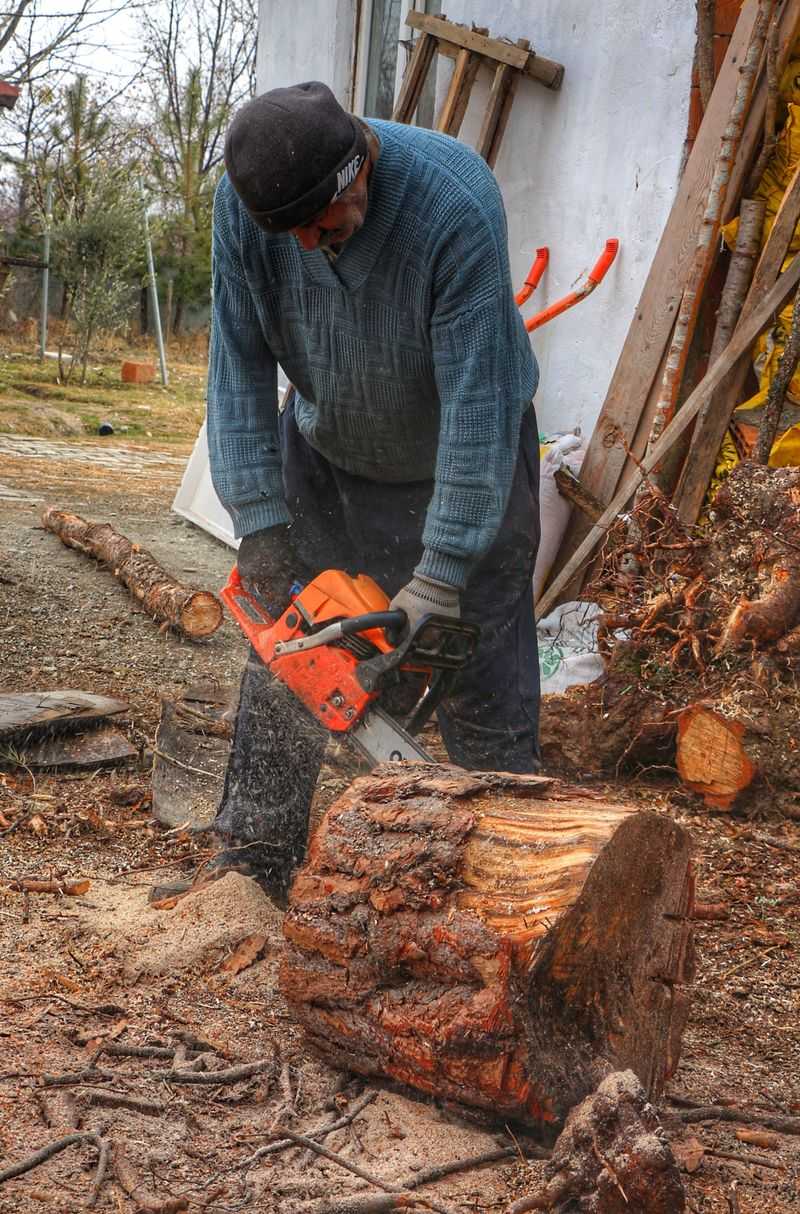
A big trunk on the ground looks like free posts. It is not that simple.
A log is raw material, and plenty can go wrong between the log and a post in the ground.
Ask a sawyer or fencing professional to look at it first. They can judge its condition, how much heartwood it has, and whether it can yield the sizes you need.
Osage orange often grows twisted and crooked, so straight, post-length pieces may be fewer than you hope.
For a rough benchmark, a Forest Service fence post guide lists an estimated 25 to 30 years for untreated Osage-orange heartwood. Treat that as a broad reference, not a promise for any one post.
Soil, moisture, and fence load all change the outcome.
Sorting matters as well. Posts with plenty of heartwood and few defects are the keepers.
Pieces that are mostly sapwood, as Forest Service guidance on hardwood posts suggests, deserve extra doubt.
Keep in mind that the Forest Products Laboratory describes a very hard, heavy wood, which can make milling and handling tough. A promising log is a starting point.
Suitability depends on what the post has to do.
Salvage Takes Planning and Safe Removal
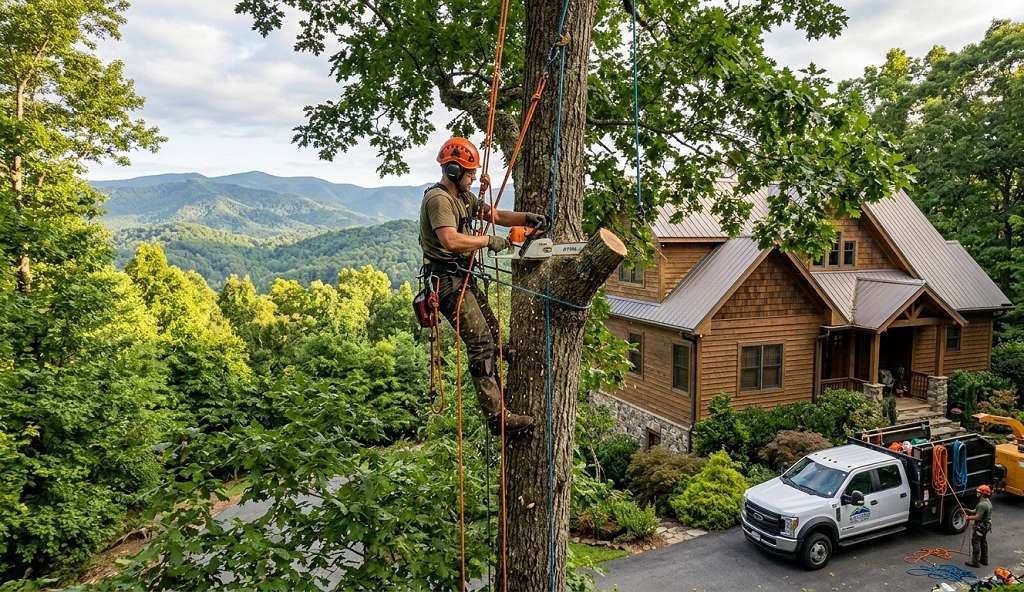
Valuable wood does not make a tree cheap or easy to remove. Free is a big word, and it hides a lot of steps.
You need permission if the tree is not yours or sits on shared ground.
Then come the costs. Safe removal, milling, hauling, and setting posts all take time, equipment, and often money.
Those costs can run higher than the wood is worth, so do not count on a bargain.
Felling a mature tree is not a weekend project. Mississippi State Extension advises homeowners not to fell a tree next to a house or power line.
If the job needs climbing or a tricky cut, hire a qualified professional.
Think of the order of decisions. First decide whether the tree should come down for a sound reason, such as hazard, damage, or poor placement.
Only then ask whether the wood is worth saving.
If it is, tell the crew before cutting so they can leave long, usable sections. Remember that the Oregon test posts faced fewer stresses than some real fences, so plan your fence design with that in mind.
Salvage is a bonus when removal is already the right call.
Decide Whether the Tree Fits Its Location
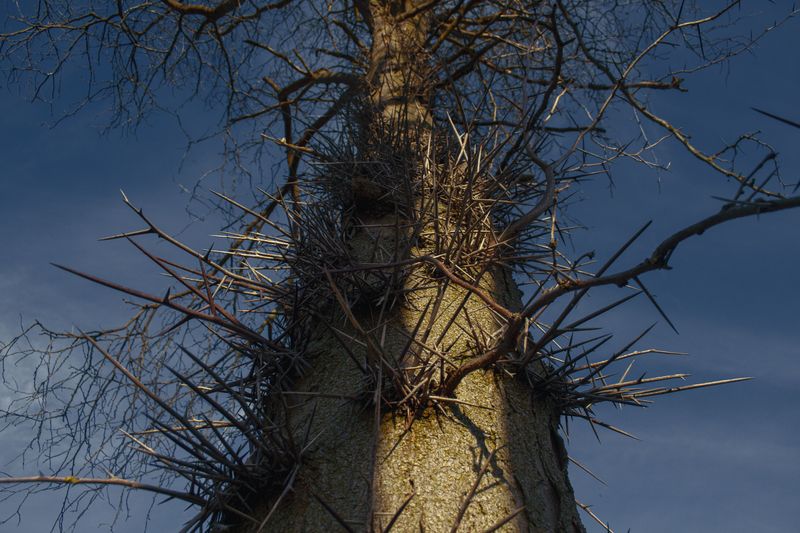
Before you think about lumber, look at the living tree. Iowa State Extension reports mature heights commonly around 30 to 40 feet, with some trees reaching 50 to 60 feet.
Twigs carry spines about half an inch long, and female trees drop fruit 3 to 5 inches wide.
That mix suits some places better than others. Illinois Extension says it is best suited to rural hedgerows, windbreaks, or barriers.
Beside a lawn, play area, or walkway, the thorns and fallen fruit can be a nuisance.
Location matters for ecology too. The Forest Service places its native range in parts of Texas, Oklahoma, and Arkansas, though it has been planted far beyond that.
In Missouri, the Department of Conservation reports it can spread by stump sprouts or root suckers in some settings, so cutting may not be the end of it.
A well-sited tree can serve as a barrier or cover, and nothing says it must go. Keep it if it fits.
If its location or condition already calls for action, talk with a qualified professional about removal and whether salvage is possible. A good tree in the wrong spot is still a good tree, just a tricky neighbor.
