
Garlic in Texas: Find Your Local Fall Planting Window and Set Honest Harvest Expectations
Follow us on Google
You’re standing in the garden on a crisp October morning in Texas, holding a handful of garlic cloves and wondering if you waited too long. Relax.
Garlic is a fine fall crop here, but the planting window depends on where you live. A gardener in Austin and one in another part of the state may follow different calendars.
Here is how to find yours, pick a variety, and know what to expect in spring.
Texas Garlic Has No Single Deadline
Ask five Texas gardeners when to plant garlic and you may hear five different answers. They could all be right.
Texas covers a huge stretch of climate, so a single date for the whole state does not hold up.
Start close to home. The Travis County vegetable planting guide from Texas A&M AgriLife Extension calls October through November the ideal garlic window for the Austin area, with September through November marginal.
That is advice for Travis County, not a rule for every yard.
AgriLife’s fall gardening guide shows regional average planting dates for fall crops that run anywhere from July through December. So the calendar shifts as you move across the state.
Even within Central Texas, advice varies. Bell County Master Gardeners recommend mid-October through early December.
That means a planting date before December fits some places well, but it is not a statewide cutoff.
Your next step is simple. Look up your county or regional AgriLife calendar, or call your county Extension office.
Then plant inside that window, and you are off to a good start.
Choose Garlic That Fits Your Region
Garlic varieties are a bit like boots. What works well in one part of Texas may pinch in another.
The best picks are ones that local gardeners and Extension offices have already tried.
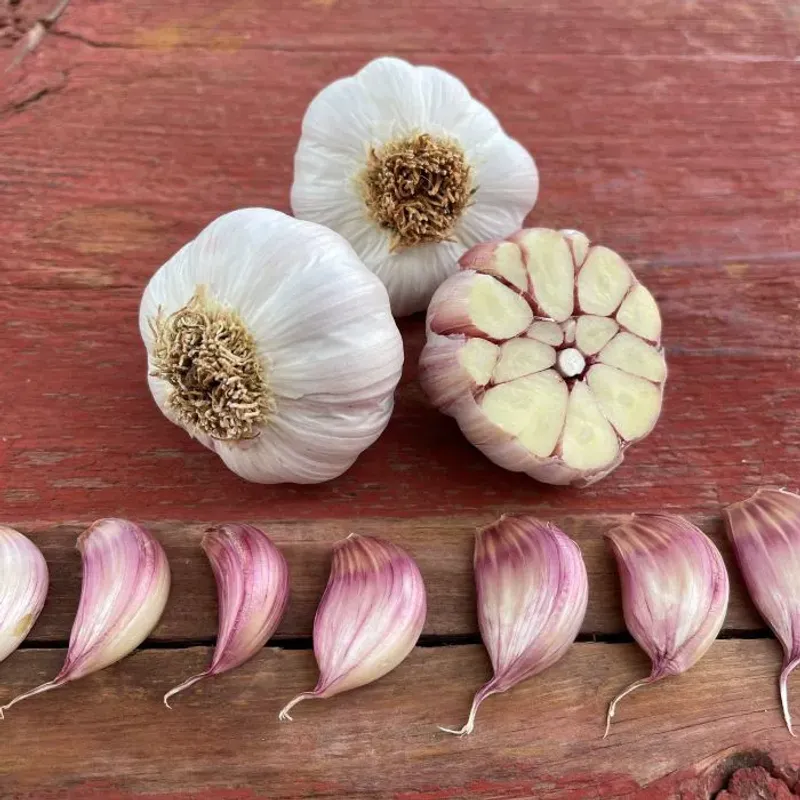
For Central Texas, an AgriLife variety list includes California Early, Creole Red, and Lorz Italian. Bell County Master Gardeners name Lorz Italian and Thermadrone as softneck varieties that perform well in their area, according to their garlic guidance.
Farther south, the picture changes. Older Texas A&M production guidance separates South Texas Creole types, such as Mexican Pink or Creole garlic, from varieties used in Central and northern Texas, such as California Early White.
You may hear about hardneck and softneck garlic. Think of that as one clue for choosing, not a rule for the whole state.
Hardnecks send up a stiff flower stalk, and softnecks do not.
No source shows that one variety grows bigger bulbs everywhere in Texas. So pick something your local Extension office or Master Gardeners already trust, and let your own garden tell you the rest.
Each Clove Builds One Bulb
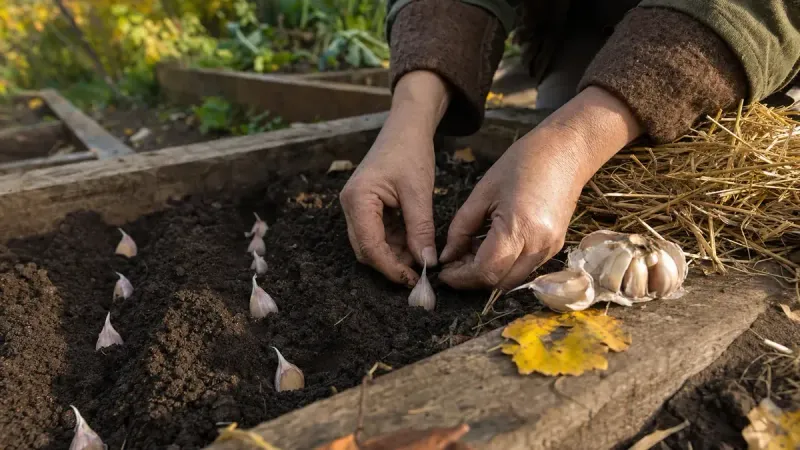
Garlic does not grow from true seed. You plant a single clove, and that one clove grows into one new bulb.
It is a small, tidy bit of magic.
Choose large, firm cloves from clean, healthy planting stock, and leave the papery skin on. Set each clove with the pointed end up, like a tiny rocket ready for launch.
Depth and spacing advice differs by source. Texas A&M’s Bexar County guidance suggests 1 to 2 inches deep and 3 to 6 inches apart.
Utah State University Extension suggests 2 to 3 inches deep and 3 to 4 inches apart.
That gap is a reminder that soil and climate matter. Use a range that fits your region, and ask your county Extension office if you are unsure.
What about that bulb in your kitchen? Some grocery garlic may be treated to slow sprouting, may not suit your area, or may carry disease, as explained by Iowa State Extension.
That does not mean every store bulb will fail. Reputable planting stock simply gives you better odds.
Support Bulb Growth With Soil, Space, and Water
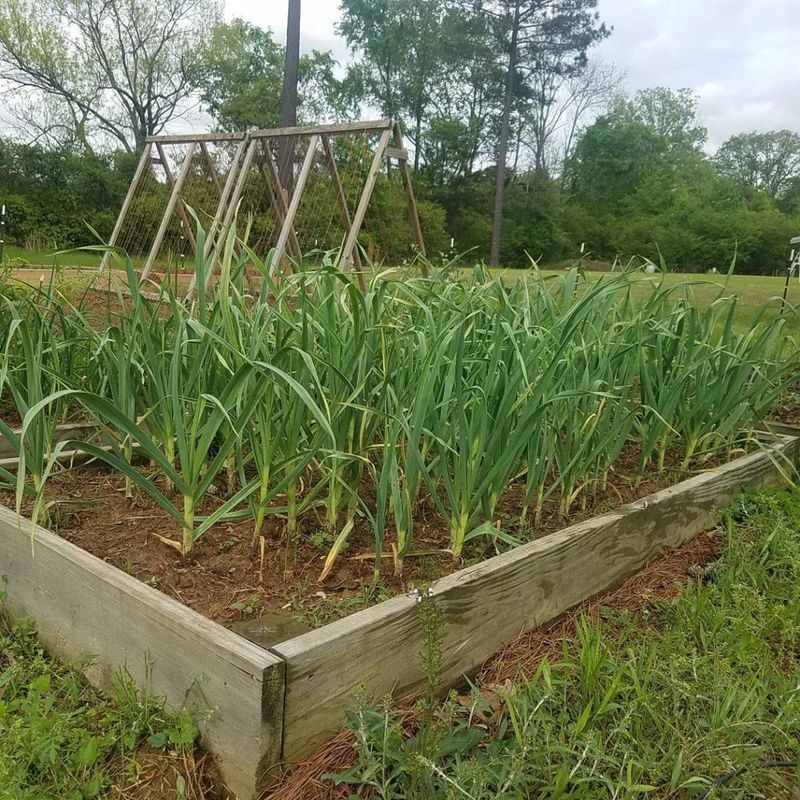
Garlic spends the cool months quietly building roots and leaves. What you give it during that time shapes what you dig up later, though nobody can promise a particular bulb size.
Soil comes first. Texas A&M production guidance says garlic can grow in many Texas soils when managed well, and it names sandy or clay loam as suitable.
It also recommends a soil test to guide fertilizer.
Drainage matters too. Heavy clay that stays soggy is rough on bulbs, so loosen it or build a raised bed.
Give each plant elbow room. Utah State Extension notes that crowded plants can end up with smaller bulbs unless water and nutrients are plentiful.
Now the water. Keep the soil moist while the plants are growing actively in spring.
Older Texas A&M guidance mentions 1 to 2 inches weekly for production, but rain, soil type, and drainage change that number from yard to yard.
As leaves begin to mature, ease off or stop irrigating. Let the garden tell you when to cut back, not a fixed schedule.
June Is a Possibility, Not a Promise
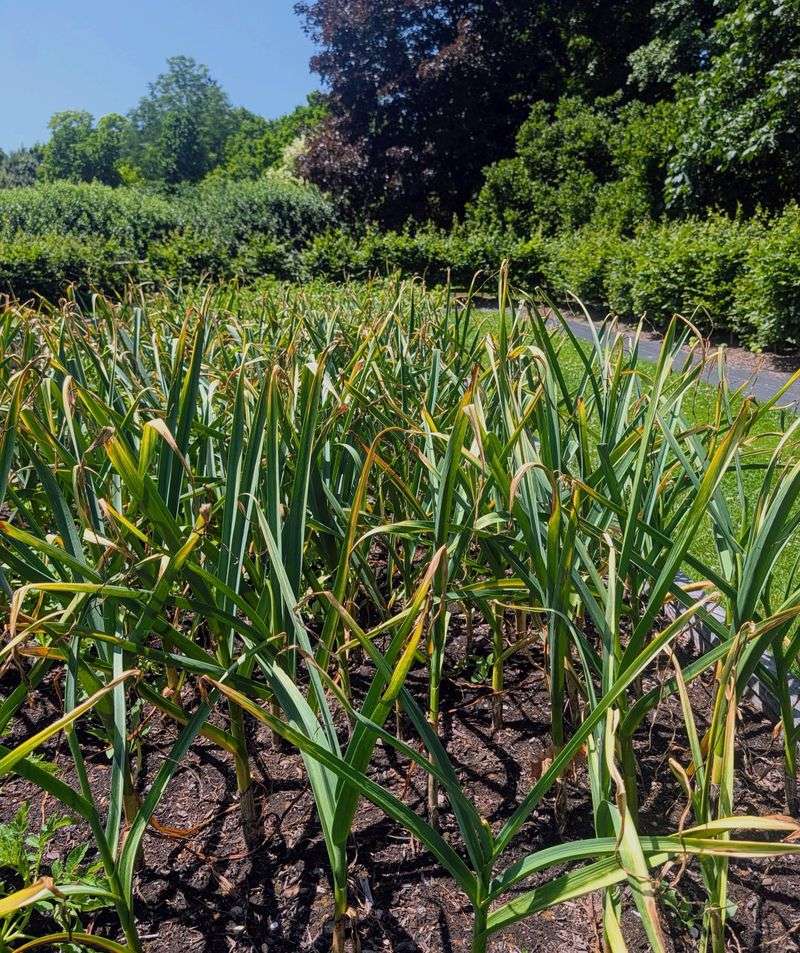
Plenty of Texans picture pulling garlic in June. Sometimes it happens just that way.
But it is a possibility, not a promise.
Texas examples show a spread. Older Texas A&M guidance says Mexican Pink or Creole garlic in South Texas matures in late May, Texas White matures in June, and California Early White in Central to northern Texas matures in June or July.
Dallas County Master Gardeners describe June as the general harvest time in North Texas, with warm springs able to shift it.
So planting before December does not decide your harvest date or your bulb size. Variety, weather, spacing, soil, moisture, and care all have a say.
Treat late May through July as a range of examples, not a statewide schedule. Mark a rough month on your calendar, then let the plants set the final date.
Use Plant Signs to Time the Harvest
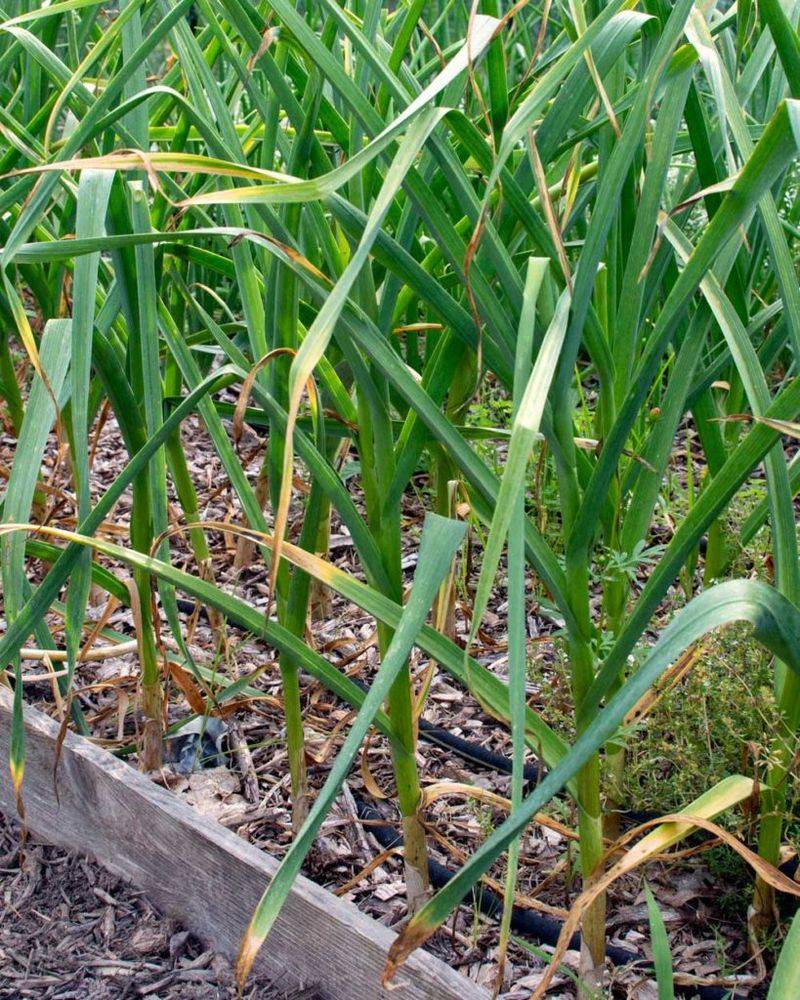
Your garlic will tell you when it is ready. You just have to read the leaves.
Watch for the lower leaves to turn brown and for the tops to yellow or begin to fall over. Dallas County Master Gardeners advise harvesting around then, before the foliage is completely dry.
Why not wait for every leaf to go brown? Bulbs left too long can begin to split their wrappers, which makes them harder to store.
Texas A&M’s Bexar County guidance offers similar maturity cues.
Loosen the soil and lift the bulbs gently rather than yanking by the stems. Then cure them, which means letting them dry slowly, in a shaded, well-ventilated place, as described by Utah State Extension.
When fall rolls around again, go back to your local planting calendar and start the cycle. A statewide promise of fat bulbs by June was never the point.
Your garlic knows its own clock.
