
A Faint Buzz in Florida Flower Beds? What It Can and Can’t Tell You
Follow us on Google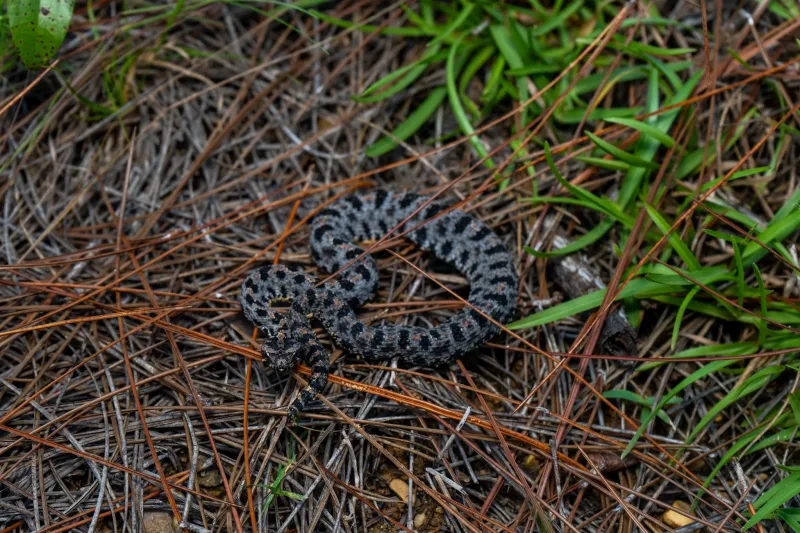
You kneel by the azaleas on a mild fall morning, rake in hand, and hear a thin buzz in the pine straw. It sounds like a cicada, but it might be a small snake.
A dusky pygmy rattlesnake can make that faint sound, though it may also stay silent. Here is what the buzz can tell you, what it cannot, and how to clean your beds with a calm head.
The Buzz Is Possible, Not a Reliable Signal
Picture a snake about as long as a school ruler. That is close to the size of the dusky pygmy rattlesnake, which the Florida Museum of Natural History says is commonly about 12 to 24 inches long as an adult.
It is venomous, and its coloring blends into leaves and soil remarkably well.
The snake wears a very small rattle. When it is disturbed, it may shake that rattle or its tail in dry leaf litter and make a faint, insect-like buzz.
Many people would take it for a cicada or a cricket.
Notice the word may. UF/IFAS Extension describes the rattle as barely audible, and older UF materials say it may not be heard at all.
So the sound is possible, but it is not something to count on.
For background, adults are often gray and stout for their size, with dark blotches and a rusty stripe down the back. Young ones have a bright yellow tail tip.
Those details are handy to know, but never step closer to check them.
Think of the buzz as a bonus clue, not an alarm system. If you hear it, take it seriously.
If you hear nothing, that tells you nothing.
Other Snakes Can Make Similar Sounds
Here is the twist that surprises people. A pygmy rattlesnake may lie perfectly still and say nothing at all.
Its camouflage is its first defense, and the Florida Museum notes the snake may remain motionless.
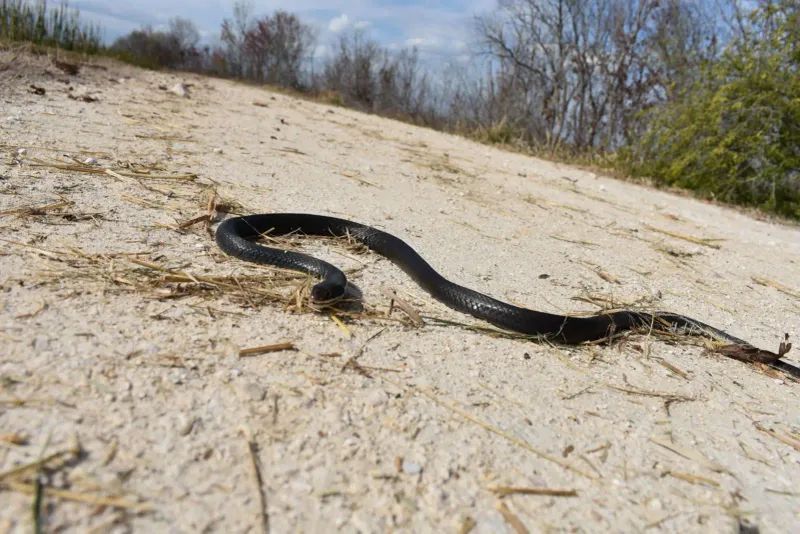
The reverse is also true. Young black racers can vibrate their tails in dry leaves and make a similar buzzing sound.
UF/IFAS adds that other nonvenomous snakes can shake their tails and sound rattlesnake-like in dry foliage.
So a buzz cannot identify what is making it. It could be a harmless racer, a real pygmy rattlesnake, or even an insect.
You simply cannot tell by ear.
What the sound can do is give you a reason to pause. Stop working, stay where you are, and look at the ground from a comfortable distance.
Do not poke at the leaves or reach in to find the source.
Step back slowly and let your eyes do the searching. Silence is not a green light, and a buzz is not a verdict.
Either way, patience costs you nothing.
Concealed Cover Calls for Care

Flower beds are cozy places. Pine straw, leaf litter, and dense plantings give small animals shade and hiding spots, and that includes snakes.
Cleanup puts your hands right where those hiding spots are.
The Florida Museum says the dusky pygmy rattlesnake lives throughout Florida but is not known from the Keys. It uses lowland pine flatwoods, prairies, wetland edges, and suburban areas near suitable habitat, so a yard beside a wooded lot or damp ditch may overlap with its range.
That is the honest takeaway. UF/IFAS Extension advises care when working in places where snakes can hide, including flower beds and gardens.
It does not say fall is a special danger. Nor does it say pine straw attracts these snakes.
Pine straw is not a villain here, and you do not need to fear your own yard.
You just need to remember that a bed full of cover is a place where you cannot see everything. Treat it that way, and the rest of the routine follows easily.
Keep Hands and Feet Out of Hidden Cover

Start by looking before you work. Scan the bed and the ground right in front of you, then move to the next patch.
Make it a habit, like checking a pot before you grab it.
Keep your hands and feet out of any spot you cannot see. FWC guidance in its wildlife and storms advice says the same about places where you cannot see the ground.
That means no reaching blindly under a heap of straw, a board, or a clump of grass.
Move debris with a long-handled tool instead, and pull it toward you from a standing position. Do not lift a pile with your bare fingers.
Thick gloves and boots are recommended by UF/IFAS Gardening Solutions when you work around likely hiding places. Think of them as one layer of care.
They do not guarantee protection from a bite.
Do not count on raking, stomping, or making noise to reveal a snake or drive it off. None of that works reliably.
Slow, careful work does.
Give a Visible Snake Room to Leave
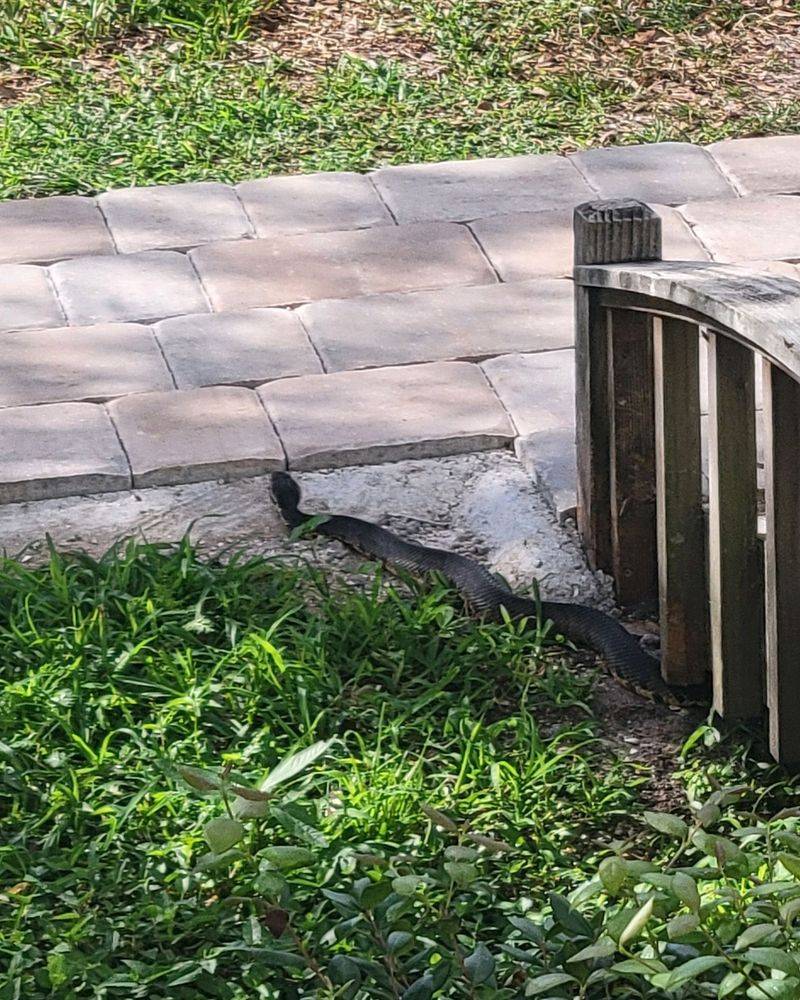
Say you spot a snake at the edge of the bed. Stop what you are doing.
Stay calm, and slowly step back.
Bring children and pets away from the area right away. Then give the snake room to move on its own.
Most snakes want to leave, and a defensive strike is a last resort rather than chasing behavior.
Do not touch it, trap it, or try to move it with a shovel. Do not try to kill it either.
UF/IFAS Gardening Solutions advises leaving snakes alone and not approaching one that may be venomous.
If you suspect it is venomous, or you cannot tell what it is from a safe distance, call a professional. Do not walk closer to confirm the pattern or the tail color.
A photo from far away, if you can take one safely, is plenty.
For general guidance on living alongside snakes, the Florida Fish and Wildlife Conservation Commission is a good place to start. Then go inside, have a glass of water, and finish the bed another day.
Seek Immediate Care After a Suspected Bite
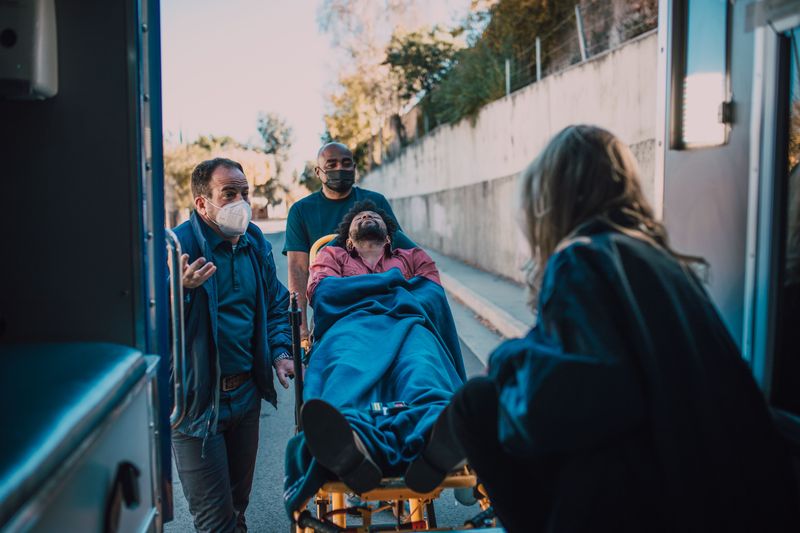
If you think a snake has bitten you, get medical attention right away. Call for emergency help or get to a hospital.
Do not wait to see whether symptoms show up.
UF/IFAS Extension is clear on what to skip. Do not cut the wound, do not try to suck out venom, and do not apply ice, heat, or a tourniquet.
Those steps can cause more harm than good.
Do not try to catch the snake so a doctor can identify it. Staying near it only raises the risk of a second bite.
The full UF/IFAS emergency planning guide lays out the same advice in one place.
The dusky pygmy rattlesnake is venomous, and a bite from one is painful. The Florida Museum says bites are not generally considered life-threatening, but can be more serious for children and small pets.
Even so, a bite always deserves a medical visit.
Getting to care matters more than knowing the species. The next safe step is the right one.
