
Skip the Leyland Cypress Row and Plant This North Carolina Native Screen That Stays Green for Decades
Follow us on Google
You step onto the back porch on a muggy July evening and the green wall along the fence has gone rusty orange again. In North Carolina, plenty of homeowners know that sinking feeling.
Before you rip anything out or plant the next row, it helps to know what went wrong and what your options are. One native evergreen, American holly, deserves a look, as long as you have the room for it.
American Holly Is A North Carolina Screen
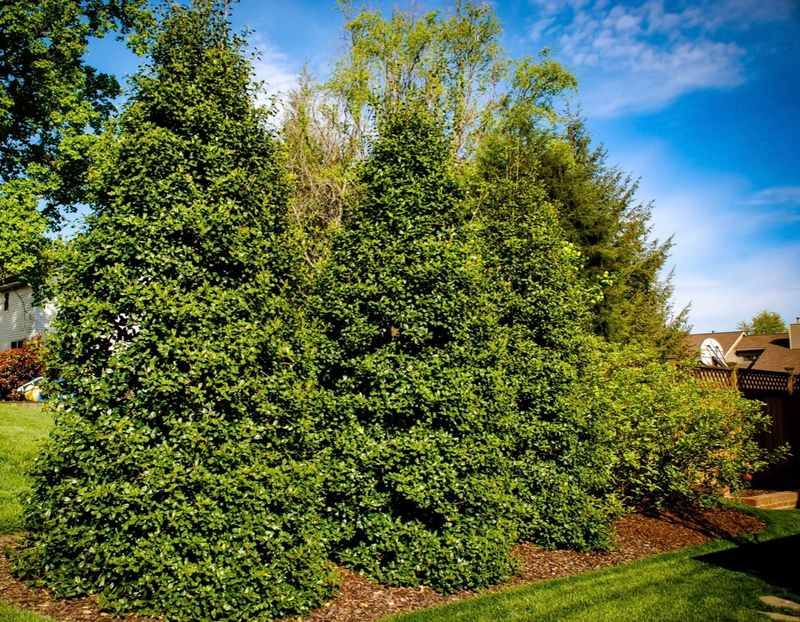
Picture a tall, dark green wall at the edge of a Piedmont yard, glossy leaves catching the afternoon light. That is American holly (Ilex opaca), and it has been growing in North Carolina long before anyone planted a privacy row.
According to NC State Extension’s plant toolbox, American holly is an evergreen that is listed for screens and hedges. It grows in the Piedmont, the Coastal Plain, and the mountains.
The state flora describes it as common across essentially all North Carolina counties, though it is less common at higher elevations.
That track record is a good reason to consider it. It is not a promise.
Native does not mean immune to poor placement, pests, or soggy ground, and no tree comes with a guaranteed lifespan.
Here is the tradeoff you need to hear up front. American holly grows slowly and gets big.
If you need a privacy fence by next summer, or you have a narrow side yard, this is probably not your plant.
But if you have room and some patience, holly can become a deep green screen that holds its foliage through winter. Think of it as a slow neighbor who eventually becomes the best one on the block.
Brown Leylands Need A Closer Look
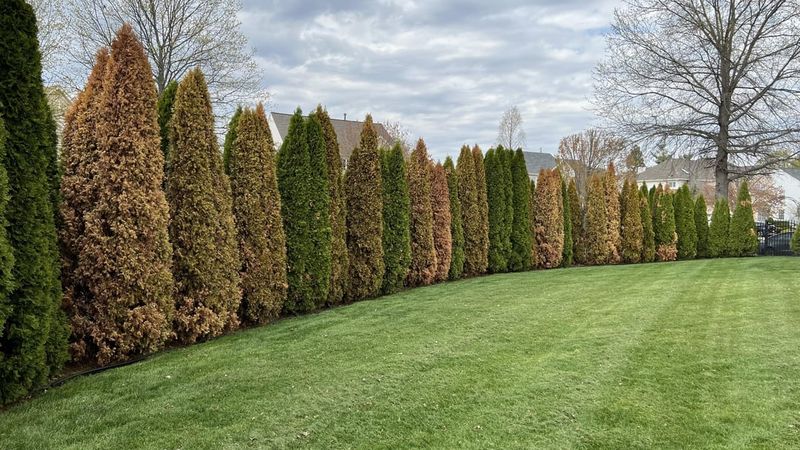
A browning Leyland row is frustrating, and it is tempting to blame the tree and start over. Hold off for a moment.
Browning has more than one possible cause, and the fix depends on which one you have.
NC State’s cypress diagnostic guide offers a useful clue. When the whole row declines at the same time, the cause often points to shared stress.
Think planting too deeply, drought, poor soil, or too much water.
Scattered branch death is a different story. A dead branch here, another one three trees down, can point to canker, a fungal disease.
Canker often follows a dry spell that has stressed the trees.
Crowding adds to the problem. A North Carolina Extension alert notes that close planting can increase competition, insect pressure, and fungal disease.
Many rows were set tight to fill in fast, and that choice can catch up with them years later.
Notice what is missing from this list. Humidity alone is not the culprit.
Our muggy summers may add stress, but they do not explain a failing row by themselves.
So walk the row. Check how deep the trunks sit in the soil, whether the whole line browned together, and whether the dead branches are scattered.
If you are unsure, your county Extension office can help sort it out.
Holly Trades Speed For Room To Grow
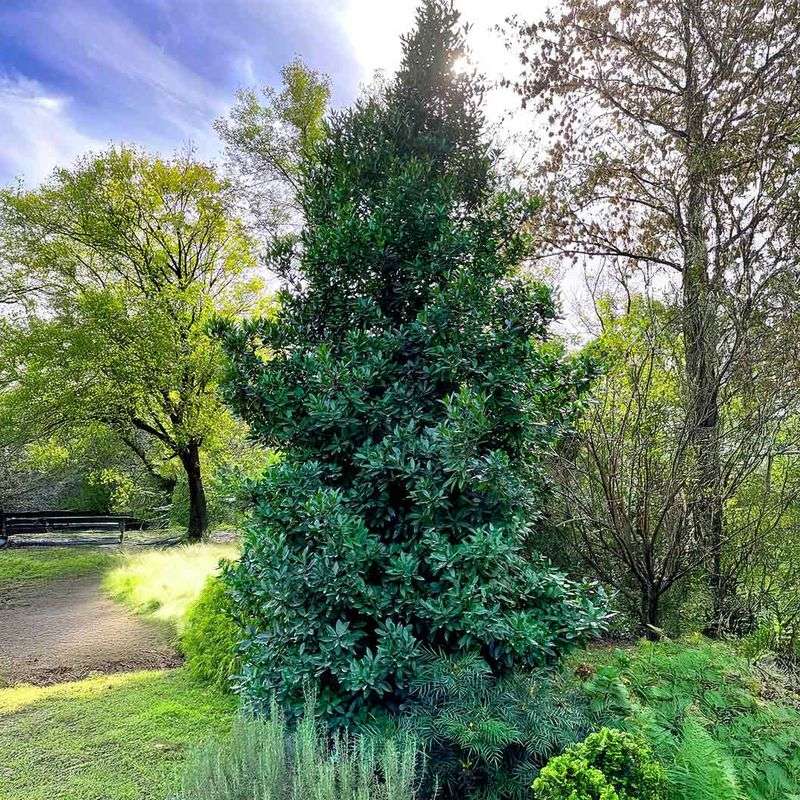
Here is the part nobody puts on a nursery tag. American holly is slow.
According to NC State Extension, it can eventually reach 40 to 60 feet tall and 10 to 20 feet wide.
That is a big tree, not a tidy hedge. It does not belong shoved against a six-foot fence in a small lot.
The temptation is to plant several close together for instant coverage. Resist it.
Crowding trees is the same move that often sets up trouble in tight Leyland rows, and a slow grower will not fill in any faster because you squeezed it.
Leave room for the full-grown plant. If that room is not there, a different screen is the honest answer.
Leyland cypress deserves a fair comparison. NC State lists its typical lifespan at 20 to 50 years, depending on environment.
It also notes that large specimens tend to topple and that the species is prone to pests and diseases.
That range is not a prediction for your row. And it is not a promise that holly will outlast it.
Individual trees live or struggle based on the site and the care they get.
So the question is not which tree wins. It is whether you have the space and patience for a screen that grows up slowly.
Clay Can Work When The Site Drains
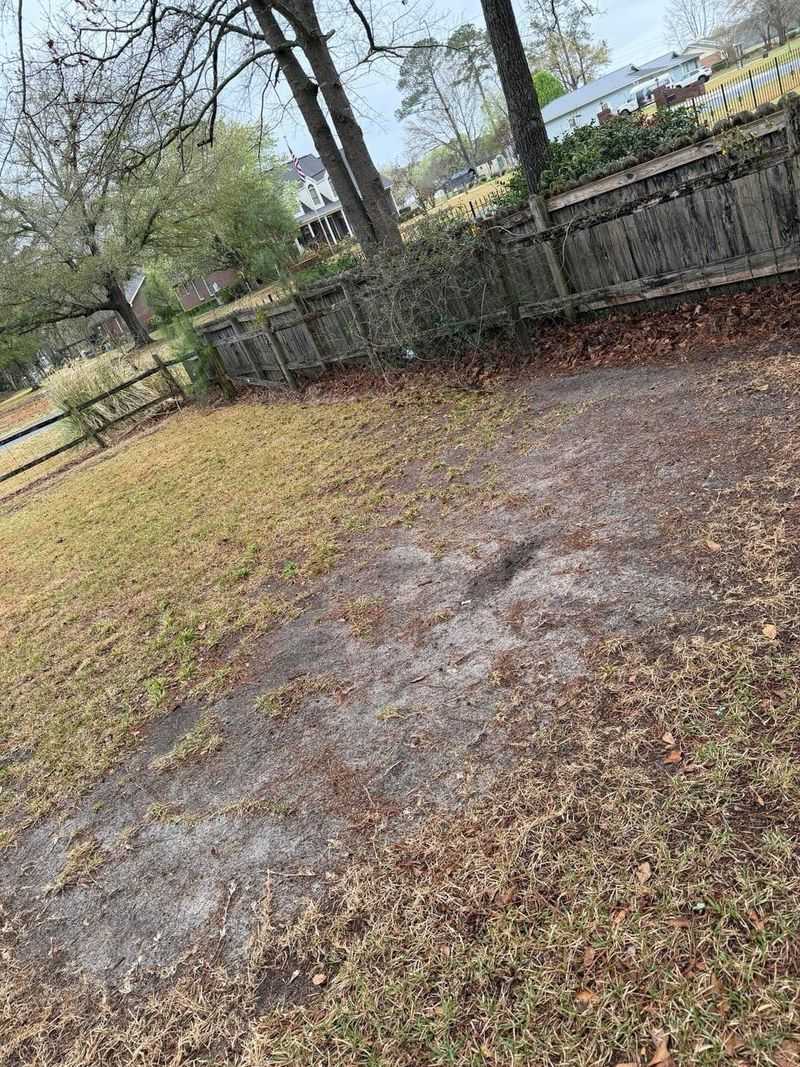
Anyone with Piedmont red clay knows the shovel-bounce feeling. The good news is that NC State lists clay as a suitable soil texture for American holly.
The catch is drainage. Clay that drains is fine.
Clay that holds standing water for days is not, and holly is intolerant of flooding.
Test it before you plant. Dig a hole about a foot deep, fill it with water, and let it drain.
Then fill it again and watch. If water is still sitting there many hours later, pick another spot or rethink the plan.
Also look at where the yard puts water after an afternoon storm. Low spots, the base of a slope, and the area below a downspout often stay wet.
Those are poor places for holly, no matter how native it is.
Light matters too. Choose a site with sun to part shade.
In hot summer conditions, NC State advises favoring afternoon shade, which is a useful note for our sticky Piedmont and Coastal Plain summers.
Native status and humidity do not cancel out a bad site. A holly in a soggy corner will struggle just like anything else.
Pick the well-drained spot with some afternoon relief, and you give a slow grower a fair start.
Birds Get Berries, But People Should Not
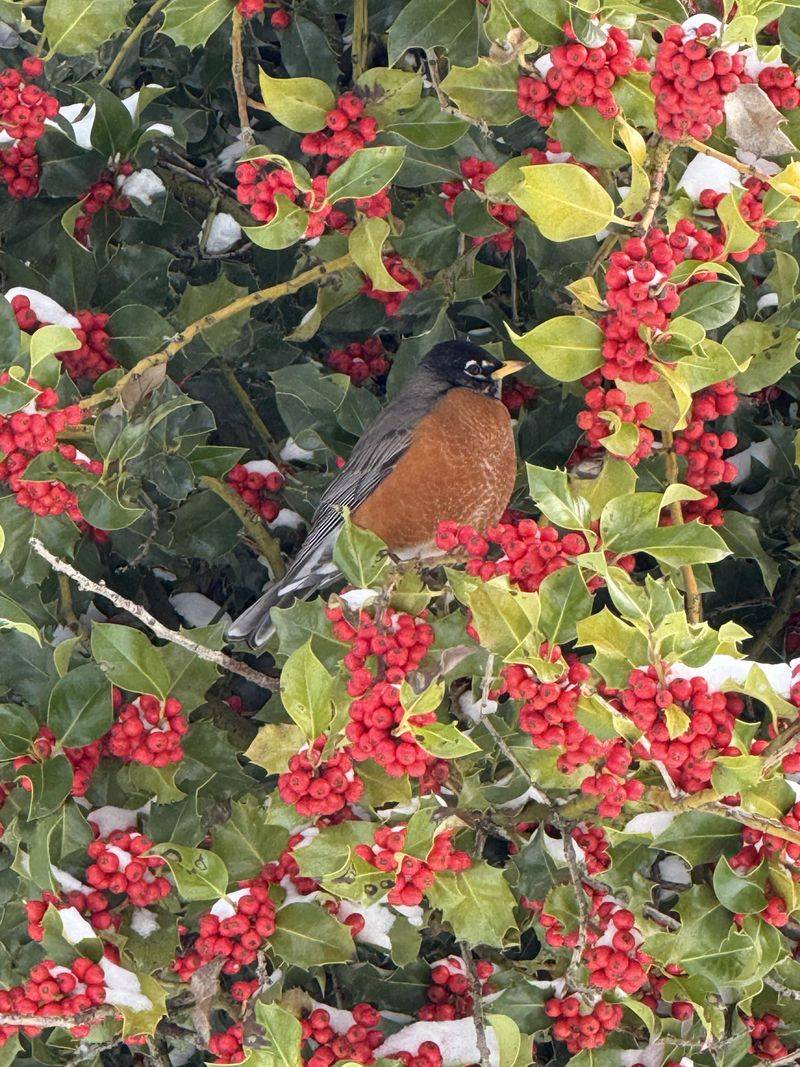
Few sights beat red berries against dark green leaves on a gray winter morning. Birds notice them too.
NC State Extension notes that birds and other wildlife eat the fruit of American holly.
Here is where it gets tricky. Only female hollies bear fruit, and both sexes must be present for fruit production.
If you want berries, you need at least one male nearby and one female. Check plant tags carefully at the nursery.
No one can promise which birds will show up. The berries are a food source, not a guarantee of visitors.
Now the safety side. The berries are poisonous to people.
NC State also notes possible problems for cats, dogs, and horses. Symptoms listed are low in severity, such as nausea, vomiting, diarrhea, and depression, but that is still a rough afternoon.
Never taste the berries, and do not assume a toddler or a curious puppy knows better. Tell kids plainly that these are for birds, not people.
If children or pets play near the fence line, think about where the female plants will go. Keep them away from the spots where little hands and noses spend the most time.
If you keep horses, plan the planting away from their reach.
Berries can bring life to the yard and risk to the household. Planning ahead lets you keep the first and manage the second.
Choose A Screen That Fits The Site

Start with the row you already have. If your Leylands are browning, diagnose before you decide.
Compare whole-row decline with scattered branch death, using the NC State cypress guide, and call your county Extension office if you are stuck.
If the row truly has to go, or you are planning a new screen, walk the site. Check how fast water drains, how much afternoon sun the spot gets, and how much room you really have.
Measure width as well as height.
American holly makes sense when the answers line up. It needs drainage, some relief from hot afternoon sun, and space for a tree that can reach 40 to 60 feet tall and 10 to 20 feet wide.
That is the same NC State Extension guidance behind the rest of this plan.
Expect slow coverage. If you need privacy sooner, you may need a temporary fence or a different plant while the holly grows.
And think about the berries. Plan the female plants with kids, pets, and horses in mind.
American holly is neither a universal fix nor a fast one. Matched to the right spot, it is a quiet green neighbor that rewards the patient.
