
This Native Texas Grass Turns Whole Yards Pink Every Fall With Almost No Work
Follow us on Google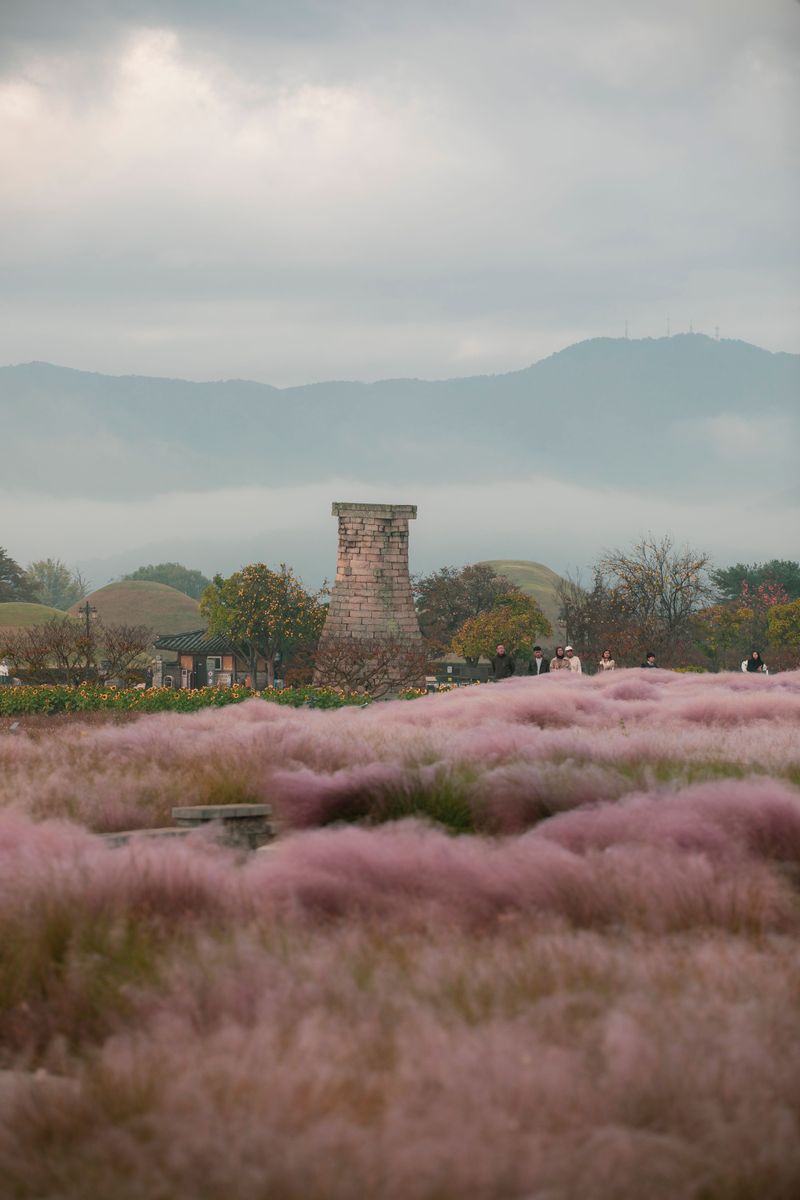
You step outside on a crisp October evening in Texas, and the low sun lights up a haze of pink floating over the ground. It looks like smoke, but it’s grass.
Gulf muhly can turn a fall yard into a glowing show right when most plants fade. Here’s how it really works, where it fits, and what it takes to get that look.
Meet the Grass Behind the Pink Fall Display
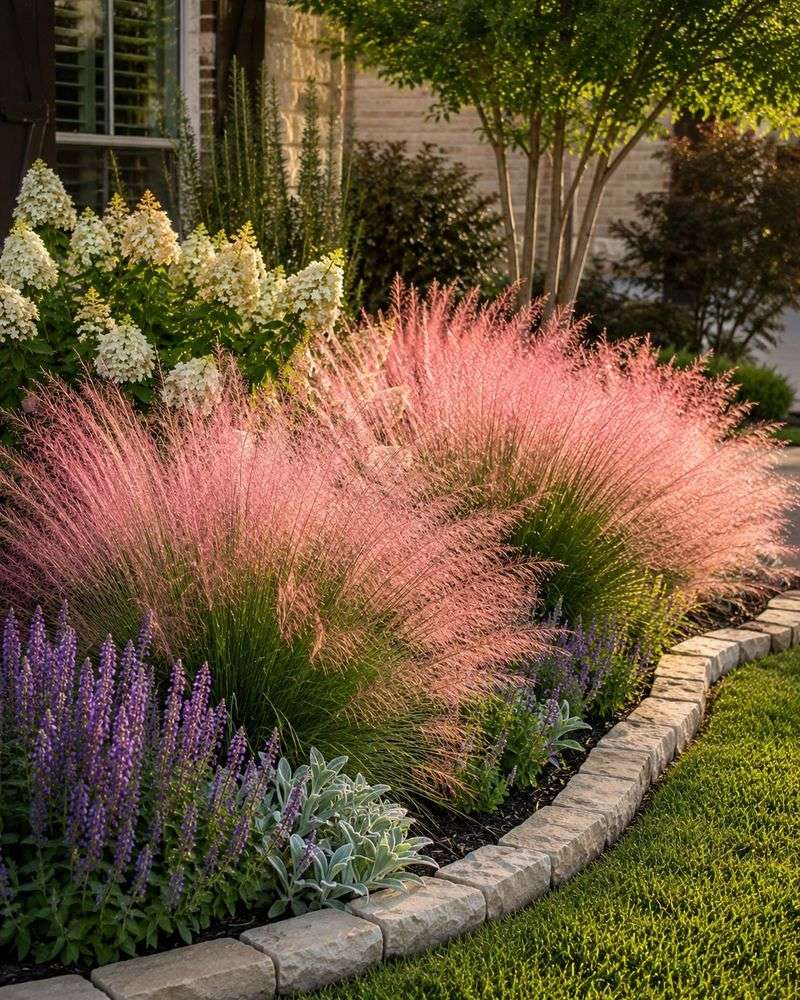
That pink haze has a name. It is Gulf muhly, known to botanists as Muhlenbergia capillaris, and it is a clump-forming perennial grass.
Think of a fountain of thin green blades, with a cloud of fine flower heads floating above it.
Those flower heads are the whole point. According to the Lady Bird Johnson Wildflower Center plant database, the plumes run from pink to purple and typically show up in fall.
Each one is so airy that you can see right through it, which is why a group of plants looks more like mist than a solid block of color.
During the rest of the year, the plant is a modest, fine-textured green mound. It does not shout.
It waits, quietly, through the long Texas summer, and then it puts on a show when the weather cools.
Now for the honest part. Gulf muhly is not a lawn grass, and it does not creep across your yard like Bermuda.
Each plant stays in its own tidy clump, so one plant gives you a pretty pink puff, not a pink yard.
You also should not count on the exact same show every year. Weather, sun, and the age of the plants all play a part.
Think of it as fall color with real potential, not a promise printed on a seed packet.
Once you see those plumes catch the light on a cool evening, though, you will understand why neighbors slow their cars to look.
When the Plumes Appear—and How Light Helps
Timing is where gardeners get tripped up. The plumes do not switch on like porch lights on a set date.
They show up in fall, and the exact week depends on where you live and how the season goes.
The Wildflower Center lists October as the bloom time. Over in Louisiana, LSU AgCenter says flowering usually begins in late September and runs through November.
Treat both as helpful reference points for the Gulf Coast side of Texas, not a guaranteed Texas calendar.
So watch your own plants. Keep a quick note on your phone the first year about the date you spot the first pink haze.
That one note will tell you more about your yard than any chart.
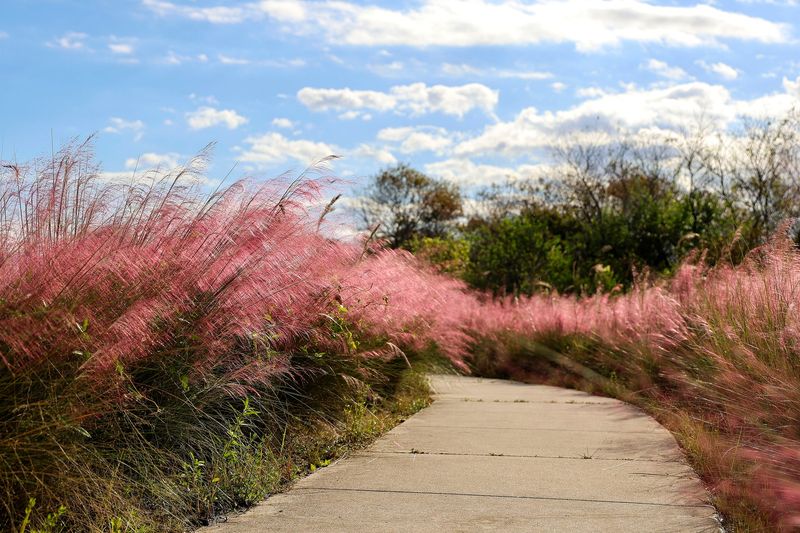
Light matters just as much as timing. These plumes are fine and see-through, so they can look faint at noon.
When the sun drops low and shines from behind them, they light up like they are plugged in.
Sun also helps the plant itself. Texas A&M AgriLife notes that Gulf muhly blooms best with plenty of sun.
One practical trick is to place your clumps where you can see them against the late afternoon light, such as along a driveway or in front of a west-facing window. You will not control the bloom date, but you can choose the best seat in the house for it.
A Broad Pink Drift Takes More Than One Clump
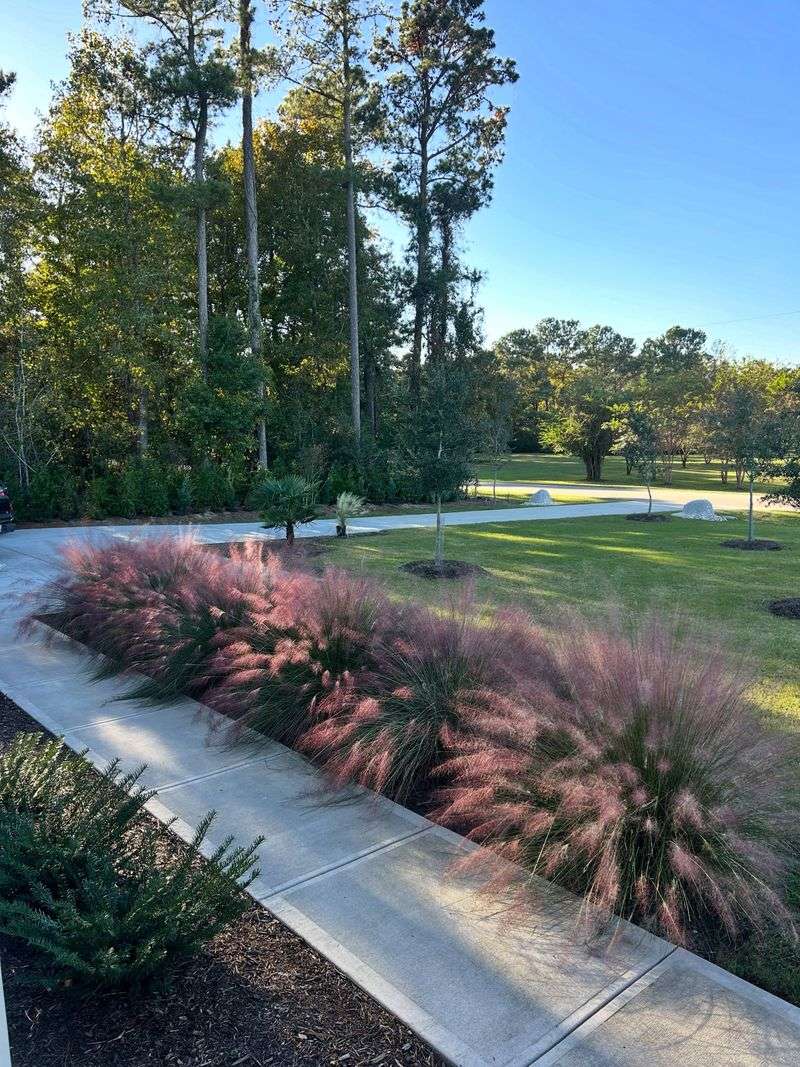
Here is the catch behind the headline. One plant will not turn a yard pink.
Gulf muhly grows in separate clumps, and the USDA fact sheet describes that clump growth without runners or rhizomes. That means it will not sprawl across your lawn on its own.
A typical clump reaches about 1½ to 3 feet tall and 2 to 3 feet wide. The flower stalks can rise above the foliage, so do not expect one fixed height.
Plan for the plumes to float a bit higher than the green mound.
For a mass planting, UF/IFAS recommends spacing plants 24 to 36 inches apart. Do the math before you shop.
A bed that is 10 feet by 10 feet needs roughly 12 to 16 plants at that spacing.
Planting in staggered rows, rather than straight lines, helps the clumps knit together into a drift. Odd numbers of plants in each group also look natural.
Leave space for each clump to reach its full width.
The first year may look sparse, and that is normal. The gaps fill in as the plants mature.
So a sweeping pink drift is possible, but it is a deliberate project with real space and a real plant count. It is not a lawn replacement.
Think of it as painting a bed one clump at a time.
A Texas Native With a Regional Home Range
Calling it a Texas native is true, but it needs fine print. Texas does not have one climate, and this grass does not belong to every part of it.
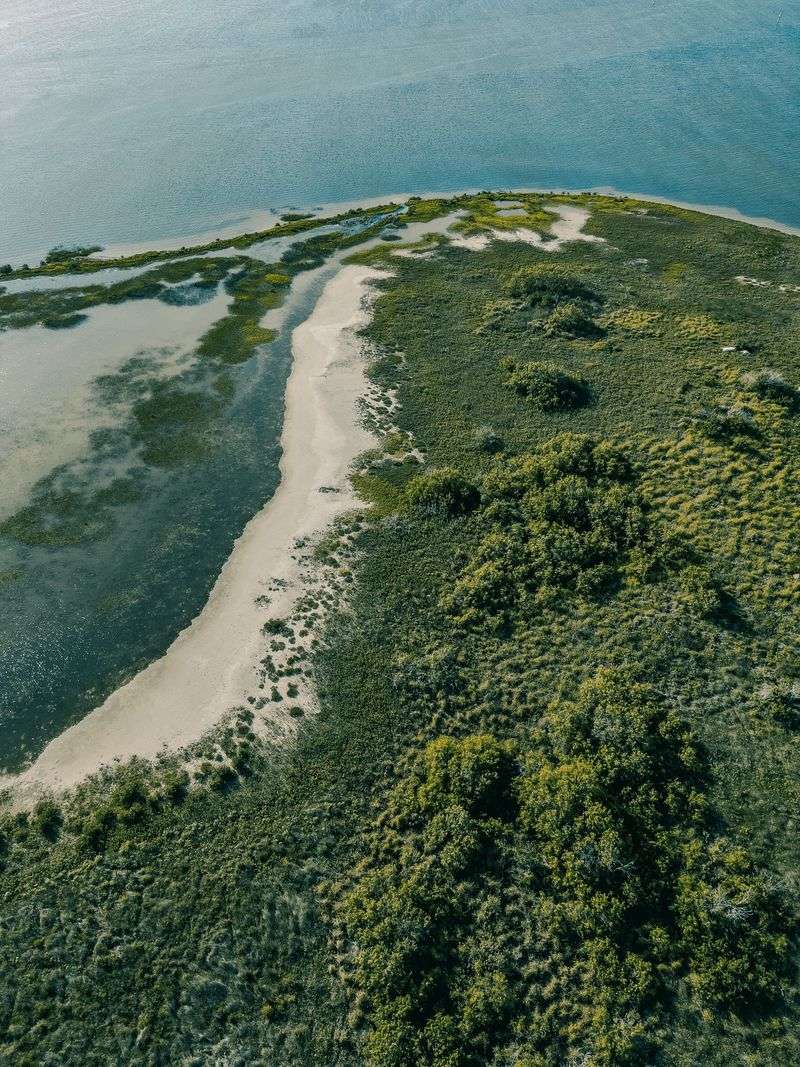
According to Texas A&M AgriLife, Gulf muhly is native in Texas to pine flatwoods, coastal uplands, and beach dunes. Picture the humid, sandy eastern and coastal side of the state, not the dry limestone hills.
The City of Austin plant guide is blunt about the limits. It says Gulf muhly is not part of the Edwards Plateau or the Blackland Prairie.
So if you live in the Hill Country or on blackland clay, you are planting it as a garden guest, not a hometown plant.
That does not mean it will fail. It simply means you should not assume native status guarantees success in your yard.
A plant can belong to the state and still need the right spot.
A smart move is to ask a nearby nursery or your county AgriLife Extension office how it has done locally. Even better, notice whether a neighbor has some growing.
Real examples on your street beat any label.
Treat the native tag as a head start, not a guarantee. The next job is matching the plant to your sunlight and soil, and that is where the real decision gets made.
Choose Sun and Soil That Drain Well
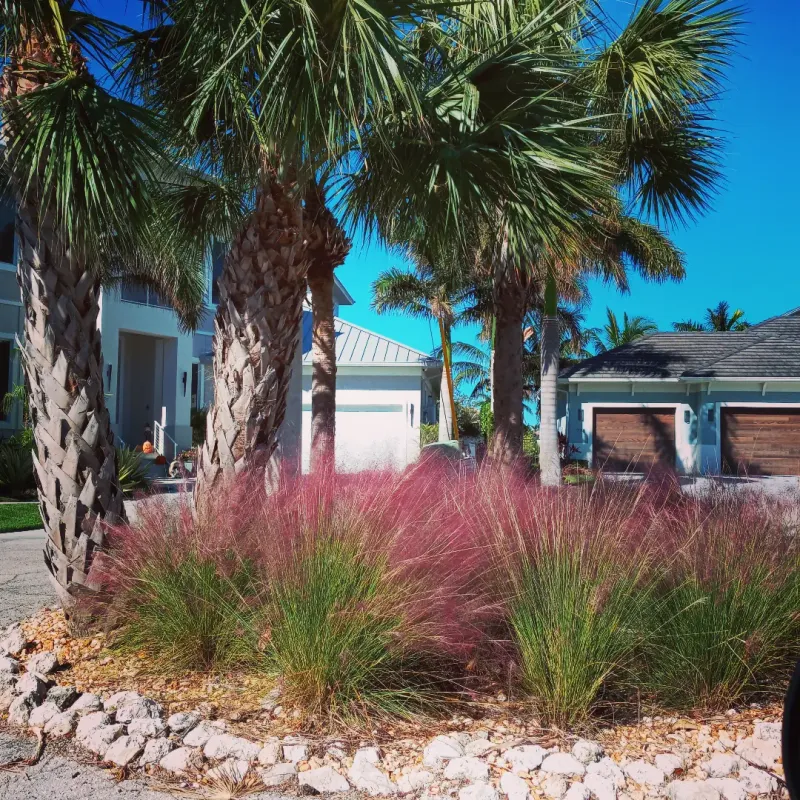
Picking the spot is the biggest decision you will make. Start with sun.
Gulf muhly tolerates some shade, but Texas Superstar says flowering is heavier in sun. For the best plumes, give it a spot that gets full sun for most of the day.
Next comes drainage, and this is where people slip. The grass tolerates a range of soils, and Texas Superstar notes it prefers well-drained ground and suits low-fertility sites.
But it is not a swamp plant.
Texas A&M AgriLife warns that Gulf muhly may be susceptible to root rot if it stays too wet in winter. That matters in heavy clay spots, where water can sit after a cold, soggy week.
Here is a simple test. Dig a hole about a foot deep and fill it with water.
Let it drain, then fill it again. If water is still standing after several hours the second time, pick another spot or build a raised bed.
Sandy soil in East Texas usually drains fast, which suits this grass. Clay can work if you improve the site, but do not assume every clay yard will behave the same way.
Low corners where runoff collects are a poor bet.
Skip heavy fertilizer. Poor soil is not a problem for this plant.
Get the sun and drainage right, and you have done the hardest part of the job.
Low-Maintenance Still Means a Little Care
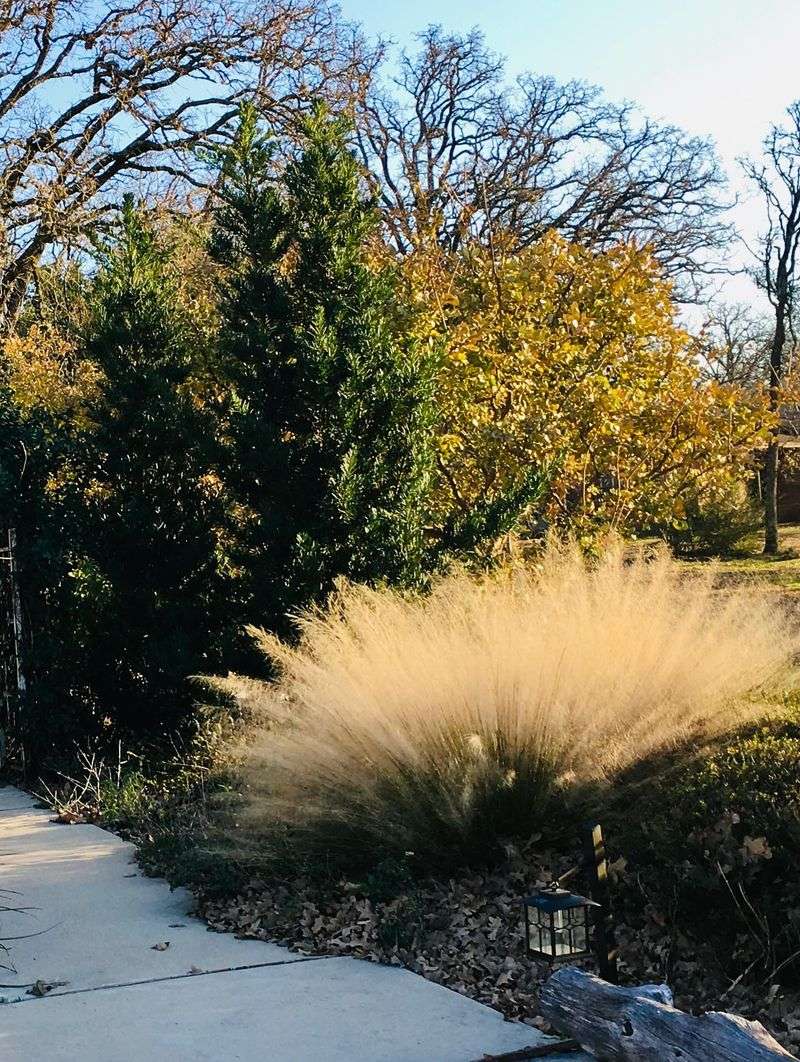
Calling this grass easy is fair. Calling it work-free is not.
Texas Superstar describes it as low-maintenance, and that phrase leaves room for a few small chores.
The first job is watering while the roots settle in. Newly planted clumps need regular water through their first season.
Once established, the grass is drought tolerant, according to UF/IFAS. But a long, hot dry spell can still stress an established plant, so give it a drink if it looks tired.
Fall is a good time to plant in much of Texas, as the Wildflower Center explains for Central Texas, because roots can grow while the weather is mild.
The second job is optional. In late winter, before new growth starts, you can cut the foliage back.
UF/IFAS recommends it, and the City of Austin guide also suggests winter cutting. Use hand shears or a trimmer.
It tidies the clump, but it is not required for fall plumes. Do not burn it, since the USDA lists prescribed fire only as a conservation use.
Pests are rarely a headache, though not never. The USDA fact sheet notes that aphids can show up on the blooms while seeds develop.
So expect watering at the start, one optional haircut, and the occasional look for aphids. That is a small price for a glowing fall evening.
