
That Pile Of Pruned Fig Branches Is Free Fig Trees, And A Bucket Of Damp Sand Roots Them All Winter
Follow us on Google
The pruning shears are back in the shed, and a pile of bare fig branches sits by the fence, smelling faintly of sap and cold dirt. Most folks haul it to the curb.
But that pile holds a cheap chance at brand new fig plants, if you handle the wood right and keep your hopes honest. Here is how to save it, store it, and see what happens by spring.
Save Prunings for Potential New Figs
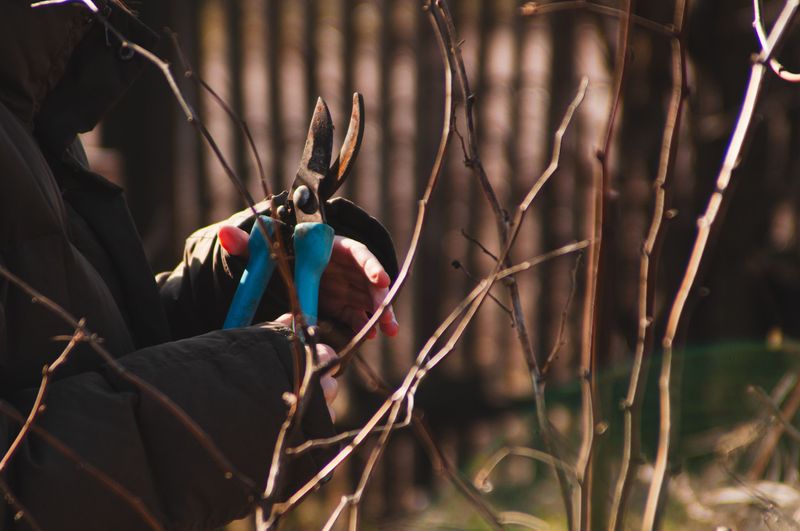
Picture a gray January afternoon, hands cold, a heap of fig prunings at your feet. Each stick is a long shot at a new plant, and the price is a few minutes of your time.
That is the real appeal here.
Now the honest part. The headline you clicked promises more than any bucket can.
Storing cuttings through winter and rooting them through winter are two different outcomes, and mixing them up is where gardeners get let down.
For storage, LSU AgCenter describes keeping dormant cuttings in moist sand or sawdust in a cool place until late winter or early spring, then setting them out. That keeps the wood alive and waiting.
It does not promise roots by March.
For rooting, Rutgers Cooperative Extension says dormant fig cuttings should root readily in a few months when planted in a moist, well-drained medium. Notice the words a few months.
Roots take time, and time is something a cutting does not hand over on a schedule.
Think of a cutting as a sleeper in a waiting room. Some wake up fast, some take their time, and a few never do.
Not every stick becomes a tree, and anyone who tells you otherwise is selling something.
So treat this as a low-cost experiment. Save more cuttings than you need, expect some losses, and be pleasantly surprised by the survivors.
A free chance is still a good deal, as long as you call it a chance.
Choose Healthy Wood While It Is Dormant
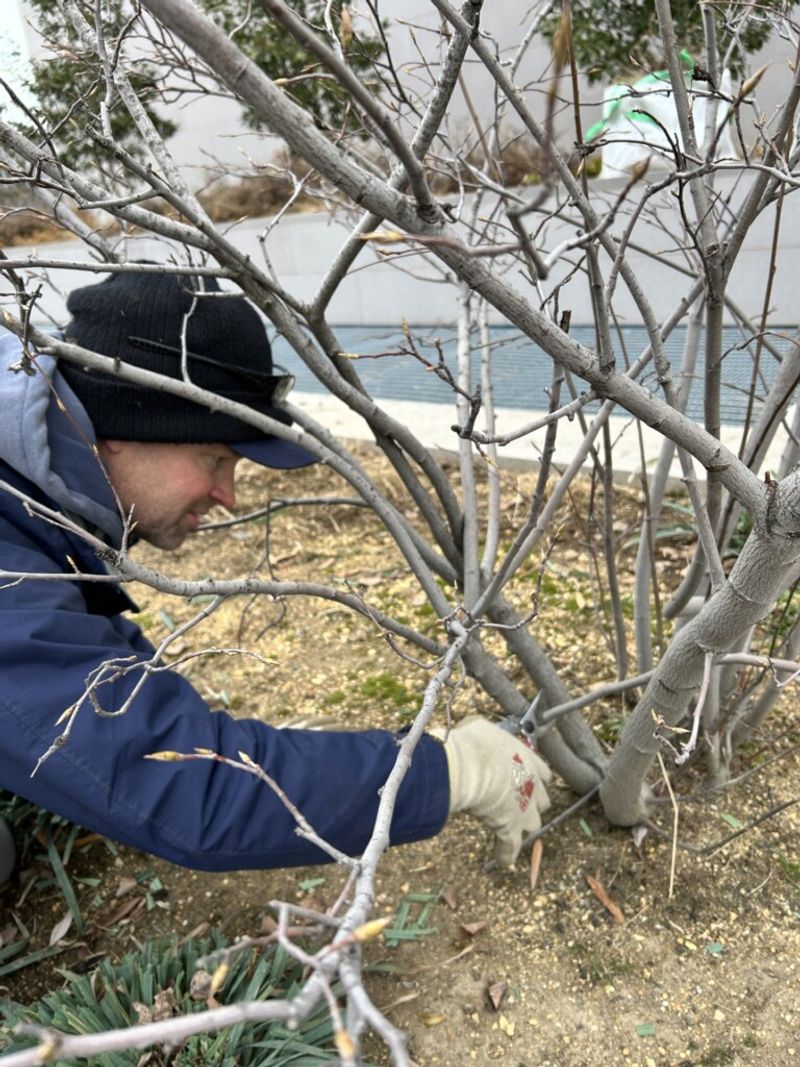
Blunt claim first: not every branch deserves a spot in your sand. Your best cuttings come from a fig that has fully stopped growing for the season, with leaves dropped and buds tight.
Look for straight, vigorous wood. Rutgers recommends one-, two-, or three-year-old growth about 9 inches long and no thicker than three quarters of an inch.
UF/IFAS suggests dormant wood about 6 inches long and less than 1 inch thick.
Those two sets of numbers are friendly examples, not a single rule. A 7 inch stick that is plump and healthy beats a perfect 9 inch stick that is shriveled.
Use the numbers as a guide and trust your eyes.
Sorting is like picking tomatoes at a farm stand. You want firm, even, and unblemished.
Pass over anything with dark sunken patches, odd cankers, or wood that looks sick.
Diseased limbs are not worth the effort. UC IPM advises removing infected limbs and disinfecting tools that touch diseased tissue.
Toss the bad wood instead of passing a problem along to a new plant.
One more thing before you start snipping. Put on gloves.
North Carolina State Extension notes fig latex can irritate skin, especially in sunlight. Wash off any sap and stay covered if you will be outside afterward.
Prepare Each Cutting Right-Side Up
Here is a mistake that costs gardeners whole bundles of cuttings. Plant one upside down, and it will sulk until it quits.
Fig wood looks the same at both ends, so you have to mark it.
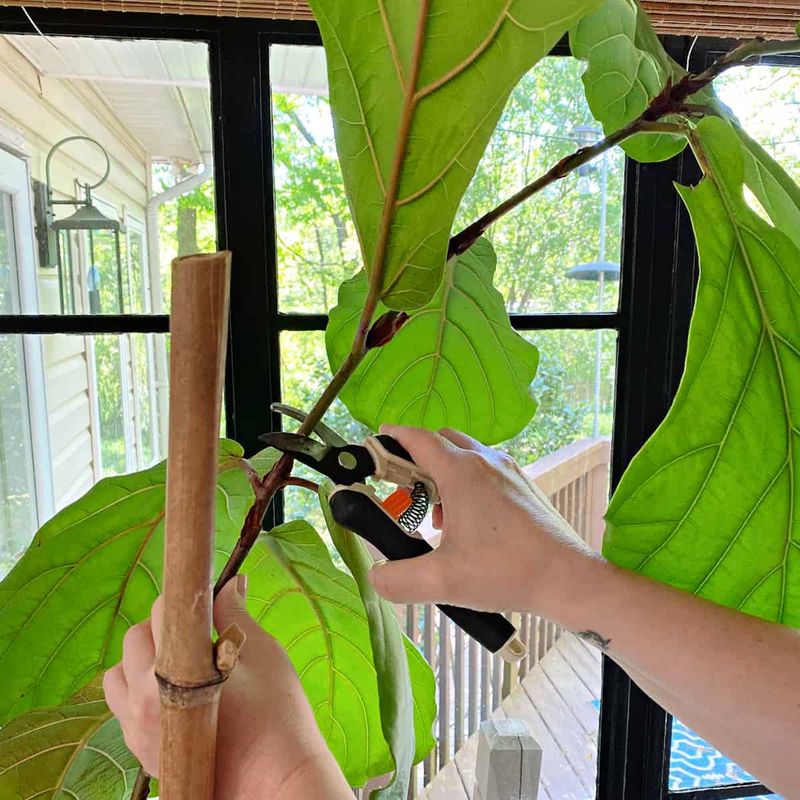
Make the bottom cut just below a bud or node, the small bump where a leaf or bud grows. Rutgers and UF/IFAS both point to the area below a node as a useful spot.
Use sharp, clean shears so the cut is smooth and not crushed.
Then keep track of direction. Some people slice the bottom at a slant and the top flat.
Others dab a marker on the top end. Pick any system you will remember in a cold garage three weeks from now.
Length and thickness are workable examples here too. Think of the 6 inch and 9 inch figures as a range you can work within, as long as the wood is healthy and has a few buds.
Rooting hormone is the optional extra. UF/IFAS says rooting efficiency may improve with a basal cut below a node and rooting hormone.
May is the key word. Hormone is a helping hand, not a guarantee.
Skip it if you want to keep things cheap. Many gardeners try some cuttings with it and some without, which tells you more than any article can about your own yard.
Use Moist Sand for Cool Winter Storage
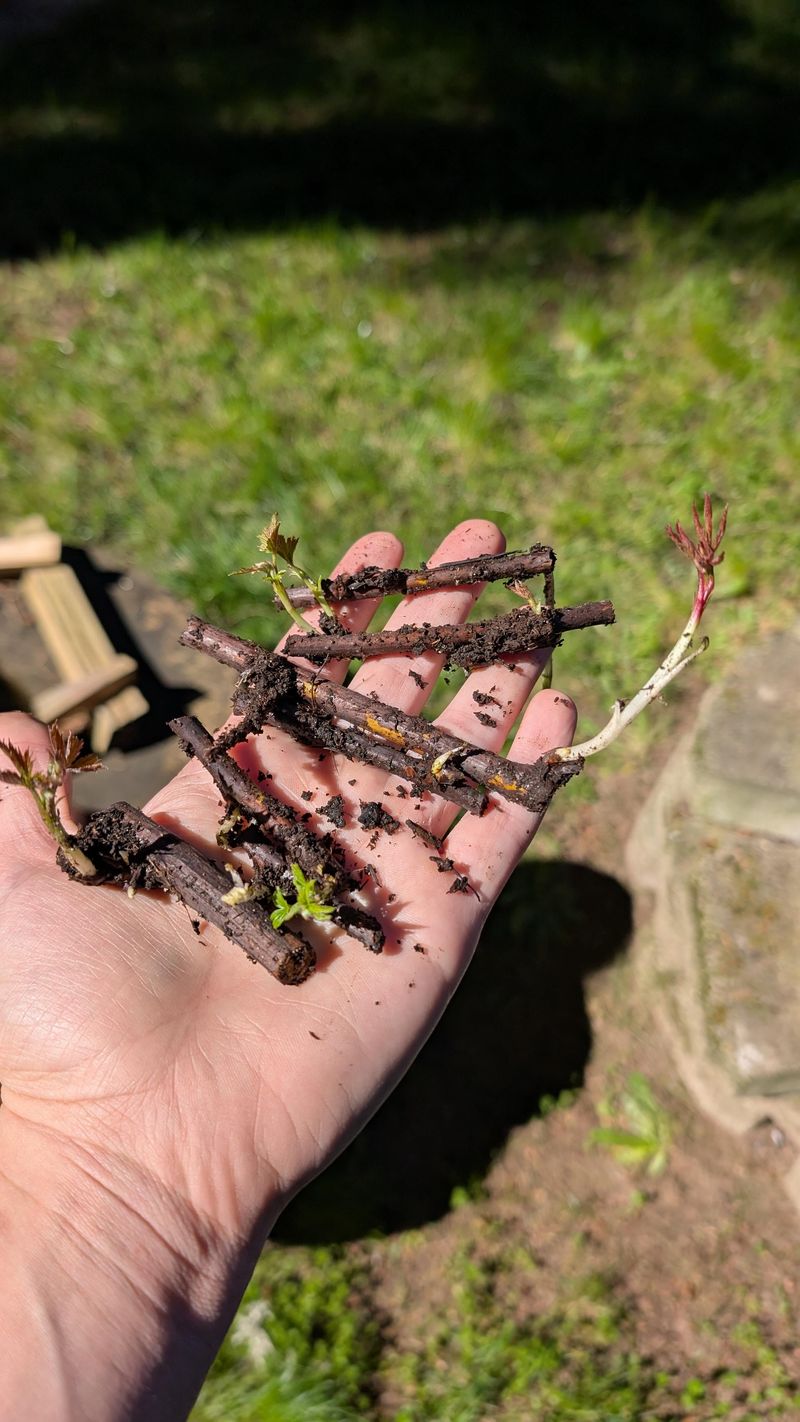
A bucket of damp sand is not a magic trick. It is a practical way to keep cuttings from drying out while winter does its slow work outside.
The documented method comes from LSU AgCenter, which advises moist sand or sawdust in a cool place until local weather suits planting in late winter or early spring. A bucket is simply one handy adaptation of that idea.
No source has tested it as a guaranteed setup.
Moist is the word to remember. Squeeze a handful of sand.
It should hold together loosely and feel like a wrung-out sponge, with no water dripping out. Soggy sand can rot wood faster than dry air.
Bury the cuttings so they do not dry out, and check the sand every few weeks. If the top feels dusty, mist it lightly.
Keep the bucket somewhere cool, not freezing hard and not warm.
Now the contrast. Storage is waiting.
Active rooting is different. Rutgers describes burying the bases in soil or another medium while leaving the tops exposed, and keeping it moist but well-drained.
Choose your goal. If you only want to hold the wood until spring, use the sand.
If you want to coax roots, plant the bases in a well-drained mix and give it months.
Callus Is Not a Complete Root System
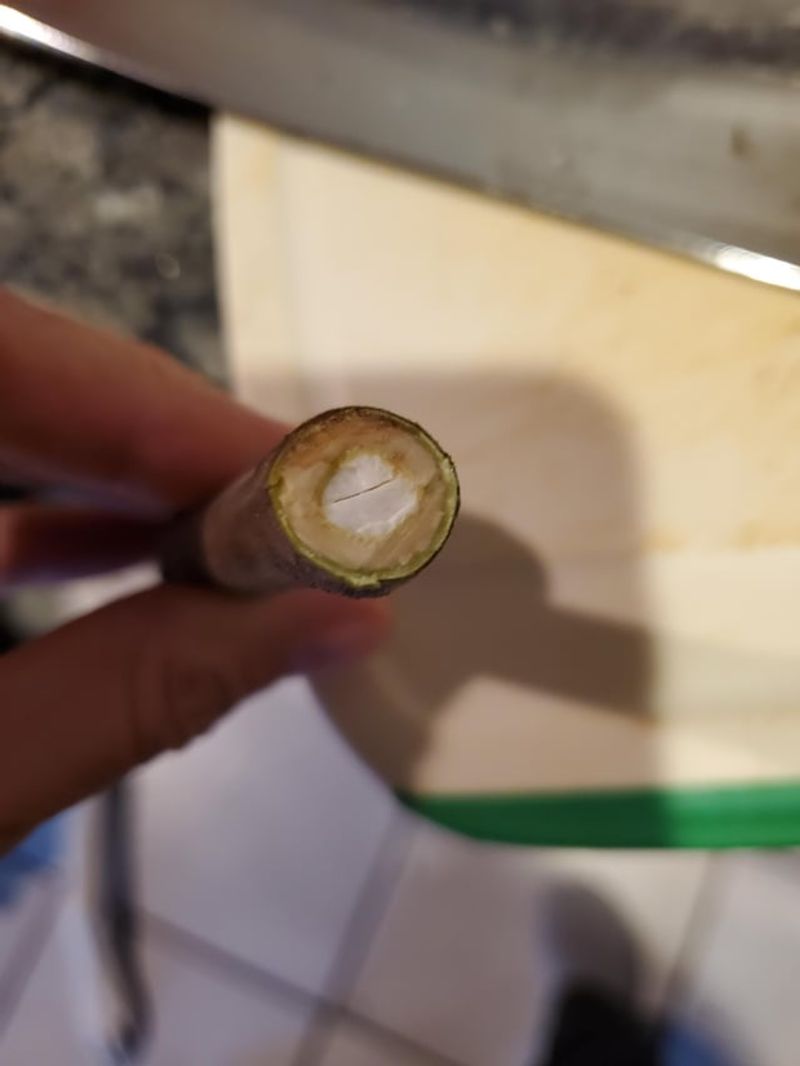
Many gardeners notice a pale, bumpy ring on the cut end of a stored cutting and shout that it has rooted. It has not.
That ring is callus, the wood’s version of a scab.
Callus is healing tissue. It shows the cutting is alive and sealing its wound, and that is good news.
But it is not a complete root system, and it is not proof the cutting is ready to move anywhere.
UF/IFAS reports that dormant cuttings can form callus in two to three weeks at 50°F to 60°F in a moist, porous medium. Porous just means loose enough for air and water to move through.
That is a quick step, and it is only the first one.
Real roots take longer. Rutgers describes rooting over a few months in the dormant season.
So do not mark your calendar for three weeks and expect a potted tree.
Think of callus as the foundation being poured, not the house being built. Patience here saves plants.
Tugging a cutting out to check roots can snap the delicate new ones.
A better clue is new growth above ground once the weather warms. Leaves opening on a cutting often mean roots are working underneath, though even that is not a promise of long-term survival.
Move Young Cuttings into Spring Conditions Carefully
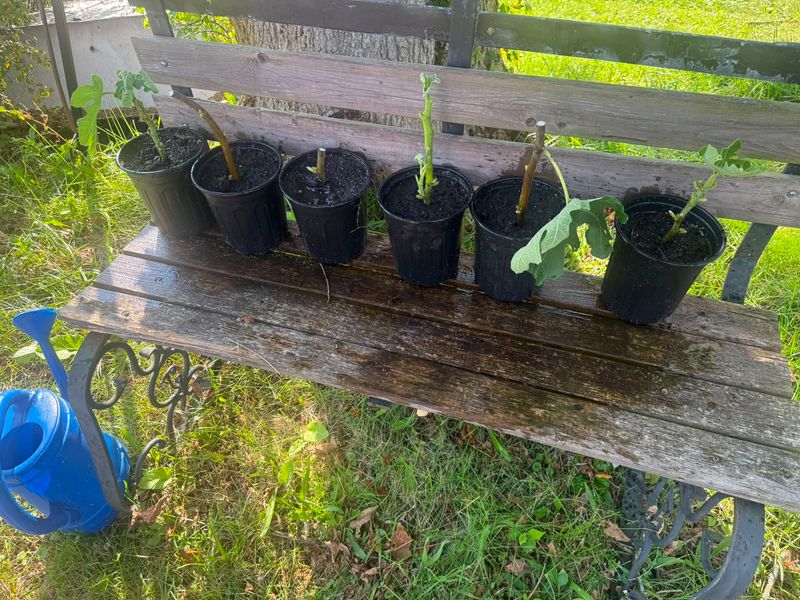
The first warm week of spring feels like a green light, and that is when new figs get hurt. A tender young cutting does not read the calendar, it reads the thermometer.
Start with timing. Tie it to your own last frost, not a date from a website.
A gardener in coastal Louisiana and one in northern New Jersey will be setting out plants weeks apart.
When you do move a rooted cutting, go gently. Pot it in a well-drained mix, or plant it where water will not sit around its base.
Handle the root ball like an egg.
Then protect it. Rutgers advises protecting young plants from low-temperature injury.
Keep a pot you can drag into the garage on a cold night, or cover it when frost threatens.
Sun needs an introduction too. LSU recommends gradually acclimating rooted cuttings before moving them into full sun.
Try a few hours of bright shade first, then add more light over a week or two.
An apparent start is not the finish line. Your free cutting still needs water, light, and a spot where it can live.
Care is what turns a stick into a tree.
Let Local Conditions Set Expectations
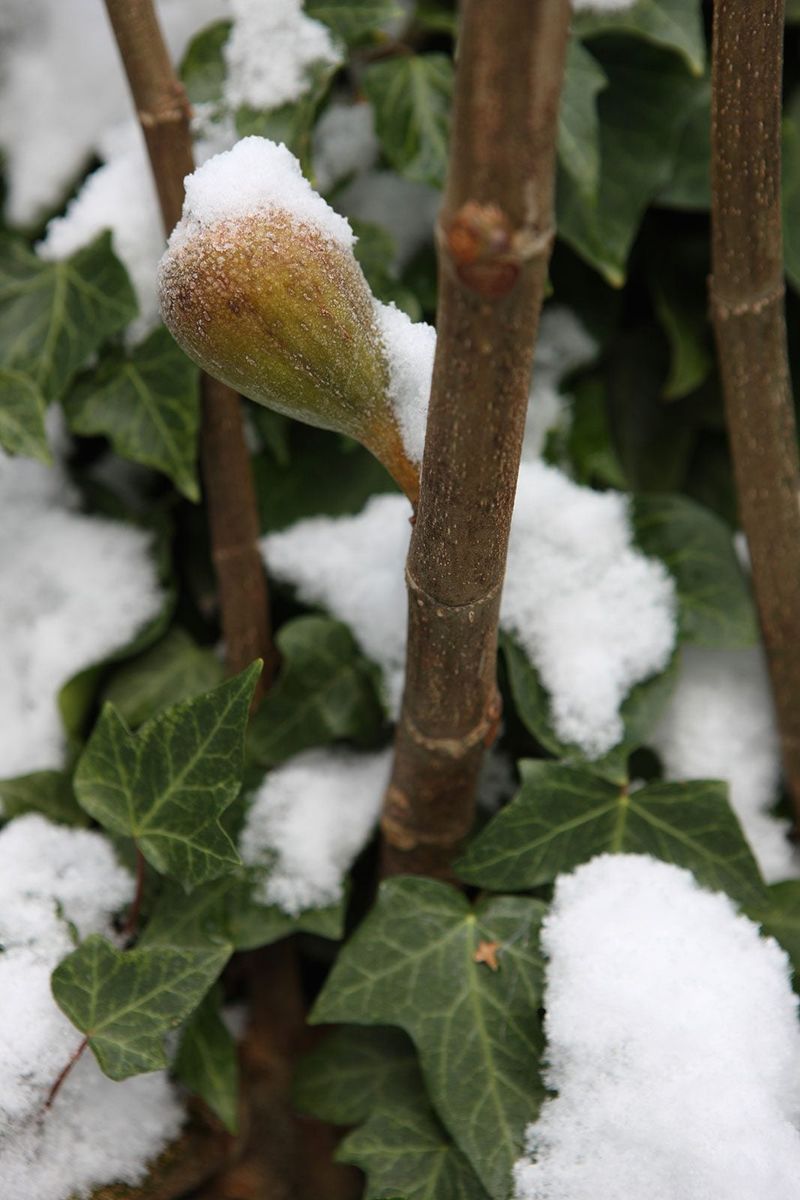
Cold is the quiet opponent in this whole story. A cutting that roots beautifully can still lose to one hard freeze, and your backyard decides how likely that is.
Rutgers offers a clear regional example. Its New Jersey guidance notes that even cold-resistant varieties may be killed back to the ground by early winter temperatures around 15°F, and that a short season limits fruit quality for many varieties there.
That is New Jersey advice, not a national rule. Gardeners in warmer parts of the South may never see such cold, while folks farther north may need pots, wraps, or a sheltered wall.
Look up your own area’s winter lows before you plant.
Also keep two questions apart. Will the cutting survive?
And will the mature tree thrive and fruit where you live? A young fig can live happily for years and still give you little fruit if your season is short.
None of that makes the effort foolish. Saving sound dormant wood costs almost nothing, and a few cuttings may give you a plant you could not buy at the same price.
So enjoy the pile by the fence, but see it for what it is. Every stick is a chance, not a promise, and chances are what gardens run on.
