
Skip the Purple Fountain Grass by Your North Carolina Driveway and Grow This Native That Returns
Follow us on Google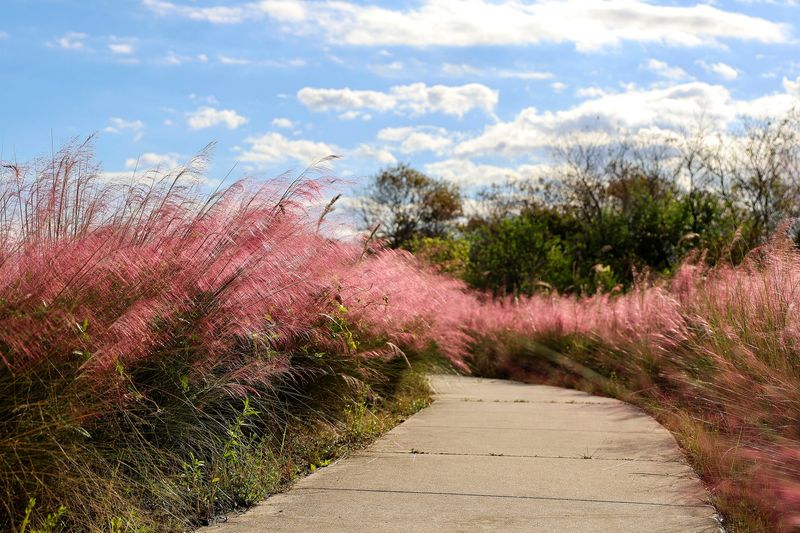
It is late September in North Carolina, and you are hauling another flat of purple fountain grass to the driveway bed. Again.
There is a native grass that may save you that yearly chore, and when it is happy, it glows pink just as summer annuals start to tire. It is pink muhly grass, and it could be the quiet hero of your sunny driveway edge.
Pink Muhly Is the Native Perennial to Consider
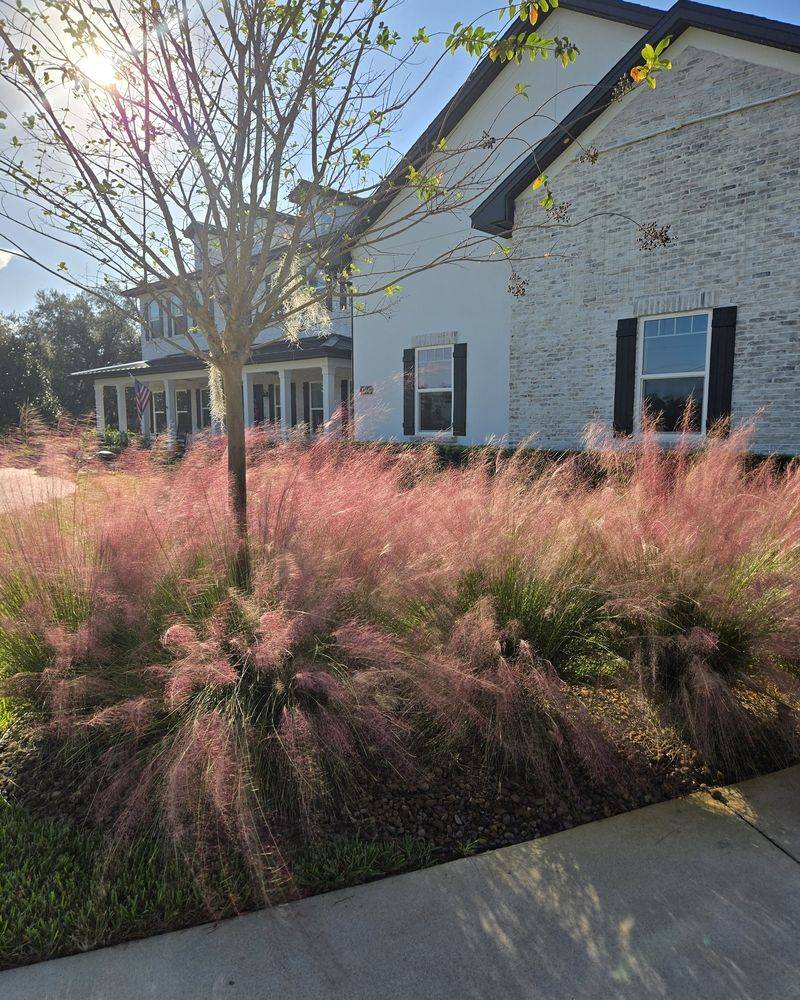
Here is the plant to put on your list: pink muhly grass, Muhlenbergia capillaris. You have probably seen it glowing along a highway or a neighbor’s walkway, looking like a pink cloud that landed in the grass.
It is a clumping perennial native to North Carolina. That means it grows in a tidy mound instead of running across your yard, and it belongs here.
NC State Extension’s plant profile says it can reach about 3 feet tall and wide, and describes it as long-lived and low maintenance.
Think about what that could mean for your spring routine. Instead of buying a new flat of annual grass every May, you plant once and give the clump time to settle in.
Many gardeners find that a well-placed clump gets bigger and better with each passing year.
Now for the honest part. This is a strong candidate, not a promise.
A plant in the wrong spot, such as shade or soggy ground, may sulk or fade away. The rest of this article shows you how to pick a spot where it has the best shot.
Picture the payoff. One planting, a few easy chores, and a fall display that keeps showing up on the edge of your driveway.
That is a good trade for a lot of busy North Carolina homeowners.
Why One Grass Can Return and the Other Usually Does Not
Here is the surprise behind your yearly shopping trip. Purple fountain grass is a perennial in warmer climates, but NC State Extension notes it is normally grown as an annual in North Carolina.
Winter cold is the usual reason it does not come back.
That is not your fault. You did not plant it wrong.
It is simply a tropical-leaning grass living in a state with real winters, including those surprise cold snaps that arrive after a mild week.
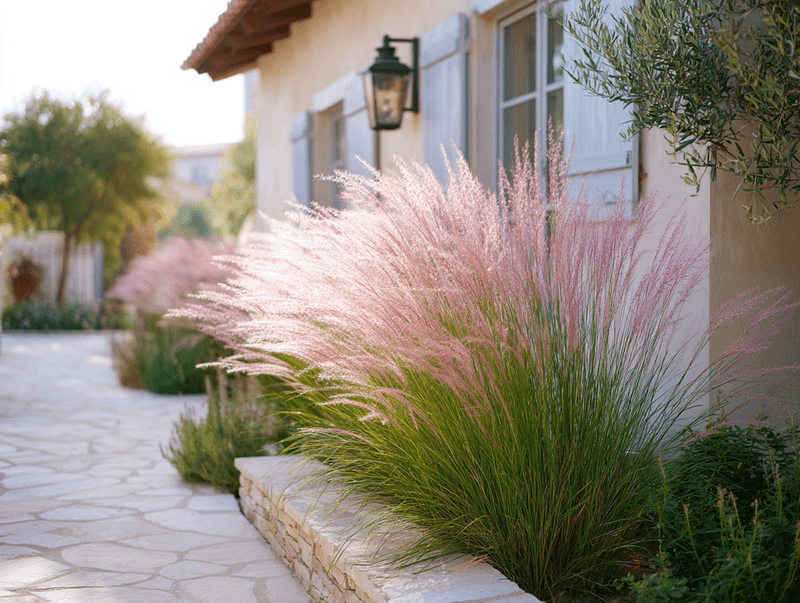
Pink muhly plays by different rules. It is a native perennial, so it is built to go dormant in cold weather and sprout again when spring warms up.
The same NC State profile calls it long-lived, which is the quality you want in a driveway plant.
Here is the limit. Returning is not guaranteed for every plant in every spot.
A clump sitting in waterlogged soil or deep shade can struggle, and a brand new plant needs its first season to put down roots.
So your decision is simple. Keep buying a plant that is designed to last one season, or give a native a fair chance to last many.
If the spot is sunny and drains well, the odds lean toward the native.
Expect a Fall Display, Not a Fixed Handoff
Do not set your calendar by these two grasses. They do not trade places on a schedule, and anyone who promises an exact date is guessing.
Purple fountain grass starts flowering in summer, and NC State says its flowers last until frost. Some clumps look tired by September, while others keep going until the first cold night.
It depends on your summer, your soil, and your luck.
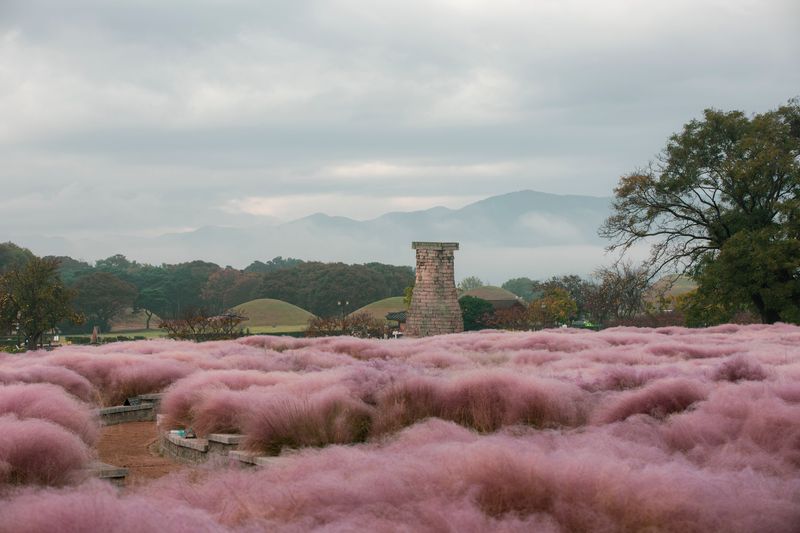
Pink muhly saves its show for later. According to an NC State Extension Gardener feature, the pink plumes generally show in late summer and fall and may last 6 to 8 weeks or until frost.
Then the plumes fade to tan and stay on the clump.
So the two displays may overlap for a while. Your driveway might hold purple and pink together in the same week, and that is fine.
As the fountain grass fades, the muhly is often just getting started.
One more reality check. That glowing look describes an established stand, so a first-year plant may be more modest.
Give it a season or two before you judge the show.
Plan for an October moment, not an exact day. When the light turns low and golden, pink plumes are hard to beat.
Native in North Carolina, but Not Equally Common Everywhere
Native does not mean it grows wild on every roadside. Pink muhly has a map, and knowing it helps you set expectations.
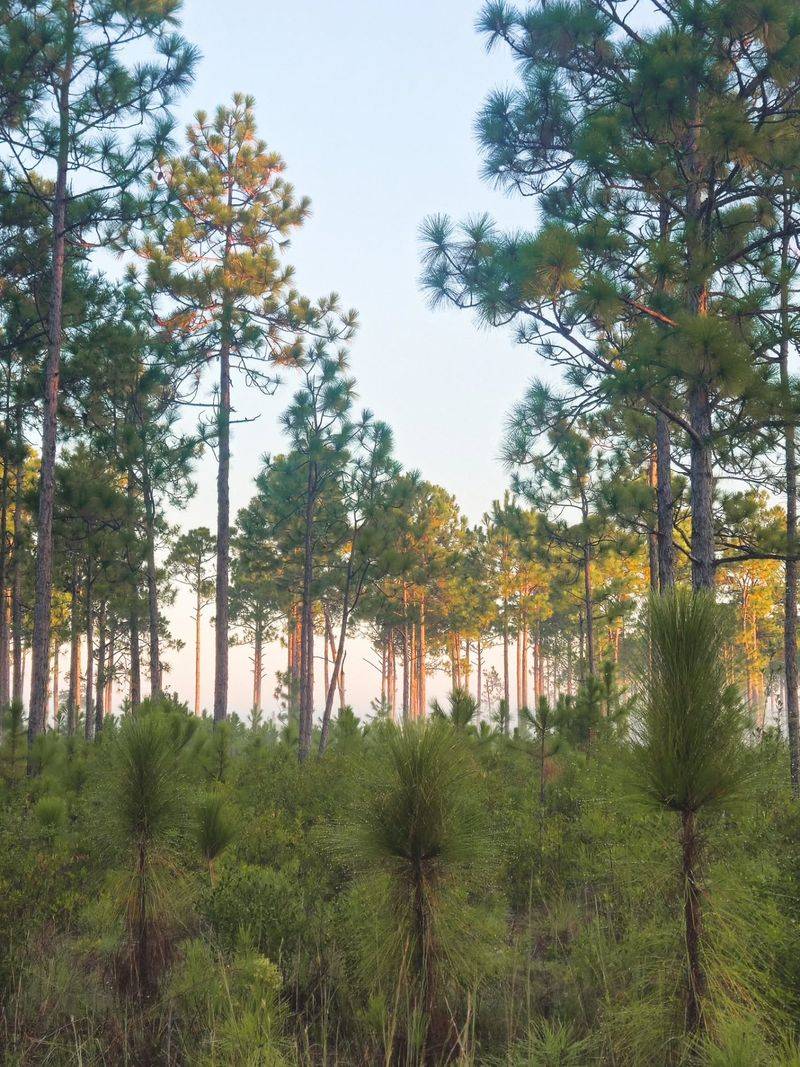
The Vascular Plants of North Carolina account records it in the Piedmont, the Sandhills, and the Coastal Plain, with scattered records in the mountains. In the wild, it is more frequent in the central and eastern parts of the state and less common in the mountains and western Piedmont.
Picture the Sandhills, where sandy, sunny, well-drained ground suits it. That is a clue about what it likes, and it is the kind of spot to copy in your own yard.
Here is where it gets tricky. Wild distribution is not the same as garden suitability.
NC State Extension lists it for cultivation in all three major regions of the state, the mountains, Piedmont, and Coastal Plain, and in USDA zones 5a to 9b.
So if you garden in Asheville or Charlotte, you are not out of luck. You simply may not see it wild near your home, and you should pay extra attention to sun and drainage.
Wherever you live, the lesson is the same. Match the plant to the spot, and the map matters a lot less.
Give a Driveway Bed Sun, Drainage, and Room
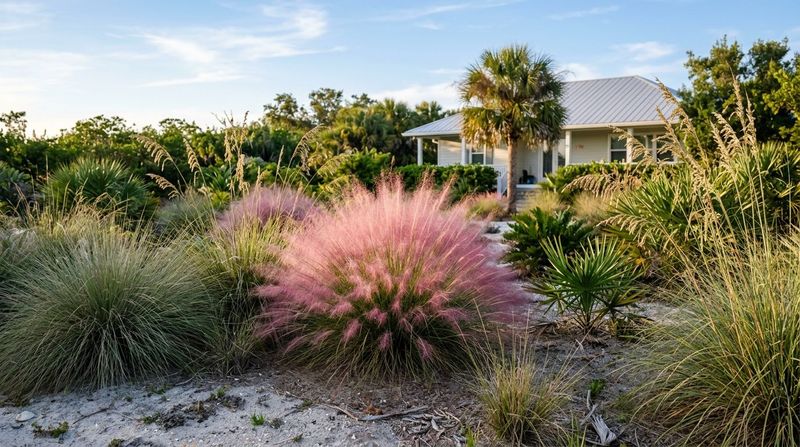
A driveway strip can be a perfect fit, if you choose the spot with care. Walk it at midday and ask two questions: does it get full sun, and does water drain away after a storm?
Full sun gives you the strongest bloom. NC State says pink muhly performs best in sun and tolerates clay, loam, sand, and rocky soil.
That is good news for Piedmont red clay and sandy Coastal Plain beds alike.
The one thing it does not tolerate is poorly drained ground. If water sits in that low corner for a day after a muggy afternoon thunderstorm, pick a higher spot or build the bed up a few inches.
Now think about room. NC State lists mature width at about 2 feet 4 inches to 3 feet, and University of Florida IFAS suggests spacing of 24 to 36 inches.
Plan on 2.5 to 3 feet per plant, and resist the urge to crowd them.
That space looks empty on planting day. By the second or third year, it is filled in.
One caution about a driveway. Nothing in the sources shows that pink muhly handles deicing salt, so keep it back from spots where salt gets shoveled or sprayed.
Leave the Tan Plumes Through Winter
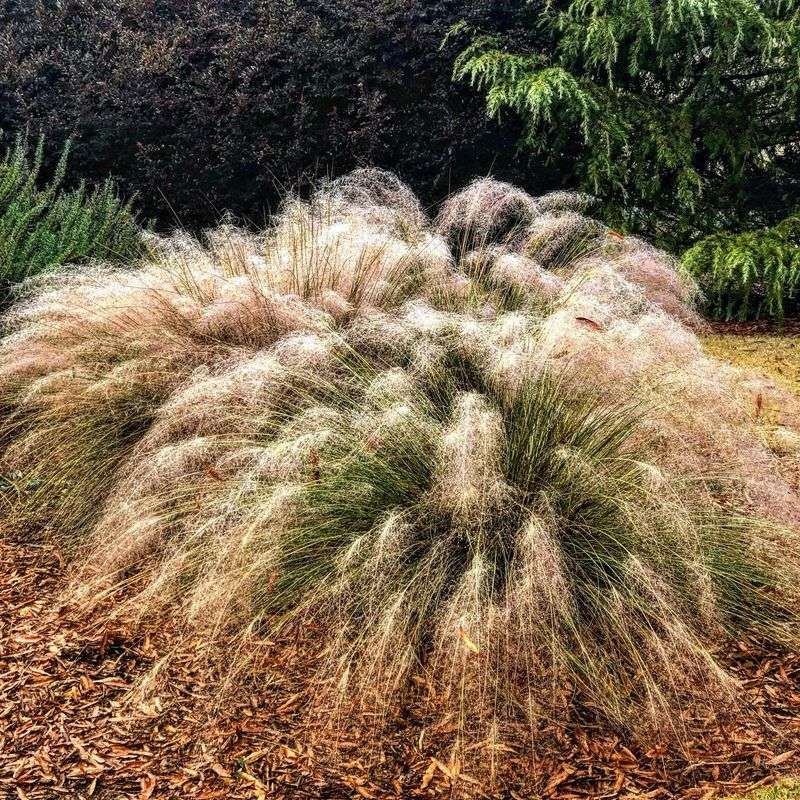
When frost finally dims the pink, resist the urge to tidy up. The clump is not dead.
It is changing costumes.
According to NC State Extension Gardener, the pink gives way to tan plumes that add winter interest. On a frosty morning, those soft, pale plumes catch the light and make a bare driveway bed look finished.
So leave the clump standing all winter. Let it ride out the cold snaps and gray weeks.
It gives you something to look at while everything else is bare.
Then comes the one big chore of the year. Before new spring growth starts, cut the whole clump back to about 6 to 8 inches tall.
Hedge shears or hand pruners work fine, and a tied-up bundle is easier to cut than a loose mop.
Timing matters here. Cut before the new green shoots push up, so you do not slice off fresh growth.
Many gardeners do it in late winter, when the plumes start to look ragged.
That is the whole routine. One haircut a year, and a clump that gives you a winter picture before it gives you a fall one again.
The Clump Offers Cover and Its Seeds Feed Wildlife
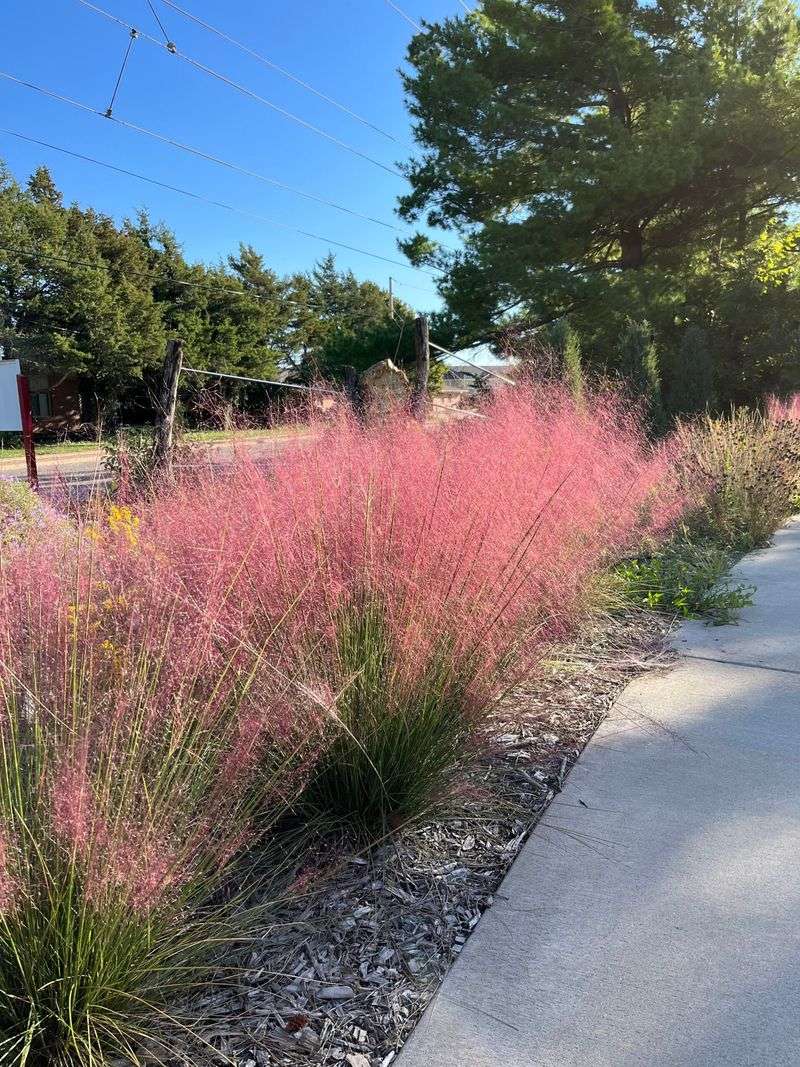
A planted driveway edge can do a small job for the creatures that share your yard. Pink muhly is not a miracle habitat, but its benefits are real and specific.
NC State Extension says the plant provides year-round cover, and its seeds are eaten by songbirds and small mammals. A dense clump gives little animals a place to tuck in, and the seed plumes may become a snack in the cooler months.
Be honest about what that means. Nothing here promises a flock of birds on your driveway, and nothing says this grass controls pests such as ticks or mosquitoes.
It is one layer in a yard that welcomes wildlife, not a fix for anything else.
Still, it is a modest, practical payoff. The same clump that lights up the fall and decorates the winter also offers shelter and seeds when other plants have gone bare.
That is the real trade at the heart of this switch. Instead of an annual that you replace every spring, you get a native plant that may settle in, return, and quietly do some work for the neighborhood.
Plant it once, give it sun, and let it earn its place.
