
Could a Roosting Pocket Be a Possible Winter Shelter for Carolina Wrens in North Carolina?
Follow us on Google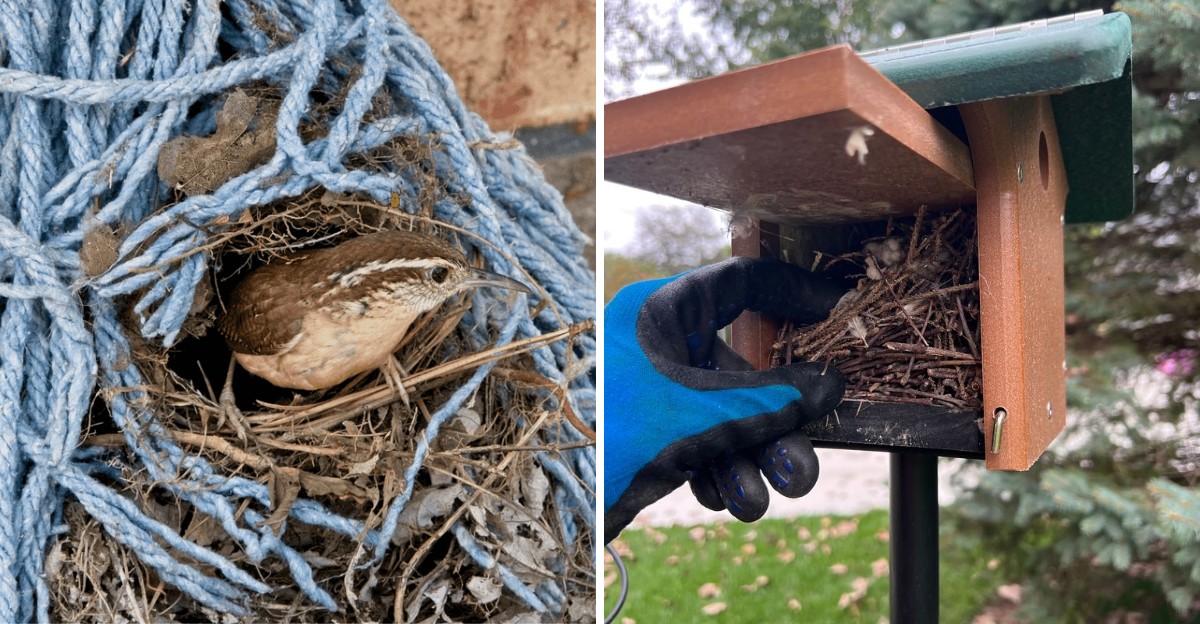
You step onto the porch on a gray winter morning and hear a loud, bubbly song from the shrubs. A Carolina Wren is already up, and you wonder where it spent the night.
Some people hang a cozy pocket or set out a box in hopes of offering a dry hideout. Here is what we know, what we don’t, and what you can try in your North Carolina yard.
A Roosting Pocket Is One Possible Hideout
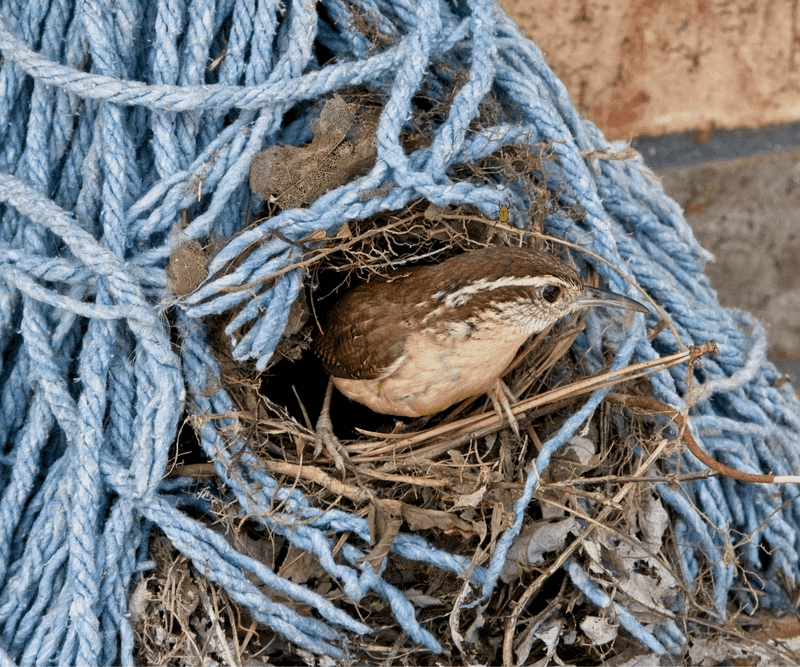
Picture a little woven pouch hanging in the corner of your porch. That is what many people mean by a roosting pocket.
Others mean a partly enclosed basket or a hanging shelter with a small opening. The name covers a lot of different things, and they do not all handle weather the same way.
Here is what is documented. Carolina Wrens are not picky about bedrooms.
According to Cornell Lab life history notes, they may roost in bird boxes and use hanging plants, garages, barns, and other protected spaces. So a sheltered nook fits the wren’s habits.
Now for the tricky part. You may have heard stories of wrens tucking into coat pockets or other insulated items.
A North Carolina field report on wrens roosting in abandoned hornet nests mentions older reports like these. But they are anecdotes, not tests.
The authors themselves call for more research on how common and how important this behavior is.
So here is the honest summary. A pocket is one possible hideout a wren might choose.
Nobody has shown that a particular pocket keeps a bird dry, and nobody has shown it keeps one safe in severe cold. Think of it as an invitation, and the bird gets to decide.
Shelter Offers Cover, Not a Guarantee
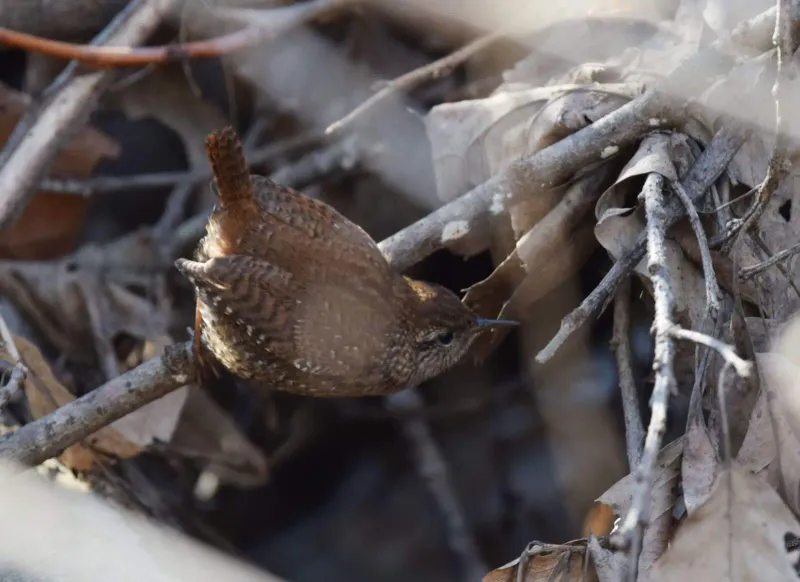
A good roost spot can block some wind and keep rain or sleet from landing directly on a sleeping bird. That sounds like a complete answer.
It is not, because winter has more than one way to make life hard for a small bird.
The North Carolina field report talks about both temperature and food availability as factors for wrens in winter. A bird that finds a warm corner but cannot find enough insects the next day still has a problem.
The bigger picture points the same way. A USGS-published analysis of bird monitoring data links winter and spring conditions, including snow cover, to changes in Carolina Wren numbers.
Those studies describe what weather does to populations. They do not show that a backyard pocket or box improves survival.
Cornell notes that a roost box can give birds a spot out of the weather, and that is a fair way to think about it. Shelter is one possible support.
Food, brush, and plain luck all share the load.
You also cannot count on a cold snap showing up on a certain date. Check a current local forecast if you want to time your setup.
Then do what you can and let the wren handle the rest.
A Roost Box Offers Clearer Design Guidance
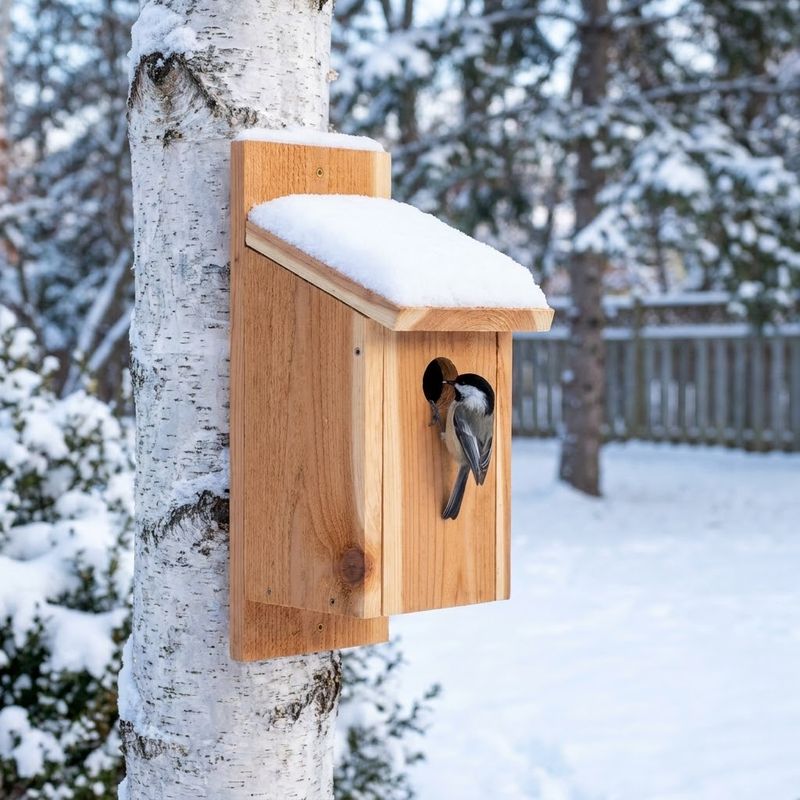
If you want advice you can follow step by step, start with a roost box. It is a small, sturdy, water-tight wooden box built for sleeping rather than nesting.
That is a very different thing from a hanging pocket.
N.C. Cooperative Extension says a small, water-tight wooden box can serve as a roost box.
Extension also says that lowering the entrance can help the box hold heat.
Cornell Lab adds more detail in its roost box guidance. A roost box has fewer ventilation holes than a nest box, and the entrance sits low.
Inside, birds need perches or rough surfaces they can cling to.
Those details give you something to check at the hardware store or in your workshop. Is the wood solid?
Do the seams keep water out? Is the hole near the bottom?
A woven pocket or open basket has no such published design list. Nobody has shown it gives the same protection from rain or wind.
So if you want the better-documented choice, go with the box.
Even then, it is an offer, not a promise. A wren may walk right past it.
Reset an Existing Birdhouse Carefully
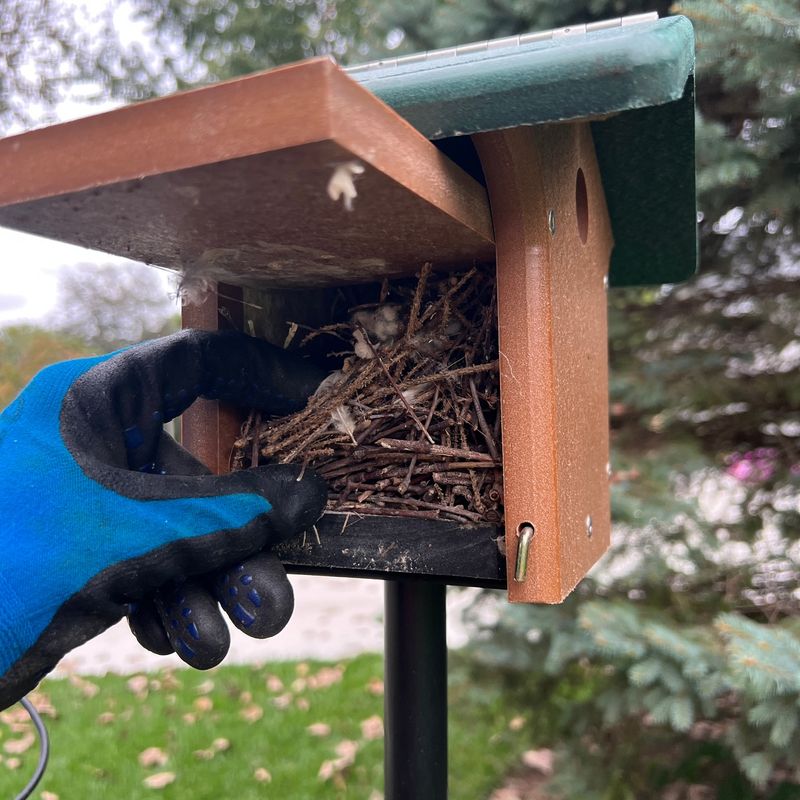
Maybe you already own a birdhouse that sat empty after summer. Fall is a good time to tidy it.
Extension suggests you clear out old nesting debris and let the box air out for a few days.
Extension also suggests adding a roosting ladder or a few diagonal sticks inside so birds have something to perch on. Where it suits the design, a lower entrance can help hold in warmth.
Here is where it gets tricky. A nest box and a roost box are built for different jobs.
General guidance on features of a good birdhouse calls for ventilation and drainage holes, because nesting boxes need to shed moisture and heat.
NestWatch also offers winter-proofing advice that describes sealing holes when converting a box for roosting. But that advice depends on the box design.
So please do not plug every hole you find. Read the advice, look at your box, and make changes that fit it.
If you are unsure, a purpose-built roost box is simpler than converting a nest box.
A little cleaning, a few sticks, and careful choices are enough.
Choose a Sheltered Site, Not a Magic Height
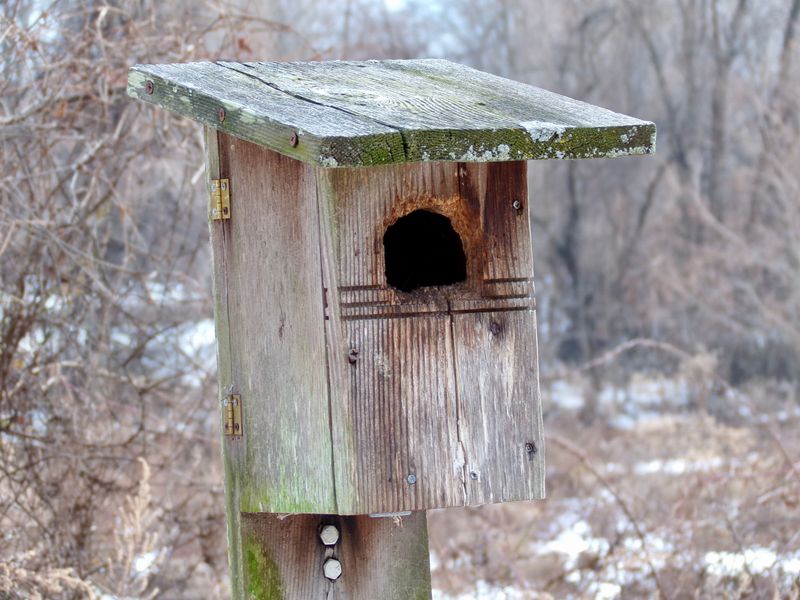
You may have seen a number for hanging bird boxes. NestWatch lists a 3 to 6 foot mounting range for Carolina Wren nesting boxes, with placement near shrubs or trees.
That is useful for spring nests.
It is not a tested height for a winter roost box. Nobody has shown that a roost box at 4 feet beats one at 7.
So treat the range as a reasonable starting point, not a rule.
What matters more is the spot. Cornell advises placing a roost box in a sheltered location away from prevailing winds.
Think about where winter wind hits your yard, then pick the side that stays calm.
A porch corner, a wall under an eave, or a spot beside dense shrubs often fits. Wrens like cover nearby, so a box close to shrubs feels natural.
Make sure the entrance does not face into rain or wind.
Then give it time. No placement can promise a wren will move in.
Some yards get a visitor within weeks, and some never do. Check the box now and then, and keep your expectations light.
Natural Cover Can Be Another Option
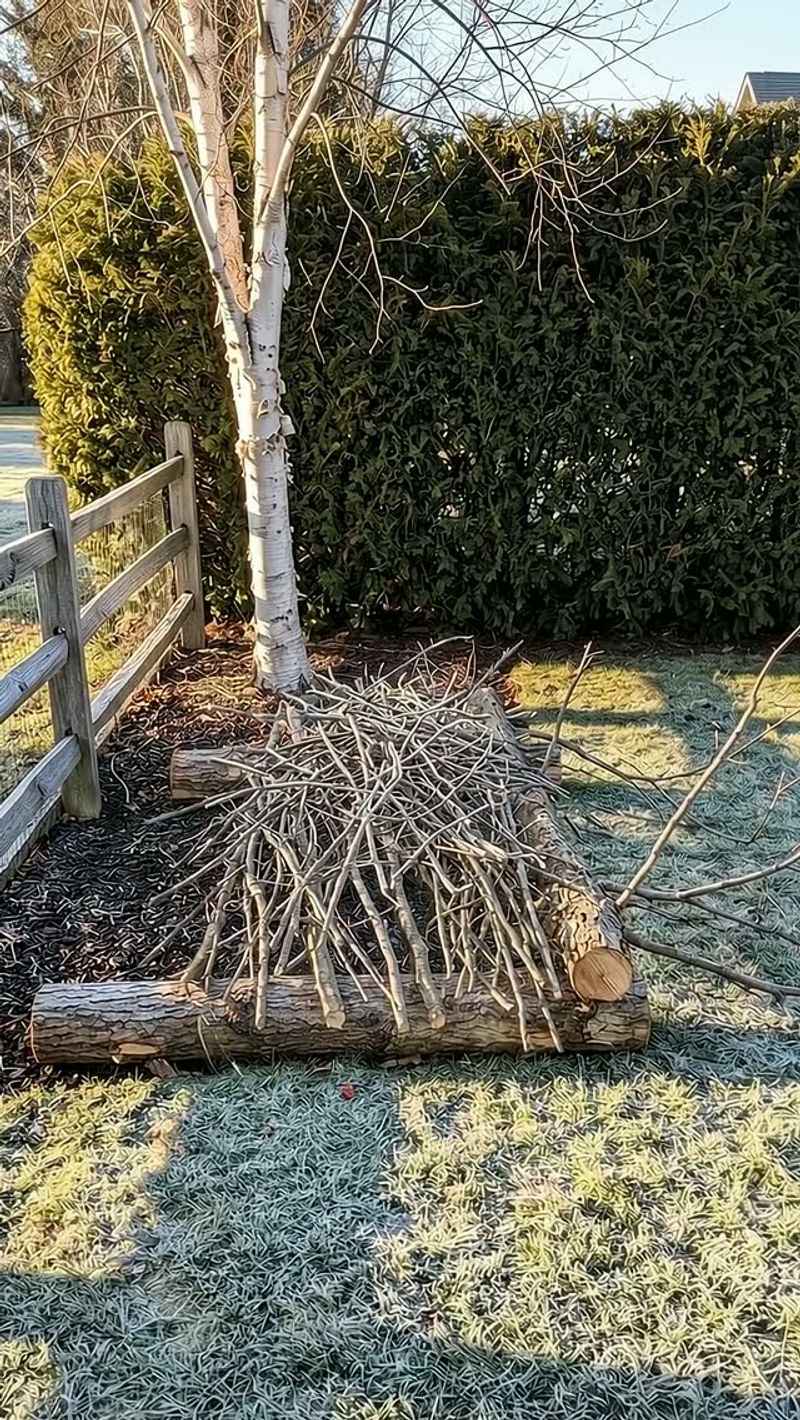
You do not need to buy or build anything to offer shelter. Look at the corners of your yard.
N.C. Cooperative Extension points to brush piles, leaf buildup in shrubs, and firewood stacks as places birds may find shelter.
Carolina Wrens already poke around such spots all day, hunting for insects. A brush pile made of fallen limbs and trimmings gives them cover close to their food.
Dense shrubs like hollies or wax myrtles can do the same job.
Think of it as habitat, not a guaranteed bedroom. These spots are not proven wren roosts, and they are not proven to prevent cold-weather harm.
They simply add choices, and that is what a wild bird wants.
A few practical thoughts. Keep a brush pile away from your house walls, and stack firewood where you would normally keep it.
Leave some leaves under shrubs instead of raking every bit.
Offer what suits your yard, keep boxes clean and in good repair, and then step back. The wren will pick its own bed, and the song you hear at dawn is the only vote you need.
