
The Winter Birds Already Settling Into Texas Backyards That Stay Until Spring
Follow us on Google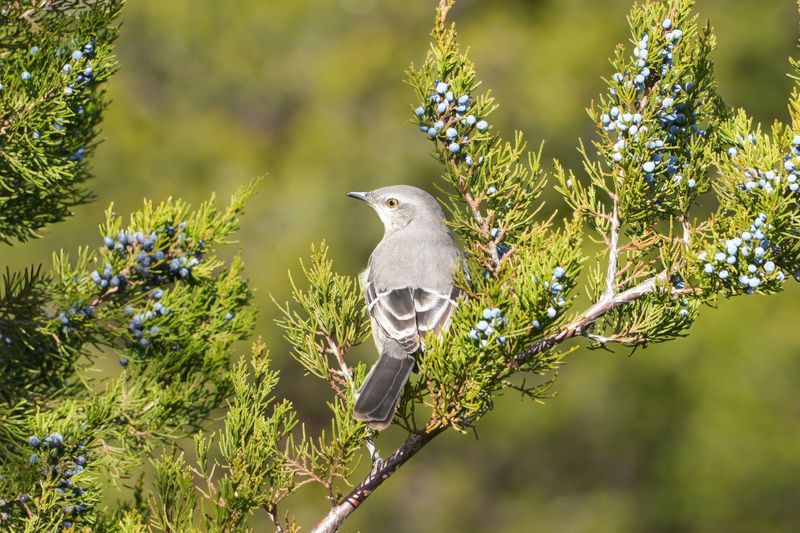
You step outside before breakfast, coffee in hand, and the air finally has that crisp bite you waited all summer for. Then a small gray bird hops out from under the shrubs, and you realize it was not there last month.
Across Texas, winter birds are already moving into backyards, and many of them will stay right through March or April. Knowing who they are, and what they need, can turn your yard into their favorite winter address.
1. Northern Cardinal
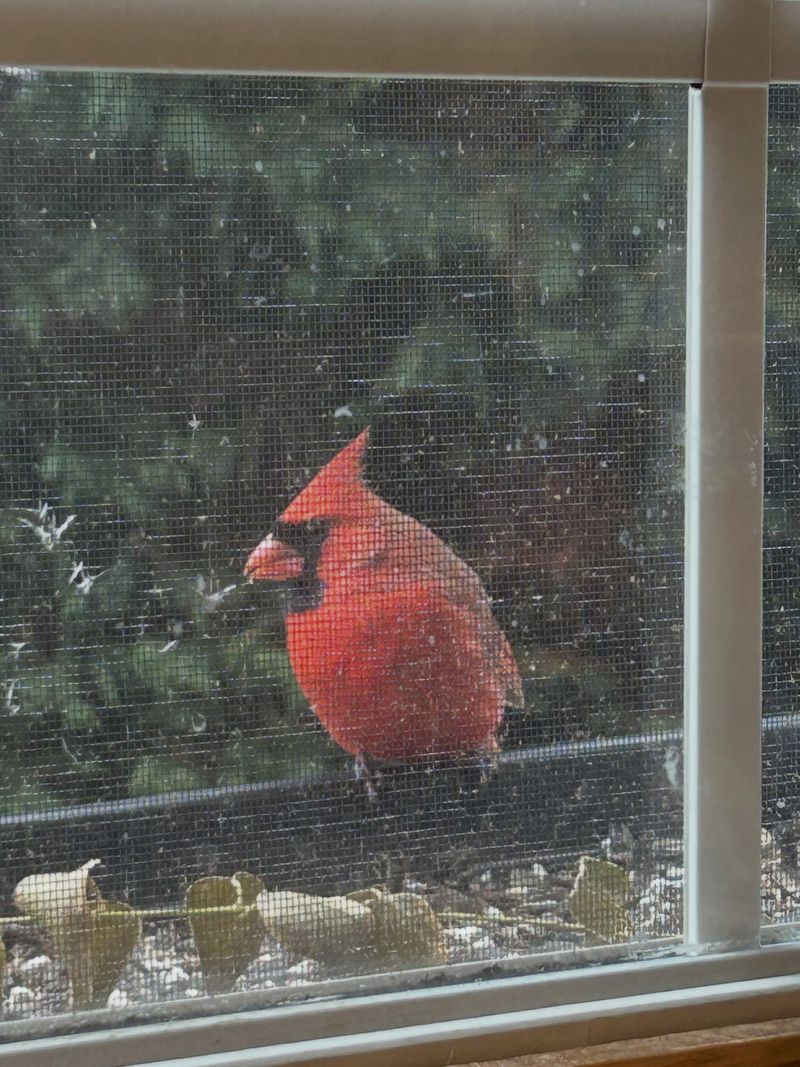
That flash of red past the kitchen window is not a stray holiday ornament. It is a Northern Cardinal (Cardinalis cardinalis), and it is not going anywhere.
Cardinals live in Texas all year, but winter is when they lean hardest on your feeders.
Here is the turn. Wild seeds and insects thin out by December, so cardinals start scouting yards that offer an easy meal near safe cover.
Black oil sunflower seed is their favorite fuel, and a sturdy hopper or platform feeder suits their chunky bodies better than a skinny tube.
Place the feeder about 5 to 10 feet from a dense shrub like yaupon holly (Ilex vomitoria) or wax myrtle. That short gap gives them a quick escape from hawks and neighborhood cats without letting a cat hide right underneath.
Keep the feeder filled through cold snaps, when they need it most. Many Central Texas homeowners find the same pair returning season after season, like old friends who know where the porch light is.
2. Dark-Eyed Junco
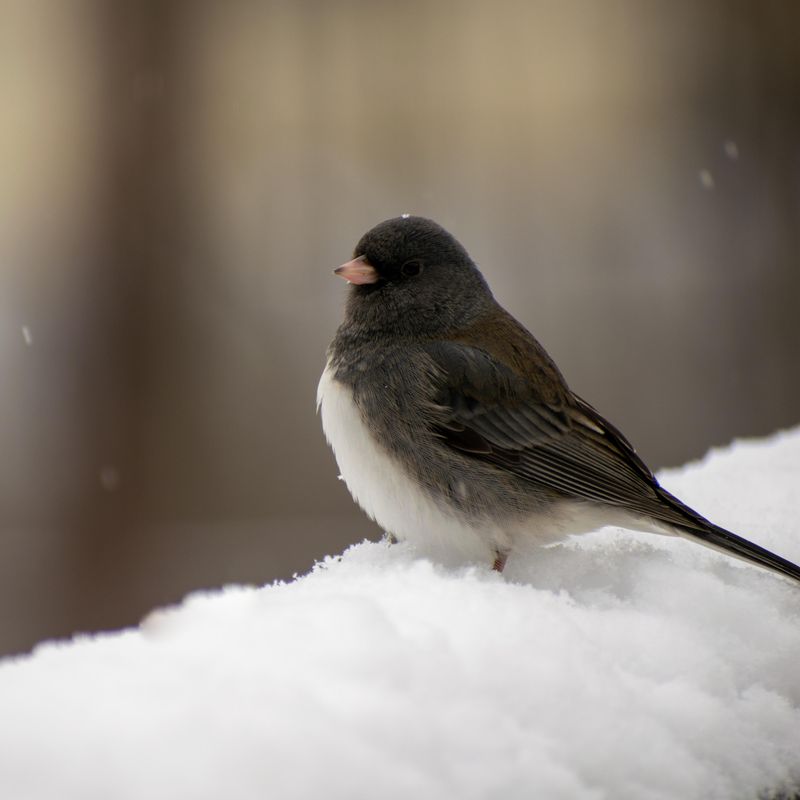
Some birds announce winter better than any weather app. The Dark-eyed Junco (Junco hyemalis), often called the snowbird, shows up in North Texas and the Panhandle when real cold settles in, and it stays until spring calls it back north.
People often miss them because they are looking up. Juncos are ground feeders, so they rarely use hanging feeders at all.
They prefer to scratch through leaf litter for fallen seed, like tiny gray shoppers checking the clearance bin.
So meet them where they eat. Scatter a handful of white proso millet on clear ground or a low platform each morning.
Leave a small corner of native grasses unmowed, and let some leaves stay put under shrubs.
Juncos are less common in South Texas and along the Gulf Coast, so do not worry if they skip your yard there. Where they do appear, their white tail flashes on a gray morning feel like a quiet welcome.
3. Northern Mockingbird
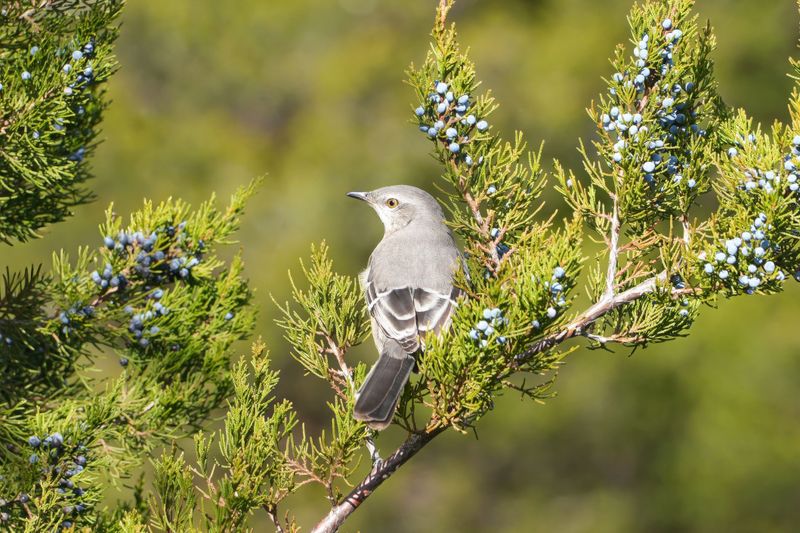
Myth says the mockingbird goes quiet in winter. Not quite.
The Northern Mockingbird (Mimus polyglottos), the Texas state bird, stays year round and often guards a winter food patch like a tiny security guard with opinions.
It actually ignores most seed feeders. Mockingbirds want berries and insects, which is why your shrubs matter more than your birdseed.
American beautyberry (Callicarpa americana), possumhaw (Ilex decidua), yaupon, and chile pequin all hold fruit into winter.
Plant shrubs in fall, 3 to 5 feet apart, so roots settle before summer heat. In Hill Country caliche, dig wide and shallow rather than deep.
Expect one bird to claim your best berry bush and chase off others. Annoying, maybe, but that fierce little landlord is proof your yard is worth defending.
4. Cedar Waxwing
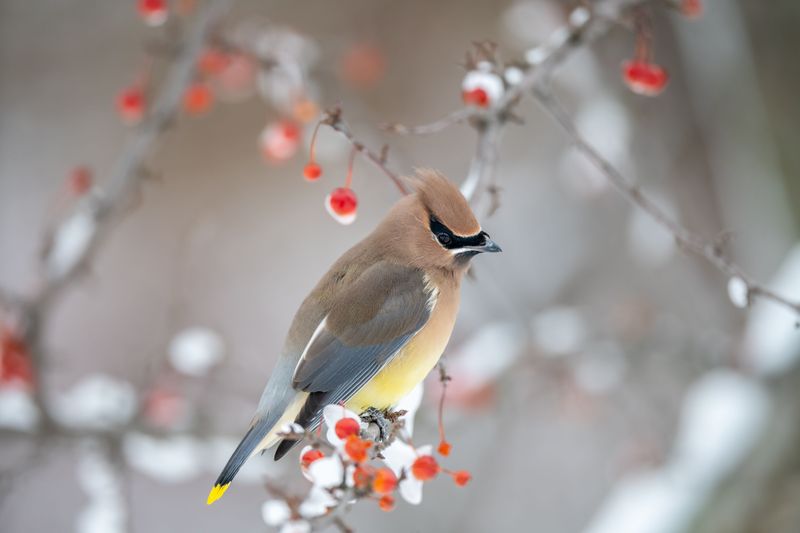
One morning your yaupon is loaded with red berries. By lunch, a chattering flock has stripped it bare.
Meet the Cedar Waxwing (Bombycilla cedrorum), a winter visitor that travels in groups and eats almost nothing but fruit until spring.
Their silky crests and waxy red wing tips look painted on. Flocks of 20 or more are common, and they wander wherever fruit is ripe, which is why they seem to appear out of nowhere.
The fix is simple. Do not prune berry shrubs in fall.
Let possumhaw, yaupon, and rusty blackhaw viburnum hold their fruit through February, when waxwings arrive in East Texas and Central Texas in good numbers.
Watching a whole flock pass a berry beak to beak is genuinely one of winter’s sweetest shows.
5. Downy Woodpecker
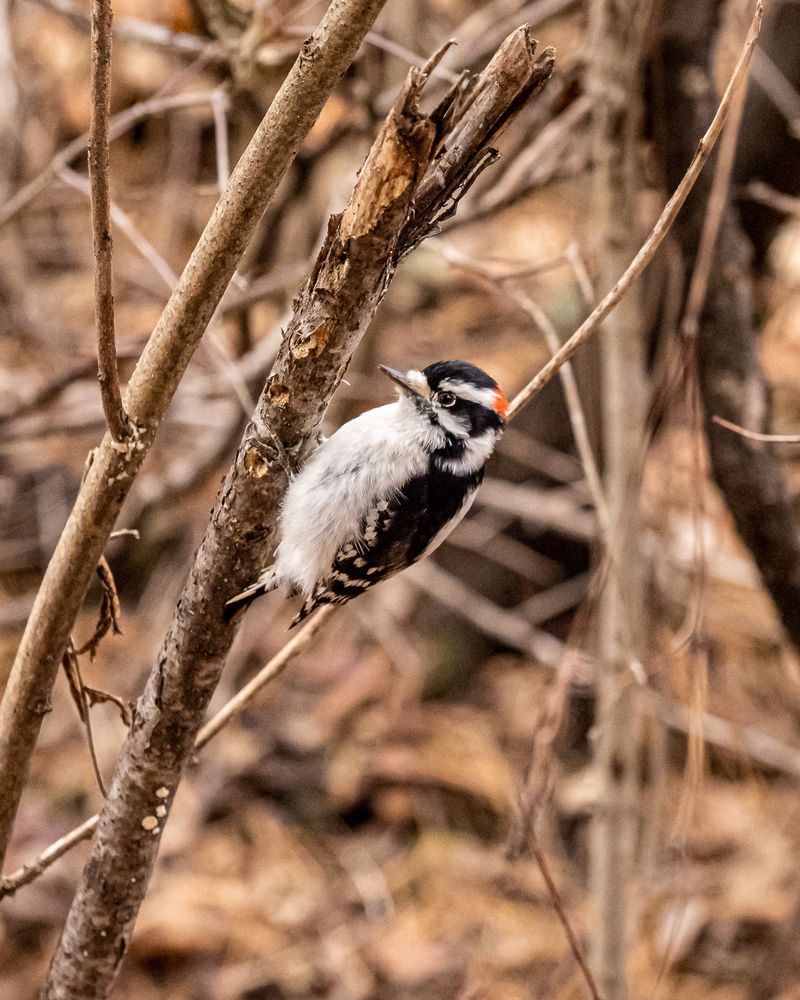
Hear a soft tapping on the live oak? Look for a black and white bird no bigger than your hand.
The Downy Woodpecker (Dryobates pubescens) lives in much of Texas year round, often trailed by chickadees and titmice.
Winter shifts its menu. Insects hide in bark cracks, so the downy needs dense fat to stay warm on 30 degree nights.
Suet delivers exactly that.
Hang a suet cage on a trunk or post about 5 feet high. Choose no-melt blends, since Texas winter afternoons can still hit 75 degrees.
If an old dead limb is safe, leave it standing for natural foraging.
Soon you will catch that little acrobat hanging upside down, completely unbothered.
6. American Goldfinch
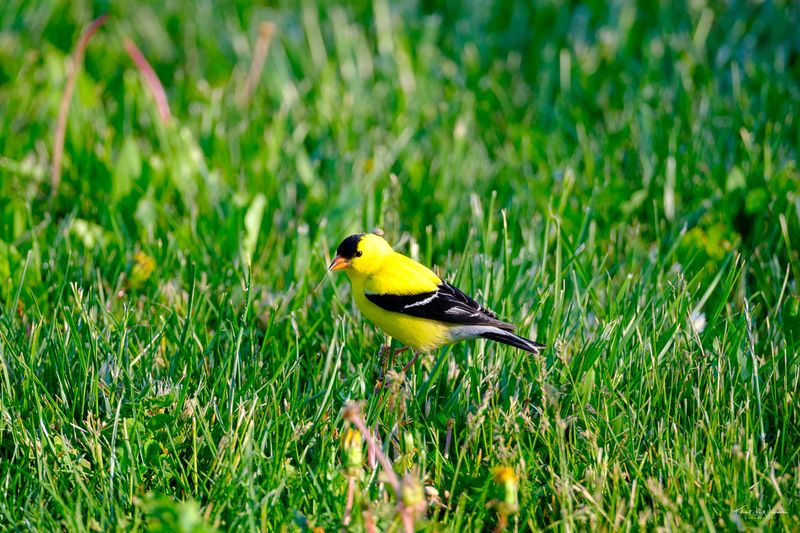
Here is the surprise. Goldfinches arrive looking dull.
The American Goldfinch (Spinus tristis) winters across most of Texas in olive-brown plumage, then slowly brightens before heading north in spring.
They are picky eaters. Nyjer seed in a tube with tiny slits works best, and leftover sunflower or Maximilian sunflower seed heads in the garden do the same job for free.
Clean feeders every 2 weeks with 1 part bleach to 9 parts water, then rinse and dry. Damp nyjer molds fast after Gulf Coast rains.
By March, the males turn lemon yellow right in front of you, a slow reveal you earned.
7. Yellow-Rumped Warbler
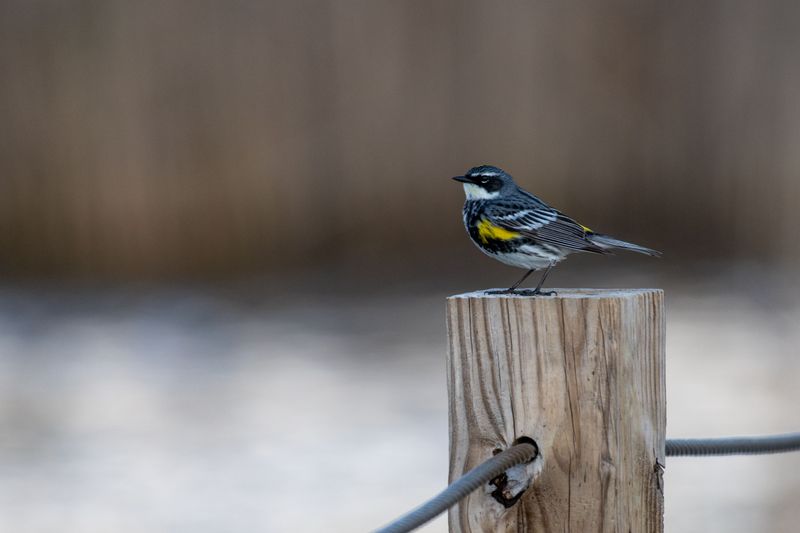
Most warblers flee to the tropics. The Yellow-rumped Warbler (Setophaga coronata) stays, and it may be the most common winter bird in South Texas and the Gulf Coast yards you never noticed.
Its trick is a stomach that can digest the waxy berries of wax myrtle (Morella cerifera), something most warblers cannot. Birders call it the butter-butt for that yellow rump patch.
Plant wax myrtle 6 to 8 feet apart as a screen, and it pulls double duty as cover. Warblers also take suet and visit shallow water.
Once you learn that flash of yellow, you will see it everywhere until April.
8. Every Winter Bird Comes Back for Water
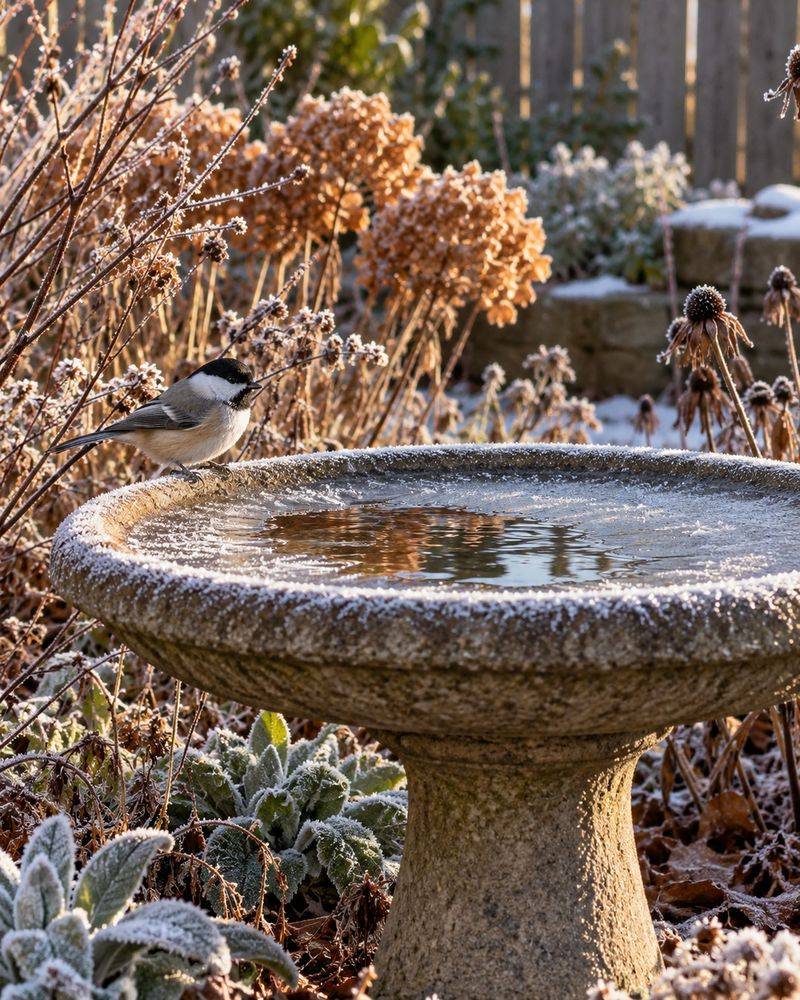
Seeds get the attention, but water quietly does the heavy lifting. Texas winters often bring long dry stretches, and natural puddles vanish for weeks.
Keep the bath no deeper than 1 to 2 inches, with a few flat rocks for small feet. A slow drip draws birds by sound alone.
Scrub it every few days so it stays clean and mosquito free.
Before a hard freeze, set out a fresh dish each morning, or use a small heater. Texas A&M AgriLife Extension also suggests native plants for year-round shelter, which works hand in hand with water.
It is not a magic solution, just one layer. But by spring, you will know you gave these birds a genuinely good winter home.
