
The Bold Florida Plants That Give Your Front Door A Resort Look Without A Landscaper
Follow us on Google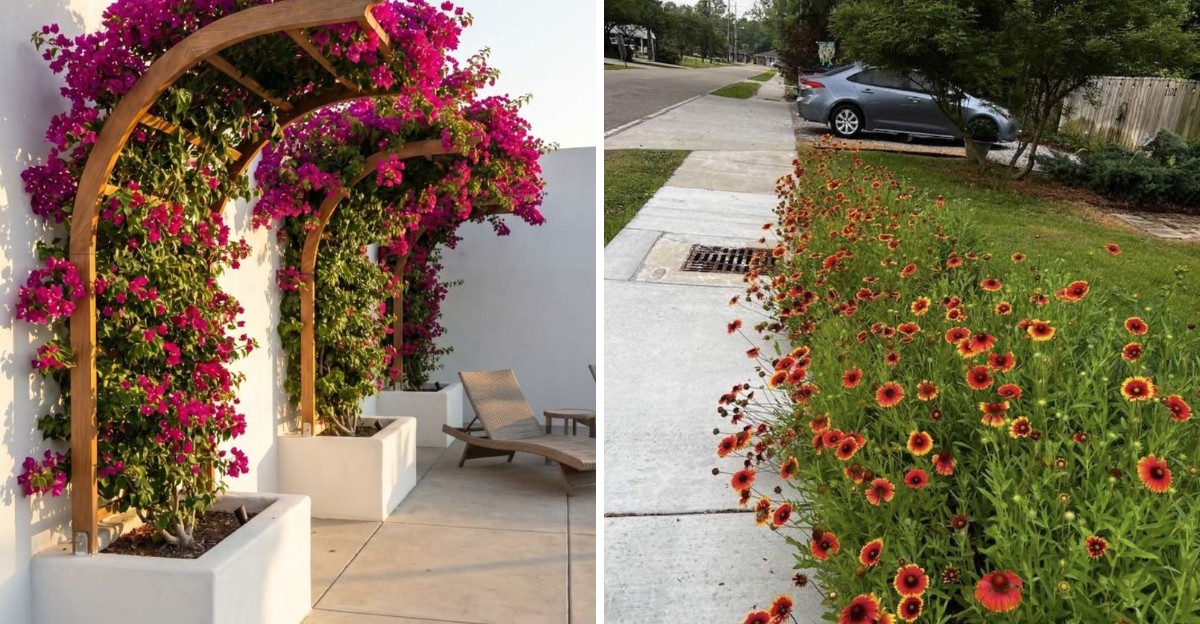
You step outside with your coffee, the morning air already thick and warm, and you look back at your front door. It’s fine, but it doesn’t feel like the Florida you see at the beach resorts.
The good news is that a few bold, easy plants can close that gap without a landscaper or a big bill. Here are eight that do the heavy lifting for you, matched to real Florida weather from the Panhandle to the Keys.
1. Bird of Paradise
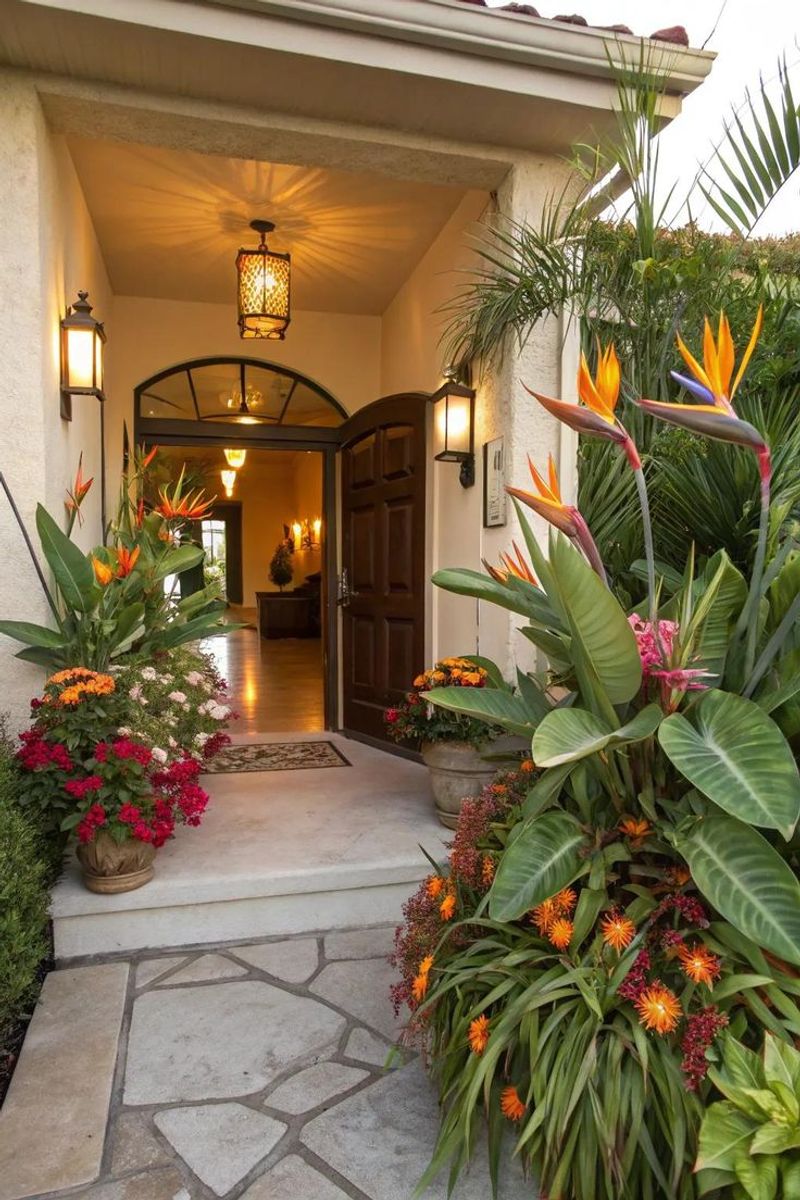
Picture orange and blue blooms shaped like a crane in flight, standing guard by your door. Bird of paradise (Strelitzia reginae) is the plant most people actually picture when they think resort entry.
Its big paddle leaves do half the work even when it is not flowering.
Here is where it gets tricky. It can take full sun, but it often grows taller and blooms bigger with morning sun and some afternoon shade.
In North and Central Florida, grow it in a large container so you can roll it to shelter when a freeze is forecast, since damage gets serious in the low 20s.
Plant in rich, well-drained soil and water often for about six months while roots settle. In winter, water only when the top 2 to 3 inches feel dry.
If you use more than one, space them about 6 feet apart.
Feed with a balanced liquid fertilizer every other week in spring and summer, or a slow-release granular every three months. Give it a year, and guests will start asking who designed your entry.
2. Bougainvillea
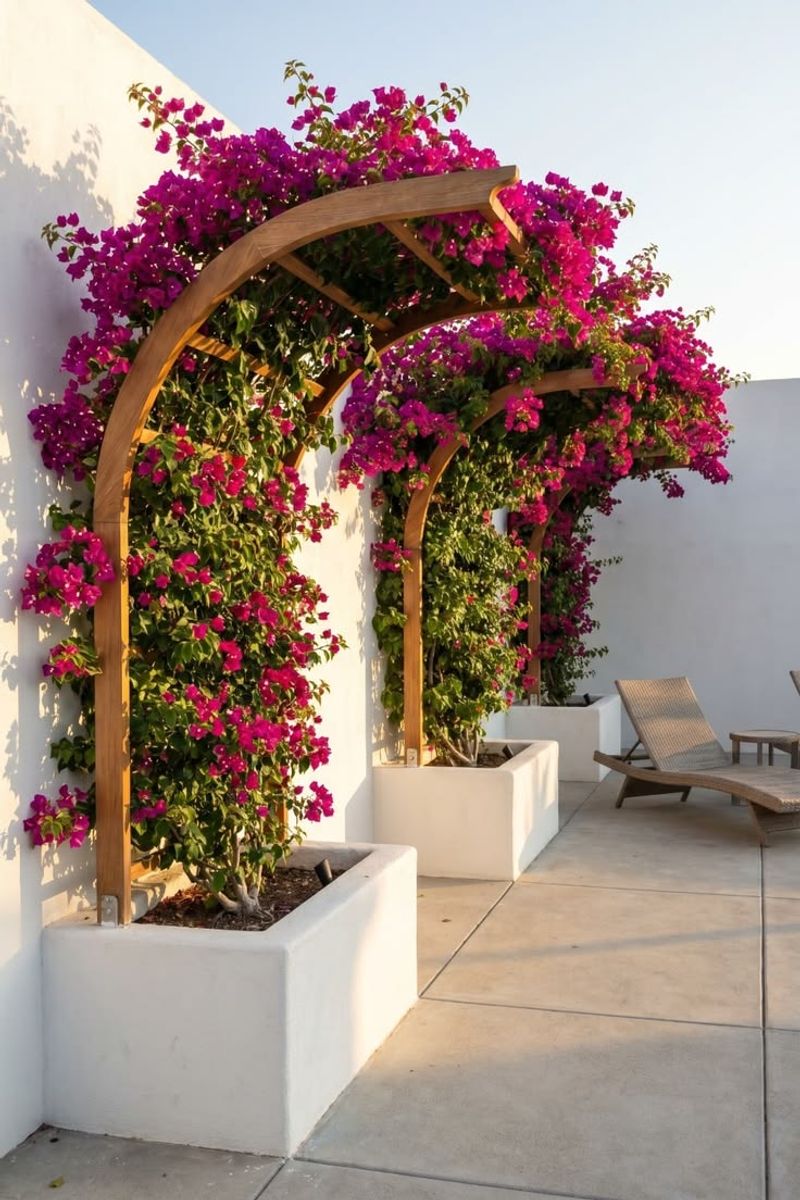
Most people think those hot pink petals are flowers. They are not.
The color comes from papery modified leaves called bracts, and bougainvillea (Bougainvillea spp.) wears them like a party dress over an arbor or spilling from a big pot.
The twist is that kindness can kill the show. Many Florida gardeners overwater it and get a wall of green with almost no color.
This plant comes from drier places and blooms best when it feels a little thirsty.
Give it full, direct sun most of the day. New plants need water every two to three days for six to eight weeks, then water deeply about once a week in dry spells and let the soil dry between drinks.
It is hardy in Zones 9 to 11, so Central and South Florida suit it best. In North Florida, a dwarf type in a container can come inside on frosty nights.
Prune hard in late winter or early spring, and wear heavy gloves because the thorns bite back.
3. Firebush

A front door that comes with its own wildlife show feels genuinely expensive. Firebush (Hamelia patens) is a Florida native with red-orange tubular flowers from late spring until frost, and hummingbirds treat it like a drive-through.
Zebra longwings and gulf fritillaries visit too, and songbirds pick at the small dark berries later. So your entry stays busy and alive all season.
It grows statewide on sand or limestone as long as drainage is good. In North Florida it is root-hardy, which means a hard freeze may knock the top back but it returns from the roots in spring.
In South Florida it can hit 15 feet, though pruning keeps it at a tidy 5 to 8 feet.
Water regularly the first year, then only in long dry spells, letting the top 2 to 3 inches dry first. Go light on fertilizer, since heavy nitrogen trades flowers for leaves.
A quiet hero, and a busy one.
4. Coontie
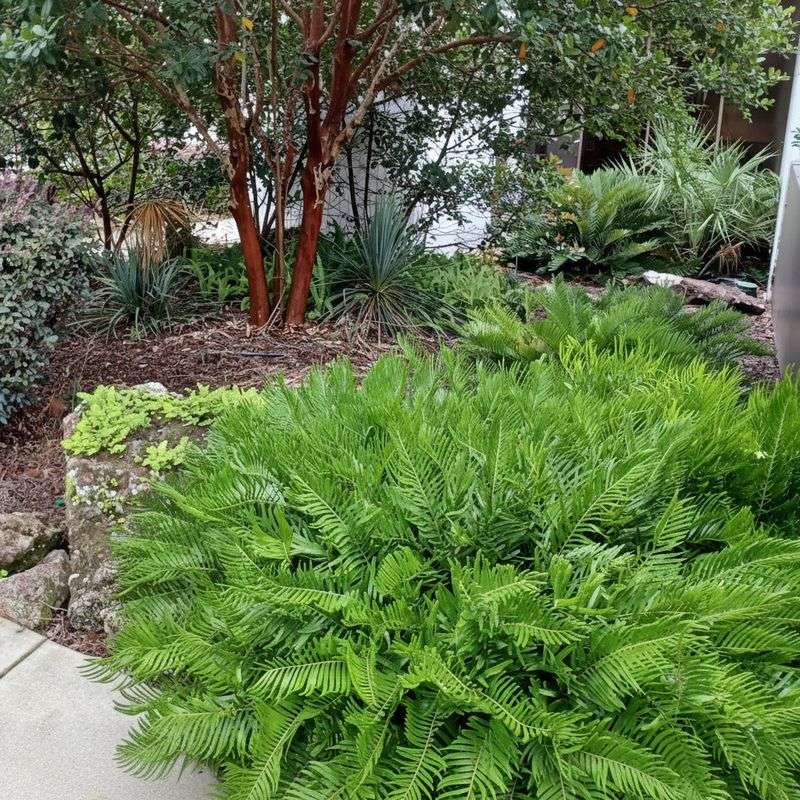
Dinosaurs walked past plants a lot like this one. Coontie (Zamia integrifolia) is Florida’s only native cycad, an ancient plant family, and its glossy fern-like fronds bring calm, timeless polish to a shady entry.
It grows slowly, which sounds boring until you realize it barely needs trimming. Most plants stay 1 to 2 feet tall, with fronds up to 3 feet long, and keep their shape for decades.
Drainage is the whole game. Soggy roots invite rot, so sandy soil is perfect.
Water every two to three days for the first few weeks, then once or twice a week for a couple of months. UF/IFAS Extension notes established coontie rarely needs extra water.
It handles lows near 15 degrees and can regrow from its underground stem after a North Florida freeze. Give it bright shade, snip brown fronds at the base, and enjoy the easiest elegance on your street.
5. Muhly Grass
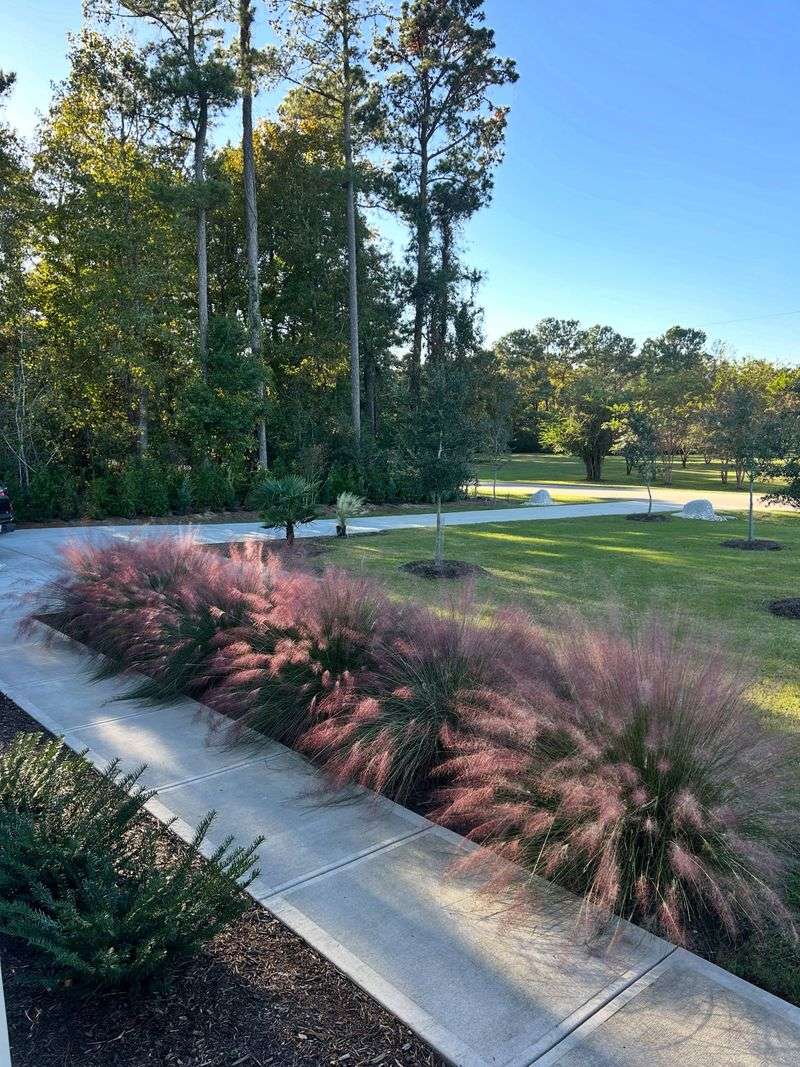
Every October, some front yards suddenly look like they are wrapped in pink fog. That is muhly grass (Muhlenbergia capillaris), a Florida native whose airy plumes float above fine green leaves and catch the low autumn sun.
It reads clean and modern, a nice counterweight to big tropical leaves. And it handles salt spray, so Gulf Coast and Atlantic Coast homes can use it near the door without worry.
Give it at least six hours of direct sun. Water weekly for the first two to three months, then let rain handle it, adding water only when the top 2 inches are dry.
Overwatering is actually its worst enemy and leads to floppy, yellow clumps.
Skip the fertilizer and soil amendments. Space plants 24 to 36 inches apart in groups, and cut them back to 4 to 6 inches in February or March.
That is the entire yearly routine.
6. Ti Plant
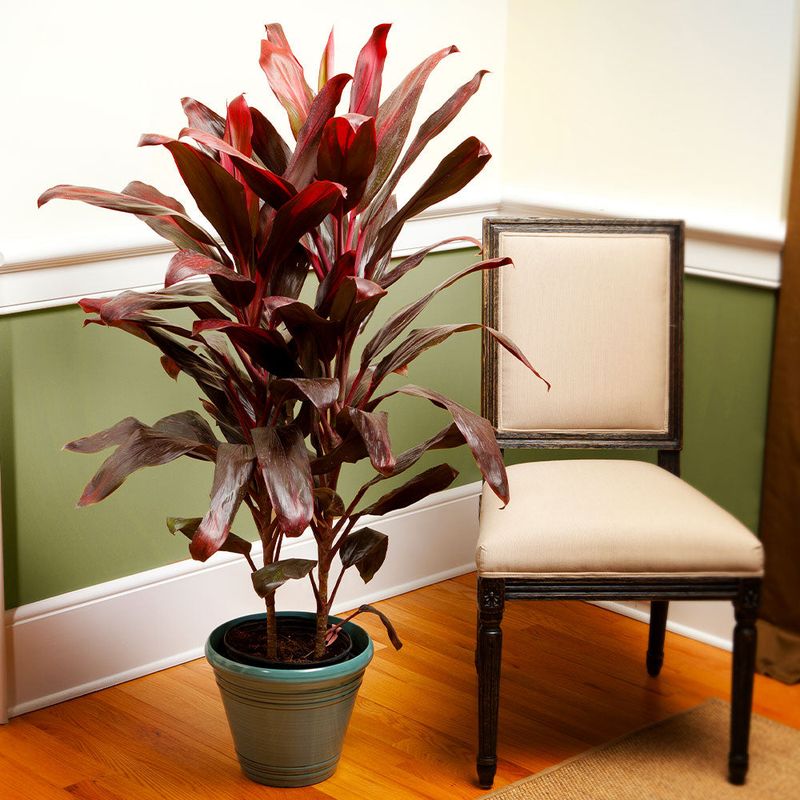
Flowers come and go. Ti plant (Cordyline fruticosa) never takes a day off, because its color lives in the leaves, in burgundy, hot pink, and red that glow by a doorway all year.
The catch is cold. Ti plants are happiest in Zone 10 and warmer, so South Florida can plant them in the ground.
In Central and North Florida, tall containers let you scoot them against the house or into the garage when a cold snap rolls in.
They like steady moisture, but drainage still matters to avoid root rot. Afternoon shade keeps the leaves from scorching in Florida’s summer glare, and new plants should move into sun gradually.
Rotate pots every few weeks so stems grow straight, and wipe dust off the leaves now and then. A matched pair on either side of the door looks like a hotel lobby, honestly.
7. Sabal Palm
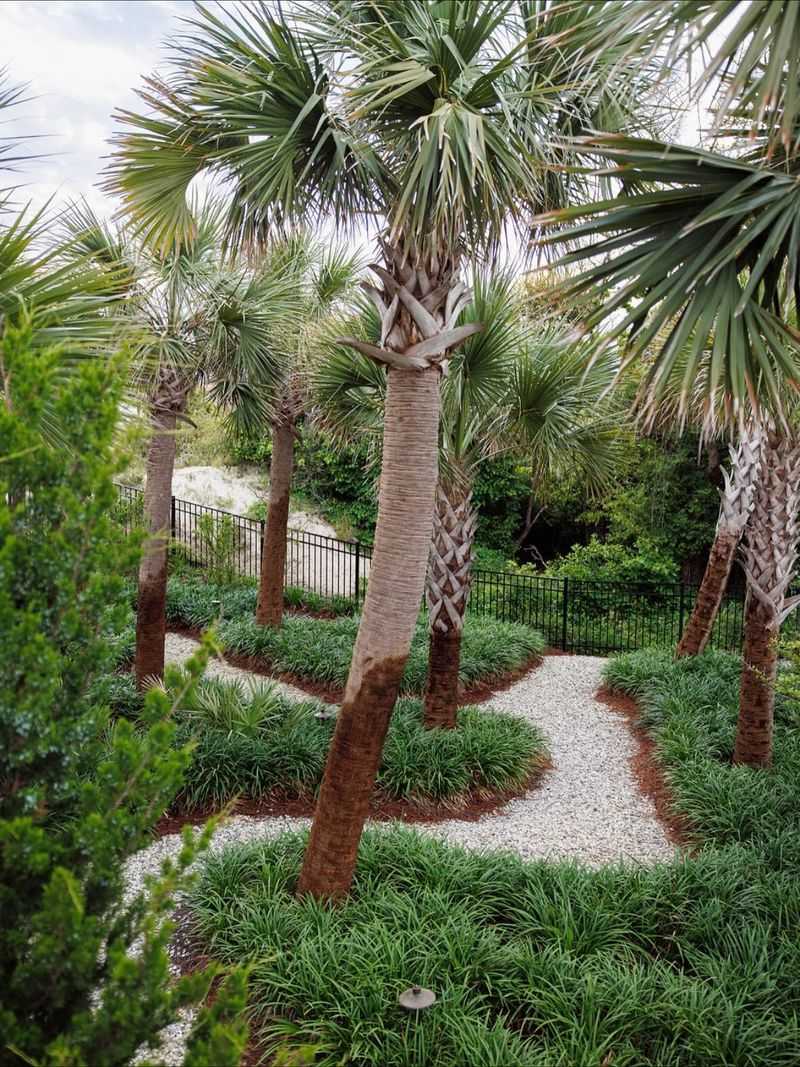
Not every resort palm needs babysitting. The sabal palm (Sabal palmetto) is Florida’s state tree, and it shrugs off hurricanes, salt spray, and North Florida freezes that flatten fussier palms.
That toughness is the secret to a no-landscaper entry. One sabal set about 8 to 10 feet from the door gives height and that unmistakable fan-frond silhouette without crowding the walkway.
Many homeowners lose new sabals by underwatering, and here is why. Transplanted sabals often lose most of their roots, so they need water every day or two for the first few months.
After about a year, rain usually covers it.
Resist the urge to strip lower fronds into a skinny tuft, which weakens the palm. Remove only fully brown ones.
Add a cheap uplight, and evenings on the porch suddenly feel like vacation.
8. Blanket Flower
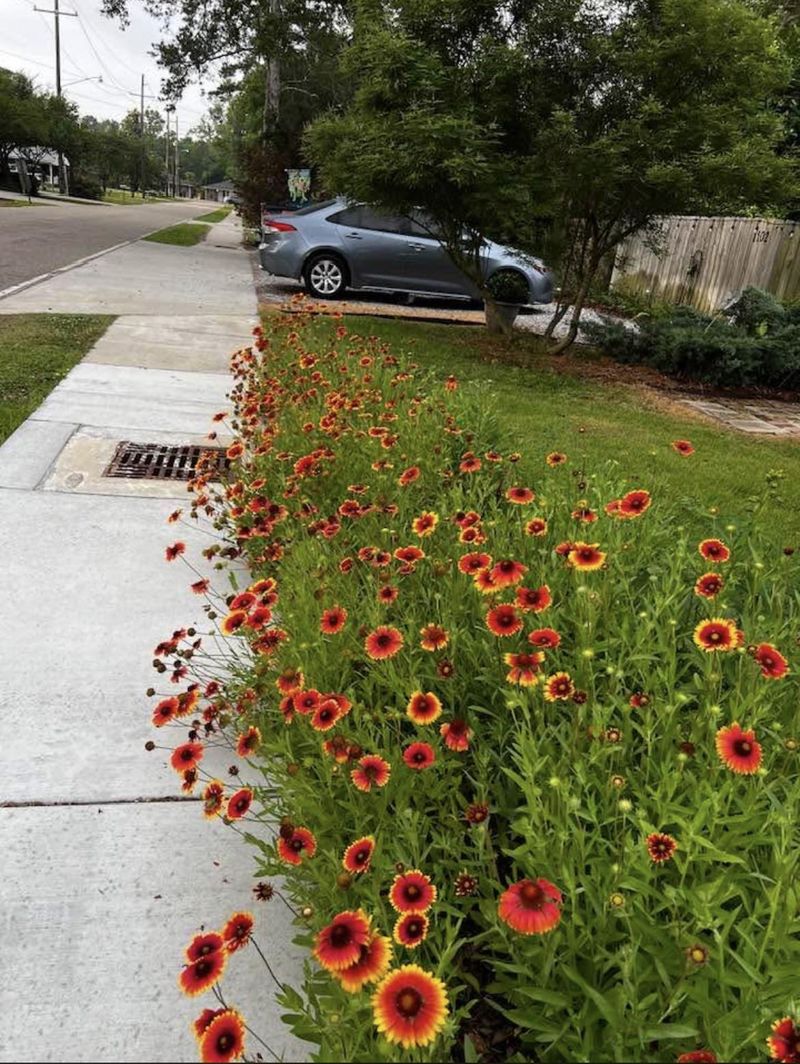
Some spots by the walkway are just brutal, full sun bouncing off concrete and sand that drains in seconds. Blanket flower (Gaillardia pulchella) loves exactly that, with red and yellow daisies that look like a beach sunset.
It is native to Florida dunes, so salt and heat do not scare it. That makes it a bright, low edging that ties your bolder plants together at ground level.
Plant 12 to 18 inches apart in full sun, water for the first two to three weeks, then mostly leave it alone. Rich soil and extra water make it sprawl and rot, so poor sand is genuinely better.
It reseeds and may fade after a couple of years, so let a few flowers go to seed. Mix it with the other seven, and you have built a resort entry yourself, one smart plant at a time.
