
These Perennials Triple In Size In One Season, So Next Spring’s Bare Bed Fills Before You Buy More
Follow us on Google
It’s a warm May evening, and the soil by your back fence still smells damp from the morning rain. Everything else in the yard is leafing out, but that one bed sits bare, a patch of dirt staring back at you.
Here’s the good news. A handful of perennials can grow two or three times wider in a single season, so the small plants you set out this spring can cover that gap by fall and save you another trip to the garden center next year.
1. Rozanne Geranium Covers Three Feet In One Summer
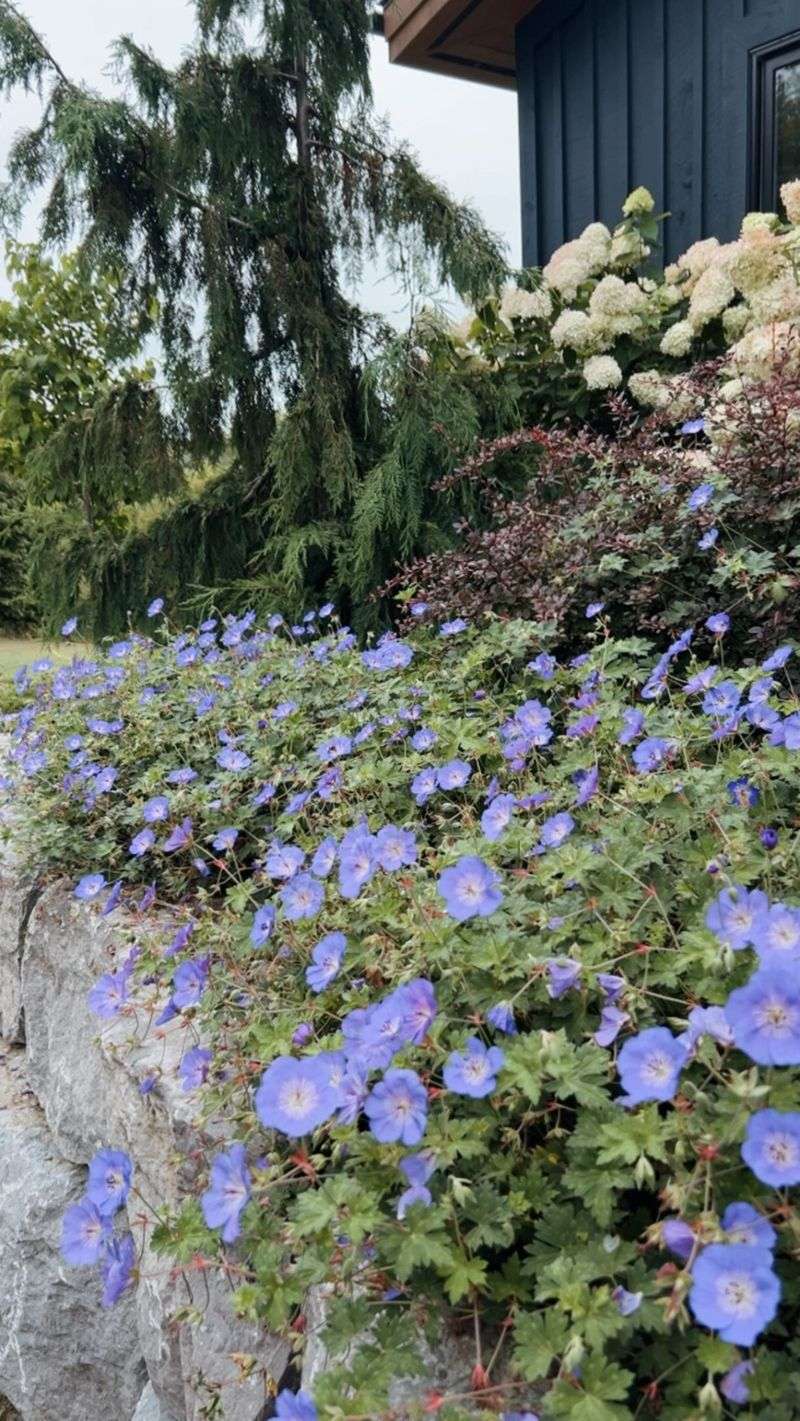
A single quart pot of hardy geranium Rozanne, Geranium ‘Rozanne’, can spread 24 to 36 inches wide by its first August. That is roughly triple the footprint you planted in May.
Few perennials move that fast without becoming a nuisance.
Instead of sending out runners, it grows from one central crown and weaves politely through its neighbors like a friendly guest who helps with the dishes. Plant it 24 inches apart and the gaps close before midsummer.
It handles USDA Zones 5 through 8 for winter cold.
Heat is the real test. In humid Southern summers, give it afternoon shade or the flowers stall.
If it flops or slows in late summer, shear it back to about 3 inches tall in August, and a fresh flush of blue usually returns within a few weeks.
Your payoff is simple. One plant covers a spot that would otherwise need three, and the blooms often keep going until the first hard frost.
2. Daylilies Turn One Fan Into a Full Clump Fast
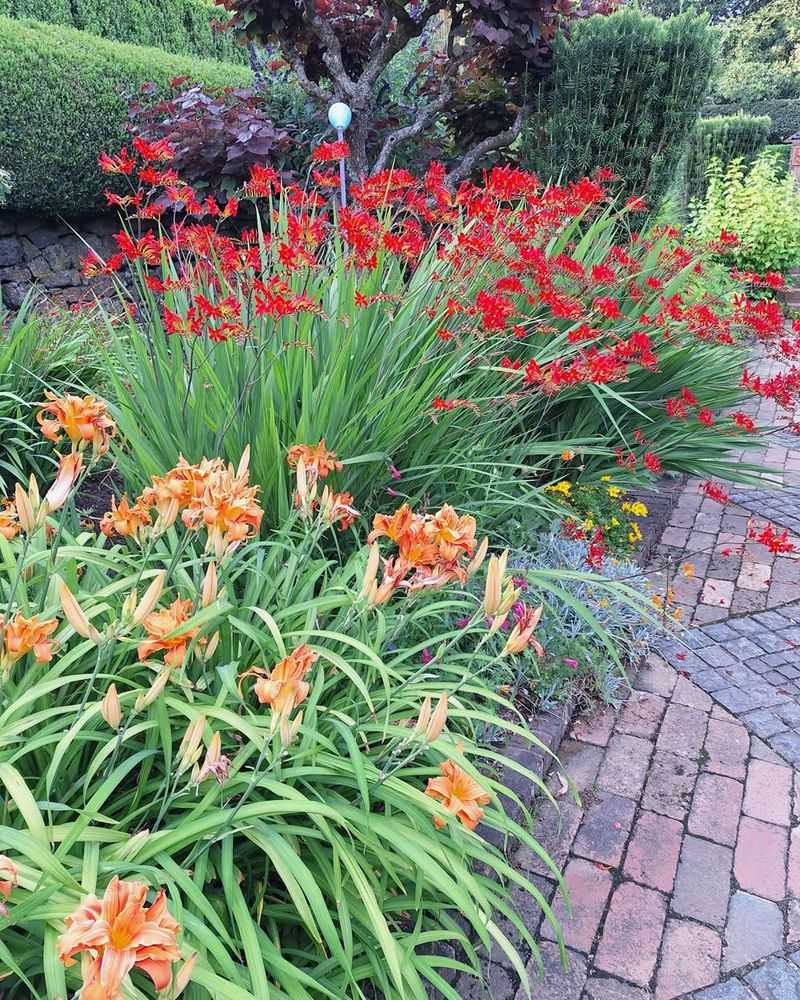
Most people think of daylilies as old roadside plants, and that reputation hides how hard they actually work. Hemerocallis species grow from fleshy roots that push out new fans, or leaf clusters, every season.
A small division with two or three fans often doubles or triples its fan count by fall in full sun. Mature clumps reach 18 to 24 inches wide for many cultivars, and they grow in USDA Zones 3 through 9, which covers most of the country.
Give them at least 6 hours of direct sun and steady water while buds form. They tolerate drought once settled, but a dry June means fewer flowers.
Plant the crown about 1 inch below the soil line, no deeper.
Every three to five years, clumps crowd themselves like kids packed into a back seat. Dig and divide in early spring or right after bloom.
That single job hands you free plants for every other bare spot in the yard.
3. Catmint Fills Hot Dry Gaps Without Extra Water
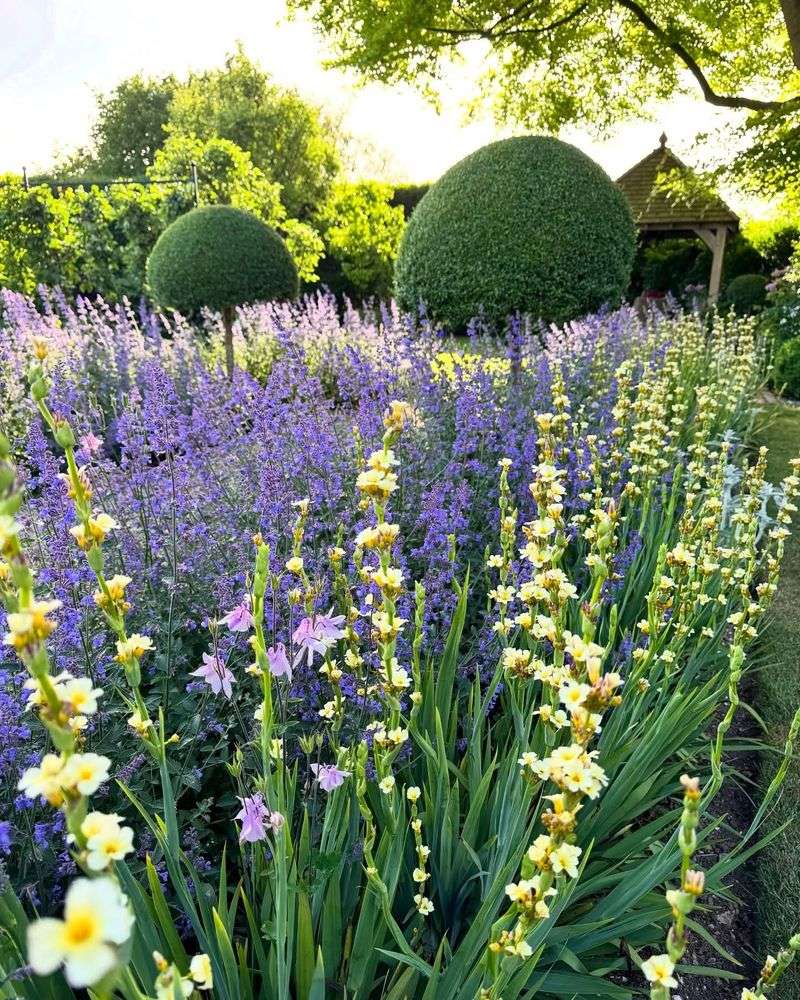
Picture the strip along your driveway in July, baking at 95 degrees while the hose sits coiled. That is where catmint, Nepeta x faassenii, shines.
Cultivars like Walkers Low start as small plugs and swell to about 3 feet wide by late summer. Space them 24 to 30 inches apart and expect the soil between them to disappear in one season.
They are hardy in Zones 3 through 8.
Catmint is a camel among perennials, storing up resilience instead of demanding water. Once rooted, it needs little irrigation in most regions, which can trim your summer water bill.
Bees crowd it, so plant it a few feet back from where kids play barefoot.
After the first bloom fades, cut it back by about half. It sulks for a week, then rebounds with tidy foliage and a second round of flowers.
4. Black-Eyed Susan Self-Sows Into Next Year’s Gaps
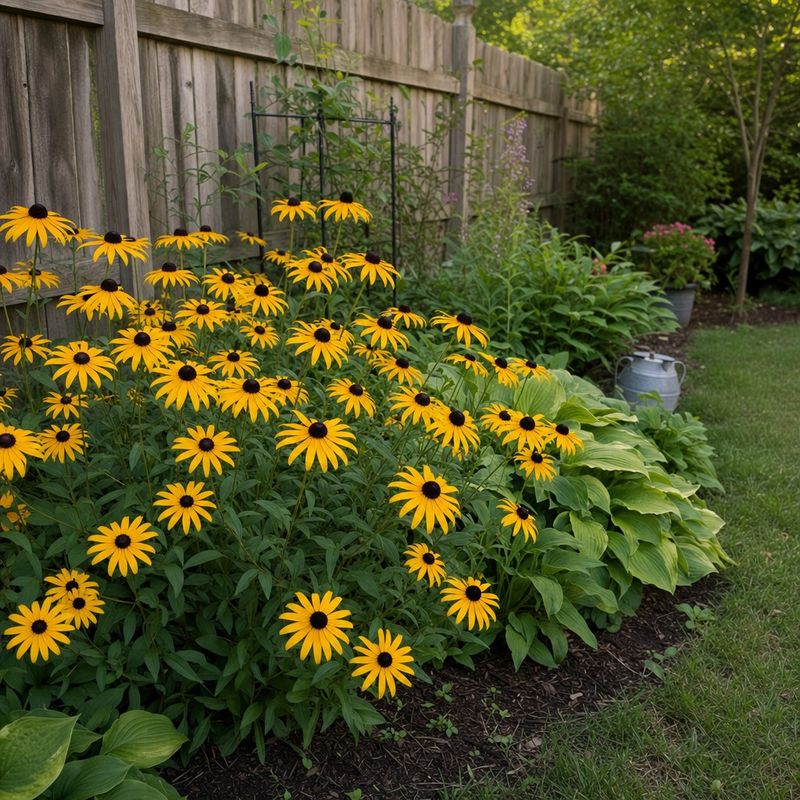
Here is a surprising fact. Orange coneflower, Rudbeckia fulgida, spreads two ways at once, by short underground stems and by seed.
It is native to much of the eastern and central United States, so it knows local weather well.
A plant set out in spring often forms a clump 2 to 3 feet across by September. Leave a few seed heads standing over winter and goldfinches will feast, while some seeds drop into bare soil nearby.
That second trick is the quiet magic. Next spring, small seedlings pop up in the spaces you meant to fill, a little like the plant planning ahead for you.
Pull any that land in the wrong place.
Give it full sun and average soil in Zones 3 through 9. Leaf spot can show up in humid summers, so spacing plants about 18 inches apart helps air move.
It will not stop disease completely, but it lowers the odds.
5. Ostrich Fern Claims Damp Shade Where Flowers Fail
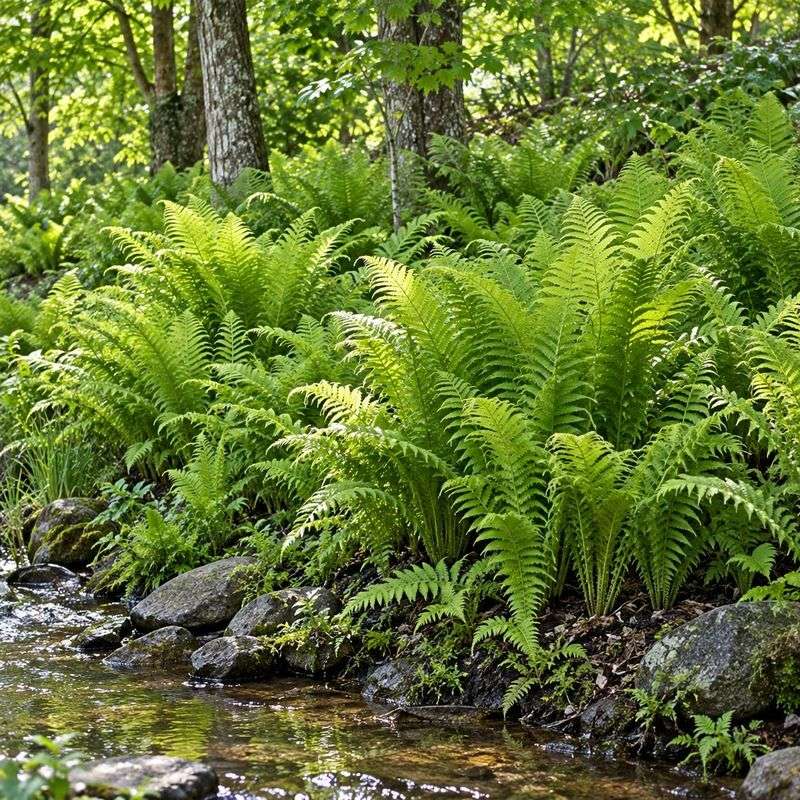
The shady corner under the maple stays soggy all spring, and nothing you plant there seems to last. Ostrich fern, Matteuccia struthiopteris, actually prefers that spot.
It is native to much of the northern United States and Canada, where it grows along cool streambanks. Underground rhizomes, which are creeping horizontal stems, send up new crowns a foot or more away from the parent.
Within a season or two, one plant becomes a small colony 2 to 4 feet tall.
The fronds unroll in spring like green party favors. They want partial to full shade, moist rich soil, and they handle Zones 2 through 8.
In hot, dry regions such as much of Texas or the Southwest, they struggle and brown by July.
Plant them about 24 inches apart and keep the soil damp the first summer. By the next spring, the muddy corner looks deliberate instead of forgotten.
6. Bee Balm Runs Fast but Feeds Hummingbirds
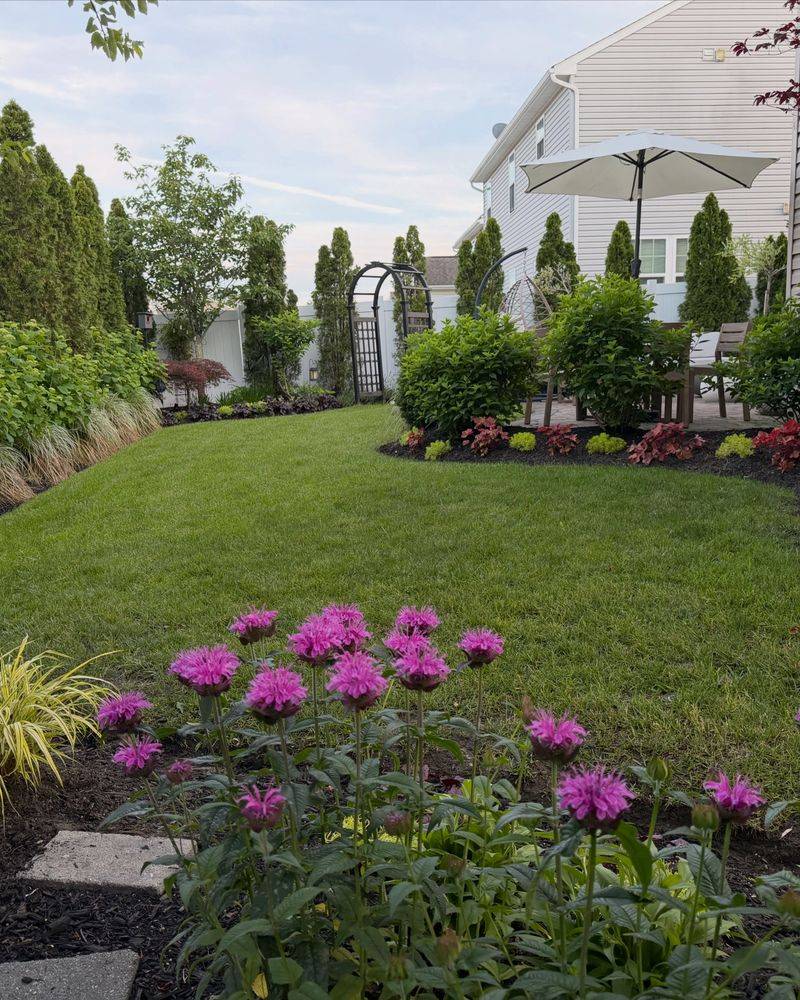
Myth says bee balm is a short-lived fuss plant. In reality, Monarda didyma and its hybrids spread by shallow runners and can triple in width in one good summer.
Scarlet bee balm is native to the eastern United States, and hummingbirds treat it like a roadside diner. Plants grow 2 to 4 feet tall and spread steadily in full sun to light shade, Zones 4 through 9.
Powdery mildew is its old enemy, showing up as white dust on leaves in humid August weather. Choose mildew-resistant cultivars, water the soil instead of the leaves, and space plants 18 to 24 inches apart.
University of Minnesota Extension notes that crowded, stressed plants suffer worse mildew, so airflow matters.
The runners stay near the surface, which makes them easy to pull with a hand trowel. Every two or three years, lift the dying center and replant the outer pieces into your next bare spot.
7. Plume Poppy Fills Big Spaces but Needs Firm Limits
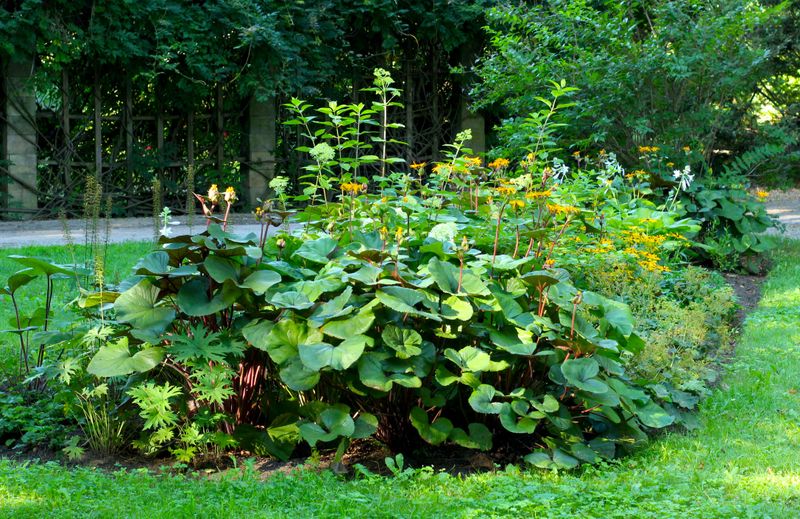
Plume poppy, Macleaya cordata, is the bulldozer of this list. Stems shoot 6 to 8 feet tall in one season, and rhizomes travel well past the 3 feet you might expect.
So it belongs only where something stops it, such as a strip bordered by a driveway, a fence, or deep edging sunk 10 to 12 inches into the soil. In the right spot, a single plant screens a bare fence line by midsummer.
It handles full sun to part shade and appreciates afternoon shade in hot Southern summers. Keep soil moist but not soggy.
Cut spent plumes in late summer to stop seedlings.
One serious caution. The stems hold an orange-yellow sap, and the plant is considered toxic to pets and people if eaten.
Skip it near dog runs or play areas, and wear gloves when you cut it, because a powerful helper still needs a leash.
8. Gooseneck Loosestrife Is a Fill-In With a Warning
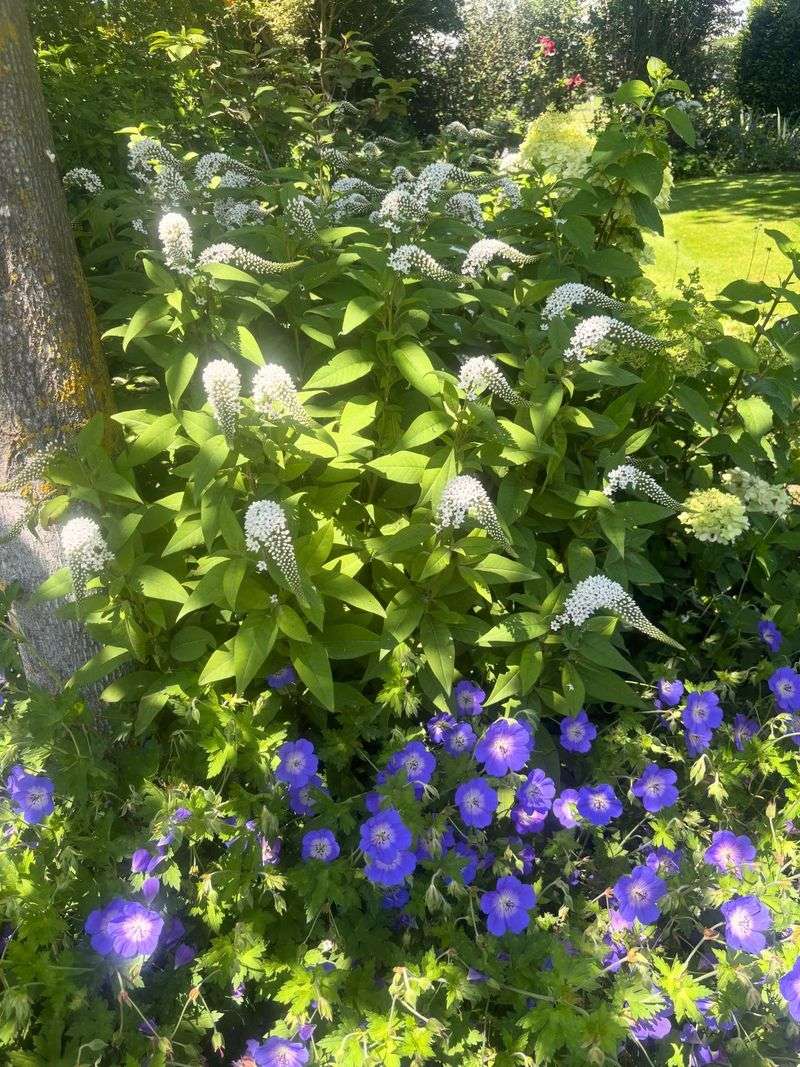
Many gardeners notice the same thing in year two. The gooseneck loosestrife, Lysimachia clethroides, they planted as three small pots now covers the whole bed and is creeping under the lawn.
That speed is the point and the problem. Its rhizomes can push a clump to 3 feet across in one season, and the arching white spikes look like a row of geese bowing in midsummer.
It grows in Zones 3 through 9 in moist soil and full sun to part shade.
Use it only in a contained spot, such as a bed walled by concrete, a large container sunk into the ground, or a wet corner bordered by mowed lawn. Dry soil slows it a bit, but it does not tame it.
Divide or thin it every spring, starting the first year. Treat it as one layer of your plan, alongside the polite spreaders above.
Mix a few of these plants by light and moisture, and that bare bed should look full before next spring arrives.
