
That Pennsylvania Weed You Keep Pulling Comes Back Because You Are Fighting It Wrong
Follow us on Google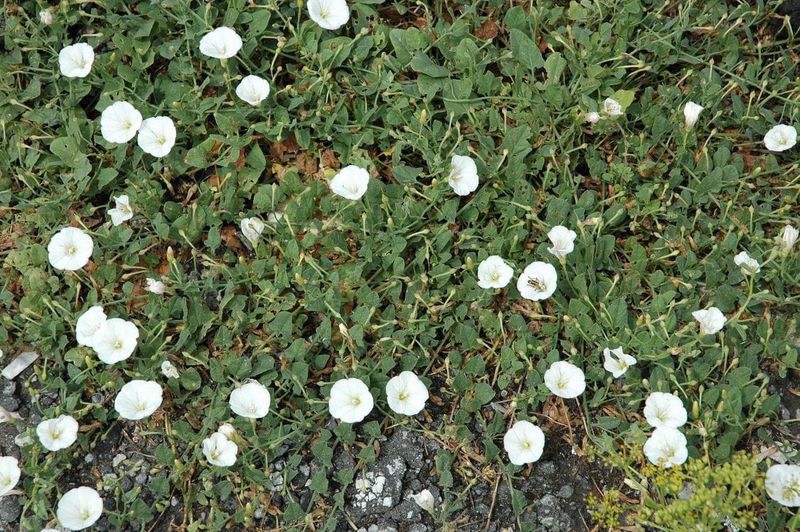
You pull it out on a Saturday, roots and all, and by the following weekend it’s back like nothing happened.
That vine winding through your fence or smothering your garden bed is likely playing a much longer game than you realize.
For many Pennsylvania homeowners, the problem isn’t the technique used to pull it, it’s what stays in the ground after the pulling stops.
Understanding what’s actually down there changes everything about how you fight it.
The Returning Vine May Be Bindweed
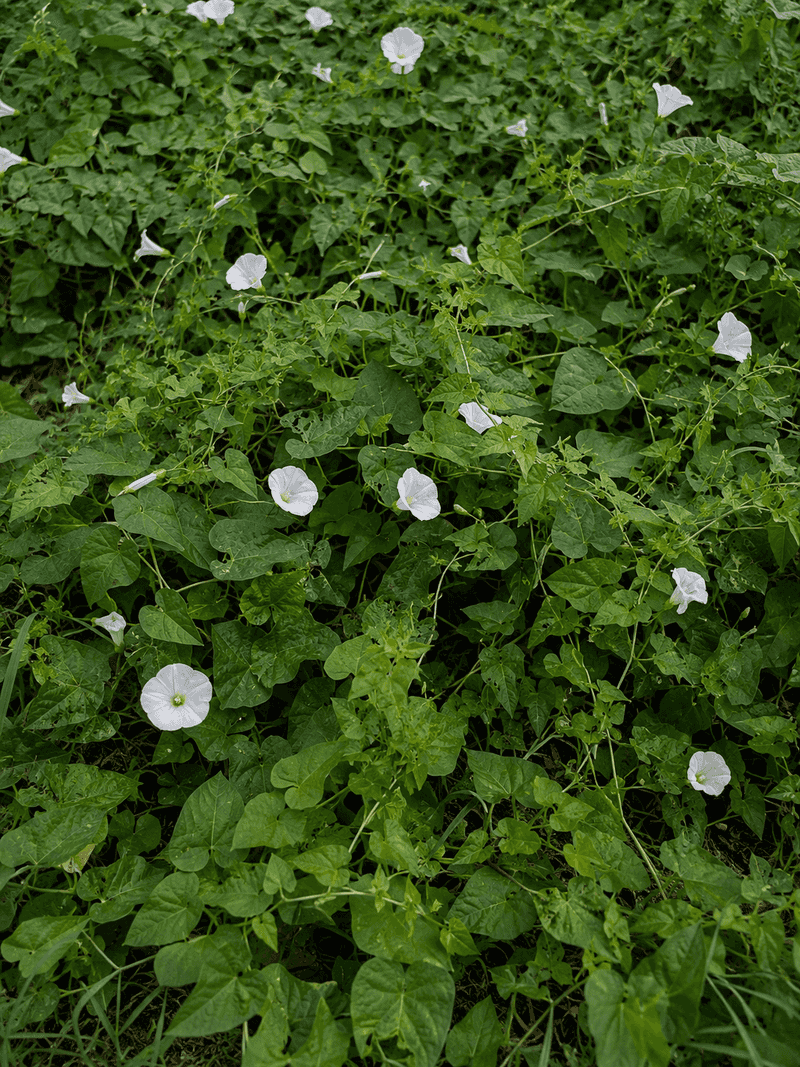
Two vines account for most of the repeated returns Pennsylvania gardeners deal with along fences, in planting beds, and at the edges of lawns.
Field bindweed (Convolvulus arvensisCalystegia sepium) and hedge bindweed () are the leading suspects, and Penn State Extension identifies both as persistent perennial vines in Pennsylvania.
That said, a photograph or a careful side-by-side comparison is still worth doing before you commit to a control plan, because morning glory and several other returning perennials can look strikingly similar from a distance.
The two bindweeds are visually distinct once you look closely.
Hedge bindweed tends to have larger leaves, typically 2 to 4 inches long, and trumpet-shaped white or faintly pink flowers that can reach roughly 3 inches across.
It climbs aggressively and can reach about 10 feet.
Field bindweed runs smaller in every direction: its leaves are more arrowhead-shaped, its flowers top out at around three-quarters of an inch wide, and its root system runs deeper and wider than its modest above-ground size suggests.
According to Cornell University Weed Science’s bindweed identification resource, field bindweed’s underground system is one of the key traits separating it from look-alikes.
Other perennial weeds like goutweed, Canada thistle, and Japanese knotweed also return stubbornly after pulling, so getting the identification right shapes every decision that follows.
The recurrence is not evidence that you pulled it wrong.
It is evidence that something persistent lives below the surface.
The Vine You See Is Only the Top
Here is where the tug-of-war gets genuinely unfair.
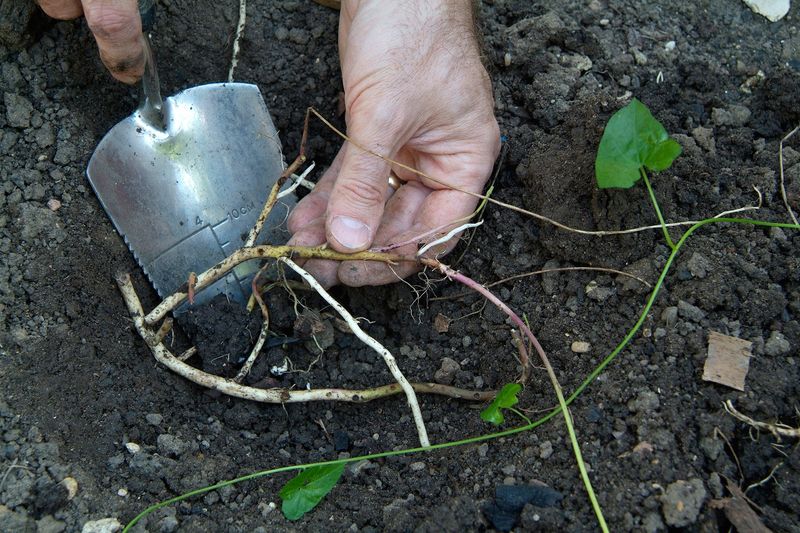
What you grab when you pull bindweed is the aerial part of a plant whose real infrastructure is entirely underground.
The visible stems and leaves are more like antennae than the whole organism, and pulling them off leaves the actual machinery intact.
Field bindweed builds a root system that can extend many feet deep, but most of its lateral roots and rhizomes spread through the upper 1 to 2 feet of soil.
That shallow lateral network is what keeps sending up new shoots after the top growth disappears.
Cornell’s bindweed research notes that field bindweed root pieces as small as 1 inch can regrow, which means any fragment left behind after pulling or digging has the potential to produce a new shoot.
This is not a case of the plant fighting back harder because you disturbed it.
Regrowth happens because surviving underground structures have stored energy and the biological drive to send up new growth.
The goal shifts once you understand this.
You are no longer trying to win a single tug-of-war.
You are trying to reduce what Penn State calls the plant’s underground reserve, steadily, over time, by preventing new leaf growth from replenishing it.
That reframe matters because it replaces frustration with a realistic plan.
Why One Good Pull Rarely Finishes the Job
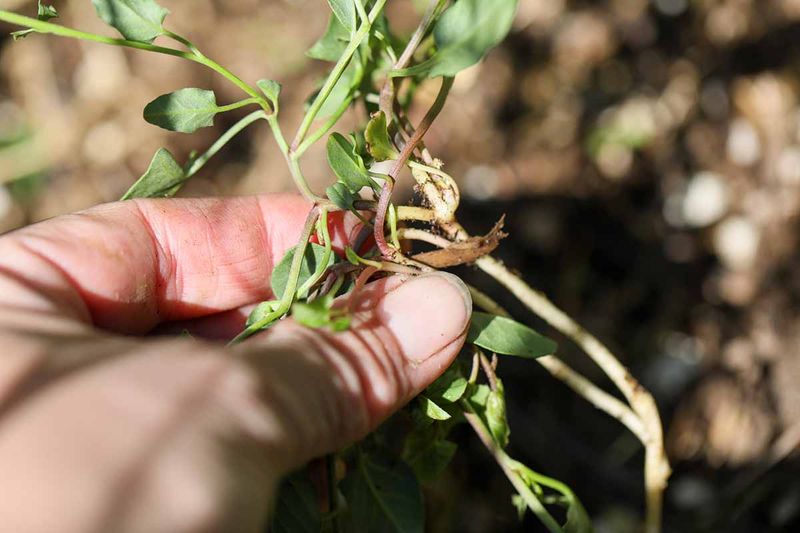
Many gardeners across the Susquehanna Valley and the central valleys of Pennsylvania have had this experience: a satisfying afternoon pulling vines, a clean-looking bed, and then new growth two weeks later in the same spot.
A clean bed after one session is not the same thing as control.
The root system does not know the top was removed.
Field bindweed roots can reach deep into the soil profile, and while most lateral growth occupies the upper 1 to 2 feet, you cannot assume you have removed the whole network after one dig.
There is also a spreading risk worth knowing.
Digging, tilling, or breaking and moving viable underground pieces can distribute fragments to new areas of the bed.
Cornell’s bindweed identification guidance confirms that small root fragments can produce new plants, so casual rototilling of an infested patch can actually widen the problem rather than solve it.
Pulling the vine does not automatically make the infestation worse, but moving root pieces around does.
For a small patch, the better approach is to wait until after a rain or a good watering, then loosen the soil gently and follow each stem toward its base.
Remove as much root and rhizome as you can reach without breaking pieces off and leaving them scattered.
Place anything with viable roots or seeds in the household trash, not in a home compost bin.
Cut or pull before any flowers mature and before seed capsules form, because Penn State Extension notes that hedge bindweed flowers from July through August and both species can set seed as well as spread underground.
Even a careful digging session is the first step in a monitoring routine, not the last step in removal.
Weekly Removal Can Deplete the Underground Reserve
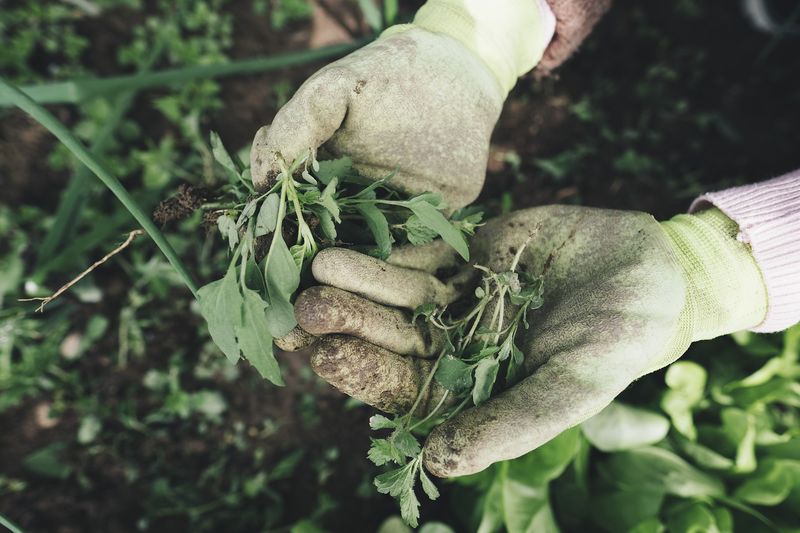
Removing every visible shoot before it can grow substantial leaves is the most defensible herbicide-free strategy for bindweed, and it works on a principle that is genuinely simple.
Roots and rhizomes store energy.
New leaves replenish that energy.
Cut off the new leaves before they can feed the roots, repeatedly and consistently, and the underground reserve gradually shrinks.
Penn State Extension describes this as a long-term weakening process that requires consistent effort and often more than one growing season, not a guaranteed eradication method.
That honesty matters.
You will likely not clear a well-established patch in a single summer, and expecting to do so sets up the kind of frustration that makes people give up in August when the vine looks just as thick as it did in May.
The practical instruction is to inspect the patch at least once a week and remove every new shoot you find before it builds substantial foliage, flowers, or produces seed.
The schedule does not need to be tied to rain forecasts or humidity levels.
Maintain the routine while the plant is actively pushing up new growth, which in Pennsylvania typically runs from late spring through early fall.
Adjust based on what you actually see in the patch, not on a fixed calendar date.
Progress looks like fewer new shoots per week, weaker regrowth, and stems that seem thinner and less vigorous than they did earlier in the season.
A single afternoon when the bed looks clean is not a milestone.
Declining shoot count over several weeks is.
That shift in how you measure success keeps the effort sustainable through a full growing season and into the next one if needed.
Late-Season Treatment Can Join the Plan
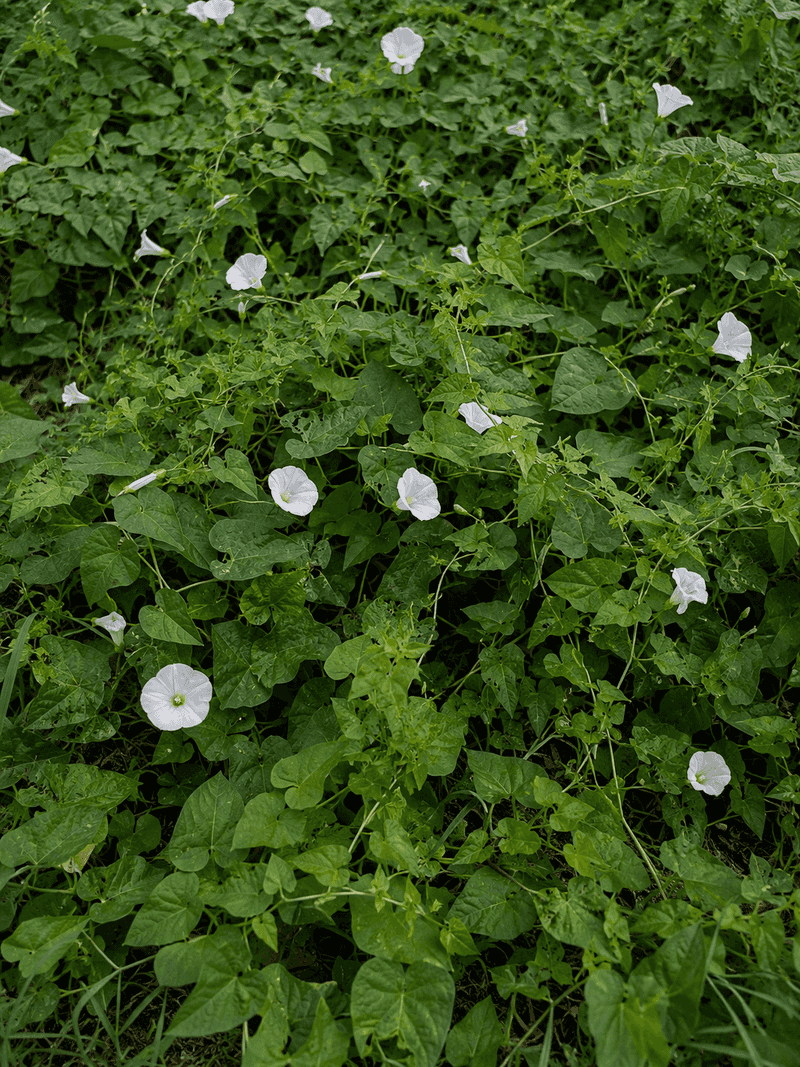
For a patch that has been growing undisturbed for several seasons, weekly pulling alone may feel like bailing a boat with a teaspoon.
An optional systemic herbicide, applied correctly and at the right time, can become one layer of a larger integrated plan for deeply established infestations where mechanical removal alone is not making measurable progress.
Timing matters more than most homeowners expect.
Late summer through early fall is generally more effective for treating perennial weeds because the plant is moving carbohydrates down toward its underground storage organs as the growing season winds down.
A systemic product applied during this window travels with those carbohydrates and reaches parts of the root system that a summer spray might miss.
Penn State Extension’s perennial weed timing guidance gives a central Pennsylvania reference window of approximately September 1 through October 15, or before a hard frost, but that window shifts for colder northern counties, higher elevations in the Poconos or Laurel Highlands, and warmer pockets in the Delaware Valley.
The foliage must still be green and actively growing when you apply.
A vine that has already gone dormant will not move the product where it needs to go.
Penn State Extension recommends systemic herbicides for bindweed in fall, but only a product that is properly labeled for the specific weed and the specific site.
Do not copy agricultural application rates from an extension chart onto a consumer product.
Concentration, allowed uses, and application method all vary by label.
Read the full label before opening the container, not after.
In a planting bed with desirable plants nearby, targeted application is far safer than broadcast spraying.
Shield valued ornamentals, avoid applying on windy days, and do not let the product contact foliage you want to keep.
A nonselective systemic herbicide does not distinguish between bindweed and the serviceberry you planted last spring.
Label safety instructions for systemic herbicide products typically require that people and pets stay out of treated areas until the spray has fully dried, though individual products can differ.
After treatment, plan to monitor and repeat control if new shoots emerge, because one application is a meaningful step, not a guaranteed finish.
Mulch and Covering Buy Time
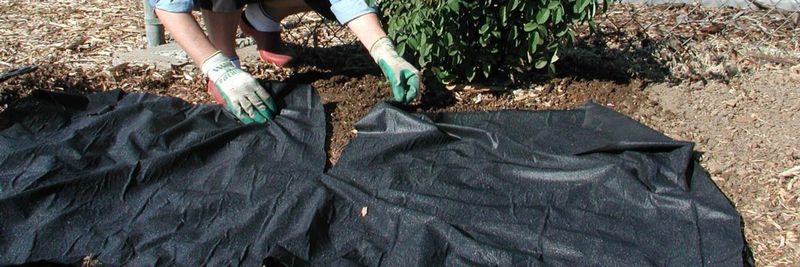
After a removal session, many Pennsylvania gardeners reach for a bag of mulch or a roll of landscape fabric, hoping to smother what remains.
Both can contribute to the effort, but neither one is a finish line, and knowing the difference between suppression and eradication saves a lot of disappointment come June.
Ordinary wood chip or shredded bark mulch reduces the light reaching the soil surface and makes new bindweed shoots easier to spot against a dark background.
That is genuinely useful.
But established bindweed may have enough stored energy in its rhizomes to push through a standard 2 to 3 inch mulch layer.
Mulch works best as one layer added after removal, not as the treatment that kills what remains underground.
Landscape fabric and cardboard can suppress bindweed more aggressively when they fully exclude light, but reliable long-term suppression requires intact, sustained coverage with minimal gaps.
Ask Extension’s bindweed guidance and UC IPM’s weed management pest notes both report that complete light exclusion may take roughly 3 to 5 years to deplete an established root system.
Seams, edges, planting holes, and gaps in the fabric give the vine an escape route.
Incomplete covering may still reduce growth temporarily and make the patch easier to monitor, but it cannot be counted on to eliminate the root system on its own.
And casual tilling of an infested area, which feels productive, can actually fragment and move viable root pieces to new spots in the bed.
Covering and mulching work best as support layers after mechanical removal, not as shortcuts that replace the weekly depletion routine.
Match the Control Plan to the Patch
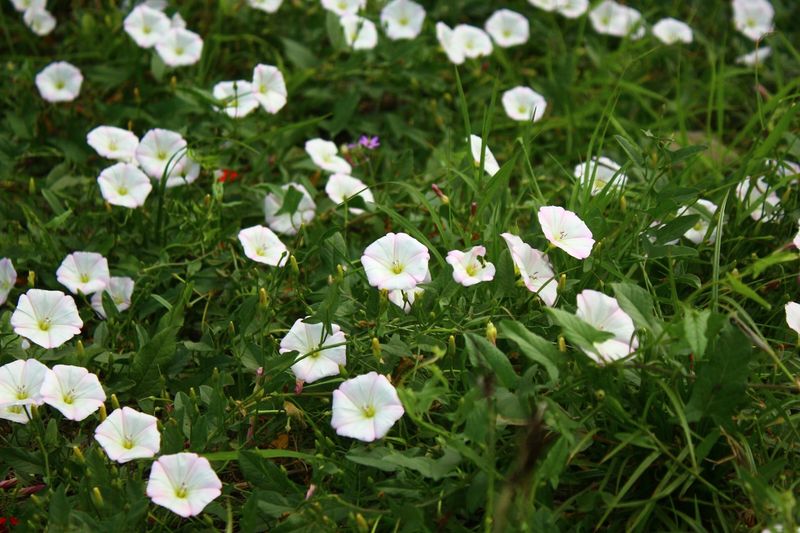
Small patches and large entrenched ones call for different levels of effort, and matching the plan to the actual size of the problem keeps the work sustainable.
Throwing full integrated control at three shoots along a fence is overkill.
Expecting weekly pulling alone to clear a patch that has been spreading unchecked for five years sets you up for a long, discouraging season.
For a small patch, combine careful removal of as much accessible root and rhizome as you can reach after a rain, cutting or pulling any new growth before flowers mature, at-least-weekly checks through the growing season, safe disposal of plant material in household trash rather than compost, and a layer of mulch to reduce light and make new shoots visible.
That combination is realistic and manageable for most Pennsylvania homeowners with a limited infestation.
For a larger or more established patch, integrated control means pairing repeated mechanical removal with a labeled late-season systemic treatment during the fall window, then monitoring through the following spring for regrowth.
Penn State Extension’s guidance on perennial weed timing supports that fall treatment approach, but the follow-up monitoring is not optional.
Assuming one treatment finished the job is how a manageable patch becomes a multi-year project.
On the legal side, the Pennsylvania Department of Agriculture lists field bindweed among regulated plants, and the Pennsylvania Code includes it on the prohibited noxious weed seed list.
That does not automatically mean every homeowner is legally required to eradicate every garden occurrence, but it does signal that the state takes this plant seriously.
The realistic measure of success is not a permanently bare patch.
It is fewer shoots each week, no seed production, and an underground reserve that is genuinely smaller than it was last season.