
Stop Replanting Crispy Knock Out Roses And Grow These 8 Florida Shrubs That Bloom Far Longer
Follow us on Google
You step onto the patio after breakfast and the air already feels heavy, that familiar Florida humidity settling in for the day.
You glance at your Knock Out roses and there it is again, petals edged in brown, leaves looking tired and crispy right when you want them looking their best.
Many Florida homeowners fight this same battle every year, replanting roses that keep losing to black spot, chili thrips, and our long humid summers.
The good news is you do not have to keep struggling.
Florida offers plenty of tough shrubs that bloom far longer without the constant fuss, and here are eight of them.
1. Firebush Brings Constant Crimson And Orange Flashes
You dream of hummingbirds flitting through your yard, but it can feel like they fly right past your stressed-out plants.
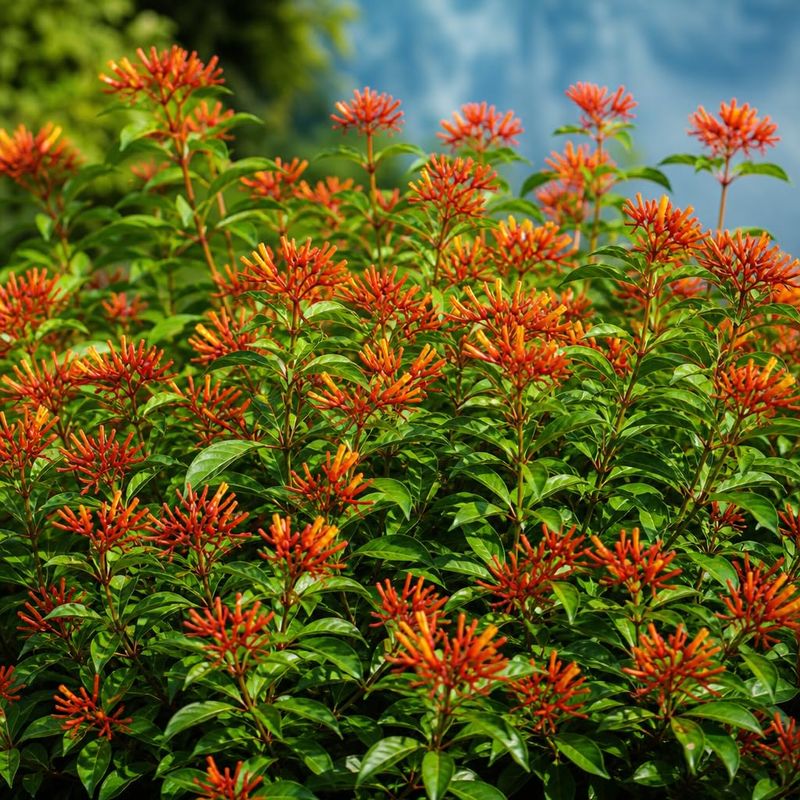
Here is where Firebush, Hamelia patens, steps in as a quiet hero.
Its abundance is the surprise.
This semi-woody shrub throws out an explosion of red-orange tubular flowers from late spring straight through the first frost.
In warmer parts of South Florida and the Keys, you may see blooms nearly year-round, making it a genuine long-distance bloomer.
The real trick is its adaptability.
Firebush loves our intense sun but tolerates a little partial shade, though it blooms less there.
It draws pollinators like magnets, with hummingbirds, zebra longwings, and gulf fritillaries flocking to the nectar.
Plant it in well-drained soil and give it steady water for the first few months.
Once settled, it is notably drought-tolerant and handles moderate salt spray, a real bonus for Atlantic and Gulf Coast gardeners.
Expect it to reach 5 to 15 feet, so it works as a hedge or a standout specimen.
For a tidier shape, prune it back in late winter or early spring to spark fresh growth.
Do not prune too hard or too often, or you can reduce its bloom power.
So you end up with a yard that buzzes with life and color, effortlessly.
2. Thryallis Creates Golden Waterfalls All Season
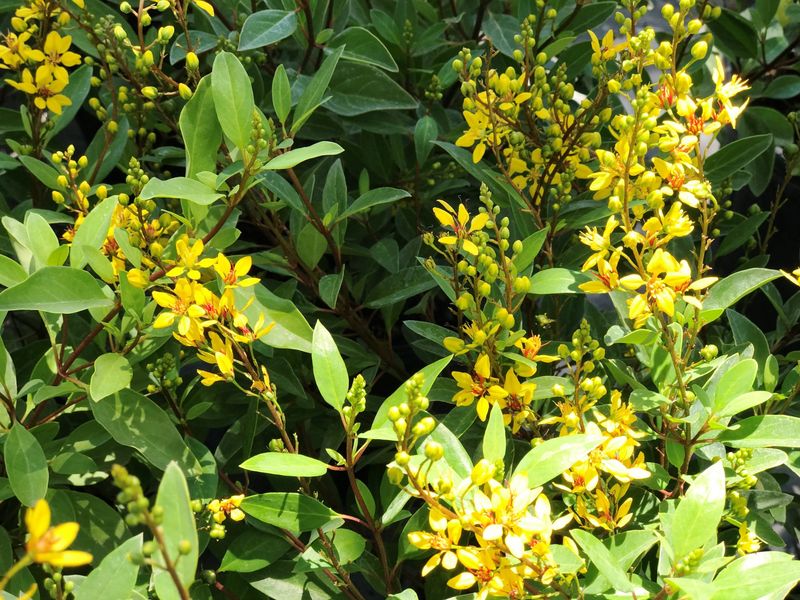
Picture stepping into your Central Florida backyard and finding a cascade of bright yellow flowers swaying in the breeze.
Many gardeners are surprised how much steady cheer Thryallis, Galphimia gracilis, delivers.
Folks call it rain-of-gold for good reason.
It looks delicate, but it is genuinely one tough cookie, blooming with abandon when other plants are hiding from the heat.
The plain-language reason is simple.
Thryallis loves the heat and humidity that make other plants wilt.
It flowers heavily through summer and fall, and in the warmest stretches of South Florida those golden blooms can stay on nearly all twelve months.
Give it full sun, at least six to eight hours daily, for the best show.
It prefers well-drained soil but shrugs off sandy conditions.
Water about an inch or two each week while it establishes, then it becomes moderately drought-tolerant.
Thryallis grows about 5 to 9 feet tall and 4 to 6 feet wide in an airy mound.
A light trim in spring keeps it in shape.
So you get a splash of continuous sunshine, even on the hottest days.
3. Dwarf Powderpuff Explodes With Year-Round Puffs Of Color
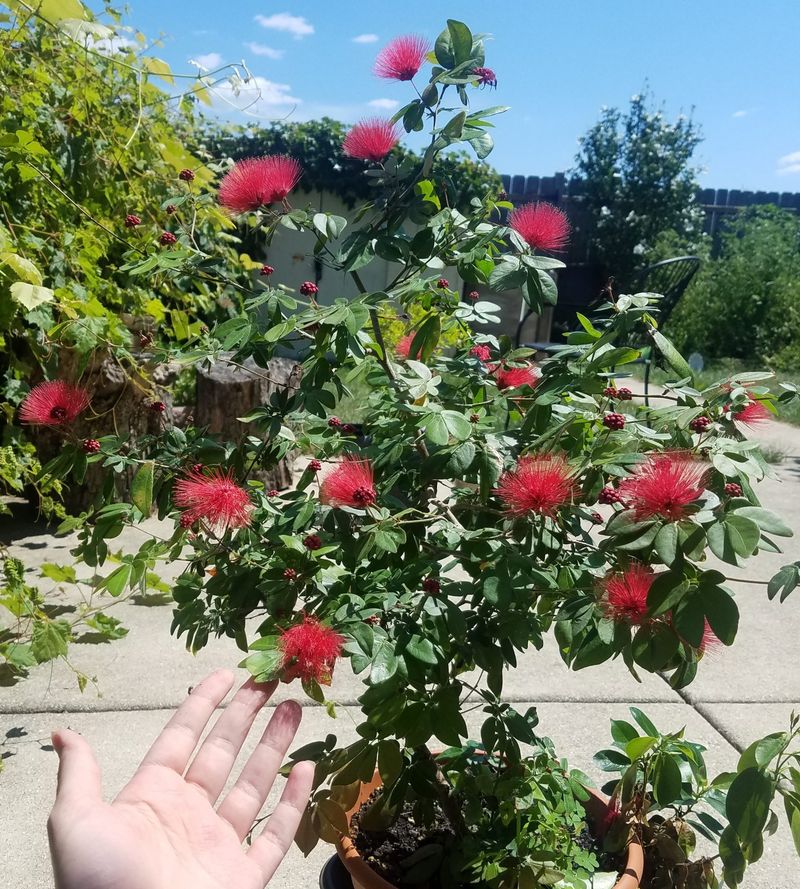
You have seen bold flowers before, but have you ever seen a shrub covered in what looks like exploding fireworks?
That is the delight of the Dwarf Powderpuff, Calliandra emarginata.
Its wispy, delicate look hides a genuinely robust nature.
This is not a one-season show, it brings color to your South Florida landscape almost continuously.
The Dwarf Powderpuff ignores the usual bloom calendar, producing pink-to-red puffball flowers on and off all year, with its biggest display in the warm months.
Those puffs are a hummingbird and butterfly magnet, adding real motion to the garden.
Plant it in full sun to partial shade in well-drained soil, though it stays adaptable.
Once established it turns wonderfully drought-tolerant, which means less worry about the water bill during dry spells.
It keeps a compact size, usually 3 to 7 feet tall and wide, perfect for smaller yards or as an accent.
It is evergreen in milder areas, but do not fret if a rare cold snap in North or Central Florida causes dieback.
It typically re-sprouts from the roots when warmth returns.
So you end up with a garden where something is always blooming right outside your window.
4. Blanket Flower Spreads A Sunset Over Your Yard
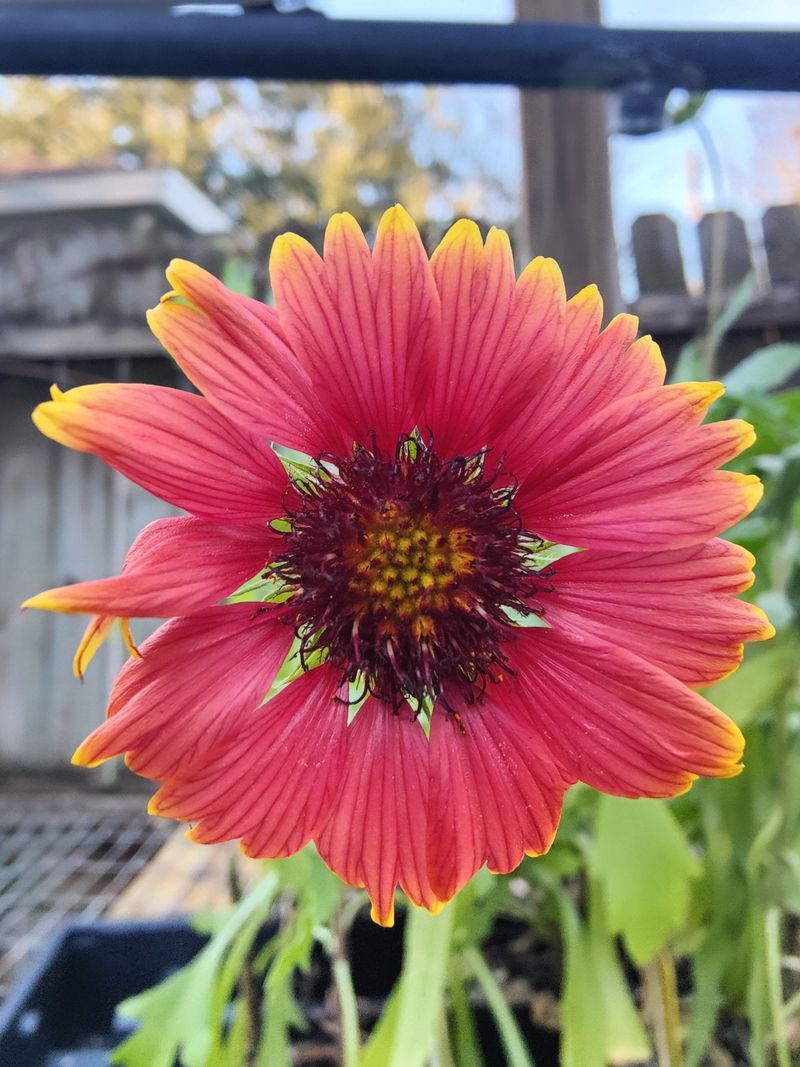
You want that sun-drenched, authentically Floridian look, but some flowers just quit when real heat arrives.
Here is a surprising fact, the Blanket Flower, Gaillardia pulchella, often thought of as a wildflower, truly lives up to its name by spreading a colorful blanket of blooms.
The tension is how such a cheerful plant can be so tough, thriving where others throw in the trowel.
Its secret is extraordinary resilience paired with a long bloom time.
Bright red, orange, and yellow daisy-like flowers keep going from spring through fall, and in warmer parts of Central and South Florida you can enjoy them year-round.
Blanket Flower is heat, wind, drought, and salt-tolerant, making it a strong pick for coastal areas and sandy soils that challenge so many plants.
It needs full sun, at least six hours of direct light for the best display.
Growing 1 to 3 feet tall and spreading up to 3 feet wide, it forms a low mound.
Snip off spent flowers for even more blooms, though it is not required since it readily reseeds itself.
So next season brings fresh plants with no effort from you.
You get a continuously cheerful landscape that shrugs off Florida’s roughest conditions.
5. Leavenworth’s Tickseed Paints Your Garden Yellow For Months
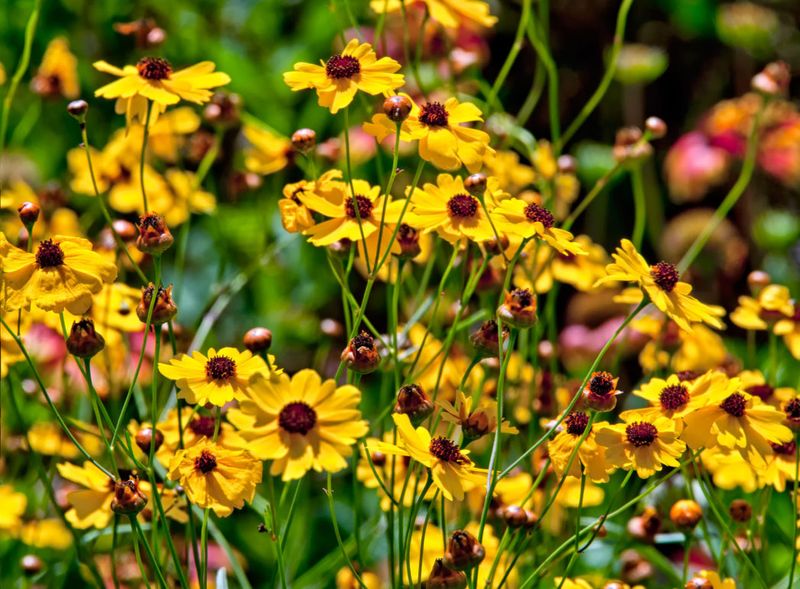
A state wildflower must be too wild for tidy garden beds, right?
That is a common myth about Leavenworth’s Tickseed, Coreopsis leavenworthii.
Here is the twist.
Florida’s actual state wildflower quietly out-blooms many flashier alternatives, offering a sunny presence that feels right at home in any yard.
Its long season and easygoing attitude do the heavy lifting.
Bright yellow daisy-like flowers with dark brown centers bloom from late spring right through late fall.
In South Florida, it can even surprise you with blooms year-round, giving you color when other flowers fade.
Butterflies love it, and pollinators show up in numbers.
It prefers full sun and takes to various well-drained soils, thriving in the moist pinelands and sandy ground common across Florida.
Growing 1 to 3 feet tall, it shines in mass plantings or along borders.
It can behave as an annual or short-lived perennial, but it is an enthusiastic self-seeder, so it returns season after season.
Just skip heavy mulching if you want those seeds to reach the soil.
So you get a low-maintenance, brightly colored garden that genuinely captures Florida’s natural spirit.
6. Simpson’s Stopper Offers Subtle Beauty Throughout The Year
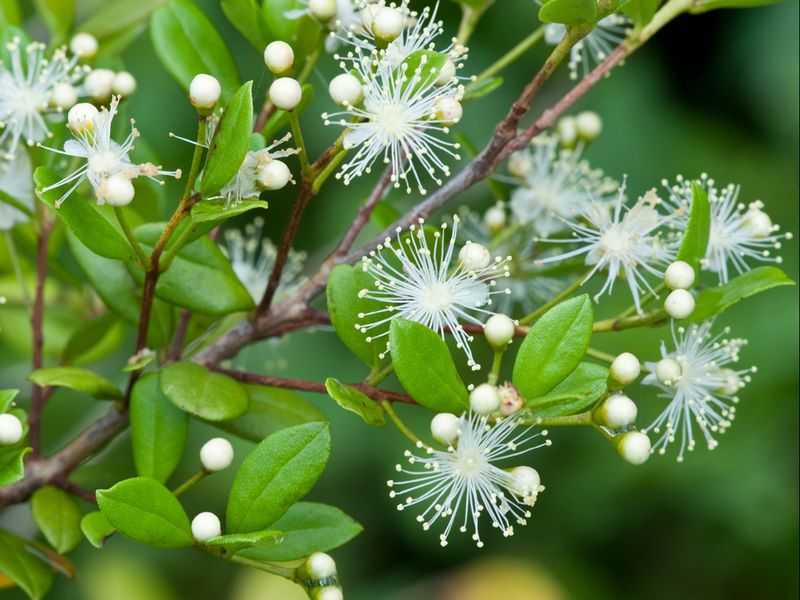
You appreciate a plant that gives more than a fleeting show, and that is where Simpson’s Stopper, Myrcianthes fragrans, truly shines.
Its flowers are small, but their year-round presence plus other features create a steady appeal that bolder blooms often miss.
This Florida native is a real workhorse.
It delivers delicate, fragrant white flowers on and off all year, with the heaviest bloom in spring.
The beauty does not stop at the flowers.
Small showy orange to red berries follow, and birds adore them.
New leaves emerge coppery-bronze or burgundy before maturing to glossy dark green, and the bark peels to reveal handsome reddish-brown tones, so there is interest in every season.
It handles full sun to partial shade and adapts to many well-drained soils, including sandy and alkaline ground.
It is cold-hardy down to about 25 degrees Fahrenheit, drought-tolerant once established, and salt-tolerant, perfect for coastal Southwest Florida.
Prune it as a dense shrub around 5 to 8 feet tall, or let it grow into a small tree up to 20 feet.
So you get continuous, quiet beauty and a welcoming haven for local wildlife.
7. Muhly Grass Brings Autumn Clouds Of Pink
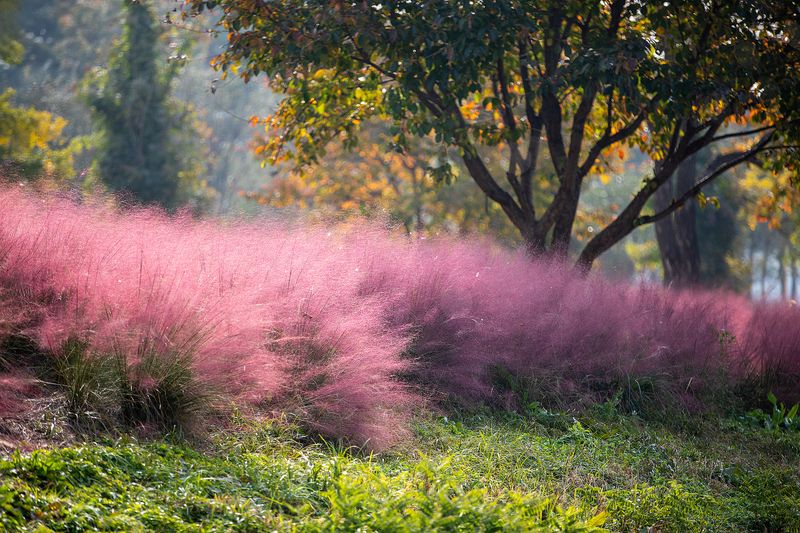
You are hunting for something that truly turns heads, especially when other plants start winding down.
That is the magic of Muhly Grass, Muhlenbergia capillaris.
An ordinary green grass most of the year, it transforms into a living pink cloud.
The change is almost hard to believe until you see it.
The showstopper is its fall display.
In late summer and autumn, it erupts with airy, rosy-purple plumes that look cloud-like, bringing color when many flowers have faded.
The show lasts about four to eight weeks.
It genuinely thrives in full sun, needing at least six hours daily for the most plumes.
This Florida native is highly drought-tolerant once established and handles soils from sandy to rocky, and it tolerates salt spray, a strong fit for Panhandle and Gulf Coast landscapes.
Space individual clumps 2 to 3 feet apart to give them room.
Foliage reaches about 18 inches, with plumes soaring 3 to 4 feet tall.
Cut back the old foliage in late winter before new growth appears to keep it neat.
So you get a stunning, effortless display that makes neighbors genuinely stop and stare.
8. American Beautyberry Offers Jewel-Toned Berries All Winter
You might be chasing flowers, but sometimes the longest-lasting color comes in a different form.
That is the delightful secret of the American Beautyberry, Callicarpa americana.
Its small spring flowers give almost no hint of the spectacular display to come.
This deciduous shrub is a genuine wildlife hero, feeding birds for months.
Tiny pinkish-white flowers bloom from late spring to mid-summer, but the real show starts in late summer.
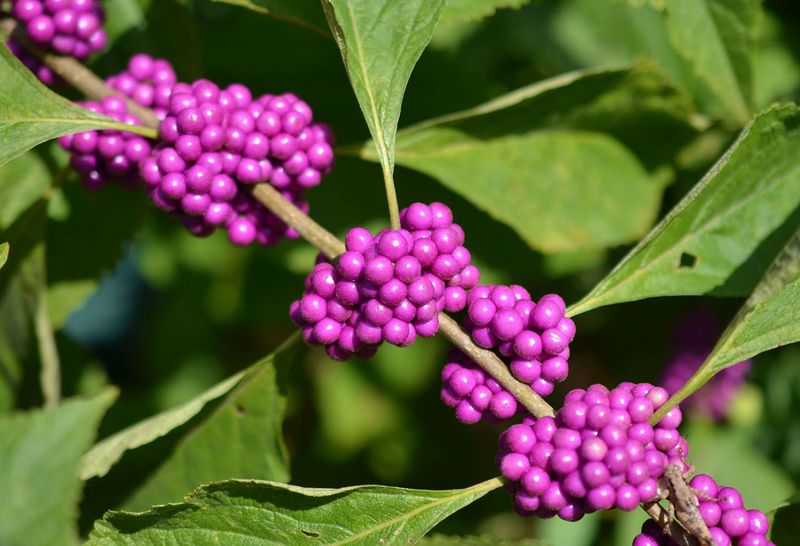
Branches fill with dense clusters of vibrant magenta-purple berries that tightly ring the stems.
The berries are more than pretty.
They persist well into winter, often after the leaves drop, providing food for over 40 species of songbirds and small mammals through the leaner months.
According to UF/IFAS Extension, native shrubs like this one give wildlife exactly what it needs.
It thrives in full sun to partial shade and turns drought-tolerant once established, handling both dry spells and some wet soil.
It grows 3 to 8 feet tall and 4 to 8 feet wide.
A hard pruning in late winter or early spring sparks new growth, which is where the berries form.
So your backyard feels alive even in a cool North Florida winter, and you know you are helping local wildlife.