
How Texas Homeowners Keep A Potted Lemon Tree Fruiting Through Triple-Digit Heat
Follow us on Google
You step outside before 8 a.m. and the concrete is already warm under your feet.
By noon, your potted lemon tree is sitting in air that could hit 105 degrees, and a few tiny green lemons are scattered on the patio floor.
Growing a lemon tree in a Texas summer is not impossible, but it takes more than just setting the pot in the sun and hoping for the best.
The good news is that what you do around the heat matters far more than the heat itself.
Heat Does Not Explain Every Fallen Lemon
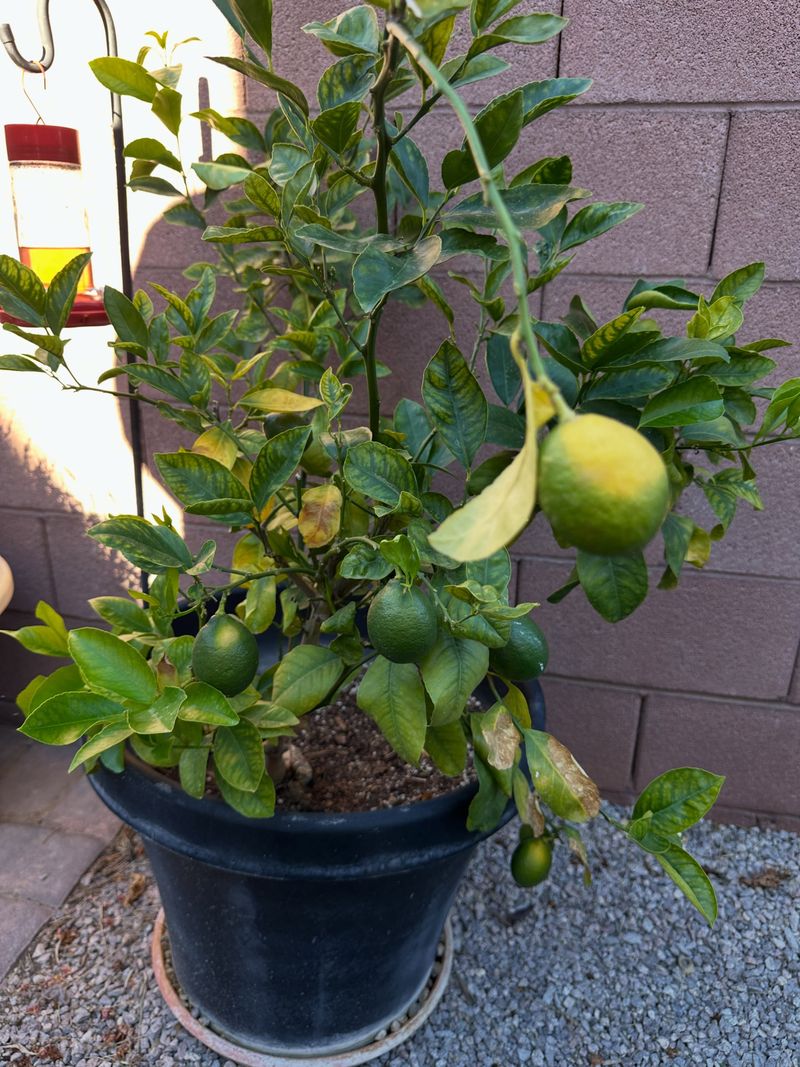
Those tiny lemons rolling across your patio after a heat wave can feel like a verdict.
Before you blame the triple-digit temperature, though, it helps to know that your tree may be doing something completely normal.
Citrus naturally sheds a large number of small fruits after the petals fall.
According to UC IPM’s guidance on citrus fruit drop, this self-thinning process is a built-in behavior, not a sign of failure.
A healthy lemon tree can drop dozens of pea-sized fruits and still carry a respectable harvest.
What actually pushes fruit drop beyond the normal range is a combination of stressors arriving at once.
High heat, dry conditions, wind, poor irrigation, inadequate nitrogen, sudden temperature swings, pest pressure, and reduced foliage can all pile on top of each other.
Texas summers deliver most of those stressors in the same week.
University of Arizona Cooperative Extension’s home citrus diagnostic guide points out that fruit loss often traces back to a combination of environmental factors rather than any single cause.
Heat gets the blame because it is the most obvious, but drought stress and wind frequently do as much damage.
The honest promise of this guide is a modest one.
Careful management during a Texas summer can reduce the added stress that pushes your tree past its normal self-thinning and into a heavier, preventable loss.
You cannot force every young lemon to stay on the branch, and no routine guarantees a full harvest.
But you can genuinely improve the odds, and that is worth a lot when the cookout is three weeks away.
Water the Root Zone, Not the Calendar
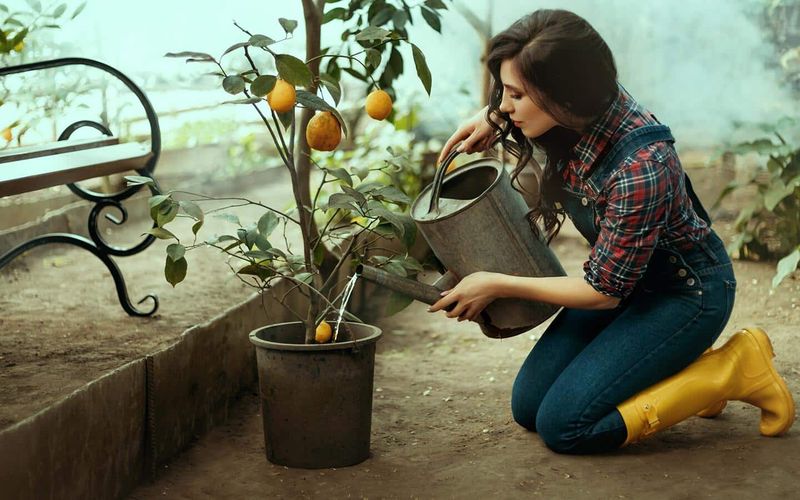
Container citrus has one big disadvantage over a tree planted in the ground: it runs out of water much faster.
A pot sitting on a hot concrete patio in Central Texas can dry out in less than 24 hours when temperatures are above 100 degrees and a south wind is blowing.
That does not mean you water every single day on a fixed schedule.
Pot size, potting mix, temperature, humidity, wind speed, sun exposure, and how well the container drains all change how quickly the medium dries.
Texas A&M AgriLife Extension’s irrigation management principles note that mature container plants in full sun may need daily watering under some conditions, while other situations call for less.
A rigid daily rule can lead to overwatering just as easily as neglect.
The practical routine is to check the upper inch of the potting medium each morning during a heat stretch.
Push a finger about 1 inch into the mix.
If that top layer is dry, water slowly and thoroughly until you see excess running freely from the drainage holes.
That tells you the whole root zone has been wetted, not just the surface.
Repeated shallow sips of water are less reliable than one thorough pass.
Shallow watering keeps the upper inch moist while leaving the lower root zone dry, which is exactly where the tree needs moisture most.
Texas A&M AgriLife Extension’s container citrus guidance identifies overwatering as the most common cause of poor container citrus performance, so the goal is consistent moisture, not permanent saturation.
Do not leave the pot standing in a saucer full of water.
That keeps roots wet around the clock and invites root rot.
Drain the saucer after each watering session and let the medium tell you when it is time to water again.
The Pot and Its Placement Set the Stress Level
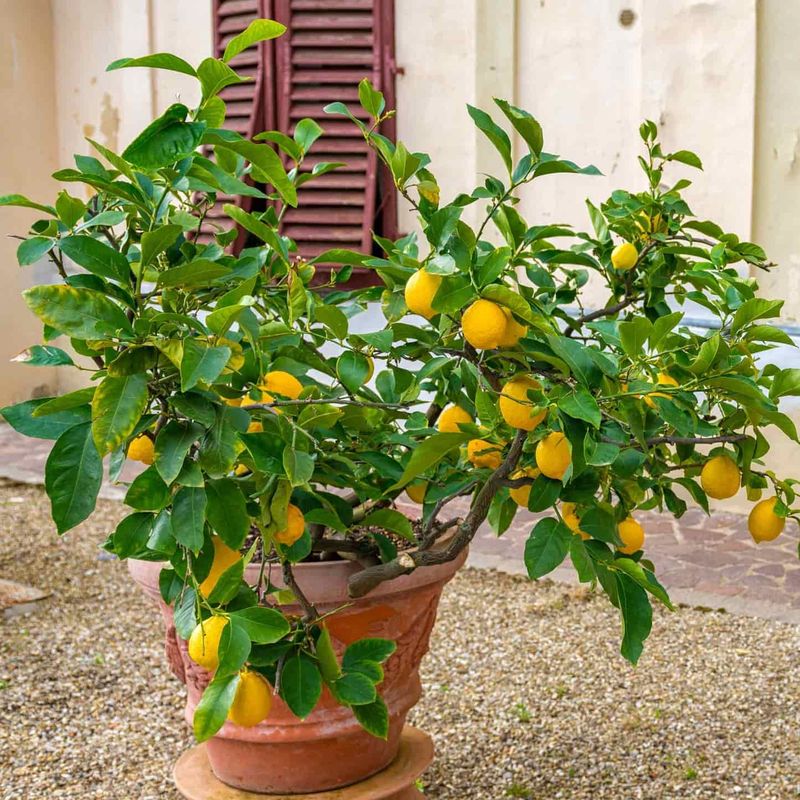
Before you adjust your watering schedule or your fertilizer, look at where the pot is sitting and what it is sitting on.
Those two details shape nearly every other stress your tree will face during a Texas summer.
Container roots are more exposed to temperature extremes than roots in the ground.
A black nursery pot sitting directly on concrete in San Antonio can have a root-zone temperature well above the air temperature on a 103-degree afternoon.
That kind of heat at the root level stresses the tree even when the foliage looks fine.
Moving the pot onto a wood deck, a paver surface, or even a doubled-up piece of scrap lumber can reduce that exposure without sacrificing light.
On the subject of pot size, UC Agriculture and Natural Resources’ guide to growing citrus in containers describes 15 gallons as a suitable size for many compact container citrus trees, including Meyer lemon (Citrus x meyeri).
That is a useful reference, not a statewide Texas rule.
What matters is that the container is large enough to support growth while still light enough to move when a freeze threatens.
The container must also have adequate drainage holes.
Texas A&M AgriLife Extension’s citrus fact sheet recommends a well-draining potting medium and leaving about 1 to 4 inches between the soil surface and the rim of the pot to allow thorough watering without overflow.
Citrus prefers strong light, and afternoon shade is not a universal Texas requirement.
But if your tree is showing wilted leaves, scorched leaf edges, or drying out unusually fast, moving it away from a south-facing wall or a stretch of reflected concrete heat is a reasonable stress-reduction step.
West Texas and Panhandle trees may face intense sun and low humidity simultaneously, while Gulf Coast trees deal with humidity and storm exposure.
Placement decisions should match your actual conditions, not a one-size answer.
Steady Feeding Keeps Leaves Working
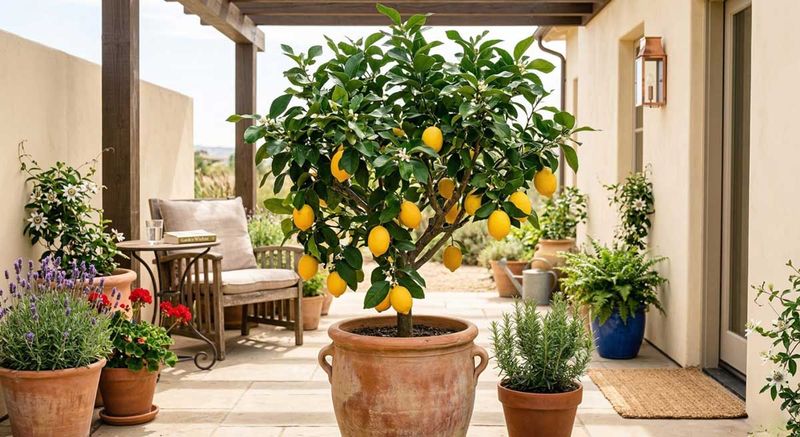
Fertilizer is not a rescue treatment for a tree that is already dropping fruit in August heat.
Think of it more like a slow, steady paycheck that keeps the whole operation running.
Nitrogen is the nutrient most commonly needed by Texas citrus, and container trees lose nutrients faster than in-ground trees because repeated watering flushes them out through the drainage holes.
A steady, moderate feeding schedule according to the product label keeps that supply from running low without creating a different problem.
That different problem is salt buildup.
Excess fertilizer leaves mineral salts behind in the potting medium, and those salts can burn leaf edges, cause twig dieback, and push the tree toward weak, leggy growth.
If you see a white crust forming on the soil surface or around the drainage holes, that is a signal to flush the container.
Run clean water slowly through the pot until it drains freely from the bottom, and let it drain completely before the next watering cycle.
Texas A&M AgriLife Extension’s citrus guidance flags excessive fertilizer as a source of leaf burn and poor growth in container trees.
Avoid heavy fertilizer applications during triple-digit weather.
The tree is already under stress, and a large nutrient push at the wrong moment adds salt pressure rather than helping fruit set.
Follow the label, stick to the recommended rate, and let the tree’s active growth guide the timing.
Nutrition connects directly to foliage, and foliage connects directly to fruit.
UC IPM’s citrus fruit drop resource explains that leaves produce the carbohydrates that support developing fruit.
Strip leaves or prune heavily while lemons are forming and you are removing the factory that feeds them.
Limit pruning to dead, damaged, diseased, or size-limiting wood and leave healthy foliage alone, even if a few leaves look a little tired from the heat.
Spider Mites Exploit a Thirsty Tree
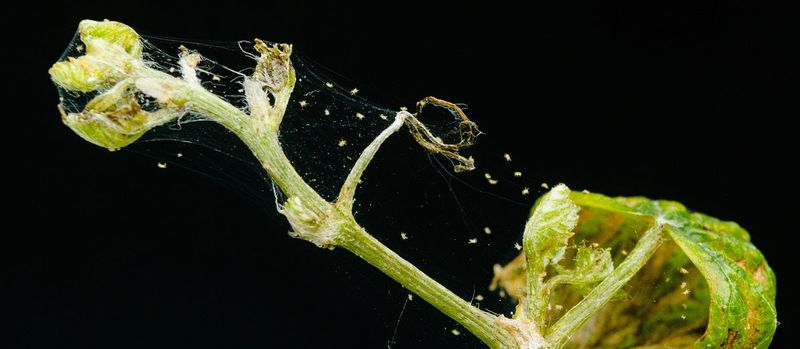
Spider mites have a trick: they wait for the exact conditions that already stress your tree and then move in.
Hot, dry weather above 95 degrees combined with a water-stressed plant is practically a welcome mat.
By the time many Hill Country or North Texas gardeners notice something is wrong, the mites have been feeding for a while.
The first signs are easy to miss because they look like general heat stress.
Foliage turns dull and slightly grayish.
Individual leaves show tiny pale flecks, which gardeners call stippling, from the mites puncturing leaf cells to feed.
Turn a leaf over and look at the underside with good light.
Fine webbing, especially near the midrib, and tiny moving specks smaller than a printed period confirm the problem.
The pest-to-fruit connection matters here.
UC IPM’s citrus red mite guidance notes that mite damage reduces the foliage available to support the tree, which adds another layer of stress on top of heat and drought.
Fewer healthy leaves means less energy for holding young fruit.
Texas A&M AgriLife Extension’s spider mite fact sheet recommends monitoring before treating and using the least disruptive labeled control if intervention becomes necessary.
On a small container tree, a strong, direct spray of water on the leaf undersides can dislodge a light mite population without any chemical at all.
Do that in the cooler morning hours, not at midday when wet foliage and intense sun can work against you.
Broad-spectrum insecticides are a poor first response because they kill the predatory mites and beneficial insects that naturally keep populations in check.
Knocking out those allies can actually make the next mite outbreak worse.
And never apply horticultural oil during the hottest part of the day or when temperatures are expected to stay above the product’s label limit, because oil applied in extreme heat can injure foliage further.
Flowers Need Calm More Than Fussing
When your lemon tree puts out a flush of white blossoms, the instinct is to hover.
Resist it.
The tree knows what it is doing, and most of your interventions will create more stress than they prevent.
Meyer lemon is self-pollinating.
Penn State Extension’s guide to growing lemons confirms that a single Meyer lemon tree can set fruit on its own without a second tree nearby.
You do not need a companion plant, and you do not need to shake branches or strip competing growth to redirect the tree’s energy toward fruit.
Outdoors in a Texas yard, bees and other pollinators handle flower visits without any help from you.
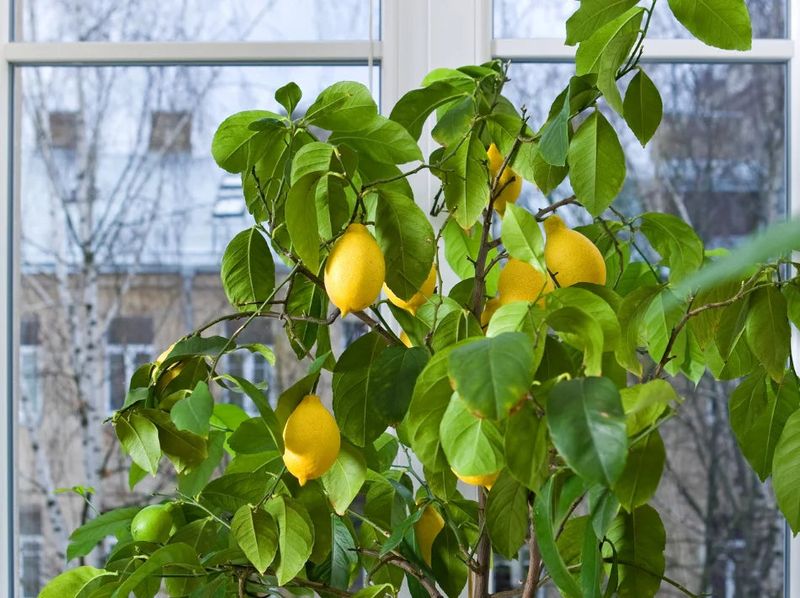
The situation changes if the tree is spending time indoors, where insects are absent.
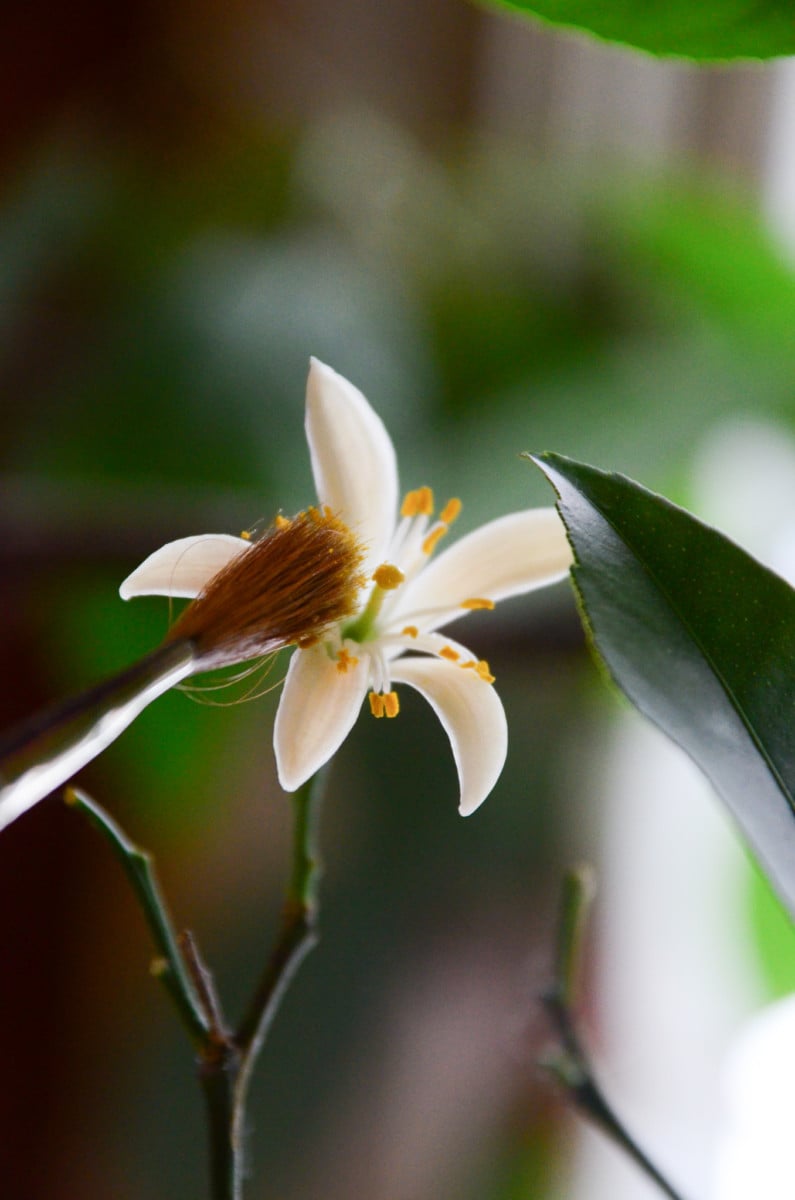
In that case, gently brushing from flower to flower with a small, soft paintbrush can help move pollen.
A few passes through open blooms on a calm morning is enough.
What actually harms fruit set around bloom time is environmental disruption.
University of Arizona Cooperative Extension’s citrus diagnostic guide connects post-bloom fruit drop to wind, abrupt light changes, temperature swings, and inadequate irrigation rather than pollination failure in most home situations.
Moving the pot from full shade to full sun during a blooming period, or letting the medium dry out while flowers are open, adds more risk than leaving the tree alone.
Some fruit drop after bloom is genuinely normal, as noted earlier.
UC IPM’s fruit drop guidance makes clear that a tree shedding small young fruit is not automatically a sign of pollination trouble.
Keep conditions stable, water when the medium calls for it, and let the tree decide how many lemons it can carry.
That calm consistency does more good than any amount of well-meaning intervention.
Texas Weather Changes the Plan
Texas is not one climate, and anyone who has gardened in both El Paso and Beaumont knows that a single care calendar cannot cover both places.
Your potted lemon tree needs a plan that bends with the region, not a rigid checklist.
A tree in West Texas or the Panhandle may sit in intense sun, single-digit humidity, and persistent wind that pulls moisture from the container faster than the roots can absorb it.
In those conditions, checking the soil surface twice a day during a heat stretch is not excessive.
Texas A&M AgriLife Extension’s irrigation management resource ties watering frequency to local conditions including wind and humidity, not to a fixed regional schedule.
A Gulf Coast tree, by contrast, may sit in higher humidity with the added risk of tropical storms, downpours that saturate the medium in an hour, and salt-laden wind during hurricane season from June through November.
After a heavy rain, check the medium before watering automatically.
A sudden downpour can fully saturate a container, and adding more water on top of that creates the same root-zone problems as overwatering on a dry day.
Drain the saucer, check the drainage holes, and wait until the upper inch dries before resuming your normal routine.
High winds deserve their own moment in the plan.
Wind speeds the tree’s water loss and can physically stress branches that are holding young fruit.
Moving the pot to a wind-sheltered spot during a strong front, even temporarily, reduces that combined load.
Freeze preparation is non-negotiable for a container tree.
Texas A&M AgriLife Extension’s citrus fact sheet notes that container roots are more exposed to cold than in-ground roots and may need protection during most freezing temperatures.
A thin frost cloth over the canopy is not enough on its own when temperatures drop into the mid-20s.
Moving the pot into a garage, a covered porch, or another protected space is safer and more reliable than any outdoor cover alone.
Good Care Improves the Odds, Not the Promise
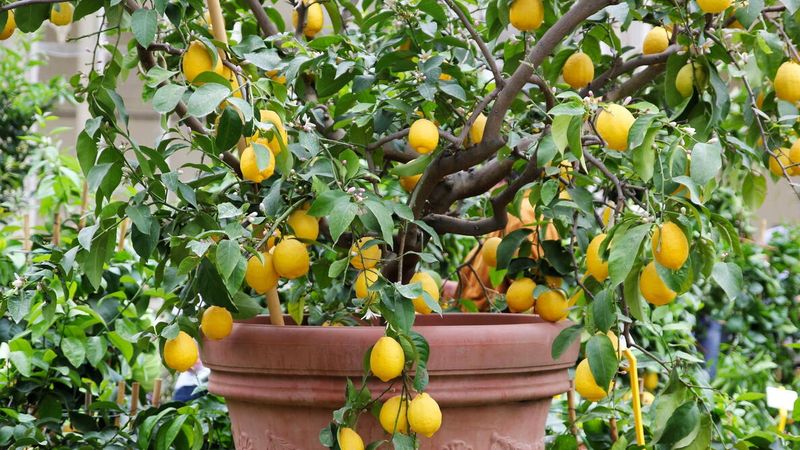
Pull the whole plan together and it comes down to a short list of daily and seasonal habits.
Check the upper inch of the potting medium and water slowly through the root zone when it is dry.
Confirm that drainage holes are clear and that the pot is not sitting in standing water.
Keep the tree in strong light and reduce reflected heat exposure when the container is drying unusually fast or the foliage shows signs of scorch or wilt.
Feed according to the product label, favor steady moderate nutrition over heavy applications during hot weather, and flush the container if a white salt crust appears.
Leave healthy foliage alone while fruit is developing and limit pruning to dead, damaged, diseased, or size-limiting wood.
Inspect leaf undersides for spider mite stippling, dull color, or fine webbing, and respond with the least disruptive labeled treatment if monitoring confirms a problem.
UC IPM’s citrus fruit drop guidance reminds us that losing some small lemons after bloom is a normal part of how citrus manages its crop load.
A tree that drops 20 baby fruits and holds 8 through to harvest has not failed.
That is a tree doing its job under difficult conditions.
Texas A&M AgriLife Extension’s citrus guidance is worth bookmarking as a year-round reference, because what the tree needs shifts with the season and the region.
Observation beats rigid schedules every time, and Texas is genuinely not one climate.
If you are adding a tree or moving one, buy from a reputable, compliant Texas source and check current rules before transporting citrus across county lines.
The Texas Department of Agriculture’s citrus greening quarantine information and the TDA’s broader citrus information page list current restrictions for Gulf Coast, Coastal Bend, Lower Rio Grande Valley, and Webb County areas.
A tree you protect all summer deserves a clean start.