
Roly-Polies Can Absorb Certain Metals, But They Are Not Cleaning Your Soil
Follow us on Google
Flip over a damp flowerpot and you will almost always find a few roly-polies curled up underneath, minding their own business.
A claim spreading online says those little critters are actually pulling heavy metals out of your garden soil, which sounds like a free cleanup crew you never had to hire.
The biology behind that idea is real and genuinely surprising, but the practical conclusion is not quite right.
Pillbugs can store certain metals in their bodies, and that is worth understanding before you decide whether to chase them off or leave them alone.
Roly-Polies Are Metal Accumulators, Not Cleanup Crews
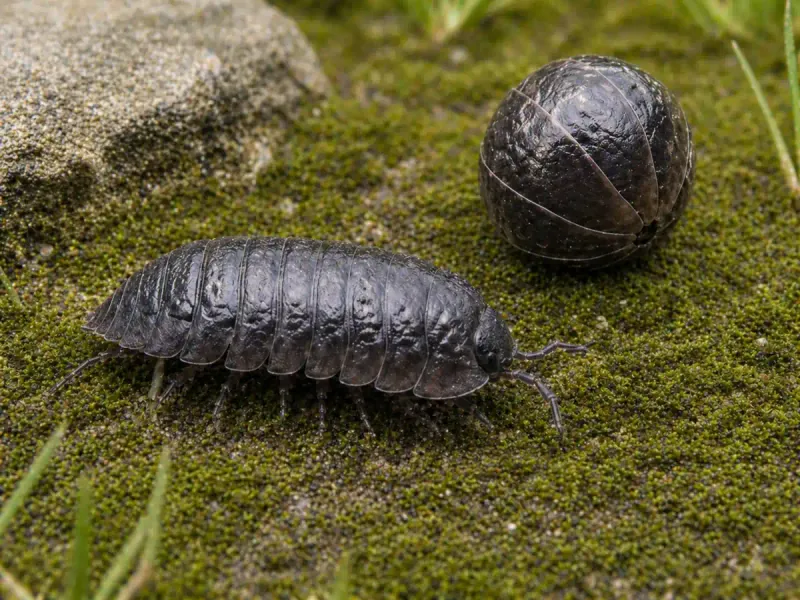
Spend a few minutes lifting mulch in almost any US yard and you will find them: small, gray, armored animals that curl into a tight ball the moment they feel threatened.
Pillbugs and sowbugs are not insects.
They are terrestrial crustaceans, more closely related to crabs and shrimp than to beetles or ants, and they carry seven pairs of legs to prove it.
They live under leaf litter, mulch, boards, stones, and flowerpots because those spots stay damp, which is the one condition they cannot survive without.
What makes them interesting to soil scientists is that their tissues can hold metals at concentrations well above what surrounds them.
Researchers focus especially on the hepatopancreas, a digestive organ that handles nutrient absorption and can sequester contaminants picked up through food and surroundings.
Studies on isopod metal accumulation show that tissue levels of cadmium, copper, zinc, lead, and mercury can reflect the exposure history of the animal’s diet and habitat, which is why ecologists sometimes use them as bioindicators.
That biological ability is real and worth knowing about.
But accumulation is not the same as removal.
A metal stored inside a living pillbug is still on your property, still in the biological material moving through your yard’s food web.
The headline idea, that roly-polies are actively cleaning your soil, skips a step that matters quite a lot, and the research on isopod bioaccumulation does not support the cleanup conclusion.
A Metal Inside a Pillbug Has Not Disappeared
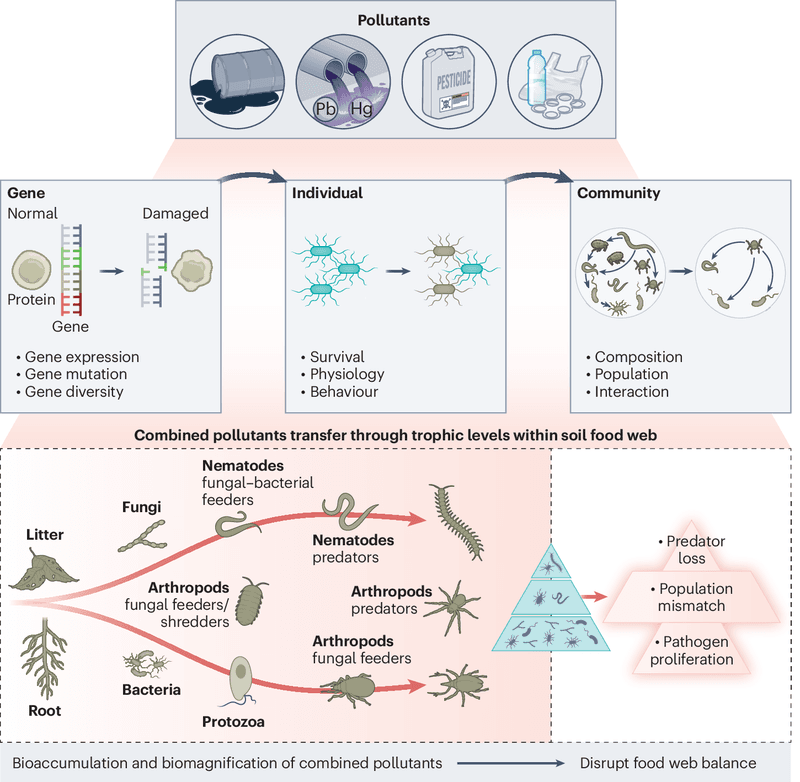
Bioaccumulation, in plain terms, means a living organism ends up holding more of a substance than its food or surroundings contain.
Isopods can do that with certain metals, and the concentration inside their tissues can be striking.
But holding something is not the same as destroying it, and metals are not broken down by biological processes the way some organic compounds can be.
A metal stored in an isopod’s hepatopancreas stays in biological material.
When that animal dies, the metal returns to the soil as the body decomposes.
When a bird, toad, or ground beetle eats the pillbug, the metal moves up the food chain.
When the isopod molts its outer shell, some metal may be shed with it.
The review literature on isopod ecology notes that these animals are mobile and may feed in one location and appear in another, so their tissue content does not pin the contamination to one spot.
Managed remediation is a different thing entirely.
EPA guidance on metals in soils explains that cleanup requires site-specific attention to contaminant concentration, chemical form, soil pH, organic matter, exposure pathways, physical removal or containment, and long-term monitoring.
For metal accumulation in a living organism to count as removal, the contaminated animal or its waste would need to be collected and handled safely before the metal cycled back into the environment.
No such protocol exists for backyard pillbug populations, and EPA’s foundational work on metal persistence makes clear that metals do not disappear from a site just because biology has temporarily touched them.
The Laboratory Finding Needs Its Missing Context
A 2025 study is the most likely source of the cleanup claim circulating online, and the finding it reported is genuinely striking on its surface.
The experiment used Porcellio laevis, a species of terrestrial isopod, not the common roly-poly most US gardeners recognize from under their flowerpots.
That distinction matters before any number gets quoted.
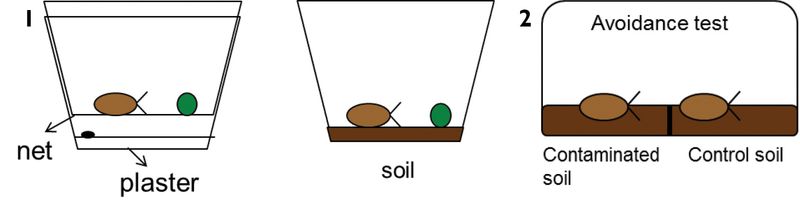
The 2025 Porcellio laevis cadmium study found apparent removal of 86.9 percent of cadmium from test soil at a concentration of 400 milligrams per kilogram after 60 days.
The experiment used artificial cadmium chloride contamination, controlled laboratory conditions, and 40 isopods per treatment group.
Those are the conditions that produced the headline number, and each of those details limits how far the result travels into a real backyard.
The study also reported 92.5 percent mortality among the isopods at the highest treatment levels.
Nearly all of the animals died.
That is not a minor side note.
It means the organisms were under severe biological stress at the concentrations being tested, and it raises an immediate practical problem: a yard full of metal-laden, dying isopods is a contamination-redistribution event, not a remediation outcome.
Dead and decomposing animals release what they stored.
The study does not demonstrate that common US garden isopods can safely or reliably remediate a real contaminated yard.
It does not cover metals other than cadmium.
Broader isopod research confirms that metal uptake varies widely by species, so a result from Porcellio laevis under lab conditions cannot be extended to Armadillidium vulgare in a suburban garden bed.
Pillbug Numbers Cannot Test Your Soil
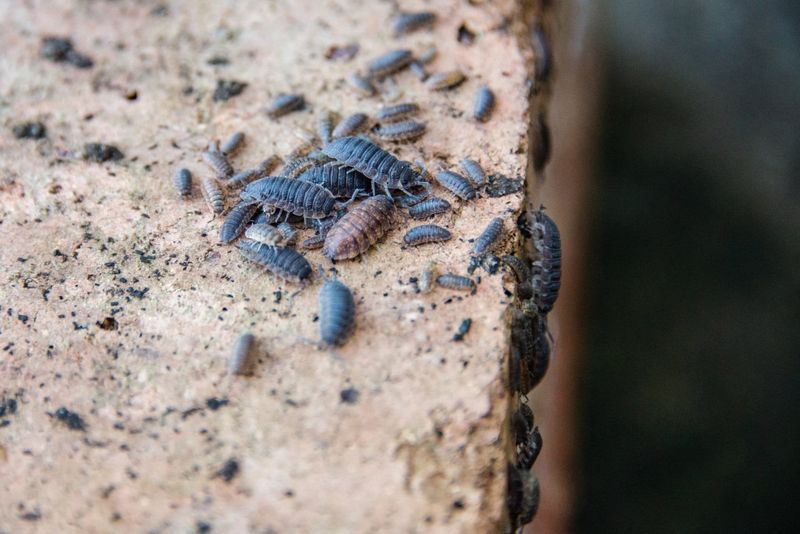
A cluster of roly-polies under a pot might feel like a clue about what is happening in the soil below it, but the biology does not work that way.
Metal uptake in isopods varies by species, the specific metal involved, the animal’s food source, its exposure route, surrounding soil chemistry, its age, body size, and even the season.
A crowd of pillbugs tells you the spot is damp and has organic debris.
It does not tell you what metals are present or at what concentrations.
Research on isopod tissue levels found that metal content in isopods often corresponds more closely to metals in leaf litter than to total metals in the soil beneath them.
These animals feed on decomposing plant matter, so their bodies reflect their lunch more than their address.
And because they move around, a pillbug you find under a pot near your porch may have been feeding in the mulch along your driveway an hour earlier.
The phrase “heavy metals” adds another layer of confusion.
It is a loose public label that groups together lead, cadmium, arsenic, copper, zinc, mercury, chromium, and nickel, which EPA ecological screening guidance treats as distinct contaminants with different toxicity levels, mobility in soil, and biological effects.
A reading for zinc tells you nothing useful about lead or arsenic risk.
Pillbug abundance cannot substitute for that kind of specificity.
On the pest side, UC IPM notes that pillbugs mostly eat dead plant material, but large populations can damage seedlings, young roots, low leaves, and fruit resting on wet soil.
Their presence alone is not proof of good soil health, contamination, or a need for control.
Leave Harmless Populations in Place
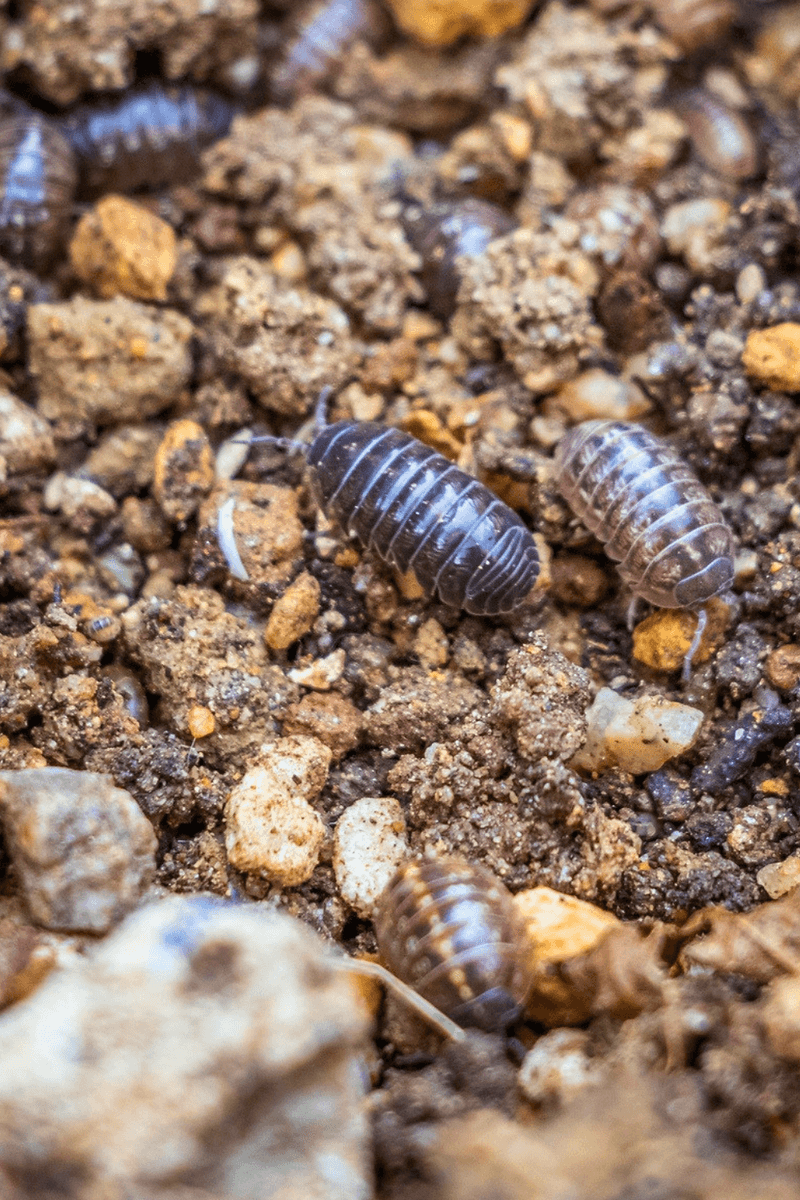
Most pillbug populations in ornamental beds, under shrubs, or along a fence line are doing nothing worth worrying about.
If the plants nearby look healthy and you are not seeing chewed seedlings or damaged fruit, the roly-polies are probably just processing dead leaves and moving on.
Oregon State Extension confirms that pillbugs rarely cause serious plant damage when conditions are not overly wet and there is plenty of decomposing material to eat.
Their modest contribution to decomposition is worth keeping.
By chewing dead plant matter into smaller pieces, they make that material easier for bacteria and fungi to break down further, which feeds a slow, steady return of nutrients to the soil.
University of Florida IFAS extension describes their role as one part of a larger decomposer community rather than a dominant driver of soil fertility, so calling them universal soil builders overstates the case.
When pillbugs are damaging plants, the fix is habitat management, not a contamination response.
Reduce surface moisture by switching from overhead watering to drip irrigation where possible.
Pull back mulch several inches from plant stems so the area near crowns dries out between waterings.
Remove excess boards, cardboard, or debris piles that serve as daytime shelter.
Improve airflow in dense plantings.
Place a physical barrier, such as a folded piece of hardware cloth or a small raised platform, under ripening squash or cucumbers that rest on damp soil.
UC IPM and Utah State Extension both recommend raised beds and plastic mulch as longer-term options for gardeners who see repeated damage.
These are habitat and pest-management steps, not responses to metal contamination.
Test Suspected Contamination Directly
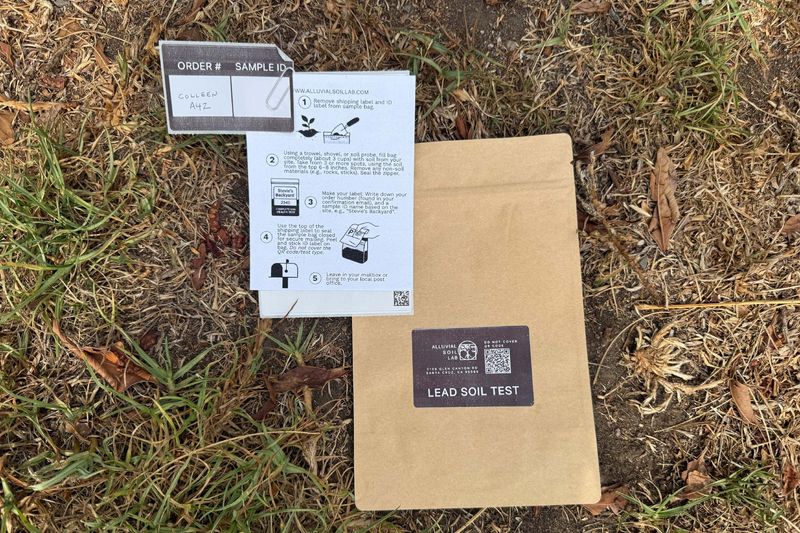
Certain yard situations call for actual soil testing rather than observation and guesswork.
If your house was built before 1978, if your garden sits within 10 feet of an older building, a busy road, or a driveway sealed with older materials, or if the property has an uncertain history involving industrial or commercial use, those are reasonable prompts to investigate.
None of that means your soil is definitely contaminated, but those site histories carry enough known risk to warrant a direct answer.
A standard soil fertility test will not give you that answer.
Fertility panels check nutrients such as nitrogen, phosphorus, and potassium, not environmental contaminants.
You need to specifically request testing for lead and any other metals plausible given your site, such as arsenic near old orchards or cadmium near certain industrial areas.
EPA guidance for urban agriculture sites and Penn State Extension’s gardening guide both walk through how to request the right kind of analysis from an accredited laboratory.
Sample more than one location across the property.
Lead and other pollutants can vary sharply within a single yard, with higher concentrations near building foundations, fence lines, and areas where roof runoff lands.
EPA’s lead-in-soil resource recommends collecting multiple samples rather than relying on a single reading.
Many state Cooperative Extension services offer soil testing or can direct you to an accredited lab that handles environmental contaminants, and USDA resources on soil testing methods can help you understand what the results mean once they arrive.
Use Clean Growing Areas When Tests Find Lead
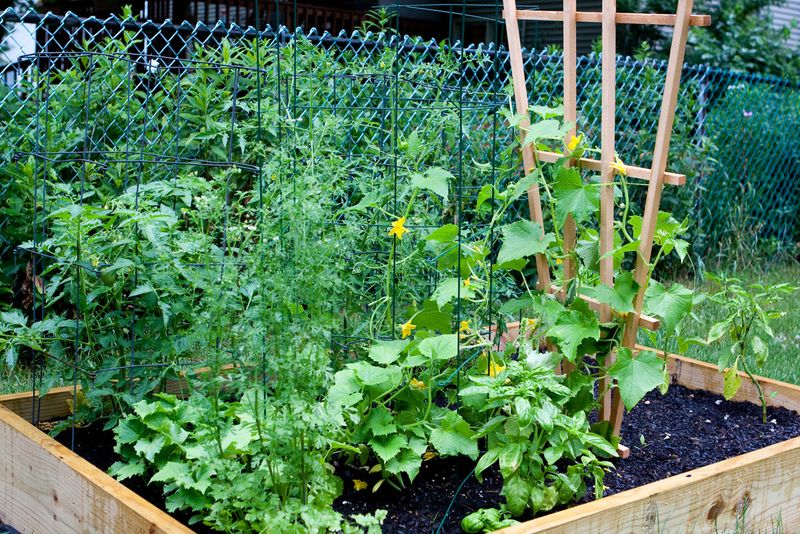
A soil test that comes back with elevated lead does not mean you have to give up on growing food.
It means you need to change where and how you grow it, and there are practical options that work well for most home gardeners.
The key is putting a reliable barrier between what you eat and the contaminated ground.
Raised beds filled with clean purchased soil or a tested soil mix are the most common and effective choice.
Containers work equally well for herbs, lettuce, and smaller crops.
CDC guidance on lead in soil advises against growing fruits and vegetables in lead-contaminated soil and recommends containers or clean raised beds instead.
If you use raised beds, lining the bottom with heavy landscape fabric or hardware cloth adds a barrier against root contact with the soil below, though the clean fill itself does most of the work.
EPA recommends keeping children away from bare contaminated soil and locating food gardens at least 10 feet from older buildings, roads, and driveways where lead levels tend to be higher.
Cover any bare contaminated ground with dense ground cover, mulch, or pavers to reduce dust and direct contact.
Wash produce thoroughly, and consider removing shoes at the door to reduce soil tracked into living spaces.
These steps together address the realistic exposure routes, which include bare soil contact, dust, and produce grown in place, not just the soil chemistry itself.
Pillbug abundance in a yard with confirmed lead contamination is not a sign the soil is becoming safer.
The two facts are unrelated for practical purposes, and EPA urban agriculture guidance is clear that biological presence does not substitute for tested, clean growing media.
Appreciate Them Without Deploying Them
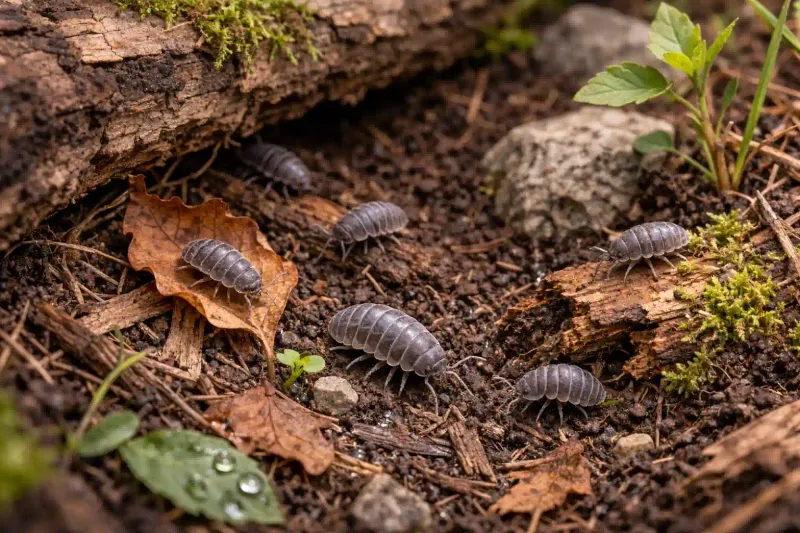
The right mental model for a roly-poly in your yard is a small, interesting decomposer with a surprising biological trait, not a remediation tool waiting to be put to work.
Knowing that they can accumulate certain metals is a genuinely useful piece of biology.
It explains why researchers use them as indicators of contamination in an area and why ecologists pay attention to their tissue levels.
It does not mean you have a cleanup crew under your flowerpot.
Three responses cover almost every situation a home gardener will face.
If pillbugs are present and plants are healthy, leave the population alone.
If they are damaging seedlings or fruit, reduce moisture, pull back debris and mulch, and improve airflow, those are habitat changes that reduce the conditions pillbugs need without reaching for a pesticide.
If your yard has a plausible contamination history, test the soil directly and use clean raised beds or containers for food crops.
One thing worth avoiding is moving isopods between properties or releasing purchased species into your yard.
Penn State Extension’s guide to invasive terrestrial isopods warns that terrestrial isopods can spread easily through mulch, compost, plants, and garden materials, and some common species in the US were introduced from Europe.
There is no established homeowner method for collecting, containing, or deploying pillbugs as a contamination treatment, and the 2025 study’s 92.5 percent mortality rate at high cadmium levels illustrates why improvising one would create more problems than it solves.
A roly-poly curled in your palm is a crustacean that has been recycling dead leaves since before your house was built.
That is enough of a reason to let it keep doing its job.