
The Late Summer Bulbs Pennsylvania Gardeners Plant Now For Fall Color That Lasts
Follow us on Google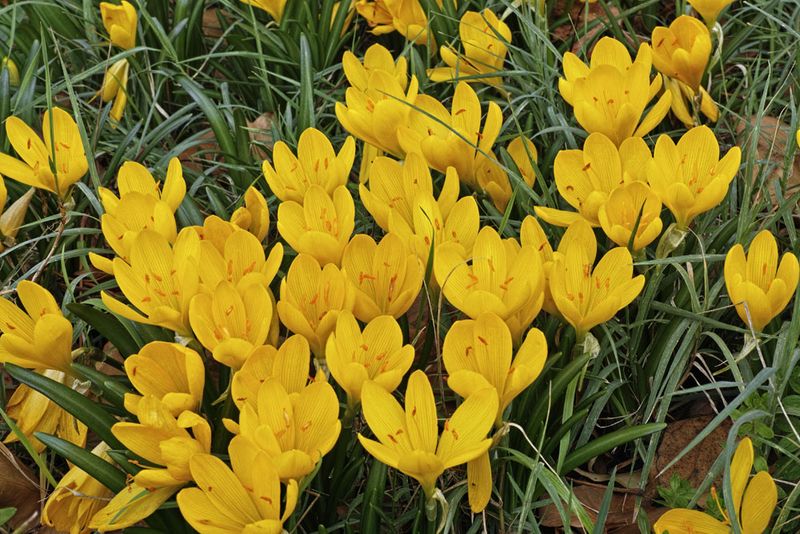
You step into your Pennsylvania yard on a late August afternoon, the air still thick with the last heat of summer, and the tired summer annuals are fading fast.
Most folks figure the season for big color is finished, but that is simply not true.
Right now, as mornings turn cool and the light shifts, you have a quiet window to plant bulbs that bloom this very fall.
Imagine golds and soft purples showing up when everything else is winding down, sometimes right past the first light frost.
1. Autumn Daffodils Bring Golden Light To Fall Gardens
Most gardeners picture spring when they hear the word daffodil, but there is a cousin that saves its show for autumn.
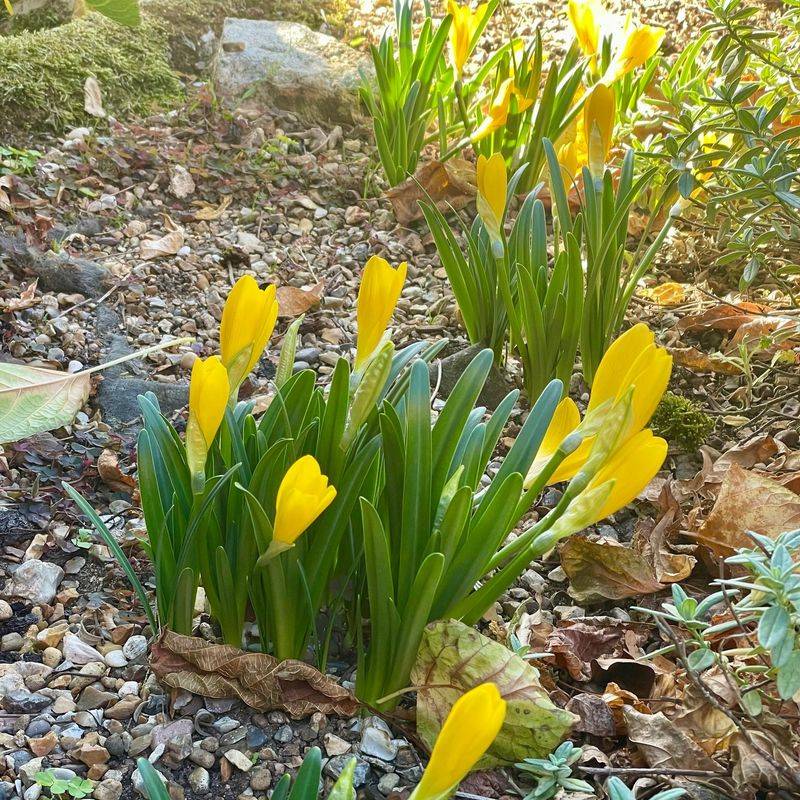
Meet the autumn daffodil, Sternbergia lutea, whose bright golden goblets rise on stems about 6 inches high starting in September and lasting for weeks.
What sets it apart is the glossy, strap-like foliage that emerges with the flowers and stays evergreen through the whole Pennsylvania winter, finally fading in early summer.
That unusual rhythm keeps something alive in the garden long after other plants have given up for the year.
Here is where it gets tricky.
If your soil in the central valleys runs heavy and clay-rich, work in compost or a little grit first to keep the bulbs from rotting.
Plant them in full sun, ideally, though light afternoon shade is fine.
Set the bulbs 3 to 5 inches deep and space them 4 to 6 inches apart in late summer or early fall.
Get them in as soon as they show up in stores, often mid-August through September, for the best odds of first-year blooms.
That golden burst, arriving when the garden looks worn out, genuinely feels like finding sunshine on a gray autumn morning.
2. Prepare The Soil With Care For Lasting Success

Newcomers are often surprised by how much soil decides a bulb’s fate, especially bulbs you want to keep for years.
Drop one in a quick hole and poor, soggy ground becomes the villain of the story.
The reason is plain.
Bulbs store next year’s whole flower underground, so they need soil that drains well and still feeds strong roots, not a wet trap that invites root rot.
Before you plant Sternbergia or any fall bulb, loosen the soil deeply, at least 8 to 12 inches down.
Roots need room to spread.
If you garden in the heavy clay common across western Pennsylvania and the Susquehanna Valley, mix in 2 to 4 inches of well-rotted compost or leaf mold, plus coarse sand or fine gravel to move water along.
Sandy ground in parts of the northern tier needs organic matter too, this time to hold moisture and nutrients in place.
Most bulbs like a pH between 6.0 and 7.0, slightly acidic to neutral.
A quick soil test from Penn State Extension tells you where you stand.
This groundwork now actually decides whether your bulbs shrug off an unpredictable winter and come back every fall.
3. Timing Your Planting To Beat The Frost
A stubborn myth says every bulb goes in the ground come spring.
Fall-blooming bulbs like Sternbergia lutea run on a much tighter clock, and the shortening days are quietly counting down.
The reason is simple.
These bulbs need a solid root system before the ground freezes hard, so they can anchor themselves and stockpile energy for the flowers and the winter ahead.
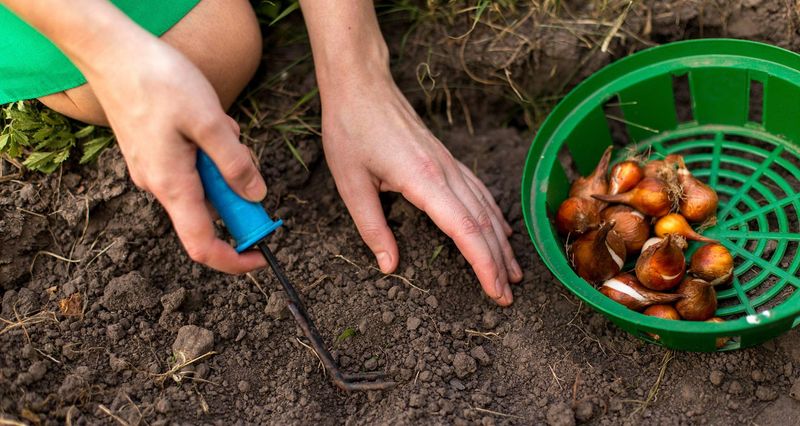
So plant in late summer or early fall.
Up in the northern tier around Bradford, where first frost can land between September 11th and the 20th, get Sternbergia in by early September.
Across most of the state, including the central valleys and the Allegheny Plateau, late August through mid-September hits the sweet spot.
Even in the warmer southeastern lowlands and the Delaware Valley, where zones reach 7b to 8a, planting by late September leaves plenty of time.
Aim for soil that is cool but still easy to dig, giving bulbs at least 4 to 6 weeks to root before a real freeze.
Water thoroughly after planting to settle the soil around each bulb.
This one timing tweak is the difference between a long show and a bag of bulbs that never got going.
You will feel a small pride knowing you gave your golden beauties a proper head start.
4. Watering Needs Change With The Seasons
You might be surprised how little fuss established fall bulbs need, but their watering rhythm has a mind of its own.
Too much water at the wrong moment does as much harm as a drought.
The reason is that these bulbs have dormant stretches when they genuinely want to stay dry, and soggy soil during those weeks leads straight to rot.
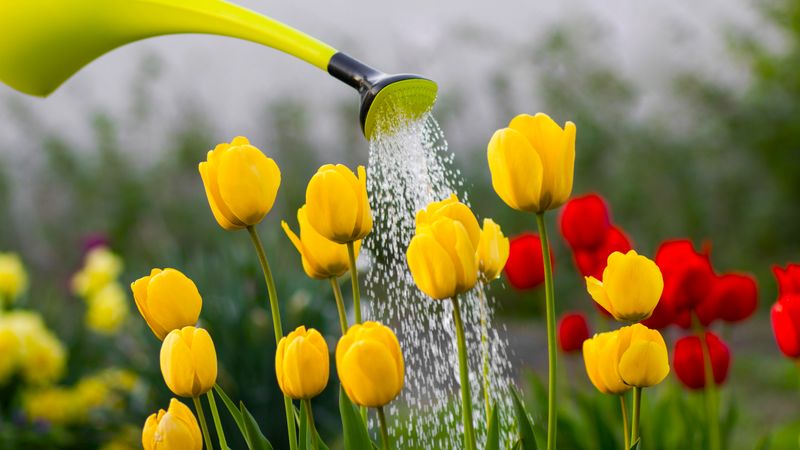
Right after you plant Sternbergia lutea in late summer, water it well to settle the soil and wake up the roots.
Through the fall blooming season, keep watering moderately, especially when the sky stays stingy between those sudden thunderstorms.
Once the flowers fade and only the evergreen leaves remain through winter, back off.
Pennsylvania snow and rain usually handle the moisture, so extra water is rarely needed.
When spring returns and the foliage is busy feeding next year’s bloom, offer moderate moisture again.
By early summer, when the leaves die back, the bulbs slip into summer dormancy and prefer things dry.
Matching your watering to that cycle heads off the usual problems and keeps a colony of autumn daffodils thriving for the long haul.
5. Protect Your Bulbs From The Cold
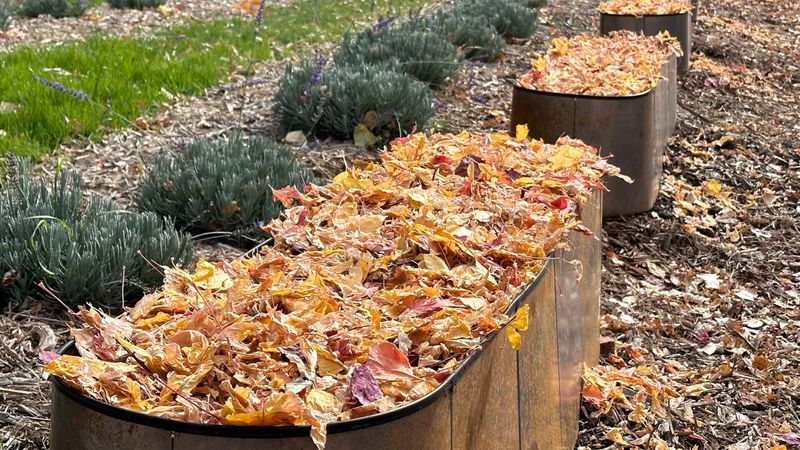
Even hardy bulbs appreciate a little backup against a Pennsylvania winter.
Hardy does not mean invincible, and repeated freeze-and-thaw cycles can heave a young bulb right out of the ground.
The reason a blanket helps is insulation.
A layer over the soil keeps the temperature steadier, so the bulbs are not shoved upward every time the ground swells and shrinks.
For Sternbergia lutea, especially in colder spots like the Poconos or the higher elevations of the Allegheny Plateau where zones run 5b to 6a, spread mulch after planting and before the deepest cold arrives.
A 2 to 3-inch layer of shredded bark, chopped leaves, or straw over the planting area does the trick.
That buffer matters most where the thaw-and-freeze routine repeats all winter.
Sternbergia is rated for Zone 6a, and some gardeners nudge it into Zone 6 microclimates with this exact protection, so the extra layer is smart insurance against lows that can dip below 0 degrees F across much of the state.
The mulch holds moisture for the roots too.
Tucking your treasured bulbs in for the season brings genuine relief, knowing they are set to blaze gold again next fall.
6. Meadow Saffron Blooms Without Any Leaves
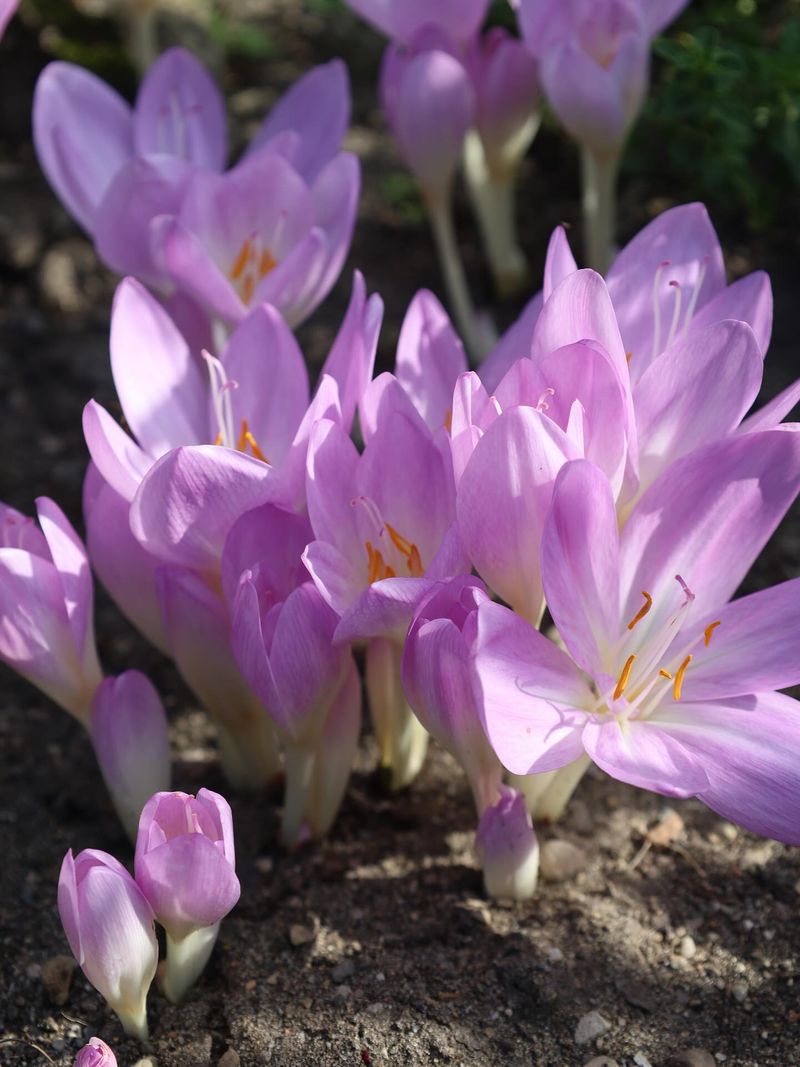
Picture flowers rising straight out of bare soil in October, no leaves in sight, like the ground decided to bloom on its own.
That is the meadow saffron, Colchicum autumnale, nicknamed naked ladies for exactly that reason.
The rosy pink, lavender, or white goblets appear in fall while the broad, lance-shaped leaves show up back in spring and die off by summer.
So the bare autumn surprise is part of the plant’s plan, not a problem.
Colchicum is hardy down to USDA Zone 4, which makes it a dependable choice for nearly all of Pennsylvania, even the colder northern tier.
Give it full sun to partial shade and well-drained, organically rich soil.
Plant the corms 2 to 6 inches deep and 6 to 12 inches apart in late summer, as soon as you can find them.
They are so eager they can actually bloom right in the bag.
One serious caution.
Every part of Colchicum is poisonous, so handle the corms carefully and keep them away from curious pets and children.
Treat it with respect and it rewards you with color when few plants dare.
7. Autumn Crocus Adds Delicate Purple To The Bed
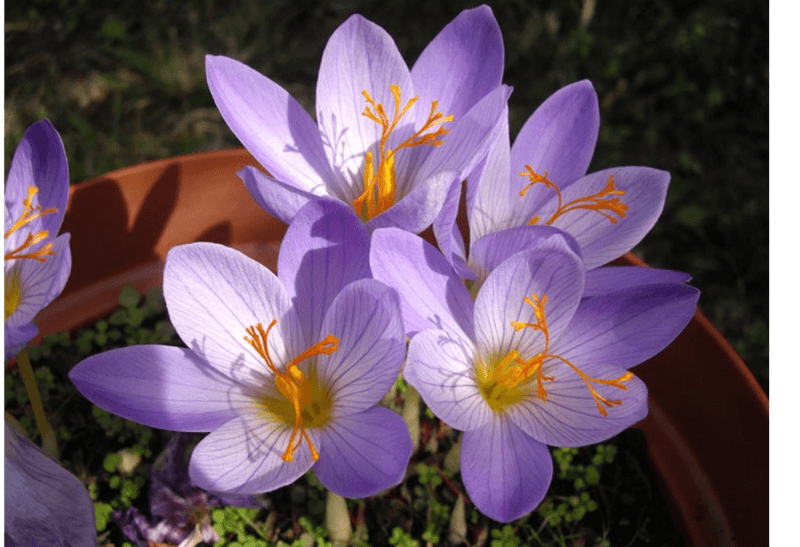
If Sternbergia is the loud gold and Colchicum the bold goblet, the autumn crocus is the quiet whisper of the fall bed.
Crocus species offer small, delicate blooms in purple, lavender, and white just as the garden dims.
Crocus speciosus stands out for being both showy and tough, a rare combination in a plant this dainty.
Set the corms 3 to 4 inches deep and about 3 inches apart in late summer to early fall, in full sun with excellent drainage.
They are hardy in USDA Zones 5 through 9, so they slot in comfortably across much of Pennsylvania, from the Laurel Highlands to the Delaware Valley.
Grouped together, those little cups read as a soft purple haze near the front of a border.
A fun aside.
Crocus sativus, the saffron crocus, is a cousin that actually produces the edible spice, though it is less hardy and fussier here.
For pure fall color, speciosus is the safer bet.
Both the autumn crocus and Colchicum shrug off deer and rodents, a genuine gift for anyone whose garden doubles as a nightly deer buffet.
8. Layering Bulbs For Color That Truly Lasts
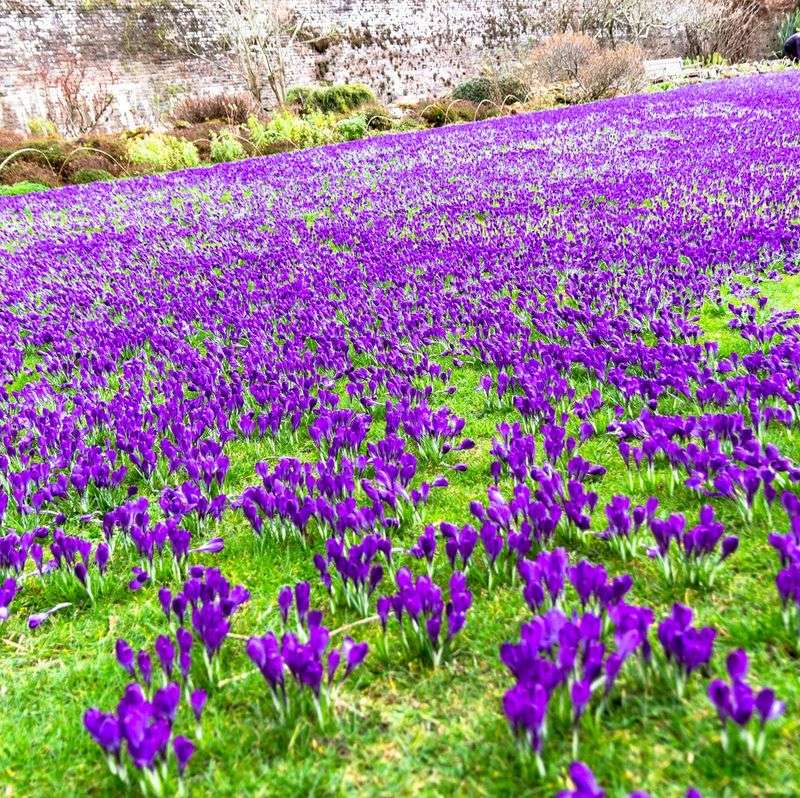
Plant just one kind and you get a single week or two of color.
Combine these fall bulbs and you stretch the show across the whole season, from the first cool snap into the frostier days.
The reason layering works is timing.
Each bulb peaks on a slightly different schedule, so as one fades another steps in, keeping the bed alive when everything nearby is going brown.
Try tucking Sternbergia lutea, Colchicum autumnale, and Crocus speciosus into the same sunny, well-drained pocket, spacing each per its own needs and keeping the poisonous Colchicum where no pet or child will graze.
In the warmer southeastern lowlands you can push planting into late September, while colder northern gardeners should wrap up by early to mid-September.
Pair the low crocus at the front, the mid-height Colchicum behind, and the golden Sternbergia woven through for contrast.
A 2 to 3-inch mulch layer over all of them buffers the freeze-and-thaw that troubles most of the state.
None of this is a magic fix, it is one smart layer in a garden that already reads the seasons.
But when your neighbors are raking and mourning summer, your bed will still be handing out gold and purple, and you will have quietly earned it.