
What Your Pennsylvania Hydrangeas Need Right Now To Keep Blooming Into Fall
Follow us on Google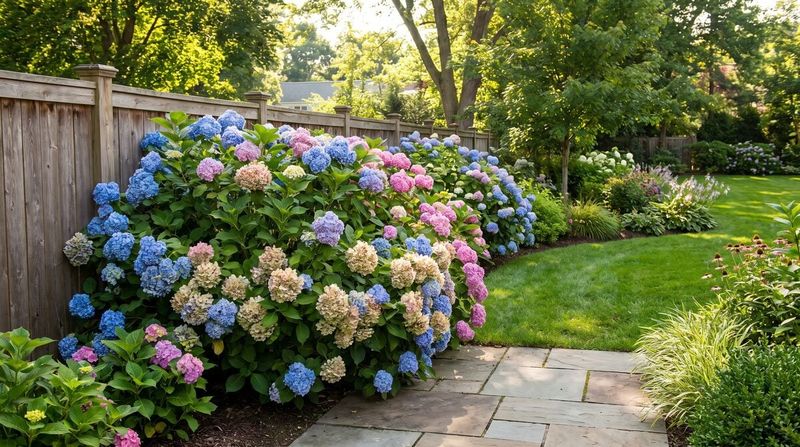
Late August in Pennsylvania, and your hydrangeas are still putting on a show.
But you’ve heard you should feed them now, prune them, do something before the season slips away.
The truth is a little more complicated than that, and getting it right depends almost entirely on which hydrangea you’re actually growing.
This guide gives you a realistic plan for protecting what’s blooming and giving the right plants their best shot at color into fall.
The Hydrangea Type Sets the Promise
Forget the idea that a special August feeding is the key to fall color.
What actually determines whether your hydrangea keeps producing flowers is the plant itself, and a lot of Pennsylvania gardeners are working with shrubs they’ve never fully identified.
The species and cultivar set the realistic ceiling, and no amount of fertilizer or pruning changes that fundamental fact.
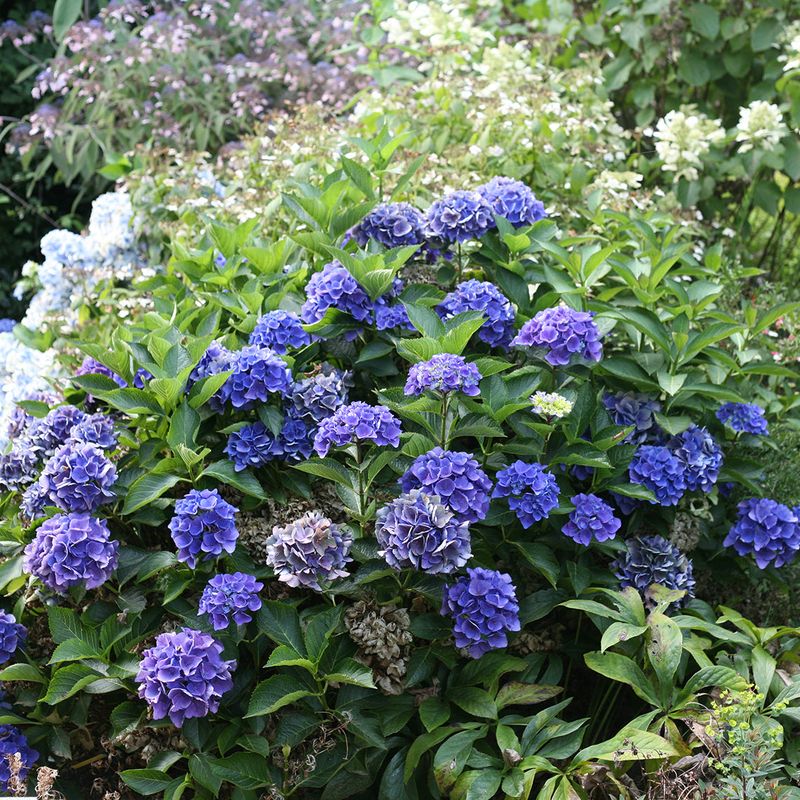
Bigleaf hydrangeas (Hydrangea macrophylla), the classic mopheads and lacecaps, and oakleaf hydrangeas (Hydrangea quercifolia) bloom on old wood, meaning stems that grew the previous season.
Their flower buds for next year are already forming right now, in late summer.
Penn State Extension explains that reblooming bigleaf cultivars such as Endless Summer and Let’s Dance are different because they can flower on both old wood and new wood, giving them a genuine shot at a second flush later in the season.
Smooth hydrangeas (Hydrangea arborescens) and panicle hydrangeas (Hydrangea paniculata) bloom on new wood, the current season’s growth.
University of Illinois Extension notes that these two types are naturally better candidates for dependable late-season displays because their flower timing is not tied to last year’s stems.
Here is where many gardeners trip up: flower color does not tell you whether a plant can rebloom.
A mophead turning from pink to dusty rose to tan is aging through its single flush, not producing fresh flowers.
Check the plant tag or look up the cultivar name rather than guessing from color alone.
Penn State’s pruning guide reinforces that species identity should drive every care decision you make from here on out.
The useful promise for late August is this: protect the flowers already open and support a possible second flush on the right plants.
That is a realistic goal, and it is genuinely achievable with a few targeted steps.
Water Is the First Late-Summer Fix
You step out after a dramatic Thursday afternoon thunderstorm and the garden looks soaked.
But a heavy downpour that runs off compacted soil or splashes across a raised bed may not have delivered an even, deep soak to your hydrangea’s root zone.
Pennsylvania summers are genuinely unpredictable that way.
Penn State Extension’s plant health guidance points to consistent root-zone moisture as one of the most defensible interventions for keeping ornamental shrubs healthy through late summer heat.
The general starting point is about 1 inch of water per week, including rainfall, but that number is a starting point, not a rule.
A hydrangea in a rocky raised bed in the Poconos dries out faster than one in a clay-heavy southeastern Pennsylvania yard.
The better guide is your finger.
Push it 3 to 4 inches into the soil near the base of the shrub.
If it comes up dry or barely damp, the plant needs water.
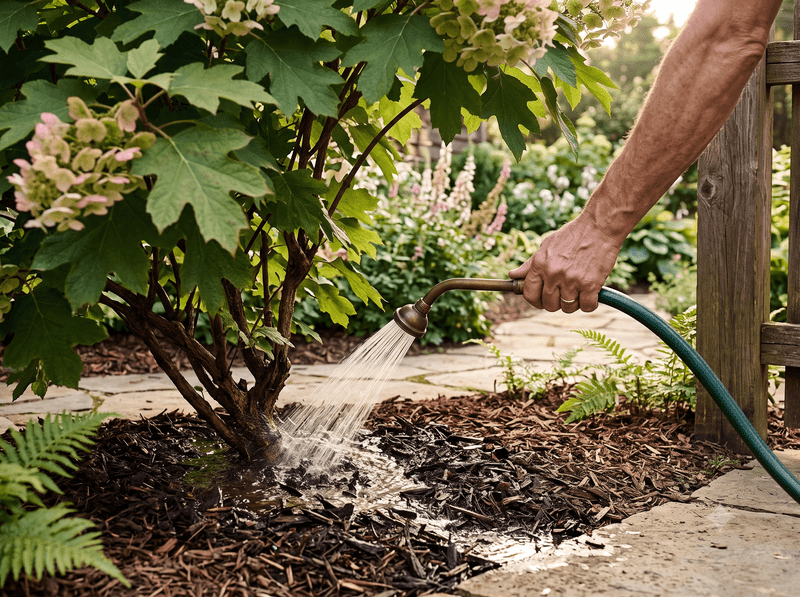
Penn State’s perennial care resources recommend watering slowly at the base rather than overhead sprinkling, which can promote leaf disease and wastes water through evaporation.
A soaker hose or drip line placed at the base, run in the morning, is the practical setup that works.
Penn State’s water conservation guidance notes that morning watering lets the surface dry during the day, reducing fungal pressure.
Avoid keeping the soil constantly saturated, because waterlogged roots lose oxygen and become vulnerable to rot.
Keep 2 to 3 inches of mulch over the root zone to slow evaporation between waterings, but pull it back from direct contact with the stems.
Penn State’s flower planting guidance is consistent on this point: mulch is a tool, not a substitute for checking actual soil moisture.
Water is the most reliable thing you can do for your hydrangeas right now.
Late Pruning Can Erase Next Year
Many gardeners feel the urge to tidy things up in August.
The hydrangea looks a little ragged, maybe some stems are flopping, and the pruners are right there in the garage.
Cutting now on the wrong plant can silently erase an entire season of flowers before next spring even arrives.
Old wood, meaning stems that grew during the previous season, is where bigleaf and oakleaf hydrangeas carry their flower buds for the coming year.
Those buds are forming right now, in late summer and early fall.
Penn State Extension’s pruning guide is direct: cutting back bigleaf or oakleaf hydrangeas in August, September, fall, or winter removes the buds that would have opened next spring and summer.
University of Illinois Extension explains that timing is everything with hydrangeas, and the species determines the window.
Smooth and panicle hydrangeas bloom on new wood, so they can receive major pruning in late winter or early spring without losing flower buds.
Those are the plants where a hard cutback in the dormant season actually makes sense.
If you are not certain what species you have, the safest move is to do nothing with the pruners right now.
Postpone any major shaping until you can confirm the plant type and the correct pruning window.
Penn State’s broader pruning resource supports this cautious approach: when in doubt, wait.
A missed pruning season costs you nothing.
A mistimed one can cost you next year’s entire bloom.
Dead or clearly broken stems can be removed at any time without harm.
But broad late-season shaping on an unidentified hydrangea is a gamble that rarely pays off.
Deadheading Depends on the Cultivar
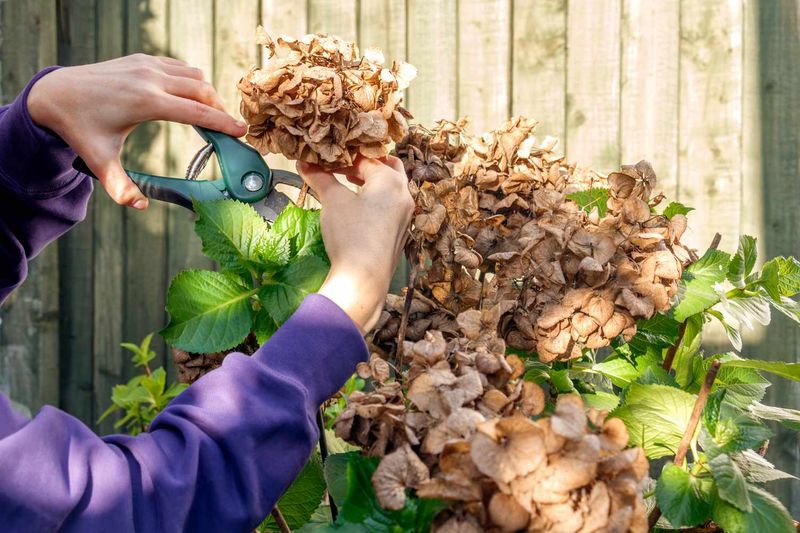
Spent flower heads on a hydrangea are not an emergency.
For most plants, leaving them alone is perfectly fine, and removing them does not make the shrub work harder to bloom again.
For old-wood-only bigleaf and oakleaf hydrangeas, deadheading is a cosmetic choice, nothing more.
University of Maryland Extension’s hydrangea pruning resource is clear that removing faded flowers on these plants does not trigger new buds or extend the season.
The plant simply does not have new-wood flowering ability to activate.
If you prefer a tidier look, go ahead and remove the spent heads, but do not expect more blooms in return.
Reblooming bigleaf cultivars are a different story.
Ask Extension’s hydrangea guidance supports removing only the spent flower cluster on verified reblooming types when you want to encourage another flush or tidy the plant.
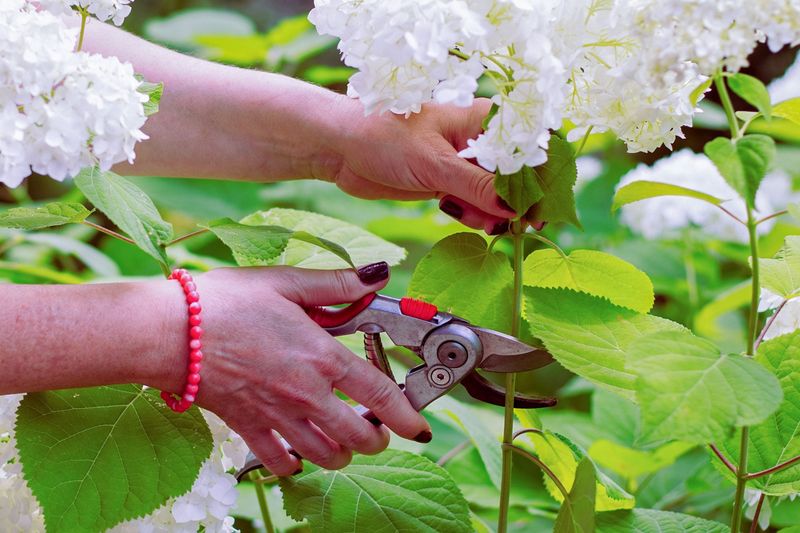
The key word is “only.” Cut just below the faded bloom and leave the rest of the stem intact.
Removing long sections of stem late in the season risks taking new-wood buds with it.
A second flush on a reblooming bigleaf hydrangea is often smaller and less dramatic than the first.
Penn State Extension notes that even when conditions are right, the late-season rebloom may be modest.
That is not a failure; it is just the plant working within its natural rhythm for late August in Pennsylvania.
Deadheading is optional for plant health across all hydrangea types.
Treat it as a personal preference, not a required step in your fall care routine.
Test Before You Feed
Browning flowers, weak growth, and a disappointing bloom season can feel like obvious signs that your hydrangea is hungry.
But those same symptoms can come from incorrect pruning, drought stress, poor light, fungal disease, or winter injury.
Reaching for a bloom-booster fertilizer before you know the actual cause is a guess that can backfire.
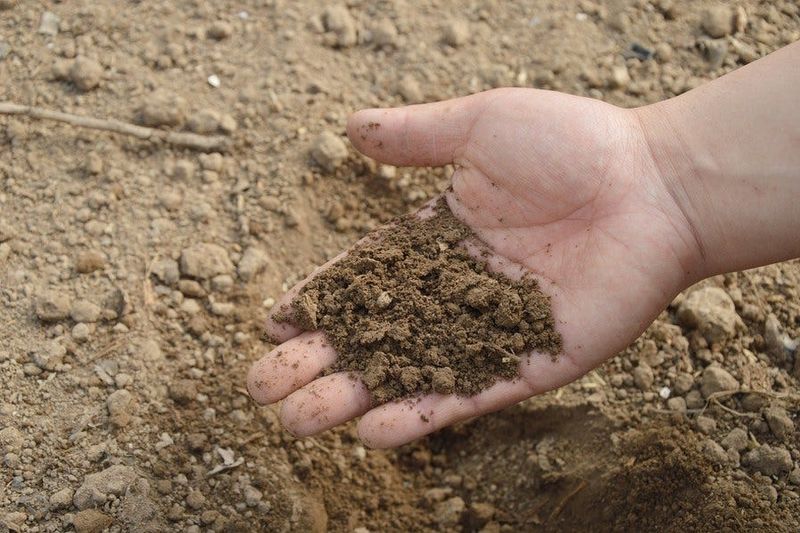
Penn State Extension’s soil testing program measures pH and available nutrients and returns recommendations specific to your planting situation.
Collecting a sample is straightforward: combine small amounts of soil from several spots in the planting area, taken from about 6 to 8 inches deep, and submit them together.
The results tell you what the soil actually needs, rather than what a bag label suggests.
West Virginia University Extension’s fertilization guidance warns that excess nitrogen encourages leafy growth at the expense of flowers.
Applying a high-nitrogen product to a hydrangea that is already blooming poorly can make the problem worse, not better.
Routine high-phosphorus bloom boosters carry similar risks: Penn State’s ornamental planting guidance notes that research has not supported routine phosphorus additions unless the soil is actually deficient.
If a soil test does show a need for fertilizer, follow its specific rate and timing.
Penn State’s fertilizer application guidance is consistent: do not apply to drought-stressed plants, waterlogged soil, or frozen ground.
Any of those conditions can damage roots rather than help them.
Penn State’s water-saving tips also point out that overfertilizing can increase a plant’s water demand, creating more stress during a dry stretch.
Fertilizer cannot substitute for correct plant identification, steady moisture, good light, or thoughtful pruning.
It is one tool, and only a useful one when the soil data supports it.
Light and Site Conditions Shape the Display
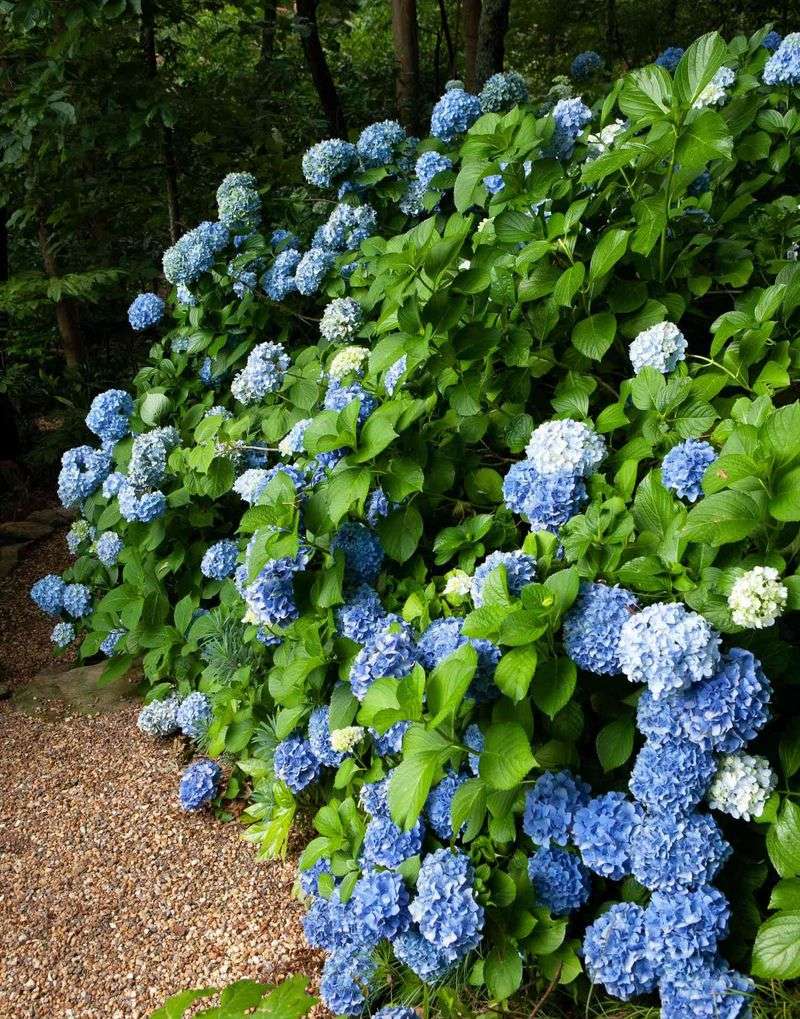
Two hydrangeas planted in the same Pennsylvania county, cared for by gardeners following the same routine, can look completely different by late August.
The site often explains the gap more than anything the gardener did or did not do.
Bigleaf hydrangeas are particularly sensitive to afternoon heat.
University of Georgia Extension recommends bright morning sun with afternoon shade as a safer general setting for many hydrangeas, especially bigleaf types.
A spot that catches the hot western sun from 2 p.m. onward can scorch leaves and wilt flowers even when the soil has adequate moisture.
Too much shade creates the opposite problem: reduced flowering and weak, stretched stems.
Oregon State Extension notes that hydrangea performance is closely tied to light balance, and that no single light prescription fits every species.
Panicle and smooth hydrangeas generally tolerate more sun than bigleaf types, making them more forgiving in open, exposed Pennsylvania yards.
Soil drainage matters just as much as light.
Oregon State Extension’s heat-wave guidance explains that heat and drought together are harder on hydrangeas than either stress alone.
A site with poor drainage can keep roots wet after a summer storm, while a raised or rocky bed may dry out within a day.
Neither extreme supports healthy late-season flowering.
Check your own yard rather than assuming conditions based on region.
Push a trowel into the root zone after a rain and look at what you find.
Penn State Extension consistently ties plant health outcomes to site-specific assessment rather than broad regional formulas.
Browning or weak growth in late summer is a reason to look at light, drainage, and moisture first, not a signal to reach for a fertilizer bag.
Pennsylvania Frost Sets the Ceiling
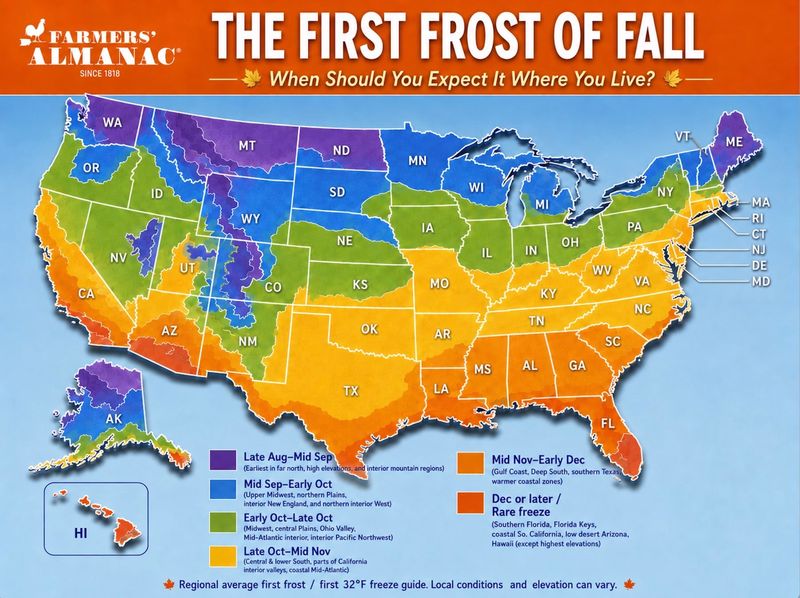
Every late-summer care step you take for your hydrangeas runs up against one hard reality: Pennsylvania weather sets the end date, and it does not negotiate.
Understanding the rough timeline for your area helps you set realistic expectations rather than chasing a promise the season cannot keep.
Penn State Extension’s frost guidance lists average first fall frost dates that show just how much the state varies: October 4 in Altoona, October 14 in Scranton, October 23 in Pittsburgh, October 30 in Harrisburg, and November 17 in Philadelphia.
Those are averages, not forecasts.
An early cold snap can arrive a week or two ahead of the average date, and a warm fall can push it later.
The USDA Plant Hardiness Zone Map places Pennsylvania in zones ranging from roughly 5b in colder northern and higher-elevation areas to 8a in the warmest southeastern pockets.
But hardiness zones describe average annual extreme winter temperatures, not when the first fall frost arrives or how long fresh flowers will last.
A gardener in the northern tier or on the Allegheny Plateau should plan for an earlier end to the outdoor bloom season than someone in the Delaware Valley.
Elevation, valley position, urban heat, and local exposure all shift the actual frost date at any specific yard.
The USDA’s Pennsylvania Conservation Planting Guide reflects the state’s wide range of growing conditions, reinforcing that no single date applies everywhere.
An early cold snap can end fresh flower production on even a healthy, well-watered shrub.
Careful late-summer care extends the viewing window, but it does not command the weather.
Gardeners in Scranton and those near Philadelphia are genuinely working with different calendars, and both of them are working around a ceiling they did not set.
Use a Simple Care Reset Now
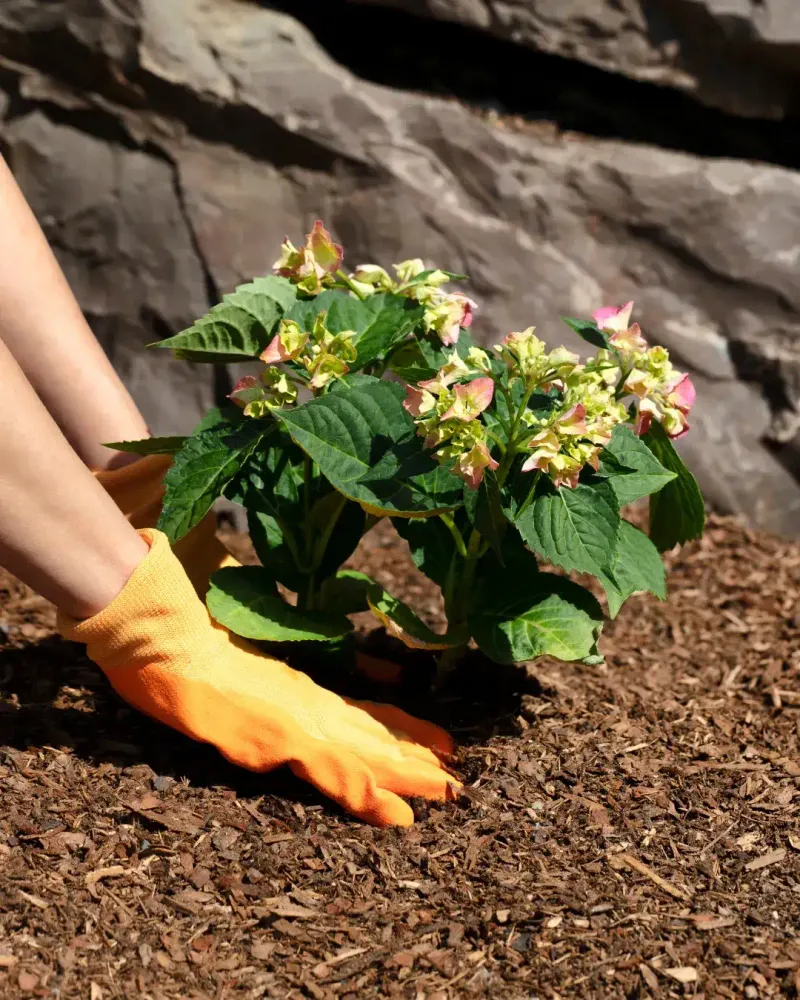
The practical plan for right now is shorter than most gardening articles make it sound.
Start by confirming what hydrangea you have, using the plant tag or a reliable cultivar source, not flower color alone.
Then kneel down and check the soil 3 to 4 inches below the surface near the base of the shrub.
If the soil is dry, water deeply and slowly at the root zone.
Penn State Extension points to consistent root-zone moisture as the strongest late-summer intervention for ornamental shrubs.
Keep 2 to 3 inches of mulch over the root zone and away from the stems.
Skip broad late-season pruning unless you have confirmed the species and the correct window for that plant.
Deadhead only if you have a verified reblooming bigleaf cultivar and want to encourage another flush or tidy the shrub.
University of Maryland Extension is clear that deadheading is optional, not required, for plant health.
Skip fertilizer unless a Penn State soil test shows a specific need.
Panicle hydrangeas aging through tan and bronze in October are doing exactly what they are supposed to do.
That changing color is a different kind of seasonal display from a fresh rebloom, and it is genuinely worth appreciating on its own terms.
Pennsylvania’s frost window is the real ceiling on fresh flowers, and careful care can protect what is already blooming and support the right plants.
No single treatment guarantees new blooms before the first cold snap arrives, but the steps above give your hydrangeas the best honest chance they have.