
Your Oak Is Dumping 10,000 Acorns This Year Because The Whole Forest Seems Coordinated
Follow us on Google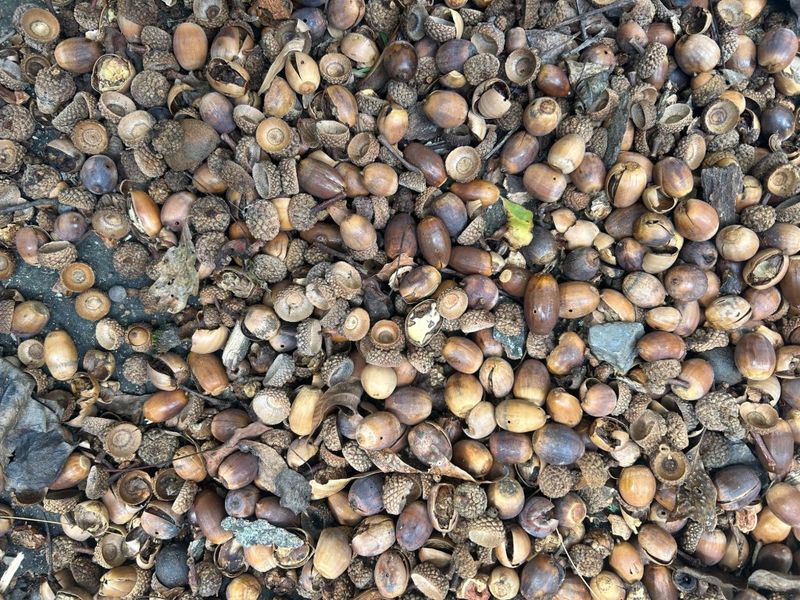
Step outside on a fall morning and the crunch underfoot is hard to ignore.
Your oak tree has buried the patio, the steps, and half the lawn in acorns, and the neighbors are reporting the same thing.
Something is going on, and it is bigger than one tree having a good season.
Understanding what drives a heavy acorn year can help you manage the mess, protect your pets, and actually appreciate what your yard is doing right now.
Why the Forest Only Seems Coordinated
Spend a fall morning raking acorns off a driveway in the mid-Atlantic or the Midwest, and it can feel like every oak on the block got a memo.
The trees around you are all dropping heavily at once, and the effect is striking enough to feel deliberate.
Scientists have a name for this pattern: masting.
The word comes from the Old English word for nuts and seeds used as wildlife food, and masting describes unusually variable and synchronized seed production across an oak population, not just one tree having a banner year.
One oak loaded with acorns is worth noticing, but it does not by itself make a regional mast year.
Masting is a population-level event, meaning that many trees of the same or related species produce heavily in the same season.
Research on California oak acorn production shows that acorn crops vary sharply from year to year and from place to place, and that synchrony among trees is a real but geographically uneven pattern.
The trees are not holding a meeting.
What looks like coordination comes from shared environmental cues, the physics of wind-borne pollen, internal resource cycles, and the long pressure of natural selection.
A 2016 review of mast-seeding mechanisms found that weather, resource dynamics, and pollen coupling can all push trees toward the same reproductive timing without any tree-to-tree communication.
The pattern is real.
The intention is not.
That distinction matters when you are standing under a tree that has buried your yard.
The acorn flood is not random, but it is also not a forest conspiracy.
It is an emergent result of biology responding to the same conditions at the same time, and once you see it that way, the pile at your feet becomes a lot more interesting.
What 10,000 Acorns Really Means
Ten thousand is a number that earns attention, and it should.
But context matters here.
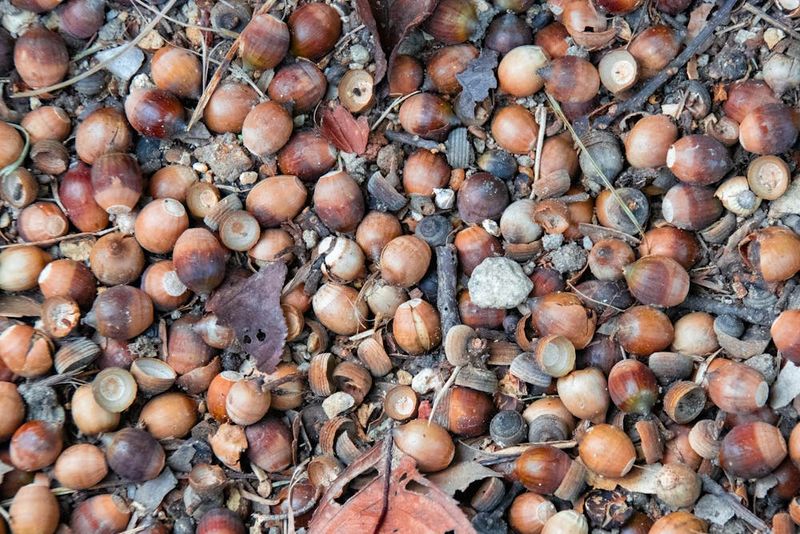
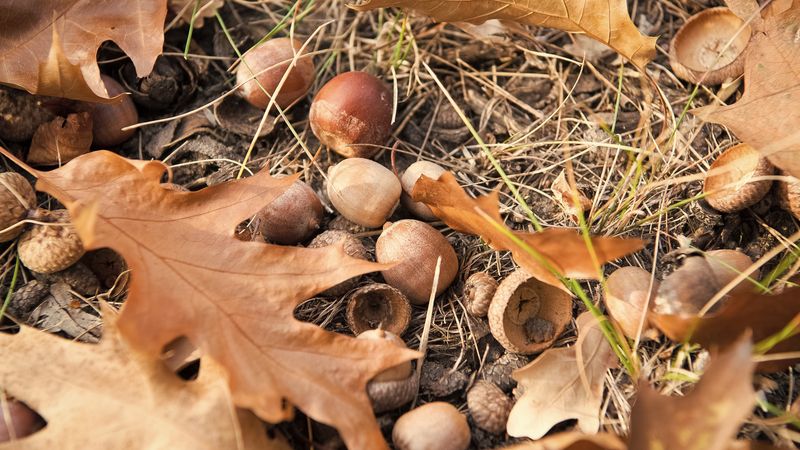
Pennsylvania State University Extension notes that an older oak can drop up to 10,000 acorns in a strong year, which makes that figure a reasonable upper-end illustration for a mature, healthy tree with a full canopy in favorable conditions.
It is not the expected output of every oak in every yard.
A young tree, a tree in shade, a tree on a dry site, or a tree coming off a heavy previous year may produce far fewer.
Production across a region can also vary in ways that make a single number misleading.
U.S.
Forest Service data show that acorn output across a stand can range from near zero to hundreds of thousands of acorns per acre depending on species, site quality, canopy density, and the year.
A Forest Service analysis of geographic synchrony in oak reproduction found detectable synchrony across roughly 500 to 1,000 kilometers in some populations, which means a local surge can be part of a broader regional pattern without covering the entire country.
No reliable evidence reviewed for this article establishes that 2026 is a nationwide mast year.
If your yard is buried in acorns right now, the honest interpretation is local: your oak species, your regional weather this past spring and summer, and the observations of neighbors and local naturalists matter far more than a national headline.
Massachusetts state guidance on acorn abundance frames heavy crops as a local and regional phenomenon worth watching, not a universal calendar event.
Look at what is actually on the ground around you, and start there.
Weather And Pollen Create The Signal
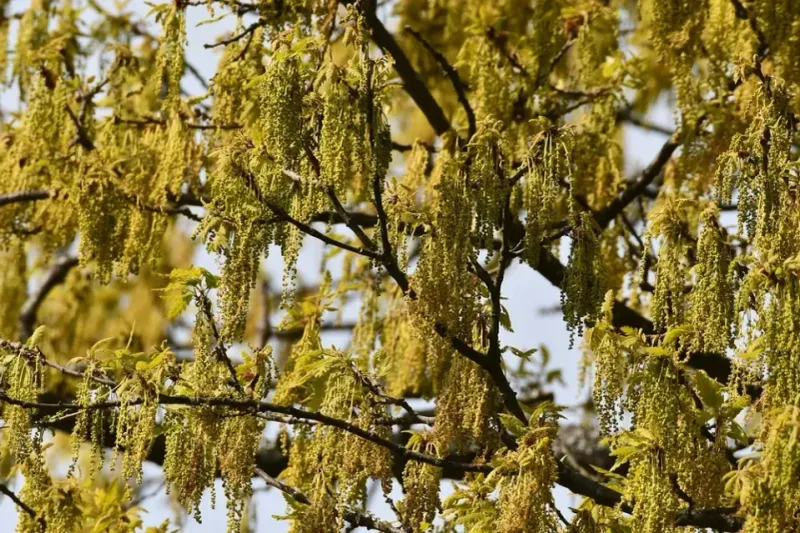
Oak flowers are easy to miss.
They appear in early spring as thin, dangling clusters called catkins, and they do their work quietly before most people are paying attention to the yard.
What happens during those few weeks of flowering and pollination shapes the entire acorn crop that falls five or six months later.
Warm, dry, calm days during peak pollen release can mean more successful fertilization.
A late frost, a stretch of cold rain, or an unusually wet spring can reduce it sharply.
Wind is the delivery system.
Oak pollen travels on air currents, and trees that flower at the same time are more likely to exchange pollen successfully.
That overlap in flowering timing is part of what researchers call pollen coupling, and it helps explain why synchrony across a neighborhood or a region can strengthen a crop.
When conditions favor a wide, well-timed pollen release, many trees benefit at once.
The 2016 mast-seeding review in New Phytologist identifies weather during flowering and pollen coupling as overlapping mechanisms that can produce synchrony across a population without any direct tree-to-tree exchange.
Conditions during the summer maturation period also matter.
Drought stress, unusual heat, or pest pressure after pollination can cause developing acorns to drop early or fail to fill properly.
A spring that favored flowering can still produce a modest crop if summer conditions turn harsh.
Forest Service research on oak synchrony patterns shows that the strength and geographic extent of a synchronized crop depend on species and habitat, meaning the same spring weather can produce very different results in a white oak stand versus a red oak stand a few miles away.
The practical takeaway is that what you are seeing this fall was largely decided last April, maybe earlier.
The weather signal is regional, which is part of why your oak and the oak two streets over may be responding the same way.
Trees Spend Resources On A Big Crop
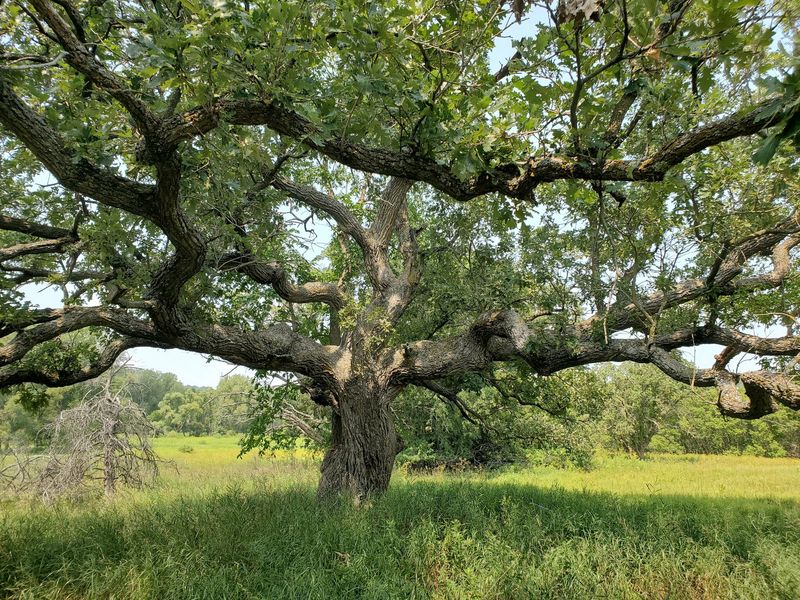
A heavy acorn crop is expensive for a tree.
Producing thousands of seeds takes carbon, nitrogen, phosphorus, and other stored resources that the tree has been accumulating, sometimes over more than one growing season.
After an unusually large reproductive effort, a tree may have less left in reserve for the following year, and production can drop noticeably.
That pattern looks like a rest year, and in some cases it functions like one, but it is not a decision the tree is making.
Research on mast-seeding mechanisms describes resource storage and depletion as a contributing factor in year-to-year variation, alongside weather and pollen dynamics.
The key word is contributing.
Weather can override the resource signal entirely.
A tree that spent heavily last year may still produce a decent crop this year if spring conditions were favorable, and a tree that produced little last year is not guaranteed a big year ahead.
Individual trees also differ.
Two oaks of the same species growing fifty feet apart may not track each other exactly, because their soil conditions, canopy exposure, root competition, and prior reproductive history all vary.
That is why a neighborhood can have one tree absolutely loaded and a neighbor’s tree of the same species looking relatively light.
Mississippi State University Extension notes that meaningful changes to acorn production in managed hardwood stands can take four to five years to become visible after management changes, which tells you something useful about your yard tree.
Fertilizing, pruning back branches, or adding extra water this fall will not change this year’s crop, and those interventions are not recommended as acorn-management tools for a single yard tree anyway.
The tree is running its own resource schedule, and the best thing you can do is work around it.
A Huge Crop Can Beat The Seed Eaters
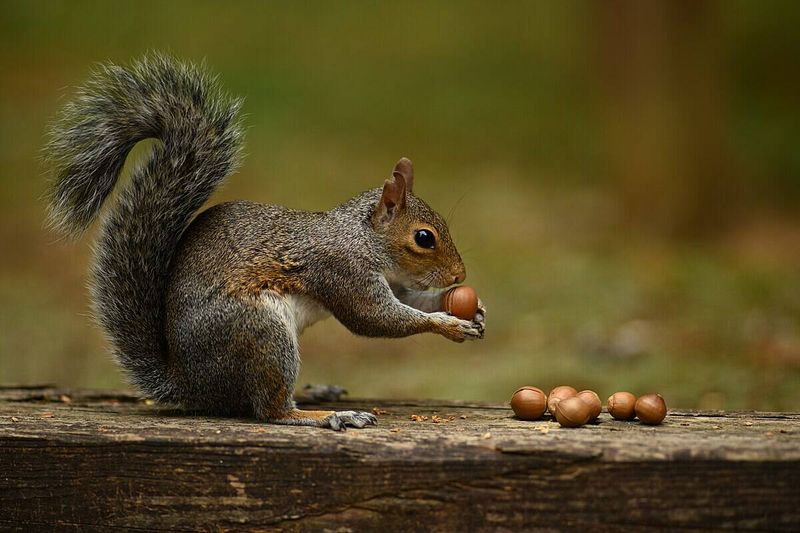
Squirrels move fast, but they cannot be everywhere at once.
When an oak produces acorns in ordinary numbers, the local squirrel population, plus the deer, jays, mice, chipmunks, turkeys, bears, and insects, can work through most of the crop before spring.
A mast year changes the math.
When production surges well beyond what the local consumer community can eat or cache, some seeds escape simply because there are too many of them.
Ecologists call this predator satiation, and it is considered one of the leading evolutionary explanations for why masting evolved.
The idea is that irregular, synchronized bumper crops occasionally overwhelm seed-eating animals and give a small fraction of acorns a better chance at germination.
Forest Service research on oak mast production and animal impacts on acorn survival in the central hardwoods found that animal consumption removes a large portion of the crop in most years, and that surviving acorns face further losses from insects, fungi, and poor burial conditions.
Predator satiation improves the odds for some seeds.
It does not guarantee a new tree.
An acorn that escapes a squirrel still has to avoid acorn weevil larvae, survive winter without rotting, land in soil with enough moisture and light, outcompete grass and other seedlings, and survive its first summer drought without being browsed by a deer.
Most acorns do not make it through all of those filters.
What a big crop does do is raise the number of acorns entering that gauntlet.
Even if only a fraction of one percent survive to become seedlings, a crop of thousands gives the species more chances than a crop of hundreds.
The strategy is statistical, not surgical, and it has worked well enough over millions of years to keep oaks as one of the most ecologically significant tree groups in North America.
Oak Species Keep Different Calendars
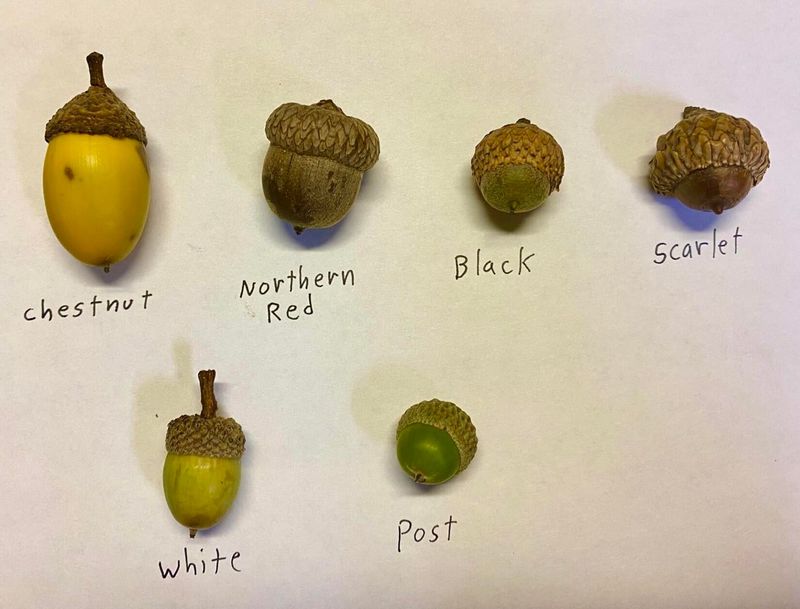
Not every oak in your neighborhood is on the same schedule, even if they are all dropping acorns right now.
The roughly 90 oak species native to the United States fall broadly into two groups, and those groups behave differently in ways that matter for both wildlife timing and any plans you might have for growing a new tree.
White oak group trees, which include white oak (Quercus alba), swamp white oak, and bur oak, generally mature their acorns in a single growing season.
Those acorns often begin germinating shortly after they fall, sometimes within weeks, because they do not need a cold period to break dormancy.
Red oak group trees, which include northern red oak, pin oak, and scarlet oak, typically take two growing seasons to mature their acorns, and the seeds usually require a cool, moist period before they will germinate.
Mississippi State University Extension reports that many oak species produce a good mast crop roughly every three to four years, while some white oak populations may go four to ten years between strong crops.
Neither interval applies universally across all species or all regions.
Iowa State University Extension recommends cold-moist stratification of about 30 to 60 days at 32 to 41 degrees Fahrenheit for bur oak acorns, and 30 to 45 days for red and pin oak acorns, before spring planting.
White oak acorns can often be planted directly in fall.
California black oak (Quercus kelloggii) is a useful example of how far species can diverge from a simple pattern.
Forest Service species review data show that California black oak acorns take two full years to mature, and synchrony among trees in some populations is weaker than in many eastern species.
Treat any general statement about oak cycles as a starting point, then look up your specific species and region before drawing conclusions.
Manage The Yard Without Wasting The Wildlife Value
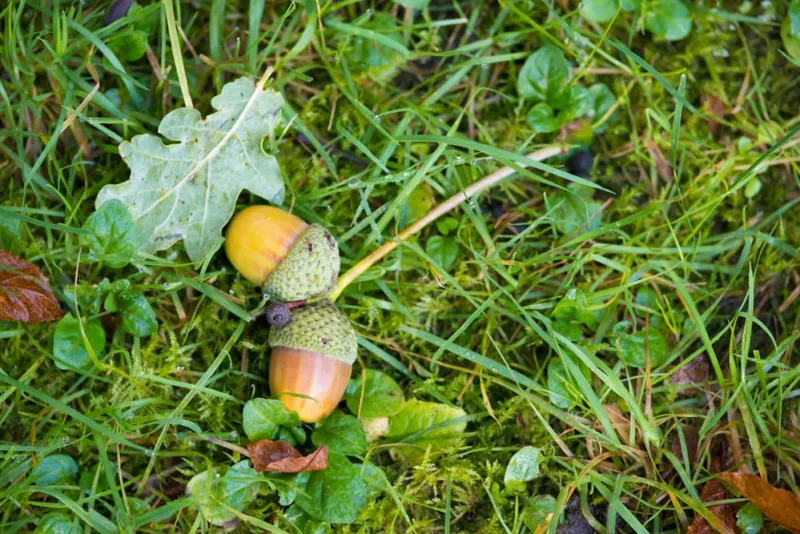
A hard acorn on a wet step is a genuine hazard.
Before anything else, clear thick accumulations from any surface where people walk, run, or change direction quickly: front steps, back porches, patio pavers, driveways, and any path between the house and a car, shed, or gate.
Acorns roll under a shoe the way marbles do, and a fall on a hard surface is a real injury risk, especially for older adults and kids moving fast.
Lawns deserve attention too.
A thin scatter of acorns will mostly disappear on its own as wildlife and decay do their work.
A thick mat of acorns left under a tree through winter can smother grass, create a barrier that keeps water from reaching roots, and turn into a rolling hazard every time someone crosses the yard.
Rake or collect heavy accumulations rather than waiting them out.
Massachusetts guidance on heavy acorn years recommends leaving some acorns in lower-traffic areas to support wildlife, and that is genuinely good advice for a backyard with a quiet corner.
Squirrels, blue jays, deer, wood ducks, wild turkeys, and black bears all use acorns as a critical fall and winter food source.
A modest pile under the far edge of the tree costs you nothing and feeds something.
Acorns are not soft leaf litter.
They are dense, hard seeds that attract wildlife, roll into paths, and do not break down quickly.
Do not treat them the same way you would a pile of maple leaves.
Pet and livestock safety is a separate concern from wildlife value.
ASPCA guidance on oak toxicity identifies tannins in acorns as harmful to horses and warns that large quantities can cause serious digestive problems.
Dogs and cats are less vulnerable than horses, but eating acorns can still cause vomiting, diarrhea, and abdominal discomfort, and a large acorn can cause an obstruction.
Keep dog paths and horse pastures clear.
If your horse has access to an area with heavy acorn drop and limited pasture grass, move the animal or fence off the area.
Do not reach for fertilizer, loppers, or a hose to try to reduce this year’s crop.
Mississippi State Extension is clear that management changes take years to affect acorn production in any meaningful way.
If the tree has dead wood, cracked limbs, or branches hanging over the roof, call a certified arborist, but do not prune simply because the acorn drop is inconvenient this season.
Some Escaped Acorns Matter, But None Guarantee A Forest
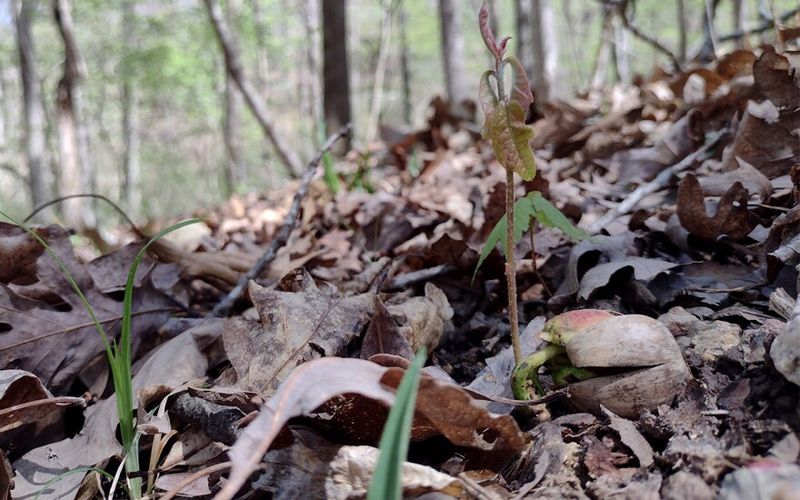
Every oak you have ever walked under started as a single acorn that made it past a remarkable number of obstacles.
A mast year raises the number of acorns entering that process, and some of those extra seeds will find a patch of soil, a burial depth, and a first-summer rain that lets them survive.
But a big crop does not translate directly into a new oak forest.
Forest Service research on acorn survival in the central hardwoods makes clear that animal consumption, insect damage, fungal rot, poor burial, drought, grass competition, and deer browsing eliminate most seeds before they become seedlings, even in a strong mast year.
Wildlife population effects from a heavy crop are real but complicated.
Acorns can support deer, bears, turkeys, and squirrels through a critical part of the year.
Research on oak and black bear relationships in southeastern uplands shows that acorn availability influences bear movement, body condition, and reproduction in meaningful ways.
But a surge in acorns can also increase rodent numbers in some regions, which sets off a chain of effects involving predators, parasites, and disease systems that can take a year or more to play out.
One effect worth knowing about is the potential connection between acorn abundance and Lyme disease risk.
A long-term study in southeastern New York found that acorn abundance two years earlier and rodent abundance one year earlier were strong predictors of Lyme-disease risk in that region.
The same study warned that acorns are not a universal predictor, because tick risk can be high in areas with few or no oaks.
Tick species, host availability, geography, and timing all interact.
A heavy acorn year is not a reason to panic, but it is a reasonable prompt to check your tick-prevention habits this fall and next summer.
The practical rule is simple: clear the surfaces that need to be safe, leave a modest patch for the wildlife that genuinely depends on it, and read the event through your local species and conditions.
The pile under your tree is a product of spring weather, tree biology, and decades of natural selection, not a forest-wide plan, and that makes it more interesting, not less.