
Never Walk On Your Bare Pennsylvania Soil Right After A Heavy Thunderstorm
Follow us on Google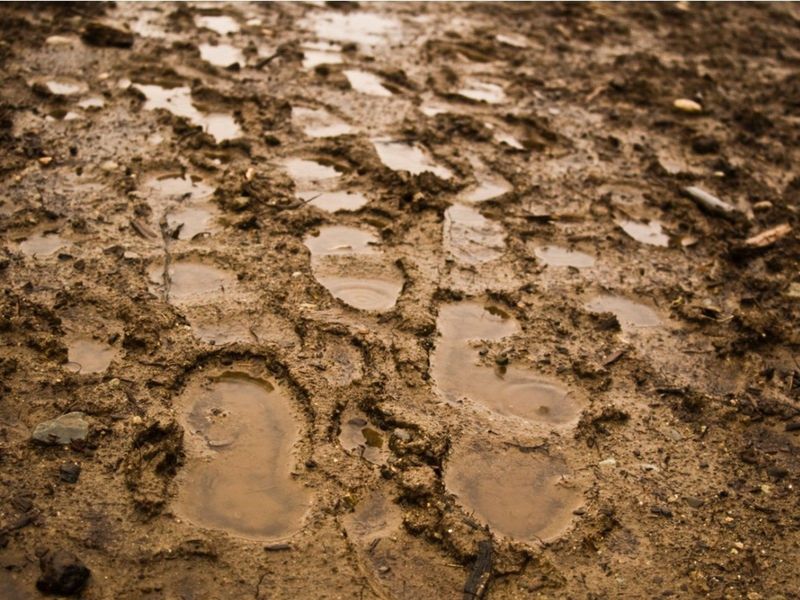
You walk outside after a summer thunderstorm, the air still smells like rain, and your first instinct is to check on the tomatoes or the flower bed along the fence.
That quick inspection might be doing quiet damage you won’t notice for weeks.
The real risk isn’t the storm itself but the pressure your feet put on soil that’s still saturated and vulnerable.
Knowing when your Pennsylvania garden bed is ready for foot traffic can save you a season of struggling plants and hard-packed ground.
The Thunderstorm Is Not The Whole Story
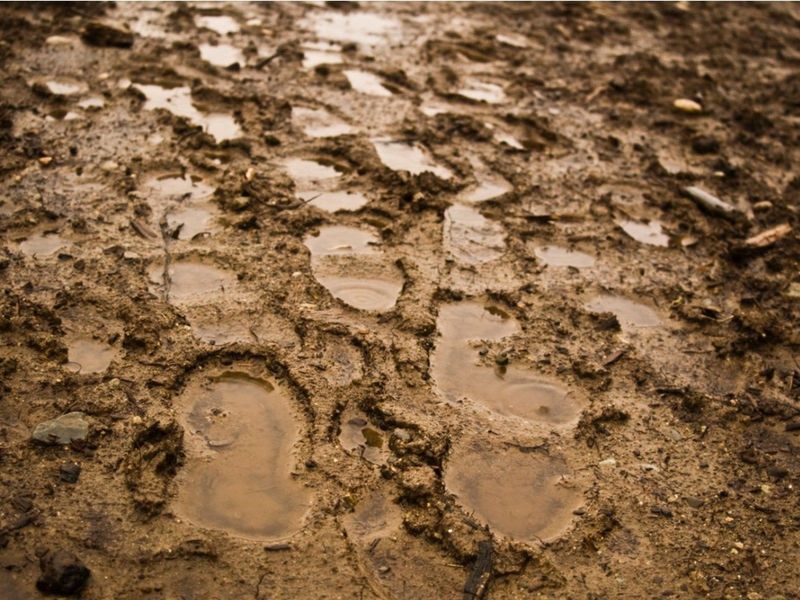
Step outside after a heavy Pennsylvania thunderstorm and the ground looks fine on the surface.
The beds are dark, the mulch is dripping, and everything smells like summer.
But the headline on this article isn’t quite the whole truth, and getting the nuance right actually helps you protect your garden better than a blanket rule ever could.
The storm itself isn’t the villain here.
What matters is whether your soil is still holding so much water that any pressure you apply will squeeze the particles together and close off the pore spaces roots depend on.
A single necessary step across the corner of a bed is not the same thing as repeatedly trampling a bare vegetable row to check every plant.
University of Maryland Extension identifies repeated foot traffic across wet garden soil as a cause of compaction, while noting that the resulting plant decline can develop over several years, not overnight.
Six things interact to determine how much risk any given step carries: moisture level, soil texture, whether the surface has any protective cover, how well the area drains, how much pressure each footstep applies, and how often that same patch gets walked on.
A well-drained sandy bed in a western Pennsylvania yard may be ready to walk on hours after a storm.
A dense clay bed in a shaded corner of the Delaware Valley might still be dangerously soft the next morning.
Penn State Extension advises waiting until garden soil is relatively dry before digging, planting, or stepping on it.
That’s the real rule.
Avoid unnecessary entry into bare planting beds until you test the soil yourself, and save the quick inspections for the path, not the bed.
Compaction Removes The Pore Space Roots Need
Healthy soil isn’t just dirt.
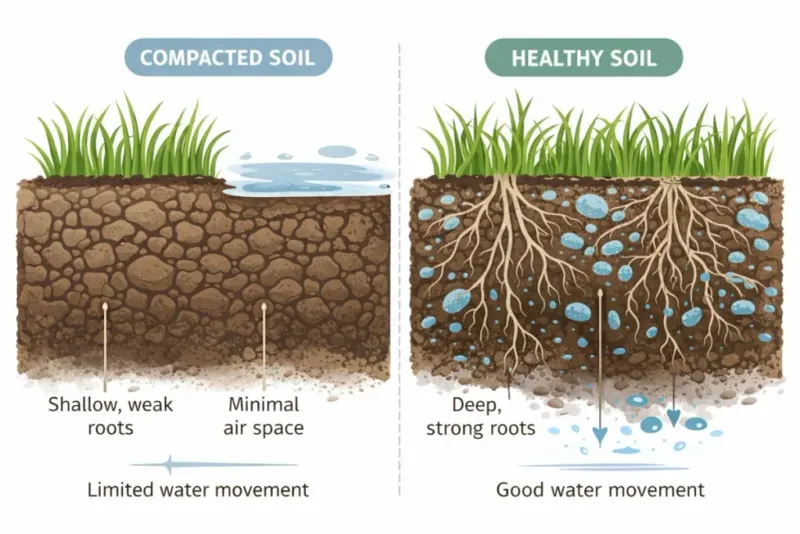
About half its volume, in good condition, is open space, pores filled with air and water that roots move through, that oxygen occupies, and that rainfall soaks into.
Compaction happens when pressure pushes soil particles closer together and collapses those pores.
What’s left behind is a dense layer that slows everything down.
Water infiltration drops, so rain runs off instead of soaking in.
Oxygen can’t reach roots.
Root tips hit resistance and turn sideways instead of growing down.
Over time, plants in compacted soil show up as stunted, yellowing, and prone to drought stress even after a wet week, because the soil can’t move water where it needs to go.
Penn State Extension’s overview of soil compaction effects connects reduced pore space directly to increased runoff, restricted root growth, and declining plant performance.
Water makes this worse because it acts as a lubricant.
When soil particles are wet, they slide against each other more easily under pressure, like wet sand shifting under your heel at the beach.
Dry particles resist movement.
Wet ones don’t.
USDA Natural Resources Conservation Service guidance on soil risks confirms that saturated soil is significantly more vulnerable to structural damage from applied loads.
Clay and silt soils are generally more susceptible than sandier ones because their fine particles pack together more tightly when wet.
But don’t treat this as a universal ranking across Pennsylvania.
A sandy loam bed that gets walked on repeatedly can still lose pore structure.
Colorado State Extension’s research on soil compaction notes that even coarser-textured soils lose pore space under sustained traffic.
Your soil’s actual condition on any given day matters more than its texture alone.
Bare Soil Can Also Form A Rain Crust
Here’s where it gets tricky.
Foot-traffic compaction and storm-driven surface crusting are two separate problems that can happen at the same time, and mixing them up leads to the wrong fix.
Knowing which one you’re dealing with changes what you do next.
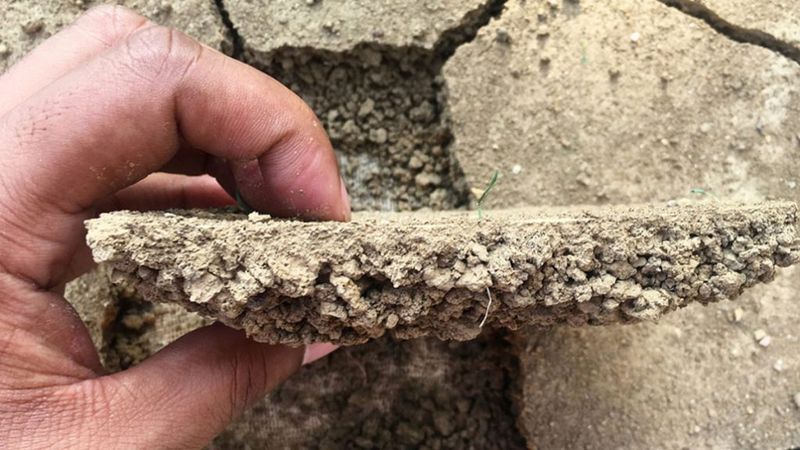
Raindrops hit exposed soil with surprising force.
On a bare vegetable bed or a freshly turned flower border, those drops break down soil aggregates, the little clumps of particles that give soil its crumbly texture.
Fine particles splash free and settle into surface pores, sealing them off.
What forms is a thin, dense crust that can slow or block water infiltration even after the soil below has dried out.
Penn State Extension’s guidance on infiltration surfaces explains that bare fine-textured soil is especially prone to this kind of surface sealing during heavy rain.
Footstep compaction works differently.
Your weight presses particles together downward through the soil profile, not just at the surface.
Both problems reduce how well water moves through the bed, but crusting is a surface issue while compaction can reach several inches deep, depending on soil moisture and how much pressure is applied.
A mulched bed, a planted bed with established root systems, or a bed covered with crop residue resists both problems better than bare soil does.
The cover absorbs raindrop energy before it reaches the surface and distributes foot pressure across a wider area.
Colorado State Extension notes that surface cover meaningfully reduces compaction risk under traffic.
After a big storm, look for sealed surfaces, muddy smears where you walked last time, standing water that wasn’t there before, or soil that looks smooth and glassy rather than crumbly.
Those are your signals, not the storm itself.
Use The Crumble Test Instead Of A Clock
Forget the clock.
Whether your soil is ready to walk on, dig in, or plant after a storm has nothing to do with how many hours have passed.
It has everything to do with what the soil actually does when you handle it.
The test is simple.
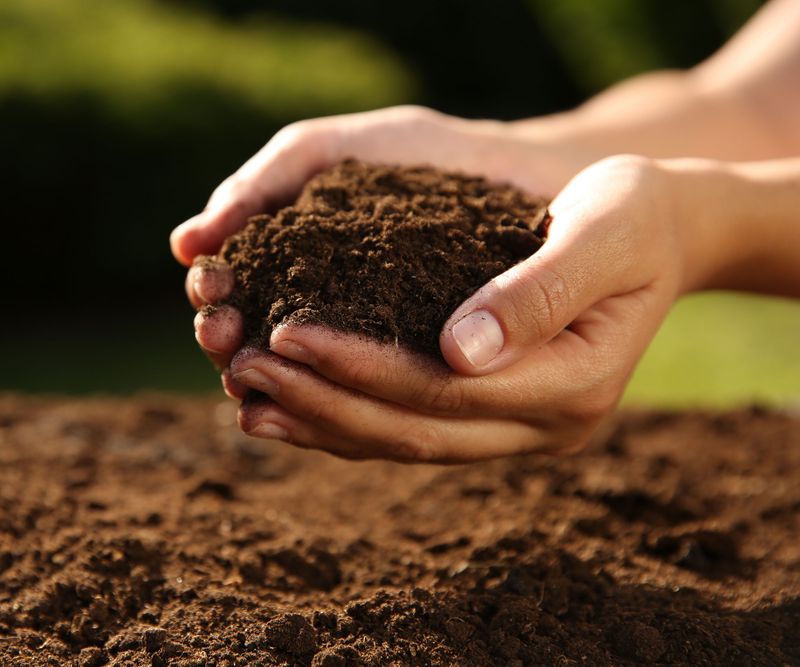
Reach into the bed and pull up a handful of soil from planting depth, roughly 4 to 6 inches down.
Squeeze it firmly in your fist, then open your hand.
If the soil stays in a muddy ball, smears when you poke it, or reshapes like soft clay, it’s still too wet.
Penn State Extension describes workable soil as soil that crumbles readily after being pressed, not soil that holds a shape or leaves residue on your palm.
When it crumbles, you’re clear to proceed.
Recovery time genuinely varies from yard to yard and storm to storm.
A raised bed with good drainage and sandy loam fill might pass the crumble test within a few hours of a moderate rain.
A flat, shaded bed with heavy clay soil in a corner of a Poconos backyard might still fail it 18 hours later.
Colorado State Extension’s compaction research reinforces that soil texture and existing moisture level are the primary drivers of vulnerability, not the elapsed time since rain stopped.
Penn State’s guidance on avoiding soil compaction references field-capacity conditions approximately 24 hours after soaking rain as a worst-case research scenario, not as a universal waiting rule for home gardens.
Slope, shade, drainage, rainfall intensity, and the season all shift that number.
The squeeze test gives you a real answer for your specific bed on that specific day.
No timer required.
Keep Your Feet On The Path
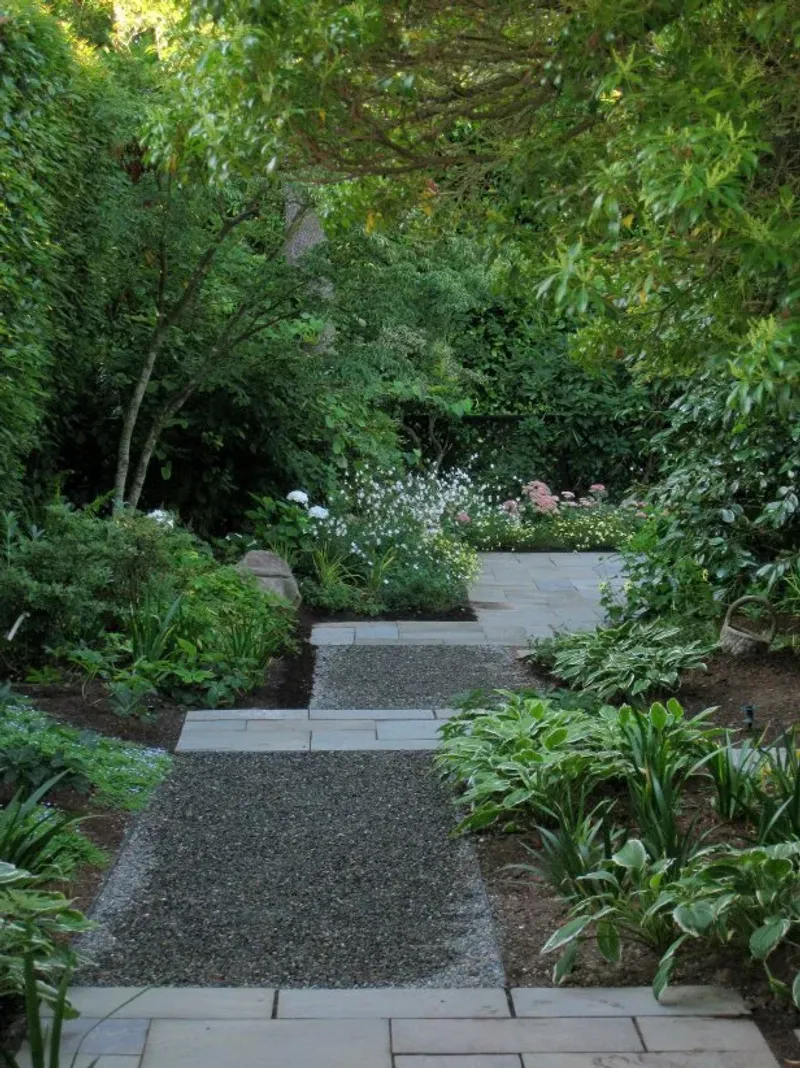
Prevention is easier than repair, and most of the damage to wet planting beds happens during quick, unplanned visits.
The fix is boring but it actually works: stop crossing the bed and start using the path.
Established paths, whether gravel, stepping stones, wood chips, or compacted gravel, distribute your weight across a stable surface and keep your feet off the soil entirely.
When you need to inspect plants after a storm, walk the perimeter and lean in.
If you can’t reach the center of the bed from the edge, that’s a design problem worth solving now rather than every time it rains.
Raised beds solve this permanently when they’re sized correctly.
Penn State Extension’s Lancaster County raised bed guide notes that adult gardeners can generally reach the center of a bed about 4 feet wide without stepping inside.
A York County Master Gardener guide on raised bed gardening recommends walkways of at least 3 feet between beds so you have a stable, comfortable place to stand while working.
Build to those dimensions once and you eliminate the temptation to step in every time you want a closer look.
For existing in-ground beds, 3 to 4 inches of wood or bark chip mulch can reduce the impact of both rainfall and occasional foot traffic on the soil below.
Colorado State Extension identifies surface cover as a meaningful buffer against compaction under foot pressure.
But mulch is a preventive layer, not a free pass.
Repeatedly trampling a mulched bed while the soil underneath is saturated still transfers pressure downward.
Use the path, and treat the mulch as backup protection, not a substitute for staying off the bed.
Treat Turf Differently From A Bare Bed
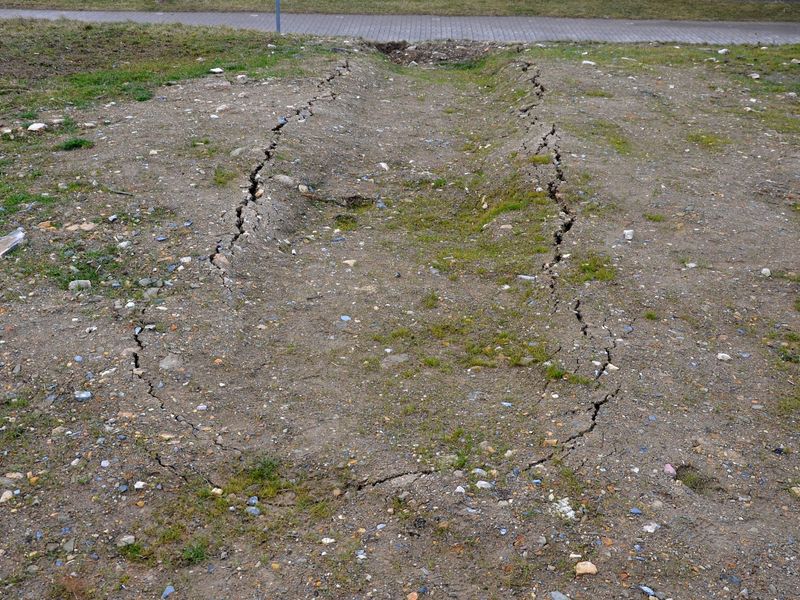
An established lawn and a bare vegetable bed are not the same thing after a storm.
Treating them identically leads to either unnecessary panic about your grass or, worse, ignoring real damage in your planting beds.
Turf has several layers of protection that bare soil doesn’t.
Living grass roots hold particles in place.
Thatch and surface residue absorb some of the impact from both rain and footsteps.
The root network itself creates structure that resists immediate compaction better than bare exposed soil.
A single walk across your lawn to get the mail after a summer storm is not a crisis.
Repeated walking along the same route, week after week on wet ground, is the real concern, because those compacted paths develop over time.
USDA NRCS soil risk guidance confirms that surface cover, including living vegetation, meaningfully distributes pressure and reduces compaction risk compared to bare ground.
Still, do not mow or roll a soft lawn immediately after a heavy storm.
Mower wheels on saturated turf create ruts and press the soil below the root zone.
Wait until the grass blades spring back upright and the surface no longer feels spongy underfoot.
Core aeration is a useful tool for lawns with suspected compaction, but it belongs in specific seasonal windows, not in response to every storm.
Penn State Extension’s seasonal lawn management guide recommends core aeration during cool, active growing periods, generally early to mid-spring or late summer to early fall.
Penn State’s fall lawn care tips describe hollow tines typically 3 to 4 inches long and 1/4 to 3/4 inch wide as the right tool, and reserve the practice for turf that shows signs of actual compaction, not just post-storm softness.
Solid-spike tools are not a substitute for hollow-core aerators.
Repair A Garden Bed Only When It Is Workable
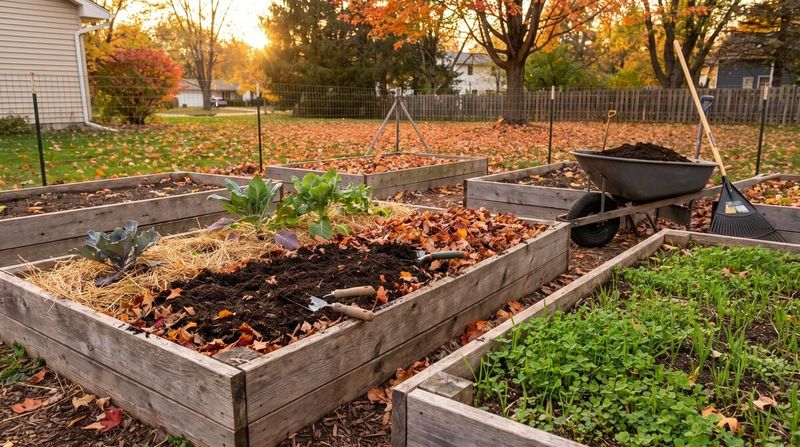
You’ve spotted the problem: a section of bed that stays wet too long, a traffic route through the garden that’s packed hard, or plants that are yellowing despite regular rain.
The instinct is to grab a tool and fix it right now.
That instinct is wrong if the soil is still wet.
Rototilling or aggressively digging wet clay soil is one of the worst things you can do to it.
The tines smear particles together instead of separating them, destroy the aggregate structure you’re trying to restore, and can leave behind persistent clods that harden into chunks as the soil dries.
This is especially true for the clay-heavy soils common in parts of southeastern Pennsylvania and the central valleys.
Wait for the crumble test to pass before you touch the bed with any tool.
Once the soil is workable, the most supported long-term fix is organic matter.
Penn State Extension recommends incorporating roughly 1 to 3 inches of compost or organic matter into the top 6 to 12 inches of bed soil when conditions allow.
Organic matter improves soil structure over one or more seasons, not overnight, so don’t expect one application to erase a compacted layer.
It’s one layer of a broader approach.
Penn State’s raised bed soil health guidance reinforces that building organic matter consistently over time produces more lasting results than any single intervention.
Do not add sand to Pennsylvania clay as a general remedy.
Colorado State Extension warns that adding insufficient sand to clay can reduce pore space or produce a concrete-like mix.
Reduced traffic, organic matter additions, and correcting any drainage issues are the safer, more reliable path.
Let the soil tell you when it’s ready, and then work with it, not against it.
Protect Tree And Shrub Root Zones
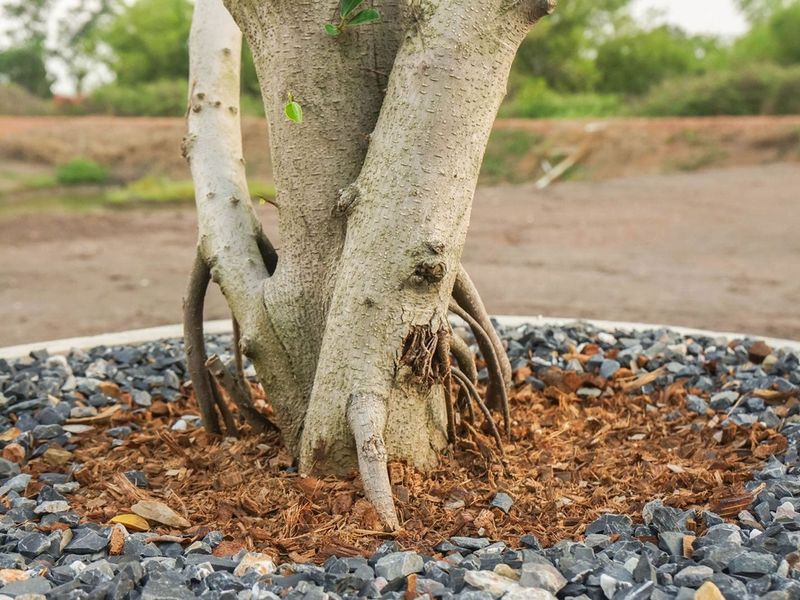
Established trees and mature shrubs deserve a different kind of caution than your vegetable bed.
The root zones of woody plants extend much farther from the trunk than most people expect, often well beyond the drip line, and those roots are not designed to handle repeated disturbance.
After a heavy storm, the temptation might be to dig around the base of a tree to improve drainage or to loosen what looks like compacted soil near the roots.
Resist it.
Deep digging or aggressive cultivation in a root zone can sever the fine feeder roots that trees depend on for water and nutrients.
Damage to those roots doesn’t always show up immediately.
A stressed tree may decline gradually over two or three growing seasons before the connection to root-zone disturbance becomes obvious.
University of Maryland Extension advises against cultivating compacted soil around established trees and shrubs without professional evaluation, and notes that in selected cases, certified arborists may use air-spade equipment to relieve compaction without cutting roots.
That’s not a do-it-yourself remedy.
If you suspect a mature tree is declining because of compacted or waterlogged soil near its base, the right move is a call to a certified arborist, not a shovel.
The practical post-storm step for trees is simple: keep a ring of mulch 3 to 4 inches deep out to at least the drip line, and stay off the root zone.
Don’t park equipment there, don’t pile storm debris on it, and don’t let foot traffic from cleanup work repeatedly cross the same path through it.
Protecting the root zone before a storm causes trouble is far easier than trying to repair it afterward.
Let Soil Condition Guide The Next Step
The headline on this article is a useful warning, but not a universal law.
One unavoidable footprint across a corner of a wet bed is not going to ruin your garden.
Repeated foot traffic across saturated, bare planting soil, week after week through a wet Pennsylvania summer, is what creates the persistent, localized compaction that plants actually struggle to grow through.
The practical routine is straightforward.
After heavy rain, stay on established paths while the ground is still soft.
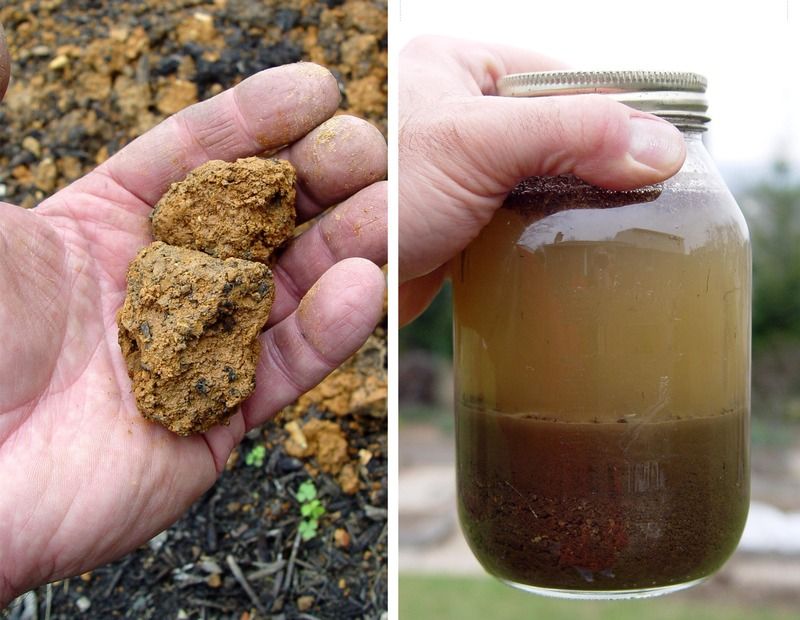
Before entering a bare planting bed for any reason, run the crumble test.
Grab a handful of soil from 4 to 6 inches down, squeeze it, and open your hand.
If it crumbles, you’re good.
If it smears or holds its shape, give it more time.
Penn State Extension’s home garden soil guidance puts it plainly: wait for relatively dry, workable conditions before digging, planting, or stepping in.
Pennsylvania yards don’t all behave the same way.
A well-drained raised bed in the Susquehanna Valley might be ready hours after a storm.
A heavy clay bed on a shaded slope in the Laurel Highlands might need a full day or more.
Penn State’s compaction avoidance guidance is clear that no single timetable applies across different textures, drainage conditions, and site histories.
Observation beats an arbitrary countdown every time.
The soil in your backyard is genuinely trying to do its job.
Give it the chance to recover between storms, and it will keep supporting your plants through every wet summer Pennsylvania can deliver.