
This Tiny Pest Is Quietly Wrecking Pennsylvania Blueberry Bushes Right Before Harvest
Follow us on Google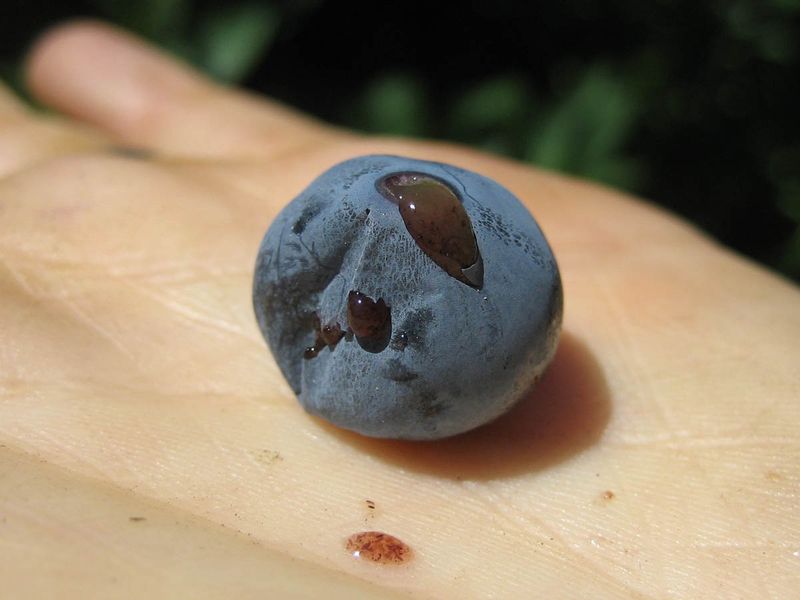
You walk out to your blueberry bushes on a warm July morning, ready to finally pick, and the berries that looked perfect yesterday are soft, leaking, or just collapsing in your hand.
Something got there first, and you never saw it coming.
A tiny invasive fruit fly called spotted-wing drosophila is one likely culprit in Pennsylvania backyard plantings, though soft or leaking berries alone are not enough to confirm it.
Knowing what to look for, how to check, and what actually works can save a real portion of your harvest this season and the next.
A Likely Suspect, Not a Diagnosis
Soft, leaking blueberries near harvest are genuinely alarming, but the headline overstates the case.
Spotted-wing drosophila, or Drosophila suzukii, can damage Pennsylvania blueberry fruit and has caused serious losses for some growers, yet it does not wreck every bush in the state, and its symptoms do not prove its presence on their own.
Your berries may be failing for another reason entirely, and treating the wrong problem wastes time and money.
So what makes this fly different from the ordinary vinegar flies hovering around your recycling bin?
Common fruit flies generally wait for fruit to rot or ferment before moving in.
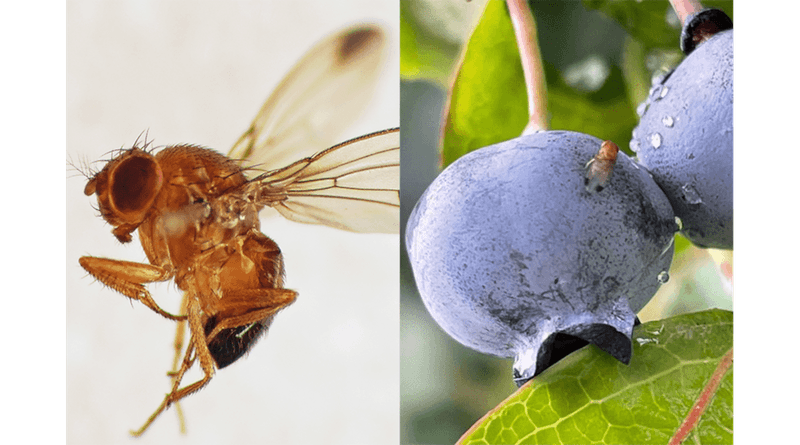
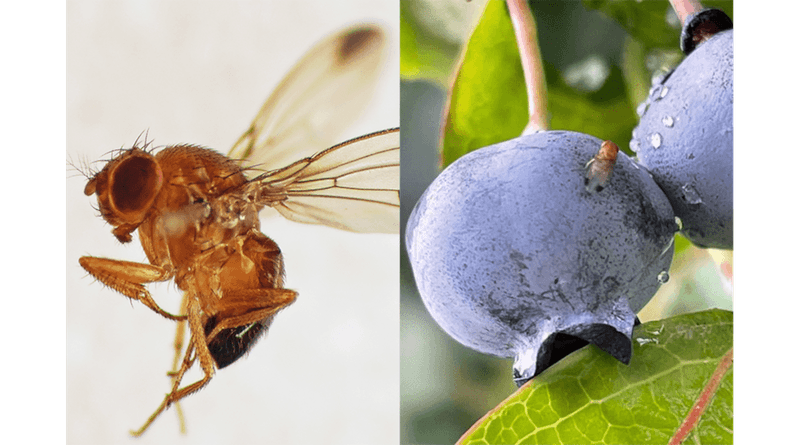
Penn State Extension’s spotted-wing drosophila fruit monitoring guidance explains that SWD females carry a serrated, saw-like egg-laying structure that can pierce intact, still-ripening berries, which means the fly is not waiting for decay.
It is creating the problem from the inside before you ever notice anything wrong on the surface.
Adults are roughly 1/16 to 1/8 inch long, about the size of a sesame seed.
Males have a single dark spot near the tip of each wing, which is the field mark most people recognize.
Females lack those obvious spots, so a quick glance at the bushes will not tell you whether the pest is present.
A hand lens or trap is far more reliable than a naked-eye scan of the planting.
The practical takeaway here is provisional: SWD is a plausible and documented explanation for certain blueberry losses in Pennsylvania, but traps or a fruit examination must support that suspicion before you act on it.
Penn State’s natural history overview of SWD notes that local risk varies considerably by site, season, and nearby host plants, which means your neighbor’s berry patch and yours can face very different pressure even in the same neighborhood.
Why Healthy-Looking Berries Fail Near Harvest
Here is where it gets tricky.
A female SWD lays her eggs inside a berry while it is still ripening and looks perfectly fine from the outside.
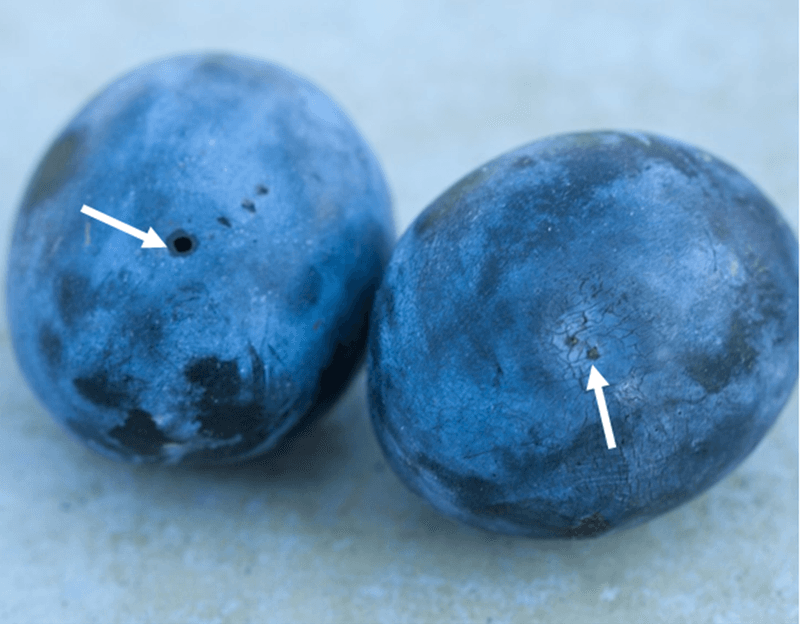
The larvae hatch and feed within the fruit, and the first sign you may notice is a tiny pinprick hole, a soft spot, or juice seeping through the skin.
By the time you see that, the damage is already done inside.
The collapse often becomes most obvious right around harvest, or even a day or two afterward when berries sit at room temperature.
That timing has led many Pennsylvania gardeners to assume something attacked the fruit at the last minute, but egg-laying can begin earlier, as berries start to color and soften.
University of Minnesota Extension’s SWD guidance notes that symptoms may not appear until after picking or after berries rest at room temperature, which explains the frustrating pattern of picking what looks like a good crop and watching it fall apart in the bowl.
Pinprick holes, shriveling, leakage, and sudden softening are clues worth taking seriously, but they are not a diagnosis.
Sunscald can produce spots and soft areas that look nearly identical to SWD injury, and other damage can mimic the same signs.
Do not skip the confirmation step.
Penn State’s highbush blueberry production resource reports that later-season crops can face greater fly pressure as SWD populations build through summer, and some Pennsylvania growers have lost large portions of late-summer and fall berry crops.
But risk is genuinely site-specific.
A planting in the Poconos with a cooler microclimate and different surrounding vegetation may face a very different timeline than one in the Delaware Valley, where warm, humid summers can accelerate fly activity.
Local monitoring, not statewide generalizations, tells you what is actually happening in your yard.
Check the Fruit Before You Treat
Reaching for a spray bottle the moment you see a soft berry is a move many southeastern Pennsylvania gardeners regret later.
Sunscald, mechanical bruising, and other fungal or insect problems can all produce damage that looks like SWD injury, and spraying for the wrong pest adds cost and chemical exposure without solving anything.
Confirming the actual problem first is the smarter path.
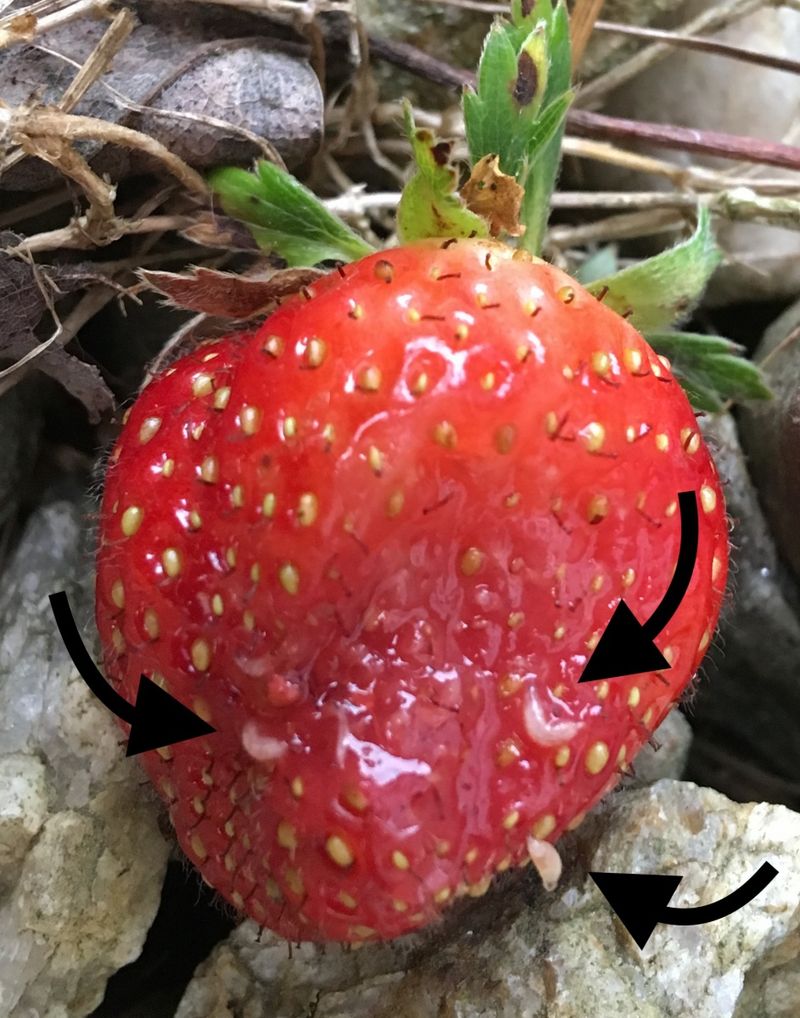
A straightforward fruit check uses a salt solution: dissolve 1/4 cup of salt in 4 cups of water, then place sound-looking, intact berries into the solution and wait about 15 minutes.
Penn State’s monitoring guidance describes this method and notes that small white, legless larvae floating to the surface after soaking suggest SWD activity.
The larvae are tiny, so good lighting and a magnifying glass help.
One important limitation: the salt-water test is not species-specific.
Other maggots can look similar, and a positive result does not identify SWD by itself.
Combine what you find in the fruit with what your traps are showing and with the visible symptoms on the plant.
Finding larvae in fruit alongside adult flies in a trap is a much stronger signal than either piece of evidence alone.
Penn State’s small fruit alert on SWD reinforces that sunscald can closely resemble SWD injury and that fruit should be checked through monitoring or a larval test before any firm diagnosis is made.
Finding one adult in a trap or a few larvae in a salt-water check is a warning to act promptly and inspect more fruit, not proof that every berry on the bush is infested.
Keep the response proportionate to what the evidence actually shows.
Start Monitoring Before the Berries Color
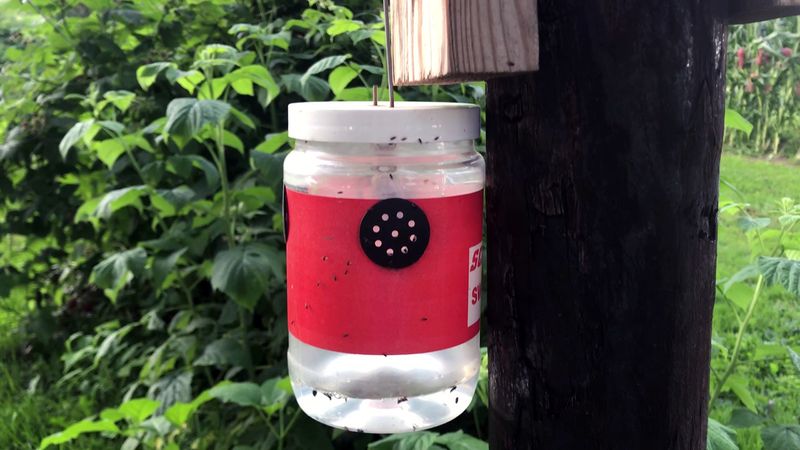
Waiting until you see damage to set a trap is like installing a smoke detector after the fire.
The most useful thing a trap can do is warn you before losses begin, which means getting it in place about two weeks before your berries start to color.
For most Pennsylvania blueberry plantings, that window falls somewhere in late June through mid-July depending on variety and location, with later-maturing varieties in the northern tier or at higher elevations on the Allegheny Plateau pushing that timing into August.
For a small backyard planting, a homemade trap works well.
Use a clear container, such as a 32-ounce deli container or a clean plastic bottle, and punch 6 to 12 holes roughly 3/16 inch wide around the upper sides.
Add 1 to 2 inches of apple cider vinegar and one drop of unscented dish soap to break the surface tension.
Penn State’s SWD monitoring guide recommends hanging the trap at fruit height on the shady, humid side of the planting, where flies tend to concentrate.
Check the trap daily once berries begin coloring if you can manage it, or at least twice per week.
Change the bait and any sticky card inside at least once a week, because a stale trap stops working.
Finding even one adult is a cue to inspect fruit immediately and tighten up your harvest schedule, not a signal to panic.
Traps measure activity, they do not control it.
Penn State is direct on this point: intensive trapping did not noticeably reduce SWD numbers in Pennsylvania, and the bait is not more attractive to flies than ripe fruit is.
Think of the trap as your early warning system, not your defense.
The real protection comes from what you do after the trap signals that flies are present.
Remove Breeding Fruit and Chill the Harvest
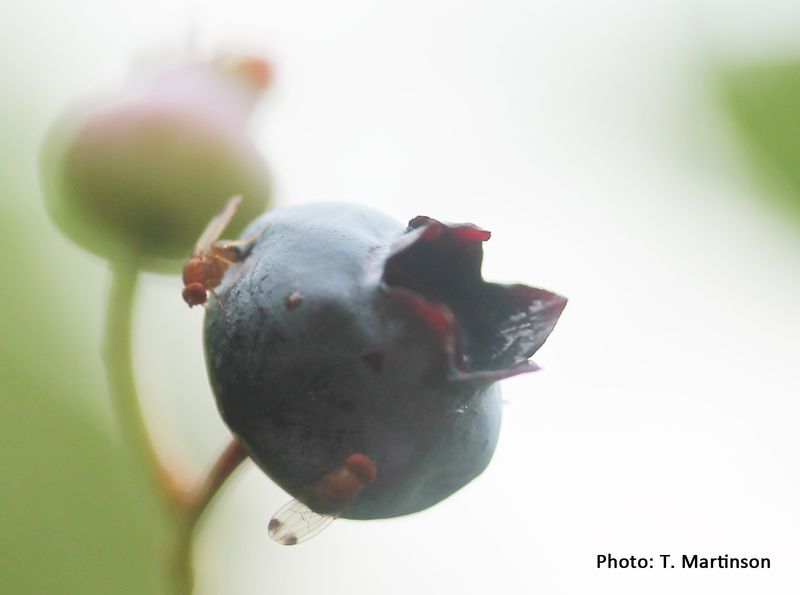
Every overripe, dropped, or damaged berry left on the ground beneath your bushes is a nursery for the next generation of flies.
SWD females lay eggs in soft or ripening fruit, larvae mature inside, and new adults emerge to start the cycle again.
Cleaning up that fallen fruit is one of the most direct things you can do to slow that cycle in your own yard.
Pick ripe berries frequently, every two to three days during peak ripeness, and pull any overripe or damaged fruit off the plant and off the ground.
Do not toss suspect berries into your regular compost pile.
Penn State’s SWD management guidance is clear that SWD can continue developing and emerge from fruit in a compost pile, and crushing the berries alone does not stop that from happening.
For backyard disposal, two options stand out as genuinely reliable.
Seal the suspect fruit in a plastic bag and set it in full sun for at least a week before discarding it.
Oregon research summarized by Penn State found that solarizing bagged fruit this way killed eggs and larvae.
The other option is to seal the bag and put it in the trash rather than the compost.
Burial depth guidance is inconsistent across extension sources, so bagging or solarizing is the safer and clearer recommendation for a home gardener.
Penn State’s small fruit alert also recommends refrigerating picked berries as close to 32 degrees Fahrenheit as practical.
Chilling slows or stops larval development inside any berries that may already be infested, and it preserves fruit quality for berries that are clean.
Sanitation reduces breeding pressure in your yard, it does not guarantee eradication, but it genuinely moves the odds in your favor.
Install Fine Netting Before Flies Reach the Fruit
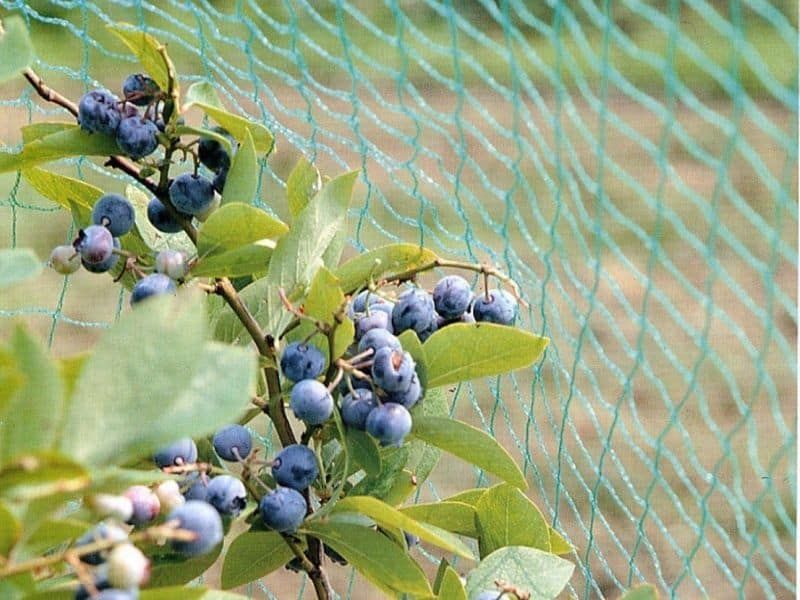
A physical barrier between the flies and your berries sounds simple, and for a small planting it actually is, as long as you use the right mesh and seal it properly.
The catch is that most of the bird netting sold at garden centers will not do the job.
Coarse bird netting has openings large enough for SWD to pass through regardless of where you live in Pennsylvania, from the Laurel Highlands to the Susquehanna Valley.
Penn State’s management guidance specifies mesh finer than 0.98 millimeters, or 18 mesh and finer, as suitable for excluding SWD.
University of Maryland Extension’s Mid-Atlantic blueberry resource describes effective material measuring approximately 1.0 by 0.6 millimeters.
Look for insect barrier fabric or fine row-cover mesh marketed specifically for small insects, not the wide-weave deer or bird netting most stores carry.
Timing matters as much as mesh size.
Install the netting after flowering ends but before susceptible fruit is exposed to meaningful SWD activity, because a net installed after flies are already inside the enclosure traps the problem with the crop rather than excluding it.
UC IPM’s blueberry pest management guidelines reinforce that exclusion works as a preventive measure, not a remedy for an already-infested planting.
The netting must be sealed at the base and along any seams, not simply draped over the bushes.
Gaps invite the flies right in.
Fine mesh can also reduce airflow, complicate picking, and create conditions favorable to fungal disease in humid Pennsylvania summers, so plan for how you will open and reseal the enclosure at harvest time.
For a small backyard row of three to five plants, this is manageable as a seasonal barrier during fruit development, and it is one of the more effective nonchemical tools available.
Use Pesticides Only When the Label Supports Them
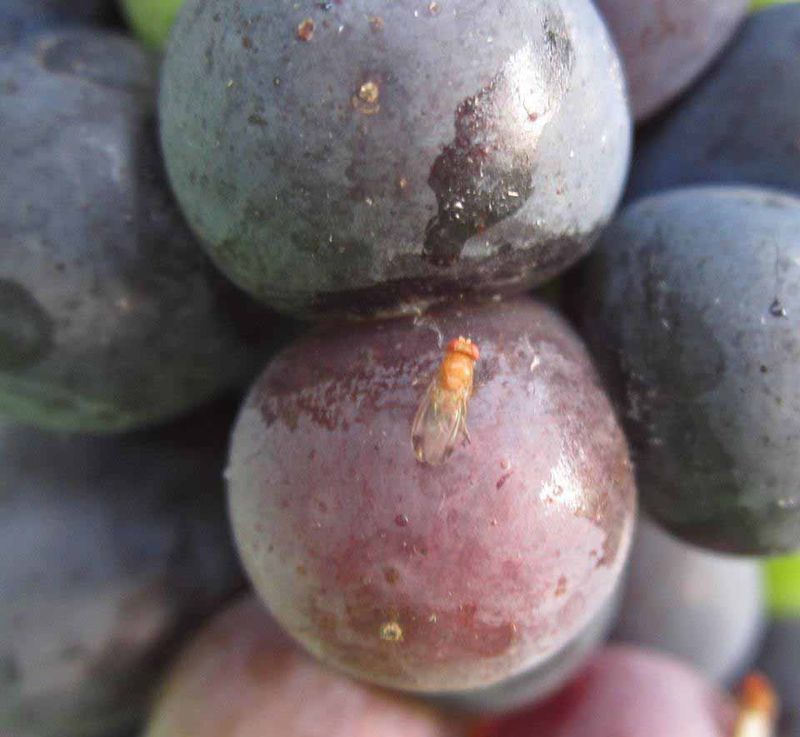
Spraying the moment you spot a soft berry is one of the most common mistakes Pennsylvania backyard growers make with SWD, and it is also one of the least effective responses.
UC IPM’s blueberry pest management guidelines make the mechanism plain: insecticides work by killing exposed adult flies before they lay eggs or enter fruit.
They do not reach larvae already developing inside a berry.
If the damage is visible, the larvae are already protected inside the fruit, and spraying now will not rescue those berries.
Chemical control fits into a broader integrated plan when monitoring shows adult fly activity and berries are approaching the susceptible stage, not after the fact.
Several insecticide classes show strong efficacy against SWD adults in commercial programs, including pyrethroids, spinosyns such as spinosad, diamides, some organophosphates, and carbamates.
But product availability, crop registration, pre-harvest intervals, and re-entry restrictions differ widely, and what a commercial grower applies per acre is not what a homeowner should put into a backyard sprayer.
Penn State’s 2024 Pennsylvania SWD update is direct: the current product label is the controlling authority for legal pesticide use.
Before applying anything, confirm that the product is registered for blueberries, check the active ingredient, the maximum number of applications, the pre-harvest interval, the re-entry interval, and any pollinator restrictions.
Do not borrow a rate from a commercial guide and scale it down by eye.
Apply treatments in the evening when pollinators are less active, avoid spraying open flowers entirely, and prevent drift onto neighboring plants or water.
University of Minnesota Extension’s SWD guidance notes that resistance is a documented concern and that rotating insecticide classes when repeated treatments are necessary helps slow its development.
And do not assume that a spinosad product is automatically safe because some formulations are approved for organic production.
Spinosad can harm pollinators and still requires label-compliant use, timing, and rates.
Build a Layered Plan for Your Pennsylvania Site
No single step here will solve an SWD problem on its own, and that is actually fine once you understand how the layers work together.
The sequence that holds up best across Pennsylvania sites starts about two weeks before your berries begin to color: hang a trap at berry height on the shady side of the planting, check it at least twice a week, and inspect fruit at the first sign of adult activity using the salt-water method.
From there, pick ripe berries every two to three days during the harvest window, pull dropped and overripe fruit from beneath the bushes, seal any suspect culls in plastic bags and solarize them in full sun for at least a week before disposal, and refrigerate the harvest as close to 32 degrees Fahrenheit as practical.
Where your planting size and setup allow it, install fine mesh of 0.98 millimeters or finer after flowering ends but before berries reach the susceptible coloring stage, sealed at the base with no gaps.
Penn State’s SWD management guidance supports each of these steps as part of a combined approach rather than as standalone solutions.
Healthy blueberry culture supports plant vigor and airflow, and that matters for spray coverage and disease prevention.
Penn State’s home blueberry planting guide recommends full sun, well-drained acidic soil with a pH of 4.5 to 5.0, about 4 inches of mulch, and at least 1 inch of water per week for established plants.
Those practices keep your bushes productive, but they will not stop SWD on their own.
Natural enemies including parasitoid wasps are present in parts of the Mid-Atlantic and may contribute to suppression over time, as Penn State’s 2024 update describes, but beneficial insects are not a reliable fix for an active infestation.
On the food-safety question, University of Minnesota Extension states there is no known human-health risk from eating fruit containing SWD, though you should discard visibly decayed or sour-smelling berries and wash fruit normally.
The pest is a crop-quality problem, not a health emergency.
Let your own trap counts and fruit checks guide your response, because your yard’s pressure is the number that actually matters.