
That Tree Dropping Leaves In August Is Not Turning Early, It Is Begging You For Water
Follow us on Google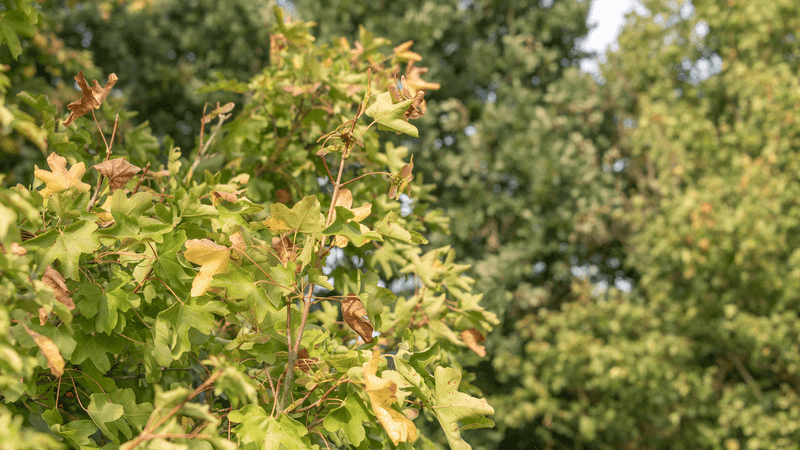
Something looks off about that tree in your yard.
The leaves are yellowing, dropping, or turning a dusty red-brown, and it is only August.
Before you assume fall arrived early, consider that your tree may be telling you something more urgent about heat, dry soil, or another problem hiding underground.
Knowing the difference could save the tree, protect your property, and keep your family safe from a failing branch.
August Leaf Drop May Signal Stress—or Normal Timing
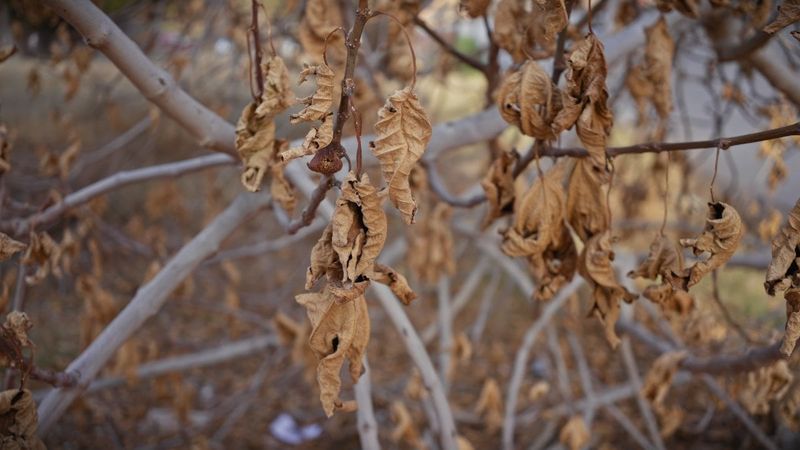
Leaves collecting on the lawn in August catch your attention fast.
Your first thought might be that fall came early, but the calendar is not the problem.
A tree showing early color, scorch along leaf edges, wilting, or a noticeably thin canopy in midsummer may be reacting to heat, dry soil, or something more complicated happening below the surface.
The honest answer is that August leaf drop is a reason to look closer, not proof of any single problem.
University of Minnesota Extension’s August garden checklist notes that drought, flooding, mechanical injury, disease, insect damage, and other stressors can all produce early color and leaf drop.
Some tree cultivars naturally begin coloring weeks before their neighbors, so timing alone does not tell you what is wrong.
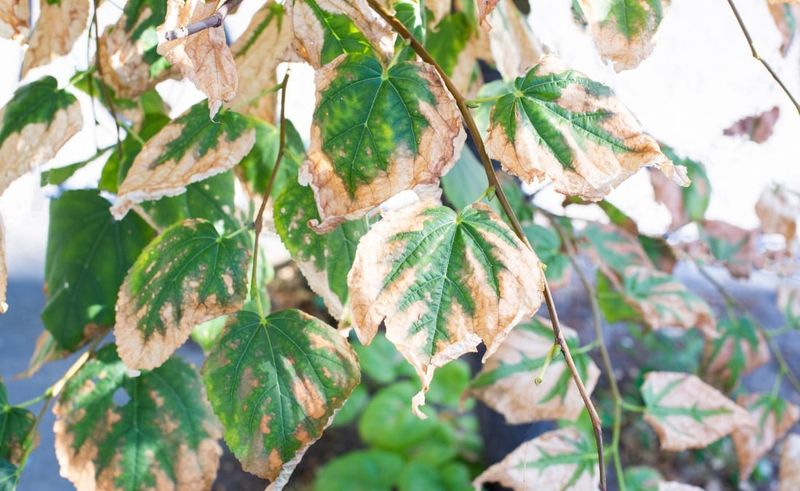
Common drought and heat symptoms include leaf scorch, where edges and tips turn brown while the center stays green, along with smaller-than-normal leaves, sparse patches in the canopy, wilting that does not recover overnight, and early leaf color that spreads across much of the tree.
University of Minnesota’s guidance on maples turning red in August points out that early color does not automatically mean the tree will die, but it does mean something worth investigating is happening.
Excess water, saturated soil, compacted ground, root injury, transplant shock, insects, and fungal disease can produce symptoms that look nearly identical to drought.
Penn State Extension’s overview of abiotic urban tree stressors explains that heat increases water loss through evapotranspiration, while other stressors block the tree from replacing that moisture even when water is present in the soil.
The right next step is not reaching for a hose.
Walk over to the tree and check the soil first.
How Heat and Drought Trigger Leaf Loss
On a 95-degree afternoon, a large shade tree can push dozens of gallons of water out through its leaves every hour.
That process, called evapotranspiration, is how a tree cools itself and moves nutrients, but it demands a steady supply of soil moisture to keep going.
When the soil runs dry and the roots cannot keep up, the tree faces a real problem.
Oregon State University Extension’s guide on drought stress in landscape trees explains that when water demand outpaces supply, leaves begin to wilt, scorch, and eventually drop.
Shedding leaves reduces the surface area losing water, which buys the tree time.
Think of it as the tree closing its windows during a heat wave, not a signal that it is giving up.
The symptoms follow a rough progression.
Wilting appears first, often recovering at night when temperatures drop.
Then leaf edges scorch and turn brown.
Leaves may curl, turn yellow, or shift to early fall color across large portions of the canopy.
In severe or extended drought, smaller branches and twigs can die back as the tree pulls resources toward its core.
That branch dieback is worth understanding clearly.
Penn State Extension notes that drought can contribute to branch dieback, but dead limbs are a structural hazard that exists separately from the water problem.
Leaf drop is a stress response.
Limb failure is a safety issue.
Watering a drought-stressed tree may help it recover, but it will not automatically restore dead branches or reverse damage that has already progressed too far.
Test Root-Zone Moisture Before You Water
Grab a long screwdriver, a wooden dowel, or a soil probe and walk out under the tree.
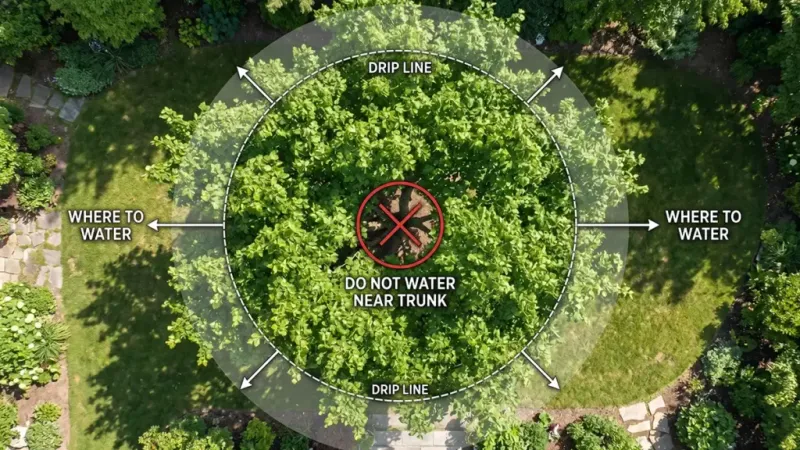
Push it into the ground at several spots beneath the canopy, not just next to the trunk.
The trunk sits at the center of the root zone, but the roots that actually absorb water spread outward, often reaching to the edge of the canopy and beyond.
You are checking whether the soil is genuinely dry through the active root zone.
Useful inspection depths vary depending on the tree, soil type, and regional guidance.
Utah State University Extension’s guidance on browning leaves and other dossier sources reference inspection depths ranging from roughly 6 to 18 inches as reasonable targets, depending on local conditions.
If the probe slides in easily and comes out damp, the tree likely has enough moisture.
If it meets resistance and comes out dusty, the soil is dry and watering makes sense.
Wet or saturated soil is a different story entirely.
Overwatered or poorly drained soil reduces the oxygen available to roots, and the damage can look exactly like drought stress from above.
Penn State Extension’s resource on abiotic diseases of woody ornamentals explains that root problems from compaction, poor drainage, deep planting, or girdling roots can prevent a tree from taking up water even when surrounding soil appears moist.
Adding more water to those conditions will not help and can make things worse.
Illinois Extension’s guide on tree problems reinforces that compacted soil, construction damage, and planting too deeply are common reasons a tree declines despite adequate rainfall.
Check a few spots across the root zone, note how the probe feels at different depths, and let the soil tell you what the tree actually needs before you turn on the water.
Give a Dry Tree a Slow, Broad Soak
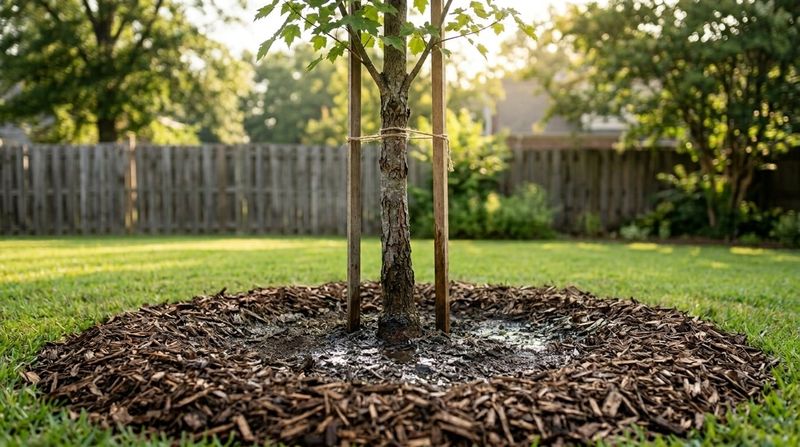
Soil checks out dry through the root zone, so now the tree needs water.
The method matters as much as the amount.
Water spread slowly across a wide area does far more good than a quick blast at the base of the trunk, where most established roots are not located.
Set up a soaker hose, a drip system, or a garden hose turned down to a slow trickle and lay it in a broad ring beneath the canopy, starting a few feet out from the trunk and extending toward or just past the drip line.
That is where the feeder roots are concentrated.
Let it run long enough for water to sink several inches into the soil.
A brief lawn-sprinkler cycle may wet only the top inch of grass and soil, with most of the water intercepted before it reaches tree roots.
A sprinkler can work if it delivers enough volume evenly over time, but it needs to run far longer than a typical lawn cycle.
For a volume estimate, Colorado State University Extension’s drought watering guide offers a regional starting point of about 10 gallons per week for each inch of trunk diameter, measured at roughly 4.5 feet above the ground, for trees not receiving lawn irrigation.
A tree with a 2-inch trunk diameter would receive about 20 gallons weekly under that guideline.
Illinois Extension’s summer watering guidance uses approximately 1 inch of water per week for established trees and up to 2 inches during hot, dry stretches.
These are regional examples, not universal rules.
Your soil type, local rainfall, tree species, root condition, and any irrigation restrictions change what is actually needed.
For established trees, deep and less frequent watering is generally better than a little water every day.
University of Minnesota Extension’s guidance on rooting depth explains that frequent shallow watering keeps roots near the surface, where they are more exposed to heat and drying.
Newly planted trees are a different situation.
Colorado State Extension’s care guide for recently planted trees notes that establishment can take roughly 1 year per inch of trunk diameter, and new trees generally need more frequent monitoring and irrigation while their roots grow outward into surrounding soil.
Do not put a young tree on the same schedule as a 20-year-old oak.
Use Mulch and Skip Emergency Fertilizer
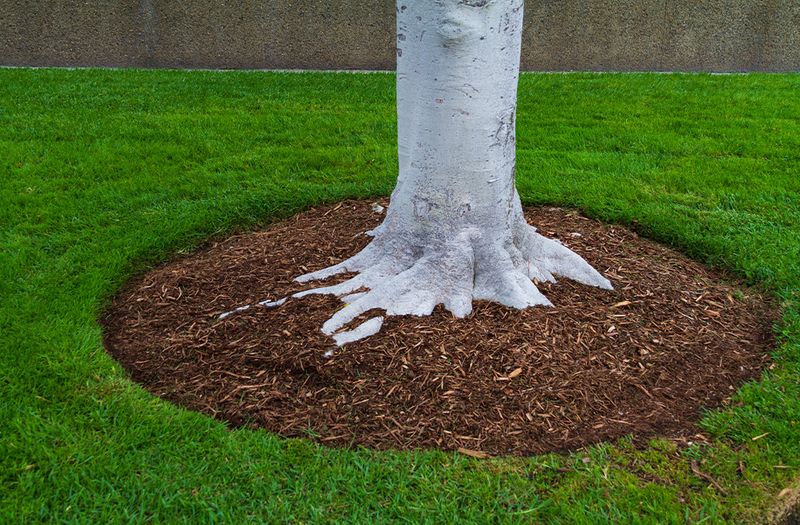
After watering, the fastest thing you can do to protect that moisture is spread mulch.
A 2- to 4-inch layer of organic mulch, wood chips, shredded bark, or leaf compost spread across the root zone slows evaporation from the soil surface and moderates soil temperature on days when the ground would otherwise heat up and dry out fast.
Colorado State University Extension’s drought guidance recommends keeping that mulch layer pulled back several inches from the trunk and the root flare, the widened base where the trunk meets the soil.
Mulch piled against bark holds moisture against wood that needs to stay dry.
Over time, that can reduce oxygen exchange, soften the bark, and invite decay or pest problems.
TreesAreGood’s hazard management resource reinforces keeping the root flare visible and clear.
The goal is a donut shape, not a volcano.
One thing to skip right now is fertilizer.
A severely drought-stressed tree does not need a push of new growth, it needs stable moisture.
Colorado State Extension warns that fertilizer salts can injure roots when soil moisture is too low to dilute them properly, and a tree under heat stress may not be able to support the new growth that a fertilizer application triggers.
Hold off until the tree has recovered and the soil has returned to normal moisture levels.
Mulch and a good soak are the two most useful tools you have today, and neither requires a trip to the garden center.
Recognize When Water Is Not the Fix
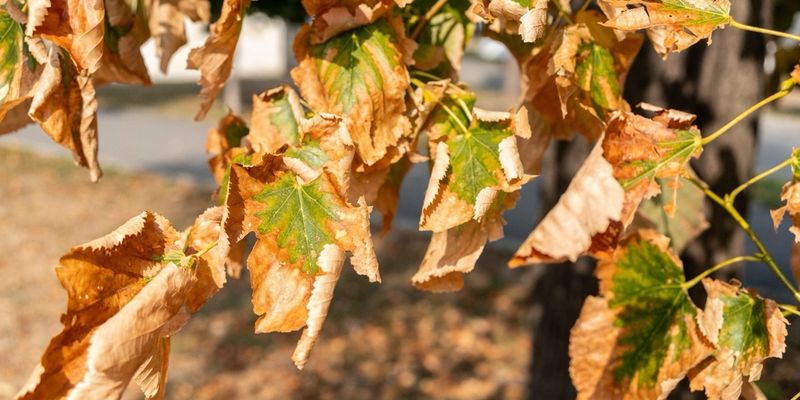
Uniform browning across most of the canopy after several weeks of heat and no rain points fairly consistently toward environmental stress.
That pattern, spreading evenly from leaf edges inward across a large portion of the tree, lines up with what drought and heat do.
But not every August problem looks like that, and the differences matter.
Watch for symptoms that break the pattern.
One section of the canopy dying while the rest looks fine, dark or water-soaked spots on leaves, holes chewed through leaf tissue, clusters of insects on stems or bark, cracks or oozing areas on the trunk, fungal growth at the base, or symptoms concentrated only in the upper canopy can all point somewhere other than simple drought.
University of Minnesota Extension’s oak leaf browning diagnostic tool illustrates how many different causes produce similar-looking brown leaves, from drought and heat to disease, insects, and root problems.
Pattern is a clue, not a guaranteed diagnosis.
Penn State Extension’s plant problem diagnosis guide recommends looking at the whole picture: where symptoms appear on the tree, how quickly they spread, whether nearby trees show the same signs, and whether there has been recent construction, soil disturbance, or chemical application nearby.
Compacted soil, girdling roots, poor drainage, planting too deep, and root disease can all prevent a tree from absorbing water even when the ground is moist.
Watering harder will not fix those conditions and can actively worsen root stress in wet or poorly drained soil.
If the decline continues after you have corrected any moisture problem, symptoms are severe, or you cannot identify a clear cause, bring in a certified arborist for a professional assessment.
Some decline is reversible with the right intervention, but disease, structural defects, and irreversible root damage require diagnosis, not just irrigation.
Treat Damaged Limbs as a Separate Safety Problem
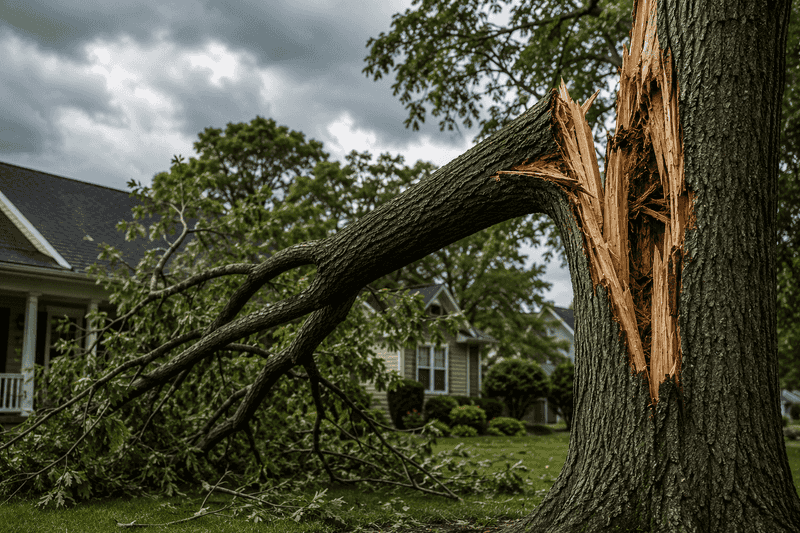
Leaf drop and limb drop are two different problems, and mixing them up can put people at risk.
A tree shedding leaves in August may be managing heat stress the only way it can.
A dead, broken, cracked, or hanging limb overhead is a structural hazard that exists whether or not the tree is drought-stressed, and it does not wait for a convenient moment to come down.
TreesAreGood’s hazard management guidance is direct: keep people, pets, vehicles, and play areas out from under branches that look dead, broken, cracked, or partially attached.
Wind, a passing storm, or simply the weight of the limb can bring it down without warning.
The ISA Basic Tree Risk Assessment framework used by certified arborists evaluates the likelihood of failure, the size of the part, and the presence of targets below, meaning people, cars, structures, and play equipment.
That combination drives urgency, not just the appearance of the branch.
Do not climb or attempt to remove large or overhead limbs yourself.
A qualified arborist has the training, equipment, and insurance to do it safely.
For pruning timing, Penn State Extension’s guidance on hardwood cankers notes that routine pruning timing can matter for certain disease situations, while hazardous limbs may need prompt professional attention regardless of season.
When in doubt, call first and ask whether timing matters for your specific tree.
One reassuring note to close on: early leaf drop alone does not mean the tree is finished.
University of Minnesota Extension notes that early color in August does not necessarily mean a tree will die.
Outcome depends on the cause, how long the stress lasted, the species, and whether underlying root or structural problems get addressed.
A tree that drops leaves in August and gets the right care often leafs out normally the following spring, the kind of quiet comeback that makes a yard feel a little more alive again.