
Shade-Loving Texas Flowers That Bloom Bright In The Dimmest Corners
Follow us on Google
You step outside before breakfast and the patio already feels warm, the air thick with that familiar Texas humidity.
You glance at that dim corner under your old live oak, the one where grass gives up and store-bought shade plants just fade away, and you sigh.
You are not alone in that puzzle.
Many of us have those tricky low-light spots where nothing seems to want to bloom.
But there are native Texas flowers, tough and beautiful, waiting to turn those forgotten corners into color.
They know our heat, our sudden downpours, and even hard freezes.
You just need their names and a few of their secrets.
1. The Unbeatable Turk’s Cap Is A True Texas Star
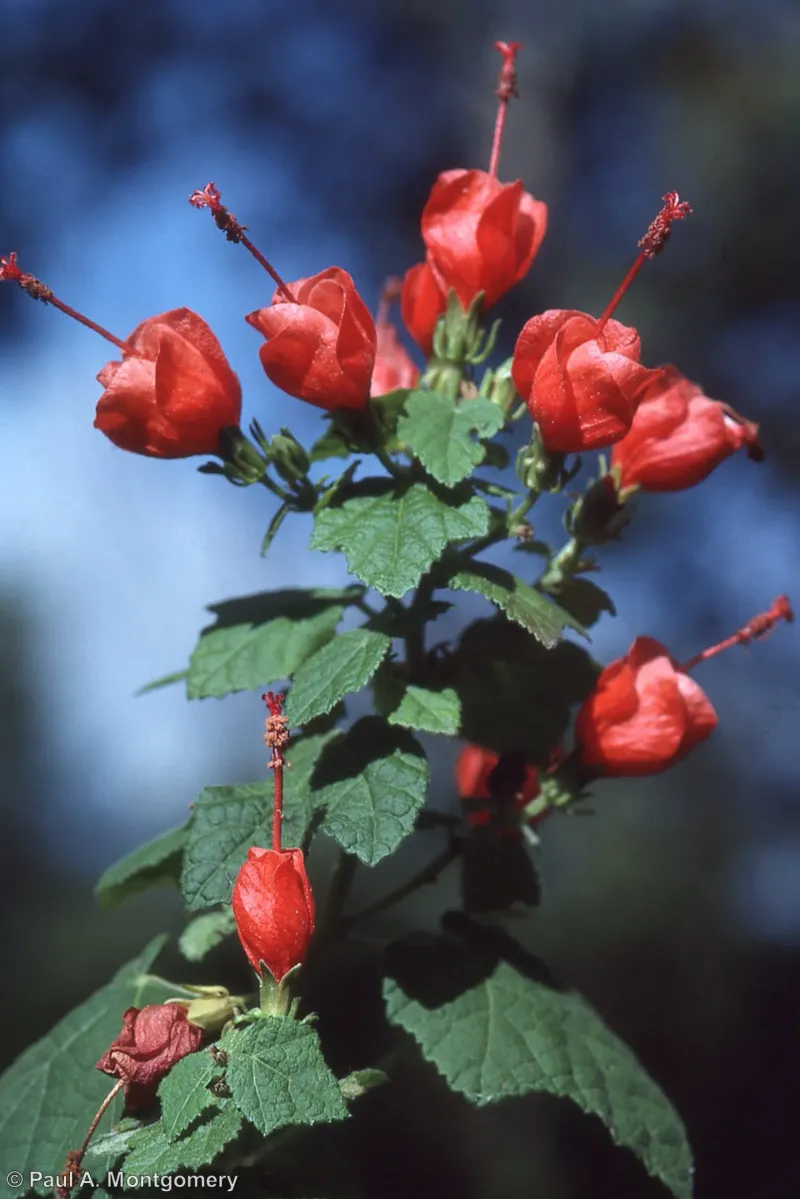
If you want a plant that punches above its weight in a shady spot, you have found it in Turk’s Cap, or Malvaviscus arboreus var. drummondii.
Its bright red, hibiscus-like blooms never quite unfurl, twisting into little turbans that hummingbirds cannot resist.
It keeps blooming from May through November when other plants have long quit.
Many Central Texas gardeners swear by it because it handles deep shade to full sun, though it looks best with some afternoon protection.
Picture those red flowers popping in your East Texas woods or under a towering live oak.
Established clumps often reach 3 to 6 feet tall and spread 8 to 10 feet across over time.
Here is where it gets tricky.
In too much darkness it can get leggy, because even shade lovers need some sun energy to grow compactly.
If it stretches too much, prune it back by a third to half for bushier growth.
In the Panhandle it dies back after a hard freeze, then springs right back.
Cut dormant stems to 4 to 6 inches above ground in late winter.
That small effort brings months of color and hummingbirds to your darkest corner.
2. The Elegant Texas Spiderlily Brings Pure White Light
You might picture bright flowers as bold and colorful, but some bring a pristine, almost glowing whiteness to the shade.
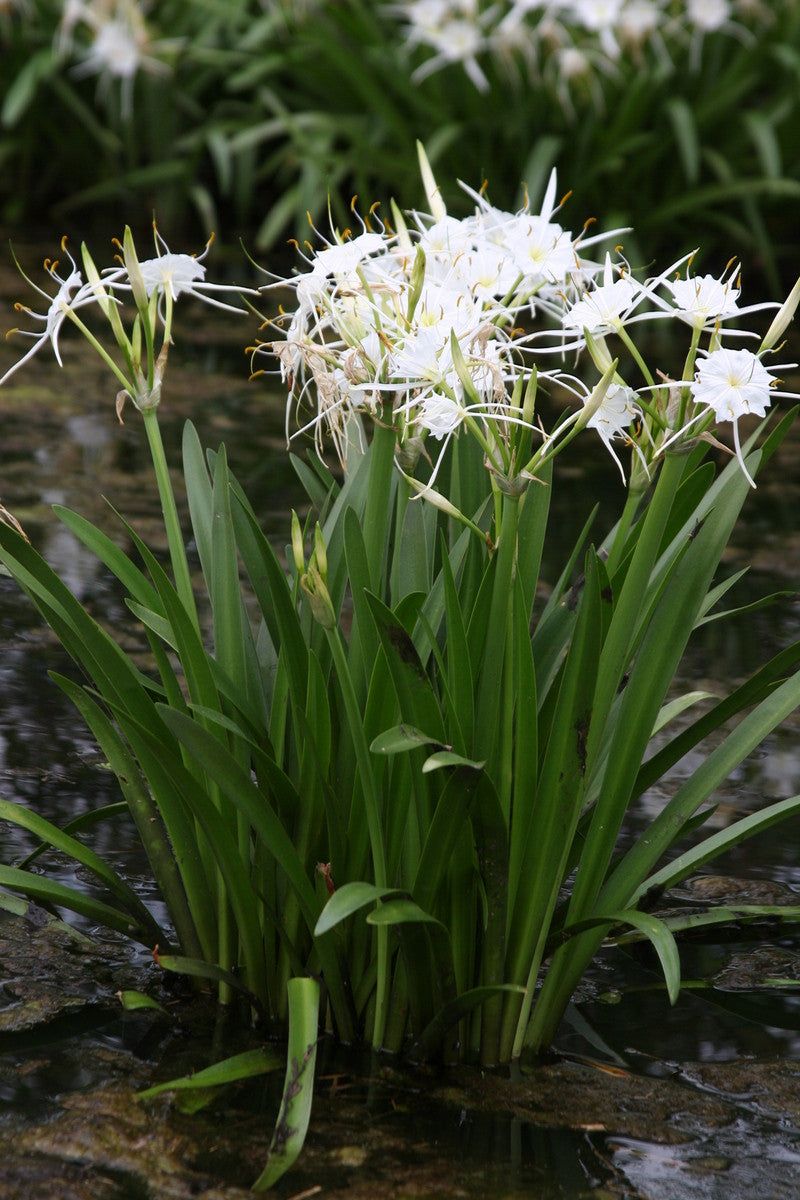
Meet the Texas Spiderlily, Hymenocallis liriosme.
Its large, sweetly fragrant white blooms look like elegant spiders, with long petals radiating from a central cup, peaking February through May.
The catch is moisture.
While most shade plants tolerate dryness, this one genuinely prefers consistently moist to wet soil.
Its native home includes floodplains and stream banks, so it handles damp with ease.
That makes it perfect for the low spots that stay soggy, or a rain garden where water collects.
Plant the bulbs about 4 inches deep and space them 6 to 10 inches apart in fall.
It can even thrive in up to 2 inches of standing water, and its strap-shaped leaves form a lush clump up to 3 feet tall.
The trick is to never let it truly dry out.
Along the Gulf Coast or in East Texas with higher rainfall, it becomes a quiet hero.
In Central Texas with shallow alkaline soil, grow it in pots sunk into the ground to hold moisture.
Those faintly fragrant evening blooms genuinely light up a shaded night.
3. Wild Columbine Offers Unexpected Flashes Of Red And Yellow
Sometimes the best discoveries hide in plain sight.
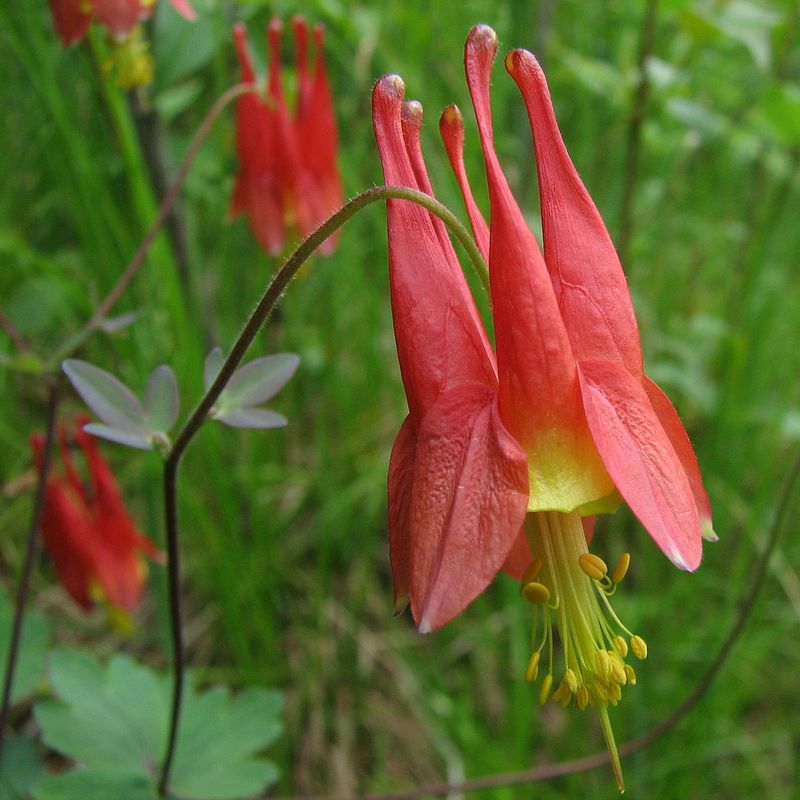
Wild Red Columbine, Aquilegia canadensis, brings a surprising burst of red and yellow to shadier spots.
Its nodding bell-like flowers have spurs pointing backward like tiny lanterns, and hummingbirds with their long beaks are perfectly built to reach the nectar inside.
Blooms often run February through July.
The tension is drainage.
Columbine loves shade but truly dislikes sitting in soggy ground, which rots the roots.
You might think shade means wet, but for this plant it means sun protection while roots still breathe.
It naturally grows in rocky calcareous woodlands, especially in Central Texas, where thin soil drains fast.
These plants reach 2 to 4 feet tall with an airy, graceful spread of 1 to 2 feet.
To make it a hero in heavy blackland clay, work a few inches of compost into the bed to improve drainage.
Plant it in part to full shade, ideally with morning sun and afternoon protection from harsh Texas heat.
And here is a bonus: columbine is deer resistant, so those nibbling antagonists usually leave the fern-like leaves alone.
It self-seeds too, sending up new red-and-yellow beacons year after year.
4. Heartleaf Skullcap Spreads A Groundcover Of Blue Charm
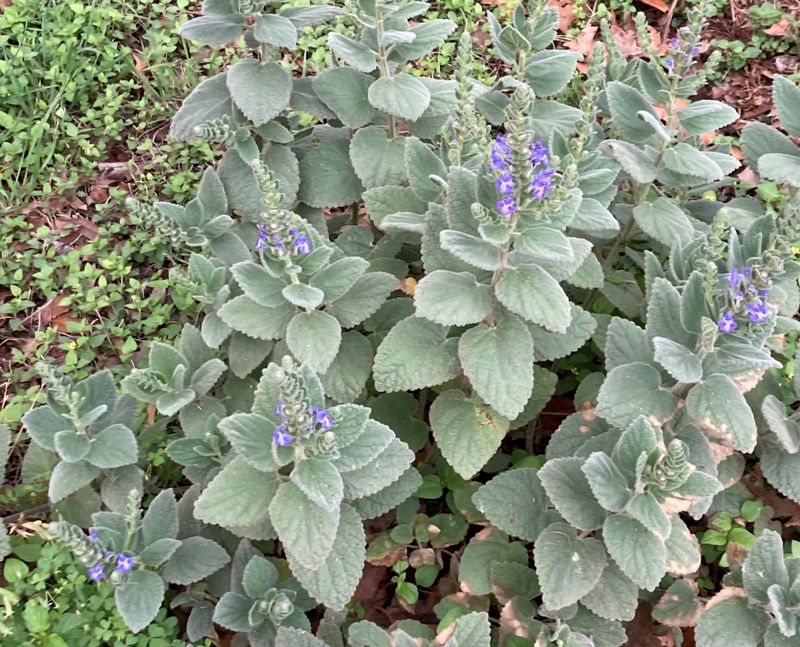
Few things feel as satisfying as a plant that solves a real problem, like those bald patches under big shade trees.
Heartleaf Skullcap, Scutellaria ovata, is that kind of hero.
It forms a fuzzy, heart-shaped groundcover topped with charming spikes of blue to violet flowers in spring.
The surprise is how tough this delicate-looking plant genuinely is.
It tolerates cold down to -13 degrees and heat up to 100 degrees, adapting from the Panhandle to the Lower Rio Grande Valley.
It spreads by fleshy underground roots, forming colonies where other plants struggle.
That means it can actually cover bare ground beneath mature trees, creating a living mulch that looks intentional and feeds pollinators.
Give it well-drained soil.
In dense blackland clay, a few inches of compost improves drainage nicely.
It prefers the drier side once established, so resist the urge to overwater.
Mature plants reach 1 to 2.5 feet tall and stay reliably deer resistant, thanks to oily glands on the leaves.
Its evergreen to semi-evergreen foliage keeps interest even in winter, making a tricky shade spot feel cared for all year.
5. Woodland Phlox Creates A Carpet Of Lavender Delight
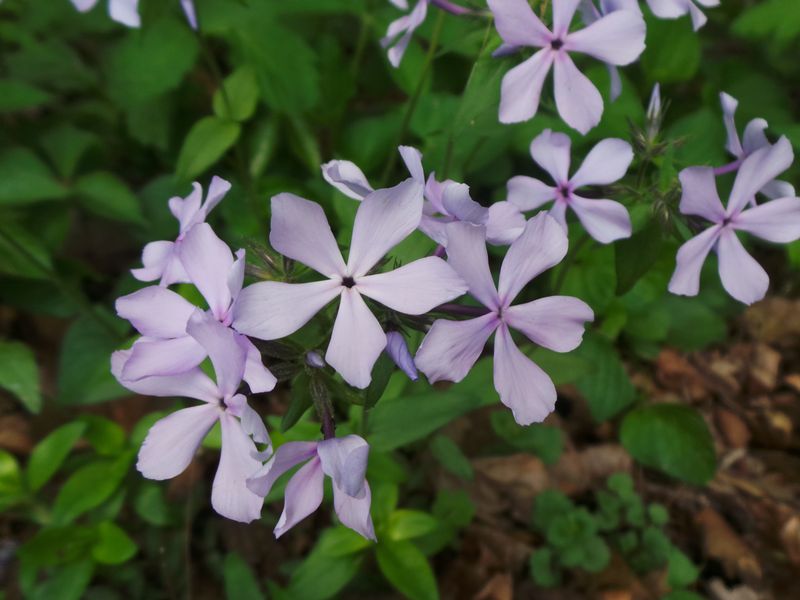
Picture a fragrant carpet painting your shady woodland edge lavender, blue, and violet each spring.
That is Woodland Phlox, Phlox divaricata, a graceful Texas native that specializes in soft color for dim corners.
Its lightly scented, star-shaped flowers emerge March through May, and the display is genuinely enchanting.
It fits the dappled light under deciduous trees in East Texas or along the north side of your home in North Central Texas.
The challenge in our hotter regions is its need for steady moisture and rich, humusy soil.
These plants evolved in the cooler, moister understories of the eastern and central states, so they do not tolerate scorching afternoon sun or dryness.
They grow about 8 to 20 inches tall with an 18 to 24 inch spread, forming a dense mounded habit.
Work generous organic matter into the bed at planting to hold both drainage and moisture.
Space plants 16 to 18 inches apart for that full carpet effect.
A light mulch layer keeps roots cool and can trim watering to about 1 inch per week in dry spells.
Swallowtails and hummingbirds will thank you for the perfumed haven.
6. Cedar Sage Glows Scarlet In Rocky Hill Country Shade
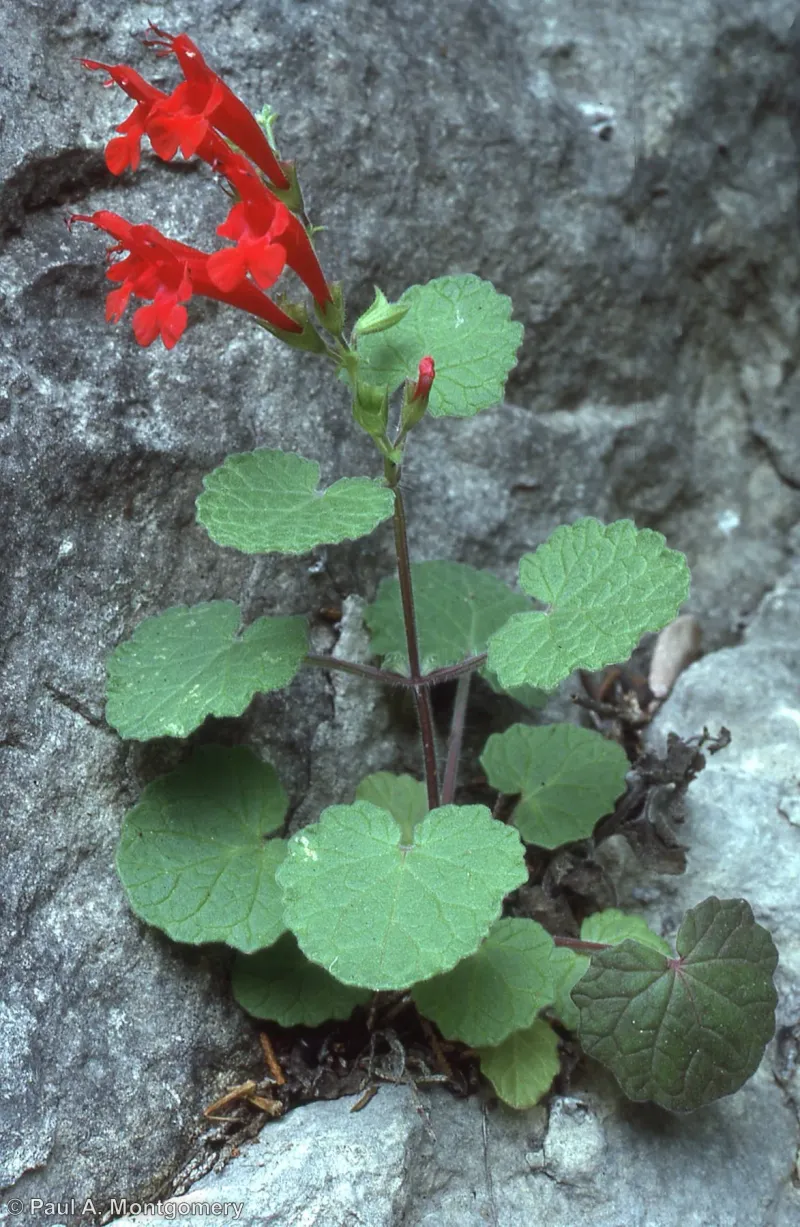
Under the junipers of the Hill Country, where thin caliche soil defeats most flowers, one quiet hero glows scarlet.
Cedar Sage, Salvia roemeriana, throws up loose spikes of deep red tubular blooms from spring into early summer, and its rounded, scalloped leaves stay tidy at the base.
Most folks assume salvias demand full sun.
Cedar Sage genuinely prefers the opposite.
It evolved in the dappled shade beneath cedar and oak on rocky limestone slopes, which is exactly why it thrives where you thought nothing would.
It stays compact, usually 1 to 1.5 feet tall, so it tucks neatly into the front of a shaded bed.
Plant it in that shallow alkaline soil it already loves, no fancy amendments needed, and space plants about 12 inches apart.
Water deeply once a week the first month, then back off.
It handles dry stretches once its roots grab hold.
Hummingbirds work the red flowers hard, and it will self-seed gently into the gravel.
A splash of true red in the shade feels almost impossible, but Cedar Sage delivers it every spring.
7. Inland Sea Oats Rustle With Movement In Deep Shade
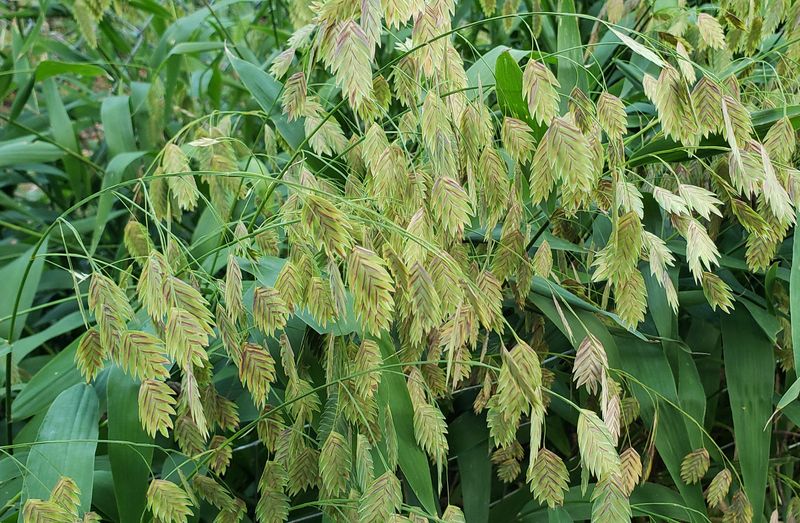
Not every bright corner needs a flower.
Sometimes it needs movement, and Inland Sea Oats, Chasmanthium latifolium, brings it in a way that catches every glance.
Its flat, drooping seed heads dangle like little bamboo charms, turning green in summer, then gold and bronze into fall.
Here is what surprises people.
This native grass genuinely thrives in deep shade, the kind of gloom where flowers refuse to bloom.
Along shaded creek banks in East Texas and the Gulf Coast, it forms lush clumps 2 to 4 feet tall.
The plain reason it works is those seed heads.
They catch even the faintest light and the slightest breeze, adding a shimmer of motion to a still, dark spot.
Songbirds strip the seeds through winter.
Plant it in moist, rich soil and space clumps about 18 to 24 inches apart.
Cut it back to a few inches in late winter before new growth.
Fair warning, it self-seeds freely, so pull volunteers you do not want.
In a bare, shadowy corner, that soft rustle genuinely makes the whole space feel alive.
8. Protecting Your Shady Oasis From Hidden Threats
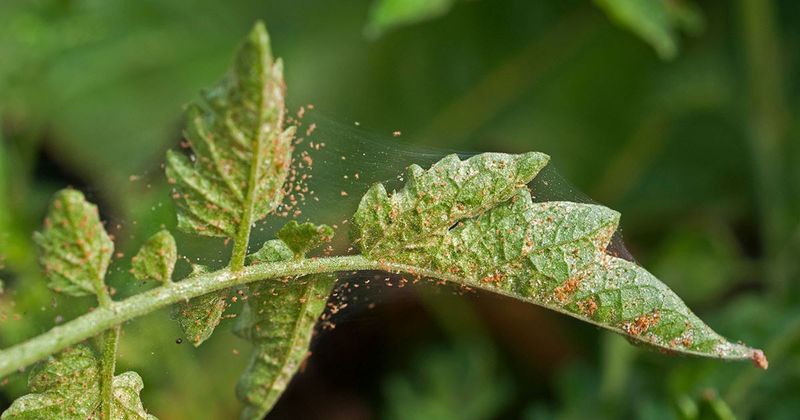
Even a carefully planned shade garden draws unwelcome guests, turning your quiet heroes into stressed victims.
During Texas’s long, hot, dry stretches, the spider mite is a common antagonist.
These arachnids are nearly invisible, but their damage is not.
You will spot fine webbing under leaves and a speckled, bronzed discoloration on the foliage.
They pierce plant cells and drain them, and they multiply fast in hot, dry weather, finishing a generation in as little as 5 to 20 days.
Here is the turn.
Stressed plants are far more likely to get infested, because a healthy plant defends itself better.
You might reach for harsh chemicals, but simpler fixes work well, according to Texas A&M AgriLife Extension.
First confirm an active infestation, since sometimes you are just seeing old damage.
Then knock the mites off with a strong hose spray, aiming at the undersides of leaves.
For stubborn cases, insecticidal soap, neem oil, or Spinosad products are less toxic options, always following the label.
Inspect regularly and keep plants well-watered without drowning them.
Strong plants fend off these tiny antagonists, and your shaded blooms stay looking their best.
9. Cultivating Success In Those Challenging Corners
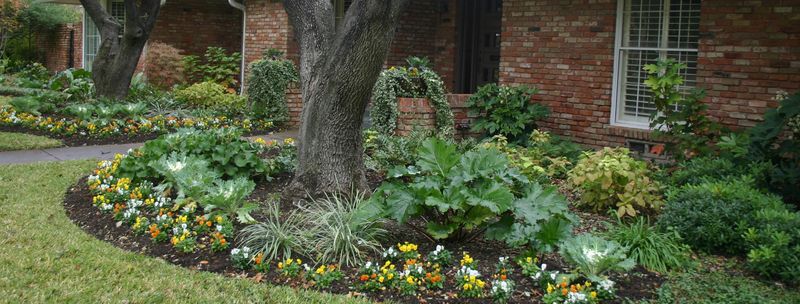
Building a thriving shade garden in Texas is genuinely about working with nature, not against it.
Those overlooked corners can become the most serene, cool retreats in your yard during our scorching summers.
Success with Turk’s Cap, Spiderlily, Columbine, Skullcap, and Phlox comes down to reading their needs and your ground.
Soil is the foundation.
From blackland clay in North and Central Texas to caliche in the Hill Country and acidic sand in East Texas, every region has quirks.
A safe rule is to work 3 to 6 inches of good compost into the bed before planting.
That improves drainage in clay and holds moisture in sand.
Watering right is the next layer.
Most shade plants want moisture but hate soggy roots.
A deep soak once or twice a week beats frequent shallow sprinkles, and deep means water reaching 6 to 8 inches down to grow strong roots.
Let the top inch or two dry between waterings.
Containers, like your Spiderlily pots, need checking daily in intense heat.
Give new plants steady moisture for the first few weeks, and that small effort pays off big.
Read your shade, listen to the plants, and those dimmest corners will bloom brighter than you ever expected.