
This Pennsylvania Tick Hides In Fall Leaf Piles Long After You Think Tick Season Ended
Follow us on Google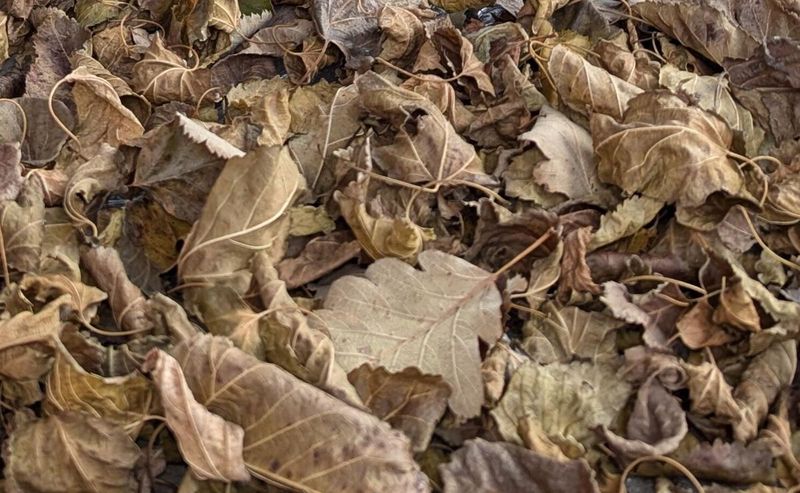
Most Pennsylvania homeowners figure that once the air turns cold and the leaves start falling, tick season is behind them.
That assumption is worth reconsidering before you grab your rake and head out bare-handed.
One tick in Pennsylvania stays active well into October and November, and fall cleanup can bring you right into its habitat.
You do not need to fear every leaf pile, but knowing which tick is still out there and why it matters can help you work smarter this season.
The Blacklegged Tick Stays Active Into Fall
Fall in Pennsylvania does not close the book on tick season, at least not for one particular species.
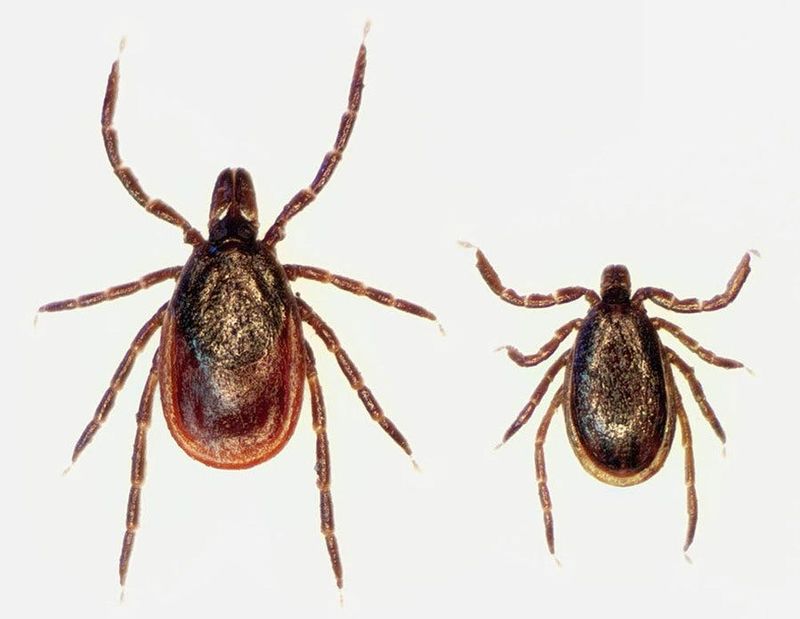
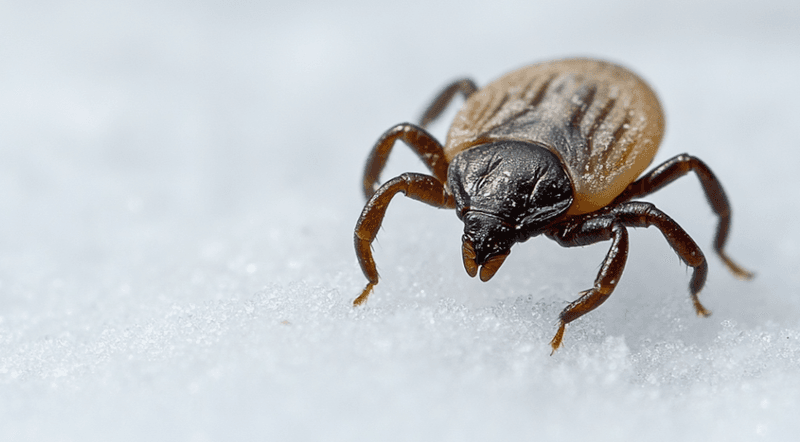
The blacklegged tick, Ixodes scapularis, also called the deer tick, is genuinely active during October and November across the state.
According to Penn State Extension’s fall tick guidance, adult blacklegged ticks seek larger hosts during this period, including deer, pets, livestock, and people doing exactly the kind of yard work that defines the season.
Adults are actually the life stage most commonly encountered in fall.
Nymphs molt into adults during late summer and early autumn, and those adults then begin searching for a blood meal before temperatures drop too far.
They do not disappear when the calendar flips to October.
Fall is a normal, expected part of their active season.
Pennsylvania’s blacklegged tick is widespread, too.
Penn State Extension reports that the species has been identified in all 67 Pennsylvania counties, from the Lake Erie shoreline to the Delaware Valley.
That reach means this is not a concern limited to heavily wooded rural corners of the state.
And the blacklegged tick is not the only tick you might encounter in fall.
Penn State’s guide to common Pennsylvania ticks identifies American dog ticks, lone star ticks, and the more recently established Asian longhorned tick as species also present in the state.
Their seasonal patterns, preferred habitats, and disease associations differ from one another.
The blacklegged tick gets the spotlight here because of its fall adult activity, but it shares the landscape with others worth knowing.
Cold Weather Does Not Flip A Universal Switch
Here is where many homeowners get tripped up.
The first cold snap arrives, maybe a hard frost overnight or a few days in the low 30s, and it feels like the tick threat has been switched off.
The reality is more complicated, and genuinely more important to understand before you assume you are in the clear.
Penn State Extension’s Lyme disease resource describes adult blacklegged ticks as potentially active on days when temperatures rise above freezing, and other Penn State material uses 40 degrees Fahrenheit as a practical rule of thumb for when activity becomes more likely.
That 40-degree figure is a useful guide, not a biological switch.
A tick does not consult a thermometer and then decide to stop moving at exactly 39 degrees.
What matters even more for fall cleanup is that leaf litter and other sheltered spots can be warmer than the surrounding air.
A sun-warmed patch of damp leaves along a south-facing fence or wooded edge may sit several degrees above the ambient temperature on a cold but sunny November afternoon.
Ticks in those pockets can remain active while your weather app shows something that sounds reassuring.
Uniform snow cover does generally reduce tick activity, but patchy snow, rapid warming after a cold stretch, or exposed and sun-warmed ground can all bring ticks back into play.
Penn State’s blacklegged tick profile makes clear that reduced activity is not the same as disappearance.
The tick is waiting, not gone, and a mild December afternoon can look a lot like a cool October one from the tick’s perspective.
Leaf Litter Offers Shelter, Not A Guarantee
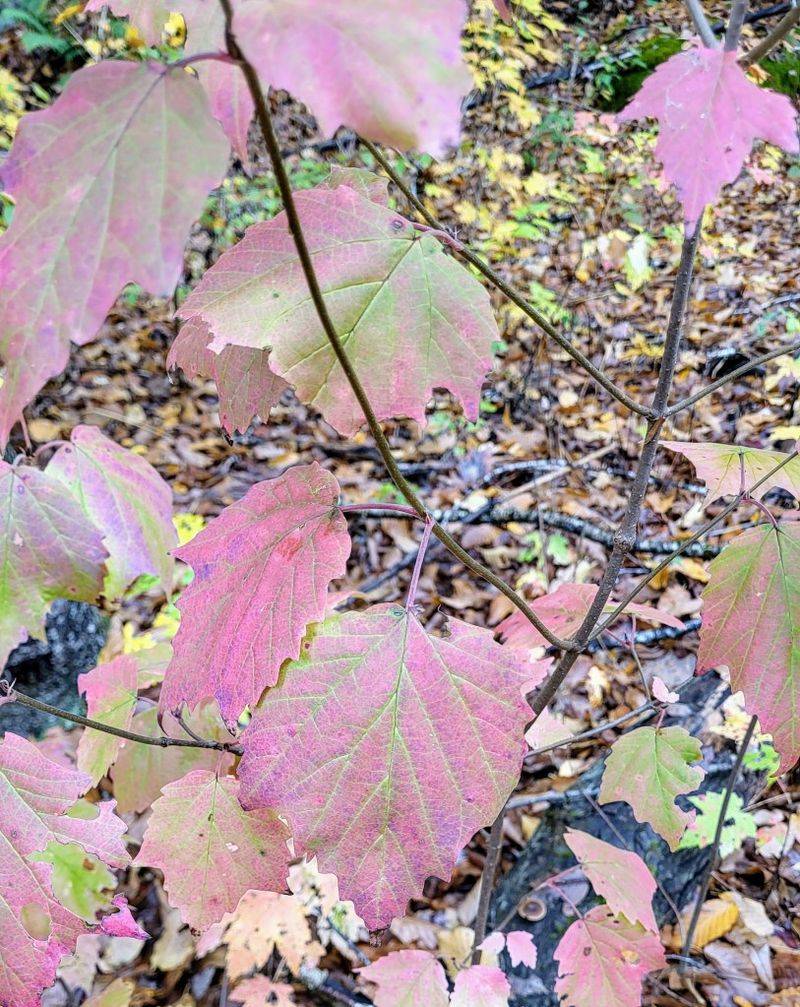
Leaf litter matters to blacklegged ticks because of what it provides: shade, moisture, and insulation.
Ticks are sensitive to drying out, and a thick layer of fallen leaves near a wooded edge holds humidity in a way that open lawn does not.
Research published on PubMed examining humidity and blacklegged tick activity supports the connection between moist microhabitats and tick survival, which is part of why shaded, leaf-covered ground near woodland edges is considered favorable habitat.
But leaves do not create ticks.
Ticks arrive through host animals, primarily white-footed mice, deer, birds, and other wildlife that move through the property and carry immature ticks with them.
A leaf pile in a yard with no nearby host activity, no wooded edge, and no history of tick encounters is a very different situation from a damp, shaded pile sitting against a brush line where deer regularly walk through.
Stone walls, woodpiles, and brush piles add to the picture by providing shelter and nesting spots for rodents that serve as hosts for tick larvae and nymphs.
Penn State’s blacklegged tick profile describes this layered habitat system, where the combination of shade, moisture, host animals, and leaf cover creates conditions more favorable than any single element alone.
Risk goes up when several of those factors come together: shaded damp leaves, nearby brush, a stone wall with rodent activity, regular deer movement, and a person or pet working or playing in that zone.
A leaf pile on a sunny, open lawn away from wooded edges is a different situation entirely.
No pile automatically contains ticks, and no pile automatically contains infected ones.
Context is what shapes the actual exposure picture.
Cleanup Can Bring You Into Tick Habitat
One thing blacklegged ticks do not do is jump, fly, or drop from tree branches onto people walking below.
They are ground-level travelers.
They generally climb onto a passing host from leaf litter, low vegetation, tall grass, or brush, which is why the height of exposure is usually below the knee.
That detail matters when you picture what fall cleanup actually looks like.
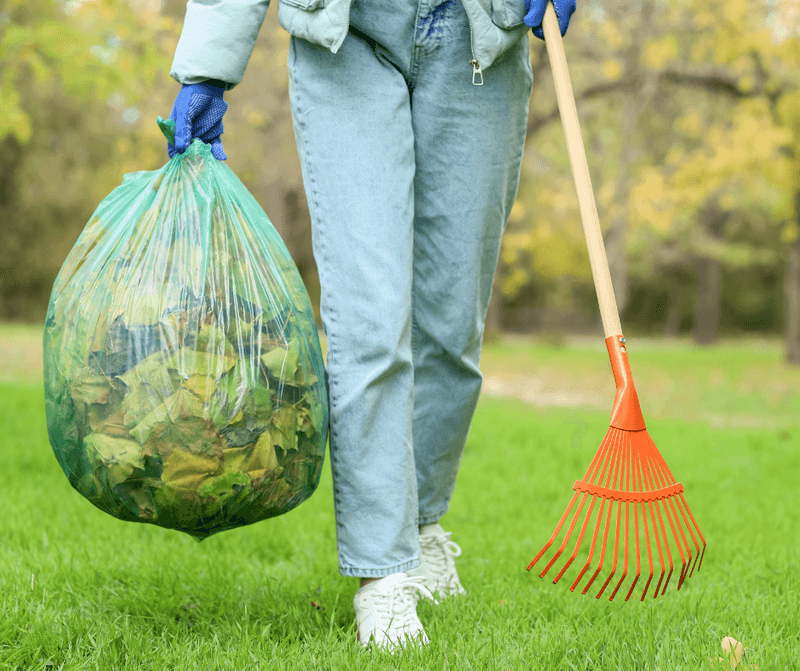
Raking near a wooded edge, moving a brush pile, reaching bare-handed into a damp leaf pile, carrying armloads of leaves, or kneeling in debris along a fence line are all situations that can bring a person into tick habitat.
These are possible exposure situations, not guaranteed ones, and they do not independently cause infection on their own.
But they are the moments worth thinking about before you head outside, especially along shaded, wooded borders where the habitat conditions described in the previous section tend to cluster.
Targeted yard management around high-use areas can make those zones less hospitable.
Penn State Extension’s tick management guidance recommends keeping grass mowed, reducing brush and debris near patios and play areas, and minimizing conditions that attract rodents.
A 3-foot transition strip of wood chips or stone between a lawn and a woodland edge is one landscape measure Penn State describes as a way to make that boundary less favorable for ticks and their hosts.
That strip is a partial measure, not a complete solution.
Penn State’s broader tick and tickborne disease resource is consistent on this point: landscape adjustments reduce contact opportunities but do not eliminate ticks from a property.
Pairing them with personal protection is what actually moves the needle.
Dress For The Work Before You Rake
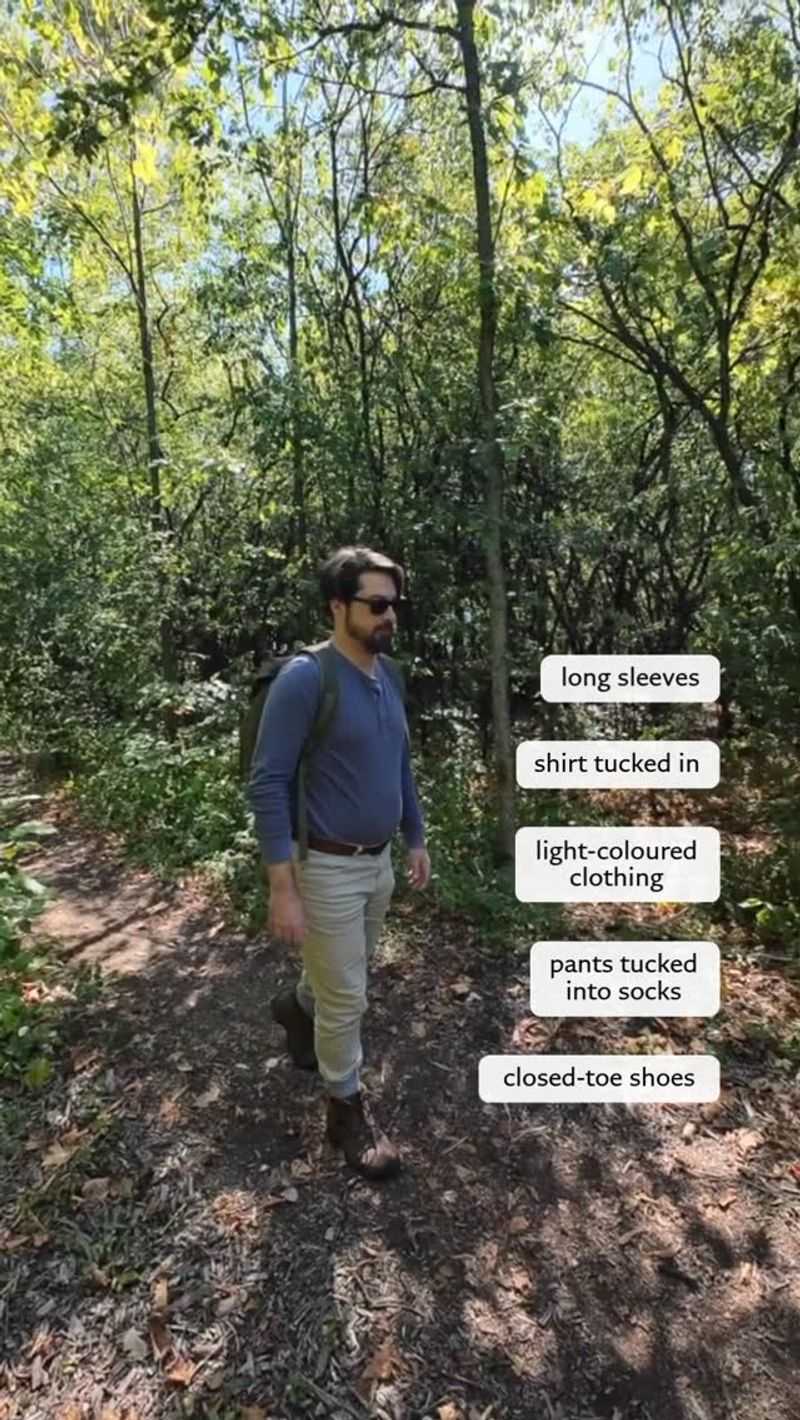
Before the rake comes out, the clothing choices you make actually matter more than most people realize.
Long pants and long sleeves are the foundation.
Closed shoes or boots, not sneakers with open mesh, keep ticks off your feet.
Tucking pants into socks sounds fussy, but it closes the gap that ticks most often use to reach skin.
Light-colored clothing is a practical choice for a specific reason: dark ticks are easier to spot against a pale background.
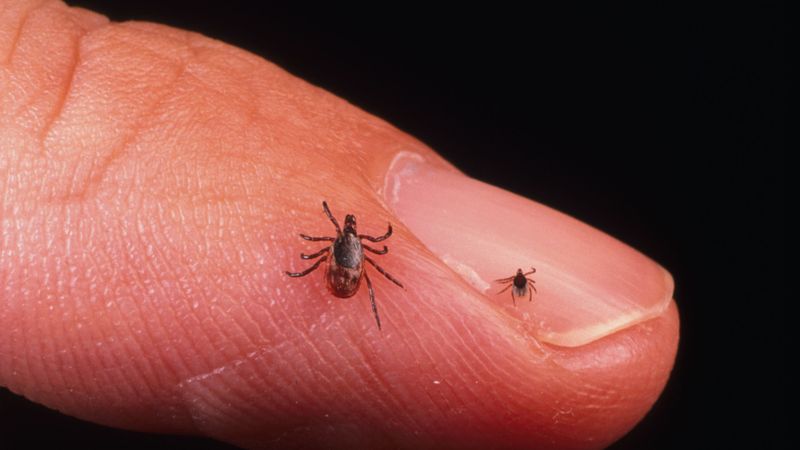
A blacklegged tick nymph is about the size of a poppy seed, and an adult is only slightly larger.
Light khakis or light gray work pants give you a fighting chance of catching one before it finds skin.
An EPA-registered skin repellent adds another layer of protection when used exactly as the label directs.
CDC tick prevention guidance recommends active ingredients such as DEET or picaridin for skin application.
The label is not optional reading: concentration, application method, and reapplication timing all affect how well the product performs.
Higher DEET concentrations generally provide longer protection, but label instructions set the limits.
Permethrin-treated clothing and gear are a separate option worth knowing about.
Permethrin is applied to clothing, boots, and gear before you go out, not to skin, and it can remain effective through multiple washes.
Penn State Extension’s fall tick prevention page describes treated clothing as an additional layer alongside repellents, not a replacement for them.
None of these steps require extreme gear.
A pair of light-colored work pants, a long-sleeved shirt, boots, and a repellent from the hardware store cover the basics for most fall cleanup days.
Check Yourself After The Yard Work
Coming inside after fall cleanup is the moment the tick-check habit earns its keep.
Ticks that have not yet attached can be found and removed before they become a problem, and that window matters.
The check should cover the whole body, not just the obvious spots.
Pay attention to the areas ticks prefer: behind the knees, around the waistband, in the groin, under the arms, around the ears, along the hairline, and the back of the neck.
These are warm, sheltered spots ticks tend to move toward after climbing on.
A full mirror check, or help from someone else for hard-to-see areas, is the most reliable approach.
Clothing and gear deserve the same attention.
Ticks can ride indoors on a jacket, a pair of gloves, or a hat and then transfer to skin later.
CDC tick prevention guidance recommends drying dry clothing on high heat for 10 minutes to kill ticks.
If clothes are damp or wet, additional drying time is needed before the heat step can do its job.
Cold-water washing and medium-temperature drying cycles should not be counted on to kill ticks reliably.
Showering within 2 hours of coming indoors is another step the CDC associates with reduced Lyme disease risk, partly because it can wash off unattached ticks and gives you a natural opportunity for a full body check.
Pets that were outside with you should be checked as well, since ticks can hitch a ride indoors on a dog or cat and later move to a person.
Treat the whole routine as a quick habit, not a crisis response, and it becomes easier to keep up through the fall season.
Remove An Attached Tick Promptly
Finding an attached tick is unsettling, but the response is straightforward when you know what to do.
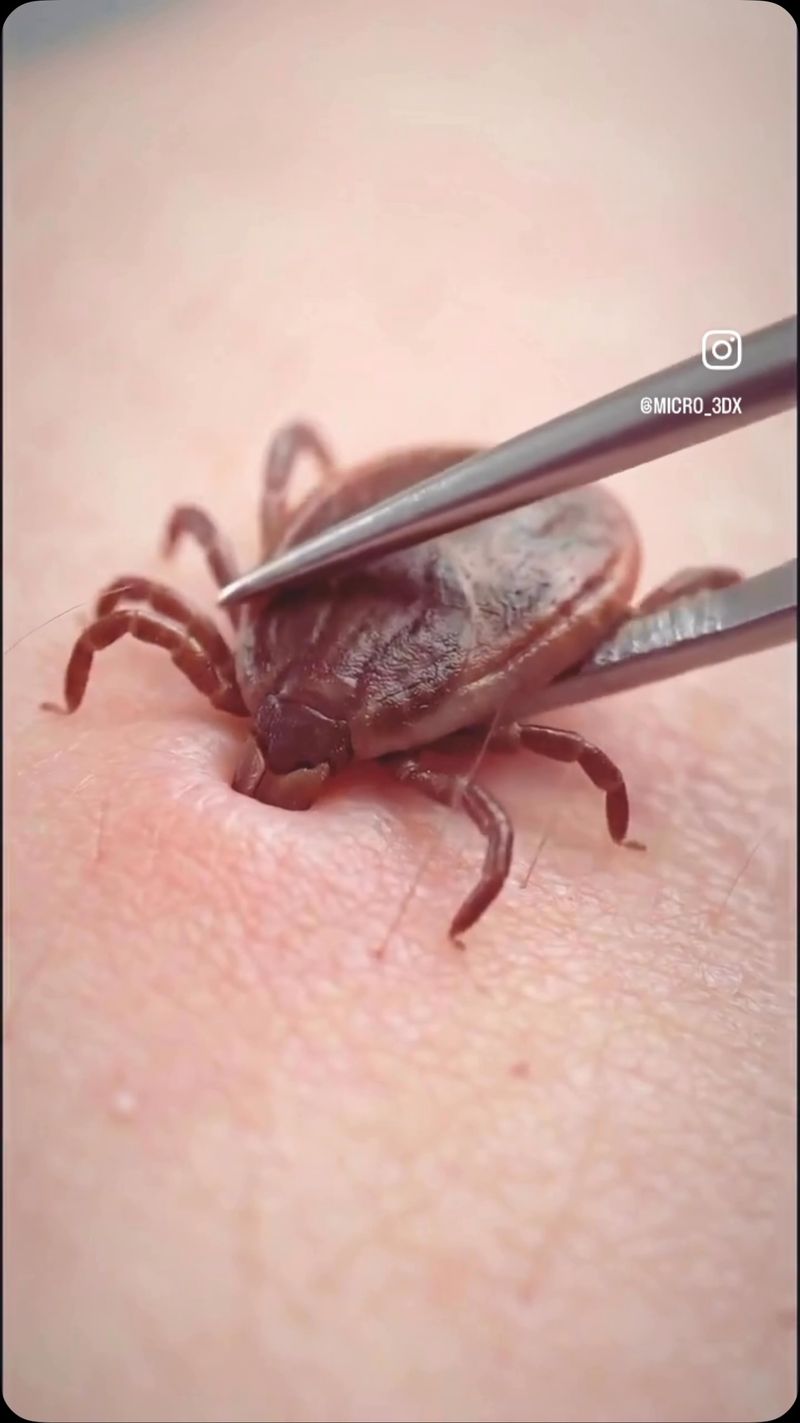
Reach for fine-tipped tweezers, not your fingers, not a hot match, and not a glob of petroleum jelly or nail polish.
Those approaches can stress the tick and make the situation worse.
Grasp the tick as close to the skin surface as possible.
Pull upward with steady, even pressure.
Do not twist, jerk, or rotate.
The goal is to remove the tick intact, mouth parts and all, without squeezing its body.
CDC guidance on what to do after a tick bite is specific on this: clean the bite area and your hands with rubbing alcohol or soap and water after the tick is out.
The timing of removal genuinely matters for some diseases.
For Lyme disease specifically, CDC information on how Lyme spreads indicates that transmission from an infected blacklegged tick generally becomes less likely when the tick is removed within 24 hours of attachment.
But that window does not apply equally to every tick-borne disease, and prompt removal is the right move regardless of how long the tick appears to have been attached.
Do not send the tick for testing and then wait for results before deciding whether to seek medical care.
The CDC is clear that tick-test results should not guide treatment decisions, because a positive result does not prove transmission occurred and a negative result can create false reassurance.
What matters more is watching for symptoms over the following days and weeks: a spreading rash, fever, headache, fatigue, or muscle and joint aches.
Those are the signals worth reporting to a healthcare provider, not a lab result from the tick itself.
Manage The Busy Parts Of The Yard
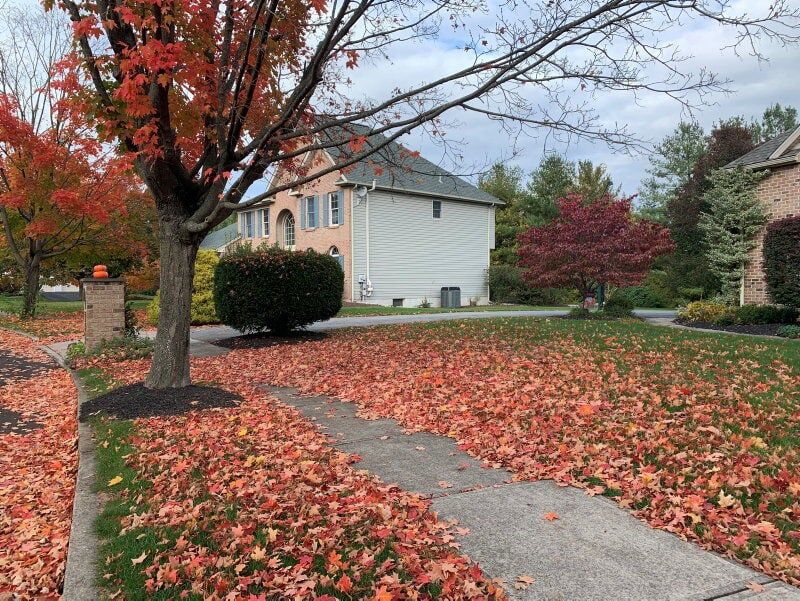
A total-property leaf purge is not the answer, and it is not realistic for most Pennsylvania homeowners anyway.
Leaves genuinely provide benefits: insulation for overwintering insects, organic matter for soil, and shelter for ground-nesting birds and other wildlife.
Penn State Master Gardener fall cleanup guidance supports retaining leaves in lower-traffic garden beds or a designated compost area where they can do their ecological work without placing people in regular contact with them.
The practical focus belongs on the areas where people and pets spend time.
Lawns, play spaces, patios, paths, and garden work areas are worth keeping cleaner.
Leaves left on lawns should be removed or mulched before they smother the turf, and that work is also a reasonable time to think about reducing brush piles, tall weeds, and debris along wooded borders.
Penn State Extension points to these high-use zones as the priority for targeted management.
Essential-oil sprays sold as tick repellents are not a proven long-term replacement for EPA-registered products or professional tick control.
Penn State’s tick and tickborne disease resource notes that commercial essential-oil products have not demonstrated lasting effectiveness against ticks, and some formulations can affect pollinators and soil organisms.
Broad casual pesticide applications carry their own concerns, and any product used for tick control must be registered for that purpose and applied according to its label.
The manageable routine looks like this: target the zones where you actually spend time, dress for the work before you start, run a tick check when you come in, and move useful leaves to spots where they support the garden without placing them in busy areas.
Fall cleanup does not have to be a source of anxiety, it just works better with a few extra minutes of awareness built in.