
You Can Weave A Living Fence That Blocks Wind And Wildlife, But Only If You Plant It Dormant
Follow us on Google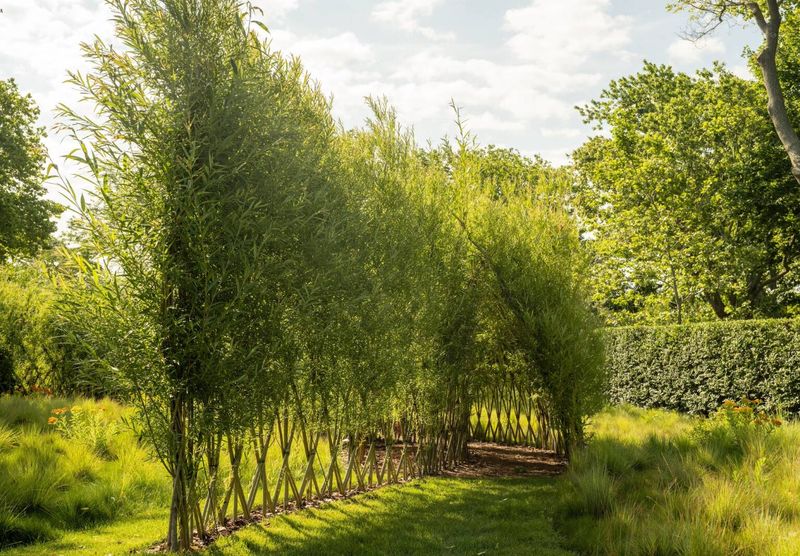
Push a bundle of willow rods into the ground this winter and you can grow a woven living fence called a fedge, part fence, part hedge, rooted right where it stands.
It defines your yard, softens some wind, and gives birds a place to perch and move through.
The catch is timing: plant those rods while they’re still dormant and leafless, before buds break in spring, and you give them the best chance to root before they have to support any leaves.
Miss that window and survival gets harder, though not always impossible.
A Living Willow Fedge Makes A Boundary, Not A Barrier
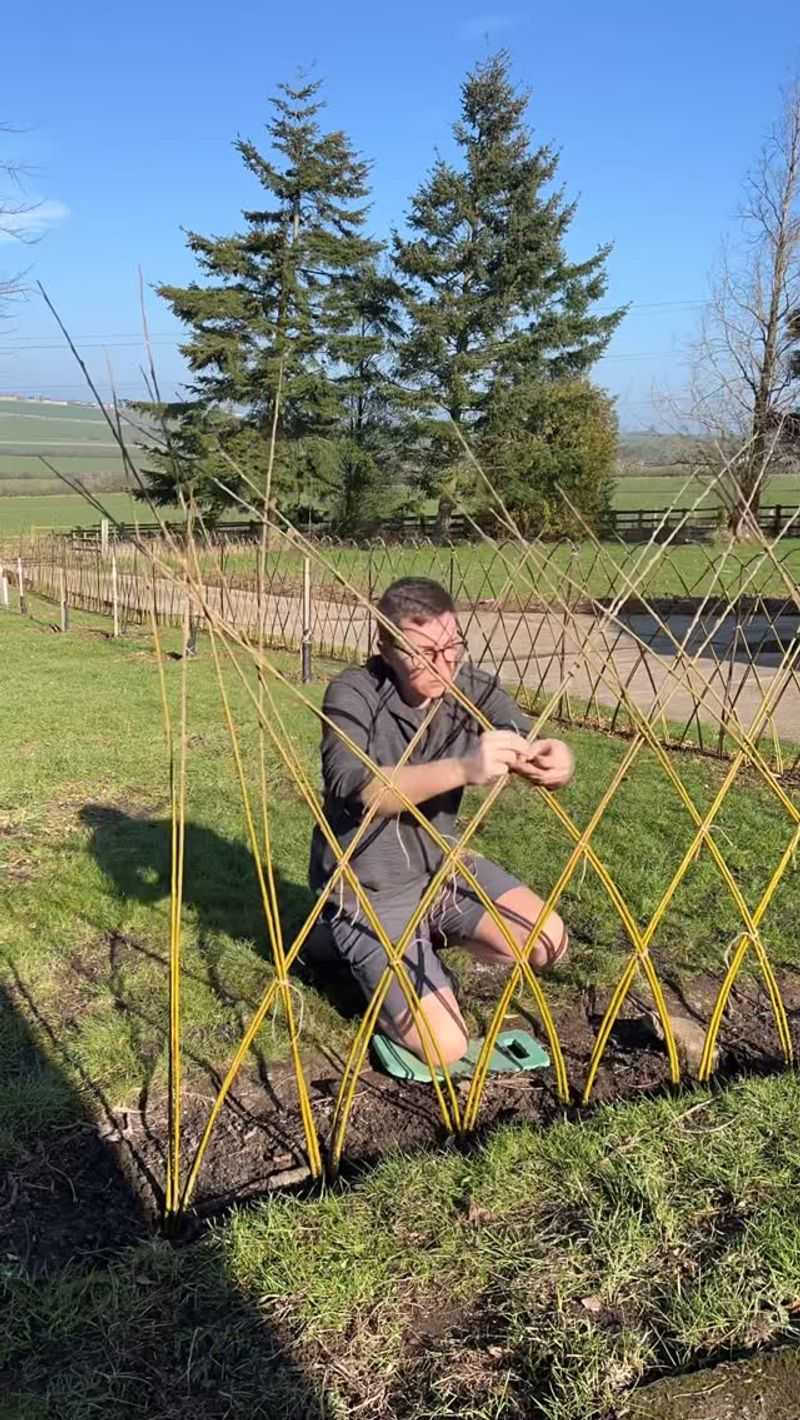
Willow rods pushed into the ground and woven together while still bare can root in place and grow into a living boundary called a fedge.
The word blends fence and hedge, and that mix describes what the structure actually does: it marks a line, fills in with leaves through the growing season, and creates a presence in the yard without concrete or lumber.
RHS guidance on living willow describes this kind of woven structure as a way to define space and add natural screening that grows more solid over time.
On a practical level, a fedge can give you seasonal visual privacy along a property edge, a windbreak feel along a patio, and some cover for songbirds and small animals moving through the yard.
Those are real benefits worth having.
But the structure has honest limits, and you should know them before you dig your first hole.
A fedge does not reliably exclude deer or rabbits.
Willow is actually a plant deer and rabbits like to browse, so a fresh fedge can become a meal rather than a barrier.
It also does not work like a full windbreak.
USU Extension windbreak guidance describes effective wind protection as depending on height, density, multiple rows, and careful orientation.
A single woven row of willow rods gives you a modest softening of wind, not a storm shield.
Dormant planting matters because unrooted rods need to develop roots before they can support leaves.
Plant them while leafless and they lose less water during that critical window.
That timing rule gives you the best general odds, and the rest of this article explains how to use it well.
Dormant Rods Give You The Best Odds
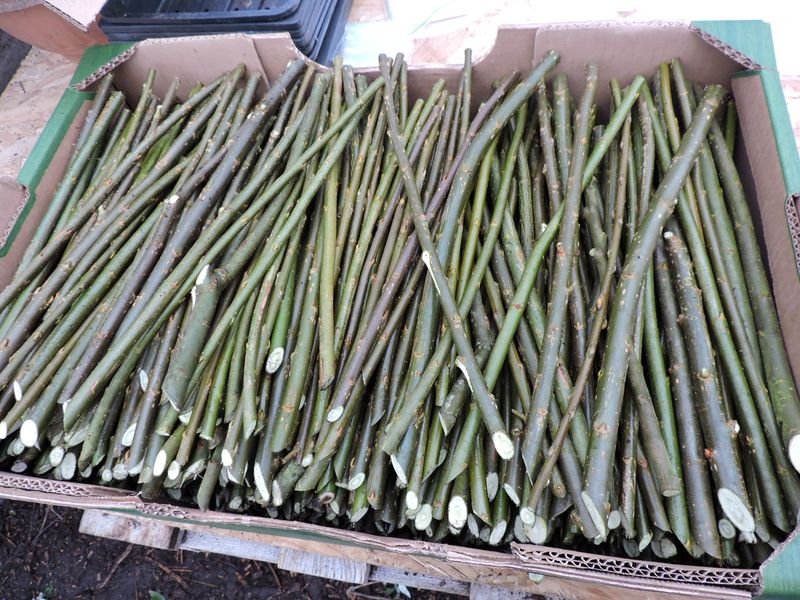
Dormancy means the stems are leafless and the buds have not yet begun active spring growth.
During that window, a willow rod has almost nothing to support above ground, so it can put its energy into forming roots rather than feeding leaves.
Plant it then and you give it the gentlest possible start.
RHS recommends planting living willow from winter to early spring, while the plant is still in that leafless state.
Penn State Extension gives the same dormant, pre-bud-break guidance for bare-root woody plants, suggesting early March through early May in Pennsylvania after frost leaves the ground but before buds open.
That Pennsylvania range is a regional example, not a nationwide rule.
In milder parts of the country you may be able to plant earlier.
In colder areas or spots with heavy clay, frozen or waterlogged soil may mean you need to wait until the ground is actually workable.
Do not push rods into soil that is still frozen solid or sitting in standing water.
Both conditions work against root development just as much as waiting too long does.
The goal is moist, workable ground and leafless stems, and those two things together are what the timing rule is really about.
There is one narrow exception worth knowing.
USDA research on actively growing black willow cuttings found that some leafy material could survive when it was briefly soaked and planted into reliably moist, nonflooded soil.
A companion black willow survival study confirmed that soil texture and moisture were critical factors in those outcomes.
That finding applies specifically to black willow under particular conditions.
It does not mean leafy rods of other willow species or cultivars will root reliably, and it is not a reason to skip dormant planting as your default plan.
Treat it as a narrow, demanding exception, not general permission to plant whenever you feel like it.
Match The Willow To The Property
Not every willow suits every yard.
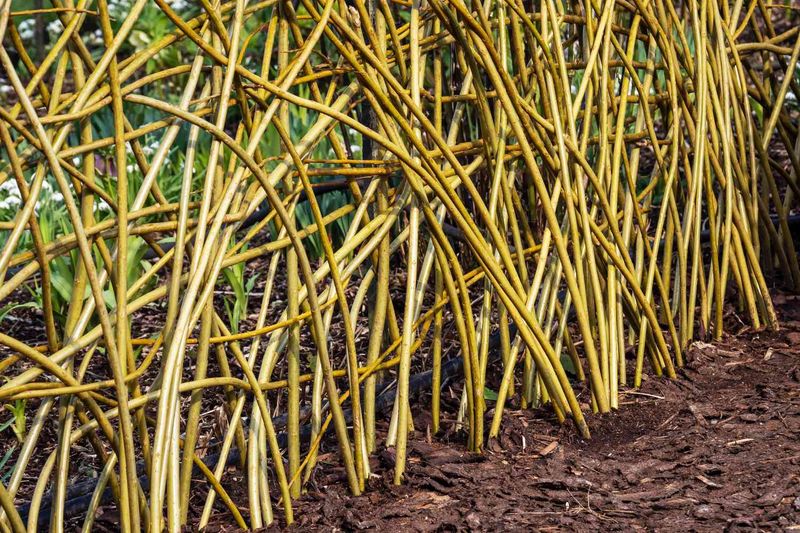
RHS lists golden willow (Salix alba var. vitellina), basket willow (Salix viminalis), and purple osier (Salix purpurea) as materials suited to living willow structures.
Those are useful starting points, but US readers should check regional suitability before ordering.
A species that thrives in the damp Pacific Northwest may struggle in a dry Colorado summer or a humid Georgia clay.
One species to approach carefully is weeping willow, Salix babylonica, which is native to China, not the United States.
USU Extension notes weeping willow’s origins and site demands, including its aggressive root system.
If your goal is habitat or streamside restoration, locally native willow species are generally a better fit.
Revegetation projects in Utah favor regionally native willows for exactly that reason.
Your local cooperative extension office can tell you which species are native to your county.
For site conditions, full sun is generally where willow performs best, though some species tolerate partial shade.
More important than sun angle is soil moisture.
Willow wants ground that stays consistently moist without sitting in permanent standing water.
UMN shoreland guidance describes willow as especially suited to moist conditions near water, but that does not make it drought-proof once planted as unrooted rods.
Before you mark your planting line, check what is underground.
Willow roots follow moisture aggressively.
The Minnesota Drainage Guide recommends keeping water-loving trees like willow well away from perforated drain lines, with setbacks that vary by drainage system and local rules.
Call 811 to locate buried utilities before you dig, and ask your county extension office or local municipality about any setback requirements near septic systems, foundations, or irrigation lines specific to your area.
Prepare The Line Before Planting
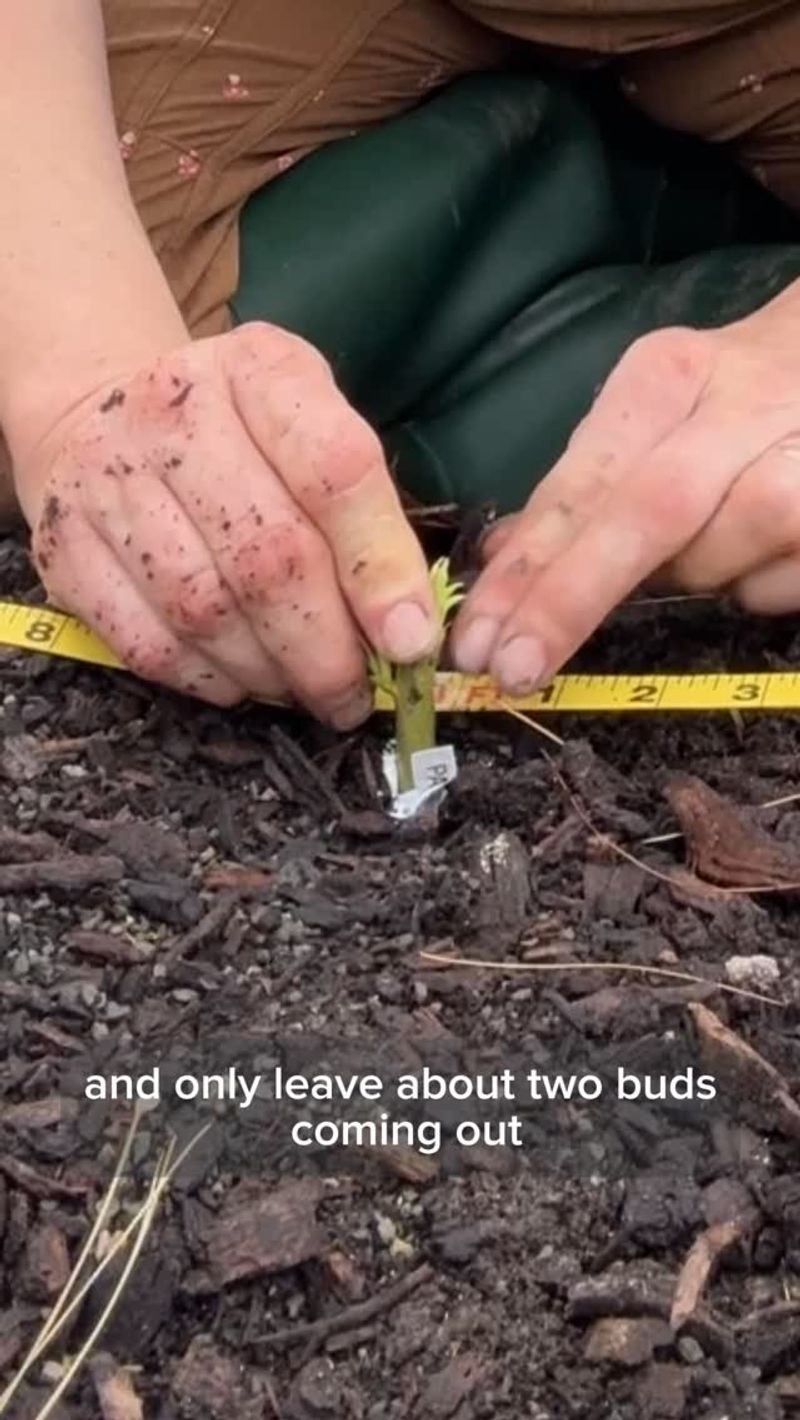
Grass and perennial weeds are the quiet enemies of a new fedge.
They compete for moisture and nutrients right at the base of unrooted rods during the weeks when those rods are most vulnerable.
Clear the planting strip completely before your rods arrive, removing sod and digging out the roots of any perennial weeds that would regrow.
UMN living snow-fence guidance recommends weed control for 3 to 5 years after planting, which tells you how long competition stays a real threat.
Plan for mulch or a fabric weed barrier along the planting line from day one, and keep whatever you use a few inches back from each stem so it does not girdle the bark as stems thicken.
Willow fedge rods are not the same as bare-root plants.
Bare-root plants already have roots when they arrive.
Fedge rods, often called whips, are dormant unrooted stems that will form roots after you push them into the soil.
Oregon State Extension describes these large dormant cuttings as whips, canes, or poles and notes that willow generally roots more readily from cuttings than many other woody plants.
That rooting ability is real, but it still depends on good conditions from the start.
When your rods arrive, keep them cool, shaded, and moist until you plant.
RHS cautions against leaving rods in direct sun or a warm room, and Forestry Commission guidance recommends cool storage with bases in water or moist packing material if planting is delayed.
Follow your supplier’s specific instructions, because different rod lengths and species may have slightly different handling needs.
If deer or rabbits browse in your yard, arrange guards or tubes before you plant, not after the first shoots appear.
Plant And Weave The First Framework
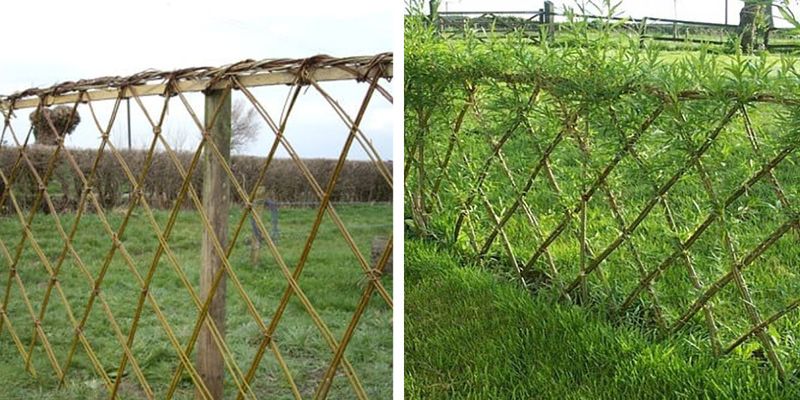
Once your soil is cleared and your rods are ready, the planting itself moves quickly.
RHS recommends spacing rods about 10 inches apart, with half of them angled at roughly 45 degrees in one direction and the other half angled between them in the opposite direction.
The result is a diagonal diamond pattern, like a loose lattice, that gives the fedge its woven look and structural integrity as the stems grow and thicken together.
Push each rod at least 12 inches into the ground.
That depth anchors the rod and puts the base in contact with consistently moist soil.
For longer whips or sandy soils that drain quickly, going deeper makes sense.
In heavy clay that holds water well, 12 inches is usually enough, but probe the soil first to make sure you are not pushing into a waterlogged layer.
RHS also describes an option of adding four loosely woven rods at roughly 6.5-foot intervals along the line for extra solidity.
Think of those as the structural uprights in a frame, giving the woven diagonal rods something more to lean against as they establish.
You do not have to use them, but they help on longer runs where the line might sag or shift before roots grip.
Do not mistake this close decorative spacing for windbreak design.
A proper windbreak uses much wider spacing and multiple rows.
UMN shrub windbreak guidance lists within-row spacing of roughly 3 to 6 feet and between-row spacing of 6 to 10 feet, plus careful attention to orientation and row count.
A fedge woven at 10-inch spacing is a backyard boundary feature, not a farm shelterbelt, and it performs accordingly.
Set your expectations at modest wind softening and seasonal screening, and the fedge will deliver.
Water And Weed Control Build Survival
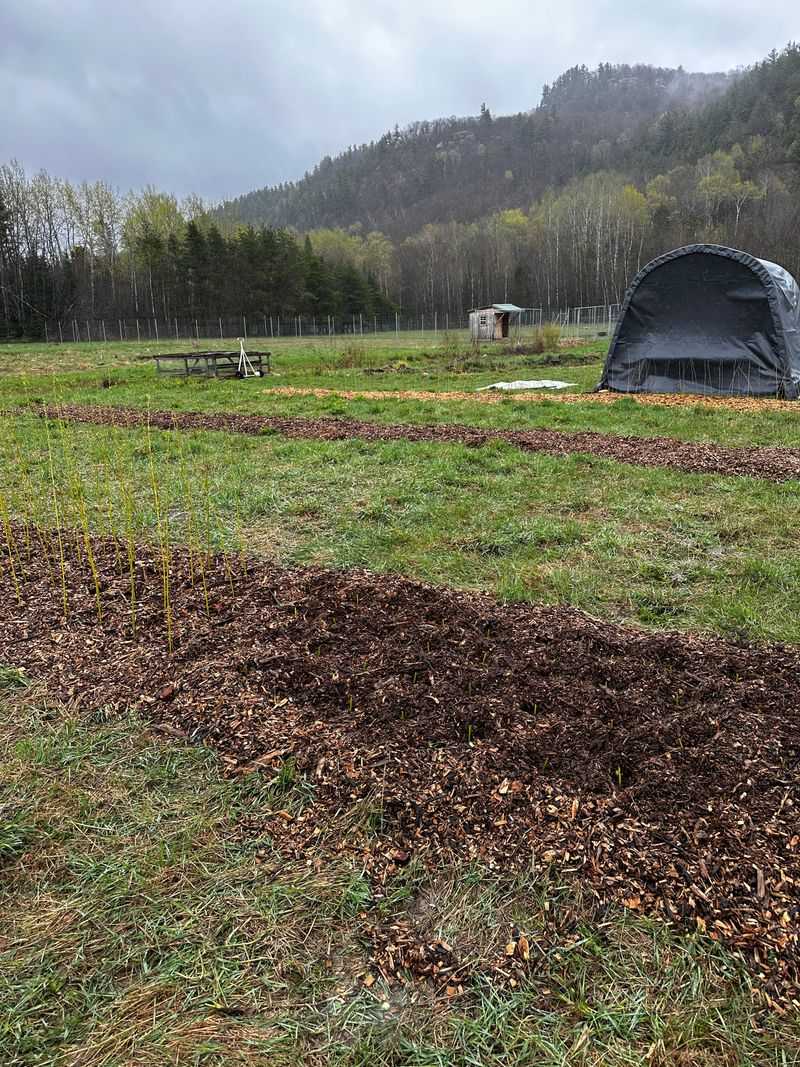
Water your rods as soon as you finish planting, soaking the soil around each one thoroughly.
During the first few weeks, check the soil every few days, especially if the weather turns dry or windy.
Unrooted rods have no root system yet to pull moisture from deep soil, so the top foot of ground needs to stay consistently damp.
UMN living snow-fence guidance recommends about 2 to 5 gallons per plant every 2 to 3 weeks during dry conditions for the first 3 years.
That range is a context-specific example from Minnesota conditions, not a schedule that fits every yard or climate.
In a wet Pacific Northwest spring, you may need far less.
In a dry Kansas summer, you may need more frequent watering than that guidance suggests.
Use it as a ballpark and adjust based on what your soil and weather actually do.
UMN planting guidance for woody plants recommends more frequent watering during the first weeks after planting, before roots establish.
After that initial period, you can ease back to a regular dry-spell schedule.
Mulch helps hold moisture between waterings and keeps soil temperature more stable, so lay a 2 to 3 inch layer along the planting strip and keep it away from the base of each stem.
Survival threats go beyond just watering.
USDA research on willow establishment and a related black willow survival study identify desiccation, droughty soil, competition, flooding stress, herbivory, and erosion as causes of mortality.
USFS species review data on willow reinforces that early survival depends heavily on moisture conditions at the planting site.
Weed control, consistent watering, and animal protection together are what carry unrooted rods through those first vulnerable months.
Treat Wind And Wildlife As Separate Problems
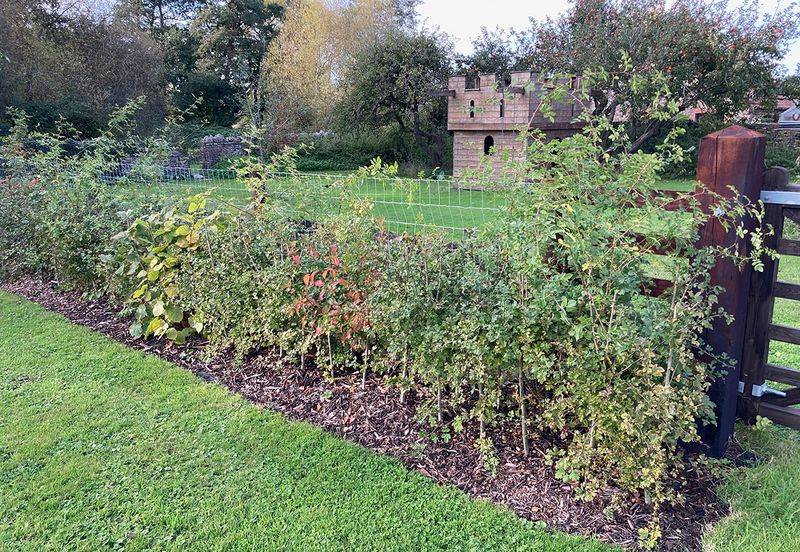
Wind and wildlife sound like one problem when you are standing on a breezy afternoon watching deer browse your garden, but a fedge addresses them differently and partially.
Keeping those two goals separate will save you from disappointment.
On the wind side, a fedge can slow and soften air movement near the ground along its line.
But wind protection on a meaningful scale depends on height, density, porosity, gaps, orientation, placement, and number of rows.
USDA National Agroforestry Center windbreak research describes the protected downwind zone as typically extending 10 to 20 times the windbreak’s height, but that math applies to designed multi-row plantings, not a single woven row of willow.
USU Extension windbreak guidance emphasizes that row count, plant density, and careful orientation all shape how much protection you actually get.
A backyard fedge is a wind-softening boundary, a pleasant one, but not a storm barrier.
On the wildlife side, the fedge offers some cover and movement structure for birds and small animals.
What it does not do is keep deer or rabbits out.
Willow is a browse plant, and UMN guidance on deer and rabbit pressure is clear that deer exclusion generally requires fencing about 6 to 8 feet tall.
UMN living snow-fence guidance specifically recommends tubes, guards, or fencing when deer or rabbits threaten new plantings.
Oregon State Extension riparian planting guidance echoes that recommendation for willow plantings near browse pressure.
If deer are a serious problem in your yard, protect the fedge itself with individual rod guards during establishment and consider a separate exclusion fence for the garden beds you care most about.
The fedge can coexist with that solution, but it cannot replace it.
Weave New Growth And Plan For Winter
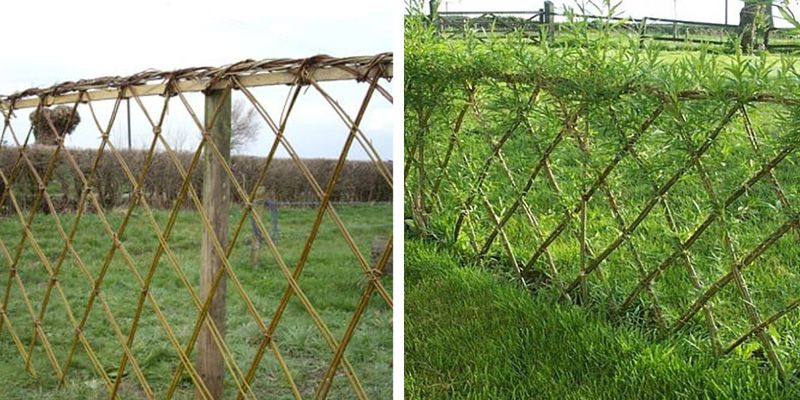
Once your fedge roots and pushes new growth, the structure needs annual attention to stay tidy and useful.
Winter is the best time to weave new shoots, when the stems are flexible and easy to bend without snapping.
Work them upward or sideways into the existing framework.
RHS guidance on living willow structures specifically warns against directing shoots downward, because downward-bent growth tends to die rather than root into the pattern.
RHS living willow care advice also calls for regular trimming and annual shaping to keep the fedge from growing loose and uneven.
Plan for the fedge to become more open in winter.
Willow is deciduous, which means the leaves drop and the woven stems become the main visual element from late fall through early spring.
That openness is worth accepting because the structure is still there, still defining the boundary, still offering some wind resistance at ground level.
But it cannot give you the same screening in January that it provides in July, and promising yourself year-round privacy from a willow fedge will lead to frustration.
Wildlife value follows the same honest scale.
A single-row fedge along a property line gives birds a perch and small animals a movement corridor.
UNH wildlife habitat guidance and USDA agroforestry notes on wildlife and windbreaks both describe larger, connected, diverse plantings as far more valuable for habitat than isolated single-species strips.
If supporting wildlife is a real goal, the fedge is a start, and adding a mix of locally appropriate native shrubs and small trees nearby will make the whole planting work much harder for the animals you want to attract.
A living fence you wove with your own hands is a genuinely satisfying thing, and it earns that satisfaction by doing exactly what it can, no more and no less.