
The Right Way To Rewild A Pennsylvania Yard Without Letting Invasives Take Over
Follow us on Google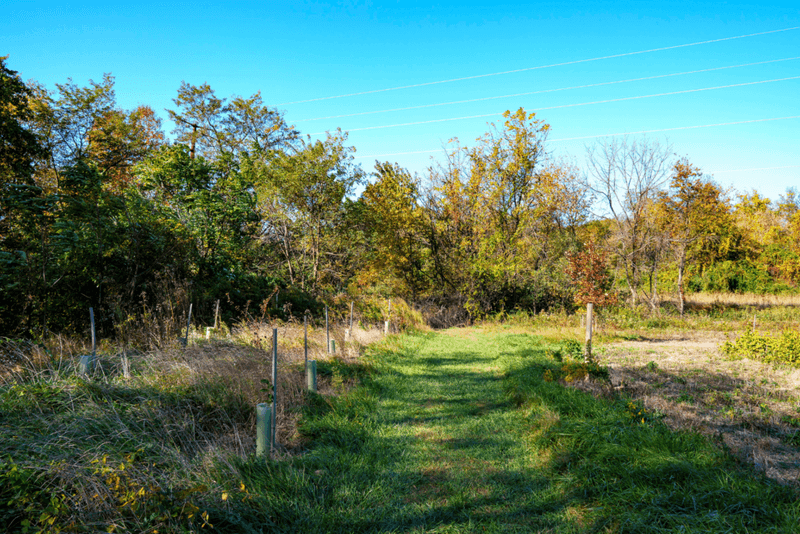
Plenty of Pennsylvania homeowners have looked at a patch of lawn and thought: what if I just let it go?
The idea sounds freeing, but a yard left entirely to chance rarely fills in with goldenrod and spicebush.
More often, Japanese knotweed or tree-of-heaven shows up first, and those plants do not share space graciously.
Rewilding a yard the right way means making deliberate choices, not stepping back and hoping for the best.
Redefine Rewilding Before You Change the Yard
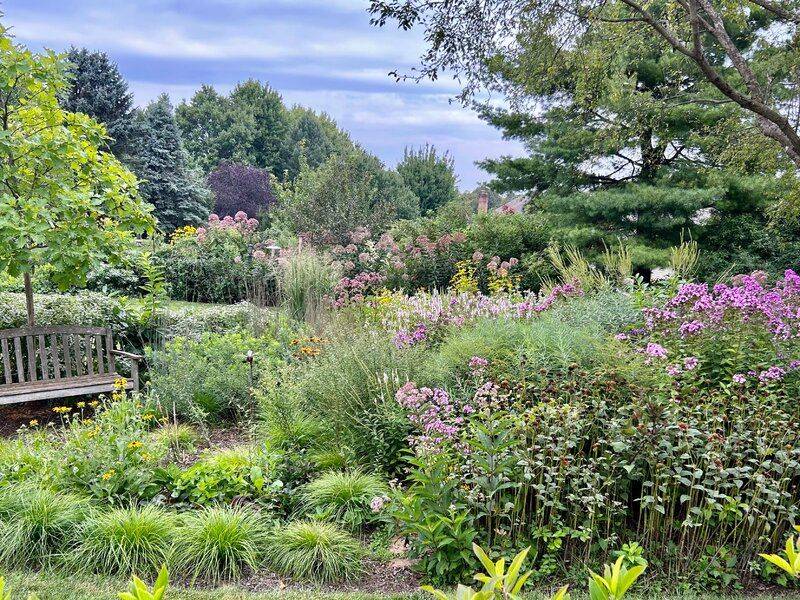
A lot of people picture rewilding as the moment they put the mower away for good.
That picture is genuinely appealing, but it skips a step that matters a great deal in Pennsylvania: deciding what you actually want to happen and where.
Managed natural landscaping is a more honest name for what works.
You choose a small, clearly edged area, you learn what arrives in it, and you treat the first season as a field course rather than a finished product.
Penn State Extension’s guidance on residential natural landscaping recommends starting with a modest plot, such as a native wildflower bed, a woodland edge strip, or a defined meadow corner, rather than converting the entire property at once.
A smaller footprint means less disturbance, lower cost, and a much clearer view of which plants are showing up uninvited.
No process, including this one, guarantees that invasive plants will never appear.
Pennsylvania DCNR is direct about this: invasive plants spread quickly in disturbed ground and can move in through seeds, roots, and rhizomes carried by wind, water, birds, and equipment.
The goal is to reduce and manage that risk, not to eliminate it permanently.
Pick a pilot area with a clear physical edge, a path, a fence line, a mowed strip, or a garden border.
Keep practical access around the house, garage, and play areas intact.
Treat everything beyond that defined edge as the next project, not the current one.
A limited start is not timid, it is actually the faster path to a yard that works.
Identify Plants Before You Remove Them
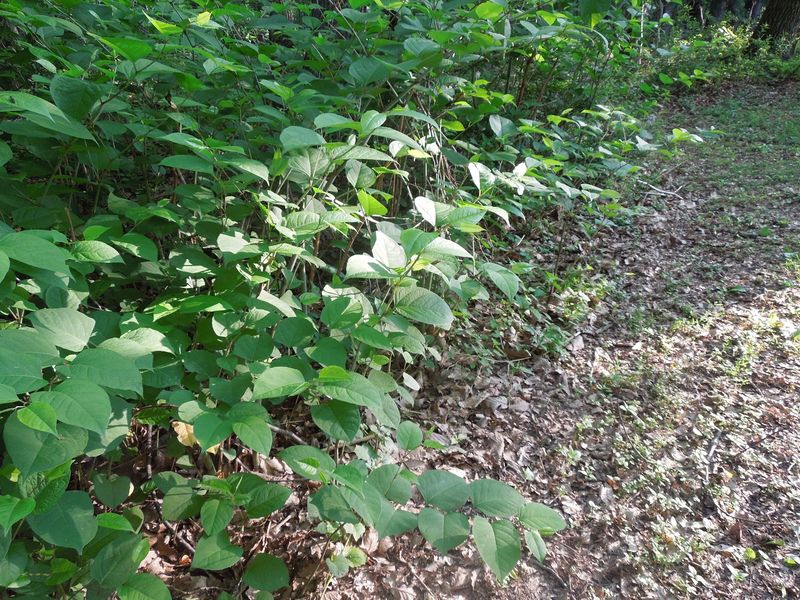
Before anything gets pulled, cut, or sprayed, spend time figuring out what you actually have.
This step feels slow, but skipping it causes real problems later.
Invasive plants in Pennsylvania are nonnative species that spread quickly and cause environmental, economic, or human-health harm.
Pennsylvania DCNR tracks dozens of them, including tree-of-heaven (Ailanthus altissima), Norway maple (Acer platanoides), Japanese barberry (Berberis thunbergii), privets (Ligustrum species), Japanese knotweed (Fallopia japonica), lesser celandine (Ranunculus ficaria), and wild parsnip (Pastinaca sativa).
Each one spreads differently and requires a different response.
Treating them all the same way is where control efforts fall apart.
Here is where it gets tricky: not every aggressive or spreading plant is invasive.
Penn State Extension notes that some native plants spread forcefully in garden settings without meeting the technical definition of invasive.
Goldenrod, certain ferns, and native asters can colonize a bed energetically, but they support local insects and birds in ways that invasive plants generally do not.
Pulling them out by mistake leaves open ground that invasives are glad to fill.
Use the DCNR invasive plant fact sheets to confirm an identification before you act.
A photo, a leaf shape, a stem cross-section, or a root structure can settle the question.
Penn State Extension’s plant identification resources and local cooperative extension offices are also useful when you are uncertain.
Knowing what you have is not optional, it is the foundation of every good decision that follows.
Control Invaders While Populations Stay Small
Small infestations are genuinely easier to manage than large ones, and the window for easy control closes faster than most people expect.
A single Japanese barberry shrub produces hundreds of seeds per year.
One lesser celandine plant can blanket a shaded slope in two or three seasons.
DCNR advises acting before invasive plants set seed and recommends mechanical removal, digging or cutting, for small populations when the species responds to that method.
The key phrase is “when the species responds.” Digging works well for shallow-rooted plants with limited resprouting ability.
For plants like Japanese knotweed, which spreads through underground rhizomes and can resprout from small root fragments, digging alone often makes the problem worse by fragmenting the root system and spreading viable pieces.
Do not casually compost material from invasive plants.
Seeds, roots, and rhizomes can survive a typical backyard compost pile and reinfest the yard when finished compost is spread.
Bag and dispose of invasive material according to local guidelines, or check with your county extension office about proper handling for specific species.
The DCNR fact sheets list disposal guidance by species and are worth reading before you start.
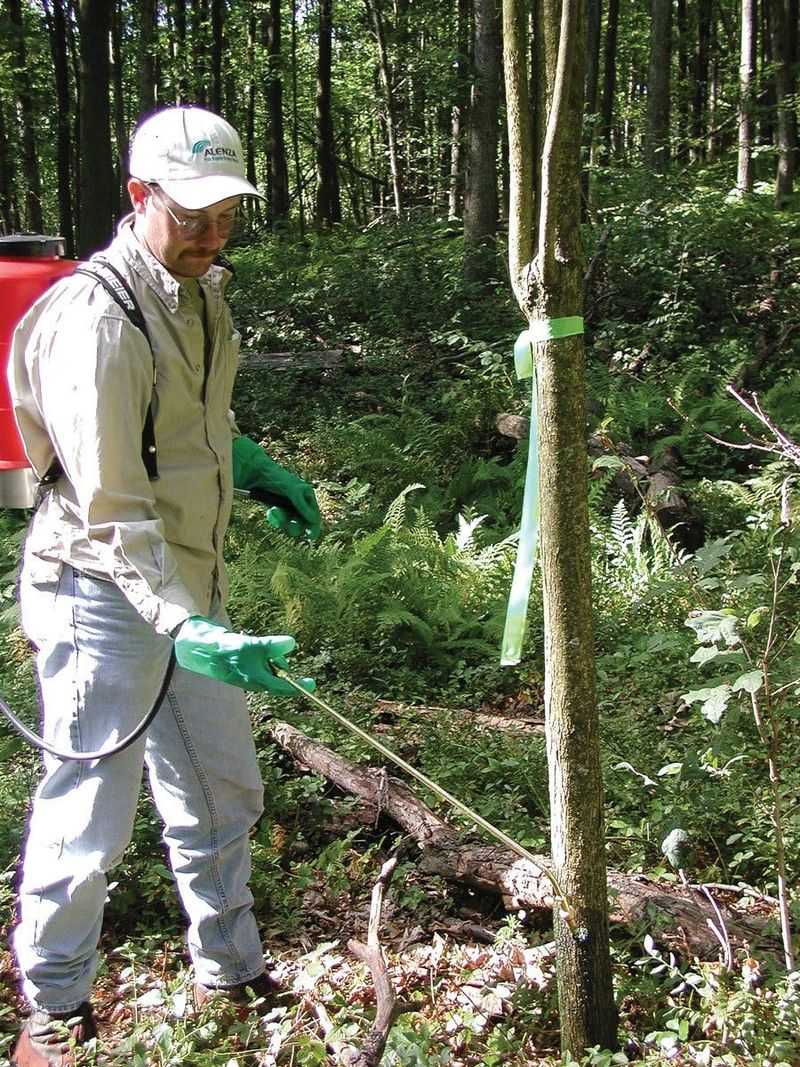
For larger or persistent infestations, targeted herbicide methods can be effective when applied correctly.
Penn State Extension describes techniques such as cut-stump, basal-bark, hack-and-squirt, and targeted foliar application that limit exposure to desirable plants.
These are not the same as broadcast spraying, which can damage native plants and non-target vegetation.
Pesticide labels are legally binding documents.
The EPA is clear that label directions must be followed exactly.
When an infestation is large, the species is particularly aggressive, or the site creates exposure risk, a licensed applicator is worth calling.
Close Bare-Soil Gaps After Removal
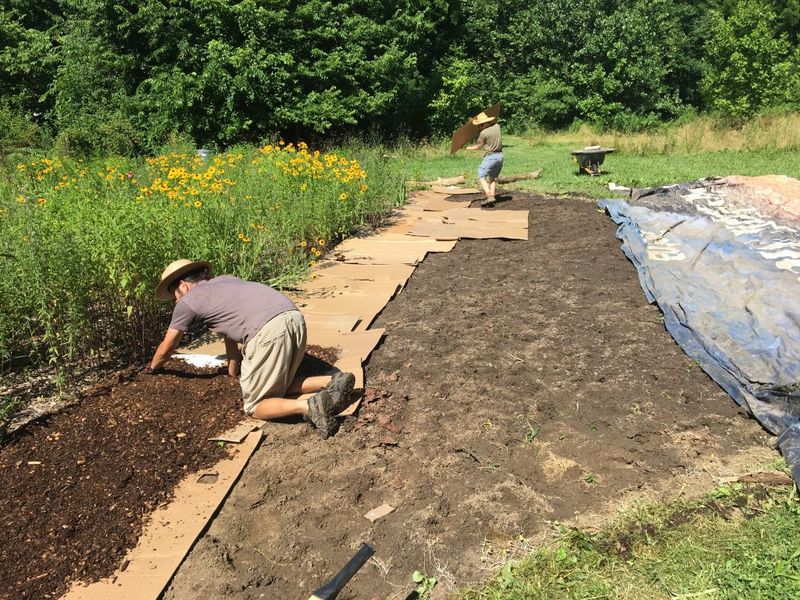
Clearing invasive plants feels like finishing the job.
It is actually the start of the most vulnerable period in the whole project.
Bare soil is an open invitation.
DCNR warns that invasive plants thrive on disturbed ground and recommends establishing healthy native cover as quickly as possible after removal.
Limit unnecessary digging and avoid moving more soil than the project requires.
When you bring in topsoil, mulch, gravel, or fill, check the source and ask whether it has been screened for weed seeds.
Many reinvasion problems trace back to a truckload of fill or a bag of bulk mulch from an unknown supplier.
Native plants do not always rush back on their own after invasive removal.
A peer-reviewed restoration study found that natural succession can stall when native seed sources are scarce and invasive legacies remain in the soil or vegetation.
Seeds of removed invasives can persist in the soil for years.
Replanting, what restoration ecologists call assisted succession, actively closes the gap instead of waiting and hoping.
In plain terms: after you remove an invasive, plant something in its place before the next rain.
A fast-establishing native ground cover, a plug of Pennsylvania sedge (Carex pensylvanica), or a layer of weed-free wood chip mulch all work better than leaving the ground open.
Two inches of mulch kept away from plant stems slows weed germination and holds soil moisture without creating the conditions that rot crowns and stems.
Even with good cover in place, plan to check the cleared area regularly.
Invasive seeds in the soil bank can still germinate, and catching them early keeps the project from circling back to square one.
Choose Native Plants For The Actual Site
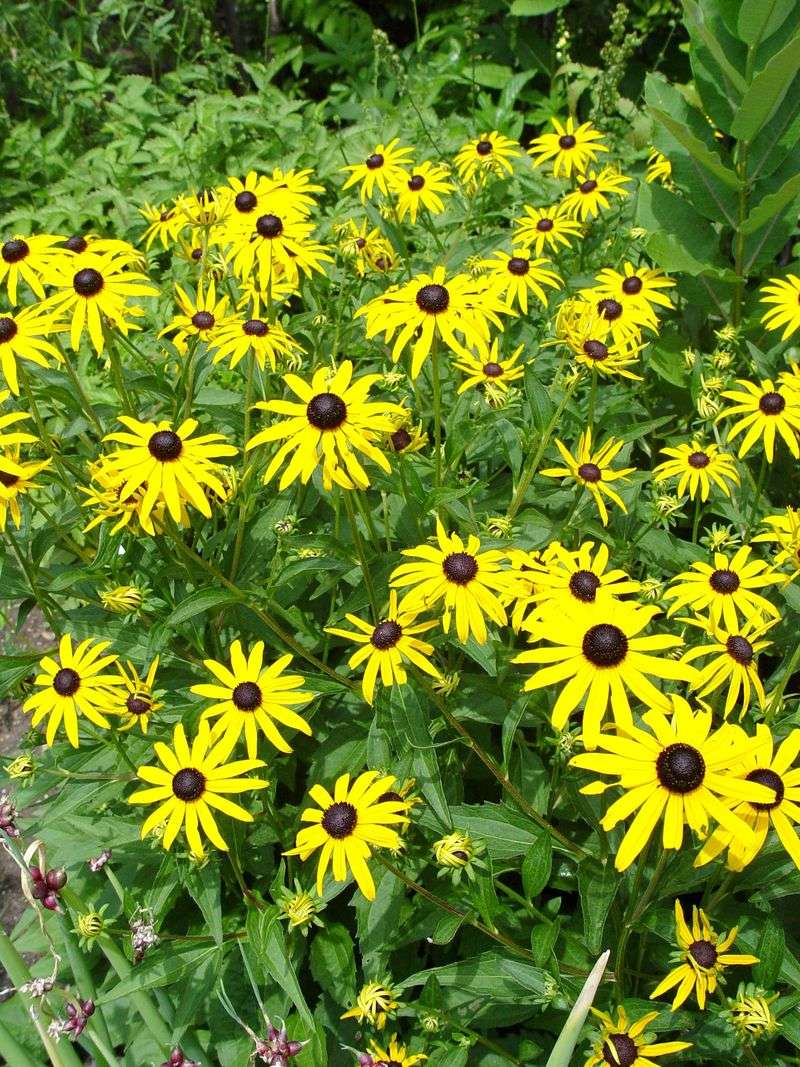
Buying plants labeled “native” is a fine starting point, but the label alone does not tell you whether a plant will survive in your specific corner of Pennsylvania.
A moisture-loving species placed on a dry shale slope in the central valleys will struggle.
A vigorous spreader placed in rich, disturbed soil near a path may become its own management project.
Start with a soil test before you buy anything.
Match every plant to your actual sun exposure, soil texture, moisture level, and fertility.
A plant that fits the site establishes faster, needs less supplemental water, and competes better against weeds than one fighting the wrong conditions from day one.
Some Pennsylvania natives that perform well across a range of residential conditions include spicebush (Lindera benzoin), serviceberry (Amelanchier species), eastern redbud (Cercis canadensis), mountain laurel (Kalmia latifolia), bee balm (Monarda didyma), Joe Pye weed (Eutrochium species), black-eyed Susan (Rudbeckia hirta), native asters (Symphyotrichum species), switchgrass (Panicum virgatum), Pennsylvania sedge, and native milkweeds such as butterfly weed (Asclepias tuberosa).
Penn State Extension explains that native plants are adapted to local soils and climate patterns, which is genuinely useful, but that adaptation applies to the right local conditions, not every yard in the state.
If you are using a seed mix, read every species on the label.
Penn State cautions against mixes with unknown or unlisted species and recommends buying from reputable native plant nurseries or suppliers.
Many commercial wildflower mixes contain nonnative annuals that look cheerful in the first year and contribute little after that.
Buy from a supplier who can tell you exactly what is in the bag and where the seed was grown.
Establish A Meadow Before You Expect One
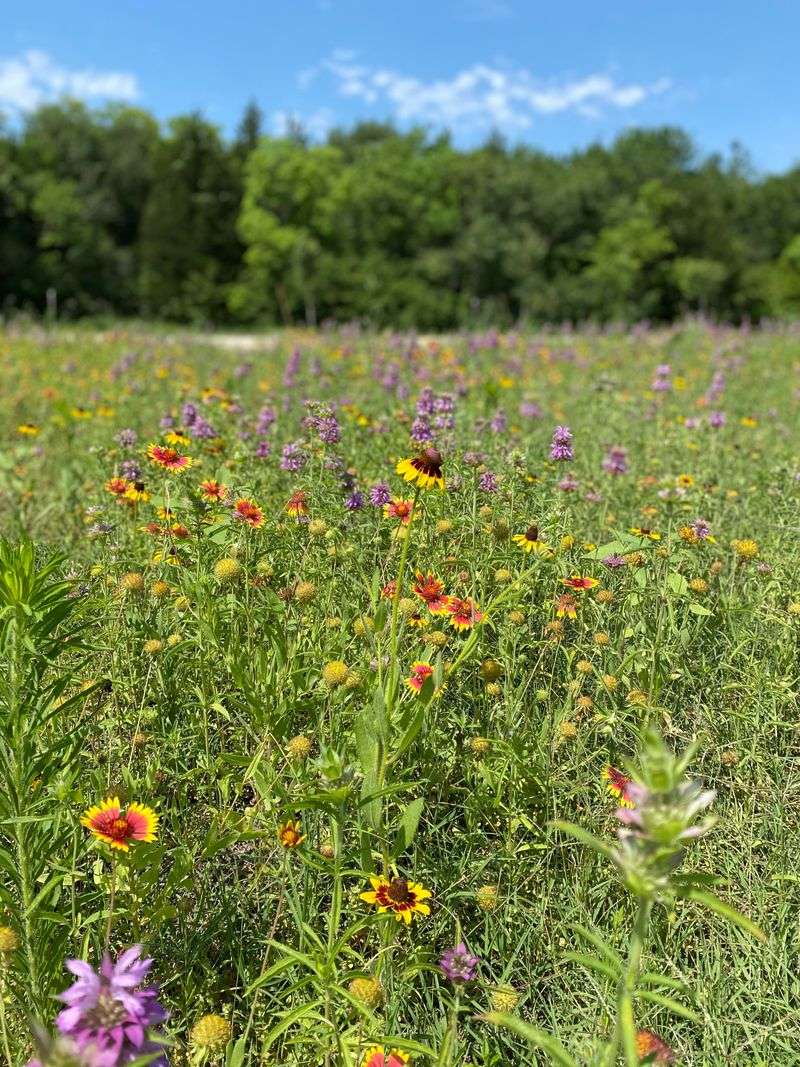
Many people plant a meadow once and then wait, expecting it to take care of itself.
The first summer usually corrects that expectation, sometimes dramatically.
Fast-growing annual weeds, foxtail, ragweed, pigweed, and others, emerge earlier and grow faster than most native perennials in their first year.
If those weeds set seed before the natives establish, the meadow fills in with the wrong plants and the cycle repeats.
A separate Pennsylvania meadow guide advises mowing before weeds exceed 8 inches and cutting down to about 4 inches, repeating often enough to prevent weeds from producing seed heads.
Neither approach is universal, the right threshold depends on your site, your plant mix, and what is actually growing.
The mowing is not hurting the native plants.
Most native meadow perennials spend their first year building root systems rather than top growth, so cutting the weeds above them does not set the natives back significantly.
What it does is buy time.
Newly planted natives may need supplemental water during dry periods, especially in the first growing season.
Requirements vary by site, weather, and how well the plants are establishing.
Do not assume that planting natives means walking away from the hose entirely.
A dry July in the Susquehanna Valley or a hot August in the Delaware Valley can stress young plants that are not yet rooted deeply enough to pull moisture from lower soil layers.
Once a meadow is genuinely established, usually after 2 to 3 years, Penn State’s native meadow guidance confirms that cutting once or twice a year is typically enough to manage woody encroachment and reset the planting.
Low maintenance is accurate.
Maintenance-free is not.
Build Clearer Buffers Around Everyday Spaces
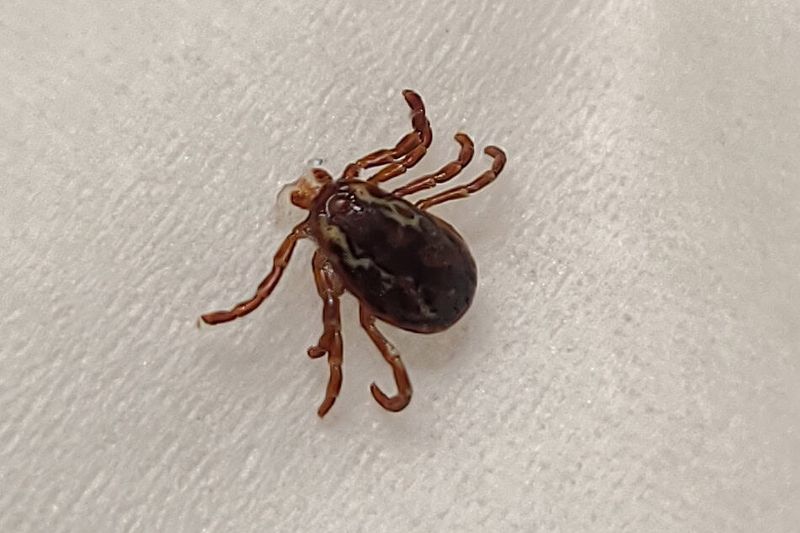
A naturalistic yard and a comfortable outdoor life can coexist, but they require some deliberate separation, especially where the yard meets the woods.
Tall grass, leaf litter, brush piles, wooded edges, deer, and rodents create the conditions where tick exposure is most likely.
That barrier does not mean a naturalistic planting cannot exist near the patio or play area.
It means the zone immediately beside those spaces, especially where they border brush or woods, should be shorter, clearer, and easier to walk through.
Think of it as a gradient.
The naturalistic planting lives in the middle of the yard or along the back property line.
A shorter, maintained transition zone sits between that planting and the places where people actually spend time.
Paths stay clear.
The area around the playset stays mowed.
The patio edge stays open.
The habitat continues beyond that, just not immediately underfoot.
Deer browsing adds a second layer of complication.
Penn State Extension describes deer as selective browsers that can eliminate preferred native seedlings, particularly young trees and shrubs, while leaving less-preferred plants like ferns, mountain laurel, and spicebush relatively untouched.
In areas with heavy deer pressure, fencing new plantings for the first 2 to 3 years or choosing species with lower browse appeal may be necessary.
Plant selection helps, but it does not solve heavy browsing on its own.
Honest expectations here save a lot of frustration.
Monitor The Yard Through Every Growing Season
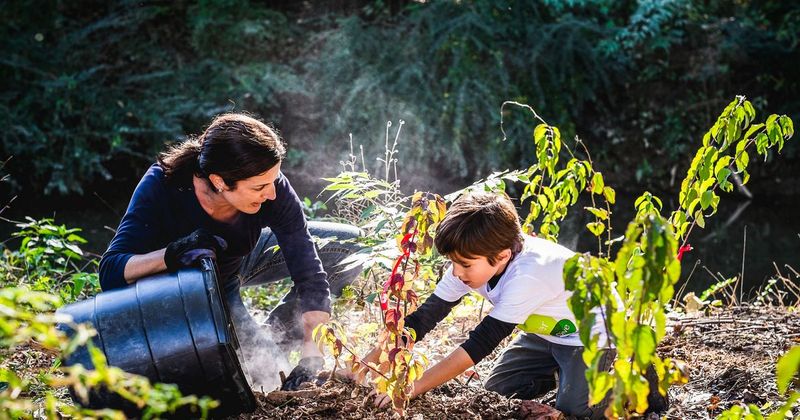
Every naturalized area in Pennsylvania needs someone walking through it regularly.
That is not a criticism of the project, it is simply how managed natural landscaping works.
Plan to inspect new naturalized areas every 2 to 4 weeks during the growing season, particularly after any soil disturbance, mowing, tree removal, flooding, or construction nearby.
That rhythm is practical editorial guidance, not a regulatory requirement, but it reflects how quickly a small invasive seedling can become a large invasive plant.
Look for resprouts from previously removed species, new seedlings at the edges, bare patches where plants have failed, seed heads forming on weeds, and browse damage on young natives.
Address small problems before they require the same amount of work as the original clearing.
Pennsylvania’s growing conditions vary considerably, and your monitoring calendar should reflect your actual location.
Penn State Extension documents average first-frost dates ranging from around September 13 in Ridgway to October 28 in Philadelphia, with last-frost dates shifting by several weeks between the northern tier and the southeastern corner of the state.
A gardener in the Poconos and a gardener in the Delaware Valley are working in meaningfully different conditions.
Check local frost information rather than relying on a single statewide planting date, and adjust your end-of-season inspection and cleanup timing accordingly.
DCNR also recommends monitoring property regularly and acting while invasive populations are small.
A yard that looks wild and works well for birds, pollinators, and seasonal interest is genuinely achievable in Pennsylvania.
It just requires the kind of attention a good neighbor pays to their property, curious, consistent, and willing to act before small problems grow into large ones.