
The One Thing You Must Do To Texas Crape Myrtles Before September Ends
Follow us on Google
Late summer in Texas is when crape myrtles (Lagerstroemia indica and related hybrids) are winding down their first big flower show, and right now is exactly when a small, optional task can give your tree a real shot at one more round of color before the first frost.
You do not have to do this, and skipping it will not hurt the tree.
But if you have got spent flower heads drooping from reachable branch tips and the days are still hot and long, removing those faded clusters may encourage another flush, especially on shrubs, dwarf forms, and smaller trees.
The Useful Task Is Optional Deadheading

Walk up to your crape myrtle right now and look at the branch tips.
If you see tan, papery flower heads or small green seed capsules where the blooms used to be, those are spent clusters, and removing the reachable ones is the one late-summer option worth your time.
The job is called deadheading, and University of Georgia Cooperative Extension guidance on crape myrtle culture describes it as a way to encourage repeat flowering, not as a plant-health requirement.
The title of this article uses the word “must,” and that word needs a correction right up front.
No Texas crape myrtle must be deadheaded.
The tree will not suffer if you leave the seed capsules alone.
Some newer cultivars cycle into a second bloom on their own without any help from you, and a well-placed, healthy tree can flower abundantly season after season with little intervention.
What deadheading actually does is improve the odds of another display while favorable growing conditions remain.
That distinction matters.
Texas Master Gardeners’ September task guidance lists deadheading crape myrtles as a timely late-summer option, not a universal calendar requirement.
The job is most manageable, and most worth doing, on shrubs, dwarf cultivars, and small trees where you can reach the branch tips from the ground or a stable step.
University of Florida IFAS extension notes that removing every spent cluster from a large mature tree is impractical and is not required for good flowering.
Do what you can reach safely, and leave the rest alone.
Why Removing A Spent Cluster May Help
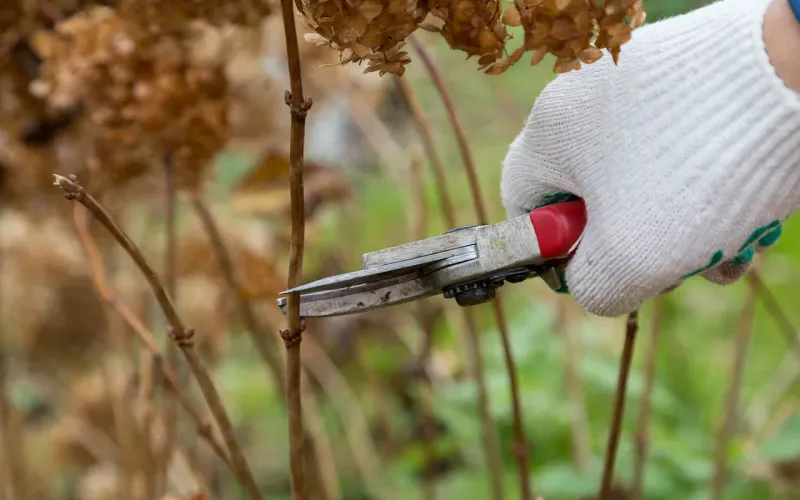
Crape myrtles flower on new growth produced during the current growing season.
Every bloom you enjoy this summer grew on a shoot that formed this year, not on old wood carried over from last fall.
That single fact is the foundation for why deadheading can sometimes coax out another round of color.
When a terminal flower cluster finishes blooming, the shoot’s energy often shifts toward developing the seed capsule.
Removing that spent cluster may allow or encourage nearby lateral buds to push out new shoots.
If the plant has enough warm growing time ahead, those new shoots can mature and flower.
Texas A&M AgriLife Extension’s Earth-Kind pruning guidance confirms that crape myrtles bloom on current-season growth, which is why timely removal of spent heads can open the door to another flush.
Deadheading, to be clear, means removing only the flower head or green seed capsule at the very tip of a shoot.
It does not mean cutting back the branch, shortening the stem, or reshaping anything.
UF/IFAS Okaloosa County extension guidance notes that a second flush may take approximately 4 to 6 weeks after deadheading, presenting that as a potential interval from practical experience, not a guaranteed Texas forecast.
The response depends heavily on cultivar, plant vigor, available moisture, and how much warm weather remains before your first frost.
Some trees will surprise you with a respectable second show.
Others may push out only a few small clusters, or none at all.
Deadheading improves the chance, it does not promise the result.
Use The Growing Season, Not A Rigid Deadline
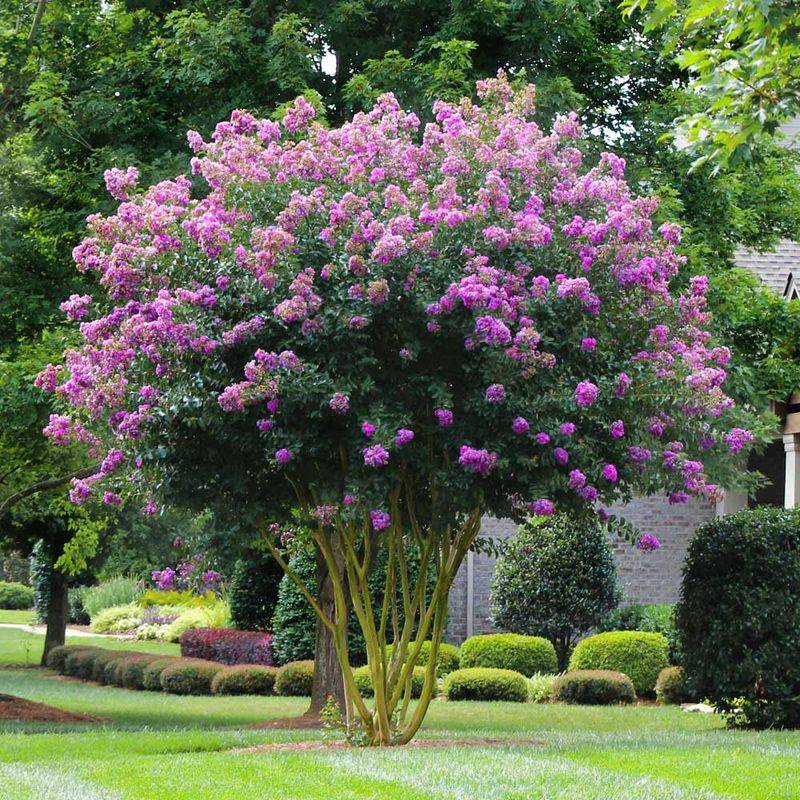
September 30 sounds tidy, but your crape myrtle does not keep a calendar.
The right moment to deadhead is soon after the first flower clusters fade, while the days are still warm and the tree is actively pushing growth.
Waiting until the last week of September in, say, Amarillo or Lubbock may leave too little growing time for a meaningful second bloom before a killing frost arrives.
UF/IFAS extension guidance suggests that a second flush may take roughly 4 to 6 weeks after deadheading.
That is an approximate interval drawn from practical experience, not a statewide promise.
In the Texas Panhandle, where a first frost can arrive in mid-October, you may already be cutting it close by early September.
Along the Gulf Coast or in South Texas, warm conditions can stretch well into November, giving a late deadheading much better odds.
Texas Master Gardeners in Harris County list crape myrtle deadheading as a September garden task, while Brazos County guidance recommends the same job in August to encourage another bloom cycle.
The difference is not a disagreement; it reflects the simple truth that timing should follow the plant and the weather, not a fixed date on the wall.
Late-flowering cultivars that do not begin blooming until after mid-July may genuinely not have enough warm time remaining to produce a second flush before frost, even in Central Texas.
Oklahoma State Extension guidance on winter protection reinforces why late-season growth timing matters: new tender shoots that emerge too close to freezing temperatures may not harden in time.
And UGA Extension’s crape myrtle culture guidance notes that a second bloom is less reliable for cultivars with later bloom times.
Act when your tree tells you to, not when the calendar does.
Make One Small Cut At The Shoot Tip

Pick up a pair of clean, sharp bypass hand pruners.
That is genuinely the right tool for this job, narrow enough to get between stems without bruising surrounding growth and sharp enough to leave a clean cut rather than a ragged one.
Wipe the blades with rubbing alcohol before you start if you have been cutting anything else in the yard.
Find a faded flower cluster or a small green seed capsule at the end of a shoot.
Look just below it for a healthy leaf joint or a visible lateral bud, that small swelling where a new shoot could emerge.
Place your cut just above that point, removing only the spent terminal cluster.
Leave the supporting branch, all larger stems, and the canopy completely alone.
Texas A&M AgriLife Earth-Kind pruning guidance is clear that the cut should be narrow and purposeful, not a broad reshaping of the tree.
UF/IFAS Okaloosa County extension describes the same limited cut: remove the flower head or seed capsule at the shoot tip, not the branch below it.
You are taking off roughly 2 to 4 inches of spent material in most cases, nothing more.
Now the safety part, and this is not optional.
Work from the ground or a firmly planted stepladder with both feet stable.
University of Florida IFAS guidance on crapemyrtle pruning specifically cautions against unsafe attempts to reach high branches on mature trees.
A possible second bloom is not worth a fall from a shaky ladder propped against a branch.
If a cluster is more than a comfortable arm’s reach away, leave it.
The tree will be fine either way, and so will you.
Keep Deadheading Separate From Pruning
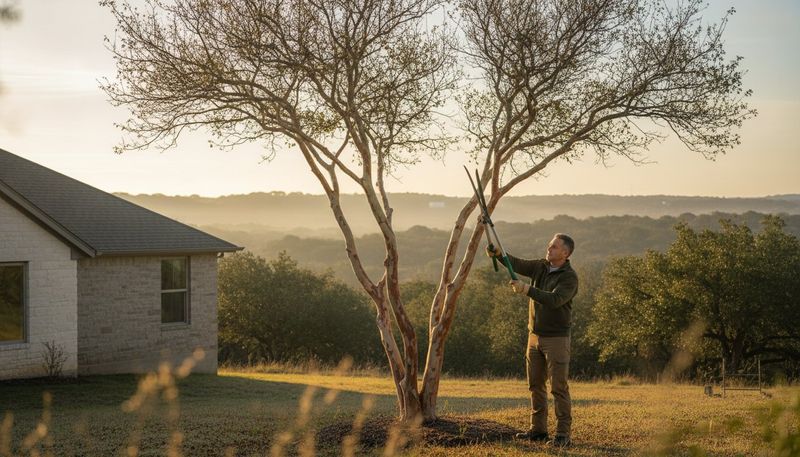
Here is where a lot of well-meaning Texas gardeners go sideways.
They head outside to remove a few spent flower heads and end up cutting back whole branches, reshaping the canopy, or trying to force the tree into a tighter form.
That is not deadheading anymore, and it can genuinely cause problems.
University of Florida IFAS crapemyrtle pruning guidance draws a clear line between three different actions.
Deadheading removes faded flower heads or seed capsules.
Structural pruning removes dead, damaged, crossing, or poorly placed branches.
Topping cuts major limbs back to stubs and is widely condemned by extension horticulturists across the South as harmful to the tree’s long-term form and health.
These are not interchangeable jobs, and late August or September is not the time to combine them.
Healthy, properly selected crape myrtles do not need pruning to flower.
UGA Cooperative Extension states this plainly: the misconception that crape myrtles must be pruned to bloom is widespread but wrong.
A tree planted in the right spot with enough sun will flower on its own without annual cutting.
Major late-summer pruning creates another problem specific to Texas.
Heavy cuts stimulate tender new growth, and that soft tissue may not harden before a freeze arrives.
Oklahoma State Extension discourages pruning from roughly mid-August until killing frost, except for dead, diseased, or damaged material.
OSU’s ornamental pruning guidance similarly recommends dormant-season work, generally late winter to early spring, for most structural cuts.
Save that job for February.
Right now, take only what you came for: the spent flower tips, nothing else.
Let Region And Cultivar Set Expectations
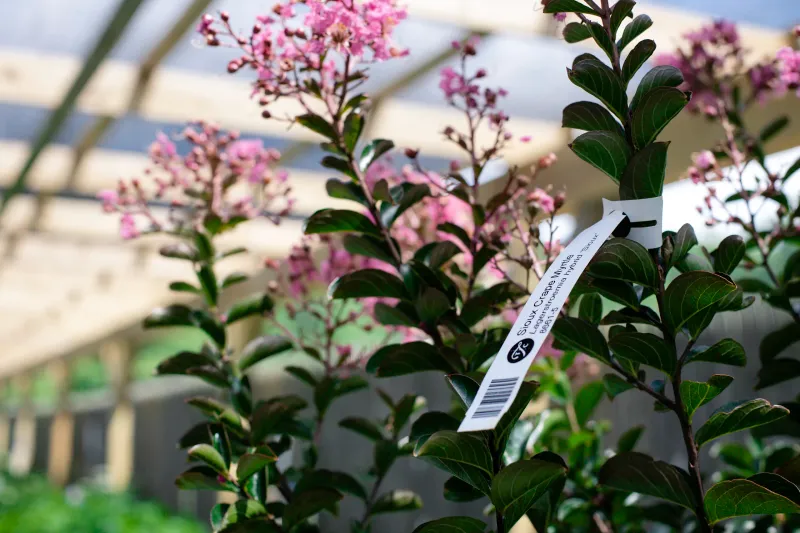
Texas is not one climate, and your crape myrtle knows that better than any gardening article does.
A second bloom after deadheading is generally more plausible where warm growing conditions last longer and less plausible where the first frost arrives early.
That is a climate-based expectation, not a ranked statewide guarantee, and your actual result will depend on several things at once.
Cultivar matters as much as location.
UGA Cooperative Extension’s crape myrtle culture publication notes that cultivars beginning to bloom after mid-July may not have enough remaining growing season to reliably produce a second flush.
If your tree is still on its first wave of flowers in late August, deadheading the earliest spent clusters makes sense.
If it just finished a bloom that started in late July and you are already in North Texas with a frost forecast in 6 weeks, the odds of a meaningful second show are slim.
Newer repeat-blooming cultivars are worth knowing about.
Some of them cycle into fresh flower heads naturally, without any deadheading at all, which is one more reason this task is optional rather than universal.
Check your planting tag or cultivar name against Texas A&M AgriLife Extension’s crape myrtles for Texas resource to see what your specific tree is bred to do.
Plant vigor and moisture play a role too.
A tree stressed by severe drought or growing in too much shade will not respond well to deadheading regardless of the calendar.
Brazos County Master Gardeners recommend deadheading in August to encourage another bloom cycle, a timing that reflects the reality of Central Texas heat and the growing window that remains.
Use your local frost date, your cultivar’s known bloom timing, and the tree’s current condition as your guide, not a single statewide rule.
Support The Plant And Ignore False Alarms
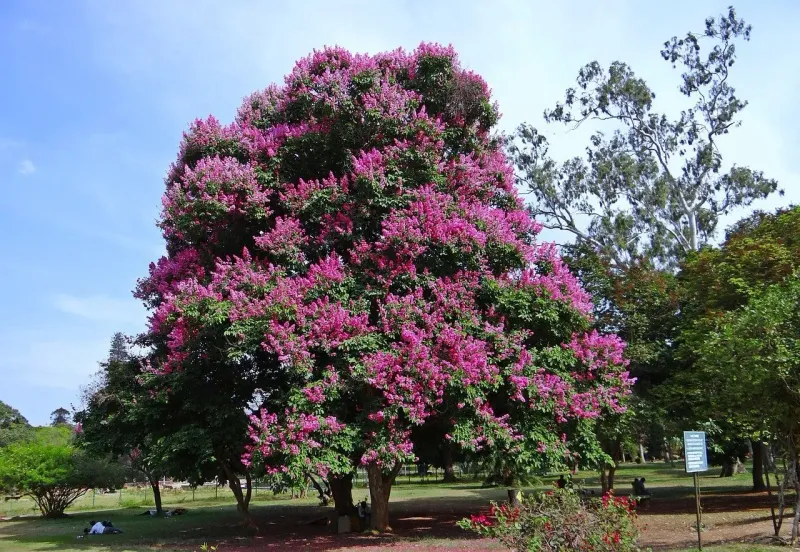
Deadheading works best when the tree has what it needs to actually grow new shoots.
Full sun is non-negotiable for crape myrtles.
Texas SmartScape lists crape myrtle as a low water demand plant once established, with a flowering period that can span 60 to 120 days depending on cultivar.
But low water demand does not mean no water during a stretch of triple-digit heat and no rain.
During a dry Texas summer, deep occasional watering supports the active growth that makes a second flush possible.
Shallow daily sprinkling does less good than soaking the root zone thoroughly and then letting the soil dry somewhat before watering again.
Properly placed mulch around the base, kept away from the trunk, can help retain that moisture between waterings.
No deadheading will compensate for a tree sitting in too much shade or wilting from severe drought stress.
Seed capsules left on the tree are not a problem.
They do not steal the tree’s energy in any way that extension sources have documented as harmful.
Leave them if you find their texture interesting in winter, or remove them if you prefer a tidier look.
Either choice is fine.
One real concern to separate from spent blooms: crape myrtle bark scale.
Signs include white or gray felt-like material on trunks and branches, sticky honeydew dripping from the canopy, and black sooty mold coating leaves and surfaces below.
Texas A&M AgriLife Extension identifies crape myrtle bark scale as a pest that can reduce bloom and disfigure trees, and Texas IPM research on bark scale treatments emphasizes earlier systemic applications and spring crawler control rather than an automatic fall spray.
Deadheading will not touch this problem.
If you suspect bark scale, get a correct identification first and defer any pesticide decisions to your current product label and local extension guidance, especially while the tree is flowering and pollinators are active.
Remove the reachable faded clusters if you choose, leave the major limbs exactly where they are, and let the tree decide whether it has one more show left in it this season.