
Rhizoma Perennial Peanut: A Long-Term Lawn Alternative For Suitable Florida Yards
Follow us on Google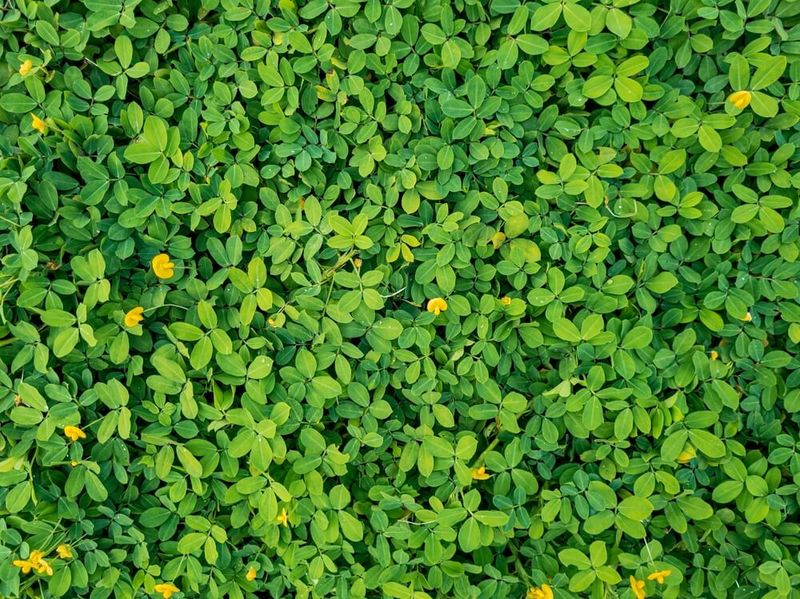
Your mower pulls out of the garage every single week, the water bill climbs every dry season, and the fertilizer schedule never really ends.
A lot of Florida homeowners are quietly asking whether all that effort is the only option for a front yard.
Rhizoma perennial peanut, Arachis glabrata, has been getting real attention as a ground cover that can cut recurring lawn-care inputs over time in the right yard.
The honest answer is that it takes planning, some upfront cost, and the right site conditions, but for many sunny, well-drained Florida yards it genuinely delivers lower long-term maintenance.
Meet Rhizoma Perennial Peanut
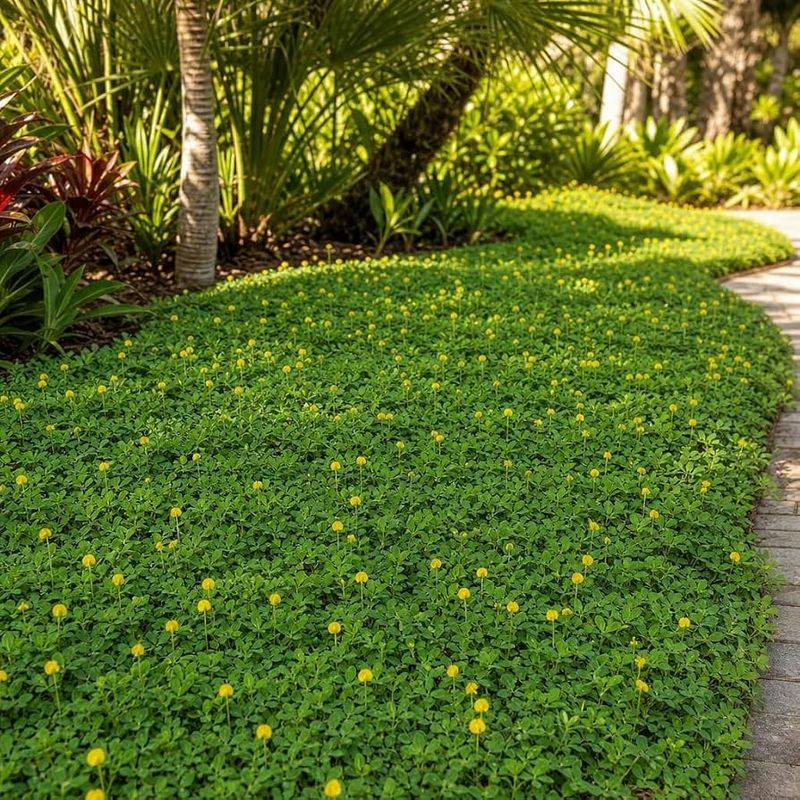
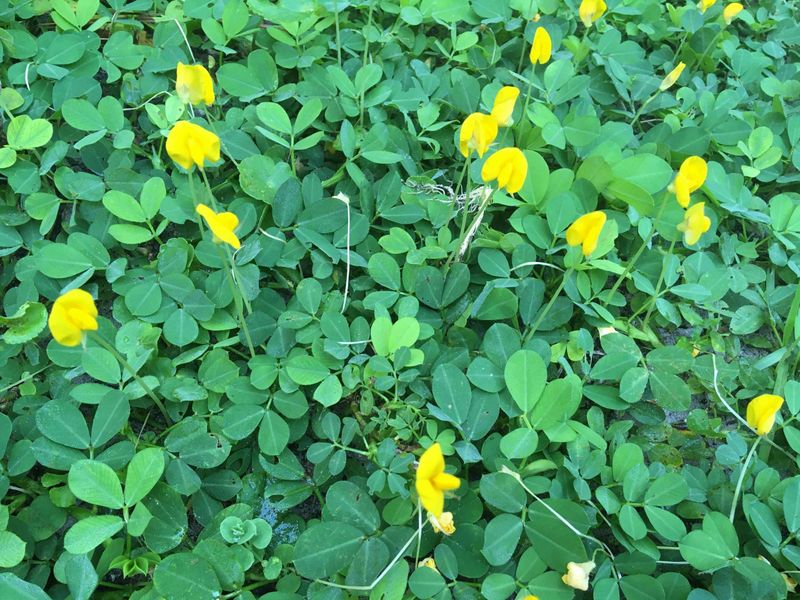
Picture a low, dense mat of green foliage dotted with small yellow flowers on a warm Florida morning.
That is rhizoma perennial peanut, Arachis glabrata, a legume that spreads through underground stems called rhizomes rather than by seed.
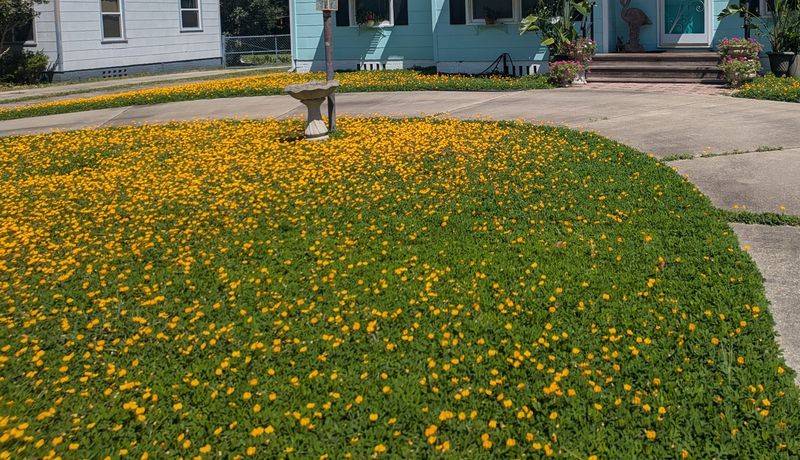
It stays low to the ground, produces cheerful yellow blooms during the warm growing season, and gradually fills open space without the weekly attention that most Florida lawns demand.
Before you order any material, understand what you are actually buying.
Rhizoma perennial peanut is not the same plant as the edible peanut you find at a ballgame, and it is a different species from pintoi peanut, Arachis pintoi, which spreads by above-ground runners called stolons.
UF/IFAS agronomic guidance on perennial peanut covers both types, but the rhizoma type is the better-supported choice for much of Florida, particularly where occasional cold matters.
Pintoi peanut can establish slowly and may stay below 50 percent cover after a full year in research plots, so the two should not be treated as interchangeable.
Rhizoma perennial peanut originated in tropical South America, not Florida, so it carries no native-plant credits for local habitat value.
What it does offer is a track record as a promising lawn alternative for suitable sites across the state.
The key phrase is “suitable sites.” UF/IFAS Gardening Solutions is clear that it performs best in full sun and well-drained soil, and it does not provide an instant or universal lawn replacement.
Think of it as a quieter, lower-input option for the right yard, not a guaranteed fix for every Florida front lawn.
The Payoff Takes More Than One Season
The headline that brought many readers to this topic promises a replacement that costs less than one year of sod care.
That claim is not supported by the available research, and repeating it would not do you any favors when you are actually budgeting for this project.
The honest cost story is more nuanced and still genuinely encouraging for the long term.
A detailed economic comparison, based on a telephone survey of commercial lawn-care companies in the Naples and Fort Myers region, put establishment costs for perennial peanut at roughly $1,250 per 1,000 square feet, compared with less than $350 for St. Augustinegrass sod at the time.
That Seminole County analysis of the UF/IFAS cost comparison estimated the higher installation cost would be recovered in about 3.2 years, not one season.
Those figures came from a 2002 survey, so treat them as historical evidence of the cost structure rather than a quote you can use today.
The payback estimate also rested on specific assumptions: commercial mowing rates, irrigation costs, a 5,000-square-foot lot, and southwest Florida conditions.
A homeowner planting plugs, paying for site preparation, or hiring installation labor may face a longer road to break-even.
The actual savings come from the recurring side of the ledger.
Once established, perennial peanut can need significantly less mowing, little or no nitrogen fertilizer, and reduced supplemental irrigation compared with St. Augustinegrass.
That is where the real financial advantage builds, quietly, season after season, rather than arriving all at once in year one.
Check Sun And Drainage Before You Buy
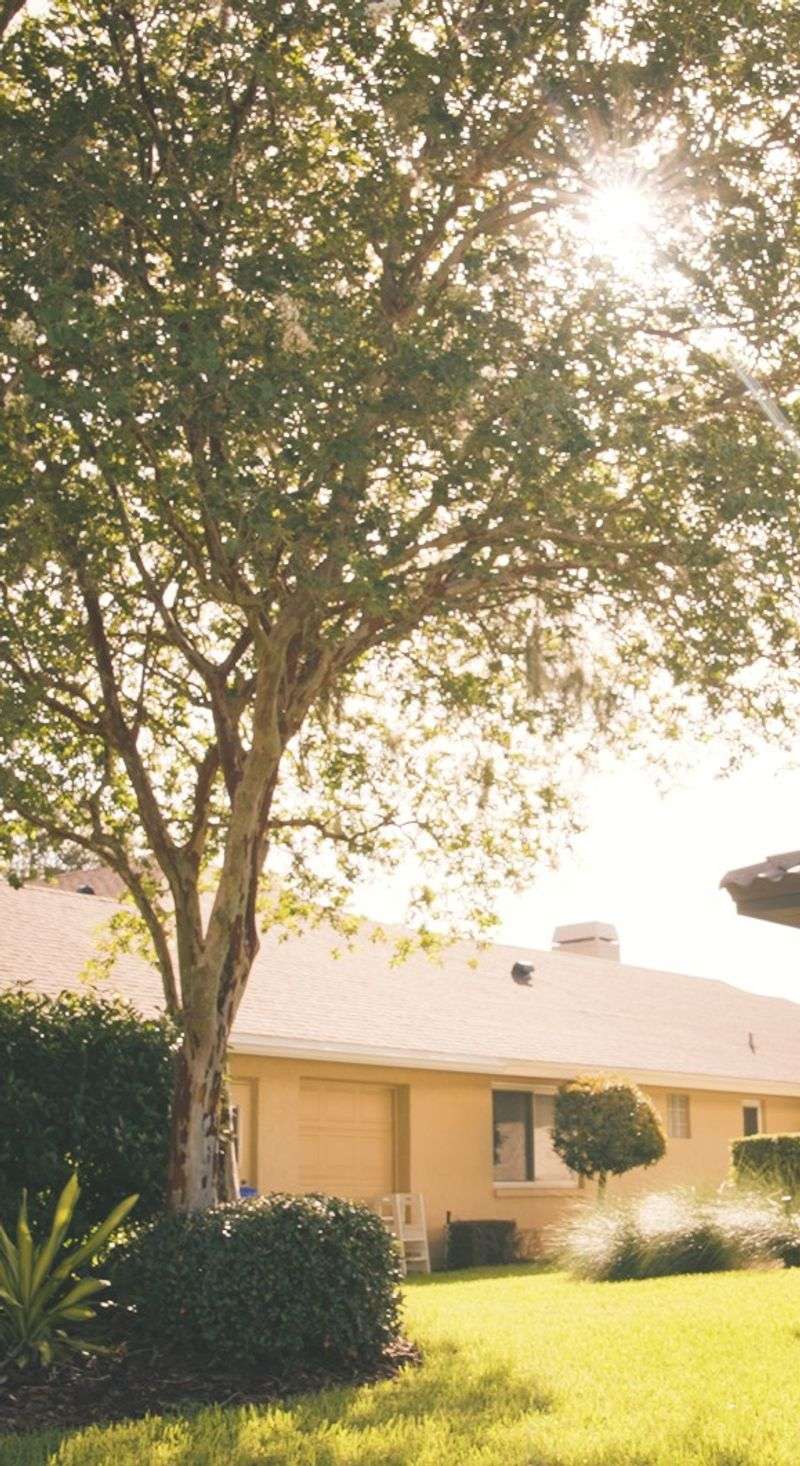
Spending money on plants before walking your yard at different times of day is a common and expensive mistake.
Rhizoma perennial peanut is genuinely forgiving in many ways, but sun and drainage are non-negotiable starting points.
Get those two wrong and the planting struggles from day one.
Full sun is where this plant thrives, producing the densest growth and the most reliable yellow flowering.
Partial shade may be tolerated, but UF/IFAS Gardening Solutions notes that dense shade is a poor match.
If a large live oak or building shades most of your front yard for half the day, a different ground cover or a good layer of mulch will serve that area better.
Check out UF/IFAS guidance on shade-tolerant ground covers for those problem spots, and save the perennial peanut for the open, sunny sections.
Drainage is the other deal-breaker.
After a typical Florida afternoon downpour, walk your yard and look for low spots where water pools and sits.
Rhizoma perennial peanut does not tolerate saturated soil for more than roughly one to two weeks.
A yard with standing water after rain is a setup for root rot and a failed planting.
Well-drained, sandy soil, which describes much of the Florida peninsula, is actually ideal.
If a section of your yard drains quickly and gets six or more hours of direct sun, that is your candidate area.
Wet corners, heavily shaded strips along the north side of the house, and spots under dense tree canopy all deserve a different solution.
Prepare The Area And Set The Plants
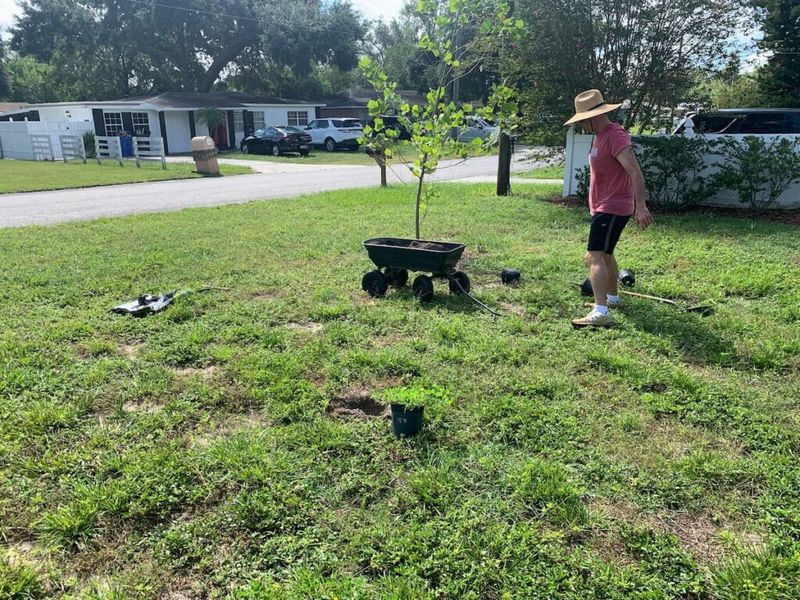
Clearing the ground before you plant is the step most people want to skip, and it is the one that causes the most regret.
Existing St. Augustinegrass, weeds, and turf runners left in place will compete hard with newly planted perennial peanut and can slow or stall coverage.
Kill or remove existing vegetation thoroughly, and give the soil a chance to dry and settle before you start placing plants.
You have a few material options once the area is ready.
Rhizomes, plugs, sod strips, and container-grown plants are all used for installation.
UF/IFAS Gardening Solutions recommends spacing plugs or plants 12 to 18 inches apart to allow them to fill in without leaving enormous gaps that invite weeds.
Rhizome material should go in about 1 inch deep on average, according to UF/IFAS agronomic guidance.
Sod strips can speed coverage but add cost, while bare rhizomes are typically the most economical material and require the most patience.
Material choice, labor, and site preparation together determine what you actually spend on installation.
The Orange County UF/IFAS Extension blog on perennial peanut makes clear that the upfront investment is real and varies considerably depending on how you source and install the plants.
A homeowner doing their own labor and buying bare rhizomes in bulk will spend very differently than someone paying a landscape crew to install container plants.
Either way, building a realistic budget before you purchase anything is what separates a satisfying project from a frustrating one.
Manage The Establishment Phase
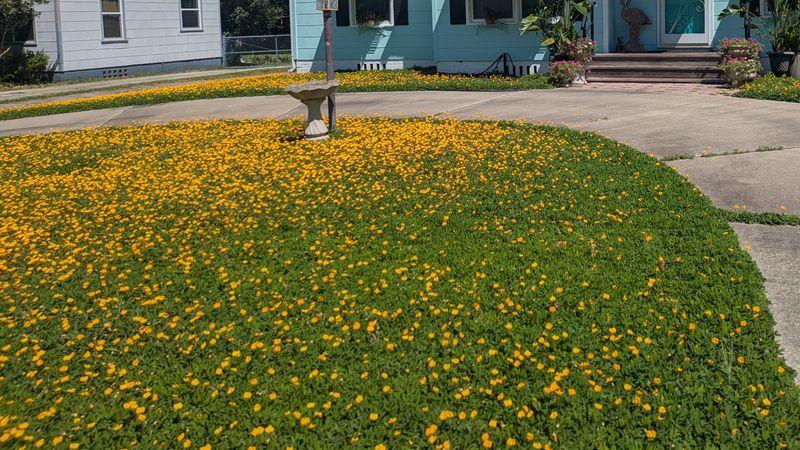
The establishment phase is when you do the most work, and also when the planting is most vulnerable.
Newly set plants have not yet developed the deep root system that makes mature perennial peanut so resilient.
Water is your most important tool during this window.
Regular irrigation is essential while new plants root into the soil.
The first 30 days after planting are especially critical.
The Seminole County perennial peanut fact sheet and UF/IFAS planting guidance both stress that adequate water during establishment is non-negotiable.
The drought tolerance that makes this plant attractive comes later, after the root system is established.
Treating it like a drought-proof plant from the day you install it is a reliable way to lose the planting.
Weeds are the other major challenge during establishment.
Open spaces between young plants are an open invitation, and UF/IFAS weed management guidance points out that broadleaf herbicide options become limited once the peanut is in the ground because many products can injure the ground cover itself.
Hand removal and mowing are the practical nonchemical approaches during this window, and they require consistent attention through the first growing season.
Coverage speed varies with planting material, season, and site conditions.
UF/IFAS research on Arachis species found that rhizoma perennial peanut can exceed 60 percent cover in about six months under favorable winter planting conditions, while summer planting may take at least 12 months to reach that threshold.
A few-week transformation is not realistic.
Budget your time and patience the same way you budget your dollars.
Expect Less Routine Care, Not No Care
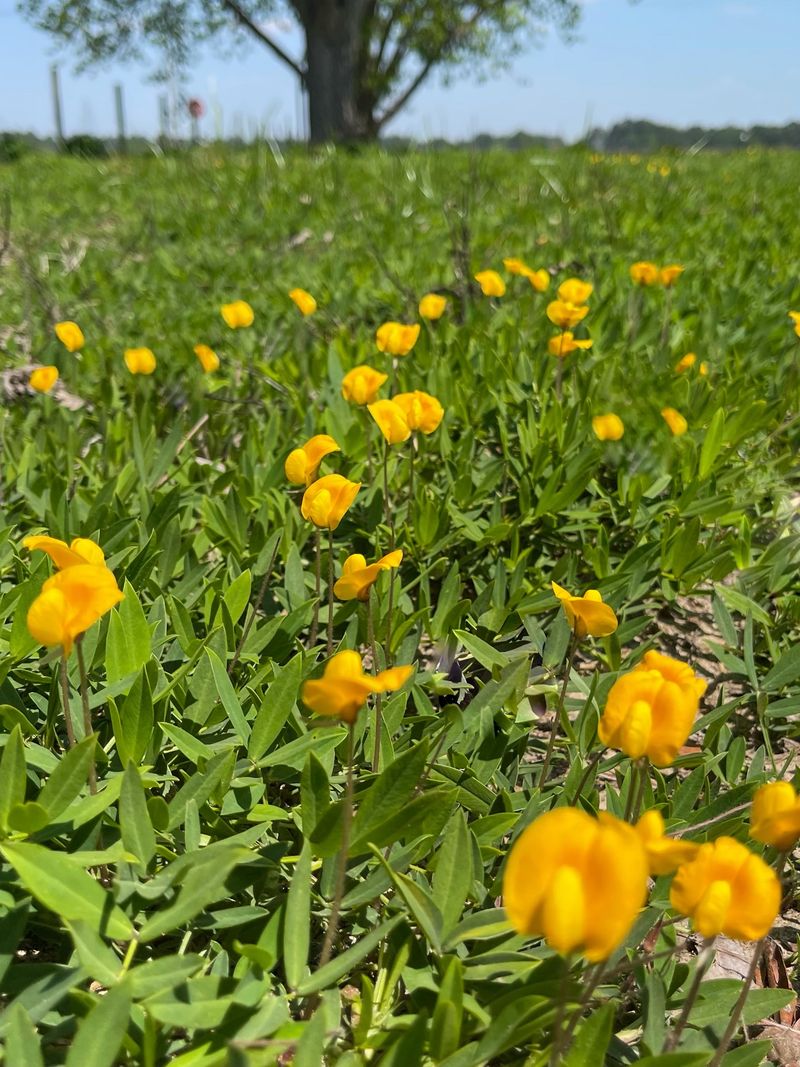
Once perennial peanut fills in and roots deeply, the routine maintenance calendar genuinely shrinks.
That is the real payoff, and it is worth understanding exactly why it happens so you can set realistic expectations for your own yard.
The plant fixes atmospheric nitrogen through a relationship with naturally occurring soil bacteria.
That biological process is why it generally needs little or no nitrogen fertilizer after establishment.
UF/IFAS research on perennial peanut cultivars and management supports this, but also makes clear that fertilizer decisions should follow a soil test rather than a blanket assumption.
Phosphorus or potassium deficiencies can still affect plant health, and sites with unusual soil chemistry may need targeted correction.
The benefit is fewer routine nitrogen applications, not an automatic end to all fertilizer needs.
Mowing follows a similar pattern.
UF/IFAS Gardening Solutions describes mowing as optional for established plantings, though it can encourage flowering and improve overall appearance.
Lower-growing cultivars may benefit from mowing every four to eight weeks during active growth in the warm season, while other plantings may need only occasional grooming or spot weed control.
Compare that with a St. Augustinegrass lawn that typically needs mowing every seven to fourteen days during Florida’s long summer.
The Escambia County UF/IFAS Extension feature on perennial peanut also notes that edging along beds and pathways stays on the to-do list because rhizomes will spread into adjoining areas.
The honest summary is fewer routine inputs, not zero inputs, and that distinction actually matters when you are planning the project.
Design Around Traffic And Frost
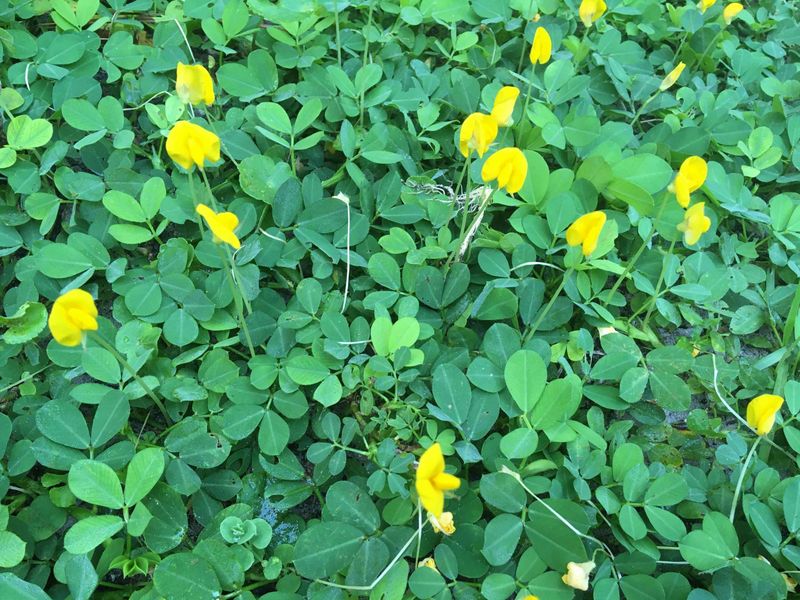
Covering every inch of the front yard with one plant is the kind of plan that looks great on paper and causes problems by spring.
Rhizoma perennial peanut has real limits, and designing around them from the start is what makes the project work long-term.
Foot traffic is the most common limit people underestimate.
Orange County UF/IFAS Extension is direct about this: perennial peanut does not hold up under heavy foot traffic the way most turfgrasses do.
Routes used by children cutting across the yard, delivery drivers, pets making daily laps, or gatherings that spill off the driveway need a different surface.
Stepping stones, a defined concrete or paver path, compacted mulch, or a strip of durable turf in the high-traffic corridor all protect the planting while preserving the maintenance savings in the areas that see lighter use.
Frost is the other factor that varies sharply across Florida.
In South Florida and frost-free coastal areas along both the Gulf and Atlantic coasts, perennial peanut can hold its foliage for much of the year and stay actively growing well into what residents elsewhere call winter.
Move north into Central Florida or the Panhandle and the picture changes.
UF/IFAS cultivar research confirms that frost can cause foliage to brown or send the plant into dormancy, leaving bare rhizomes exposed until spring regrowth begins.
A front yard that looks lush in Tampa in November may look sparse in Tallahassee until March.
The Hillsborough County ground cover fact sheet reinforces that a mixed landscape, combining perennial peanut in suitable areas with paths, mulch, or other surfaces where conditions require them, is more reliable than a single-plant solution across the entire yard.
Choose A Partial Conversion When It Fits
The strongest case for rhizoma perennial peanut is not a complete lawn replacement.
It is a targeted conversion in the parts of your yard where the conditions actually support it.
Sun, drainage, and manageable traffic are the three filters, and any section of your yard that clears all three is a genuine candidate.
Start with a realistic budget that includes site preparation, planting material, establishment irrigation, early weed control, edging along beds, and occasional grooming.
The historical UF/IFAS cost analysis estimated payback in about 3.2 years under specific southwest Florida conditions, and your own timeline will depend on your actual costs and how much of the recurring maintenance bill you eliminate.
Count the savings after the planting fills in, not before.
UF/IFAS guidance on turf alternatives recommends reducing lawn in difficult or low-traffic areas and reserving durable surfaces for routes that see real use.
That framing fits perennial peanut perfectly.
Use it where the site cooperates, keep intentional paths and problem areas as turf, mulch, stepping stones, or hardscape, and let the plant do what it actually does well.
A thoughtfully designed partial conversion, planned honestly from the start, will outperform an ambitious full-yard replacement that hits its limits by the second summer.