
That Purple Weed Taking Over Your Texas Lawn May Actually Be A Native Worth A Second Look
Follow us on Google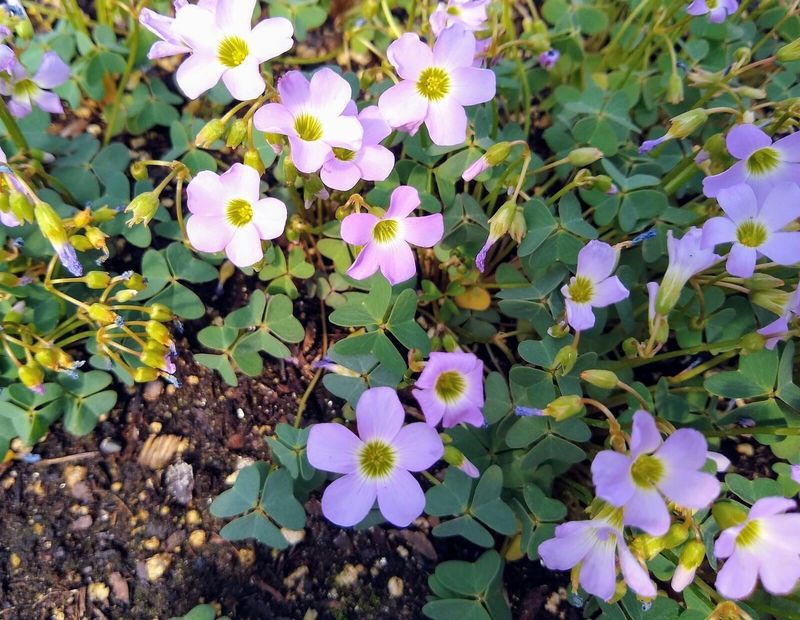
You step outside on a warm April morning and notice a low patch of purple flowers spreading across your lawn, and your first instinct is probably to pull them up.
Before you do, take a closer look, because that plant may be violet woodsorrel, a Texas native that a lot of homeowners yank without ever knowing what it is.
Getting the identification right changes everything about how you handle it.
That Purple Patch May Be Violet Woodsorrel
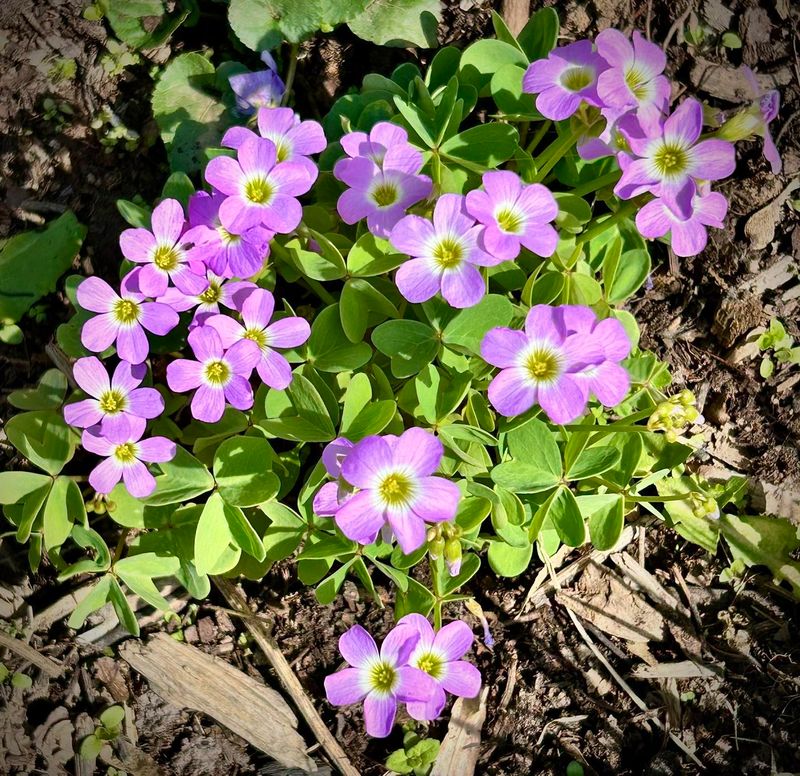
Pull back one of those purple-flowered stems and look at what is underneath.
If the leaves come up on individual stalks from a low base, each one made of three small, shallowly notched leaflets shaped a bit like a butterfly wing, you may be looking at violet woodsorrel, known botanically as Oxalis violacea.
Texas A&M AgriLife’s AggieTurf program identifies it as a Texas-native perennial broadleaf plant that grows from underground bulbs and produces flowers ranging from violet to pinkish purple, rarely white.
That basal rosette structure is one of the clearest field clues.
The leaves do not grow up a central stem the way many common weeds do.
They rise on their own individual stalks directly from ground level, giving the plant a low, neat appearance that can look almost intentional in the lawn.
Purple color alone cannot confirm the identification, and that point matters before you decide to keep or remove it.
A purple spring weed in a Texas yard could be violet woodsorrel, but it could also be purple deadnettle, henbit, common blue violet, or another Oxalis species entirely.
Get close enough to check the leaf shape, the stem structure, and the way the plant is rooted before you call it.
If you can, photograph the leaves, flowers, and root zone together.
That one extra minute of looking can save you from treating the wrong plant the wrong way.
Native Does Not Mean Every Patch Belongs
Knowing a plant is native to Texas genuinely changes the conversation, but it does not settle the question of whether a particular patch belongs in your yard.
A native plant is still a weed when it is growing somewhere you do not want it, competing with turf you are trying to maintain, or spreading into a pathway where foot traffic will crush it anyway.
Violet woodsorrel earns a second look because it provides documented flower resources for bees and other visitors, and because it is a perennial that will return year after year from its underground bulbs.
That persistence cuts both ways.
It means you get a recurring patch of spring color with no replanting effort, but it also means that once you decide you want it gone, simply snapping off the leaves will not do the job.
The bulbs stay in the ground and send up new growth the following season.
A reasonable compromise for many Texas homeowners is a controlled patch in a spot where the plant will not create conflict.
Think about a low-traffic lawn edge beside a garden bed, a strip beneath open tree canopy where turf thins out naturally, or a corner that does not see mowing pressure or foot traffic.
Keeping it there, with a clear boundary, lets you preserve a small native flower without letting it push into areas where it will cause maintenance headaches.
The key word is controlled.
Deliberately spreading violet woodsorrel to new areas of the yard, or letting a kept patch run unchecked, can create more removal work later than you bargained for.
Decide where it fits, define that space, and manage the edges.
That is a more honest recommendation than simply calling it worth keeping across the board.
Bees Give It Modest Ecological Value
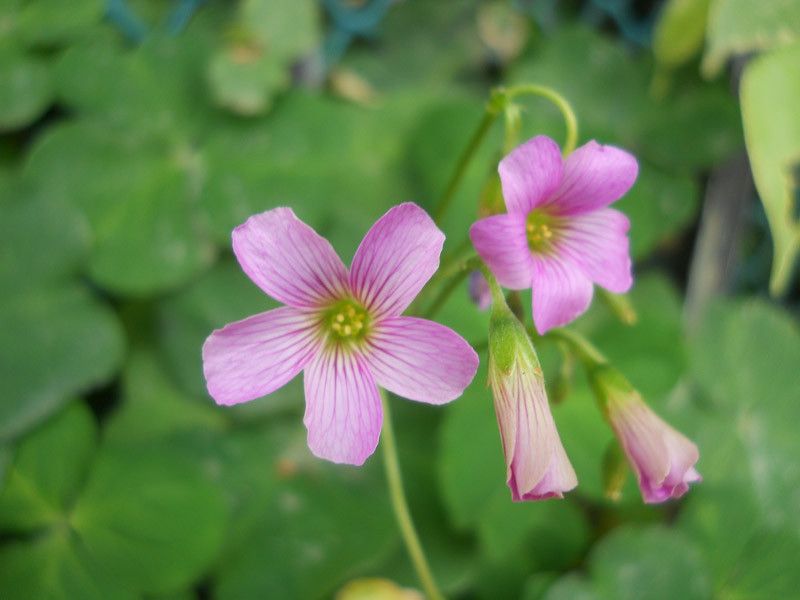
Here is where the plant earns some genuine credit.
A peer-reviewed pollination study documented that flies, bees, and butterflies all visited violet woodsorrel, while bees, including sweat bees and other native bee groups, were identified as the most likely effective pollen-transfer agents.
That is a real ecological contribution, even if it is a modest one.
Sweat bees are small, often metallic-colored native bees that forage close to the ground and are common across Texas.
They are easy to miss, but they are active pollinators, and a low patch of violet woodsorrel in early spring gives them a flower source at a time when other options in a typical lawn may be scarce.
What that study does not show is that a small residential patch will dramatically increase the total number of pollinators in your yard, reverse any broader pollinator decline, or turn your lawn into a meaningful conservation resource.
Those are bigger claims than the evidence supports.
A retained patch of violet woodsorrel is better understood as one small contribution to backyard habitat, the kind of thing that helps a little without fixing everything.
One distinction worth keeping clear: violet woodsorrel’s pollinator value comes from flower visitation and pollen transfer.
Do not confuse that with the host-plant role that common blue violet plays for fritillary butterfly caterpillars.
That relationship belongs to Viola species, not to Oxalis.
If you read that a purple lawn flower feeds butterfly larvae, check whether the source is talking about violet or woodsorrel before repeating the claim.
They are different plants with different ecological roles.
Look Closely Before You Call It
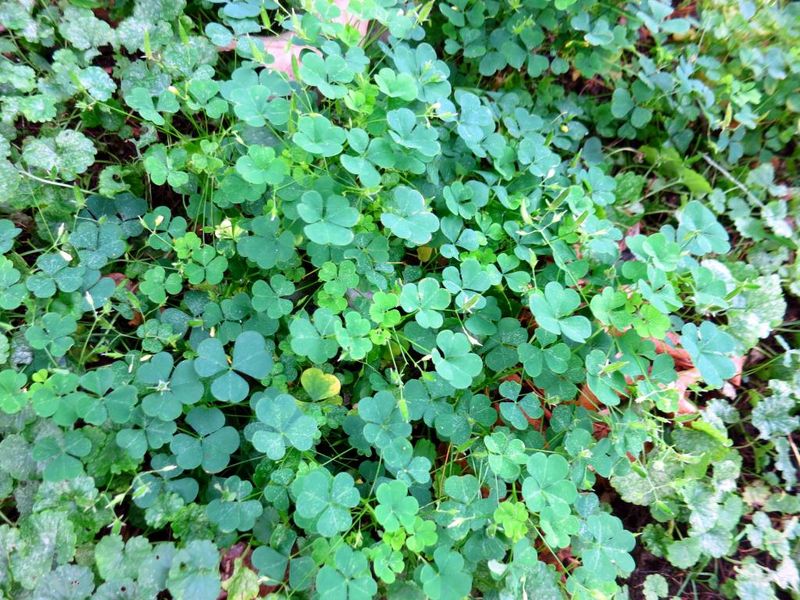
Spring in Texas brings a lot of purple flowers to the lawn, and not all of them are violet woodsorrel.
Getting the identification right before you decide to keep or treat a plant is the most practical thing you can do, because the management approach is different depending on what you are actually looking at.
Violet woodsorrel has small, three-part leaflets on individual stalks rising from a low base.
Each leaflet is shallowly notched at the tip, giving it a slight heart shape.
Texas A&M AggieTurf notes that a related species, Oxalis articulata, may have hairy flower stalks and hairy leaf undersides, so even within the Oxalis group, close inspection matters.
Texas lawns can also harbor yellow woodsorrel, creeping woodsorrel, and introduced ornamental oxalis varieties.
The native status of one Oxalis species does not carry over to every other one you might find in the yard.
Common blue violet, Viola sororia, is another purple-flowered native that shows up in lawns.
Its leaves are distinctly heart-shaped, and it spreads by both rhizomes and seed.
University of Minnesota Extension’s wild violet profile notes that it can become dominant in favorable conditions and is capable of flowering below mower height when mowed repeatedly.
It is a different plant from violet woodsorrel, with a different growth habit and a different ecological role.
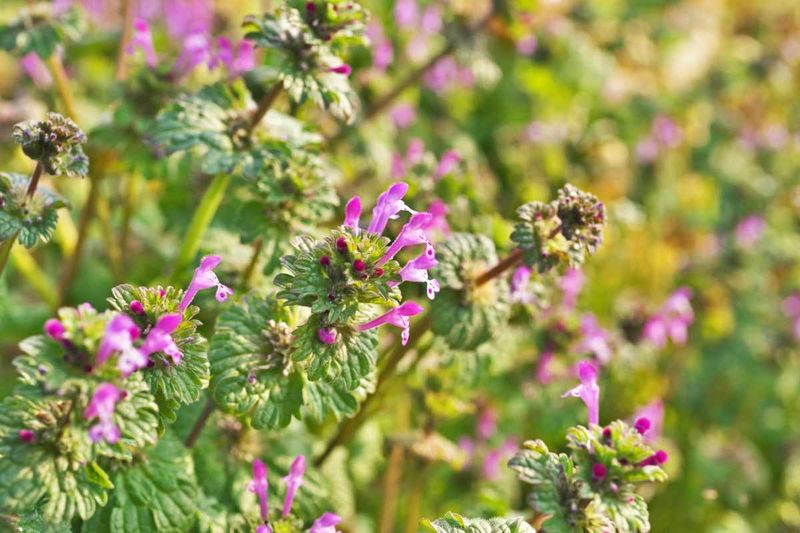
Purple deadnettle, Lamium purpureum, is the one most likely to trip people up in early spring.
Texas A&M AggieTurf’s deadnettle entry describes it as a nonnative winter annual with square stems, opposite toothed triangular leaves, and small pinkish-purple flowers arranged in whorls up the stem.
If the stem has four sides and the leaves grow in pairs across from each other, you are not looking at a native pollinator plant.
You are looking at a nonnative annual, and the ecological case for keeping it is a different conversation entirely.
The AggieTurf turfgrass weeds directory is a useful starting point for cross-checking Texas lawn weeds with photographs before you make a management call.
Give A Kept Patch A Boundary
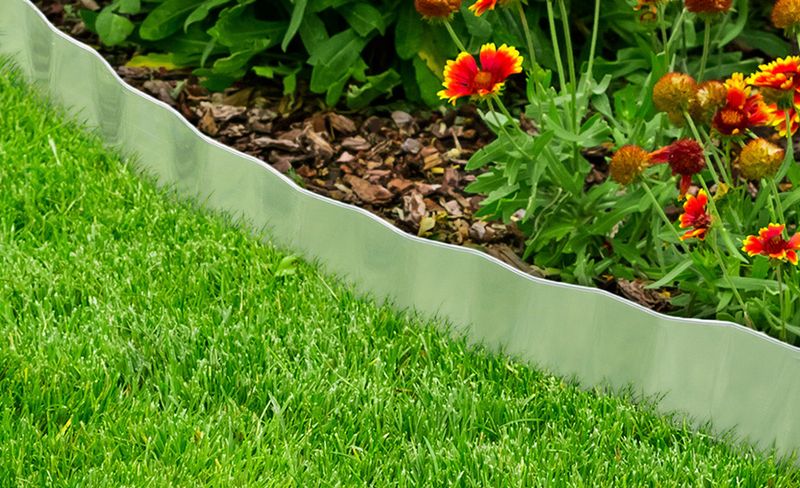
Deciding to keep a patch of violet woodsorrel is not a set-it-and-forget-it move.
The plant’s underground bulbs give it staying power, which means a patch without a defined edge will gradually push outward into turf, pathways, and garden beds over a few seasons.
A practical boundary means choosing a spot where the plant will not interfere with regular mowing, children playing, pet activity, or foot traffic across the lawn.
Low-traffic edges beside established beds, strips beneath a tree where turf already struggles, and corners that do not see heavy use are all reasonable candidates.
Spots along a narrow path, in a play area, or anywhere that requires consistent foot traffic are not good candidates, regardless of the plant’s ecological value.
Local conditions across Texas affect how well a kept patch stays contained.
Violet woodsorrel’s perennial bulb structure means it responds differently depending on your soil type, shade level, rainfall pattern, and turf species.
A patch in a shaded, moist corner of a Central Texas yard may behave very differently from one in a sunnier, drier spot in South Texas or near the Gulf Coast.
Irrigation habits, local freeze exposure, and the grass species surrounding the patch all influence how aggressively it spreads.
Checking the boundary two or three times a season and digging out any bulbs that have migrated beyond your chosen area is a reasonable maintenance commitment.
Texas A&M AgriLife’s turfgrass establishment guidance emphasizes knowing your grass species and its tolerances before making any management change near established turf, and that principle applies here too.
A kept patch that fits the yard is a fine choice.
One that spreads unchecked becomes the weed problem the headline warned about.
Dig The Bulbs When You Want It Gone
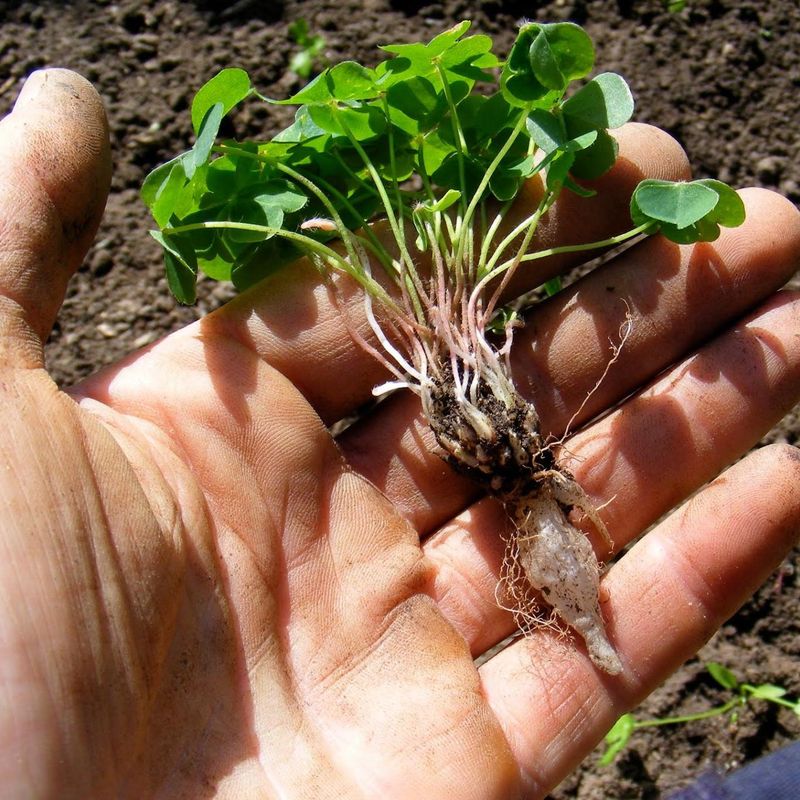
Snapping off the leaves feels satisfying in the moment, but violet woodsorrel will be back.
The plant grows from small underground bulbs, and removing only the visible top growth leaves those bulbs sitting in the soil, ready to send up new foliage once conditions are right again.
For a small patch, hand removal is the safest first option, especially when the area is near desirable flowers or turf that is still establishing.
Loosen the soil around the basal rosette with a narrow trowel or hand fork, working carefully to avoid breaking the bulbs apart and leaving fragments behind.
Then lift the whole cluster, including as many of the small bulbs as you can find.
Texas A&M AggieTurf’s violet woodsorrel profile and AgriLife’s turfgrass establishment guidance both recommend hand weeding as the safest approach near establishing turf, noting that herbicide tolerance varies by grass species.
Plan to check the removal area again about three to four weeks later.
Small bulb fragments left in the soil will often produce new rosettes, and catching those early, while they are small, is much easier than letting them re-establish.
Two or three follow-up passes through a single growing season can clear a modest patch without any chemical help.
Mowing will reduce the visible flowers and limit seed spread, but it will not eradicate a perennial plant growing from bulbs.
Research on related lawn weeds documents that some species actually adapt by flowering below the mower blade height when mowed consistently.
Mowing is a useful tool for managing the appearance of the patch, but digging is the only hand-removal method that actually addresses the root of the problem.
Healthy Turf Leaves Less Room
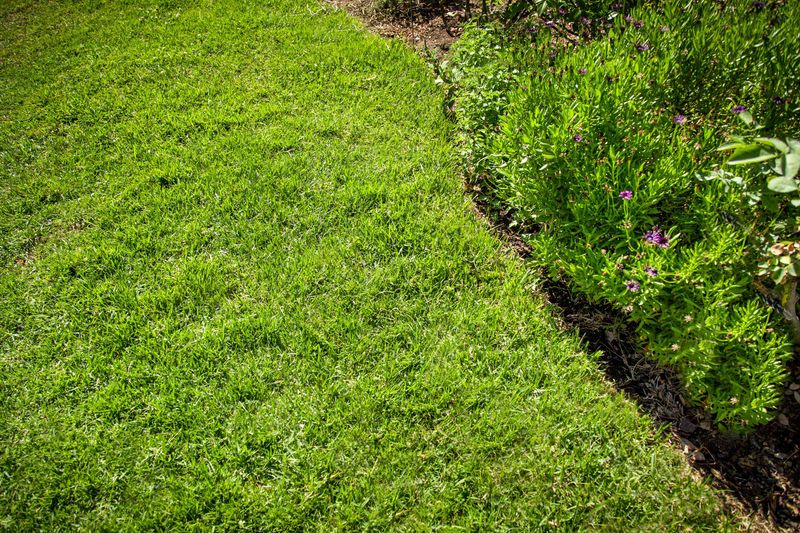
Weeds find their way into thin spots.
A lawn with dense, healthy turf simply offers fewer openings for opportunistic broadleaf plants to establish, and that is as true for violet woodsorrel as it is for any other lawn weed.
Good turf management is not glamorous, but over time it is one of the most effective weed-prevention tools available.
For Brazos Valley lawns, Texas A&M AgriLife Extension’s regional lawn guidance recommends mowing St. Augustinegrass at a height of at least 3 inches and Bermuda or zoysia grass at around 2 inches.
Mowing frequency should follow the grass, roughly every 5 to 7 days when the lawn is actively growing.
These figures are Brazos Valley examples, not universal rules for every Texas region, cultivar, or growing condition.
A St. Augustine lawn in the Hill Country with shallow alkaline soil and less reliable rainfall may need slightly different handling than one near the Gulf Coast.
During hot, dry stretches from May through September, the same guidance recommends applying roughly 0.5 to 1 inch of water through slow, thorough irrigation rather than frequent light sprinkling.
Deep, infrequent watering encourages roots to grow deeper, which makes turf more resilient through the long Texas summer.
That recommendation is about turf health, not about managing violet woodsorrel specifically.
Proper fertilization and mowing at the correct height for your grass species fill in the thin patches where weeds get their start.
A lawn that is consistently managed through the spring flush, the summer heat, and the fall recovery period simply gives broadleaf plants less room to work with.
That is not a complete solution for a well-established violet woodsorrel patch with a developed bulb system, but it makes a real difference in preventing new ones from taking hold in the first place.
Spray Only After You Decide
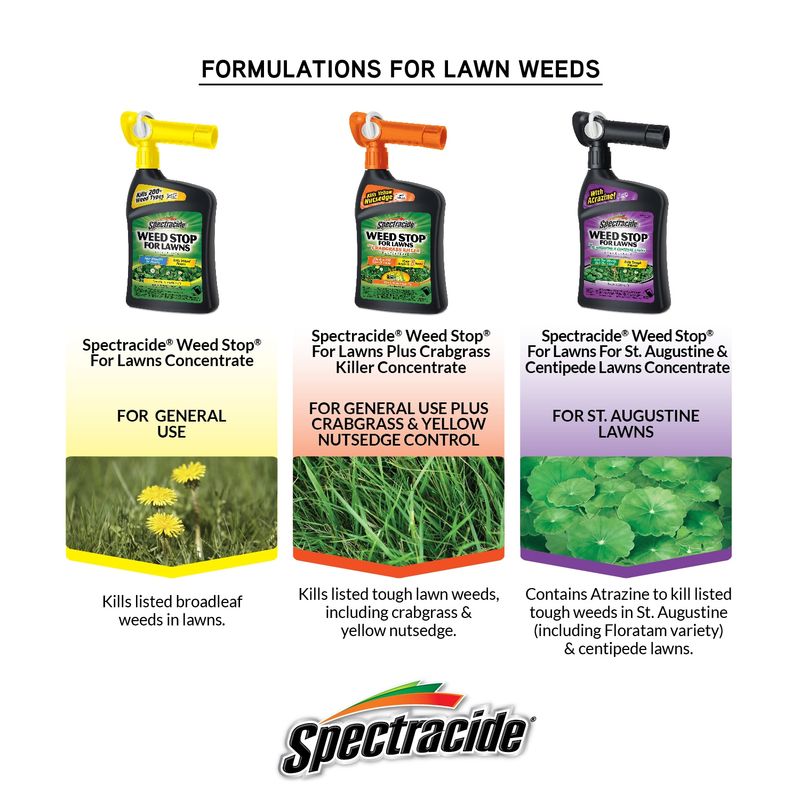
Reaching for the herbicide before you know whether you want to keep the plant or remove it is the one move most likely to create regret.
If you are still deciding, hold off.
A broadleaf herbicide applied to violet woodsorrel will also affect any other broadleaf plants nearby, including native flowers you may have intentionally kept or recently planted.
When spot treatment does make sense, bee lawn management guidance recommends avoiding applications while flowers are actively blooming and pollinators are visiting, using targeted spot treatment instead of broadcast spraying, and confirming that the product is labeled for your specific turfgrass before applying it.
Those precautions protect the desirable plants and insects you are trying to keep while still addressing the patch you want gone.
Heat timing matters in Texas.
Texas A&M AgriLife Extension warns that broadleaf weed killers applied when daytime temperatures reach the mid to upper 80s or higher can injure St. Augustinegrass.
That threshold arrives early in Central, South, and Gulf Coast Texas, sometimes by late April or May, which leaves a narrow window for safe spring application.
AgriLife’s turfgrass establishment guidance also stresses that herbicide tolerance varies by grass species and that following the product label is not optional.
The clearest takeaway from all of this is simpler than the label instructions make it sound.
Identify the plant first.
If it turns out to be violet woodsorrel and your yard has a spot where a small, contained patch would not cause problems, that is a reasonable choice to make.
If it is in the wrong place, or if you have confirmed a nonnative weed instead, dig it out carefully while the patch is small, follow up a few weeks later, and keep the turf healthy enough to close the gap.
A yard that you understand is a yard you can actually manage.