
Why Zebra Longwing Butterflies Vanish From North Carolina Gardens And The Plants That Bring Them Back
Follow us on Google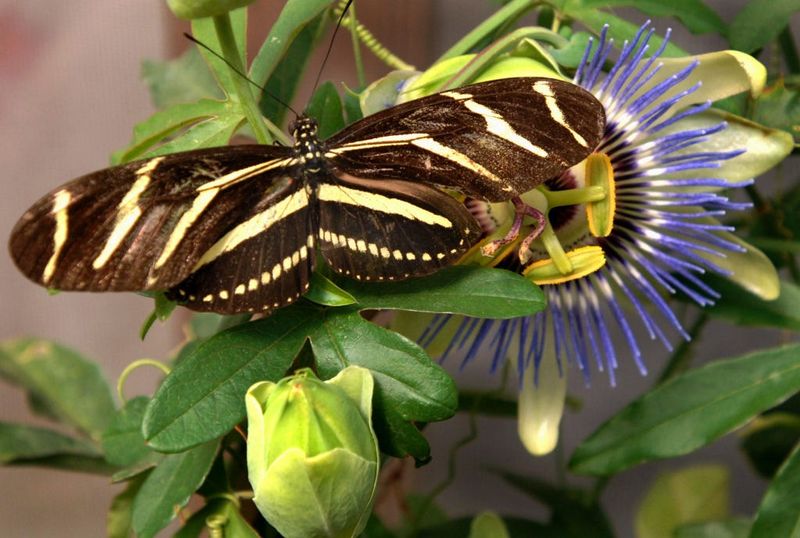
Most North Carolina gardeners who spot a striking black-and-white striped butterfly and then never see it again are left wondering what went wrong. The honest answer is that zebra longwing butterflies are rare, occasional visitors in this state, not reliable backyard regulars that disappear whenever a particular plant goes missing.
Two native passionflower vines, maypop and yellow passionflower, can give a visiting female a place to lay eggs and feed her caterpillars, but planting them is an invitation, not a guarantee.
Passionflower Creates An Opportunity For A Rare Visitor
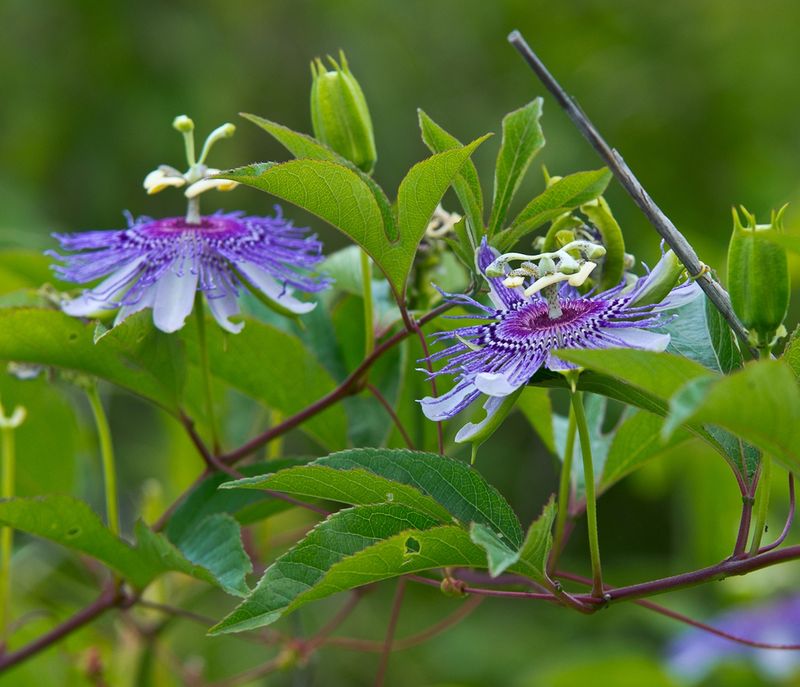
Maypop, Passiflora incarnata, and yellow passionflower, Passiflora lutea, hold a documented place in the zebra longwing story in North Carolina. The North Carolina Butterfly Atlas records females laying eggs on both species at Fort Macon State Park along the coast, which makes these vines the only two native larval host plants with confirmed in-state use.
What that means for your garden is specific. If a female zebra longwing reaches your yard, she may lay eggs on either vine, and those eggs may develop into a local generation of caterpillars.
The plants create a breeding opportunity, not a summons, and the distinction matters because no amount of passionflower can overcome the simple fact that the butterfly has to find your garden first.
Both vines also support Gulf fritillaries and variegated fritillaries, two butterflies that visit North Carolina gardens far more reliably than zebra longwings do. NC State Extension lists zebra heliconian among the butterflies supported by yellow passionflower, alongside these more dependable fritillaries.
That overlap is the real reason to grow these vines: they earn their spot in a wildlife garden whether or not a zebra longwing ever shows up.
One more thing worth saying clearly: chewed or ragged passionflower leaves show that caterpillars are feeding on the plant, but they do not tell you which caterpillars. NC State Extension recommends leaving designated host plants alone so larvae can complete their development, but attribute the feeding to zebra longwings only if you actually observe the eggs, larvae, or adult butterfly on the vine.
Zebra Longwings Are Not Regular Statewide Residents
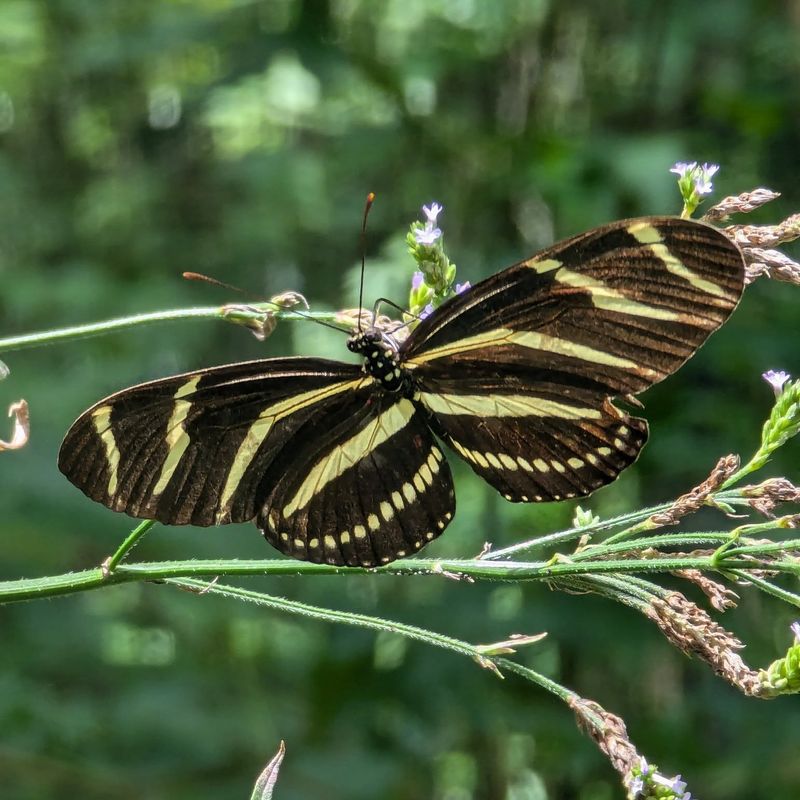
Here is where a lot of gardening articles go wrong. The zebra longwing is genuinely beautiful, and it is genuinely rare in North Carolina, and those two facts get tangled up into a story that is more wishful than accurate.
The North Carolina Butterfly Atlas classifies zebra longwings as very rare to rare strays, with the bulk of records concentrated along the southern coast and only scattered sightings elsewhere. Their documented flight period runs from early June through mid-November, with most confirmed sightings arriving from mid-August into November.
That timing lines up with southward migrants pushing up from Florida and the Gulf Coast, not with a resident population that overwinters and reappears each spring.
The 2008 season offers the clearest example of how temporary these visits can be. A coastal outbreak that year produced enough individuals to generate local offspring, but the North Carolina Butterfly Atlas documents that those offspring did not survive the winter of 2008 to 2009.
The atlas describes later outbreaks the same way: temporary events, not the start of a resident population. Winter cold is a hard ceiling on the species in most of the state.
What this means practically is that a missing host plant is not the reason your garden feels empty of zebra longwings. Regional rarity, migration patterns, winter mortality, and simple chance are the larger forces at work.
A native passionflower vine can support a visiting female if she arrives, and that is a genuinely useful role. But the vine cannot move the species northward or keep it through a cold January in Raleigh or Asheville.
Make Sure The Striped Butterfly Is The Right Species
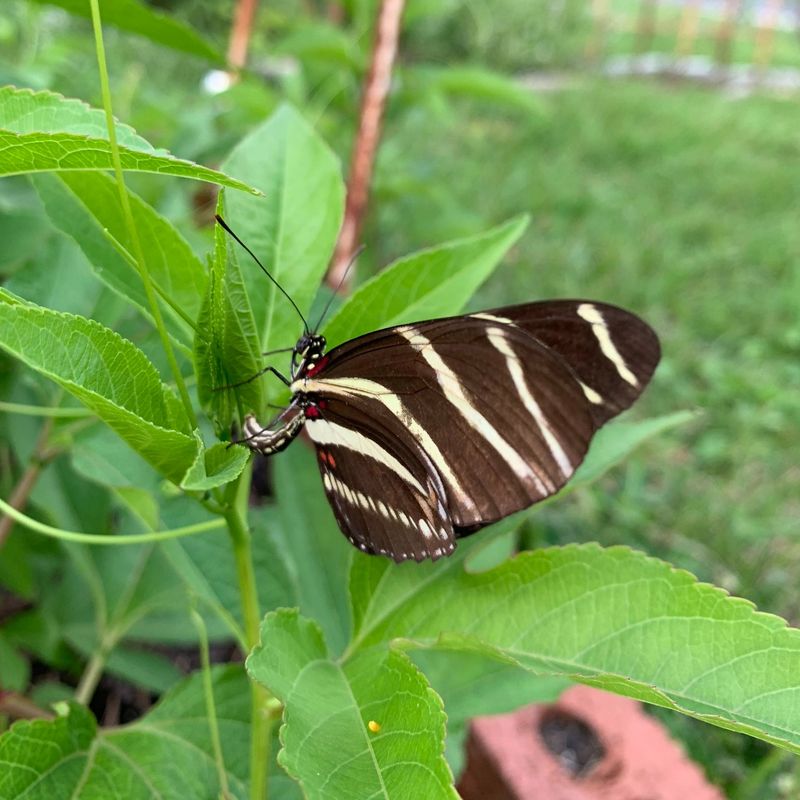
Before you plant anything, make sure the butterfly you are trying to attract is actually a zebra longwing. Many Piedmont gardeners who describe a “zebra butterfly” disappearing from their yard are almost certainly thinking of the zebra swallowtail, Eurytides marcellus, which is a completely different species with different needs.
The numbers tell the story quickly. The North Carolina Butterfly Atlas has recorded roughly 128 zebra longwing observations compared to more than 2,500 zebra swallowtail records in its database.
Those counts are not statewide population estimates, but they do illustrate how dramatically more common the swallowtail is across the state. If you have seen a black-and-white striped butterfly in your inland North Carolina garden with any regularity, the swallowtail is the far more likely candidate.
The two species look similar at a glance but are easy to separate once you know what to check. The zebra longwing, Heliconius charithonia, has long, narrow wings with yellow stripes on a black background and flies with a slow, floating motion.
The zebra swallowtail has the pointed hindwing tails typical of swallowtails, plus red and blue markings that the longwing lacks.
Their larval host plants are completely different, and this is where the practical mistake happens. Zebra swallowtail caterpillars feed on pawpaw, Asimina triloba, and dwarf pawpaw, not on passionflower.
Planting maypop will do nothing to support a zebra swallowtail. If the striped butterfly you want back is actually the swallowtail, the plant it needs is a native pawpaw, which grows well across much of North Carolina.
Choose Between Maypop And Yellow Passionflower
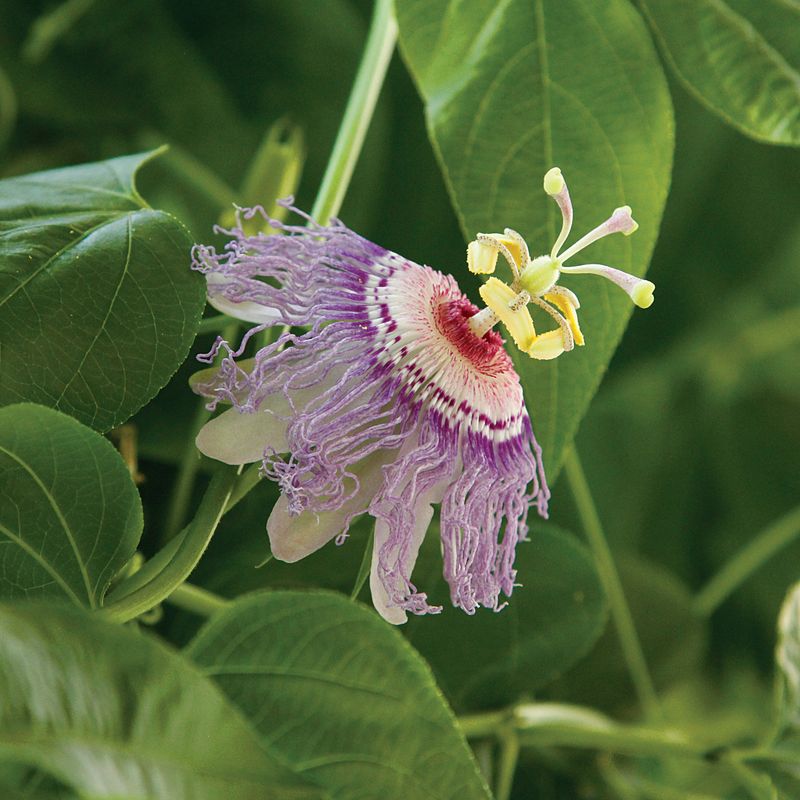
Choosing between these two vines comes down to how much space and energy you want to manage. Both are native to North Carolina, both have been documented as larval hosts for zebra heliconians, and both support Gulf fritillaries and variegated fritillaries more dependably than they will ever attract a zebra longwing.
Maypop, Passiflora incarnata, is the showier of the two. NC State Extension describes maypop as a fast-growing perennial vine that can climb or trail across the ground, thrives in full sun to partial shade, and can eventually claim 12 to 24 feet of space.
Its roots spread by suckers, which means new shoots can pop up several feet from the original plant. That growth habit is useful for covering a large fence or arbor quickly, but it demands some attention in a tidy garden.
Yellow passionflower is quieter. NC State lists yellow passionflower as generally more restrained than maypop, though it still spreads through underground rhizomes.
It grows in full sun to partial shade, prefers moist, well-drained soil, and may reach 10 to 20 feet tall with a 2- to 4-foot spread when given a support. Its flowers are small and pale, without the dramatic purple flair of maypop, but caterpillars do not care about the flower.
A key point that passionflower alone cannot answer: adult zebra longwings need more than a larval host plant. Published research on Heliconius charithonia notes that adults require nectar, shelter, and suitable basking areas in addition to the larval vine.
A single passionflower planted in an otherwise bare corner handles only one piece of what the butterfly actually needs.
Plant The Vine Where Growth And Safety Stay Manageable
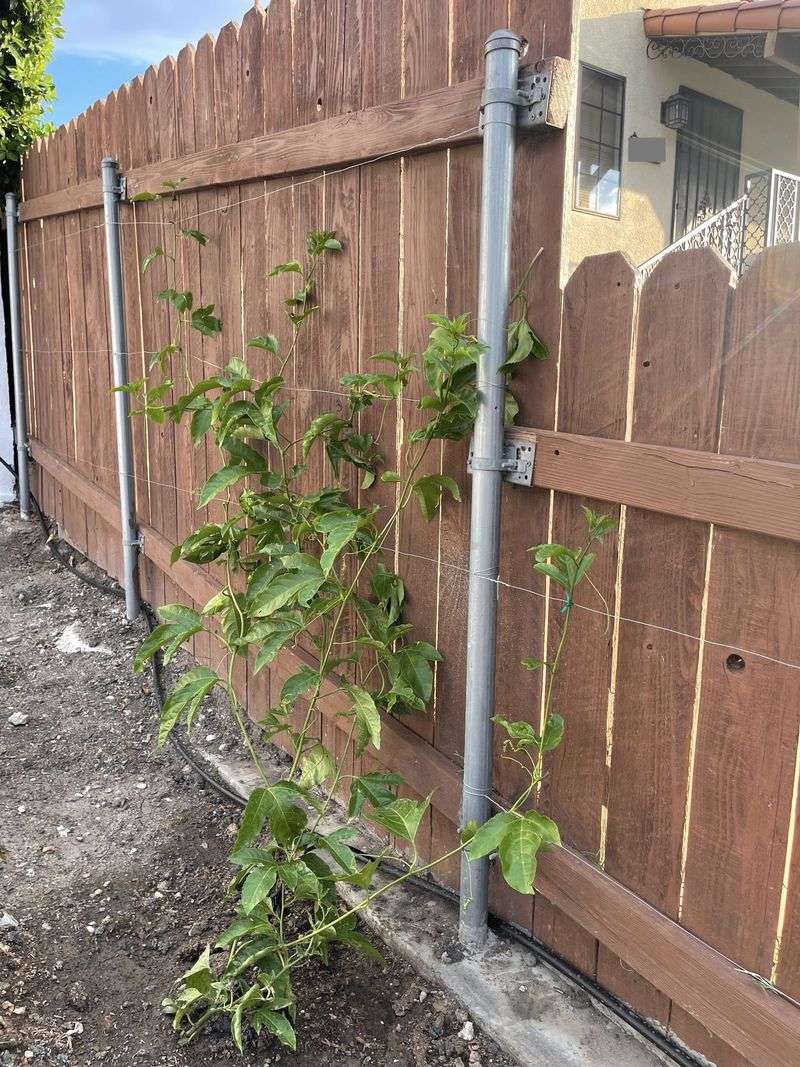
Placement matters more with passionflower than with most garden vines, and getting it right from the start saves a lot of corrective pruning later. The best spot is a sunny fence, trellis, or arbor that gets at least six hours of direct light and sits away from narrow walkways where the vine can brush against people or pets.
Maypop does not need to climb in order to bloom and feed caterpillars, but giving it a structure makes the growth far easier to manage and keeps the foliage where you can actually watch for eggs and larvae. Keep it away from the area immediately surrounding your house.
NC State Extension gives maypop a high flammability rating, which means it should not be planted within the defensible space close to a home’s foundation, and during dry stretches in the Sandhills or coastal plain, that guidance carries real weight.
Timing matters for establishment. Plant in spring or early in the growing season so the root system has time to anchor itself before winter arrives.
NC State specifically recommends early planting for yellow passionflower to give the roots time to develop and improve the odds of a strong spring return. A vine planted in late summer in the NC Piedmont may survive, but it is working against the clock.
One safety note that should not be skipped: NC State lists medium poison severity for the leaves and stems of both Passiflora incarnata and Passiflora lutea, with cyanogenic glycosides identified as the toxic compound. Keep plant material away from children, pets, and any animals that might chew on the foliage.
Ripe maypop fruit has a long history of being eaten by people in the South, but do not assume that every part of the plant at every stage is safe, and treat unripe fruit with the same caution as the leaves.
Protect Caterpillars Instead Of Chasing Perfect Leaves

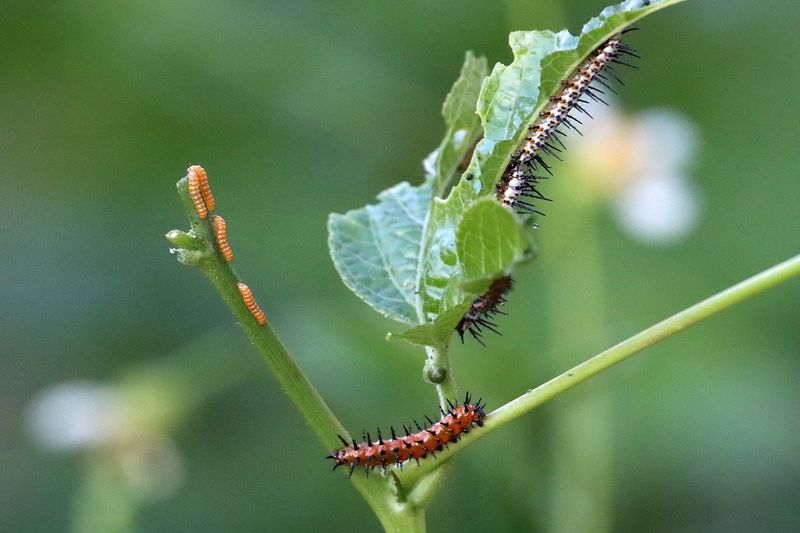
Ragged passionflower leaves are actually good news, even when they look alarming. Chewed foliage shows that caterpillars are using the plant, and caterpillars eating the leaves is exactly what a host plant is supposed to do.
The damage does not mean the vine is failing; it means the vine is working.
The key habit to build is simple: reserve a section of the vine for wildlife and leave it alone. NC State Extension recommends leaving designated host plants undisturbed when possible so larvae can complete their development.
You can train or prune the rest of the vine for appearance, but the wildlife section needs to stay intact through the feeding cycle. Many gardeners find it easier to grow the vine on a back fence or secondary trellis where the chewed look is less noticeable from the porch.
What you spray on that vine matters enormously. Broad-spectrum insecticides will kill caterpillars along with any pest insects, and that outcome defeats the whole purpose of planting a host plant.
Bt kurstaki, a biological product that many gardeners consider a gentle option, is specifically designed to kill moth and butterfly caterpillars. NC State Extension’s integrated pest management guidance encourages minimizing pesticide use and targeting treatments carefully, because chemicals that eliminate pest insects can reach and harm the beneficial ones you are actively trying to support.
Monitor the vine by looking, not by spraying. Check for eggs, small caterpillars, and adult butterflies visiting the foliage.
That observation habit is how you actually confirm which species is using the plant, and it is far more satisfying than a chemically clean vine with nothing living on it.
Build A Butterfly Habitat Beyond One Host Vine
A single passionflower vine is a good start, but it cannot carry the full weight of a butterfly habitat on its own. Think of it as one layer in a garden that needs several layers to actually function.
NC State Extension recommends building butterfly habitat around a combination of host plants, nectar sources, shelter, basking areas, and damp soil or mud. Each of those elements serves a different part of the butterfly’s life.
Host plants feed caterpillars. Nectar plants fuel adults.
Shelter and basking spots give butterflies a place to rest and warm up on cool mornings. Damp soil provides minerals that many species seek out, a behavior called puddling.
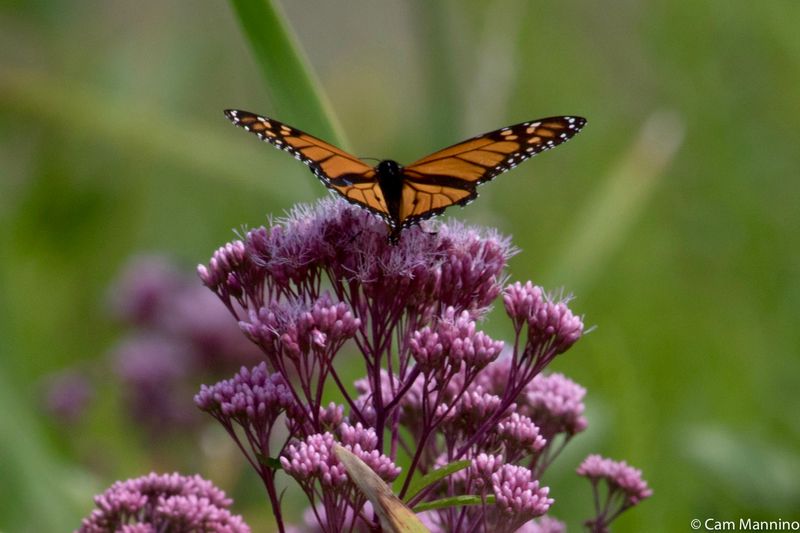
For nectar plants that genuinely earn their space in a North Carolina garden, native milkweeds support monarchs passing through in fall. Joe-Pye weed, goldenrod, black-eyed Susan, purple coneflower, and native asters extend the bloom season from midsummer into October, covering the exact window when late-season butterflies are most active.
None of these are guaranteed to attract a zebra longwing, but they will attract swallowtails, fritillaries, skippers, and the monarchs that many coastal plain and Piedmont gardeners already watch for.
NC State Extension’s hummingbird and butterfly guidance emphasizes plant diversity as the core of a working habitat. A garden with ten species of native plants in bloom across three seasons will support more butterfly activity than a garden with one spectacular vine and bare ground around it.
The passionflower invites the rare visitor. The rest of the garden keeps the yard alive with the species that actually show up every summer.
Set A Realistic Standard For Garden Success
Getting this right comes down to a short sequence of honest steps. Identify the butterfly you are actually seeing, because zebra swallowtails are common across many parts of the state and zebra longwings are not.
Plant a native passionflower in a spot where it has room to spread and where children and pets cannot easily reach the foliage. Protect the vine from pesticides and let caterpillars feed.
Add nectar plants, a basking surface, and a patch of damp soil nearby.
Geography shapes what you can reasonably expect. The North Carolina Butterfly Atlas shows zebra longwing records concentrated along the southern coast, near Brunswick and New Hanover counties, with scattered and often single-record appearances in inland counties.
A garden near a maritime thicket south of Wilmington has a more credible shot at hosting a visiting female than a garden in Greensboro or Boone. That is not a reason to skip the vine if you live inland; it is a reason to hold your expectations lightly.
The atlas is clear that even documented NC populations have not survived winter, so annual return and colony establishment are not outcomes you can plant toward. The vine improves the odds that a passing female will have somewhere to lay eggs, and that is the honest limit of what it can do.
NC State Extension notes that butterfly gardens may take several years to mature, and in much of North Carolina, a zebra longwing may never become a regular face in the yard. A garden that reliably draws Gulf fritillaries, swallowtails, and monarchs through a muggy Carolina August is already doing something worth keeping, with or without the rarest guest on the list.